
Tag: blockchain

  • Top Altcoins to Consider Post-Fed Decision

    Top Altcoins to Consider Post-Fed Decision

    Following a pivotal hypothetical Federal Reserve announcement in late October 2025, which saw the central bank opt to maintain or even slightly lower benchmark interest rates, the cryptocurrency market is abuzz with renewed optimism. This dovish stance by the Fed signals a potential shift towards an accommodative monetary policy, injecting much-needed liquidity into the financial system and fostering a "risk-on" sentiment among investors. Historically, such periods have proven to be fertile ground for speculative assets, with cryptocurrencies often leading the charge. The immediate market reaction has been one of cautious bullishness, as traders and institutions alike begin to re-evaluate their portfolios, seeking opportunities in assets poised for growth in this new economic climate.

    This strategic move by the Federal Reserve is profoundly significant for the crypto ecosystem. Lower interest rates diminish the appeal of traditional, lower-yielding investments, pushing capital towards higher-return, riskier assets. This influx of capital not only boosts trading volumes and potentially asset prices but also provides a robust environment for innovation and development within the blockchain space. With increased institutional integration, the crypto market's correlation with traditional finance continues to strengthen, making Fed decisions a critical barometer for digital asset performance. As liquidity expands and the cost of borrowing decreases, venture capital investment in crypto startups is likely to accelerate, fueling advancements in decentralized finance (DeFi), NFTs, Web3 applications, and other emerging sectors.

    Market Impact and Price Action

    The Federal Reserve's decision to maintain or slightly lower interest rates has sent ripples through the crypto market, setting the stage for potential significant price movements. While Bitcoin (BTC) often serves as the bellwether, altcoins are particularly sensitive to shifts in market liquidity and investor sentiment. The immediate aftermath has seen a general uptick across the board, with trading volumes showing a healthy increase as investors reposition themselves for a potentially sustained rally. Technical analysts are closely watching key support and resistance levels, with many anticipating a breach of overhead resistance as bullish momentum builds. This scenario echoes past periods of monetary easing, where increased liquidity fueled substantial bull runs in the digital asset space.

    Several altcoins, in particular, appear well-positioned to capitalize on this post-Fed market shift due to their strong fundamentals, technological advancements, and growing ecosystems.

    Ethereum (ETH)

    Ethereum (ETH), the second-largest cryptocurrency by market capitalization, is poised for significant gains. The successful implementation of the Dencun upgrade in early 2025 marked a crucial step in its scalability roadmap, significantly reducing transaction costs and improving network efficiency for Layer 2 solutions. This enhancement has solidified Ethereum's position as the backbone of the decentralized economy, making it more attractive for developers and users alike. Furthermore, ongoing discussions and development around future upgrades, potentially involving further sharding or enhanced proof-of-stake mechanisms, continue to drive long-term investor confidence. Increased liquidity flowing into the crypto market is highly likely to gravitate towards established, robust ecosystems like Ethereum, further bolstering its price action and overall market dominance. Its extensive network of DeFi protocols and NFT marketplaces stands to benefit immensely from a renewed "risk-on" environment.

    Solana (SOL)

    Solana (SOL) continues to emerge as a strong contender, leveraging its high-performance blockchain architecture to attract a growing user base and developer community. Recent technological advancements, including optimizations to its Firedancer validator client and continued improvements in network stability, have addressed past concerns and enhanced its reputation as a scalable and efficient Layer 1 alternative. Strategic partnerships with major Web2 companies looking to integrate blockchain technology have further expanded Solana's reach, particularly in the gaming and enterprise sectors. In a market flush with liquidity, Solana's ability to offer fast, low-cost transactions makes it an attractive platform for new projects and a preferred choice for investors seeking high-growth potential. The renewed risk appetite could see significant capital inflows into SOL, pushing it towards new price discovery.

    Chainlink (LINK)

    Chainlink (LINK), the industry-leading decentralized oracle network, is fundamental to the expansion of the entire Web3 ecosystem. Its critical role in securely connecting real-world data to smart contracts across various blockchains makes it an indispensable infrastructure layer. The ongoing development of Chainlink's Cross-Chain Interoperability Protocol (CCIP) is a game-changer, enabling seamless and secure communication between different blockchain networks. This innovation is crucial for the future of multi-chain DeFi and enterprise blockchain solutions. As institutional interest in decentralized applications grows and liquidity floods the market, the demand for reliable and secure oracle services provided by Chainlink will inevitably surge. This positions LINK for substantial appreciation as the broader crypto ecosystem expands and becomes more interconnected.

    Render (RNDR)

    Render (RNDR) stands out as a unique altcoin benefiting from the burgeoning intersection of blockchain and artificial intelligence (AI). As a decentralized GPU rendering network, Render allows users to leverage distributed GPU power for rendering complex graphics and AI computations. With the accelerating demand for AI-driven applications and high-fidelity digital content, the need for scalable and cost-effective rendering solutions is paramount. Recent partnerships with major animation studios and metaverse platforms, coupled with continuous upgrades to its network capabilities, have positioned Render at the forefront of this technological convergence. In a "risk-on" environment, investors are increasingly looking for innovative projects with real-world utility and strong growth narratives. RNDR's unique value proposition within the AI and metaverse sectors makes it a compelling investment opportunity post-Fed decision.

    Community and Ecosystem Response

    The Federal Reserve's latest announcement has ignited a wave of positive sentiment across the crypto community, with social media platforms like X (formerly Twitter) and Reddit buzzing with discussions about a potential resurgence. Crypto influencers and thought leaders have largely welcomed the news, interpreting the dovish stance as a green light for increased institutional and retail investment. Many are drawing parallels to previous periods of monetary easing, which historically have coincided with significant bull runs in the digital asset space. The prevailing sentiment is one of cautious optimism, with many predicting a sustained rally across Bitcoin and a wide array of altcoins.

    This renewed enthusiasm is already translating into increased activity within related DeFi protocols, NFT projects, and Web3 applications. Decentralized exchanges are reporting higher trading volumes, and lending protocols are seeing increased liquidity as users seek to leverage their assets in anticipation of upward price movements. NFT marketplaces are also experiencing a fresh wave of interest, with floor prices stabilizing and new collections gaining traction. The "risk-on" environment fostered by the Fed's decision provides a favorable backdrop for these nascent sectors, encouraging innovation and user adoption. Broader crypto Twitter and Reddit sentiment reflects a collective belief that the market is entering a new phase of growth, with many analysts highlighting the potential for new all-time highs for various digital assets.

    What's Next for Crypto

    The Federal Reserve's recent decision carries significant short and long-term implications for the cryptocurrency market. In the short term, we can expect continued volatility as the market fully digests the implications of the Fed's stance, but the overarching trend is likely to be bullish. Increased liquidity and a sustained "risk-on" sentiment are expected to drive capital into digital assets, potentially leading to a broader market rally. Investors should monitor trading volumes closely, as sustained high volumes often precede significant price movements.

    Looking further ahead, the long-term implications are even more profound. An accommodative monetary policy environment tends to foster innovation and investment in nascent technologies. This could accelerate the development and adoption of blockchain technology across various industries, from finance and supply chain to gaming and entertainment. Potential catalysts to watch include further regulatory clarity from major global economies, continued advancements in scalability and interoperability solutions (like Ethereum's future upgrades and Chainlink's CCIP), and the emergence of groundbreaking Web3 applications. Strategic considerations for projects and investors should focus on building robust ecosystems, fostering real-world utility, and adhering to evolving regulatory frameworks. Possible scenarios range from a steady, gradual ascent to a more parabolic bull run, with the likelihood of the latter increasing if global economic conditions remain stable and institutional adoption continues to grow.

    Bottom Line

    The Federal Reserve's decision to maintain or slightly lower interest rates marks a pivotal moment for the cryptocurrency market, signaling a potentially robust period of growth and innovation. For crypto investors and enthusiasts, the key takeaway is the reinforced "risk-on" environment, which historically has favored digital assets. The influx of liquidity is expected to benefit not only established giants like Bitcoin and Ethereum but also a diverse range of altcoins with strong fundamentals and compelling use cases, such as Solana, Chainlink, and Render.

    The long-term significance of this decision lies in its potential to accelerate the mainstream adoption of blockchain technology and digital assets. As traditional financial markets become more intertwined with crypto, the macroeconomic environment plays an increasingly critical role. This period of accommodative monetary policy could serve as a catalyst for unprecedented growth, attracting new capital and talent to the ecosystem. Investors should pay close attention to important dates such as upcoming network upgrades, major partnership announcements, and any further shifts in global monetary policy. Metrics like total value locked (TVL) in DeFi, active user addresses, and developer activity will be crucial indicators of sustained growth. Ultimately, this period presents a unique opportunity for strategic investments in projects poised to define the future of the decentralized economy.


    This article is for informational purposes only and does not constitute financial or investment advice. Cryptocurrency investments carry significant risk.
  • Ethereum’s Fusaka Upgrade Goes Live: Implications for ETH

    Ethereum’s Fusaka Upgrade Goes Live: Implications for ETH

    October 29, 2025 – A pivotal moment for the Ethereum network is unfolding as the highly anticipated "Fusaka" upgrade has successfully gone live on the Hoodi testnet, marking the final testing phase before its monumental mainnet activation. Scheduled for December 3, 2025, Fusaka is poised to be one of Ethereum's most significant overhauls since "The Merge," introducing a suite of technical enhancements designed to drastically improve the network's scalability, efficiency, and security. This upgrade is a critical step in Ethereum's "Surge" roadmap, aiming to prepare the blockchain for mass adoption by making it faster, cheaper, and more robust.

    The successful testnet deployments, including earlier activations on Holesky and Sepolia, have instilled strong confidence across the crypto community and developer ecosystem. This development signals that Ethereum is on track to deliver on its promise of a more performant and accessible blockchain. The implications for the broader crypto ecosystem are profound, promising to reshape the landscape for decentralized finance (DeFi), non-fungible tokens (NFTs), and Web3 applications by significantly lowering transaction costs and increasing throughput, thereby fostering an environment ripe for innovation and wider utility.

    Market Impact and Price Action

    The impending mainnet launch of the Fusaka upgrade on December 3, 2025, is generating considerable bullish sentiment within the cryptocurrency market, particularly for Ethereum (ETH). Following successful testnet deployments, market participants are keenly anticipating the fundamental improvements Fusaka will bring, leading to expectations of positive price movements for ETH. The current trading price for Ether is hovering around $4,000, with analysts projecting potential new all-time highs post-upgrade.

    Leading up to the mainnet activation, the market has likely entered a "buy the rumor" phase, with increased buying pressure fueled by the anticipation of enhanced network utility. Post-upgrade, forecasts suggest ETH could exceed $6,500 in 2025, with some optimistic projections reaching $7,500 or even $10,000 by the end of the year or in subsequent years. Average projected prices for 2025 are around $4,200, with an upside potential to $5,500 if institutional demand and staking participation continue their growth trajectory. The Fusaka upgrade is widely seen as a significant catalyst for Ethereum's long-term value, driven by improved efficiency, reduced costs, and broader enterprise integration.

    Trading volume is expected to surge as investors position themselves for the upgrade, reflecting heightened speculative activity. On-chain data indicates a resumption of accumulation by "whales" (wallets holding 100-10,000 ETH), and Ethereum treasury firms are showing increased supply dominance over Bitcoin counterparts, suggesting growing institutional interest and a potential increase in liquidity across the ecosystem. Technically, traders will be monitoring key resistance levels, particularly the $4,420 to $4,700 range, and the psychological barrier of $5,000. A definitive breakthrough above these levels post-upgrade could signal strong bullish momentum. Support levels around $4,420 will be crucial to watch for trend validation or potential pullbacks. While past upgrades have sometimes seen "sell the news" reactions, the phased rollout of Fusaka might mitigate extreme volatility, allowing for sustained positive reactions as each stage is successfully implemented.

    Community and Ecosystem Response

    The Ethereum community and broader crypto ecosystem have reacted with widespread optimism and anticipation to the successful testnet deployments of the Fusaka upgrade and its imminent mainnet launch. Social media channels are abuzz with discussions centered on the practical benefits for everyday users: cheaper and faster transactions, particularly on Layer 2 networks. The community views Fusaka as a crucial evolutionary step, propelling Ethereum towards a more scalable, user-friendly, and globally accessible network capable of supporting millions of active wallets and complex decentralized applications without prohibitive costs.

    Crypto influencers and thought leaders, including Ethereum co-founder Vitalik Buterin, have lauded Peer Data Availability Sampling (PeerDAS) as "the key to layer-2 scaling." Joseph Young, a prominent analyst, has highlighted the upgrade's foundational improvements in scalability, efficiency, node health, and data availability as profoundly positive for Ethereum's future. This expert consensus, coupled with a significant surge in stablecoin usage on Ethereum—seen as "dry powder" awaiting deployment—further fuels the bullish sentiment, with some influencers projecting substantial ETH price appreciation.

    The impact on related DeFi protocols, NFT projects, and Web3 applications is expected to be transformative. The dramatic reduction in Layer 2 transaction costs, driven by PeerDAS (EIP-7594) and increased blob capacity, is anticipated to make interactions with these applications significantly more affordable. Estimates suggest L2 transaction fees could be cut by up to 30%, with blob capacity expanding by over 400%, potentially leading to near-zero transaction costs. This enhanced scalability and throughput, alongside improved developer tools and security hardening, is expected to foster an explosion of innovation, attract more dApp creators, and ultimately drive mainstream adoption by making Ethereum more competitive with high-speed Layer 1 blockchains like Solana (SOL) and Avalanche (AVAX).

    What's Next for Crypto

    The Ethereum Fusaka upgrade, set for mainnet activation on December 3, 2025, heralds a new era for the crypto market, with both short-term and long-term implications. In the immediate aftermath, users of Layer 2 solutions such as Arbitrum (ARB) and Optimism (OP) are expected to experience a noticeable reduction in transaction fees. This newfound efficiency and affordability are likely to spur increased network activity and attract new users and applications to the Ethereum ecosystem, strengthening its competitive stance against rival Layer 1 blockchains.

    Looking further ahead, Fusaka is poised to accelerate institutional adoption. The significant reduction in node operational costs, potentially up to 40% due to PeerDAS, lowers the barrier for financial institutions and enterprises to engage with Ethereum. This could lead to broader integration of Ethereum-based solutions in DeFi, supply chain management, and digital identity, leveraging the network's enhanced reliability and throughput. Fusaka also lays critical groundwork for future scalability initiatives, particularly the upcoming "Glamsterdam" upgrade, which will introduce parallel execution (EIP-7928) to further boost transaction processing capabilities, positioning Ethereum for sustained growth as a global settlement layer.

    Strategic considerations for projects and investors are paramount. Projects should optimize their strategies for Layer 2 deployments to fully capitalize on reduced costs and increased throughput, exploring new use cases previously hampered by high gas fees. For investors, Fusaka reinforces the case for long-term ETH investment, viewed as a catalyst for value growth. Diversification, alongside close monitoring of Layer 2 adoption metrics, transaction volumes, and institutional capital inflows, will be crucial. The most likely scenario is a successful deployment leading to significant reductions in L2 costs and increased network activity, solidifying Ethereum's position as a leading smart contract platform, though moderate success is also plausible depending on broader market dynamics.

    Bottom Line

    The Ethereum Fusaka upgrade represents a monumental leap forward for the world's second-largest blockchain, solidifying its commitment to scalability, efficiency, and user experience. For crypto investors and enthusiasts, the key takeaways are clear: expect significantly faster transactions, dramatically reduced costs on Layer 2 networks, and a substantial increase in overall transaction throughput. The introduction of PeerDAS (EIP-7594), alongside an increased block gas limit from 45 million to 150 million, will fundamentally transform how users interact with the network and how developers build on it.

    The long-term significance of Fusaka cannot be overstated. It is a critical component of Ethereum's "Surge" roadmap, establishing foundational improvements like Verkle Trees that will support light clients and mobile adoption, while laying the groundwork for future upgrades like "Glamsterdam" and full Danksharding. This upgrade positions Ethereum as an enterprise-grade infrastructure, reducing node costs by up to 40% and making it a more attractive and reliable platform for institutional asset holders, thereby paving the way for wider integration in areas like DeFi and real-world asset (RWA) tokenization.

    Ultimately, Fusaka is expected to be a powerful catalyst for broader crypto adoption. By making Ethereum more accessible, affordable, and performant, it removes significant barriers for mainstream users and accelerates institutional integration. This enhanced competitiveness against other Layer 1 blockchains, coupled with Ethereum's proven reliability, strengthens its role as the foundational layer for the expanding Web3 ecosystem. Following the mainnet launch on December 3, 2025, stakeholders should closely monitor the phased rollout progress, Layer 2 performance metrics (especially transaction costs), network activity (daily active addresses, TVL), and institutional capital inflows as key indicators of Fusaka's success and its profound impact on the future of decentralized technology.


    This article is for informational purposes only and does not constitute financial or investment advice. Cryptocurrency investments carry significant risk.
  • Solana’s Ascendance: Why Institutions and New Projects Are Flocking to the High-Performance Blockchain

    Solana’s Ascendance: Why Institutions and New Projects Are Flocking to the High-Performance Blockchain

    October 28, 2025 – The cryptocurrency landscape is witnessing a significant shift as the Solana blockchain rapidly solidifies its position as a preferred platform for both burgeoning crypto initiatives and established financial institutions. Driven by its unparalleled speed, remarkably low transaction costs, inherent scalability, and a thriving developer ecosystem, Solana (SOL) is attracting substantial capital and innovation, signaling a pivotal moment for the broader digital asset space.

    This surge in adoption, particularly evident throughout 2024 and extending into late 2025, underscores a growing confidence in Solana's long-term viability and technological superiority. Recent weeks have seen major players like Fidelity Investments (NYSE: FNF) and Bitwise making landmark moves, integrating Solana into their offerings and launching new investment products. This institutional embrace, coupled with an explosion of new DeFi, NFT, and gaming projects, indicates that Solana is not just a contender but a dominant force shaping the future of decentralized applications and finance. The implications for the crypto ecosystem are profound, promising enhanced user experiences, greater financial inclusivity, and a new era of high-throughput blockchain innovation.

    Market Impact and Price Action

    The increasing institutional embrace and burgeoning ecosystem activity have profoundly impacted Solana's (SOL) market dynamics, driving significant price action and heightened trading volumes. As of late October 2025, SOL has demonstrated remarkable resilience, trading robustly around the $194-$203 mark, even amidst broader market fluctuations.

    Earlier in October, SOL saw fluctuations between $190 and $220. Despite a weekly decline of approximately 14% around October 17, influenced by a Bitcoin-led market downturn, Solana found consistent and strong support within the $175-$185 range, proving its robust floor. Notably, Solana hit an all-time high (ATH) of $294.3349 on January 19, 2025, partly fueled by the "meme coin phenomenon" that also significantly boosted network activity. A surge in early October, driven by institutional momentum and ETF speculation, saw the price touch $250. The recent bullish momentum has allowed SOL to reclaim the psychological $200 level, marking a 14% increase from its October 22 low of $177. Analysts are now projecting SOL targets between $240-$290 by month-end, contingent on breaching critical resistance, with some eyeing a potential rally to $400 and beyond, possibly reaching $412 based on a discernible bull flag pattern on the weekly timeframe.

    The primary catalysts for this market performance are the landmark institutional announcements. On October 27, 2025, Hong Kong's SFC approved the ChinaAMC Solana ETF, Asia's first spot SOL ETF. This was swiftly followed by the debut of Bitwise's (NYSE: BITS) Solana Staking ETF (BSOL) on the NYSE on October 28, offering 100% direct SOL exposure with an attractive 7% annual staking yield. Fidelity Digital Assets (NYSE: FNF) further bolstered confidence by extending buy, sell, and trading support for Solana to its retail and institutional clients in October 2025. These developments mirror the market-moving impact of earlier Bitcoin and Ethereum ETF approvals, with JPMorgan (NYSE: JPM) analysts forecasting $3 billion to $6 billion in inflows for a Solana ETF in its first year.

    Trading volumes for SOL have remained exceptionally high, signaling robust liquidity and active participation. Spot volumes surged by 47% to $14.8 billion around October 17, demonstrating increased trading during a correction phase. Within 24 hours of the Hong Kong ETF announcement, SOL trading volumes spiked up to 46%. The Bitwise Solana Staking ETF (BSOL) alone attracted $10 million in trading volume within its first 30 minutes, outperforming other recent crypto ETF launches. This heightened activity, coupled with increased open interest in Solana futures, underscores growing institutional positioning and confidence. Technically, a "golden cross" on Solana's daily chart, along with a Relative Strength Index (RSI) at 53, reinforces the bullish outlook, suggesting sustained upward momentum if key resistance levels can be overcome.

    Community and Ecosystem Response

    The Solana community and its broader ecosystem are responding with overwhelming enthusiasm and accelerated development to the platform's burgeoning adoption. Across social media platforms like X (formerly Twitter) and Reddit, sentiment is predominantly optimistic, with discussions frequently lauding Solana's technological advancements, expanding utility, and its growing institutional validation. The news of Fidelity's (NYSE: FNF) integration of SOL trading and the launch of new Solana ETFs has ignited widespread celebration, with influencers and the official Solana accounts highlighting this as a significant milestone for mainstream acceptance. While some community members acknowledge past network outages, the prevailing mood is bullish, recognizing Solana's enhanced stability in 2025.

    Crypto influencers and thought leaders have been vocal proponents of Solana's trajectory. Grayscale, a leading digital asset manager, has lauded Solana as the "financial bazaar of crypto," underscoring its efficiency, cost-effectiveness, and high transaction throughput. Figures like Lark Davis have publicly celebrated the institutional validation, while analysts from Fidelity Digital Assets had previously predicted Solana would outpace Ethereum (ETH) in 2025, citing its improving revenue, Total Value Locked (TVL), and community engagement. The approval of Solana Exchange-Traded Funds (ETFs) in Hong Kong and the U.S. has been a central theme, with Bitget chief analyst Ryan Lee estimating potential inflows of $3 billion to $6 billion into the Solana staking ETF within its first year, drawing parallels to Bitcoin (BTC) and Ether (ETH) ETF adoption. The observation of significant "whale" buying activity is also interpreted by many as a signal of long-term allocation and renewed institutional confidence.

    The impact on Solana's ecosystem is transformative and multifaceted. Its DeFi sector has witnessed explosive growth, reaching a record TVL of $12.2 billion by September 2025, solidifying its position as the second-largest decentralized finance ecosystem. Daily decentralized exchange (DEX) activity now averages a robust $1.2 billion, with Solana's DeFi protocols accounting for an impressive 81% of all DEX transactions in 2025. Key projects like Jupiter, Jito, and Raydium continue to thrive, forming a sophisticated and functional financial landscape. In the NFT space, Solana's low fees, high speeds, and scalability make it an increasingly attractive platform for creators and marketplaces like Magic Eden, fostering rapid growth and innovation. The network now hosts over 2,100 active dApps and more than 8,400 smart contracts, with daily active addresses surging past 2.2 million in October 2025, representing a 60% year-over-year increase. Solana's role in Real-World Asset (RWA) tokenization is also expanding rapidly, with partnerships involving major financial institutions like HSBC and handling 98% of all tokenized stock trades for firms like BlackRock (NYSE: BLK) and Galaxy Digital (TSX: GLXY). These developments paint a picture of an ecosystem rapidly maturing and cementing its status as a critical player in the evolving Web3 landscape.

    What's Next for Crypto

    Solana's escalating adoption is set to exert a profound and transformative influence on the crypto market, both in the short and long term. As of late October 2025, Solana (SOL) trades resiliently around $191-$204, boasting a market capitalization exceeding $105 billion. Analysts are increasingly bullish, with some projecting SOL could reach $500 by the end of 2025 and potentially $600-$700 or more by 2026, contingent on key catalysts aligning.

    In the short term (the next 6-12 months), Solana's momentum is expected to sustain a broader bullish sentiment across the crypto market. The recent approval of spot Solana ETFs in Hong Kong and the anticipated launch of US spot Solana ETFs (like the Bitwise Solana Staking ETF (BSOL)) will inject significant institutional capital, boosting liquidity and credibility for the entire Solana ecosystem, including its burgeoning DeFi protocols, NFT projects, and Web3 applications. This influx could also trigger a shift in capital and developer interest, potentially drawing resources from Ethereum (ETH) and incrementally challenging Bitcoin's (BTC) dominance as a store of value. The immediate focus will remain on high-performance Layer 1 blockchains, with Solana leading the charge in areas like GameFi, where its speed and low costs enable more scalable and immersive experiences, and in democratizing NFTs by making them accessible to a wider audience.

    Looking further ahead, Solana has the potential to fundamentally reshape the crypto landscape. By 2030, if it successfully navigates decentralization and stability challenges, Solana could emerge as a formidable challenger to Ethereum's dominance, potentially securing a spot among the top three blockchains by market capitalization. Its vision to serve as the core platform for a new, globally integrated financial internet, supporting the tokenization of a vast array of real-world assets (RWAs), positions it as a critical piece of future financial infrastructure. The network's ambitious roadmap, including major protocol upgrades and a relentless push for institutional adoption, underscores a mature approach to sustained ecosystem development.

    Several key catalysts are on the horizon. The Firedancer upgrade, expected to fully roll out in Q2-Q3 2025, promises to dramatically enhance Solana's performance, reliability, and security, potentially enabling over 1 million transactions per second (TPS). The Alpenglow upgrade, approved in September 2025 for Q1 2026 mainnet deployment, is set to reduce transaction finality to an astonishing 100-150 milliseconds, rivaling traditional Web2 systems. The anticipated approval of US spot Solana ETFs by the SEC in late 2025 or early 2026, following Hong Kong's precedent, remains a pivotal development. Furthermore, Solana's leadership in Real-World Asset (RWA) tokenization, which has already surpassed $700 million on the network in 2025, and continued advancements in Solana Mobile initiatives will drive utility and broader user accessibility. Strategic partnerships, such as Crypto.com managing a $400 million digital asset treasury on Solana, signify a growing trend of institutional confidence.

    For projects, the strategic imperative is to leverage Solana's inherent strengths in speed and low cost, focusing on building highly reliable and scalable applications, particularly in DeFi and RWA tokenization. Developing compliant, institutional-grade solutions will be crucial for attracting larger capital and user bases. Investors, on the other hand, should consider a long-term investment horizon for SOL, given the robust network growth and technological advancements. Diversifying into promising projects within the Solana ecosystem, especially in high-growth areas like GameFi and NFTs, is also advisable. Close monitoring of regulatory developments, particularly regarding US spot Solana ETFs, and tracking "whale" accumulation patterns will provide valuable insights into market sentiment and future price movements.

    While a "Bullish Acceleration" scenario (high likelihood) sees Solana continuing its strong growth, cementing its position as a leading Layer 1, a "Mainstream Financial Backbone" scenario (medium-high likelihood) envisions Solana as a primary settlement layer for global finance. Even a "Niche Institutional Powerhouse" (medium likelihood) where Solana excels in specific high-performance use cases remains a strong possibility. The least likely scenario, "Stagnation/Increased Competition," is mitigated by Solana's aggressive development roadmap and increasing institutional buy-in, though competition from other Layer 1s and unforeseen technical setbacks always remain a consideration.

    Bottom Line

    Solana's journey from a promising contender to a dominant force in the blockchain ecosystem is undeniable, marking a critical inflection point for the broader crypto market. The confluence of its technological superiority—manifested in blazing speeds, ultra-low transaction costs, and inherent scalability—and its rapidly expanding institutional and retail adoption makes it a cornerstone of the evolving digital economy. The recent landmark approvals of Solana ETFs in Hong Kong and the imminent expectation of similar products in the US, alongside Fidelity's (NYSE: FNF) integration of SOL, underscore a profound shift in how traditional finance views and engages with high-performance altcoins.

    For crypto investors and enthusiasts, the key takeaway is clear: Solana is no longer just a speculative asset but a foundational layer for a new generation of decentralized applications and financial services. Its robust ecosystem, spanning DeFi, NFTs, GameFi, and Real-World Asset (RWA) tokenization, offers diverse investment opportunities beyond the native SOL token itself. The long-term significance of Solana's rise lies in its potential to democratize access to high-performance blockchain technology, enabling innovation and financial inclusion on a global scale that was previously unimaginable.

    Moving forward, several critical dates and metrics bear close watching. The successful deployment of the Firedancer upgrade (Q2-Q3 2025) and the Alpenglow upgrade (Q1 2026) will be paramount for cementing network stability and performance. The decisions from the US SEC regarding spot Solana ETFs (late 2025/early 2026) will undoubtedly trigger significant market reactions. Investors should also monitor Solana's Total Value Locked (TVL) in DeFi, daily active addresses, and developer activity as key indicators of continued ecosystem health and growth. As Solana continues to build out its infrastructure and attract more users and institutions, it is poised to not only challenge existing blockchain paradigms but also to accelerate the mainstream adoption of Web3 technologies, fundamentally reshaping the future of finance and the internet.


    This article is for informational purposes only and does not constitute financial or investment advice. Cryptocurrency investments carry significant risk.

  • Prenetics Closes $44 Million Equity Offering, Pioneers Dual Health and Bitcoin Treasury Strategy

    Prenetics Closes $44 Million Equity Offering, Pioneers Dual Health and Bitcoin Treasury Strategy

    Hong Kong, October 28, 2025 – In a significant move highlighting the accelerating trend of corporate adoption in the digital asset space, Prenetics Global Limited (NASDAQ: PRE), a leading global diagnostics and genetic testing company, today announced the successful closing of a $44.0 million equity offering. The capital infusion is earmarked for the global expansion of its rapidly growing consumer brand, IM8, and, notably, for the strategic accumulation of Bitcoin (BTC) as part of a pioneering "dual-pronged health and wealth strategy."

    This development positions Prenetics as the first consumer health company to formally integrate a Bitcoin Treasury strategy, signaling a bold embrace of digital assets within traditional corporate finance. The offering, which involved the sale of 2,722,642 Class A ordinary shares and associated warrants, underscores a growing corporate conviction in Bitcoin's long-term value proposition and its potential to diversify treasury holdings. The immediate market reaction has been one of keen interest, as investors and crypto enthusiasts alike watch to see if this hybrid strategy will set a new precedent for publicly traded companies. This move by Prenetics is not just about capital raise; it's a strategic pivot that could inspire a new wave of corporate innovation at the intersection of traditional industries and the burgeoning crypto ecosystem.

    Market Impact and Price Action

    While Prenetics' equity offering directly impacts its own stock, the broader implications for Bitcoin and the cryptocurrency market are centered on sentiment and the continued validation of digital assets as legitimate corporate treasury reserves. As of October 28, 2025, Bitcoin's price movements have been robust, fueled by a combination of increasing institutional interest, regulatory clarity, and a growing narrative of BTC as a hedge against inflation and a store of value. Although specific price movements directly attributable to the Prenetics announcement might be subtle in the vast crypto market, the cumulative effect of such corporate endorsements contributes to a strong underlying demand.

    Trading volumes for Bitcoin remain healthy, indicating active participation from both retail and institutional investors. Technical analysis suggests Bitcoin is maintaining key support levels, with market participants closely watching for a decisive break above recent resistance points, which could signal further upward momentum. The Prenetics announcement adds another layer of fundamental strength, reinforcing the idea that Bitcoin is increasingly viewed as a long-term asset rather than purely a speculative play.

    Comparing this to past events, such as MicroStrategy's (NASDAQ: MSTR) initial Bitcoin acquisitions in 2020, or Tesla's (NASDAQ: TSLA) brief foray into accepting Bitcoin for car purchases, each corporate adoption has historically served as a catalyst, bolstering confidence and attracting new capital. While Prenetics' $44 million offering is smaller in scale compared to the multi-billion dollar holdings of some crypto pioneers, its significance lies in the type of company adopting the strategy – a consumer health brand – broadening the scope of corporate engagement beyond tech or finance. This diversification of corporate adopters suggests a more mature and widespread acceptance of Bitcoin's role in a diversified corporate treasury.

    Community and Ecosystem Response

    The crypto community has largely welcomed Prenetics' strategic move with enthusiasm. Social media platforms like Crypto Twitter and Reddit are abuzz with discussions praising the company's foresight and innovative approach. Influencers and thought leaders are highlighting Prenetics' "health and wealth" strategy as a clever way to blend traditional business expansion with forward-thinking financial management. Many see this as further validation of Bitcoin's utility and long-term potential, especially coming from a non-traditional crypto-native company.

    Reactions emphasize that such diverse corporate adoption helps to de-risk Bitcoin in the eyes of mainstream investors and provides a blueprint for other companies looking to integrate digital assets. While there isn't a direct impact on specific DeFi protocols or NFT projects, the overarching sentiment of increased corporate legitimacy benefits the entire Web3 ecosystem. The general consensus is that every new corporate entity publicly embracing Bitcoin strengthens the network effect and accelerates mainstream integration, ultimately driving broader crypto adoption. This move is seen as another brick in the wall of institutional acceptance, gradually eroding skepticism and building a more robust foundation for the digital economy.

    What's Next for Crypto

    Prenetics' strategic foray into Bitcoin accumulation carries significant short and long-term implications for the crypto market. In the short term, it serves as a powerful case study, potentially encouraging other consumer-facing or non-tech companies to explore similar treasury strategies. This could lead to a ripple effect, increasing corporate demand for Bitcoin and other digital assets. Potential catalysts to watch include other publicly traded companies announcing similar Bitcoin treasury initiatives, as the success of early movers like Prenetics becomes more apparent.

    Longer term, this trend signifies a deepening integration of digital assets into the global financial landscape. As more companies diversify their balance sheets with Bitcoin, it could contribute to greater price stability for BTC and a reduction in its notorious volatility, making it an even more attractive asset. Strategic considerations for projects and investors include monitoring the performance of companies with significant crypto holdings, understanding the motivations behind their strategies, and assessing the regulatory environment which continues to evolve to accommodate this new wave of corporate interest. Possible scenarios range from a steady increase in corporate Bitcoin adoption, leading to a more robust and less volatile market, to a more aggressive pivot by companies seeking to capitalize on potential appreciation, which could introduce new market dynamics. The likelihood of continued corporate adoption appears high, given the perceived benefits of diversification and inflation hedging.

    Bottom Line

    Prenetics' $44.0 million equity offering and its explicit commitment to a Bitcoin Treasury strategy represent a critical juncture in the corporate adoption narrative. For crypto investors and enthusiasts, the key takeaway is the continued mainstreaming of Bitcoin as a legitimate and strategic corporate asset. This move by a consumer health company like Prenetics, which aims for $1 billion in both revenue and Bitcoin holdings within five years, underscores a growing confidence in digital assets that extends far beyond the traditional tech and finance sectors.

    The long-term significance lies in the normalization of Bitcoin as a corporate treasury asset, potentially transforming how companies manage their capital and hedge against economic uncertainties. It reinforces the idea that Bitcoin is not merely a speculative investment but a foundational component of a forward-looking financial strategy. Important metrics to monitor include the growth in the number of publicly listed companies holding Bitcoin, the aggregate value of corporate BTC holdings, and regulatory developments that further clarify accounting and tax treatments for digital assets. As the digital asset landscape matures, such strategic moves by diverse corporations will be pivotal in shaping the future of finance and accelerating global crypto adoption.


    This article is for informational purposes only and does not constitute financial or investment advice. Cryptocurrency investments carry significant risk.
  • Hedera’s HBAR Soars as Historic Spot ETF Goes Live, Signaling New Era for Institutional Crypto Investment

    Hedera’s HBAR Soars as Historic Spot ETF Goes Live, Signaling New Era for Institutional Crypto Investment

    New York, NY – October 28, 2025 – Today marks a pivotal moment in the digital asset landscape as Hedera's native token, HBAR, experienced a dramatic double-digit surge following the official launch of the Canary HBAR ETF (HBR) on Nasdaq. This groundbreaking spot Exchange-Traded Fund, offering direct exposure to the Hedera Hashgraph network's token, began trading after an extensive regulatory journey initiated by Canary Capital Group LLC. The launch has not only ignited significant bullish sentiment around HBAR but also signals a profound shift in how institutional investors can access and engage with the broader cryptocurrency market.

    The HBR ETF's debut represents a critical bridge between traditional finance and the rapidly evolving world of enterprise-grade blockchain applications. By providing a regulated, transparent, and accessible investment vehicle, the ETF eliminates many of the complexities associated with direct crypto ownership, such as wallet management and private key security. This development is poised to unlock substantial institutional capital, further legitimizing digital assets and paving the way for a "second wave" of cryptocurrency ETF approvals beyond Bitcoin and Ethereum, focusing on assets with demonstrable utility and enterprise adoption.

    Market Impact and Price Action

    The launch of the Canary HBAR ETF (HBR) sent immediate shockwaves through the market, propelling the Hedera (HBAR) token into a double-digit daily surge. On October 28, 2025, HBAR's price saw an impressive leap, with various reports indicating gains ranging from 8% to a significant 20%, pushing its value to approximately $0.21. This substantial upward momentum occurred even as the broader cryptocurrency market experienced a period of correction, with leading assets like Bitcoin (BTC) and Ethereum (ETH) retracing their gains.

    Accompanying the price explosion was an unprecedented surge in trading activity. HBAR futures volume skyrocketed by 200%, reaching an estimated $625 million as traders moved quickly to capitalize on the heightened volatility and speculative opportunities. Overall, HBAR's daily trading volume more than doubled, with some reports citing an increase of 337% to $951 million, and even surpassing $1 billion, underscoring robust buying pressure and a significant influx of capital into the asset.

    Historically, the introduction of spot crypto ETFs has often followed a pattern of "buy the rumor, sell the news," where prices rally in anticipation, only to experience a brief pullback post-launch. The launch of spot Bitcoin ETFs in January 2024, for instance, saw BTC's price dip initially before resuming a sustained upward trajectory, fueled by consistent institutional inflows. While HBAR's immediate reaction has been overwhelmingly positive, the market will closely monitor for any potential consolidation or profit-taking in the coming days. Key technical levels to watch would include the newly established resistance around $0.21 and potential support levels forming around previous highs, with high trading volumes validating these price movements. The Relative Strength Index (RSI) would likely indicate HBAR entering overbought territory, suggesting the possibility of short-term price adjustments before further upward movement.

    Community and Ecosystem Response

    The launch of the Canary HBAR ETF has reverberated throughout the crypto community, sparking a wave of enthusiasm and robust discussion across social media platforms. On X (formerly Twitter), the sentiment was overwhelmingly positive, with users hailing the ETF as "institutional stealth mode activated" and commending Hedera's consistent performance in handling transactions for major corporations. While a natural caution regarding hype-driven movements exists, the prevailing mood points to a strong belief in HBAR's long-term trajectory and the significance of increased institutional access.

    Reddit communities echoed this bullish sentiment, with many users expressing high conviction in HBAR's potential, some even drawing comparisons to Bitcoin's foundational strengths. Discussions highlighted optimism that enhanced regulatory clarity and the ongoing tokenization efforts would serve as powerful catalysts for a sustained bull run. Recent positive developments within the Hedera ecosystem, such as new IBM use cases and the launch of an institutional wallet by the Hashgraph Group, were frequently cited as additional proof points for HBAR's future growth.

    Prominent figures within the crypto space have also weighed in, amplifying the excitement. Anthony Scaramucci, founder of SkyBridge Capital, notably expressed his strong enthusiasm, calling the approval of a Hedera ETF "the sound of inevitability." Crypto analysts like Mark Chadwickx confirmed the Nasdaq listing, emphasizing the "major step for institutional access" and the "huge credibility boost" it provides. Bloomberg's Senior ETF analyst, Eric Balchunas, also acknowledged the HBAR ETF's listing, placing it within a broader trend of altcoin ETF preparations. These endorsements from influential voices further solidify the perception of Hedera as a serious contender in the institutional blockchain arena.

    The ripple effects of the HBR ETF are expected to significantly impact Hedera's broader ecosystem, including its burgeoning DeFi protocols, NFT projects, and Web3 applications. The ETF is seen as a crucial "bridge between traditional finance and enterprise-blockchain applications," poised to accelerate adoption across various sectors. Hedera's unique hashgraph consensus algorithm, known for its fair ordering of transactions, offers distinct advantages for DeFi by mitigating issues like MEV (Maximal Extractable Value) and sandwich attacks. With ongoing network upgrades and a strong builder community, the increased liquidity and visibility brought by the ETF are anticipated to fuel further innovation and expand the real-world utility of applications built on Hedera. Recent partnerships, such as with BEEAH Group and The Hashgraph Association for a decentralized identity platform (IDTrust), underscore the network's commitment to tangible, enterprise-grade solutions, which are now more accessible to a wider pool of investors.

    What's Next for Crypto

    The launch of the Canary HBAR ETF (HBR) is not merely an isolated event for Hedera; it represents a significant milestone in the "second wave" of crypto ETFs, carrying profound short-term and long-term implications for the entire digital asset market. In the immediate future, HBAR's price action will remain under intense scrutiny. While the initial surge was robust, market participants will be watching for potential volatility or a "sell the news" reaction, a common phenomenon observed after major crypto ETF approvals. However, the increased liquidity and trading volume injected by the ETF are expected to enhance HBAR's market depth and attract sustained attention from traditional financial media and investors.

    Looking further ahead, the HBR ETF's debut, alongside similar products for Solana (SOL) and Litecoin (LTC), signals a maturing regulatory landscape and growing institutional confidence in altcoins. This trend is poised to unlock substantial capital, potentially triggering a broader "altcoin season" as institutional funds seek diversification beyond Bitcoin and Ethereum. Major financial players like BlackRock (NYSE: BLK) entering the space provide trusted entry points, accelerating the integration of digital assets into mainstream financial systems and offering investors straightforward diversification opportunities within their portfolios. The SEC's "Universal Listing Standard" for Commodity Trust Shares is also a crucial development, streamlining future altcoin ETF approvals.

    Key catalysts to watch include continued regulatory clarity, especially from a potentially more crypto-favorable U.S. administration, and the sustained performance and inflows into HBAR and other altcoin ETFs. Strong, consistent inflows, mirroring the success seen with Bitcoin ETFs, could validate institutional demand and fuel further market expansion. Furthermore, a favorable macroeconomic environment with anticipated Federal Reserve interest rate cuts could increase liquidity, historically benefiting risk assets like cryptocurrencies. For Hedera specifically, continued adoption of its network by enterprises, such as its governing council members Google (NASDAQ: GOOGL) and IBM (NYSE: IBM), and advancements in Web3 and Real-World Asset (RWA) tokenization will be critical drivers of its long-term investment case. Projects like Hedera must continue to focus on regulatory clarity, institutional-grade features, and robust ecosystem development to capitalize on this new era of crypto investment.

    Bottom Line

    The launch of the Canary HBAR ETF (HBR) on Nasdaq is a landmark event, offering crucial takeaways for crypto investors and enthusiasts. Foremost, it significantly enhances accessibility, allowing both retail and institutional investors to gain exposure to Hedera (HBAR) through traditional brokerage accounts, circumventing the complexities of direct crypto management. This increased ease of investment, coupled with the ETF's listing on a major exchange, injects substantial legitimacy into Hedera and the broader altcoin market, signaling growing regulatory comfort and validating Hedera's position as a stable, enterprise-grade platform. The immediate result was a powerful price surge for HBAR, boosting its market capitalization by over $1 billion, showcasing the latent demand.

    In the long term, the HBR ETF represents a vital bridge between traditional finance and enterprise blockchain applications. Hedera's unique governance model, with a council of global corporations like Google (NASDAQ: GOOGL) and IBM (NYSE: IBM), offers transparency and predictable fees, highly attractive to institutional investors. This integration is expected to accelerate institutional capital allocation to the Hedera ecosystem. Furthermore, the HBAR ETF's approval, as part of a "second wave" alongside Solana (SOL) and Litecoin (LTC) ETFs, strongly suggests a maturing regulatory stance towards a more diverse range of cryptocurrencies. This trend validates utility-backed digital assets and could pave the way for more varied crypto-backed investment products, further embedding digital assets into traditional financial systems.

    The future of crypto, as illuminated by this event, points towards an increasingly integrated and accessible landscape. The focus is shifting towards projects with strong real-world use cases, robust governance, and clear regulatory standing. While market volatility and ongoing regulatory scrutiny will persist, the continued development of regulated investment vehicles like the HBAR ETF indicates a profound evolution, where digital assets are poised to become a more mainstream and diversified component of global financial portfolios.


  • XRP: Debunking the $500 Dream and Charting a Realistic Course for the Digital Asset

    XRP: Debunking the $500 Dream and Charting a Realistic Course for the Digital Asset

    October 28, 2025 – The cryptocurrency market is abuzz with speculation surrounding XRP, the digital asset developed by Ripple Labs. While a fervent segment of the community continues to champion the ambitious, albeit largely unrealistic, target of $500 per token, a sober analysis of market fundamentals, technical indicators, and regulatory developments paints a more grounded picture. This article delves into the recent debate, dissects XRP's market outlook, and outlines achievable price targets, offering a realistic perspective for investors and enthusiasts.

    The persistent discussion about XRP potentially reaching $500 this cycle has largely been fueled by highly optimistic, often speculative, forecasts from certain influencers and community members. However, a closer look at market capitalization requirements quickly reveals the implausibility of such a valuation in the foreseeable future. As of late October 2025, XRP trades in the range of $2.63 to $2.67 USD. For XRP to hit $500, its market capitalization would need to swell to an astronomical $25-$29 trillion, a figure that would dwarf the entire global cryptocurrency market, surpass the GDP of major economies like the United States, and exceed the combined value of the world's largest public companies. This debate matters because it often leads to unrealistic expectations, potentially causing significant financial disappointment for investors who base their strategies on such improbable targets.

    Market Impact and Price Action

    XRP has experienced a dynamic period of price movements and market activity, influenced by a mix of regulatory clarity, institutional interest, and broader crypto market trends. The token currently holds the #4 rank by market capitalization, hovering between $158 billion and $160 billion USD, with a 24-hour trading volume recently reported between $4.57 billion and $4.92 billion USD.

    In the last 24 hours, XRP has seen minor fluctuations, but over the past week, it has demonstrated resilience with approximately a 4% rise. Notably, XRP reached an all-time high of $3.65 on July 17, 2025, and another earlier high of $3.84 on January 3, 2018. It has recently rebounded by over 20% from its October 17 lows of around $2.18, currently trading about 27.95% below its July peak. A significant catalyst was the definitive and favorable resolution of the SEC lawsuit against Ripple Labs on October 27, 2025, which triggered an unprecedented price surge of over 80% in a single day, pushing its market capitalization above $70 billion at the time.

    From a technical perspective, XRP is navigating crucial levels. Immediate support zones are identified around $2.50, the 200-day Exponential Moving Average (EMA) at $2.55, and further down at $2.35 and $2.10. Maintaining support above $2.55 is critical for a potential long-term recovery. Resistance levels are clustered around $2.68–$2.73 (EMA cluster), $2.80, and the 100-day Simple Moving Average (SMA) at $2.81. A decisive close above $2.73 could validate an upside move towards $2.90–$3.00, with a breakout above $3.30 potentially paving the way for a rally towards the $3.66 peak by the end of October 2025. Historical data shows that the XRP Stochastic RSI forming a "golden cross" on the weekly timeframe has often preceded substantial price spikes, with a recent cross in early October 2025 suggesting potential for further upward momentum, historically leading to an average increase of 314%, which could bring XRP to around $10.93.

    Comparing this to past events, the prolonged legal dispute between Ripple and the SEC (starting in late 2020) significantly impacted XRP's price, leading to sideways action and delistings. The recent resolution, however, has provided much-needed clarity, mirroring the positive market reaction seen during the 2024 U.S. Presidential Election when XRP rallied over 400% following Donald Trump's victory. While these surges are significant, they are still a far cry from the exponential growth needed to reach $500.

    Community and Ecosystem Response

    The XRP community and broader crypto ecosystem present a complex tapestry of sentiment, ranging from staunch optimism to cautious realism. Social media platforms like X (formerly Twitter) and Reddit are hotbeds for discussion, often revealing a mix of "indifference and quiet conviction" alongside notable "hate" directed towards XRP, often stemming from past investment losses or misunderstandings about its perceived centralization.

    While some influencers, such as BarriC and Edoardo Farina (Head of Social Adoption at XRP Healthcare), have publicly championed the $500 target, or even $1,000, these predictions are largely viewed as highly speculative and dependent on an unprecedented scale of institutional adoption not yet realized. Even Ripple CEO Brad Garlinghouse's optimistic projections about XRP capturing a significant portion of SWIFT's transaction volume, while suggesting potential for $50–$100 in the long term, do not extend to the $500 mark without extraordinary, unforeseen circumstances. More grounded analysts like CoinsKid and CasiTrades offer targets in the range of $4.13 to $27 for the current cycle, acknowledging potential dips before significant bullish impulses.

    A persistent debate within the community revolves around Ripple's influence and XRP's decentralization. Concerns have been raised about Ripple's strategic decisions, such as issuing a significant portion of its stablecoin (RLUSD) on Ethereum (ETH:CCC) rather than the XRP Ledger (XRPL), leading some to question Ripple's commitment to its native blockchain. Ripple CTO David Schwartz's recent clarification about the company's ability to sell rights to escrowed XRP has also fueled discussions about circulating supply and long-term valuation. Despite these debates, the community frequently highlights XRP's fundamental technical advantages, including its speed, low transaction fees, and efficiency in cross-border payments. The XRPL's unique consensus model and Layer 1 functionalities are often praised as conducive to development and liquidity, attracting a dedicated developer community on platforms like the XRPL Discord and @RippleXDev on X.

    What's Next for Crypto

    The future trajectory of XRP and its implications for the broader crypto market are shaped by several key factors, ranging from regulatory clarity to technological advancements.

    In the short term, XRP is experiencing price consolidation, with analysts observing a symmetrical triangle pattern. A breakout above or below key resistance and support levels (e.g., $3.13 resistance, $2.60-$2.88 support) will dictate its immediate path. The expected interest rate cuts by the Federal Reserve could foster a "risk-on" sentiment, benefiting assets like XRP. The recent settlement of the SEC lawsuit, with a reduced penalty, has already provided crucial regulatory clarity, positively impacting market sentiment and institutional participation. Anticipation around spot XRP ETF approvals is another significant short-term driver, with approvals expected to trigger further rallies and enhance liquidity.

    Long-term, XRP's value proposition is intrinsically linked to its utility in cross-border payments. Ripple's partnerships with global financial institutions and payment providers are expanding the adoption of its On-Demand Liquidity (ODL) solution. Increased institutional adoption, fueled by regulatory clarity and potential ETFs, could solidify XRP's position as a top-tier digital asset. However, XRP faces competition from other high-performance blockchains and the potential emergence of stablecoins and Central Bank Digital Currencies (CBDCs). The limited supply of XRP, with Ripple periodically releasing tokens from escrow, could lead to scarcity and higher prices around 2035-2038 if demand continues to grow.

    Several catalysts are on the horizon. The SEC lawsuit's formal conclusion in August 2025, with both parties dropping appeals and Ripple (XRP:CCC) agreeing to a $50 million settlement, removes a major overhang. The prospect of spot XRP ETFs is paramount; firms like Bitwise, 21Shares, and CoinShares have filed applications, with decisions potentially due between late November and mid-December 2025. In fact, XRP Futures and ETFs have already launched on CME Group (CME:NASDAQ) and Nasdaq (NDAQ:NASDAQ), attracting significant institutional interest. Furthermore, technological upgrades to the XRP Ledger (XRPL), including version 2.5.0 with smart contract capabilities via Hooks, batch transactions, and a permissioned DEX, aim to attract institutional users and dApp developers. Ripple's application for a banking charter for "Ripple National Trust Bank" could also boost XRP's utility.

    For investors, strategic considerations include closely monitoring regulatory and institutional trends, diversifying portfolios, and understanding the difference between short-term trading and long-term investment strategies. Realistic price projections for XRP range from $3-$5 by the end of 2025, with potential for double-digit values ($10.50-$27) in the mid-term (2026-2027) if institutional inflows are sustained. Long-term (2028-2030 and beyond), if XRP successfully solidifies its position as a global payment standard, targets could reach $6-$8, with some very optimistic but still realistic long-term forecasts (by 2040-2050) suggesting $100-$300, driven by widespread government adoption as a store of value.

    Bottom Line

    XRP stands at a pivotal moment, having shed the weight of regulatory uncertainty and now riding a wave of growing institutional interest. For investors and enthusiasts, the key takeaway is a call for realism: while XRP possesses significant utility and potential for growth, the $500 price target remains a highly improbable fantasy in the foreseeable future. The recent regulatory clarity from the SEC lawsuit's resolution is a game-changer, fostering greater confidence in the digital asset and setting a crucial precedent for the broader crypto market.

    The long-term significance of XRP lies in its potential to revolutionize cross-border payments, offering a faster and cheaper alternative to traditional systems. Its integration into global financial infrastructure through RippleNet and ODL is a testament to its practical utility. This emphasis on real-world applications is vital for broader crypto adoption, signaling a maturation of the market towards projects with tangible value. The potential approval of spot XRP ETFs will further accelerate this trend, opening doors for traditional investors and legitimizing digital assets within established financial systems.

    Important dates and metrics to monitor include the upcoming decisions on spot XRP ETF applications (late November to mid-December 2025), continued expansion of RippleNet and ODL, growth in the XRPL developer ecosystem, and key macroeconomic factors like Federal Reserve interest rate decisions. Investors should also watch transaction volume, active wallet addresses, and network load as indicators of genuine utility and adoption. While the journey to widespread crypto adoption is ongoing, XRP's current trajectory, grounded in utility and regulatory clarity, offers a compelling case for its role in shaping the future of finance, albeit with realistic expectations firmly in check.


    This article is for informational purposes only and does not constitute financial or investment advice. Cryptocurrency investments carry significant risk.
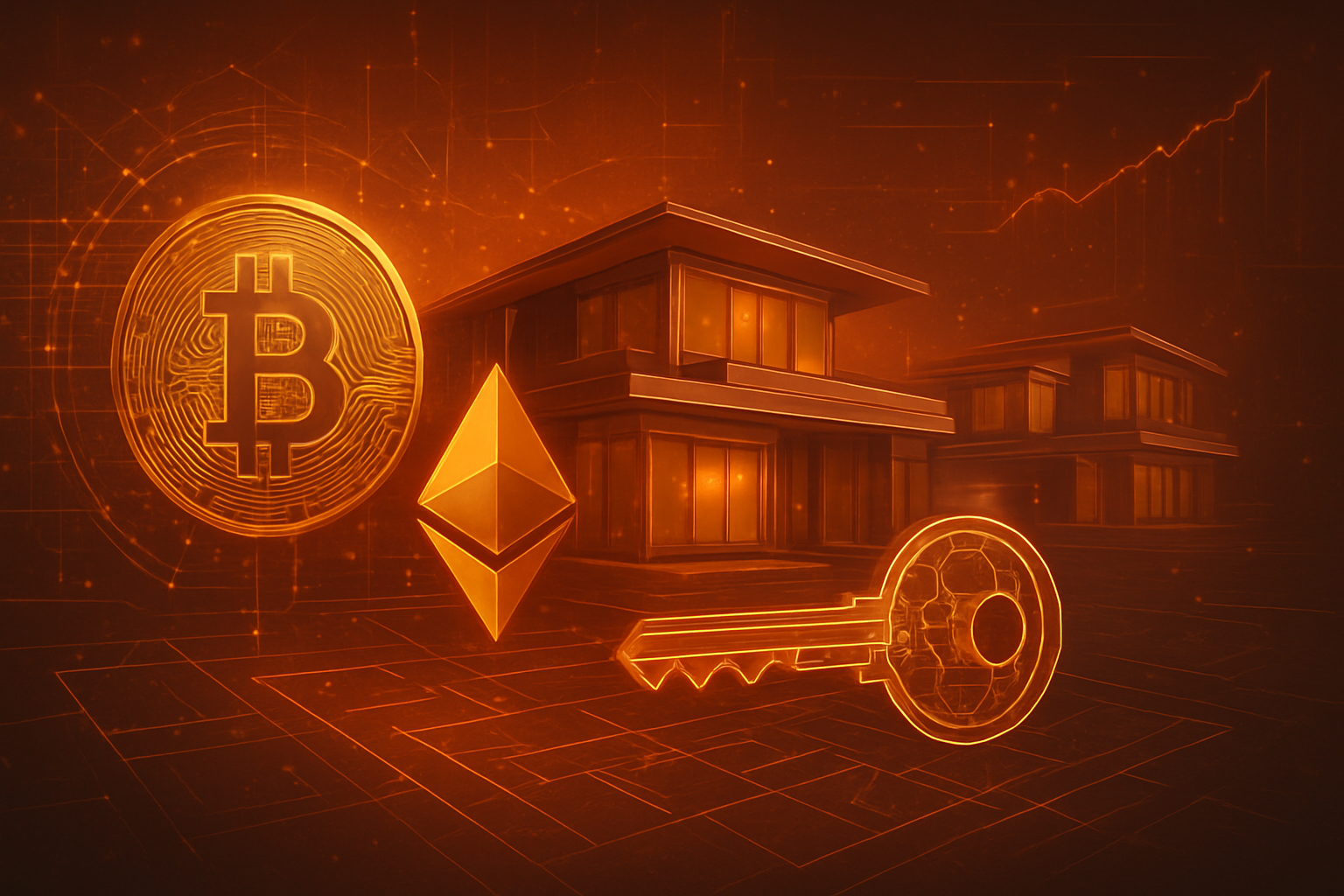
  • Crypto’s Golden Key: Digital Assets Unlock a New Era for Ultraluxury Real Estate, Paving the Way for Future NJ Transactions

    Crypto’s Golden Key: Digital Assets Unlock a New Era for Ultraluxury Real Estate, Paving the Way for Future NJ Transactions

    The ultraluxury real estate market is quietly undergoing a profound transformation, with cryptocurrency emerging as a preferred medium for high-value asset purchases. While specific, publicly reported transactions involving digital assets for opulent properties in exclusive enclaves like Avalon and Stone Harbor, New Jersey, remain largely under wraps due to privacy considerations, the broader landscape points to an undeniable surge in crypto adoption for real estate. This shift is highlighted by major institutional moves and foundational blockchain infrastructure developments, signaling a new era for how the world's most coveted properties are bought and sold.

    In a significant development in July 2025, Christie's International Real Estate, a subsidiary of Christie's (NYSE: CRST), launched a dedicated U.S. crypto division, boasting a portfolio exceeding $1 billion in luxury properties and explicitly accepting Bitcoin (BTC) and Ethereum (ETH) as payment. This move, alongside the pioneering efforts of platforms like Propy, bypasses traditional banking hurdles, offering unparalleled transaction speed, enhanced privacy, and access to a fresh demographic of affluent, tech-savvy buyers. The immediate market reaction among crypto enthusiasts and real estate professionals has been one of cautious optimism, recognizing the immense potential for digital assets to streamline and secure high-stakes transactions. This evolution is not merely a niche trend; it represents a pivotal moment for the crypto ecosystem, validating its utility beyond speculative investment and cementing its role in tangible asset acquisition.

    Market Impact and Price Action

    The increasing integration of cryptocurrency into the ultraluxury real estate market, while not directly tied to specific price movements of individual tokens in the same way a major exchange listing might be, has a more subtle yet profound impact on the broader crypto market. The primary effect is a bolstering of the "utility" narrative for digital assets. When high-net-worth individuals and institutions begin using Bitcoin, Ethereum, and other major cryptocurrencies for multi-million-dollar property acquisitions, it fundamentally alters the perception of these assets from mere speculative instruments to legitimate mediums of exchange and stores of value.

    This growing utility can contribute to a more stable demand floor for leading cryptocurrencies. While no immediate, sharp price spikes are typically observed directly after a luxury real estate transaction, the cumulative effect of such adoption strengthens the long-term investment thesis for major tokens. It signifies a maturation of the market, attracting traditional investors who may have previously been wary of crypto's volatility. The increased acceptance also encourages more "hodling" behavior among wealthy crypto holders, as they now have a tangible, high-value avenue to diversify their digital fortunes without necessarily liquidating into fiat.

    Furthermore, the involvement of established luxury brands like Christie's lends significant credibility to the crypto space, potentially drawing in institutional capital and expanding the overall market capitalization. While specific trading volumes and liquidity changes directly attributable to real estate transactions are hard to isolate, the broader narrative of utility can indirectly lead to increased market participation and a deepening of liquidity pools over time. This trend serves as a crucial comparison point to earlier phases of crypto adoption, where its primary use cases were often limited to speculative trading or smaller e-commerce transactions. The move into ultraluxury real estate positions crypto alongside traditional wealth management tools, hinting at a future where digital assets are as commonplace as fiat in high-value transactions.

    Community and Ecosystem Response

    The crypto community's response to the growing embrace of digital assets in ultraluxury real estate has been overwhelmingly positive, brimming with a sense of validation and excitement. On platforms like Crypto Twitter and Reddit, discussions frequently highlight these transactions as irrefutable proof of cryptocurrency's expanding utility and mainstream acceptance. Influencers and thought leaders within the space, such as Michael Saylor and Anthony Pompliano, often amplify these developments, framing them as critical milestones in the journey toward a decentralized financial future where digital assets underpin significant economic activity. The sentiment leans heavily towards "I told you so," as long-time proponents see their vision of crypto as a viable medium of exchange for high-value assets coming to fruition.

    This trend also has ripple effects across related DeFi protocols, NFT projects, and Web3 applications. The ability to use crypto for real estate purchases creates a tangible bridge between the digital and physical worlds, fostering innovation in areas like tokenized real estate, fractional ownership, and blockchain-based property registries. Projects exploring these avenues gain renewed interest and credibility, as the underlying infrastructure for crypto-to-real-world asset conversion strengthens. For instance, the significant move by Bergen County, New Jersey, in May 2025, to digitize 370,000 property deeds onto the Avalanche blockchain, a partnership with Balcony, is seen as a foundational step. This initiative, aimed at reducing processing times and fraud, provides a robust, tamper-proof digital ledger that could eventually facilitate more seamless crypto-based real estate transactions within the region, even if direct purchases in Avalon or Stone Harbor haven't been widely publicized yet.

    Broader crypto sentiment reflects a growing confidence in the asset class's maturity. The narrative is shifting from "what if" to "when," as the infrastructure for integrating digital assets into traditional finance and commerce continues to evolve. While some skepticism remains regarding regulatory clarity and market volatility, the tangible use case of luxury real estate purchases provides a powerful counter-narrative, solidifying crypto's position as a serious contender in the global financial landscape.

    What's Next for Crypto

    The increasing adoption of cryptocurrency in the ultraluxury real estate market heralds significant short and long-term implications for the broader crypto market. In the short term, this trend reinforces the narrative of crypto as a legitimate asset class with practical utility, potentially attracting more institutional and high-net-worth investors who seek diversification and privacy. It could lead to a gradual increase in demand for major cryptocurrencies like Bitcoin and Ethereum, as they become more widely accepted for high-value transactions. For projects focused on real estate tokenization or blockchain-based property management, this trend serves as a powerful validation, potentially spurring further innovation and investment in these niches.

    Looking ahead, the long-term implications are even more transformative. Experts predict that within the next five years, over 30% of U.S. residential real estate transactions could involve cryptocurrency. This signifies a paradigm shift, moving beyond mere payment acceptance to potentially integrating blockchain technology for title transfers, escrow services, and fractional ownership models. The digitization of property deeds, as seen in Bergen County, New Jersey, lays the groundwork for a future where real estate transactions are faster, more secure, and significantly less bureaucratic. This could also pave the way for new financial products, such as Bitcoin-backed loans, allowing property owners to leverage their digital assets without selling them.

    Potential catalysts to watch include further regulatory clarity around crypto assets in real estate, the development of more sophisticated and user-friendly platforms facilitating these transactions, and the continued entry of traditional real estate powerhouses into the crypto space. Strategic considerations for crypto projects and investors involve focusing on interoperability, security, and scalability to meet the demands of high-value transactions. For investors, monitoring the growth of blockchain-based real estate platforms and the broader acceptance of crypto as collateral for loans will be crucial. Possible scenarios range from a gradual, steady integration to a rapid acceleration if key technological and regulatory hurdles are overcome, with the latter scenario potentially leading to a significant revaluation of digital assets based on their real-world utility.

    Bottom Line

    The burgeoning trend of cryptocurrency adoption in the ultraluxury real estate market offers several key takeaways for crypto investors and enthusiasts. Firstly, it underscores the maturing utility of digital assets, moving beyond speculative trading to tangible, high-value purchases. This validation is critical for fostering broader acceptance and stabilizing market perceptions. For those holding significant crypto portfolios, the ability to diversify into physical assets like real estate provides a powerful new avenue for wealth management, offering both privacy and potential appreciation. The increasing comfort of traditional luxury brands and regional governments with blockchain technology, as evidenced by Christie's International Real Estate and Bergen County, signals a long-term commitment to integrating digital assets into established financial frameworks.

    The long-term significance of this trend cannot be overstated. It represents a foundational shift in how real estate transactions are conducted, promising greater efficiency, security, and accessibility. While direct, publicly disclosed crypto purchases in specific high-end markets like Avalon and Stone Harbor, NJ, might still be rare, the underlying infrastructure, such as Bergen County's blockchain initiative for property deeds, is actively being built to support such transactions in the future. This prepares the ground for a seamless integration of digital assets into even the most exclusive real estate markets.

    Ultimately, this trend signifies a pivotal moment for crypto adoption. It demonstrates that digital assets are not just a fleeting technological phenomenon but are becoming an integral part of the global financial and asset management landscape. Important dates and metrics to monitor include further announcements from major real estate firms, regulatory developments regarding crypto in property law, and the expansion of blockchain-based property registries. The continued growth of this sector will be a critical barometer for the broader integration of cryptocurrencies into everyday commerce and wealth preservation.


    This article is for informational purposes only and does not constitute financial or investment advice. Cryptocurrency investments carry significant risk.

  • BlockDAG’s Ambitious Ascent: Antony Turner Unveils a New Era for Layer-1 Blockchain with $430M Presale Triumph

    BlockDAG’s Ambitious Ascent: Antony Turner Unveils a New Era for Layer-1 Blockchain with $430M Presale Triumph

    October 28, 2025 – The cryptocurrency world is abuzz with the audacious vision of BlockDAG, a Layer-1 blockchain project spearheaded by its enigmatic CEO, Antony Turner. Positioned as crypto's "most ambitious Layer-1," BlockDAG has captured significant attention, evidenced by its staggering $430 million presale success and an innovative hybrid architecture designed to redefine scalability, security, and decentralization. The project's recent exclusive Ask Me Anything (AMA) session on Binance on October 24, 2025, further amplified its presence, signaling a pivotal moment for a network poised to challenge established giants like Bitcoin and Kaspa.

    This ambitious undertaking matters deeply for the crypto ecosystem as it addresses the long-standing "Blockchain Trilemma"—the challenge of simultaneously achieving speed, security, and decentralization. If BlockDAG delivers on its promises, its impact could ripple across decentralized finance (DeFi), Web3 gaming, and global payment solutions, potentially paving the way for broader mainstream adoption. With its mainnet launch, dubbed "Genesis Day," tentatively slated for November 26, 2025, the industry watches closely to see if BlockDAG can truly usher in a new paradigm for blockchain technology.

    Market Impact and Price Action

    While BlockDAG is still in its presale phase and its native BDAG coin has not yet hit public exchanges for traditional price action, the project's presale performance offers a compelling indicator of significant investor confidence and speculative market interest. The presale, which commenced in late December 2023 at a modest $0.0001 per BDAG coin, has seen an astronomical rise, currently sitting in Batch 31 at $0.0015. This represents a remarkable 1400% increase from its initial offering, showcasing robust demand even before its official launch.

    The substantial capital raised—over $430 million from more than 312,000 holders who have acquired over 27 billion BDAG coins—underscores a strong belief in BlockDAG's underlying technology and long-term potential. This level of presale success is comparable to some of the most anticipated Layer-1 projects in crypto history, often preceding significant market capitalization upon exchange listings. Analysts are projecting an initial listing price of $0.05, which would translate to a monumental 3200% return for early presale participants.

    The strategic partnership with the BWT Alpine Formula 1® Team has also provided BlockDAG with unparalleled mainstream visibility, attracting a broader investor base beyond the typical crypto early adopters. This exposure, combined with a transparent leadership team and audits by reputable firms like CertiK and Halborn, has fostered a sense of legitimacy and trust. While direct comparisons to fully liquid tokens are premature, the presale's trajectory suggests that BlockDAG could command a significant market cap post-launch, potentially reaching $1.35-$2.7 billion by 2026, according to expert projections. The current "price" of BDAG within the presale acts as a strong resistance level for new entrants, while early batches represent significant support for existing holders, building a foundation for its eventual market debut.

    Community and Ecosystem Response

    The BlockDAG project has ignited a vibrant and largely optimistic response across the crypto community, fueled by its technological ambitions, presale momentum, and proactive engagement. Social media platforms, influencer circles, and developer forums reflect a burgeoning excitement, albeit with a healthy dose of skepticism from certain corners.

    On platforms like X (formerly Twitter), Reddit, and Telegram, BlockDAG is frequently hailed as a "top crypto buy" and a contender for the "fastest-growing crypto" of 2025. This positive sentiment is significantly bolstered by the project team's commitment to transparency and consistent updates, which have helped build trust. The community is particularly animated by unconfirmed "leaked" documents hinting at potential listings on major exchanges such as Coinbase (NASDAQ: COIN) and Kraken, which, if true, would represent a massive leap in accessibility and legitimacy. User testimonials regarding the functionality of BlockDAG's hardware, like the X10 plug-and-play miners, have also contributed to solidifying confidence, shifting the narrative from "is this another presale?" to "when will it go live?"

    Crypto influencers and thought leaders have played a crucial role in amplifying BlockDAG's message. Prominent figures such as Goalorious, Matthew Perry, Crypto Rover, and That Martini Guy have lauded BlockDAG's scalability, efficiency, and robust security, often highlighting its innovative Directed Acyclic Graph (DAG) technology. Goalorious, with a substantial following, notably dubbed BlockDAG "the investor's dream," emphasizing its parallel transaction processing capabilities and energy efficiency. The sharing of alleged internal documents concerning major exchange listings by influencers, who are not typically associated with promoting speculative tokens, has added an intriguing layer of credibility to the buzz.

    BlockDAG's technological foundation is poised to significantly impact the broader Web3 ecosystem. Its Ethereum Virtual Machine (EVM) compatibility is a strategic move, designed to facilitate the seamless migration of existing Ethereum-based projects and empower developers to build new decentralized applications (dApps) with reduced costs and enhanced execution speed. The project claims over 4,500 developers are already engaged, building more than 300 dApps, including NFT explorers and lottery applications, on the network. The impressive scalability targets (15,000 TPS, with 1,400 TPS already demonstrated on the "Awakening Testnet") combined with robust security are seen as critical for high-demand Web3 applications, DeFi protocols, gaming, and global payment solutions. Furthermore, the X1 mobile miner app, which reportedly has attracted 3.5 million users, democratizes crypto mining and creates an "instant ecosystem" with organic demand for the BDAG coin, ensuring a ready user base for future dApps and services.

    Despite the widespread optimism, pockets of skepticism persist, particularly within Reddit's "CryptoScams" threads. Concerns have been raised regarding BlockDAG's extensive marketing expenditure relative to its research and development, and some users have pointed out similarities between its whitepaper and that of Kaspa. Questions have also surfaced about the X1 mobile miner app being downloaded directly from the BlockDAG site rather than official app stores, and the permissions it requests. A notable incident involved a Reddit user reporting a scam link after attempting to purchase BDAG, though another user countered with a positive experience using Trust Wallet. Nevertheless, the transparency of the leadership team, including CEO Antony Turner, and independent security audits by CertiK and Halborn, are frequently cited as strong counterarguments to these concerns, bolstering the project's overall credibility.

    What's Next for Crypto

    BlockDAG's emergence represents a significant inflection point for the cryptocurrency market, carrying both short-term ripples and profound long-term implications. As the project gears up for its anticipated "Genesis Day" mainnet launch on November 26, 2025, the industry is bracing for potential shifts in the Layer-1 landscape and new benchmarks for decentralized applications.

    In the short term, the market is likely to witness initial price volatility for the BDAG coin post-launch, a common phenomenon as early investors may "sell the news" after the presale concludes. Despite BlockDAG's stated strategies for deep liquidity across numerous exchange listings, temporary corrections are probable. More broadly, BlockDAG's entry will intensify scrutiny on existing Layer-1 projects, forcing them to accelerate their own scaling solutions to compete with BlockDAG's demonstrated 1,400 transactions per second (TPS) on its "Awakening Testnet" and its ambitious 15,000 TPS target. Its Ethereum Virtual Machine (EVM) compatibility is also set to catalyze a wave of new dApp launches and migrations from Ethereum, as developers seek faster, cheaper, and more secure environments, shifting the market's focus towards verifiable utility rather than mere speculative hype.

    Looking further ahead, BlockDAG has the potential to fundamentally reshape the crypto landscape. By enabling parallel processing of transactions through its hybrid PoW-DAG architecture, it could overcome the throughput limitations of linear blockchains, making decentralized applications truly viable for mass adoption in areas like DeFi, gaming, and global payments. This technology also aims to redefine decentralization and security, offering enhanced resistance to 51% attacks. Should BlockDAG successfully deliver on its promises of high throughput, robust security, and a developer-friendly ecosystem, it could become a major force in driving mainstream crypto adoption, attracting enterprises, and facilitating real-world asset (RWA) tokenization. This could lead to a more diverse Layer-1 ecosystem, with projects specializing in various use cases, and set new benchmarks for funding models and de-risking strategies in future crypto launches.

    Several catalysts could accelerate BlockDAG's trajectory. A successful and stable mainnet launch on "Genesis Day" will be paramount. Confirmation of listings on Tier-1 exchanges like Coinbase (NASDAQ: COIN) and Kraken would significantly boost liquidity and institutional validation. Continued growth of its developer community and the successful deployment of its targeted 300+ dApps will drive utility and user adoption. Strategic partnerships, such as the one with the BWT Alpine Formula 1® Team, are crucial for mainstream recognition. Investors should also watch for further technological breakthroughs within the BlockDAG protocol and any favorable regulatory clarity for decentralized technologies. Conversely, technical issues post-launch, failure to secure high-profile exchange listings, or sustained skepticism could lead to a "worst-case" scenario of price crashes and damaged credibility. Strategic investors will prioritize verifiable ecosystem growth and robust technical foundations over mere presale figures, while projects building on BlockDAG must leverage its scalability and EVM compatibility, focusing on community building, transparency, and security.

    Bottom Line

    BlockDAG presents a compelling and potentially transformative proposition for crypto investors and enthusiasts. Its innovative hybrid Proof-of-Work (PoW) and Directed Acyclic Graph (DAG) architecture stands as a key takeaway, promising to deliver unparalleled scalability (targeting 15,000 TPS, with 1,400 TPS already proven on its testnet) while maintaining robust security. This approach directly addresses the "blockchain trilemma," positioning BlockDAG as a serious contender to established Layer-1 giants. The project's EVM compatibility is another critical feature, acting as a magnet for developers and facilitating the seamless migration of existing Ethereum-based smart contracts and dApps, fostering a rich and accessible ecosystem.

    The project's impressive $430 million presale success, having sold over 27 billion BDAG coins to more than 312,000 holders, coupled with the reported 3.5 million active users on its X1 mobile mining app, signifies strong investor confidence and a rapidly growing community even before its mainnet launch. This extensive pre-launch user base provides a strategic advantage, laying the groundwork for immediate utility and organic demand for the BDAG coin. While BlockDAG represents a high-risk, high-reward investment—with analysts projecting a staggering 3200% ROI for early presale investors upon a potential $0.05 listing price—its transparency, verifiable team, and audits by CertiK and Halborn lend significant credibility. The strategic multi-year partnership with the BWT Alpine Formula 1® Team further amplifies its mainstream visibility and global brand recognition.

    BlockDAG's long-term significance lies in its potential to fundamentally reshape the crypto landscape. If it successfully executes its ambitious vision, it could become a formidable rival to established Layer-1 solutions like Solana and Ethereum, driving a shift in market focus towards more technologically advanced and scalable alternatives. Its ability to provide a foundational layer for Web3 development, particularly in high-volume sectors like DeFi, gaming, and global payments, means it could play a crucial role in integrating cryptocurrency more seamlessly into everyday life and business operations. The accessibility offered by its mobile mining app also significantly lowers the barrier to entry, enhancing crypto adoption for a global audience.

    For those tracking BlockDAG, several important dates, events, and metrics warrant close monitoring. The highly anticipated Mainnet Launch, or "Genesis Day," is scheduled for November 26, 2025, though investors should be mindful of potential historical delays that could shift this to late December 2025 or early January 2026. Post-launch, critical metrics to observe include network stability, the actual sustained transaction throughput against its 15,000 TPS target, and the continued growth of active miners and dApps deployed on the mainnet. Tracking the price action of BDAG across its confirmed exchange listings (reportedly 20+) will be crucial, with particular attention paid to any official announcements regarding potential Tier-1 listings on exchanges like Coinbase (NASDAQ: COIN) or Kraken. Finally, assessing whether BlockDAG achieves analyst projections for market capitalization ($1.35-$2.7 billion by 2026) and price targets ($1-$5 by 2025-2026, and potentially up to $20 by 2027) will provide key insights into its trajectory and ultimate impact on the broader crypto ecosystem.


    This article is for informational purposes only and does not constitute financial or investment advice. Cryptocurrency investments carry significant risk.
  • SharpLink Gaming Unveils Landmark $200M ETH Deployment on Linea, Ushering in a New Era for Institutional DeFi and AI-Powered Yields

    SharpLink Gaming Unveils Landmark $200M ETH Deployment on Linea, Ushering in a New Era for Institutional DeFi and AI-Powered Yields

    October 28, 2025 – In a move poised to reshape the landscape of institutional decentralized finance (DeFi) and accelerate the convergence of blockchain with artificial intelligence, SharpLink Gaming (NASDAQ: SBET) today announced its strategic plan to deploy $200 million of its Ether (ETH) treasury on ConsenSys’ Linea, a cutting-edge zkEVM Layer 2 network. This significant multi-year commitment, commencing immediately, positions SharpLink as a pioneer among public companies in actively leveraging its digital assets for sophisticated on-chain yield generation and treasury management.

    The announcement sends a clear signal to both traditional finance and the crypto ecosystem: institutional capital is increasingly seeking productive avenues within DeFi, and the integration of AI-powered yield strategies is no longer a distant vision but a present reality. By partnering with ether.fi and EigenCloud, and utilizing Anchorage Digital Bank for secure custody, SharpLink is not merely holding ETH; it's actively deploying it to secure emerging AI workloads and generate multi-layered returns, setting a new benchmark for corporate engagement in the Web3 economy. This development is critical for validating the maturity of institutional-grade DeFi infrastructure and highlighting the transformative potential of restaking protocols in unlocking new forms of value.

    Market Impact and Price Action

    While the full market reaction to SharpLink's $200 million ETH deployment will unfold over the coming days and weeks, the announcement on this date, October 28, 2025, is expected to generate significant positive sentiment within the Ethereum ecosystem. As one of the largest corporate ETH holders, SharpLink's decision to actively deploy its treasury on Linea, rather than simply holding it, underscores a growing institutional confidence in Ethereum's long-term value proposition and its evolving DeFi capabilities. This move could serve as a powerful catalyst, encouraging other public entities and corporate treasuries to explore similar strategies, thereby increasing demand and potentially influencing ETH's price action positively in the medium to long term.

    The deployment's focus on unlocking enhanced DeFi yields and securing AI workloads through EigenCloud's Autonomous Verifiable Services (AVSs) also highlights the increasing utility and value accrual mechanisms within the Ethereum network. This could translate into increased trading volumes for ETH as investors recognize the expanded opportunities for yield generation. Furthermore, the partnership with Linea, a zkEVM Layer 2, emphasizes the critical role of scaling solutions in facilitating institutional adoption. While immediate, drastic price movements for ETH may not be solely attributable to this single announcement, the precedent set by SharpLink could contribute to a bullish narrative for Ethereum, potentially pushing it towards key resistance levels as more institutional capital flows into the ecosystem. The long-term technical outlook for ETH could be strengthened by such fundamental shifts in institutional engagement, establishing new support levels as the network's utility expands.

    Community and Ecosystem Response

    The crypto community is expected to react with considerable enthusiasm to SharpLink Gaming’s bold move. On platforms like Crypto Twitter and Reddit, discussions will likely center on the pioneering nature of this institutional deployment and its implications for the broader adoption of DeFi. Influencers and thought leaders are anticipated to laud SharpLink for its forward-thinking treasury management strategy, potentially framing it as a blueprint for other public companies looking to optimize their digital asset holdings. The utilization of ConsenSys’ Linea will also draw significant attention, validating its institutional-grade capabilities and positioning it as a key player in the institutional DeFi landscape.

    Furthermore, the integration with ether.fi and EigenCloud will spark considerable interest, particularly regarding the innovative AI-powered yield mechanisms. This move is likely to generate positive buzz around the restaking narrative, showcasing how Ethereum's security can be extended to secure new services, including those powering artificial intelligence. For related DeFi protocols and Web3 applications, SharpLink's deployment signifies a major vote of confidence, potentially attracting more institutional liquidity and development. The broader sentiment will likely be one of optimism, reinforcing the belief that the crypto ecosystem is maturing rapidly and becoming increasingly attractive and accessible for large-scale institutional participation, bridging the gap between traditional finance and Web3 innovation.

    What's Next for Crypto

    SharpLink Gaming's $200 million ETH deployment on Linea heralds a significant inflection point for the crypto market, with both short-term and long-term implications. In the short term, this move is expected to ignite further institutional interest in DeFi, prompting other corporations to evaluate similar strategies for their digital asset treasuries. This could lead to a wave of announcements from other companies exploring yield-generating opportunities on Layer 2 networks, potentially increasing overall liquidity and capital efficiency within the Ethereum ecosystem. The focus on AI-powered yields, particularly through EigenCloud AVSs, positions the convergence of AI and blockchain as a key narrative to watch, with potential for new protocols and services emerging at this intersection.

    Looking ahead, the long-term implications are profound. SharpLink's pioneering step could accelerate the development of institutional-grade DeFi infrastructure and regulatory clarity. The collaboration with ConsenSys to co-develop "institutional, composable capital markets primitives" suggests a future where on-chain capital raises, programmable liquidity tools, and tokenized equity strategies become mainstream. This could fundamentally transform how traditional financial instruments are managed and traded, bringing unprecedented transparency and efficiency. Investors should closely monitor the performance of SharpLink's deployment and the subsequent reactions from other public companies. Potential catalysts include further partnerships between traditional institutions and DeFi protocols, advancements in ZK-rollup technology, and the continued integration of AI with blockchain for novel applications. The most likely scenario involves a gradual but steady increase in institutional DeFi adoption, driven by the compelling yields and robust infrastructure being demonstrated by initiatives like SharpLink's.

    Bottom Line

    SharpLink Gaming's announcement today, October 28, 2025, regarding its $200 million ETH deployment on ConsenSys’ Linea is a landmark event for crypto investors and enthusiasts. It underscores a pivotal shift in how public companies view and manage their digital asset treasuries, moving beyond passive holding to active, yield-generating participation in the DeFi ecosystem. Key takeaways include the growing validation of institutional-grade DeFi infrastructure, the emerging significance of AI-powered yield strategies, and the increasing role of Layer 2 solutions like Linea in enabling scalable institutional engagement.

    The long-term significance of this move cannot be overstated. It sets a new precedent for corporate treasury management in the digital age, demonstrating a sophisticated approach that balances innovation with institutional rigor and compliance, facilitated by partners like Anchorage Digital Bank. This initiative is a powerful indicator of crypto's increasing adoption by mainstream entities, moving closer to a future where blockchain technology underpins a wide array of financial services and beyond. Investors should monitor the progress of SharpLink's deployment, the performance of ETH and related DeFi protocols, and any subsequent announcements from other institutional players. Important metrics to watch include total value locked (TVL) on Linea and other institutional-focused Layer 2s, the growth of restaking protocols, and the development of new AI-blockchain integrations. This bold step by SharpLink Gaming is a testament to the ongoing evolution of the crypto landscape, marking a crucial stride towards a more integrated, efficient, and institutionally robust Web3 future.


    This article is for informational purposes only and does not constitute financial or investment advice. Cryptocurrency investments carry significant risk.

  • AI Tokens Explode as Trump Lauds Nvidia CEO, Signaling Pro-Tech Future

    AI Tokens Explode as Trump Lauds Nvidia CEO, Signaling Pro-Tech Future

    October 28, 2025 – The cryptocurrency market is witnessing an electrifying surge in AI-related tokens, fueled by President Donald Trump's repeated and enthusiastic endorsements of Nvidia (NASDAQ: NVDA) CEO Jensen Huang. Most recently, on this very day, Trump lauded Huang as "one of the most brilliant men" during an address to business leaders in Tokyo, a sentiment echoed in earlier remarks on July 24, 2025, where he praised Huang's "incredible job" with Nvidia. This latest commentary has ignited a fresh wave of buying pressure, amplifying a trend of AI token rallies that has been building throughout 2025, largely in anticipation of and reaction to the Trump administration's pro-AI and pro-tech policy initiatives.

    The immediate market reaction has been nothing short of violent, with numerous AI-centric cryptocurrencies experiencing significant double-digit and, in some cases, triple-digit percentage gains within hours of the President's statements. This phenomenon underscores the profound sensitivity of the nascent AI-crypto sector to high-level political endorsements and policy signals. For the broader crypto ecosystem, this matters immensely as it signals a potentially highly favorable regulatory and investment environment for AI and blockchain technologies under the current administration, boosting investor confidence and accelerating the integration of advanced AI capabilities within the burgeoning Web3 landscape.

    Market Impact and Price Action

    The impact of President Trump's pro-AI rhetoric and specific praise for Jensen Huang has been visibly dramatic across the AI token landscape. Following instances of Trump's positive commentary, particularly in July and October 2025, and earlier policy anticipations in January and February, tokens linked to artificial intelligence have showcased remarkable price appreciation. For example, in early 2025, amidst anticipation of Trump's proposed policies, including a staggering $500 billion in private sector AI infrastructure investments, cryptocurrencies like AI16Z and ARC reportedly soared over 30%. This momentum was sustained, with AI tokens seeing over $7 million in inflows in February after further details on the proposed investment.

    The surge has not been limited to a few outliers. Post-Trump's election as the 47th U.S. President, an astounding 97% of the top 100 AI tokens reportedly gained in a single day, reflecting a broad-based positive sentiment. More recently, coinciding with positive US-China trade headlines that also boosted major cryptocurrencies, the "AI agent sector" has shown renewed vigor. Tokens like Virtuals Protocol (VIRTUAL) have been particularly explosive, surging by nearly 130% in less than two weeks leading up to the end of October 2025. This aggressive price action is accompanied by significant increases in trading volumes, indicating robust liquidity and strong conviction from market participants.

    Technically, many AI tokens have shattered previous resistance levels, establishing new all-time highs or retesting significant historical peaks. The influx of capital has pushed market caps considerably higher, with several projects moving into higher tiers of crypto rankings. While specific technical indicators vary by token, the overall trend suggests strong bullish momentum, with key support levels forming at previous resistance points as traders flock to capitalize on the AI narrative. This period of rapid growth draws parallels to past crypto bull runs driven by specific narratives, such as DeFi Summer or the NFT boom, where a confluence of technological innovation and market hype led to exponential gains.

    The comparison to similar past events highlights the power of narrative and high-profile endorsements in the crypto market. Just as Elon Musk's tweets could historically move Dogecoin, or major institutional adoption news could propel Bitcoin, President Trump's strong backing of AI, epitomized by his praise for Huang, acts as a powerful catalyst. The difference here is the underlying fundamental support: AI is a transformative technology with clear real-world applications, which lends more credibility and potential longevity to the current rally compared to purely speculative pumps. This blend of political tailwinds, technological promise, and speculative interest creates a potent environment for continued growth in the AI token sector.

    Community and Ecosystem Response

    The crypto community has reacted with palpable excitement and a flurry of activity across social media platforms. On Crypto Twitter, hashtags related to #AITokens, #CryptoAI, and #TrumpNvidia are trending, with users sharing price charts, speculative predictions, and memes celebrating the surge. Sentiment is overwhelmingly positive, with many seeing Trump's pro-AI stance as a definitive bullish signal for the entire crypto space, particularly those projects integrating artificial intelligence. Discussions frequently revolve around which AI tokens will be the next to explode, fostering a sense of collective enthusiasm and FOMO (Fear Of Missing Out) among retail investors.

    Crypto influencers and thought leaders have been quick to weigh in, largely echoing the optimistic sentiment. Many prominent analysts are highlighting the long-term implications of governmental support for AI, suggesting that this could be a pivotal moment for the intersection of AI and blockchain. Some are emphasizing the potential for increased institutional investment and the legitimization of AI-centric crypto projects. While a few voices caution against excessive speculation and the inherent volatility of the crypto market, the prevailing narrative from thought leaders is one of strategic opportunity and a significant tailwind for innovation.

    The effects extend beyond mere token price action, impacting related DeFi protocols, NFT projects, and Web3 applications. Projects that incorporate AI into their decentralized applications, such as AI-powered oracles, algorithmic trading platforms, or generative art NFTs, are experiencing renewed interest and increased user engagement. Developers are actively discussing new ways to leverage cutting-edge AI models within their Web3 frameworks, anticipating a future where AI and blockchain are seamlessly integrated. Broader crypto Reddit communities, from r/CryptoCurrency to specific project subreddits, are buzzing with discussions about the implications of AI advancements and the potential for a new wave of innovation within the decentralized ecosystem.

    This community-wide response highlights a growing belief that AI is not just a passing trend but a fundamental technological shift that will deeply integrate with and enhance the capabilities of blockchain and Web3. The political endorsement from the highest office in the U.S. serves as a powerful validation, moving AI-crypto from a niche interest to a mainstream investment narrative. The collective sentiment points towards a future where AI-driven decentralized applications become a significant component of the digital economy, attracting both capital and talent.

    What's Next for Crypto

    The short-term implications for the crypto market suggest continued bullish momentum for AI tokens, especially as long as the narrative of governmental support for AI and technology remains strong. Investors will be closely watching for further policy announcements or public statements from the Trump administration regarding AI infrastructure, chip manufacturing, or digital asset regulation. The current environment could attract more traditional tech investors into the crypto space, particularly those familiar with the growth potential of AI. However, the inherent volatility of cryptocurrencies means that pullbacks and corrections are always a possibility, and profit-taking could occur after significant surges.

    In the long term, the implications are profound. President Trump's administration is widely perceived as pro-crypto, with a focus on establishing clearer regulatory frameworks for digital assets, exemplified by initiatives like the GENIUS Act and CLARITY Act. This regulatory clarity, combined with substantial investment in AI infrastructure, could accelerate the mainstream adoption of blockchain technologies and foster an environment conducive to innovation. The integration of AI with blockchain is expected to unlock new use cases for decentralized applications, enhance security, and improve efficiency across various sectors, from finance to supply chain.

    Potential catalysts to watch include further details on the proposed $500 billion private sector AI infrastructure investments, any new executive orders or legislative actions impacting AI and crypto, and the outcomes of meetings between top tech executives like Jensen Huang and government officials. Additionally, advancements in AI technology itself, such as new breakthroughs in large language models or decentralized AI networks, could provide further impetus for AI token growth. Strategic considerations for projects and investors involve focusing on fundamental utility, strong development teams, and clear roadmaps that leverage AI in a meaningful way, rather than purely speculative ventures.

    Possible scenarios range from a sustained AI-driven bull run, where these tokens continue to outperform the broader market, to periods of consolidation as the market digests the rapid gains. A highly likely scenario involves a continued push for domestic AI infrastructure and chip production, which provides a strong macro tailwind for the underlying technology and, by extension, AI-related crypto projects. The administration's focus on AI as an economic engine, akin to a new manufacturing industry, suggests a long-term commitment that could provide enduring support for this sector of the crypto market.

    Bottom Line

    For crypto investors and enthusiasts, the key takeaway from the recent surge in AI tokens following President Trump's comments is the undeniable power of political endorsement and policy alignment. This event underscores that governmental support, particularly from a perceived pro-crypto administration, can act as a potent catalyst, driving significant capital inflows and heightened interest into specific sectors of the cryptocurrency market. The emphasis on AI infrastructure and innovation by the Trump administration provides a robust fundamental narrative for AI tokens, distinguishing this rally from purely speculative events.

    The long-term significance of this development cannot be overstated. A supportive regulatory and political environment is crucial for the sustained growth and mainstream adoption of cryptocurrencies. With initiatives aimed at regulatory clarity and substantial investment in AI, the stage is set for an accelerated integration of AI and blockchain technologies. This convergence is expected to unlock new frontiers for decentralized applications, enhance the utility of digital assets, and potentially attract a new wave of institutional and retail investors.

    Ultimately, this means a more favorable landscape for crypto adoption, particularly for projects at the intersection of AI and Web3. The current climate suggests that the market is not just reacting to hype but also to the tangible prospect of a future where AI and blockchain are integral to the global digital economy. Important dates, events, or metrics to monitor include upcoming policy announcements, progress on AI infrastructure investments, and the continued performance of leading AI tokens, as these will provide crucial insights into the enduring impact of this trend.


    This article is for informational purposes only and does not constitute financial or investment advice. Cryptocurrency investments carry significant risk.