Tag: XRPL

  • XRP’s Double-Edged Sword: Speed, Cost, and Centralization for Decentralized Organizations

    XRP’s Double-Edged Sword: Speed, Cost, and Centralization for Decentralized Organizations

    XRP, the digital asset designed for fast, low-cost global payments, presents a compelling yet complex proposition for decentralized organizations (DOs). As of late 2025, the cryptocurrency landscape continues its rapid evolution, with DOs increasingly seeking efficient and scalable solutions for their operational needs. XRP's unique attributes, particularly its high transaction speed, minimal fees, and robust scalability, position it as a strong contender for DOs focused on value transfer and high-frequency operations. However, persistent concerns regarding its perceived centralization and historical ties to Ripple Labs (XRP) introduce a critical dichotomy that DOs must carefully navigate. This article delves into the benefits and drawbacks of integrating XRP into decentralized frameworks, highlighting how its distinct characteristics differentiate it in a crowded market and what this means for the future of decentralized governance and finance.

    Market Impact and Price Action

    The market performance of XRP has, for much of its existence, been closely tied to its utility as a bridge currency for cross-border payments and its ongoing regulatory narrative. As of late 2025, XRP maintains a significant position among the top cryptocurrencies by market capitalization, often fluctuating within the top ten. Its trading volume remains robust, reflecting sustained interest from both retail and institutional investors. The liquidity of XRP is generally high across major exchanges, facilitating efficient large-scale transactions, a crucial factor for DOs managing substantial treasuries or engaging in frequent operational transfers.

    While XRP's price movements are subject to broader market trends and sentiment, its unique value proposition for efficiency and cost-effectiveness provides a foundational demand that differentiates it from purely speculative assets. For DOs, the appeal of XRP lies in its practical application for treasury management, payment processing, and potentially even micro-governance actions due to its near-instant finality and negligible transaction fees (typically a fraction of a cent, with a proposed increase to 0.0002 XRP still making it exceptionally cheap). This makes it highly attractive for DOs requiring frequent, low-value transactions or those operating globally with diverse payment needs.

    Compared to other Layer 1 solutions vying for DO adoption, such as Ethereum (ETH) or Solana (SOL), XRP's market niche for high-speed, low-cost value transfer stands out. While Ethereum boasts a vast ecosystem of dApps and robust smart contract capabilities, its transaction fees (gas fees) can still be prohibitive for certain DO operations, despite the advancements of Layer 2 solutions. Solana offers speed but has faced its own challenges with network stability. XRP's consistent performance in terms of transaction speed (3-5 seconds) and cost provides a predictable operational environment that can be highly valued by DOs prioritizing financial efficiency over complex smart contract functionality, although the XRPL's evolving "Hooks" and EVM-compatible sidechain are bridging this gap.

    The market's perception of XRP's stability and utility for enterprise-grade solutions has been a slow burn, often overshadowed by regulatory headlines. However, as the utility for DOs grows, and with the increasing demand for efficient, high-throughput blockchains for diverse applications, XRP's core attributes are increasingly recognized as valuable. Its ability to handle up to 1,500 transactions per second (TPS) natively, with potential for tens of thousands via payment channels, ensures that DOs can scale their operations without encountering network congestion or escalating costs, a critical technical analysis point for long-term viability.

    Community and Ecosystem Response

    The XRP community, often referred to as the "XRP Army," remains one of the most passionate and vocal in the crypto space. Social media sentiment, particularly on platforms like X (formerly Twitter) and Reddit, frequently highlights XRP's speed, low fees, and its potential as a global settlement asset. Discussions among community members and crypto influencers often revolve around the asset's utility for cross-border payments and the XRPL's expanding ecosystem. The ongoing development of "Hooks" for smart contract functionality and the introduction of an EVM-compatible sidechain have garnered significant positive attention, signaling a broader utility beyond its traditional payment focus.

    Reactions from crypto thought leaders are more nuanced. While many acknowledge XRP's technical prowess in terms of transaction efficiency and scalability, concerns regarding its perceived centralization, particularly due to Ripple Labs' (XRP) initial token distribution and historical influence over the Unique Node List (UNL) of validators, persist. However, the community actively counters these narratives by pointing to the growing decentralization of the validator network and Ripple's efforts to divest its holdings and support independent development. The emergence of initiatives like the XAO DAO, which aims to leverage XRP for decentralized governance and funding on the XRPL, is viewed as a significant step towards greater community-driven development and decision-making, directly addressing decentralization concerns.

    The effects on related DeFi protocols, NFT projects, or Web3 applications built on the XRPL are still in a nascent but growing phase compared to more mature ecosystems like Ethereum. However, the XRPL's inherent speed and low cost make it an attractive foundation for specific types of decentralized applications, especially those requiring high transaction throughput and minimal user fees, such as decentralized exchanges (DEXs) or payment-centric dApps. Broader crypto Twitter and Reddit sentiment, while sometimes divided, shows an increasing recognition of XRP's technical capabilities and its potential to carve out a unique niche in the Web3 landscape, particularly as the demand for efficient value transfer within decentralized frameworks grows.

    What's Next for Crypto

    The short-term implications for the crypto market, particularly concerning XRP, hinge significantly on its continued adoption by decentralized organizations and further regulatory clarity. As DOs seek more efficient and cost-effective operational solutions, XRP's core attributes position it favorably. However, the market will closely watch the progress of XRPL's smart contract capabilities via "Hooks" and the EVM sidechain. Successful implementation and developer adoption of these features could significantly broaden XRP's appeal beyond payments, attracting more complex DeFi and Web3 projects.

    Long-term, XRP's trajectory within the crypto ecosystem will likely be defined by its ability to balance its historical enterprise focus with the growing demands for true decentralization and community governance. The evolution of the XAO DAO and similar initiatives will be crucial in demonstrating a robust, community-driven future for the XRPL. Potential catalysts include further strategic partnerships with DOs or traditional financial institutions leveraging XRP for on-demand liquidity (ODL), as well as significant progress in regulatory frameworks globally that provide clarity for digital assets.

    Strategic considerations for projects and investors involve closely monitoring the XRPL's developer activity, the growth of its dApp ecosystem, and the diversification of its validator network. For DOs, integrating XRP could offer unparalleled efficiency for treasury management and operational payments, but it requires careful consideration of its perceived centralization versus its undeniable utility. Possible scenarios range from XRP becoming a dominant "backbone" for high-speed, low-cost decentralized financial operations to it remaining a specialized asset primarily for cross-border payments, with its broader Web3 adoption contingent on the success of its smart contract expansions. The likelihood of the former increases with successful decentralization efforts and developer engagement.

    Bottom Line

    For crypto investors and enthusiasts, the key takeaway regarding XRP is its unique position as a high-performance asset for value transfer within the decentralized landscape. Its unparalleled speed, minimal transaction costs, and inherent scalability make it an attractive option for DOs prioritizing operational efficiency. However, the long-term significance of XRP for the broader crypto adoption hinges on its ability to evolve beyond its payment-centric origins and fully embrace the principles of decentralized governance and open development, addressing lingering concerns about centralization.

    An assessment of its long-term significance suggests that XRP could become a cornerstone for specific decentralized financial operations, particularly those requiring real-time, high-volume transactions. Its continued development of smart contract capabilities and the strengthening of its decentralized governance model are crucial for unlocking its full potential in the Web3 era. Final thoughts on what this means for crypto adoption point to the increasing specialization within the blockchain space; XRP is carving out a niche where efficiency and cost-effectiveness are paramount, complementing other networks that excel in different areas like complex smart contracts.

    Important dates, events, or metrics to monitor include the progress and adoption of XRPL "Hooks" and the EVM-compatible sidechain, the growth of the XAO DAO and its governance activities, and any further regulatory developments concerning XRP globally. The number of active addresses, transaction volume, and the diversity of validators on the XRPL will be key metrics to gauge its ongoing decentralization and utility.


    This article is for informational purposes only and does not constitute financial or investment advice. Cryptocurrency investments carry significant risk.
  • XRP Emerges from Regulatory Shadows: A Path to Price Recovery Above $3 Amidst ETF Frenzy

    XRP Emerges from Regulatory Shadows: A Path to Price Recovery Above $3 Amidst ETF Frenzy

    October 8, 2025 – After years of battling regulatory uncertainty, XRP, the digital asset associated with Ripple Labs, has definitively shed its legal shackles, ushering in a new era of clarity and institutional interest. The resolution of the protracted U.S. Securities and Exchange Commission (SEC) lawsuit in August 2025 has not only de-risked the asset but has also ignited a fervent anticipation for spot Exchange-Traded Funds (ETFs), positioning XRP for a potential sustained price recovery above the crucial $3 mark. This pivotal moment is reshaping market dynamics, fostering a wave of optimism across the crypto ecosystem, and setting a significant precedent for other digital assets grappling with regulatory ambiguity.

    The SEC's nearly five-year legal saga against Ripple Labs concluded in August 2025 with a settlement that saw Ripple agree to pay a $125 million fine, a substantial reduction from earlier demands. Crucially, the settlement upheld the 2023 court ruling that programmatic sales of XRP on secondary markets are not securities transactions, while direct institutional sales by Ripple were. This distinction has provided XRP with a unique level of regulatory clarity in the United States, a stark contrast to many other digital assets still operating in a gray area. The immediate market reaction was overwhelmingly positive, leading to a significant surge in XRP's price and renewed confidence from investors and platforms. This clarity matters immensely for the crypto ecosystem, as it not only validates XRP's utility but also potentially signals a more innovation-friendly regulatory approach by U.S. authorities, encouraging broader institutional engagement across the digital asset space.

    Market Impact and Price Action

    The conclusion of the SEC lawsuit in August 2025 and the subsequent launch of the first spot XRP ETF in September 2025 have fundamentally reshaped XRP's market dynamics. Prior to the lawsuit's resolution, XRP's price was largely constrained by regulatory overhang, often exhibiting sideways movement. However, the definitive legal clarity triggered an "explosive" market reaction, with XRP's price soaring to multi-year highs.

    As of early October 2025, XRP has been trading robustly, hovering between $2.86 and $2.97, reflecting a 3.87% rise in the preceding seven days. This recovery comes after a broader market "dump" that began around September 22, 2025, from which XRP is now actively rebounding. Trading volume has shown an increase, with 24-hour volumes reported between $6 billion and $10 billion on October 8, 2025, indicating heightened market activity. Notably, significant whale activity was observed in late September and early October 2025, with an estimated 250 million XRP bought, potentially fueling the recent price recovery.

    The $3 price target has emerged as a critical psychological and technical resistance level for XRP since August 2025. While XRP has been "struggling to surpass the $3 mark," analysts believe a strong daily close above this level is crucial to confirm a bullish continuation, potentially leading to a rise towards $3.40 and even $3.60. Critical support levels are identified around $2.80, with a more immediate local support at $2.9618, and a long-term ascending trendline providing dynamic support in the $2.50-$3.00 range. Ambitious predictions, driven by potential ETF inflows, eye targets of $5.50 to $9.00 by the end of 2025, with some forecasts reaching $12 or higher if institutional demand truly accelerates. The launch of the first US-listed spot XRP ETF, REX-Osprey XRPR, on September 18, 2025, with a record-breaking $37.7 million in first-day volume, underscores strong institutional appetite, though some reports suggest the initial ETF buzz hasn't fully translated into sustained buying pressure compared to other major cryptocurrencies.

    Community and Ecosystem Response

    The XRP community, famously known as the "XRP Army," is currently buzzing with overwhelmingly positive sentiment, reverberating across platforms like Crypto Twitter (X) and Reddit. The definitive conclusion of the SEC lawsuit in August 2025 has been widely celebrated as a "vindication" and a testament to their unwavering loyalty. Discussions frequently revolve around bullish price predictions, with many analysts and community members forecasting XRP to reach $10-$20 (or even higher) if the anticipated spot ETFs are approved. The sentiment has shifted from cautious skepticism to enthusiastic anticipation for XRP's future, often encapsulated in the rallying cry, "XRP loyalty deserves more than words," reflecting expectations for concrete support from exchanges and broader market recognition.

    Crypto influencers and thought leaders, many of whom were staunch advocates for XRP during its legal challenges, have hailed the settlement as a "crucial step towards greater mainstream adoption." Prominent ETF analysts, including Nate Geraci, and Bloomberg analysts have expressed strong optimism regarding impending spot XRP ETF approvals, suggesting that "crypto ETF floodgates are set to open soon." Juan Leon, Senior Investment Strategist at Bitwise Asset Management (BITW), specifically praised the "XRP Army's" support, noting that the regulatory clarity has "freed XRP from its biggest regulatory hurdle," allowing its price potential to be more closely tied to adoption and ecosystem expansion. However, some recent discussions in early October 2025 also exhibit caution due to technical bearish signals and selling by mid-level holders, alongside concerns about the impact of government shutdown-induced ETF delays.

    The newfound legal clarity has galvanized the XRP Ledger (XRPL) ecosystem, sparking "renewed interest and investment" from developers and projects. There is a strong expectation that more decentralized finance (DeFi) protocols, NFT projects, and Web3 applications will integrate with or build upon the XRPL, leveraging its speed, low transaction costs, and now, regulatory certainty. Several significant XRPL upgrades and developments have either launched recently or are underway in 2025. These include an EVM-compatible sidechain, the v2.5.0 protocol upgrade introducing escrow functions, the native integration of the USDC stablecoin, and the launch of a community governance DAO platform, XAO. Critically, Multipurpose Tokens (MPTs), a new native token standard for issuing real-world assets (RWAs) with built-in compliance controls, went live on the XRPL mainnet in October 2025. Furthermore, VS1 Finance officially launched in October 2025 as the "first institutional-grade decentralized finance hub built natively on the XRP Ledger ecosystem," offering AI-powered trade solutions, portfolio optimization, and yield generation. Ripple's partnership with Ondo Finance to bring tokenized U.S. Treasuries to the XRPL is another key development, and Ripple's On-Demand Liquidity (ODL) platform had already facilitated $1.3 trillion in cross-border transactions by mid-2025.

    What's Next for Crypto

    The crypto market, and XRP specifically, is experiencing a transformative period in October 2025. The definitive resolution of the SEC vs. Ripple lawsuit in August 2025 has provided "long-awaited legal clarity" for XRP, transforming it from a speculative asset shadowed by legal ambiguities into a more legitimate financial instrument. This clarity has significantly de-risked XRP for institutional investors and is expected to boost institutional confidence.

    In the short term, the market is bracing for significant price rallies and increased volatility for XRP. The conclusion of the SEC lawsuit has already led to an "explosive" market reaction, with XRP's price soaring to multi-year highs. Expectations of spot XRP ETF approvals in October 2025 are fueling further price appreciation, with some predictions placing XRP between $3.25-$3.62 in the short term, and potentially reaching $4 by the end of October. These approvals are expected to trigger substantial capital inflows, with estimates ranging from $5 to $11 billion in the first year alone, potentially driving XRP to new price discovery levels. This influx, combined with historically low XRP availability on exchanges, could create a "supply shock," forcing holders to sell at higher prices.

    Long-term implications suggest XRP is transitioning from a speculative asset to a mainstream financial instrument, solidifying its role as a bridge currency for global payments. Regulatory clarity and ETF approvals are accelerating institutional adoption, with XRP increasingly seen as a model for regulated crypto integration. This also sets a significant precedent that could influence regulatory frameworks for other digital assets in the U.S. Ripple's application for a U.S. Office of the Comptroller of the Currency (OCC) banking license, with a decision anticipated by late 2025 or early 2026, could further cement XRP's role in traditional finance. The XRP Ledger (XRPL) ecosystem is also poised for growth, with plans for privacy tools and Multi-Purpose Tokens (MPTs) to attract institutional liquidity for tokenized real-world assets (RWAs) and compliant DeFi.

    Key catalysts to watch include the SEC's decisions on pending spot XRP ETF applications (expected between October 18-25, 2025, with some extensions to November), Ripple's OCC banking license approval (late 2025/early 2026), and the continued expansion of Ripple's On-Demand Liquidity (ODL) service and global partnerships. Strategic considerations for projects include prioritizing regulatory compliance, focusing on real-world utility, and building robust, interoperable ecosystems. For investors, it's crucial to evaluate regulatory status, closely monitor ETF developments for their potential to unlock substantial institutional capital, and assess the underlying utility and adoption of cryptocurrencies beyond speculative hype.

    Bottom Line

    For crypto investors and enthusiasts, the current landscape surrounding XRP represents a pivotal moment. The definitive resolution of the U.S. Securities and Exchange Commission (SEC) lawsuit against Ripple in August 2025 has been a game-changer, providing unprecedented regulatory clarity by reaffirming that XRP is not a security in secondary-market transactions. This legal victory has significantly de-risked the asset, restoring institutional confidence and paving the way for mainstream adoption.

    While XRP's price experienced a significant surge following the lawsuit's conclusion, reaching multi-year highs, the journey to decisively break above the $3 mark remains a key challenge. As of early October 2025, XRP is trading robustly near this psychological barrier, with strong institutional interest fueled by the launch of the first spot XRP ETF and anticipation for further approvals. However, ongoing delays in some spot XRP ETF decisions and broader political uncertainties could introduce short-term volatility. Despite these potential headwinds, the long-term significance of XRP is underscored by its fundamental utility in cross-border payments, its growing institutional adoption, and the continuous development of the XRP Ledger (XRPL) ecosystem with innovations like privacy-preserving transactions and Multi-Purpose Tokens (MPTs) for Real-World Assets (RWAs). Ripple's pursuit of a U.S. national bank charter also signals a strategic move to further integrate XRP into the traditional financial system.

    Key takeaways for investors include prioritizing assets with clear regulatory standing, closely monitoring ETF developments for their potential to unlock substantial institutional capital, and assessing the underlying utility and adoption of cryptocurrencies beyond speculative hype. Important dates and metrics to monitor include the SEC's decisions on multiple spot XRP ETF applications (October 18-25, 2025, with some extensions to November), Ripple's OCC banking license decision (late 2025/early 2026), and key technical price levels (support around $2.74-$2.80, resistance at $3.00, $3.10-$3.15, and $3.30). Observing institutional inflows, the expansion of RippleNet and On-Demand Liquidity (ODL), and broader macroeconomic indicators will also be crucial for navigating XRP's trajectory in the coming months and years.

    This article is for informational purposes only and does not constitute financial or investment advice. Cryptocurrency investments carry significant risk.

  • Ripple’s RLUSD: Ethereum Holds the Supply, XRPL Embraces the Holders – A Tale of Two Chains

    Ripple’s RLUSD: Ethereum Holds the Supply, XRPL Embraces the Holders – A Tale of Two Chains

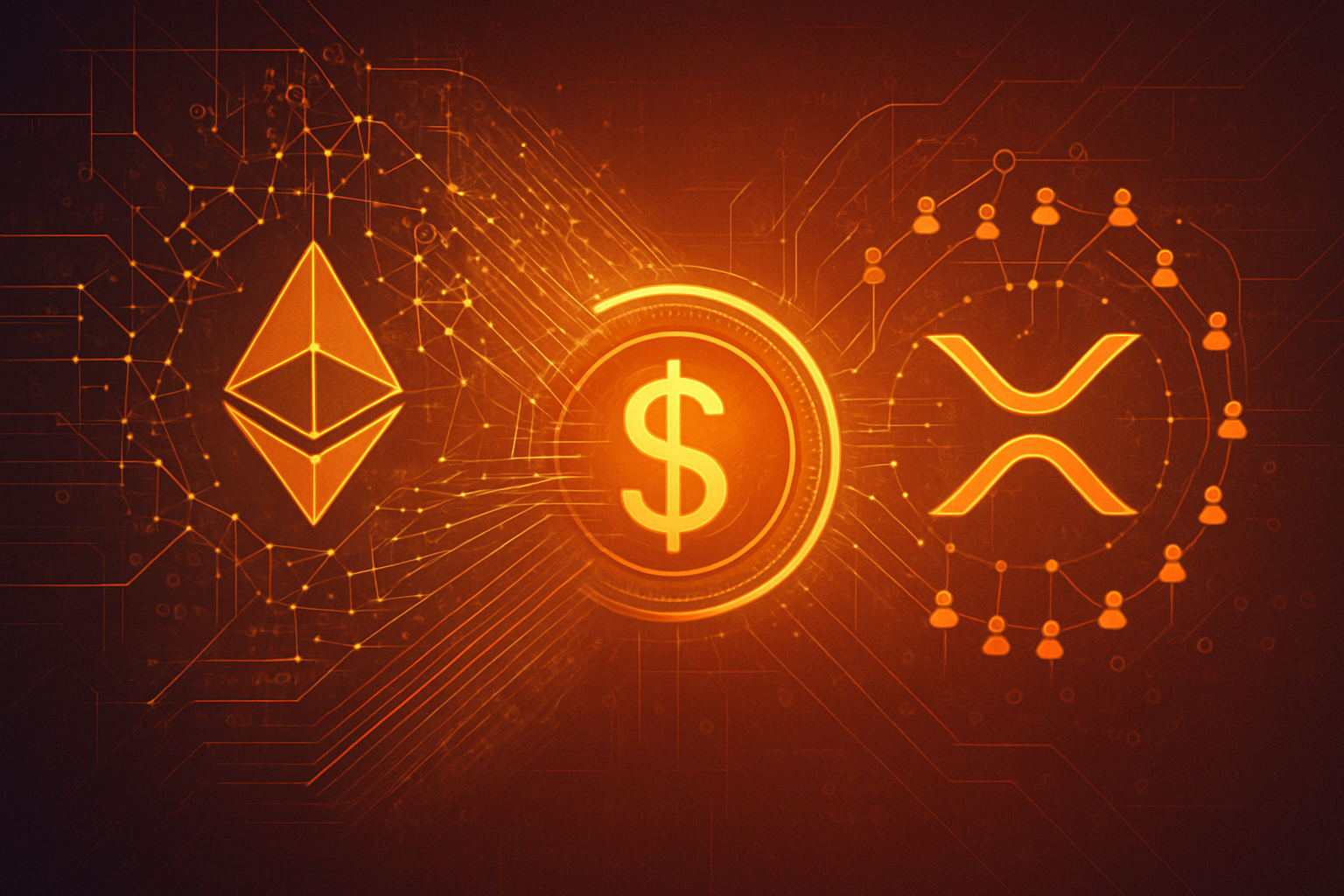
    San Francisco, CA – October 3, 2025 – Ripple's (private) stablecoin, RLUSD, launched in December 2024, has rapidly carved out a significant niche in the digital asset landscape. However, recent data paints a compelling picture of its multi-chain strategy: an overwhelming 88% of RLUSD's total supply is currently circulating on the Ethereum network, while a striking 85% of its individual holders reside on the XRP Ledger (XRPL). This unique distribution highlights Ripple's dual-pronged approach to liquidity and user engagement, simultaneously tapping into Ethereum's expansive DeFi ecosystem and XRPL's efficient transaction capabilities.

    The immediate market reaction to this pronounced imbalance has been a mix of strategic appreciation and community unease. While analysts laud Ripple's foresight in ensuring broad accessibility for RLUSD, a segment of the XRP community has expressed disillusionment. Many anticipated a more direct synergy between the new stablecoin and XRP's utility on its native ledger. This dynamic raises crucial questions about the future interplay of stablecoins and native assets within a multi-chain paradigm, underscoring the complexities of fostering interconnected yet distinct blockchain ecosystems.

    Market Impact and Price Action

    As of early October 2025, RLUSD boasts a market capitalization nearing $789 million, a testament to its swift adoption since its December 2024 launch. The distribution figures reveal that over $700 million of this supply is on Ethereum, with less than $90 million residing on the XRPL. This heavily skewed supply distribution towards Ethereum is a significant shift from earlier 2025 reports, which showed XRPL briefly gaining ground in terms of RLUSD growth rate.

    While RLUSD, as a stablecoin, is designed to maintain its 1:1 peg with the U.S. dollar, its distribution has notable implications for related assets, particularly XRP. Many XRP holders had hoped that the introduction and growth of RLUSD would directly boost demand for XRP, as every transaction on the XRPL requires a small fee paid in XRP. However, with the vast majority of RLUSD supply and therefore, transactional volume, occurring on Ethereum, XRP's direct utility for RLUSD-related activities is largely bypassed. This has contributed to the "unease" within the XRP community, as the expected positive impact on XRP's burn rate and utility has been limited by RLUSD's Ethereum dominance. Ripple has attempted to manage liquidity across chains, as evidenced by an August 2025 operation involving burning 20 million RLUSD on Ethereum and simultaneously minting it on XRPL, aiming to strengthen its presence there. However, the fundamental dynamics of supply distribution remain.

    Community and Ecosystem Response

    The stark contrast in RLUSD's supply and holder distribution has fueled considerable discussion across social media platforms and crypto forums. Sentiment among a segment of XRP holders, in particular, has been marked by "disillusionment," stemming from the perception that RLUSD's success, especially on Ethereum, does not directly translate into increased utility or demand for their native token, XRP. Crypto influencers and thought leaders have weighed in, with Chainlink community liaison Zach Rynes, for example, noting that RLUSD on Ethereum largely displaces the need for XRP for cross-border transactions and that XRP holders do not directly benefit from RLUSD revenue.

    Despite these concerns, RLUSD's multi-chain presence has undeniably broadened its reach and utility within the broader crypto ecosystem. Its significant supply on Ethereum allows for seamless integration with established DeFi protocols such as Uniswap, Aave, and Curve, making it a highly composable asset within the largest decentralized finance landscape. This strategy makes RLUSD attractive to developers and institutions seeking broad accessibility. Conversely, the high percentage of holders on XRPL, totaling over 31,000 out of 36,878, suggests that the XRPL is favored by individual users and potentially smaller institutions for holding and transacting RLUSD. XRPL's advantages, including lower transaction fees and faster settlement speeds, likely contribute to this preference for everyday use and peer-to-peer payouts. Ripple's active management of liquidity between chains also indicates a commitment to fostering a robust environment for RLUSD on both networks.

    What's Next for Crypto

    The trajectory of Ripple's RLUSD offers several key insights into the evolving landscape of stablecoins and multi-chain strategies. In the short term, RLUSD is poised for continued growth in market capitalization and adoption, driven by its institutional focus and expanding listings across major exchanges like Uphold, Bitso, MoonPay, Kraken (private), and Bybit (private). Its compliance-first design, backed by independent monthly audits and operating under a New York Department of Financial Services (NYDFS) Trust Company Charter, positions it as a "regulatory gold standard" in the stablecoin space, attracting regulated entities and traditional finance players.

    Longer-term implications suggest a potential rebalancing of RLUSD supply across chains. While current institutional integrations, such as with BlackRock's (NYSE: BLK) BUIDL and VanEck's (private) VBILL tokenized funds, initially leverage Ethereum, Securitize (private), the tokenization platform, has confirmed plans for future integration with the XRP Ledger. Such developments could gradually shift a portion of RLUSD's supply to the XRPL, potentially alleviating some of the community concerns regarding XRP's utility. Strategically, Ripple's commitment to a multi-chain future, with RLUSD acting as a bridge between traditional finance and blockchain, underscores a vision where different blockchains serve distinct but complementary roles. Investors and projects should monitor these integrations closely, as they will determine the ultimate balance of utility and liquidity across both networks.

    Bottom Line

    Ripple's RLUSD has successfully cemented its position as a compliant, institution-focused stablecoin, rapidly achieving a substantial market capitalization since its December 2024 launch. Its innovative multi-chain strategy, distributing supply predominantly on Ethereum while fostering a large holder base on XRPL, highlights a sophisticated approach to maximizing liquidity and user engagement. This model effectively leverages Ethereum's vast DeFi ecosystem for institutional capital and composability, while utilizing XRPL's efficiency for a broad base of individual and smaller institutional holders.

    The long-term significance of RLUSD lies in its potential to accelerate crypto adoption by bridging traditional finance with the blockchain world. Its regulatory clarity and rigorous backing by U.S. dollar reserves set a high standard for stablecoin trustworthiness, which is crucial for attracting institutional capital. However, the ongoing debate within the XRP community regarding the direct benefits of RLUSD to XRP's utility remains a critical point of contention. As Ripple President Monica Long stated, RLUSD is intended to be "complementary and additive" to XRP, but the current distribution raises questions about how this complementarity will manifest in practice. Key metrics to monitor include the continued growth of RLUSD's market cap, any future rebalancing of its supply between Ethereum and XRPL, and further institutional integrations, particularly those that might directly leverage the XRP Ledger. The evolution of RLUSD will be a crucial case study in how stablecoins navigate the complexities of a multi-chain future and manage community expectations around native token utility.

    This article is for informational purposes only and does not constitute financial or investment advice. Cryptocurrency investments carry significant risk.