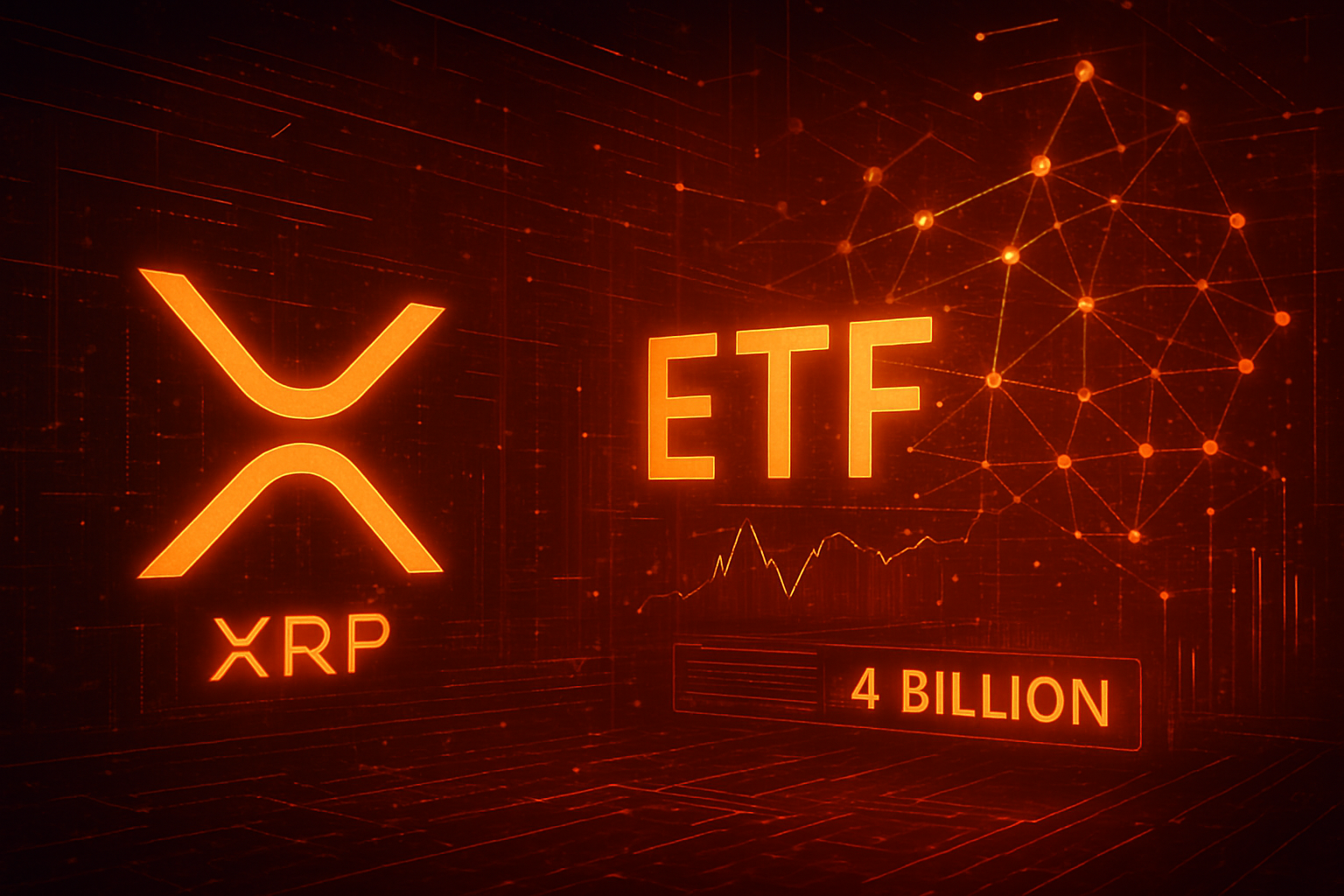
NEW YORK, NY – November 24, 2025 – Today marks a pivotal moment in the cryptocurrency landscape as Grayscale Investments (NYSE Arca: GBTC) officially launched its Grayscale XRP Trust ETF (GXRP) on NYSE Arca, providing institutional investors with direct exposure to XRP. This highly anticipated debut coincides with a monumental achievement for the XRP Ledger (XRPL), which has now processed an astounding 4 billion transactions since its inception in 2012. The dual developments have ignited fervent discussions across the crypto community, signaling a maturing market for alternative digital assets and potentially reshaping XRP's long-term market position.
The immediate market reaction to the GXRP launch, alongside other XRP Exchange-Traded Products (ETPs) from firms like Bitwise (NYSE Arca: BITB) and Franklin Templeton (NYSE Arca: EZBC), was a blend of anticipation and measured volatility. While some analysts had predicted an explosive rally, the initial hours saw XRP's price experience a "buy the rumor, sell the news" effect, leading to a slight dip. However, the underlying sentiment remains largely optimistic, with many drawing parallels to Bitcoin's post-ETF trajectory, where initial price corrections gave way to sustained institutional inflows and new all-time highs. This confluence of institutional validation and fundamental network growth underscores a significant evolution for XRP and the broader digital asset ecosystem.
Market Impact and Price Action
The launch of Grayscale's GXRP ETF on November 24, 2025, was preceded by considerable market anticipation. In the week prior, XRP had experienced a notable decline, trading between $1.83 and $1.99, a 14.7% drop. However, excitement surged on November 23, 2025, with XRP gaining 7% to reach $2.05, pushing its market capitalization to $122.49 billion on the back of a $7.19 billion inflow. Despite this bullish lead-up, the immediate impact of GXRP's trading debut saw XRP slip from $2.13 to $2.08, suggesting a muted initial reaction. This tempered response is partly attributed to broader cryptocurrency market conditions, including a "liquidity drain" and significant whale sell-offs, which exerted downward pressure on the asset.
Trading volumes for the newly launched XRP ETFs varied, with Grayscale's GXRP recording $500,296 in its first 30 minutes. Other ETPs, such as Bitwise's XRP ETF, which launched on November 20, 2025, saw stronger initial volumes, nearing $22 million on its opening day. Canary Capital's XRPC, launched earlier on November 13, 2025, demonstrated robust demand with $243 million in inflows on its first day. Overall, XRP's spot market volume consistently exceeds $2 billion, with futures market volume often quadrupling this, reflecting robust derivatives activity. JPMorgan (NYSE: JPM) analysts project that $4 billion to $8 billion could flow into XRP spot ETFs within their first year, hinting at a future increase in demand and liquidity despite current market headwinds.
Technically, XRP's posture as of late November 2025 presents a mixed picture. It was observed testing its crucial 20-month Exponential Moving Average (EMA) near $1.90, a historically significant macro trend indicator. Key support levels are identified around $1.90, with a broader zone between $1.85 and $1.75. Resistance levels are noted at $1.99 and $2.20, with a break above $2.20 potentially opening the path to $2.50. While a double-bottom retest on the monthly chart offers a bullish signal, some analysts have pointed to a complex head-and-shoulders top pattern, which, if validated, could imply a decline to $1.07 unless XRP decisively breaks above $3.00. The 14-day Relative Strength Index (RSI) near 42 suggests mildly oversold conditions, while the 4-hour MACD shows increasing bullish momentum.
Comparing this to similar past events, the launch of spot XRP ETFs draws parallels to the introduction of spot Bitcoin (BTC) ETFs in early 2024. Bitcoin's price often experienced a "buy the rumor" rally followed by a "sell the news" dip, yet these dips were typically temporary. Bitcoin ETFs ultimately led to billions in inflows, driving BTC to new record highs, from around $46,000 at approval to over $107,000 by December 2024. While XRP's immediate reaction has been less dramatic, the long-term expectation is that these ETFs will broaden institutional access, absorb significant supply, and positively impact the price over time, mirroring Bitcoin's trajectory.
Community and Ecosystem Response
The launch of Grayscale’s GXRP ETF and the XRP Ledger’s milestone of over 4 billion transactions have ignited a wave of discussions and sentiment shifts across the crypto community. On platforms like X (formerly Twitter) and Reddit, the "XRP Army" and broader crypto enthusiasts are expressing overwhelmingly positive long-term sentiment, viewing the introduction of XRP-based ETFs as a monumental step towards mainstream acceptance and institutional integration. Many believe these investment vehicles will simplify access for traditional investors and facilitate inclusion in retirement accounts, fostering a new wave of adoption.
Crypto influencers and thought leaders have largely echoed this enthusiasm. Ripple CEO Brad Garlinghouse publicly celebrated the "pre-Thanksgiving rush" for XRP ETFs, congratulating asset managers on their launches. Matt Hougan, Chief Investment Officer at Bitwise, described XRP as a "fascinating asset" with a long history of efficient transactions and a "dynamic and engaged community," anticipating expanded institutional access. Bloomberg Intelligence ETF analyst Eric Balchunas has also been actively providing insights into initial trading volumes, indicating early institutional interest. While the prevailing sentiment among these figures is optimistic about long-term growth, some analysts, like Moon, have cautioned against overly ambitious short-term price predictions, emphasizing the need for additional catalysts beyond just ETF inflows. Pro-XRP attorney Bill Morgan has also engaged, refuting claims of XRP's centralization by citing formal ETF filings that describe the XRP Ledger as a "public, decentralized, permissionless blockchain."
The XRP Ledger's achievement of over 4 billion transactions since its inception underscores its robustness and long-term operational reliability, particularly for cross-border payments and high-throughput financial activities. This sustained activity and growing regulatory clarity are creating fertile ground for ecosystem expansion. While the direct immediate effects of the GXRP ETF on related DeFi protocols, NFT projects, or Web3 applications built on the XRPL are still evolving, the broader context points to strategic expansion. The XRPL ecosystem is actively developing towards tokenized assets and DeFi products, including ongoing work on native lending protocols and the implementation of Ethereum Virtual Machine (EVM)-compatible sidechains. Furthermore, NFT activity on the XRP Ledger has seen substantial growth, with average daily NFT transactions surging by 51.1% in Q3 2025, driven by a 70.8% increase in average daily NFT mint transactions.
What's Next for Crypto
The launch of Grayscale's GXRP ETF and the XRP Ledger's 4 billion transaction milestone carry significant implications for the short and long-term trajectory of XRP and the broader crypto market. In the short term, while new ETFs offer institutional investment avenues, XRP may continue to experience volatility, driven by a "buy the rumor, sell the news" dynamic and ongoing whale selling pressure. Technical indicators suggest XRP is at crucial support levels, with potential for a relief rally if these hold, but also a risk of further downside if they break. The utility of the XRP Ledger, highlighted by its 4 billion transactions, provides a fundamental underpinning even amidst market fluctuations.
Long-term implications for XRP are largely positive, contingent on sustained institutional adoption and expanding utility. The regulatory clarity following Ripple's settlement with the U.S. Securities and Exchange Commission (SEC) in August 2025 has removed a major hurdle for institutional participation. Continued expansion of RippleNet and On-Demand Liquidity (ODL) corridors for cross-border payments, coupled with the XRPL's capacity for real-world asset (RWA) tokenization, Central Bank Digital Currencies (CBDCs), and stablecoin activity (like Ripple USD – RLUSD), positions XRP as a critical asset in bridging traditional finance and blockchain technology. Its alignment with ISO 20022 standards further enhances its appeal for institutional infrastructure.
Potential catalysts to watch include sustained and substantial capital inflows into XRP ETFs, increased adoption of XRP by corporate treasuries, and continued growth in the number of financial institutions utilizing RippleNet and ODL. Further advancements in the XRP Ledger's capabilities, such as the launch of the XRPL EVM sidechain in 2025 and expansion into RWA tokenization, will broaden its use cases. Ripple's strategic partnerships with major financial players like Mastercard (NYSE: MA), WebBank, and Gemini are also crucial for enhancing XRP's utility and acceptance. For investors, strategic considerations include mindful risk management due to volatility, adopting a long-term perspective focused on fundamental utility, and portfolio diversification.
Possible scenarios for XRP range from a bullish outlook with high adoption and significant price appreciation (moderate to high likelihood in the long term), driven by sustained ETF inflows and widespread corporate use, potentially pushing XRP to $3.50-$4.50 by late 2026. A base case (high likelihood) predicts moderate growth and utility expansion, with XRP trading between $2.30 and $3.30 for most of 2026. A bearish scenario (low to moderate likelihood long term) involves stagnation or decline due to delays in adoption or significant market headwinds. While short-term volatility is expected, the long-term outlook appears robust due to increasing institutional interest, regulatory clarity, and the growing utility of the XRP Ledger.
Bottom Line
The launch of Grayscale's GXRP ETF on NYSE Arca on November 24, 2025, coupled with the XRP Ledger achieving 4 billion transactions, marks a significant inflection point for XRP. For crypto investors and enthusiasts, the key takeaway is the increasing institutional validation of XRP as a digital asset. While immediate price action may reflect market dynamics like "sell the news" events, the long-term significance lies in the enhanced accessibility for traditional finance, potentially unlocking substantial capital inflows and driving broader adoption.
The long-term significance of these developments cannot be overstated. The regulatory clarity surrounding XRP, combined with the proven utility and scalability of the XRP Ledger, positions XRP as a critical component in the evolving landscape of global finance. The introduction of regulated investment products like GXRP signals a maturation of the crypto market, where digital assets are increasingly being integrated into traditional financial frameworks. This move is crucial for fostering greater trust and participation from institutional players, paving the way for wider crypto adoption.
Moving forward, important dates, events, or metrics to monitor include the sustained trading volumes and net inflows into XRP ETFs, the continued expansion of RippleNet and ODL corridors, further developments in the XRPL ecosystem such as the EVM sidechain and RWA tokenization, and any additional regulatory guidance. Investors should also keep an eye on broader macroeconomic trends and the competitive landscape for cross-border payments and digital asset solutions. The journey of XRP into mainstream finance is still unfolding, but these recent milestones suggest a future where it plays an increasingly prominent role.
This article is for informational purposes only and does not constitute financial or investment advice. Cryptocurrency investments carry significant risk.