
Tag: Web3

  • Binance’s Enduring Commitment to Transparency: A Deep Dive into CZ’s Listing Fee Policy

    Binance’s Enduring Commitment to Transparency: A Deep Dive into CZ’s Listing Fee Policy

    October 15, 2025 – In an industry often scrutinized for its opacity, Binance, under the leadership of its former CEO Changpeng Zhao (CZ), has long championed a policy aimed at fostering transparency in cryptocurrency listings. Dating back to October 8, 2018, Binance (BINANCE: BNB) announced a groundbreaking approach to listing fees, re-terming them as "donations" and pledging to contribute 100% of these to charitable causes via its Blockchain Charity Foundation. This policy, recently reiterated amidst renewed industry discussions in November 2024, allows projects to propose their "donation" amount, effectively removing the traditional, often exorbitant, fixed listing fees that have plagued the industry.

    The initial announcement in 2018 was met with widespread positive reception from the crypto community, which had grown weary of the "pay-to-play" accusations leveled against many exchanges. At a time when some platforms reportedly demanded millions of dollars for a token listing, Binance's move was seen as a significant step towards leveling the playing field for innovative projects, regardless of their capital reserves. This policy is not merely a philanthropic gesture; it's a strategic pillar designed to instill greater trust and accountability in the listing process, ensuring that project quality, rather than financial muscle, dictates access to one of the world's largest liquidity pools. It fundamentally matters for the crypto ecosystem by attempting to democratize access to market exposure and setting a precedent for ethical exchange practices.

    Market Impact and Price Action

    While the initial policy announcement in 2018 did not trigger immediate, specific price movements for individual tokens in the way a major product launch might, its long-term implications for market dynamics and liquidity are profound. By reducing the financial barrier to entry, Binance's policy has theoretically fostered a more diverse array of projects gaining exposure, potentially increasing overall market depth and innovation. Projects that might have been priced out of major exchange listings now have a clearer, more merit-based pathway to reaching a global audience. This can lead to a healthier market where fundamental value and technological innovation are prioritized over a project's ability to pay substantial listing fees.

    The policy's influence is more observable in the broader market structure rather than specific token price action. It has contributed to Binance's dominant position as a launchpad for new and promising cryptocurrencies, indirectly influencing trading volumes and liquidity for a wider range of assets. While there isn't a direct correlation to specific price surges or dips immediately following the 2018 announcement, the sustained growth of the altcoin market and the continuous influx of new projects to Binance could be partially attributed to this accessible listing framework. The absence of exorbitant fixed fees means projects can allocate more resources to development, marketing, and community building, which, in the long run, can lead to more robust ecosystems and potentially more sustainable price appreciation for quality projects. The reiteration of this policy in late 2024, in response to renewed scrutiny over "millionaire fees" on other exchanges, served to reinforce confidence in Binance's commitment, subtly influencing investor perception towards the platform's long-term stability and ethical standing within the competitive exchange landscape.

    Community and Ecosystem Response

    The crypto community's response to Binance's transparent listing fee policy, both at its inception in 2018 and during its reaffirmation in 2024, has been overwhelmingly positive. On platforms like Crypto Twitter and Reddit, discussions frequently highlight the policy as a benchmark for fairness in an industry often criticized for its gatekeeping tendencies. Influencers and thought leaders have consistently praised Binance for taking a stance against the "pay-to-play" model, viewing it as a crucial step towards a more decentralized and equitable crypto landscape. Many see it as a mechanism that allows truly innovative projects, regardless of their initial funding, to gain the necessary exposure and liquidity to thrive.

    The effects extend beyond mere sentiment. This policy indirectly supports the growth of related DeFi protocols, NFT projects, and Web3 applications by providing a clearer path to market. When smaller, high-potential projects can access major exchanges without prohibitive costs, it fosters a more vibrant and competitive ecosystem. This, in turn, can lead to more diverse offerings for users, increased participation in various Web3 initiatives, and ultimately, a stronger foundation for the entire decentralized economy. The broader sentiment across crypto social media is that such policies are essential for maintaining the ethos of decentralization and open access that underpins the cryptocurrency movement, contrasting sharply with traditional financial markets that often favor well-funded incumbents.

    What's Next for Crypto

    Binance's transparent listing fee policy, now a long-standing commitment, continues to shape the future trajectory of the crypto market. In the short term, it reinforces Binance's position as a preferred listing venue for emerging projects, potentially consolidating liquidity and trading volume on the exchange. This could lead to a virtuous cycle where more quality projects choose Binance, attracting more users and further solidifying its market leadership. For investors, this means a wider selection of potentially high-growth assets accessible through a single platform, though due diligence remains paramount.

    Long-term implications suggest that this policy could continue to pressure other major exchanges to adopt more transparent and equitable listing practices. As the crypto industry matures, the demand for ethical conduct and fair market access will only intensify. Potential catalysts to watch include further regulatory clarity globally, which might standardize listing requirements across exchanges, and increased competition from decentralized exchanges (DEXs) that inherently offer permissionless listings. Strategic considerations for projects involve focusing on strong fundamentals and community building, as the barrier of entry to major exchanges is now less about capital and more about merit. Investors should monitor how this policy continues to attract innovative projects, as these could represent significant investment opportunities. Possible scenarios include a broader industry shift towards similar charitable or merit-based listing models, or conversely, a widening gap between exchanges that prioritize transparency and those that continue with opaque, high-fee structures.

    Bottom Line

    Binance's enduring policy of transparent listing "donations" to charity, rather than fixed, exorbitant fees, represents a pivotal commitment to fostering a more equitable and trustworthy cryptocurrency ecosystem. For crypto investors and enthusiasts, the key takeaway is that this approach prioritizes project quality and innovation over financial muscle, potentially leading to a healthier market with a wider array of high-potential assets. It underscores Binance's role not just as a trading platform, but as an influential force shaping industry standards for transparency and accessibility.

    The long-term significance of this policy lies in its potential to democratize access to liquidity and exposure for promising projects, thereby fueling innovation across DeFi, NFTs, and the broader Web3 landscape. It serves as a powerful counter-narrative to the "pay-to-play" criticisms that have historically plagued the industry, reinforcing the foundational principles of open access and decentralization. As the crypto market continues to evolve, investors should monitor the influx of new projects onto major exchanges, particularly those adhering to transparent listing practices, as these platforms are likely to attract the next wave of groundbreaking technologies. The ongoing debate around listing fees and exchange transparency will remain a critical metric for assessing the maturity and ethical direction of the digital asset space.


    This article is for informational purposes only and does not constitute financial or investment advice. Cryptocurrency investments carry significant risk.

  • Crypto Market Plunges into “Fear Territory” as Bitcoin Leads Steep Losses

    Crypto Market Plunges into “Fear Territory” as Bitcoin Leads Steep Losses

    October 15, 2025 – The cryptocurrency market has decisively entered "fear territory" in recent days, marked by a sharp downturn that has seen major digital assets, including Bitcoin (BTC) and Ethereum (ETH), experience significant price corrections. This latest market rout, which intensified in early October, has sent ripples of panic across the ecosystem, with the widely-watched Crypto Fear & Greed Index plummeting into "Extreme Fear" levels. The immediate reaction has been a wave of panic selling, particularly from over-leveraged positions, leading to cascading liquidations and a palpable sense of uncertainty among investors.

    This downturn is more than just a momentary dip; it represents a critical stress test for the burgeoning crypto ecosystem. It exposes systemic vulnerabilities, particularly concerning excessive leverage and the interconnectedness of various financial instruments within the digital asset space. For many, this period serves as a painful, yet perhaps necessary, "deleveraging purge" that aims to cleanse the market of unsustainable speculation and set the stage for more resilient, long-term growth. The implications extend beyond price charts, impacting everything from DeFi protocols to NFT valuations and the funding landscape for Web3 startups.

    Market Impact and Price Action

    The recent market turmoil has manifested in severe price action across the board. Bitcoin, the bellwether of the crypto market, breached several key support levels, falling below the psychologically significant $60,000 mark and continuing its descent. Ethereum followed suit, experiencing a parallel depreciation that erased weeks of gains. Altcoins, as is typical during such corrections, have suffered even more acutely, with many projects seeing double-digit percentage losses as liquidity dries up and investors rush to safer assets or exit the market entirely. Trading volumes have surged during the sell-offs, indicating high distribution pressure, followed by a noticeable reduction in volume as the market searches for a bottom.

    Technical analysis reveals a grim picture, with major moving averages acting as resistance rather than support. The breaking of crucial support zones has triggered automated sell-offs and exacerbated the downward momentum. This current market behavior bears striking resemblances to previous bear cycles, such as the downturns of 2018 and 2022. In those periods, similar patterns of deleveraging, institutional capitulation, and a prolonged period of consolidation were observed. While painful, such events have historically served to flush out weak hands and overvalued projects, ultimately paving the way for eventual recovery, albeit often after an extended period of sideways movement or further declines. The current environment suggests a similar "reset" is underway, forcing a re-evaluation of risk and fundamental value.

    Community and Ecosystem Response

    The shift to "fear" sentiment is vividly apparent across crypto social media channels. Crypto Twitter and Reddit are awash with FUD (Fear, Uncertainty, Doubt), with discussions ranging from despair to desperate searches for the market bottom. While panic selling dominates, a segment of the community and prominent crypto influencers are advocating for calm, emphasizing long-term conviction and the importance of avoiding leverage. Many seasoned participants are echoing the familiar mantra of "building during the bear market" and focusing on fundamental technology rather than short-term price fluctuations.

    The broader ecosystem is feeling the pinch. Decentralized Finance (DeFi) protocols have witnessed significant liquidations as collateralized positions fall below required thresholds, leading to a reduction in Total Value Locked (TVL) across various platforms. NFT floor prices for even blue-chip collections have seen a notable decline, reflecting reduced speculative interest and a flight to safety. Web3 applications and startups, particularly those in early funding stages, are facing increased scrutiny from investors, with a renewed emphasis on sustainable business models and tangible utility over hype. The prevailing sentiment is one of caution, but also a quiet determination among builders to weather the storm and emerge stronger.

    What's Next for Crypto

    The immediate short-term outlook for the crypto market suggests continued volatility and potentially further downside as the deleveraging process completes. Investors should anticipate a period of consolidation, where prices may trade sideways or experience minor bounces that are quickly sold off. In the long term, however, this correction could be viewed as a necessary step towards market maturation. It clears out excessive speculation, forces projects to focus on sustainable development, and could lead to a healthier, more robust ecosystem.

    Potential catalysts for a reversal could include clearer regulatory frameworks from major jurisdictions, which would instill greater institutional confidence and reduce uncertainty. A shift in global macroeconomic conditions, such as a pause or reversal in interest rate hikes, could also alleviate pressure on risk assets. Technological breakthroughs, particularly in scalability, security, or real-world utility for blockchain, could also reignite investor interest. Strategic considerations for projects and investors should center on robust risk management, maintaining strong balance sheets, and continuing to build innovative, value-driven solutions. While an extended bear market is a distinct possibility, the underlying innovation in blockchain technology suggests that the ecosystem will adapt and eventually find new avenues for growth.

    Bottom Line

    For crypto investors and enthusiasts, the key takeaway from the current market downturn is the paramount importance of a long-term perspective and disciplined risk management. Volatility is inherent to nascent markets, and these periods of "fear" are often where true conviction is tested. Rather than succumbing to panic, investors are advised to reassess their portfolios, reduce exposure to highly speculative assets, and potentially use this period to accumulate fundamentally strong projects at discounted prices, provided their financial situation allows.

    The long-term significance of this downturn lies in its potential to foster a more mature and resilient crypto industry. It serves as a stark reminder that not all projects will survive, and only those with strong utility, dedicated communities, and sustainable economic models will thrive. As the market navigates these turbulent waters, important metrics to monitor include the Crypto Fear & Greed Index for sentiment shifts, Bitcoin dominance as an indicator of market risk appetite, and broader macroeconomic indicators. While the path ahead may be challenging, the foundational technology of blockchain continues to evolve, promising a future where digital assets play an increasingly integral role in the global financial landscape.


    This article is for informational purposes only and does not constitute financial or investment advice. Cryptocurrency investments carry significant risk.
  • Pi Network Navigates Enclosed Mainnet: The Crowd’s Power Amidst Unofficial Volatility

    Pi Network Navigates Enclosed Mainnet: The Crowd’s Power Amidst Unofficial Volatility

    October 15, 2025 – The Pi Network, a blockchain project that has captivated over 47 million users globally with its mobile-first mining approach, stands at a pivotal juncture. As of mid-October 2025, the network remains in its strategic "Enclosed Mainnet" phase, a period designed to cultivate a robust, utility-driven ecosystem before a full public launch. This unique development model has led to fervent community discussions regarding its future direction, unofficial price volatility, and the profound implications of its "power of the crowd" dynamic in a crypto landscape often dominated by large institutional players.

    The project's ongoing Protocol v23 upgrades, nearing Testnet completion, alongside a recently concluded hackathon (October 15, 2025) offering 160,000 PI tokens, underscore a relentless drive towards utility creation. However, the absence of an official market listing means Pi Coin's value remains a subject of intense speculation and unofficial trading, creating a unique set of challenges and opportunities that ripple through the broader crypto ecosystem.

    Market Impact and Price Action

    Unlike most cryptocurrencies, Pi Coin currently lacks official market listings on major exchanges, rendering traditional price analysis challenging. Nevertheless, unofficial "IOU markets" provide a speculative glimpse into investor sentiment. As of mid-October 2025, these unofficial valuations hover between approximately $0.21 and $0.26. This comes after a period of notable volatility; September 2025 saw a nearly 48% decline, pushing unofficial prices to a new all-time low of $0.184, before a modest recovery.

    While the Average True Range (ATR) indicated low volatility around October 8, 2025, the Relative Strength Index (RSI) suggested oversold conditions, hinting at underlying pressures. The project faces potential bearish trends, partly due to anticipated token unlocks that could increase selling pressure if the burgeoning ecosystem does not meet the community's high expectations for utility.

    In stark contrast to these unofficial market fluctuations, a community-driven "Global Consensus Value (GCV)" has emerged, with figures cited as high as $314,159 per Pi. This GCV represents a powerful, collective belief in the project's long-term potential and fundamental value, rather than a reflection of current market supply and demand. This dichotomy highlights Pi Network's philosophical departure from conventional crypto economics, prioritizing intrinsic utility and broad accessibility over speculative trading.

    Community and Ecosystem Response

    The Pi Network community, often referred to as "Pioneers," exhibits a fascinating blend of unwavering optimism and growing skepticism. Many express palpable excitement about ongoing developments, including the successful hackathon, the progression of Protocol v23, and the launch of a community-powered Pi DEX on the Testnet, which allows users to experiment with token swaps and liquidity pools. Rumors of potential bank integrations further fuel positive sentiment, with the "Global Consensus Value (GCV)" movement preparing for its third conference on October 19, 2025, to solidify its community-driven valuation.

    However, a significant segment of the community voices concerns regarding the protracted timeline for a full "Open Mainnet" launch, which has been in an "Enclosed Mainnet" state since February 2025. Issues such as perceived centralized token distributions and a perceived lack of transparent communication from the Pi Core Team have led to profound doubts about the project's ability to rebound and fully deliver on its promises. Despite these criticisms, the core philosophy articulated by the project — "value over price, community over speculation" — continues to resonate, challenging the traditional, speculation-heavy dynamics of the broader crypto market. The network's impressive scale, with over 210 live applications and 23,000 projects reportedly in Pi Studio, underscores the potential impact of this crowd-sourced ecosystem.

    What's Next for Pi Network

    The immediate future for Pi Network hinges on several critical developments designed to transition it from its "Enclosed Mainnet" to a full "Open Mainnet" phase, targeted for the latter half of 2025. This transition is contingent on the successful completion of ongoing KYC verification processes for its vast user base and the continued expansion and maturity of its decentralized application (dApp) ecosystem. The anticipated rollout of the major Protocol v23 upgrade to the Mainnet in Q4 2025 or early 2026 is another key milestone, promising enhanced stability and feature capabilities.

    Strategically, Pi Network is actively pursuing integration with Stellar's Soroban smart contracts, a move that could significantly expand its capabilities in decentralized finance (DeFi), AI payments, and tokenization. This integration signals an ambition to move beyond mere mobile mining to become a foundational layer for diverse Web3 applications. The project's continued emphasis on preventing the dominance of "whales" and instead fostering a truly community-driven market will be crucial. The success of Pi Network will ultimately be measured by its ability to translate its massive user base into tangible utility and sustainable value within its ecosystem, proving that the "power of the crowd" can indeed challenge traditional market structures.

    Bottom Line

    For crypto investors and enthusiasts, Pi Network represents a fascinating, albeit unconventional, experiment in mass crypto adoption. Its "Enclosed Mainnet" strategy, while frustrating for some due to its prolonged nature, is a deliberate attempt to build a robust, utility-first ecosystem before full market exposure. The unofficial market volatility, juxtaposed with the community's ambitious "Global Consensus Value," highlights the unique challenges and opportunities of a project attempting to redefine how cryptocurrency value is created and perceived.

    The long-term significance of Pi Network lies in its potential to democratize access to cryptocurrency, leveraging its vast user base to create a truly decentralized and inclusive digital economy. Key metrics and events to monitor include the official Open Mainnet launch, the successful deployment of Protocol v23, the continued growth and utility of its dApp ecosystem, and the progress of its KYC verification efforts. The upcoming GCV conference on October 19, 2025, will also offer insights into community sentiment and collective vision. Ultimately, Pi Network's journey will be a test case for whether the "power of the crowd" can successfully navigate the complexities of the crypto market and establish a sustainable, value-driven digital currency.


    This article is for informational purposes only and does not constitute financial or investment advice. Cryptocurrency investments carry significant risk.

  • XRP: The $1,000 Dream – A Deep Dive into Ambitious Price Predictions and Community Debate

    XRP: The $1,000 Dream – A Deep Dive into Ambitious Price Predictions and Community Debate

    A bold prediction by Dom Kwok, a former Goldman Sachs analyst and co-founder of EasyA, has sent ripples through the cryptocurrency community: XRP, the digital asset powering Ripple's payment network, could soar to an astonishing $1,000 by 2030. This audacious forecast, rooted in XRP's real-world utility and anticipated institutional adoption, has ignited a fervent debate among investors and enthusiasts, highlighting the deep divisions and high stakes in the volatile crypto market.

    Kwok's analysis, which positions XRP as far more than a "meme coin," emphasizes its role in cross-border payments for financial institutions, its growing integration into Decentralized Finance (DeFi), and the potential for XRP Exchange-Traded Funds (ETFs). The prediction also factors in a more favorable U.S. regulatory environment and Ripple's increasing use as a platform for tokenizing Real-World Assets (RWAs). While XRP maximalists have celebrated this as validation of their long-held belief, a significant portion of the community has reacted with skepticism, questioning the mathematical feasibility of such a valuation and its implied multi-trillion-dollar market capitalization. Another former Goldman Sachs analyst, Sheila Warren, publicly countered the notion, stressing that "The value of a payment network is not linearly related to the price of the token," underscoring the complexity of valuing such an asset.

    Market Impact and Price Action

    As of October 15, 2025, XRP is trading at approximately $2.49 to $2.50 USD, having experienced some short-term dips in recent weeks, including a -0.49% decline in the past 24 hours, a -12.66% decrease over the last week, and a -17% drop over the past month. Despite this recent volatility, XRP has delivered an impressive 355.18% gain over the last year, reaching an all-time high of $3.66596 on July 17, 2025.

    The market's reaction to ambitious price predictions like Kwok's is often multifaceted. While such forecasts can generate significant buzz and optimism, their direct influence on immediate price movements is typically less pronounced than fundamental factors or technical indicators. For instance, XRP's 24-hour trading volume currently hovers between $5.53 billion and $8.23 billion, with recent fluctuations reflecting broader market sentiment and whale activity. A notable event occurred on October 10, 2025, when XRP experienced a severe 45% intraday flash crash, plunging from $2.83 to $1.53 within hours. This was largely attributed to President Trump's threat of 100% tariffs on China, triggering a widespread crypto market sell-off and cascading liquidations of leveraged positions. XRP has since shown resilience, stabilizing near $2.58.

    Technically, XRP faces immediate resistance levels around $2.59, $2.65 (50-day Exponential Moving Average), and $2.70. A critical breakout above the $3.15 mark would be necessary to target higher levels, potentially reaching $3.60-$5.00. Key support levels are identified around $2.35, $2.42, and $2.54, with stronger long-term support between $1.45 and $1.68. While some moving averages signal a "strong sell," the 200-day moving average has been trending upwards since March 2025, suggesting an underlying strong trend. The Relative Strength Index (RSI) is neutral at 54, but a weekly Stochastic RSI in deeply oversold territory historically precedes major reversals, offering a glimmer of bullish hope.

    Past ambitious predictions, ranging from $10 to $13,000, have often circulated within the XRP community. While they foster discussion, market analysts generally caution that XRP's large market capitalization makes triple or quadruple-digit returns less likely in the short term. Regulatory developments, particularly the ongoing review of spot XRP ETF applications (with six major applications pending SEC rulings between October 18 and 25, 2025), are considered far more significant potential catalysts, capable of attracting billions in institutional capital.

    Community and Ecosystem Response

    The $1,000 XRP prediction has undeniably fueled a vibrant, albeit divided, discussion across social media platforms like X (formerly Twitter) and Reddit. On X, while many users engage in "fun debate" rather than serious financial forecasting, the consistent chatter underscores a deep-seated interest in XRP's potential. Reddit threads reveal a similar dichotomy: staunch believers cite XRP's utility in global finance and a potential "supply shock," while skeptics dismiss the idea as "outrageous" due to market capitalization concerns. A palpable sense of frustration also exists among retail XRP traders, who have observed the asset's "lackluster price performance" compared to other cryptocurrencies, leading to "massive FUD" (fear, uncertainty, and doubt) and a drop in bullish sentiment.

    Crypto influencers and thought leaders also offer varied perspectives. Armando Pantoja, a market expert, "definitely" believes XRP will reach $1,000 but stresses it will be a "marathon, not a sprint," drawing parallels to Bitcoin's early struggles. Analyst BarriC similarly deems $1,000 "inevitable," urging accumulation based on anticipated institutional demand. Others, like Jake Claver of Digital Ascension Group, are more aggressive, forecasting $1,500-$2,000 by January 2026, citing a "reverse carry trade" and global liquidity crisis. However, claims that Ripple co-founder Chris Larsen once suggested XRP could surpass $1,000 if Ripple captured 10% of SWIFT's global payment volume have been largely debunked as unsubstantiated rumors. Many proponents of the $1,000 target often dismiss market cap arguments, asserting that crypto market dynamics differ from traditional stock markets and that significant institutional adoption could drastically alter XRP's valuation.

    While the $1,000 prediction itself hasn't directly triggered a surge in related DeFi protocols, NFT projects, or Web3 applications, the underlying arguments for such a high valuation intersect with ongoing developments within the XRP ecosystem. The XRP Ledger (XRPL) is actively fostering a DeFi environment, with Circle (USDC) launching its stablecoin on the XRPL and the introduction of native Automated Market Maker (AMM) pools. Flare Networks has also launched XRP FI, offering lending and staking for XRP holders. These advancements are laying the groundwork for a more robust XRPL ecosystem. Furthermore, Ripple's strategic moves, including global licenses and the development of the RLUSD stablecoin, are seen as crucial for institutional adoption, which would indirectly benefit the entire XRPL ecosystem.

    What's Next for Crypto

    XRP's future, and its implications for the broader crypto market, are significantly shaped by recent regulatory clarity and its expanding utility. The August 2025 settlement in the SEC vs. Ripple lawsuit, which affirmed that programmatic sales of XRP are not securities, has been a "game-changer." This de-risking of the asset has fostered optimism for broader institutional engagement across the digital asset space, impacting not just XRP but potentially setting a precedent for other utility tokens.

    In the short term, the anticipation of spot XRP Exchange-Traded Fund (ETF) approvals, potentially by October 2025, is a major catalyst. These approvals could unlock substantial capital inflows and further price appreciation. However, the market remains susceptible to volatility from "whale" selling activity, geopolitical risks like U.S.-China trade tensions, and broader macroeconomic uncertainties.

    Long-term, XRP is positioned to become a leading "bridge asset" in the evolving Central Bank Digital Currency (CBDC) landscape and a default settlement layer for institutions handling cross-border liquidity. Ripple's focus on replacing traditional, slow infrastructure like SWIFT with a blockchain-based alternative makes XRP attractive for institutional users seeking efficient cross-border payments. The company has forged strategic partnerships globally, including with Absa Bank in South Africa for digital asset custody, and appointed BNY Mellon (NYSE: BK) as the primary custodian for its U.S. dollar-pegged stablecoin, Ripple USD (RLUSD), launched in 2024. Ripple's $1.25 billion acquisition of prime brokerage firm Hidden Road in April 2025 further strengthens its position in bridging traditional finance and digital assets.

    XRP's utility extends beyond payments to digital asset exchange, CBDC implementation, and the tokenization of Real-World Assets (RWAs). The XRP Ledger is also evolving to support smart contracts and NFTs through upgrades like XLS-20 and the introduction of sidechain technology, which will add Ethereum smart contract compatibility.

    For projects building on the XRPL, the enhanced regulatory clarity provides confidence to develop innovative applications. For investors, strategic considerations include assessing XRP's utility beyond speculation, monitoring ETF approvals, and managing risk in a volatile market. Possible scenarios include a Bullish Scenario (High Likelihood) driven by ETF approvals and institutional adoption, potentially seeing XRP reach $4-$5 near-term, and $8-$10 in the coming years, or even $50-$100 if it becomes a major corporate reserve asset. A Moderate Growth/Stabilization Scenario (Medium-High Likelihood) sees steady but not explosive growth, with XRP trading between $2-$5 by 2027. A Volatile/Bearish Scenario (Medium Likelihood, primarily short-term) could see continued price swings due to whale selling, macroeconomic events, or ETF delays.

    Bottom Line

    The ambitious $1,000 XRP prediction, while a significant talking point, underscores the profound belief held by some in its long-term potential, primarily driven by its foundational utility and growing institutional acceptance. For crypto investors and enthusiasts, the key takeaway is to focus on XRP's utility-driven nature as a bridge currency for cross-border payments and its expanding role in RWA tokenization and CBDC initiatives. The regulatory clarity gained from the SEC lawsuit is paramount, de-risking the asset and paving the way for broader institutional confidence and potentially, spot XRP ETF approvals.

    XRP's long-term significance in the crypto ecosystem lies in its potential to modernize global payments, offering a faster, cheaper alternative to traditional systems. It is also setting a crucial regulatory precedent for digital assets, contributing to the broader legitimization of the crypto industry. This shift towards utility and integration with traditional finance is vital for widespread crypto adoption, demonstrating that digital assets can offer tangible solutions beyond speculative trading.

    Important dates and metrics to monitor include the U.S. SEC's decisions on spot XRP ETF applications between October 18-25, 2025, and into November. The completion of SWIFT's ISO 20022 migration in November 2025 is another critical event, as XRP's compatibility could enhance its integration into mainstream financial operations. Investors should also track the growth of Ripple's On-Demand Liquidity (ODL), Real-World Asset (RWA) tokenization metrics on the XRPL, and XRP escrow reports. Finally, continued regulatory developments globally and technical price levels will be crucial indicators of XRP's trajectory. While the $1,000 target remains highly speculative for now, XRP's fundamental developments position it as a significant player in the future of finance.


    This article is for informational purposes only and does not constitute financial or investment advice. Cryptocurrency investments carry significant risk.
  • Global Crackdown: U.S. and UK Sanction Crypto Scam Kingpins in Landmark Action Against Forced Labor and Fraud

    Global Crackdown: U.S. and UK Sanction Crypto Scam Kingpins in Landmark Action Against Forced Labor and Fraud

    October 15, 2025 – In a monumental display of international cooperation, the United States and the United Kingdom have unleashed a coordinated barrage of sanctions against a vast network of cryptocurrency scam centers operating in Southeast Asia. This unprecedented crackdown, announced on October 14, 2025, primarily targets Cambodia's notorious Prince Group, accusing it of orchestrating sophisticated "pig butchering" investment scams that have defrauded billions globally, all while relying on horrific forced labor and human trafficking.

    This historic action, described by officials as a "convergence of criminal charges, sanctions, and regulatory measures," represents the largest joint sanctions effort ever against a scam-compound network. It underscores a hardening stance by global powers against the dark underbelly of the crypto world, sending a clear message that illicit activities, particularly those intertwined with human rights abuses, will be pursued relentlessly across borders. The immediate significance for the crypto ecosystem is profound: a direct assault on the infrastructure of digital financial crime, forcing legitimate players to re-evaluate their compliance frameworks and reinforcing the narrative that a cleaner, more regulated crypto space is on the horizon.

    Market Impact and Price Action

    The immediate aftermath of the October 14, 2025, sanctions saw a palpable, albeit not catastrophic, reaction across the cryptocurrency markets. Initial reports on October 15, 2025, indicated over $100 million in liquidations across the broader crypto market, signaling a rise in trader uncertainty. Bitcoin (BTC) experienced a modest 2.38% decline over 24 hours and a more pronounced 7.59% drop over the preceding week as of the announcement date, with Ethereum (ETH) and other altcoins also showing volatility. This suggests that while the market absorbed the news, the impact was more sentiment-driven rather than a fundamental shock to the core assets.

    Unlike events such as the collapse of major exchanges (e.g., FTX), which triggered systemic fear and sharp, widespread price drops, these sanctions specifically targeted criminal entities and their illicit proceeds. Therefore, major cryptocurrencies largely held their ground, demonstrating a growing resilience and differentiation between legitimate market activity and criminal exploitation. Trading volumes for Bitcoin and Ethereum saw some fluctuations, but no dramatic, sustained shifts indicative of a broad market panic. Instead, the focus was on the heightened regulatory risk for platforms that might inadvertently facilitate sanctioned transactions.

    The most significant "price action" in this scenario was the U.S. Department of Justice's (DOJ) announcement of seizing approximately 127,271 Bitcoin, valued at an estimated $12 billion to $15 billion, directly linked to the Prince Group's fraudulent schemes. This represents the largest financial forfeiture in DOJ history and a stark reminder of law enforcement's increasing capability to trace and reclaim illicit digital assets. While these seized funds are unlikely to be immediately dumped onto the market, their eventual liquidation could introduce selling pressure over time, though likely managed to minimize market disruption.

    Community and Ecosystem Response

    The crypto community's reaction to the U.S. and UK sanctions has been multifaceted, reflecting the industry's ongoing internal debate between decentralization maximalism and the pursuit of mainstream legitimacy. On social media platforms like X (formerly Twitter) and Reddit, a significant portion of the community expressed strong support for the crackdown, hailing it as a necessary cleansing of "bad actors" that tarnish crypto's reputation. The prevailing sentiment among these users is that removing large-scale scams and forced labor operations is unequivocally "good for crypto," paving the way for greater trust and adoption.

    However, a vocal contingent, including some prominent crypto influencers and thought leaders, also raised concerns about potential regulatory overreach. While condemning the scams, discussions emerged regarding the precedent set by such expansive international sanctions and their long-term implications for privacy, decentralization, and the open nature of Web3. There were renewed calls to reinforce the "not your keys, not your crypto" mantra, reminding users of the risks associated with centralized services and the importance of self-custody in an increasingly regulated environment.

    For related DeFi protocols, NFT projects, and Web3 applications, the direct financial impact appears minimal, as the sanctions targeted specific criminal organizations rather than core technologies. Nevertheless, the event has spurred legitimate platforms to intensify their compliance efforts. Centralized exchanges like OKX have already announced stringent Anti-Money Laundering (AML) controls against entities like the sanctioned Huione Group, signaling a broader industry-wide push for enhanced due diligence and transaction monitoring. This proactive de-risking by compliant entities aims to insulate the legitimate ecosystem from the fallout of illicit activities and regulatory scrutiny.

    What's Next for Crypto

    The coordinated U.S. and UK sanctions against the Prince Group mark a pivotal moment, signaling a new era of transnational enforcement in the crypto space. In the short term, the market will likely continue to digest the implications of this aggressive stance against crypto-enabled crime. We can anticipate heightened scrutiny on transactions originating from or destined for identified illicit addresses, forcing Virtual Asset Service Providers (VASPs) to upgrade their AML/CTF frameworks significantly. The immediate uncertainty around regulatory risk could lead to some temporary deleveraging in derivatives markets as traders adjust positions.

    Long-term, this action accelerates the evolution of the global regulatory landscape. The "historic convergence" of sanctions, criminal charges, and regulatory measures sets a powerful precedent for future multilateral actions against transnational criminal organizations exploiting digital assets. We should watch for expanded sanctions from other nations and further indictments against key figures in these networks. The capabilities of law enforcement to trace and seize illicit crypto assets will continue to advance, driven by sophisticated blockchain analytics and AI. This will push the crypto industry towards greater transparency and a more robust adherence to global financial crime standards, including a potential increased focus on DeFi protocols and unhosted wallets.

    Strategic considerations for projects and investors are paramount. Projects must prioritize robust compliance infrastructure, transparency, and strong governance to attract legitimate capital and avoid regulatory pitfalls. Investors, in turn, need to conduct enhanced due diligence, understanding the regulatory risks associated with various assets and platforms. A "flight to quality" towards more established, regulated, and compliant crypto assets and platforms is a likely scenario, potentially boosting institutional adoption while isolating riskier, less compliant ventures.

    Bottom Line

    The U.S. and UK sanctions on the Prince Group represent a landmark achievement in the global fight against cryptocurrency-enabled crime and human trafficking. For crypto investors and enthusiasts, the key takeaway is clear: the era of unchecked illicit activity in the digital asset space is rapidly drawing to a close. This action, coupled with the massive Bitcoin seizure, underscores the growing maturity of law enforcement's capabilities and their unwavering commitment to creating a safer, more legitimate crypto ecosystem.

    The long-term significance of this event cannot be overstated. It contributes to building greater trust in the crypto market, which is crucial for broader institutional and retail adoption. While some may fear regulatory overreach, the targeted nature of these sanctions against egregious criminal enterprises is largely viewed as a positive step. Investors should monitor ongoing regulatory developments, particularly around international cooperation and the implementation of advanced AML/CTF technologies. Important metrics to watch include the continued flow of funds to sanctioned addresses (which should ideally diminish), the pace of victim restitution, and any further coordinated enforcement actions. This event signifies that the future of crypto adoption is increasingly intertwined with compliance, transparency, and a collective stand against those who exploit its innovations for nefarious purposes.


    This article is for informational purposes only and does not constitute financial or investment advice. Cryptocurrency investments carry significant risk.

  • Morgan Stanley Unlocks Crypto for All: Retirement Accounts Open to Digital Assets

    Morgan Stanley Unlocks Crypto for All: Retirement Accounts Open to Digital Assets

    New York, NY – October 15, 2025 – In a landmark move poised to redefine the landscape of digital asset accessibility, Morgan Stanley (NYSE: MS), one of the world's leading financial services firms, has announced a significant expansion of its cryptocurrency offerings. Effective today, October 15, 2025, all wealth management clients, including those utilizing Individual Retirement Accounts (IRAs) and 401(k)s, will gain access to carefully vetted cryptocurrency investment options. This policy shift removes previous barriers that restricted crypto access to only high-net-worth individuals with substantial assets and aggressive risk profiles.

    The announcement, made on Friday, October 10, 2025, has sent ripples of excitement and anticipation through both traditional financial and cryptocurrency circles. It signals a decisive step towards mainstream integration, legitimizing digital assets as a viable component of diversified investment portfolios, even for long-term retirement planning. This pivotal development is expected to catalyze further institutional adoption and reshape investor perceptions of digital currencies.

    Market Impact and Price Action

    The immediate market reaction to Morgan Stanley's expanded digital asset access has been overwhelmingly positive, solidifying a bullish sentiment that has seen Bitcoin (BTC) reach an unprecedented record of $125,000. This milestone underscores the accelerating institutional embrace of cryptocurrencies, with analysts projecting significant capital inflows into the crypto market, potentially ranging from $40 billion to $80 billion, stemming from the vast U.S. retirement asset pool.

    Morgan Stanley's initial offerings will focus on Bitcoin funds from established players like BlackRock (NYSE: BLK) and Fidelity, providing a regulated and familiar entry point for traditional investors. While the firm's Global Investment Committee (GIC) recommends a maximum initial allocation of up to 4% for "opportunistic growth" portfolios and 2% for "balanced growth" strategies, with conservative approaches advised to avoid crypto entirely, even these cautious allocations could inject substantial liquidity. The move is expected to bolster Bitcoin's position as "digital gold" and a core institutional asset, with some experts forecasting its price could double to $200,000 or higher in the coming years.

    Beyond Bitcoin, the market anticipates a halo effect on other major cryptocurrencies. While Morgan Stanley's initial focus is on Bitcoin, its E-Trade subsidiary plans to enable direct trading of Ethereum (ETH) and Solana (SOL) by early 2026. This broader institutional interest, coupled with the anticipated approval of more altcoin spot ETFs by the SEC, is expected to enhance liquidity and drive price appreciation across the broader altcoin market. Trading volumes are projected to surge, building on a trend that saw Bitcoin trading volumes exceed $2.8 trillion monthly by Q1 2025, driven by corporate treasuries and ETF inflows. This increased liquidity is crucial for market stability, making digital assets more attractive and manageable for institutional investors.

    Community and Ecosystem Response

    The crypto community has largely met Morgan Stanley's announcement with enthusiasm, viewing it as a "monumental move" that further validates the digital asset space. Social media platforms are abuzz with discussions highlighting the significance of an $8 trillion firm opening up crypto access to all clients, including through retirement vehicles. This sentiment reflects a growing belief that cryptocurrencies are transitioning from a speculative niche to a recognized and enduring investment class.

    Crypto influencers and thought leaders have been quick to weigh in. Hunter Horsley, CEO of Bitwise, declared, "We're entering the mainstream era." Mike Novogratz, CEO of Galaxy Digital, emphasized the "monster pool of capital" that relaxed regulations on crypto in retirement accounts could unlock. Brian Armstrong, CEO of Coinbase (NASDAQ: COIN), succinctly stated, "Crypto is here to stay. It's going to be a part of everyone's 401(k)." These statements underscore a shared vision of a future where digital assets are a standard component of diversified portfolios.

    However, alongside the optimism, there's an undercurrent of philosophical debate within the crypto community. While increased capital and legitimacy are welcomed, some long-time advocates, particularly those adhering to a cypherpunk ethos, express concerns about potential centralization and the dilution of Bitcoin's original principles of self-sovereignty. Despite these ideological tensions, the practical benefits of enhanced capital inflow and regulatory clarity are generally embraced. The integration also blurs the lines between traditional finance (TradFi) and decentralized finance (DeFi), potentially spurring innovation in institutional-grade infrastructure, with firms like BlackRock exploring tokenized ETFs on blockchain networks. This convergence raises questions about whether institutional adoption is "saving Web3 or reshaping it altogether," as innovation continues to flourish on alternative chains outside Bitcoin's base layer.

    What's Next for Crypto

    Morgan Stanley's expansion into retirement accounts marks a critical inflection point, with profound short-term and long-term implications for the crypto market. In the short term, the immediate influx of institutional capital, coupled with the existing momentum from spot Bitcoin and Ethereum ETF approvals in 2024, is expected to sustain a bullish trend. While increased institutional involvement may introduce periods of heightened volatility due to large-scale investments, the overall sentiment points towards continued price appreciation and renewed investor confidence.

    Looking further ahead, the long-term outlook positions cryptocurrencies as a legitimate and credible asset class within mainstream finance. This integration promises greater market stability and liquidity, with blockchain technology increasingly becoming a core infrastructure layer for global finance. Digital assets are evolving from speculative instruments to strategic allocations, potentially ushering in a "crypto supercycle" of sustained growth. Key catalysts to watch include continued regulatory clarity, further approvals of altcoin ETFs (e.g., Solana, XRP, Ethereum staking), and ongoing technological advancements like Layer 2 scaling solutions and AI integration with blockchain. Macroeconomic factors such as potential lower interest rates and a weaker U.S. dollar could also enhance crypto's appeal as an inflation hedge.

    For crypto projects, strategic considerations include prioritizing compliance, building robust frameworks, and developing solutions with real-world utility, particularly in Real-World Asset (RWA) tokenization. Enhancing scalability and security while preserving decentralization will be crucial. Investors, in turn, should focus on portfolio diversification, closely monitoring the evolving regulatory landscape, and utilizing regulated products like spot ETFs. Prudent risk management, including setting allocation limits (e.g., 2-5% for speculative assets) and adopting a long-term perspective, remains essential in this dynamic market. Possible scenarios range from gradual, steady integration to an accelerated "crypto supercycle," both suggesting a future where digital assets are deeply intertwined with traditional finance, albeit with ongoing challenges around decentralization.

    Bottom Line

    Morgan Stanley's decision to open crypto investing to all clients, including through IRAs and 401(k)s, is a monumental step that fundamentally alters the trajectory of cryptocurrency adoption. For crypto investors and enthusiasts, the key takeaway is the undeniable validation of digital assets by a major financial institution, signaling a future where crypto is a standard, rather than fringe, investment. This move is a direct consequence of both surging client demand and a more permissive regulatory environment, notably influenced by President Donald Trump's executive order in August 2025 easing restrictions on alternative assets in retirement plans.

    The long-term significance of this development cannot be overstated. It promises increased liquidity, reduced volatility over time, and a broader demographic of investors engaging with digital assets. As institutional capital flows into the market, it will likely spur further innovation in infrastructure, security, and regulated product offerings. While the initial focus is on Bitcoin, the groundwork is being laid for a more diverse range of cryptocurrencies to gain institutional acceptance.

    Investors should monitor the pace of capital inflow, the introduction of new crypto products by Morgan Stanley and its peers, and the ongoing evolution of regulatory frameworks. Important metrics include trading volumes, the performance of Bitcoin and major altcoins, and the growth of tokenized real-world assets. As of today, October 15, 2025, the door to mainstream crypto investment has been flung wide open, marking a new era of integration and maturity for the digital asset ecosystem.


    This article is for informational purposes only and does not constitute financial or investment advice. Cryptocurrency investments carry significant risk.
  • Coinbase Deepens Roots in Emerging Markets with Fresh Investment in India’s CoinDCX, Cementing Global Expansion Strategy

    Coinbase Deepens Roots in Emerging Markets with Fresh Investment in India’s CoinDCX, Cementing Global Expansion Strategy

    Mumbai, India – October 15, 2025 – In a significant move underscoring its commitment to global expansion, cryptocurrency giant Coinbase (NASDAQ: COIN) today announced a fresh strategic investment in CoinDCX, a leading Indian cryptocurrency exchange. This latest backing, which values CoinDCX at $2.45 billion post-money, is a clear signal of Coinbase's long-term vision for the burgeoning crypto markets in India and the Middle East, explicitly distinguishing these strategic partnerships from any merger or acquisition aspirations.

    The investment, channeled through Coinbase Ventures, solidifies a relationship that began in 2020 and arrives at a critical juncture for both companies. It follows a notable $44 million security breach at CoinDCX in July 2025, an incident from which the Indian exchange has demonstrated robust recovery and enhanced security protocols, with user funds remaining unaffected. This renewed vote of confidence from a major global player like Coinbase highlights the immense potential seen in these regions for the future of the on-chain economy and reflects a broader industry trend of tapping into high-growth, underserved markets.

    Market Impact and Price Action

    While the immediate market reaction to Coinbase's strategic investment in CoinDCX is primarily focused on long-term growth narratives rather than dramatic short-term price swings, the announcement carries significant implications for market sentiment. For Coinbase (NASDAQ: COIN) stock, broader retail sentiment on platforms like Stocktwits has recently leaned bearish, influenced by macro-economic factors such as US-China trade tensions. However, the company's year-to-date performance has seen a substantial uplift, partly due to favorable policy expectations in the US and surges in Bitcoin and Ethereum prices. This strategic investment in CoinDCX, therefore, serves as a positive counter-narrative, reinforcing Coinbase's proactive global expansion strategy which could appeal to growth-oriented investors.

    For CoinDCX, the fresh capital infusion and continued endorsement from Coinbase provide a robust boost, particularly in the wake of the July 2025 security incident. Despite the breach, the increased valuation to $2.45 billion and the sustained investment signal strong investor confidence in CoinDCX's operational resilience, security enhancements, and market leadership. While CoinDCX is not publicly traded, this development is expected to positively influence its private market valuation and attract further institutional interest in the Indian crypto ecosystem. The news also indirectly supports the broader Indian crypto market, potentially encouraging more domestic and international investment in local blockchain projects and exchanges, thereby increasing overall liquidity and trading volumes within the region.

    The strategic nature of this investment, rather than an outright acquisition, allows both entities to maintain their distinct operational identities while collaborating on ecosystem growth. This approach minimizes the potential for immediate market disruption that a merger might entail, instead fostering a more stable, incremental growth trajectory. The emphasis on leveraging CoinDCX's established regulatory relationships in India also helps de-risk Coinbase's expansion into a market known for its complex and evolving regulatory landscape, a factor that is often closely watched by institutional investors and impacts overall market stability.

    Community and Ecosystem Response

    The crypto community in India and the Middle East has largely welcomed Coinbase's continued investment in CoinDCX with optimism. Social media platforms, particularly X (formerly Twitter) and local crypto forums, are abuzz with discussions highlighting the significance of this backing. Influencers and thought leaders within the Indian crypto space view it as a strong validation of the region's potential and CoinDCX's "compliance-first approach." Despite the recent security breach at CoinDCX, the investment has been interpreted as a testament to the exchange's ability to recover and reinforce its infrastructure, rather than a deterrent.

    Reactions from key figures further underscore this positive sentiment. CoinDCX CEO Sumit Gupta described the investment as a "vote of confidence," indicating that the new capital would fuel product innovation, Web3 ecosystem expansion, user growth, and educational initiatives across India and the UAE. Similarly, Coinbase's Chief Business Officer, Shan Aggarwal, and CEO, Brian Armstrong, have consistently emphasized the strategic importance of India and the MENA region, believing they will be instrumental in shaping the future global on-chain economy. This alignment of vision between the two companies resonates well with the community, fostering a sense of progress and stability in a market often characterized by volatility.

    The expansion into the MENA region, facilitated by CoinDCX's 2024 acquisition of Dubai-based BitOasis, further strengthens the regional crypto ecosystem. This strategic move is expected to enhance cross-border collaborations, attract more developers to build on Web3 applications, and potentially lead to the integration of more DeFi protocols and NFT projects that cater to the unique demands of these markets. The broader crypto Twitter and Reddit sentiment, while sometimes critical of specific regulatory hurdles in India, generally views increased institutional investment from global players like Coinbase as a positive catalyst for mainstream adoption and technological advancement.

    What's Next for Crypto

    Coinbase's deepened investment in CoinDCX signals a clear strategic pivot towards emerging markets, with profound short and long-term implications for the global crypto landscape. In the short term, this move is likely to accelerate the development of localized crypto products and services tailored for Indian and Middle Eastern users, potentially driving a new wave of user adoption. The focus on leveraging USDC as a backbone for financial services in these regions could significantly reduce cross-border remittance costs, offering tangible benefits to millions and showcasing a real-world utility for stablecoins beyond speculative trading.

    Looking further ahead, Coinbase's strategy underscores the growing importance of demographic dividends and technological leapfrogging in developing economies. As traditional financial infrastructure remains less pervasive in many parts of India and the Middle East, blockchain-based solutions offer a powerful alternative for financial inclusion. Potential catalysts to watch include further regulatory clarity in India, which, if favorable, could unlock even greater institutional investment and innovation. The continued expansion of CoinDCX's Web3 ecosystem initiatives, supported by Coinbase, could also foster a vibrant developer community, leading to novel decentralized applications and services.

    For projects and investors, this trend highlights the strategic imperative of focusing on user-centric solutions and regulatory compliance in emerging markets. Projects that can navigate complex local regulations and offer accessible, secure, and valuable services are likely to thrive. Investors should monitor the growth metrics of exchanges like CoinDCX (user base, transaction volumes, assets under custody) as indicators of regional market health. Possible scenarios include a rapid acceleration of crypto adoption in these regions, potentially surpassing more mature markets in terms of growth rates, or a more gradual but sustained expansion contingent on evolving regulatory frameworks and technological advancements.

    Bottom Line

    Coinbase's strategic investment in CoinDCX on October 15, 2025, is a pivotal moment for crypto investors and enthusiasts, underscoring the undeniable shift of the industry's growth focus towards emerging markets. The key takeaway is that major players like Coinbase are not merely looking for quick gains but are making long-term, strategic commitments to regions with massive untapped potential for financial inclusion and technological innovation. This is not a merger, but a calculated partnership designed to leverage local expertise and navigate complex regulatory environments.

    The long-term significance of this move lies in its potential to accelerate crypto adoption on a global scale, particularly through the expansion of stablecoin utility and localized product offerings. It also validates the resilience and growth trajectory of regional leaders like CoinDCX, even in the face of security challenges. For crypto adoption, such investments are crucial as they build trust, enhance security standards, and provide the necessary capital for infrastructure development and user education.

    Important metrics to monitor moving forward include the growth in CoinDCX's user base and transaction volumes, the expansion of its Web3 initiatives, and any further regulatory developments in India and the Middle East concerning cryptocurrencies and blockchain technology. The success of these strategic investments will serve as a bellwether for how effectively global crypto giants can integrate with local ecosystems to drive the next wave of decentralized finance and digital asset ownership.


    This article is for informational purposes only and does not constitute financial or investment advice. Cryptocurrency investments carry significant risk.
  • Bitcoin’s Enduring Reign: How BTC Continues to Benchmark the Broader Crypto Ecosystem

    Bitcoin’s Enduring Reign: How BTC Continues to Benchmark the Broader Crypto Ecosystem

    In the dynamic and often volatile world of cryptocurrency, one asset consistently stands as the undisputed benchmark: Bitcoin (BTC). Since its inception in 2009, Bitcoin has not only pioneered the digital asset revolution but has also established itself as the primary compass guiding the trends and sentiment of the entire market, particularly influencing the myriad of altcoins that have emerged in its wake. Its price movements and market dominance are not merely indicators but rather fundamental drivers of the overall health and direction of the crypto ecosystem, dictating investor confidence and capital flows.

    The immediate market reaction to significant Bitcoin price action is almost universally felt across the board. A surge in BTC often ignites a broader market rally, signaling a period of bullish sentiment and increased risk appetite among investors, who then frequently rotate profits into altcoins. Conversely, a sharp decline in Bitcoin's value typically triggers a widespread sell-off, with altcoins often experiencing even more pronounced corrections due to their higher volatility and smaller market caps. This symbiotic relationship underscores Bitcoin's foundational importance, making its performance a critical barometer for every participant in the crypto space, from individual traders to institutional giants.

    Market Impact and Price Action

    Bitcoin's influence on market impact and price action is undeniable, manifesting through strong correlations with altcoins, shifts in trading volume, and the establishment of critical support and resistance levels that often dictate broader market movements. Historically, when Bitcoin experiences a significant price rally, altcoins tend to follow, albeit often with amplified gains, a phenomenon commonly referred to as "altcoin season." This is largely due to capital rotation, where profits from a Bitcoin surge are reinvested into smaller, more speculative assets in pursuit of higher returns.

    Conversely, a downturn in Bitcoin's price typically leads to more severe corrections for altcoins. Investors, in times of uncertainty, often flock to Bitcoin, perceiving it as a relatively safer haven within the crypto market due to its larger market capitalization and established liquidity. This flight to quality increases Bitcoin's dominance while simultaneously draining liquidity from altcoins, leading to sharper declines. For instance, during the bear markets of 2018 and 2022, Bitcoin's initial decline foreshadowed even steeper losses for most altcoins, demonstrating its role as a leading indicator of market sentiment. Technical analysis often reveals that Bitcoin's key support and resistance levels, such as the 200-day moving average or significant psychological price points like $30,000 or $50,000, act as crucial turning points that reverberate across the entire market, influencing trading strategies for a vast array of digital assets.

    Community and Ecosystem Response

    The crypto community's response to Bitcoin's market movements is swift and pervasive, shaping social media sentiment, influencing key thought leaders, and impacting related sectors like Decentralized Finance (DeFi) and Non-Fungible Tokens (NFTs). On platforms like X (formerly Twitter) and Reddit, Bitcoin's price action often dominates discussions, with sentiment shifting rapidly from euphoria during bull runs to anxiety and FUD (Fear, Uncertainty, Doubt) during corrections. Crypto influencers and thought leaders frequently base their market analyses and predictions on Bitcoin's trajectory, acknowledging its role as the market's primary driver. Their opinions, amplified across their followers, can further solidify or challenge prevailing market sentiment.

    The effects extend deeply into the broader crypto ecosystem. DeFi protocols, for instance, often see changes in total value locked (TVL) and lending/borrowing activity directly correlated with Bitcoin's performance. A strong Bitcoin market can inject confidence and capital into DeFi, leading to increased participation and innovation. Conversely, a Bitcoin downturn can trigger liquidations and a general slowdown in DeFi activity. Similarly, the NFT market, while having its own unique drivers, is not immune. Periods of overall market bullishness, often initiated by Bitcoin, tend to boost demand and trading volumes for NFTs, while bear markets see a significant contraction. This interconnectedness highlights how Bitcoin's status as a benchmark permeates every facet of the Web3 landscape, acting as a foundational layer upon which much of the ecosystem's activity and sentiment are built.

    What's Next for Crypto

    The short-term and long-term implications of Bitcoin's benchmark status for the crypto market are profound. In the short term, Bitcoin's immediate price action will continue to dictate the daily ebb and flow of altcoins, with traders closely monitoring BTC charts for entry and exit points. Any significant breakout or breakdown in Bitcoin's price is likely to trigger corresponding movements, often magnified, across the altcoin landscape. Looking further ahead, the long-term implications point towards a continued, albeit evolving, leadership role for Bitcoin. As institutional adoption grows, evidenced by the proliferation of spot Bitcoin ETFs on traditional exchanges, Bitcoin's correlation with macroeconomic indicators may strengthen, potentially reducing its historical volatility but solidifying its position as a legitimate asset class.

    Potential catalysts to watch include upcoming Bitcoin halving events, which historically precede bull markets due to their impact on supply scarcity, and further regulatory clarity, particularly in major economic blocs like the United States and the European Union. The ongoing development of the Lightning Network and other scaling solutions for Bitcoin could also enhance its utility and appeal. Strategic considerations for projects and investors involve understanding this dynamic: altcoin projects need to build robust fundamentals that can withstand Bitcoin-led market downturns, while investors must acknowledge Bitcoin's role in portfolio construction, often using it as a foundational asset. Possible scenarios range from a continued "Bitcoin-led" market where altcoins largely follow its lead, to a more diversified future where certain altcoin sectors, like specific DeFi niches or Web3 gaming, might achieve greater independence, though this is less likely to fully decouple from Bitcoin's overarching influence in the foreseeable future.

    Bottom Line

    For crypto investors and enthusiasts, the key takeaway is clear: Bitcoin remains the undisputed bellwether of the cryptocurrency market. Its price movements are not isolated events but rather powerful signals that ripple through the entire ecosystem, influencing altcoin performance, market sentiment, and overall investor behavior. Understanding Bitcoin's technical analysis, market dominance, and fundamental drivers is paramount for navigating the broader crypto landscape effectively.

    The long-term significance of Bitcoin's benchmark role is that it solidifies its position as the foundational layer of the digital asset economy. As more institutions enter the space and regulatory frameworks evolve, Bitcoin's role as the primary gateway and store of value is only likely to strengthen. This means that its adoption, driven by factors like increasing utility, macroeconomic conditions, and continued institutional interest, will remain a critical metric for the overall growth and maturity of the crypto market. Important dates and events to monitor include the next Bitcoin halving, major economic announcements that could influence global risk appetite, and any significant regulatory developments concerning digital assets. Ultimately, while altcoins offer diverse opportunities, Bitcoin's performance will likely continue to be the most important indicator for the health and direction of the crypto revolution.


    This article is for informational purposes only and does not constitute financial or investment advice. Cryptocurrency investments carry significant risk.

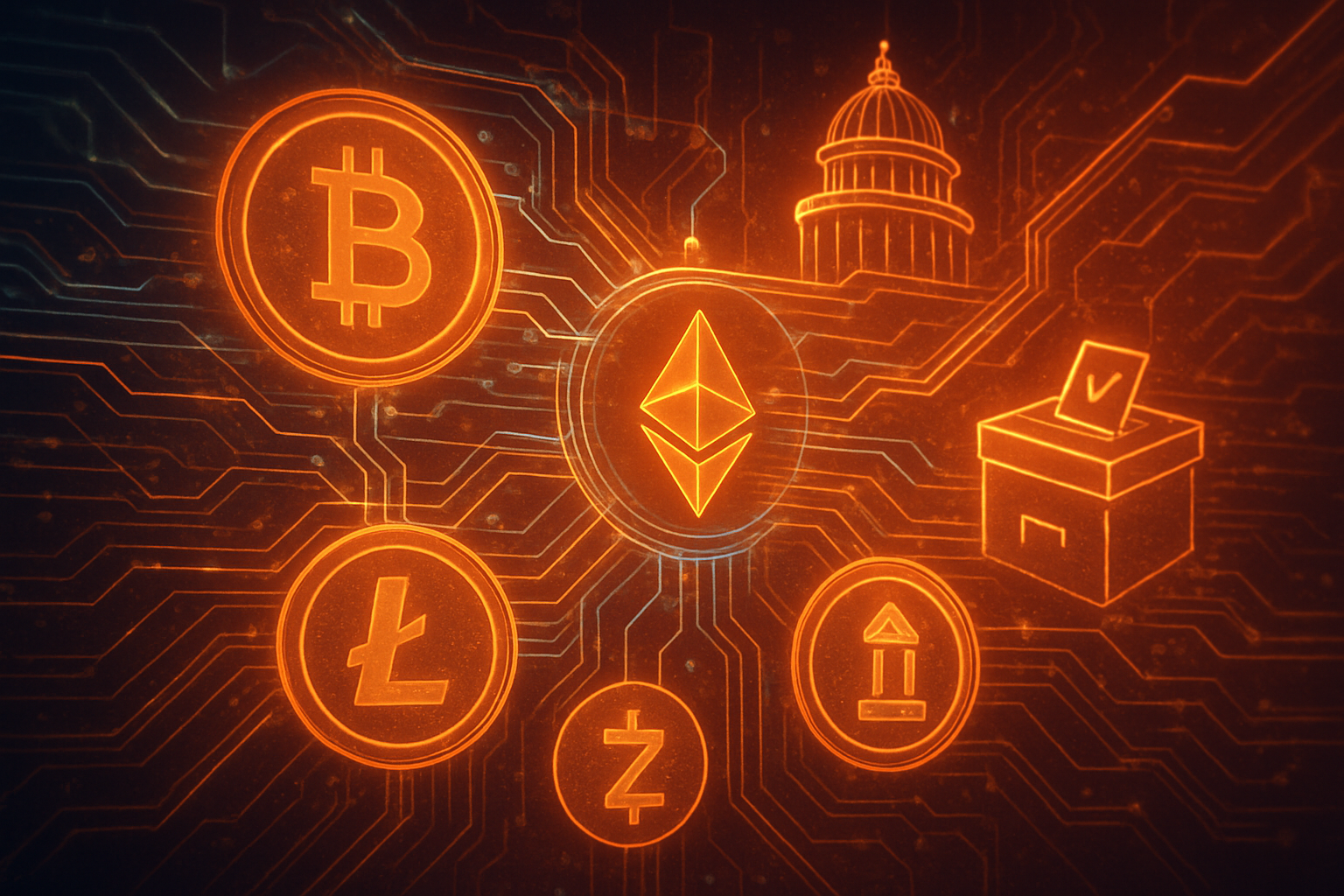
  • Crypto’s Political Power Play: Industry Spends Hundreds of Millions to Elect Allies and Shape Policy

    Crypto’s Political Power Play: Industry Spends Hundreds of Millions to Elect Allies and Shape Policy

    The cryptocurrency industry has dramatically escalated its political engagement, pouring unprecedented sums into lobbying efforts and electoral campaigns to secure a favorable regulatory landscape. Over the past two years, from 2023 to the current date of October 15, 2025, crypto entities have spent hundreds of millions of dollars, establishing powerful Political Action Committees (PACs) and backing candidates who champion digital asset innovation. This aggressive push marks a pivotal shift, transforming a nascent sector into a formidable political force capable of influencing legislative outcomes and presidential rhetoric.

    This surge in political spending, notably exceeding traditional big spenders in the 2024 election cycle, signals the industry's determination to ward off stringent regulations and foster a "light-touch" approach to oversight. The immediate reaction from the political sphere has been a noticeable shift in rhetoric from key figures, including presidential candidates, who have increasingly adopted pro-crypto stances. For the broader crypto ecosystem, this signifies a maturing industry seeking legitimacy and stability, though it also raises concerns among consumer advocacy groups about the potential for undue influence on the democratic process.

    Market Impact and Price Action

    While direct, immediate price movements of individual tokens or the overall market in direct response to specific lobbying efforts are often challenging to isolate, the broader impact of the cryptocurrency industry's political influence is profound. The consistent and substantial investment in shaping policy aims to create a more predictable and supportive regulatory environment, which is a critical factor for long-term market stability and growth.

    The passage of legislation like the Financial Innovation and Technology for the 21st Century Act (FIT21) in the House, and the signing of the GENIUS Act (stablecoin regulation) into law by President Trump in July 2025, are direct results of these lobbying efforts. Such legislative clarity, even if partial, can alleviate regulatory uncertainty that often suppresses investor confidence and innovation. When the path to legal operation becomes clearer, it typically encourages institutional investment, attracts more developers to build on various protocols, and could lead to increased trading volumes and liquidity as market participants feel more secure. Conversely, the threat of hostile regulation, which the industry is actively combating, can trigger selling pressure and dampen sentiment. The industry's success in electing pro-crypto allies and passing favorable bills provides a foundational layer of support that, while not causing immediate price spikes, underpins a more robust and resilient market outlook.

    Community and Ecosystem Response

    The crypto community has largely embraced the industry's foray into mainstream politics, viewing it as a necessary step towards wider adoption and legitimacy. The emergence of the "crypto voter" demographic is a testament to this engagement; polling data, such as a ConsenSys/HarrisX survey, indicated that 92% of crypto owners were committed to voting in 2024, with a strong preference for candidates supporting fair and transparent crypto regulations. This collective voice has been amplified across social media platforms like X (formerly Twitter) and Reddit, where discussions frequently revolve around legislative progress, the stances of political candidates, and the effectiveness of industry PACs.

    Crypto influencers and thought leaders have actively championed these lobbying efforts, often highlighting the importance of advocating for policies that foster innovation rather than stifle it. Many within the DeFi, NFT, and Web3 sectors see political engagement as crucial for protecting decentralized technologies from overreaching governmental control. For instance, the passage of bills like FIT21, which aims to clarify regulatory oversight, is often celebrated as a victory for the entire ecosystem, as it could provide a clearer framework for projects to operate within, potentially reducing legal risks for developers and users alike. While some voices express concern about the concentration of political power, the dominant sentiment remains one of proactive support for shaping a future where crypto can thrive within established legal frameworks.

    What's Next for Crypto

    Looking ahead from October 15, 2025, the cryptocurrency industry's political influence is poised to continue its upward trajectory, with significant short-term and long-term implications. The recent launch of The Fellowship PAC in September 2025, pledging over $100 million, signals an ongoing commitment to support pro-innovation candidates in future election cycles, including the crucial 2026 midterms and the 2028 presidential race. This sustained financial commitment suggests that legislative battles around market structure, stablecoin regulation, and decentralized finance will remain at the forefront.

    Potential catalysts to watch include the ongoing implementation of the GENIUS Act, further progress on market structure bills like FIT21 and the CLARITY Act, and any appointments to key regulatory bodies such as the Securities and Exchange Commission (SEC) and the Commodity Futures Trading Commission (CFTC). The industry will undoubtedly continue to lobby for the appointment of leaders who are perceived as crypto-friendly, a sentiment strongly reflected in former President Trump's pledge to appoint a pro-crypto SEC chair. Strategic considerations for projects and investors include closely monitoring legislative developments, understanding the regulatory nuances of different jurisdictions, and potentially aligning with advocacy groups that champion favorable policies. The industry's goal is clear: to solidify the United States as a global leader in digital assets, ensuring that innovation is fostered rather than hindered by regulation.

    Bottom Line

    The past two years have unequivocally demonstrated that the cryptocurrency industry has matured into a significant political player, no longer content to operate solely on the fringes of traditional finance. For crypto investors and enthusiasts, the key takeaway is that political and regulatory developments are now as critical to market health and future adoption as technological advancements. The hundreds of millions of dollars funneled into PACs like Fairshake, which by October 2025 reportedly held $141 million, and the newly launched Fellowship PAC, underscore a strategic, long-term commitment to shaping policy.

    The long-term significance of this political engagement cannot be overstated. By actively participating in the democratic process, the crypto industry is not just seeking to avoid punitive regulations but to establish a foundational legal framework that can legitimize digital assets in the eyes of mainstream finance and the broader public. This push for regulatory clarity, exemplified by the passage of bills like the GENIUS Act, is crucial for fostering institutional adoption and building trust. Important dates and metrics to monitor include upcoming election cycles, the progress of key legislative bills in both the House and Senate, and the fundraising totals and spending patterns of major crypto PACs, as these will continue to dictate the industry's political clout and the pace of regulatory evolution. The ultimate success of crypto adoption hinges not just on technological innovation, but increasingly, on its ability to navigate and influence the corridors of power.


    This article is for informational purposes only and does not constitute financial or investment advice. Cryptocurrency investments carry significant risk.

  • Shadowy Digital Front: Russia’s Alleged Crypto Covert Ops Spark EU Security Alarm

    Shadowy Digital Front: Russia’s Alleged Crypto Covert Ops Spark EU Security Alarm

    As of October 14, 2025, Europe finds itself grappling with escalating national security concerns following explicit allegations that Russia is extensively leveraging cryptocurrencies for covert operations across the continent. These claims, prominently voiced by Polish security officials, paint a troubling picture of digital assets being weaponized to fund espionage, sabotage, and broader destabilization campaigns within the European Union. The revelations underscore a critical nexus between emerging financial technologies and geopolitical conflict, raising urgent questions about illicit finance, digital asset regulation, and the very integrity of global financial systems.

    The allegations, which have been gaining traction with increasing detail since at least 2023, and with earlier instances dating back to 2016, suggest a sophisticated and adaptive approach by Russian intelligence agencies, particularly the GRU and FSB. They are reportedly utilizing cryptocurrencies like Bitcoin and stablecoins such as Tether to circumvent traditional financial oversight, pay operatives, finance critical infrastructure attacks, and evade international sanctions. Sławomir Cenckiewicz, the head of Poland's national security agency, brought renewed attention to the issue in October 2025 with public statements to the Financial Times, asserting that Russia's crypto-funded activities pose a direct threat to EU stability. This ongoing situation highlights a significant challenge for the crypto ecosystem, forcing a re-evaluation of how digital assets, designed for decentralization and efficiency, can be exploited for malign purposes, and prompting a swift, coordinated response from regulators and industry players alike.

    Market Impact and Price Action

    While direct, immediate price movements of specific cryptocurrencies tied explicitly to these allegations are difficult to pinpoint, the broader implications for the crypto market are significant, primarily stemming from increased regulatory scrutiny and a potential shift in investor sentiment. News of nation-state actors exploiting digital assets for illicit purposes inherently introduces a layer of systemic risk. The market's reaction tends to be more diffuse, manifesting as increased volatility and a general cautious outlook rather than sharp, targeted price drops.

    The primary market impact is likely to be psychological and regulatory. Investors may become warier of assets perceived to have higher anonymity or less stringent KYC/AML (Know Your Customer/Anti-Money Laundering) protocols, potentially favoring more regulated and transparent platforms. Trading volumes on "no-KYC" exchanges, though difficult to track comprehensively, could see shifts as authorities like Germany's Federal Criminal Police (which seized 47 such services in September 2024) intensify their crackdown. This regulatory pressure, while aimed at illicit actors, can create broader uncertainty, potentially dampening speculative trading and overall market liquidity for certain asset classes. The long-term technical analysis would suggest that persistent concerns over illicit use could act as a resistance level for broader crypto adoption, pushing for clearer regulatory frameworks as a necessary support. This situation echoes past instances where concerns over money laundering or terrorist financing led to increased calls for regulation, often preceding periods of consolidation or cautious growth in the market.

    Community and Ecosystem Response

    The cryptocurrency community's response to Russia's alleged covert crypto operations has been multifaceted, reflecting the industry's diverse stakeholders and ongoing debate between decentralization ideals and regulatory realities. On one hand, there's a strong push from within the ecosystem for enhanced compliance and collaboration with law enforcement. Blockchain analytics firms, such as Chainalysis, are actively engaged in monitoring Russian threat actors, tracking laundering attempts, and developing sophisticated tools to identify structured patterns in illicit transactions. Their optimism about the industry's capacity to counter sanctions evasion underscores a commitment from some quarters to uphold financial integrity.

    Conversely, the allegations have intensified existing debates surrounding censorship and access. While some platforms have faced public backlash for not unilaterally banning all Russian users, others argue against blanket restrictions, emphasizing that ordinary citizens should not be penalized for the actions of their government. This tension highlights the ethical complexities of applying traditional geopolitical sanctions within a decentralized financial paradigm. Furthermore, the adaptability of illicit actors, including the alleged rebranding of sanctioned entities (e.g., Garantex potentially as Grinex) and the proliferation of Russian-language "no-KYC" instant exchange services, demonstrates the ongoing cat-and-mouse game between enforcement and evasion. Broader crypto Twitter and Reddit sentiment often oscillates between calls for stricter regulation to protect the ecosystem's reputation and concerns about overreach that could stifle innovation or compromise fundamental principles of financial freedom. The impact on DeFi protocols, NFT projects, or Web3 applications is less direct but could be felt through increased scrutiny on anonymity-enhancing tools or decentralized exchanges if they are perceived as potential conduits for illicit funds.

    What's Next for Crypto

    The revelations regarding Russia's alleged crypto covert operations are poised to significantly shape the short and long-term trajectory of the cryptocurrency market, primarily by accelerating the global push for more robust digital asset regulation. In the short term, we can anticipate a surge in legislative efforts, particularly within the EU, to close existing loopholes that might enable foreign powers to exploit digital assets. Poland, for instance, is actively advancing new crypto oversight legislation, and the EU's 19th sanctions package already explicitly prohibits all cryptocurrency transactions for Russian residents and restricts dealings with foreign banks tied to Russian alternative payment systems. This increased regulatory fervor will likely lead to greater scrutiny of exchange services, particularly those operating with minimal KYC requirements.

    In the long term, this geopolitical dimension will undoubtedly be a persistent catalyst for the integration of national security considerations into crypto policy frameworks. Projects and investors will need to prioritize compliance and transparency, understanding that the reputational and operational risks associated with even perceived links to illicit activities are substantial. We can expect continued innovation in blockchain analytics and forensic tools to combat money laundering, alongside a potential bifurcation of the market: highly regulated and compliant platforms coexisting with a more clandestine, "dark" crypto economy. Strategic considerations for projects include investing in robust compliance infrastructure, engaging proactively with regulators, and clearly communicating their commitment to combating illicit finance. Investors will need to conduct enhanced due diligence, favoring projects with strong governance and transparency. Possible scenarios range from a highly regulated, mainstream crypto ecosystem (more likely) to a fragmented landscape where illicit use continues to pose significant challenges, necessitating an ongoing cat-and-mouse game between state actors and enforcement.

    Bottom Line

    The allegations of Russia's use of cryptocurrency for covert operations in Europe represent a critical inflection point for the digital asset space. For crypto investors and enthusiasts, the key takeaway is the undeniable reality that the industry's rapid growth has attracted the attention of nation-state actors, bringing with it complex geopolitical risks. This necessitates a shift in perspective, moving beyond purely technological or financial considerations to embrace a broader understanding of crypto's role in global security.

    The long-term significance of these developments lies in their potential to fundamentally reshape the regulatory landscape. We are witnessing a clear acceleration towards more stringent global standards for digital assets, driven by national security imperatives. While this may introduce friction and challenges for certain aspects of decentralization, it is also a necessary step for crypto to achieve broader mainstream adoption and legitimacy. The industry must demonstrate its capacity to self-regulate and collaborate with authorities to mitigate these risks. Important metrics to monitor include the progress of new EU and national crypto legislation, the effectiveness of sanctions enforcement on digital asset platforms, and the ongoing innovation in blockchain analytics tools. The future of crypto adoption will heavily depend on its ability to prove itself as a secure, transparent, and responsible financial innovation, rather than a haven for illicit activities.


    This article is for informational purposes only and does not constitute financial or investment advice. Cryptocurrency investments carry significant risk.