Tag: Ripple

  • XRP ETFs Shatter Inflow Records, Signaling Robust Institutional Embrace

    XRP ETFs Shatter Inflow Records, Signaling Robust Institutional Embrace

    In a landmark development for the cryptocurrency market, Exchange-Traded Funds (ETFs) tracking XRP have experienced unprecedented and sustained inflows throughout November and December 2025, signaling a decisive shift towards institutional adoption of the digital asset. As of early December, these U.S.-listed spot XRP ETFs have recorded an astonishing fifteen consecutive days of net inflows, accumulating approximately $861 million and pushing total assets under management (AUM) towards the $900 million mark. This surge, particularly concentrated since the debut of Canary Capital's (XRPC) spot XRP ETF in November, follows crucial regulatory clarity provided by the August 2025 settlement between Ripple and the U.S. Securities and Exchange Commission (SEC), which reclassified XRP as a commodity.

    The immediate market reaction to these record-breaking inflows has been a complex interplay of initial optimism and subsequent consolidation. While the news initially spurred a rebound in XRP's price, reaching as high as $2.19, a "sell-the-news" phenomenon quickly emerged, leading to a sharp 12% price drop shortly after Canary Capital's historic launch. Nevertheless, the sustained institutional accumulation underscores a profound shift in perception, cementing XRP's legitimacy within mainstream finance and setting the stage for its deeper integration into traditional investment portfolios. This continuous absorption of supply by institutional players, despite short-term price volatility, highlights a long-term bullish outlook from significant financial entities.

    Market Impact and Price Action

    The substantial capital flowing into XRP ETFs has created a fascinating dynamic in the market, characterized by both significant interest and unexpected price behavior. Following the initial excitement surrounding the launch of Canary Capital’s (XRPC) spot XRP ETF on November 13, 2025, which saw nearly $250 million in first-day inflows, XRP’s price experienced a notable rebound to $2.19 from a monthly low near $1.81. However, this bullish momentum was quickly curtailed by a "sell-the-news" event, with large holders liquidating over 200 million tokens within 48 hours, causing a sharp 12% price drop.

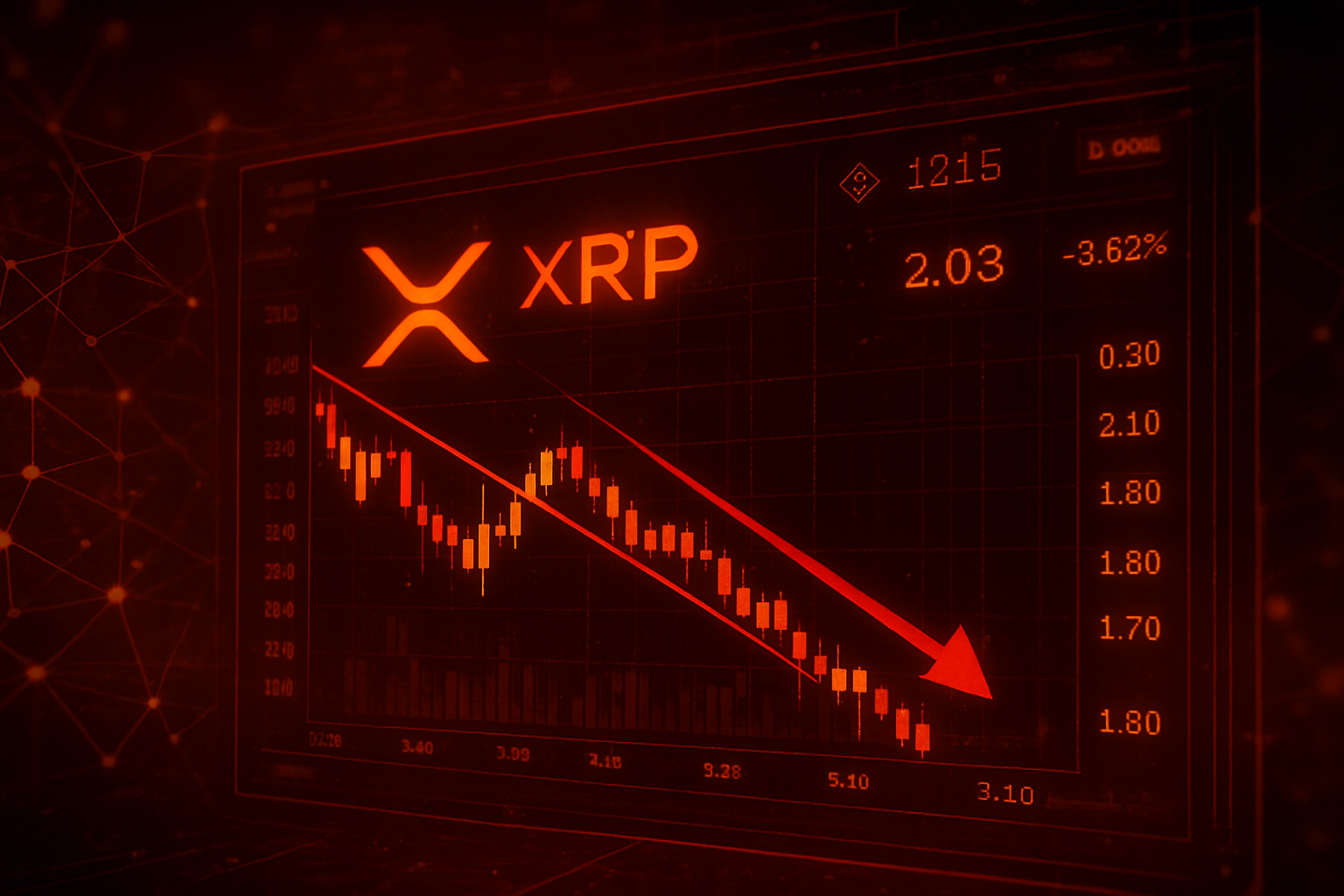
    Despite the sustained inflow streak of 15 days, which saw an additional $861 million pour into these ETFs, XRP's price actually declined by 7.9% from its higher levels, trading around $2.03 by December 7, 2025. This suggests that while institutional demand is robust, the immediate spot market price action is influenced by other factors, including profit-taking by existing holders and potentially over-the-counter (OTC) accumulation by institutions that mitigates direct upward pressure on exchange prices. Trading volumes for XRP have remained elevated, indicating strong market activity, though liquidity has seen shifts as significant amounts of XRP (over 180 million tokens in recent weeks) have been withdrawn from major exchanges like Binance, fueling speculation of an impending supply shock.

    Technically, XRP has found strong support around the $1.95-$2.00 range following the post-ETF launch volatility. Resistance levels are currently observed around $2.15-$2.20, which XRP has struggled to breach decisively. This consolidation phase, despite consistent institutional buying, suggests a tug-of-war between long-term accumulation and short-term profit-taking. Historically, similar major catalyst events in crypto, such as Bitcoin (BTC) ETF launches, have often seen initial price volatility followed by a more sustained rally as institutional capital truly settles in and retail interest eventually catches up. The current scenario with XRP ETFs appears to be in this initial, more volatile phase, hinting at potential for future appreciation once the market fully digests the implications of this institutional embrace.

    Community and Ecosystem Response

    The crypto community's response to the record XRP ETF inflows has been overwhelmingly positive, albeit with a degree of nuanced discussion regarding the immediate price impact. On platforms like Crypto Twitter and Reddit, sentiment largely revolves around a sense of validation and long-awaited legitimacy for XRP. Influencers and thought leaders have hailed the approval of U.S.-listed spot XRP ETFs as a monumental achievement, significantly de-risking the asset for traditional investors and affirming its role in mainstream finance. The August 2025 Ripple-SEC settlement is frequently cited as the linchpin that unlocked this institutional floodgate, providing the regulatory clarity necessary for such products to thrive.

    Discussions often highlight the "supply shock" narrative, with many speculating that continuous institutional buying, coupled with significant XRP withdrawals from exchanges, will inevitably lead to a scarcity that could drive future price surges. Ripple CEO Brad Garlinghouse's comments that this is "only the beginning" for XRP ETFs have resonated strongly, reinforcing a long-term bullish outlook among holders. The broader crypto Twitter and Reddit sentiment reflects a growing conviction that XRP is now firmly entrenched in the institutional investment landscape, potentially paving the way for similar developments across other altcoins that achieve regulatory clarity.

    Beyond social media, the impact on related DeFi protocols, NFT projects, or Web3 applications directly tied to XRP's ecosystem is still nascent but promising. While XRP Ledger (XRPL) projects haven't seen an immediate, explosive boom directly attributable to the ETF inflows, the enhanced legitimacy and potential for increased liquidity are expected to foster greater developer interest and integration. The decision by traditional finance giant Vanguard to list a suite of XRP spot ETFs on its brokerage platform is seen as a "major catalyst" and a "significant policy reversal," further broadening mainstream access and signaling a potential ripple effect across other institutional platforms.

    What's Next for Crypto

    The record inflows into XRP ETFs herald significant short-term and long-term implications for the broader crypto market, particularly for assets that have struggled with regulatory ambiguity. In the short term, the sustained institutional demand for XRP, even amidst some price consolidation, suggests a growing appetite among traditional investors for regulated crypto investment vehicles. This could prompt other asset managers to accelerate their efforts to launch similar ETFs for other cryptocurrencies, especially those that achieve clearer regulatory status. The immediate focus will be on whether XRP can break through key resistance levels as the "supply shock" narrative gains traction, potentially leading to a more pronounced price rally if institutional buying continues to outpace selling pressure.

    Looking further ahead, the successful launch and adoption of XRP ETFs could serve as a blueprint for the institutionalization of other digital assets. This trend points towards a future where crypto assets are increasingly accessible through traditional investment channels, potentially drawing in trillions of dollars from pension funds, endowments, and wealth managers. Potential catalysts to watch include further regulatory clarity for other major altcoins, continued innovation within the XRP Ledger ecosystem that leverages this newfound institutional interest, and the expansion of XRP ETF offerings into new jurisdictions. Strategic considerations for projects and investors now include closely monitoring regulatory developments, understanding the evolving landscape of institutional product offerings, and identifying assets that are likely to follow XRP's path towards mainstream financial integration.

    Possible scenarios range from continued steady institutional accumulation leading to gradual price appreciation, to a more explosive rally if retail interest converges with institutional demand, creating a significant liquidity event. Conversely, a major shift in regulatory sentiment or an unforeseen market-wide downturn could temper enthusiasm, though the current trajectory suggests a strong push towards deeper institutional embrace. The success of XRP ETFs validates the long-held belief that regulatory clarity is the ultimate unlock for institutional capital in the crypto space, setting a powerful precedent for the entire industry.

    Bottom Line

    The record-breaking inflows into XRP ETFs represent a watershed moment for the cryptocurrency industry, particularly for XRP itself. For crypto investors and enthusiasts, the key takeaway is the undeniable validation of XRP as a legitimate, investable asset within traditional finance. This institutional embrace, catalyzed by the August 2025 Ripple-SEC settlement, signifies a maturation of the crypto market where regulatory clarity directly translates into significant capital allocation from major financial players. While immediate price action has seen some volatility, the underlying trend of sustained institutional accumulation points to a long-term bullish outlook for XRP.

    The long-term significance of this development cannot be overstated. It establishes a clear pathway for other digital assets to gain similar institutional traction, provided they can navigate the complex regulatory landscape. This shift has the potential to fundamentally alter the market structure, bringing unprecedented levels of liquidity and stability to the crypto ecosystem. It also reinforces the narrative that cryptocurrencies are moving beyond niche speculative assets to become a recognized asset class within diversified investment portfolios.

    Moving forward, investors and enthusiasts should closely monitor several important metrics and events. Continued net inflows into XRP ETFs, significant withdrawals of XRP from exchanges indicating further supply reduction, and any new announcements regarding partnerships or integrations within the XRP Ledger ecosystem will be crucial indicators. The performance of XRP against key technical levels, particularly its ability to establish new support floors and break through resistance, will also be vital. Ultimately, the success of XRP ETFs is a powerful testament to the transformative potential of regulatory clarity in unlocking institutional capital, paving the way for a more integrated and mature global digital asset market.


    This article is for informational purposes only and does not constitute financial or investment advice. Cryptocurrency investments carry significant risk.
  • Ripple CEO Brad Garlinghouse Predicts Bitcoin to Soar to $180K Amidst Hopes for U.S. Regulatory Clarity

    Ripple CEO Brad Garlinghouse Predicts Bitcoin to Soar to $180K Amidst Hopes for U.S. Regulatory Clarity

    Dubai, UAE – December 5, 2025 – In a bold forecast that has sent ripples through the cryptocurrency market, Ripple (XRP) CEO Brad Garlinghouse declared earlier this week that Bitcoin (BTC) is poised to hit a staggering $180,000 by the close of 2026. Speaking at Binance Blockchain Week, held on December 3rd and 4th, 2025, Garlinghouse's optimistic prediction hinges significantly on the anticipated arrival of clear regulatory frameworks within the United States.

    Garlinghouse's pronouncement comes at a pivotal time for the crypto industry, which has long grappled with regulatory ambiguity, particularly in major economies like the U.S. His assertion that clearer rules will unlock substantial institutional capital has resonated deeply, offering a beacon of hope for sustained market growth beyond speculative cycles. With Bitcoin trading around $93,000-$94,000 at the time of his statement, the crypto community is keenly observing whether this ambitious target will materialize, potentially ushering in a new era of mainstream adoption and stability.

    Market Impact and Price Action

    Garlinghouse's "uber-bullish" forecast injected a palpable sense of optimism into a market already experiencing a resurgence. At the time of his statement on December 3rd-4th, 2025, Bitcoin (BTC) was trading robustly in the $93,000-$94,000 range, having recently rebounded from a dip below $84,000. This pre-existing bullish momentum, fueled by positive U.S. regulatory signals and expectations of interest rate cuts, provided fertile ground for Garlinghouse's prediction to take root.

    In the immediate aftermath, market sentiment leaned heavily bullish. Analysts had already identified the $97,000-$98,000 zone as the next significant liquidity target for Bitcoin if bulls could firmly reclaim the $93,000 resistance. Garlinghouse's confident projection could very well provide the necessary impetus for BTC to challenge and potentially breach these levels, attracting further capital from investors eyeing the long-term $180,000 target. Trading volumes, which had already seen a surge in Bitcoin ETF activity above $5.1 billion on December 3rd, indicating renewed institutional engagement, are expected to climb higher as both retail and institutional players react to the news.

    For XRP, the native token of Ripple, a bullish Bitcoin outlook from its CEO naturally sparked positive sentiment. While BTC typically leads market movements, a rising tide often lifts all boats. On December 5th, XRP was trading around $2.06, navigating some pressure despite recent ETF inflows. However, just days prior, on December 3rd, XRP had shown signs of a potential breakout towards $2.75, backed by significant whale accumulation. Garlinghouse's broader optimism for 2026, citing institutional access and regulatory progress relevant to Ripple’s business model, serves to reinforce a bullish outlook for XRP, potentially pushing it towards its immediate resistance at $2.75.

    Historically, high-profile bullish predictions, especially when coupled with tangible regulatory progress, have acted as powerful catalysts. The approval of Bitcoin Spot ETFs in January 2024, for instance, led to unprecedented inflows and new all-time highs for Bitcoin. Similarly, news of a crypto-friendly SEC Commissioner in December 2024 propelled Bitcoin above $100,000. While some suggest that the influence of individual crypto leaders might be diminishing as Bitcoin matures into a macro asset, endorsements from figures like Garlinghouse, particularly when tied to fundamental drivers like regulatory clarity, still carry substantial weight and can ignite sustained positive price action.

    Community and Ecosystem Response

    Brad Garlinghouse's audacious $180,000 Bitcoin prediction for late 2026, delivered during Binance Blockchain Week (December 3rd-4th, 2025), has ignited fervent discussions across the crypto community, particularly due to his emphasis on evolving U.S. regulatory clarity and institutional adoption. The sentiment, while generally optimistic, also reflects a nuanced perspective shaped by past market cycles and the specific dynamics of various crypto factions.

    Within the XRP community, Garlinghouse's statement has been met with a mix of excitement and cautious analysis. Many XRP holders interpret his remarks as a strong signal of positive underlying market developments, including increased institutional interest and liquidity. They actively debate how XRP’s price might react to a Bitcoin surge of this magnitude, with some analysts speculating that altcoins like XRP could experience amplified gains, potentially tripling or even five-folding their current values based on historical correlations. Conversely, a segment of the community remains skeptical, recalling previous predictions from Garlinghouse that did not fully materialize, urging a more measured approach to this new forecast.

    Broader crypto social media platforms and influencers are also buzzing with Garlinghouse's forecast. His aggressive target stands out compared to more conservative predictions from peers at the same event, such as Solana Foundation President Lily Liu, who foresaw Bitcoin "above $100,000" by the end of 2026. This boldness has amplified discussions, with news outlets widely reporting the prediction and highlighting the narrative of regulatory clarity and institutional influx. The prevailing sentiment appears to be one of cautious optimism, acknowledging the potential for significant upside while remaining mindful of market volatility.

    While the immediate, direct effects on specific DeFi protocols, NFT projects, or Web3 applications are still nascent given the recency of the statement, the underlying drivers cited by Garlinghouse—regulatory clarity and institutional adoption—are broadly positive catalysts for the entire ecosystem. Projects like "Bitcoin Hyper" ($HYPER), an SVM-powered Layer 2 solution aiming to integrate high-throughput smart contracts and DeFi into Bitcoin, have reportedly seen strong presale demand, indicating investor appetite for "high-beta infrastructure plays" that could benefit from a major Bitcoin rally. Furthermore, the XRP Ledger ecosystem has witnessed a resurgence in DeFi activity, with its Total Value Locked (TVL) increasing by approximately 7% in the week leading up to Garlinghouse's announcement, and Ripple's stablecoin, RLUSD, surpassing a $1 billion market cap the previous month, both pointing to growing utility and institutional engagement that indirectly support the broader Web3 space. The general bullish sentiment is expected to encourage more investment and development across all these sectors.

    What's Next for Crypto

    Brad Garlinghouse's $180,000 Bitcoin prediction for late 2026 paints a vivid picture of a crypto market on the cusp of significant transformation. The short-term outlook (December 2025 – mid-2026) suggests a market navigating a "risk-off" phase, yet buoyed by robust underlying structural adoption. The anticipated end of the Federal Reserve's Quantitative Tightening (QT) in December 2025 is expected to stabilize prices, while potential Fed rate cuts in late 2025 and early 2026 could further fuel investment in riskier assets like cryptocurrencies by reducing the cost of money and softening the U.S. dollar.

    Looking long-term (mid-2026 and beyond), Garlinghouse's vision implies a maturation of Bitcoin from a purely speculative asset to a foundational component of global financial infrastructure. This shift could lead to more sustained, gradual growth, potentially signaling an end to the extreme volatility of traditional four-year cycles. This era is expected to witness the widespread use of stablecoins for traditional financial transactions, the emergence of more sophisticated crypto financial products, and a dramatic surge in institutional capital inflows, all contributing to a market that prioritizes utility over pure speculation.

    Several key catalysts and developments will shape this trajectory:

    • Regulatory Developments: The most crucial factor remains U.S. regulatory clarity. The passage of the Guiding and Establishing National Innovation for U.S. Stablecoins (GENIUS) Act in July 2025 set a federal framework for stablecoins. Comprehensive market structure legislation, building on the CLARITY Act which classifies decentralized tokens like Bitcoin as commodities, is anticipated in early 2026. The Commodity Futures Trading Commission (CFTC) has also approved spot cryptocurrency trading on federally regulated exchanges in December 2025, collaborating with the SEC to create a unified regulatory front, moving away from "regulation by enforcement" towards clear, predictable rules. Globally, the EU's MiCA regulation continues its implementation, with Phase II focusing on DeFi and NFTs in Q2 2026, contributing to international regulatory harmonization.

    • Institutional Inflows and Adoption: The continued growth of Spot Bitcoin ETFs and the potential launch of Ethereum and XRP ETFs are pivotal for attracting substantial institutional capital. Garlinghouse believes crypto ETFs, currently a small fraction of the overall ETF market, will see their share surge. The tokenization of Real-World Assets (RWAs) is also gaining traction, with 76% of institutional investors planning to invest in tokenized assets by 2026. Furthermore, more publicly traded companies are adopting Bitcoin as a treasury asset, with over 1,000,000 BTC accumulated by Digital Asset Treasury Companies (DATs) expected by the end of 2026. Financial giants like BlackRock (NYSE: BLK), Vanguard, and Fidelity (NYSE: FNF) are actively developing Bitcoin-related products, signaling long-term structural participation.

    • Technological Advancements: Ethereum's Pectra upgrade in May 2025 improved network speed, boosting altcoin momentum. Layer 2 scaling solutions like Arbitrum and Bitcoin Hyper are enabling high-throughput smart contracts and DeFi on Bitcoin-secured stacks. The integration of AI and blockchain is poised to revolutionize finance, with AI-driven risk management enhancing on-chain security and smart contract resilience. Advancements in privacy (zero-knowledge proofs) and sustainability (Proof-of-Stake) will also become more prominent.

    For crypto projects, the strategic imperative is to focus on developing products with clear real-world utility, strong partnerships, and robust security. For investors, diversification, rigorous due diligence, and vigilance regarding regulatory developments are paramount.

    Three main scenarios for Bitcoin's future appear:

    1. Base Case: Stabilization Amid Rate-Cut Optimism (Likely): Bitcoin stabilizes in the $80,000–$90,000 range, supported by moderate inflation, a Federal Reserve pivot, and continued institutional adoption.
    2. Bull Case: Garlinghouse's Prediction ($180K and Beyond) (Plausible): Bitcoin reaches or exceeds $180,000 by late 2026, driven by comprehensive U.S. regulatory clarity, massive institutional inflows, and significant technological advancements.
    3. Bear Case: Prolonged Correction ($57.8K) (Less Likely): Bitcoin falls to $57,800 or lower due to unforeseen geopolitical tensions, severe regulatory crackdowns (contrary to current trends), or a resurgence of high inflation.

    While Garlinghouse's prediction is ambitious, it is grounded in tangible shifts towards regulatory clarity and growing institutional acceptance, setting the stage for a more mature and integrated crypto market.

    Bottom Line

    Ripple CEO Brad Garlinghouse's prediction of Bitcoin reaching $180,000 by late 2026 is more than just an ambitious price target; it's a powerful statement reflecting a profound shift in the cryptocurrency landscape. For crypto investors and enthusiasts, the key takeaway is that the market is moving beyond purely speculative cycles, driven instead by fundamental structural changes: robust U.S. regulatory clarity and an unprecedented surge in institutional adoption. Bitcoin is increasingly seen as "digital capital," a recognized asset class that traditional financial players are actively integrating into their portfolios.

    The long-term significance of this forecast lies in its implicit assertion that foundational regulatory challenges are being actively addressed, paving the way for crypto to become an integral component of global finance. This outlook suggests a more stable and liquid market, where institutional capital is not merely dabbling but committing to long-term participation. As hundreds of billions in institutional funds are projected to flow into Bitcoin by the end of 2026, its role as a strategic asset for corporations and even nation-states will be further solidified, reinforcing its growing importance in the global financial architecture.

    Ultimately, the trajectory towards Bitcoin at $180,000 hinges critically on sustained and accelerated crypto adoption, with U.S. regulatory clarity and institutional participation serving as the primary catalysts. The approval of spot Bitcoin Exchange-Traded Funds (ETFs) has been a watershed moment, creating regulated gateways for traditional finance and attracting significant capital. The increasing involvement of major asset managers like BlackRock (NYSE: BLK), Vanguard, and Fidelity (NYSE: FNF) signals a commitment to long-term engagement. Beyond investment vehicles, the industry is witnessing a crucial shift towards real-world utility, with expanding applications in tokenization, payments, and Web3 infrastructure, moving cryptocurrencies beyond mere speculation to solve practical problems. The ubiquity of stablecoins in traditional financial transactions is also anticipated by 2026, further cementing crypto's role in the broader economy.

    Between now and late 2026, several critical dates, events, and metrics will serve as vital indicators for the realization of Garlinghouse's prediction:

    • U.S. Regulatory Clarity: Monitor ongoing legislative progress, including the acceleration of bills like the GENIUS Act and the CLARITY Act, and the full impact of the CFTC's approval for federally regulated spot Bitcoin and crypto trading throughout H1 2026. The DC Blockchain Summit (March 17-18, 2026) will offer crucial insights into policy direction.
    • Institutional Adoption: Closely track ETF inflow data, announcements from corporations adding Bitcoin to their balance sheets, and new crypto product offerings from major financial institutions. Conferences like Consensus Hong Kong (February 10-12, 2026) and Consensus Miami (May 5-7, 2026) will highlight trends in institutional engagement.
    • Macroeconomic Factors: Keep a keen eye on Federal Reserve interest rate decisions, particularly the December 10th meeting and subsequent policy changes throughout 2026, as potential rate cuts could bolster alternative assets.
    • Crypto-Specific Developments: Observe the expansion of real-world applications in tokenization and Web3 infrastructure, and track innovations discussed at events like the Bitcoin Conference (April 27-29, 2026).

    These factors will collectively determine whether Garlinghouse's bold prediction becomes a reality, ushering in a new era of mainstream crypto adoption and financial integration.


    This article is for informational purposes only and does not constitute financial or investment advice. Cryptocurrency investments carry significant risk.
  • XRP’s ‘Death Cross’ Signals Deeper Corrections as Analysts Eye $1.80-$2.10 Range

    XRP’s ‘Death Cross’ Signals Deeper Corrections as Analysts Eye $1.80-$2.10 Range

    New York, NY – December 1, 2025 – The cryptocurrency market is abuzz as XRP, the digital asset associated with Ripple (private), has confirmed a significant 'Death Cross' technical pattern on its daily chart in late November, extending into the first days of December 2025. This ominous signal, where XRP's short-term 50-day moving average (SMA) plunged below its long-term 200-day SMA, has sent ripples of concern through the investor community, prompting technical analysts to warn of potential price drops towards the $1.80-$2.10 range.

    The immediate market reaction has been predominantly bearish, with XRP experiencing a notable decline as the crossover materialized. On December 1, 2025, XRP's price fell approximately 7%, hitting session minimums around $2.01, further cementing the bearish sentiment that had been building throughout November. This technical event is significant because it is widely interpreted as a strong indicator of a potential shift towards a long-term bearish trend, suggesting that downward momentum is likely to continue or intensify, influencing both retail and algorithmic trading strategies across the crypto ecosystem.

    Market Impact and Price Action

    The formation of the 'Death Cross' for XRP has been a culmination of sustained selling pressure and a broader market downturn. Leading up to the confirmation, XRP had already seen considerable weakness, with reports in early November highlighting its vulnerability. The 50-day moving average, a key indicator of short-term momentum, had been steadily declining, setting the stage for its eventual cross below the more stable 200-day moving average.

    In the immediate aftermath, XRP's price movements have been characterized by a struggle to hold key support levels. The confirmed 'Death Cross' on December 1, 2025, saw XRP's price drop to around $2.05, establishing new session lows. This decline followed earlier warnings from late November that predicted a slide towards the $1.50 range, drawing parallels to historical instances where similar patterns preceded drops of up to 15% for XRP. Trading volume surged by 92% within 24 hours on December 1, accompanying the price drop, indicating aggressive repositioning and liquidation waves that erased recent gains. This high volume during a price decline further underscores the strong bearish sentiment dominating the market.

    Technical analysis points to critical support levels that XRP must defend to prevent steeper losses. Analysts have identified significant floors around $2.20, with stronger support at $2.15, $2.10, and $2.05 based on classical pivot points. The much-discussed $1.80 and $2.00 levels are also cited as important demand zones, with $1.80 historically acting as a robust area of buyer interest. Should these levels fail, a breach below $2.20 could open the door to the $1.80-$2.10 range, or even deeper corrections towards $1.50 or the psychological $1.00 mark. Conversely, resistance levels are noted at $2.26, $2.31, and a formidable barrier between $2.30-$2.40. A decisive break above $2.40 would be needed to signal any potential bullish reversal.

    Comparing this event to past 'Death Crosses' reveals a mixed bag of outcomes. A similar pattern for XRP in May 2025 preceded several weeks of sideways and negative price action. However, some analysts, like EGRAG, caution against drawing direct parallels to severe past crashes, such as the 2018 bear market. They argue that a "true" bearish 'Death Cross' leading to steep declines requires the token to be trading below both moving averages with significantly slowing momentum, which was not entirely the case for XRP as it held above the 200 MA with an upward trend in late November. This suggests that while a 'Death Cross' is a bearish indicator, its impact can vary based on the broader market context and other underlying factors.

    Community and Ecosystem Response

    The XRP 'Death Cross' has ignited a firestorm of discussion across social media platforms, with crypto Twitter (X) and Reddit serving as primary hubs for analysis, predictions, and emotional reactions. The sentiment has been largely bearish, reflecting the technical warnings from analysts.

    Crypto influencers and thought leaders have largely converged on a cautious to bearish outlook. Analysts like "Umair" on X highlighted the 'Death Cross' on XRP's daily chart, projecting a potential 15% crash that could push XRP into the $1.50 range, citing historical precedents. Others forecasted even more significant corrections, with some suggesting a 50% drop to $1.25 if key support levels fail to hold. This widespread bearish prognostication from prominent voices has undoubtedly amplified market anxiety. FXEmpire and Finance Magnates also confirmed the 'Death Cross', supporting a bearish narrative and price predictions of $1.82 and $1.61, respectively, despite some ongoing XRP ETF inflows.

    However, not all sentiment was uniformly negative. A contrarian view emerged from influencers such as "Steph Is Crypto" on X, who pointed out that a similar 'Death Cross' pattern in 2017 actually preceded a substantial 10x rally for XRP. This perspective offered a glimmer of hope for some, suggesting that the event could be a capitulation point before a significant rebound. Nonetheless, the immediate trading activity on December 1, characterized by a 92% surge in volume alongside a price drop, indicated aggressive profit-taking and liquidation waves, underscoring the prevailing fear in the market.

    The XRP 'Death Cross' coincided with a broader market downturn. On December 1, 2025, major cryptocurrencies, including Bitcoin and Ethereum, experienced losses ranging from 5% to 9%, with nearly $638 million in leveraged positions liquidated across exchanges, almost 90% of which were long positions. This market-wide correction, attributed to thin liquidity and macro uncertainty, exacerbated XRP's struggles. While direct, specific impacts on XRP-related DeFi protocols, NFT projects, or Web3 applications were not explicitly detailed in the immediate aftermath, the general market caution would undoubtedly lead to a more conservative approach within these sectors. Ripple (private) itself continued to advance its ecosystem, with its APAC entity receiving expanded payment licenses from the Monetary Authority of Singapore (MAS) and its stablecoin, RLUSD, gaining recognition. Several spot XRP ETFs, including those from Grayscale (private), Bitwise (private), Franklin Templeton (NYSE: BEN), and Canary Capital (private), also launched in mid-November, suggesting ongoing institutional infrastructure development despite token volatility.

    What's Next for Crypto

    The confirmed 'Death Cross' for XRP, occurring amidst a broader market 'risk-off' environment, paints a cautious short-term outlook for the digital asset and the wider cryptocurrency space. In the immediate weeks, sustained selling pressure is anticipated for XRP, potentially retesting lower support levels and solidifying the $1.80-$2.10 range as a critical battleground. Similarly, Bitcoin (BTC) is grappling with its own 'Death Cross' confirmation from mid-November, trading near $93,000 after falling from October highs of $126,000, signaling potential further downside towards $83,500 and a major support zone at $74,000-$76,000.

    However, the long-term implications for the crypto market remain nuanced. While technical indicators suggest immediate pain, many analysts view 'Death Crosses' as lagging indicators that often appear after significant price drops have already occurred, potentially marking local market bottoms rather than the start of prolonged bear markets. Therefore, a period of consolidation followed by a gradual recovery into early to mid-2026 remains a medium-high likelihood scenario, contingent on improving macroeconomic conditions and a slow but steady increase in institutional interest.

    Several potential catalysts could shift the market's trajectory. Anticipated Federal Reserve rate cuts in late 2025 or throughout 2026 could inject significant liquidity into risk assets. Continued demand and adoption of Spot Bitcoin ETFs, alongside the growth of XRP-spot ETFs, are expected to fuel institutional participation. Regulatory advancements, such as the potential passing of the CLARITY Act by 2026, could provide much-needed confidence and integration. For XRP specifically, the ongoing resolution of the SEC vs. Ripple lawsuit remains a pivotal event, with a favorable outcome potentially unleashing renewed confidence. Technological innovations within Ethereum (e.g., Pectra and Fusako upgrades), advancements in DeFi, and the expansion of real-world asset (RWA) tokenization on platforms like the XRPL will also drive fundamental value.

    Strategic considerations for investors during this volatile period include short-term caution, diversification of holdings, and disciplined risk management, such as using trailing stop-losses. However, significant dips, especially around key support levels, could also present accumulation opportunities for long-term investors who believe in the underlying fundamentals and future growth of the crypto market. For projects, the emphasis should be on developing real-world utility, particularly in areas like AI, DeFi, and core blockchain infrastructure, to attract serious investors and withstand market downturns.

    Bottom Line

    The XRP 'Death Cross' signal, confirmed in late November and early December 2025, serves as a stark reminder of the inherent volatility and technical sensitivities within the cryptocurrency market. For crypto investors and enthusiasts, the key takeaway is to approach the current market with heightened caution, recognizing the potential for further price declines in the short term, with analysts eyeing the $1.80-$2.10 range as a critical support zone. The immediate aftermath has seen significant selling pressure and liquidations, indicating a prevailing 'risk-off' sentiment exacerbated by broader market weakness and macroeconomic uncertainties.

    Despite the immediate bearish technical signals, the long-term significance for XRP and the wider crypto market appears more resilient. The 'Death Cross' is a lagging indicator, and historical precedents suggest it can sometimes mark temporary downturns before eventual rebounds. Crucially, underlying drivers such as increasing institutional adoption, particularly through spot ETFs from entities like Franklin Templeton (NYSE: BEN) and Grayscale (private), and the ongoing pursuit of regulatory clarity are bolstering the long-term outlook. Ripple's (private) advancements in real-world asset (RWA) tokenization and the expansion of its stablecoin, RLUSD, continue to enhance XRP's utility and institutional appeal.

    Ultimately, this period of technical weakness does not fundamentally derail the long-term trend of crypto adoption. Instead, it highlights the maturation of the market, its growing sensitivity to macroeconomic factors, and the ongoing shift towards a more regulated and utility-driven ecosystem. While retail investor sentiment may fluctuate, institutional players often view such corrections as strategic accumulation opportunities. The path to broader crypto adoption will likely involve navigating these cyclical downturns, emphasizing the importance of robust fundamental development and clear regulatory frameworks.

    Important Dates, Events, or Metrics to Monitor:

    • XRP Price Levels: Watch for XRP's ability to hold support at $2.00, $1.90, and $1.61, and attempts to reclaim resistance at $2.19-$2.29 and $2.45.
    • XRP ETF Inflows/Outflows: Monitor institutional capital flows into XRP ETFs for signs of renewed demand.
    • Federal Reserve Interest Rate Decisions: Upcoming Fed meetings and any indications of rate cuts will significantly influence market liquidity.
    • SEC vs. Ripple Lawsuit: Any definitive outcome or significant progress in the lawsuit remains a pivotal event for XRP.
    • Regulatory Developments: Keep an eye on U.S. legislative progress (e.g., CLARITY Act) and global regulatory frameworks.
    • Ripple Ecosystem: Track RWA tokenization initiatives (2025-2026) and RLUSD stablecoin expansion (Q1 2026).
    • Bitcoin Price Action: Bitcoin's ability to hold $80,000-$85,000 support and overall crypto market capitalization will provide critical context.

    This article is for informational purposes only and does not constitute financial or investment advice. Cryptocurrency investments carry significant risk.

  • Ripple Ignites Wall Street Rivalry with XRP ETF Launch, Eyes JPMorgan’s Throne

    Ripple Ignites Wall Street Rivalry with XRP ETF Launch, Eyes JPMorgan’s Throne

    The cryptocurrency world is abuzz following a pivotal week that saw the launch of the Bitwise XRP Exchange Traded Fund (ETF) on November 20, 2025, and a bold declaration from a prominent Wall Street CEO. Sal Gilbertie of Teucrium Trading, in a statement made between November 21-23, 2025, asserted that Ripple is strategically positioning itself to become a formidable rival to traditional financial behemoths like JPMorgan (NYSE: JPM). This audacious ambition, underscored by the burgeoning interest in XRP-backed financial products, marks a significant turning point in the ongoing convergence of traditional finance and the burgeoning digital asset ecosystem.

    The debut of the Bitwise XRP ETF (NYSE: XRP) on the New York Stock Exchange, hot on the heels of Canary Capital's XRPC ETF on November 13, 2025, has sent ripples across the crypto landscape. Recording an impressive $26 million in trading volume on its first day—making it the third-biggest ETF debut of the year—the event signals a new era of institutional acceptance and accessibility for altcoins. Ripple CEO Brad Garlinghouse himself acknowledged the milestone, proclaiming, "The pre-thanksgiving rush (shall we say turkey trot) for XRP ETFs starts now," highlighting the momentum building around XRP-centric investment vehicles and Ripple's long-term vision to reshape global finance.

    Market Impact and Price Action

    The immediate market reaction to the Bitwise XRP ETF launch on November 20, 2025, and the subsequent Wall Street commentary has been closely watched, though comprehensive long-term data is still emerging given the recency of these events. On its inaugural day, the Bitwise XRP ETF (NYSE: XRP) impressively garnered approximately $26 million in trading volume, positioning it as the third-biggest ETF debut of the year. This initial performance, occurring amidst a broader crypto market downturn where Bitcoin experienced a dip and XRP's price was reportedly testing critical support levels, underscores a significant investor appetite for direct XRP exposure through regulated channels.

    While specific, sustained price movements for XRP (XRP) are still unfolding, the launch of an institutional investment product of this magnitude typically signals a boost in legitimacy and can attract substantial capital inflows. Historically, the introduction of Bitcoin (BTC) futures ETFs in 2021 and spot Bitcoin ETFs in early 2024 has demonstrated varied short-term impacts, often leading to initial price surges followed by consolidation or "sell the news" events. However, the overarching trend has been an increase in market liquidity, institutional participation, and a broader acceptance of the underlying asset. For XRP, the immediate volume suggests a strong initial demand, which could translate into upward price pressure if sustained, especially as other asset managers like Grayscale and Franklin Templeton are poised to launch their own XRP ETFs around November 24-25, 2025.

    Technical analysis, while still in its nascent stages post-launch, will focus on how XRP navigates key support and resistance levels established prior to and immediately after the ETF debut. The fact that the ETF launched during a challenging period for the wider market indicates that the initial demand for XRP exposure is robust, potentially establishing a strong new support floor. Analysts will be monitoring for a sustained increase in trading volume and a tightening of bid-ask spreads, which would signify enhanced liquidity and market depth, crucial for an asset aiming for global financial integration. The collective acquisition of millions of XRP tokens daily by ETF issuers, as anticipated by experts, could fundamentally alter XRP's supply-demand dynamics over the medium to long term.

    The comparison to previous ETF launches, particularly Bitcoin's journey, provides a roadmap. While initial volatility is common, the long-term effect of regulated investment vehicles has been overwhelmingly positive for asset validation and growth. JPMorgan analysts, prior to these launches, had already projected that XRP ETFs could attract between $4 billion and $8 billion in new assets within their first year, a testament to the anticipated institutional interest and the potential for XRP to become a more integral part of traditional investment portfolios.

    Community and Ecosystem Response

    The launch of the Bitwise XRP ETF and the bold assertions about Ripple's ambition to challenge JPMorgan have elicited a multifaceted response across the crypto community. On one hand, there's palpable excitement among long-term XRP holders and proponents, who view the ETF as a long-awaited validation and a gateway for institutional capital. Ripple CEO Brad Garlinghouse celebrated the Bitwise launch as a "momentous event," emphasizing its potential to revolutionize global payments. Bitwise CIO Matt Hougan echoed this sentiment, highlighting the simplified access it provides to XRP.

    However, the immediate aftermath also saw a degree of frustration and a "sell the news" reaction in XRP's price, which experienced a notable dip below $2, erasing recent gains amidst a broader market downturn affecting Bitcoin and Ethereum. This led to mixed sentiment on social media platforms like X (formerly Twitter) and Reddit. While some crypto pundits like Zach Rector viewed the pullback as a buying opportunity, and Cobb predicted an imminent supply shock for XRP due to ETF demand, many community discussions reflected anxiety as XRP tested critical support levels. Users on Reddit, for instance, expressed concerns that despite legal clarity and ETF launches, XRP remained "stuck," although the overarching long-term bullish outlook persisted for many.

    The narrative of Ripple as a "JPMorgan rival" resonated strongly within expert commentary. Sal Gilbertie of Teucrium Trading was particularly vocal, envisioning a "Ripple Bank" that, once fully licensed and operating under clear U.S. regulations, would be the true catalyst for XRP's value surge. He underscored Ripple's disciplined leadership and ISO 20022 compliance as key advantages, highlighting past instances where traditional banks like JPMorgan had actively lobbied against Ripple receiving a federal banking license, implicitly acknowledging the competitive threat.

    Despite the institutional excitement around XRP ETFs, the direct, immediate impact on related DeFi protocols, NFT projects, or Web3 applications built on the XRP Ledger (XRPL) has been less pronounced. While the XRPL ecosystem continues to develop its capabilities in tokenized assets and decentralized finance, some reports indicated a "notable pullback in network participation" on the DeFi side, with a reduction in Total Value Locked (TVL) since July. This suggests that while ETFs are opening doors for institutional investment into XRP as an asset, the direct spillover into the XRPL's broader DApp ecosystem may be a more gradual process, or perhaps overshadowed by the prevailing market conditions. However, the long-term expectation among some thought leaders is that XRP ETFs will eventually "give attention to DeFi" on the XRPL.

    What's Next for Crypto

    The recent launch of XRP ETFs and Ripple's audacious strategy to challenge traditional finance giants like JPMorgan (NYSE: JPM) mark a significant inflection point for the broader crypto market. The short-term outlook for XRP (XRP) is likely to involve continued volatility as the market digests the influx of institutional capital and navigates broader macroeconomic headwinds. While the Bitwise and Canary Capital XRP ETFs have already attracted over $118 million in inflows within days of their November 2025 launches, demonstrating robust institutional interest, a "sell-the-news" reaction could still lead to temporary price fluctuations. However, the sustained demand from these and upcoming ETFs from Grayscale and Franklin Templeton is expected to provide a steady tailwind, potentially pushing XRP past the $2.00 mark in the near to medium term. The shifting investor focus, with altcoin ETFs gaining traction even as Bitcoin and Ethereum ETFs saw outflows, signals a maturing market with diversified institutional appetite.

    Looking further ahead into 2026 and beyond, Ripple's ambition to become a "JPMorgan rival" is a long-game strategy rooted in establishing a blockchain-native backbone for global finance. Should Ripple secure a banking license, it would be poised to directly compete with established institutions by offering faster, cheaper, and more efficient cross-border payments, potentially disrupting traditional systems like SWIFT. This competition is already evident in JPMorgan's development of JPM Coin for wholesale payments, indicating a broader trend of traditional finance integrating blockchain solutions.

    The long-term implications for the crypto market are profound: continued maturation and institutionalization, with increasing adoption by banks, hedge funds, and asset managers through ETFs and tokenized assets. Regulatory clarity, particularly for stablecoins and DeFi, is anticipated to improve globally, fostering greater confidence and compliance. Stablecoins are projected to become ubiquitous, facilitating not just trading but also traditional financial transactions and cross-border settlements. Bitcoin's role is expected to evolve into a more stable digital gold, while Decentralized Finance (DeFi) is poised for mainstream integration, leveraging AI for risk management and security. Technological advancements like Layer 2 scaling solutions, cross-chain interoperability, and Ethereum's "Fusaka" upgrade in December 2025 are critical catalysts for enhanced efficiency and value capture, potentially leading a market rebound in 2026.

    Potential catalysts to watch include sustained inflows into XRP and other crypto ETFs, further regulatory clarity (especially regarding Ripple's banking license), a favorable macroeconomic environment with anticipated Federal Reserve rate cuts, and the accelerating tokenization of real-world assets (RWAs). For projects, strategic considerations include prioritizing real-world utility, robust tokenomics, regulatory compliance, interoperability, and enterprise partnerships. Investors, meanwhile, should focus on portfolio diversification, adopt a long-term horizon for assets like XRP, diligently monitor ETF inflows and macro trends, and conduct thorough research beyond speculative hype. The most likely scenario is a sustained institutional-led bull market, albeit with periods of volatility, as the digital asset ecosystem continues its integration into the global financial landscape.

    Bottom Line

    The confluence of newly launched XRP ETFs and Ripple's explicit ambition to challenge financial titans like JPMorgan marks a transformative period for the cryptocurrency ecosystem. For crypto investors and enthusiasts, the key takeaways are clear:

    • Institutional On-Ramps are Here: Multiple spot XRP ETFs, including Canary Capital's XRPC (launched November 13, 2025), Bitwise's XRP (launched November 20, 2025), and Franklin Templeton's XRPZ (launched November 24, 2025), are now live, with Grayscale's GXRP expected on November 25, 2025. These provide regulated, accessible avenues for both retail and institutional capital, simplifying custody and compliance.
    • Strong Institutional Validation: Early inflows, such as Canary Capital's $250 million and Bitwise's $26 million first-day volume, underscore significant institutional interest, further bolstered by Ripple's recent $500 million strategic funding round from Wall Street firms like Fortress Investment Group and Citadel Securities.
    • Ripple's Strategic Vision: Ripple is not merely integrating with TradFi but actively building a "21st-century investment bank" and a full-stack institutional financial platform (Ripple Prime, Ripple Payments, Ripple Custody, RLUSD stablecoin), directly positioning itself against legacy players like JPMorgan.
    • XRP's Evolving Utility: Beyond speculative trading, XRP's fundamental utility in fast, low-cost cross-border payments and as a bridge asset for tokenized assets and stablecoins is increasingly recognized, driving long-term demand.
    • Price Potential and Volatility: While analysts project significant price appreciation for XRP with sustained ETF inflows (some models suggesting $40-$168 with sufficient capital), investors must remain prepared for inherent market volatility and potential "sell-the-news" events.

    The long-term significance of these developments is profound: they signal a decisive shift towards the mainstream institutional adoption of cryptocurrencies. This wave of institutional engagement is poised to be more sustainable than previous retail-driven cycles, promising to deeply integrate digital assets into the global financial system. The convergence of crypto and traditional finance is creating a hybridized ecosystem, where Ripple's blockchain-native infrastructure, if it secures a banking license, could fundamentally disrupt existing banking models, offering more efficient and transparent alternatives for global money movement. This institutional embrace, facilitated by ETFs, is expected to inject greater liquidity, enhance market stability, and foster increased investor confidence, while regulatory approvals indicate a maturing regulatory environment vital for sustained growth.

    Ultimately, these events will significantly accelerate crypto adoption. By providing regulated, accessible, and efficient investment avenues, XRP ETFs lower barriers for investors and legitimize XRP and the broader crypto market in the eyes of traditional finance. Ripple's ambition to create a "crypto-native equivalent of JPMorgan" underscores a movement not just to integrate but to fundamentally modernize finance, driving adoption through demonstrable utility and efficiency in real-world financial operations.

    Important Dates, Events, or Metrics to Monitor:

    • ETF Inflows and Outflows: Track daily trading volumes and net capital flows for all listed XRP ETFs (Canary Capital, Bitwise, Franklin Templeton, Grayscale) to gauge sustained institutional demand.
    • Regulatory Milestones: Monitor further regulatory clarity, particularly in the U.S., and any progress on Ripple's potential acquisition of a banking license, which would be a major catalyst.
    • Ripple's Business Development: Observe growth in transaction volume for Ripple Payments, adoption rates of Ripple Prime and Ripple Custody, and the expansion of its stablecoin, RLUSD.
    • XRP Ledger (XRPL) Enhancements: Watch for new features like staking that could boost network utility.
    • XRP Price Action: Monitor XRP's price relative to key support (e.g., $2.02-$2.06, $1.25, $1.00) and resistance levels (e.g., $2.17-$2.18, with eyes on $3+, $5.05-$8.00 in optimistic scenarios).
    • On-Chain Metrics: Track daily active addresses and wallet distribution for insights into network engagement.
    • Macroeconomic Factors: Keep an eye on global liquidity trends, Bitcoin dominance, and overall altcoin market health.

    Specific Dates/Events:

    • November 13, 2025: Canary Capital's XRPC ETF commenced trading.
    • November 20, 2025: Bitwise XRP ETF (NYSE: XRP) began trading.
    • November 24, 2025: Franklin Templeton's XRPZ ETF launched.
    • November 25, 2025: Grayscale's GXRP ETF is expected to debut.
    • Mid-2026: Franklin Templeton's 0.19% sponsor fee waiver for XRPZ on the first $5 billion will expire.

    This article is for informational purposes only and does not constitute financial or investment advice. Cryptocurrency investments carry significant risk.

  • Crypto Takes Center Stage: Nearly 1 in 5 Americans Prefer Digital Assets Over Gift Cards This Holiday Season

    New Report Signals Major Shift in Mainstream Adoption

    A groundbreaking report released today, November 18, 2025, by the National Cryptocurrency Association (NCA) and PayPal (NASDAQ: PYPL), reveals a significant milestone in cryptocurrency's journey towards mainstream acceptance. The study indicates that a remarkable 17% of Americans now prefer receiving cryptocurrency over traditional gift cards for the holiday season. This preference is not merely a fleeting trend; it underscores a profound shift in consumer perception, with 31% of respondents believing digital currency gifts are less likely to go unused, addressing a common frustration associated with conventional gift cards.

    This pivotal finding signals a maturing crypto ecosystem, where digital assets are increasingly viewed not just as speculative investments, but as practical, flexible, and valuable forms of exchange. The immediate community response has been overwhelmingly positive, with crypto enthusiasts and industry leaders hailing the report as a clear indicator of growing public trust and familiarity. This preference matters immensely for the crypto ecosystem as it paves the way for broader utility, increased transaction volume, and a deeper integration of digital currencies into everyday financial and social practices, moving beyond a niche market to a truly global phenomenon.

    Market Impact and Price Action

    While the preference for crypto as a holiday gift is a sentiment-driven indicator rather than a direct market catalyst, its implications for long-term market stability and growth are undeniable. Historically, periods of increased public interest and adoption tend to precede or coincide with positive market movements. Although no immediate, dramatic price surges were directly attributable to the report's release today, the underlying sentiment it represents is a powerful bullish signal for the broader crypto market.

    The market has been closely watching adoption metrics, and this report provides tangible evidence of real-world utility gaining traction. Major cryptocurrencies like Bitcoin (BTC) and Ethereum (ETH) have maintained stable trading volumes in the hours following the report, reflecting a market that is absorbing this positive news as a foundational element for future growth rather than a speculative pump. Analysts are now looking at this sentiment to contribute to a sustained upward trend, bolstering key support levels and potentially pushing through resistance levels in the coming weeks as holiday shopping ramps up.

    Comparison to similar past events, such as the initial widespread adoption of online payment systems or the early days of e-commerce, suggests that shifts in consumer preference often lead to gradual but significant market expansion. While direct price action may not be immediate, the increased intent to gift and shop with crypto (24% considering gifting, 23% likely to shop with crypto) points to an influx of new users and capital into the ecosystem over the holiday period, which could translate into organic demand and price appreciation across various tokens. This report reinforces the narrative of crypto as a viable medium of exchange, which is crucial for its long-term valuation beyond speculative trading.

    Community and Ecosystem Response

    The crypto community has reacted to the NCA and PayPal report with a mixture of affirmation and excitement. Social media platforms, particularly Crypto Twitter and Reddit, are abuzz with discussions highlighting the significance of this shift. Many users are sharing anecdotes of friends and family members showing increased interest in crypto as a gift or payment method, validating the report's findings. The sentiment is largely celebratory, viewing this as a clear sign that the industry's efforts to educate and onboard new users are bearing fruit.

    Influencers and thought leaders across the Web3 space have been quick to amplify the report's findings, emphasizing its role in normalizing cryptocurrency. Many are pointing to the practical advantages cited in the report—such as the potential for value growth, flexibility, and avoidance of expiration—as key drivers of this mainstream acceptance. There's a strong consensus that this trend will positively impact related DeFi protocols, NFT projects, and Web3 applications by expanding the user base and increasing liquidity as more people become comfortable holding and transacting with digital assets.

    Broader crypto sentiment indicates a growing optimism about the future. The report's emphasis on younger demographics (ages 18-54) leading this adoption further fuels this optimism, suggesting a generational shift that will only accelerate mainstream integration. Discussions are also focusing on the need for continued education and robust security measures to capitalize on this momentum, ensuring that new users have a positive and secure entry into the crypto ecosystem. The community views this as a critical juncture, moving crypto from a niche investment to a widely accepted form of digital value.

    What's Next for Crypto

    The implications of this growing preference for cryptocurrency as a holiday gift are significant for both the short and long term. In the short term, we can anticipate a potential surge in new user registrations on exchanges and wallet providers as recipients look to claim and manage their crypto gifts. This influx of new users, particularly those with less prior exposure, will necessitate user-friendly interfaces and robust customer support from crypto service providers. We may also see an increase in transactional volume as a portion of these gifted funds are used for holiday shopping, further validating crypto's utility as a medium of exchange.

    Long-term, this trend solidifies cryptocurrency's position as a legitimate and increasingly preferred asset class, capable of competing with traditional financial instruments and gift formats. Potential catalysts to watch include further integration of crypto payment options by major retailers, the launch of more intuitive and secure self-custody solutions, and continued regulatory clarity which could bolster institutional confidence and consumer protection. Strategic considerations for projects and investors should focus on enhancing user experience, improving accessibility, and developing educational resources to onboard the next wave of crypto adopters. Projects that can effectively bridge the gap between traditional finance and the decentralized world are poised for significant growth.

    Possible scenarios range from a steady, organic growth in adoption, driven by consumer preference and technological advancements, to an accelerated boom if major companies or governments introduce supportive policies or infrastructure. The likelihood of continued growth appears high, especially given the generational shift highlighted in the report. However, challenges such as regulatory uncertainties, scalability issues, and persistent security concerns could temper this growth. Nevertheless, the trajectory indicates a future where crypto plays an increasingly prominent role in everyday financial activities, moving beyond speculative investment into practical utility.

    Bottom Line

    The finding that nearly 1 in 5 Americans prefer cryptocurrency over gift cards for the holiday season is a watershed moment for the digital asset industry. For crypto investors and enthusiasts, the key takeaway is clear: mainstream adoption is not just a theoretical concept; it is happening now, driven by tangible consumer preferences. This report provides compelling evidence that the utility, flexibility, and potential for value appreciation of cryptocurrencies are resonating with a significant portion of the general public.

    The long-term significance of this trend cannot be overstated. It marks a crucial step in the normalization of digital assets, positioning them as a viable and desirable alternative to traditional forms of value transfer. This shift will likely lead to increased liquidity, greater market stability, and a broader array of use cases for cryptocurrencies beyond investment. It underscores the importance of continued innovation in user experience, security, and regulatory compliance to sustain this momentum.

    As we move forward, important dates, events, or metrics to monitor include quarterly reports from major payment processors on crypto transaction volumes, consumer sentiment surveys post-holiday season, and any new partnerships between crypto companies and traditional retailers. The sustained growth in the number of active crypto wallets, the volume of retail transactions, and the development of intuitive on-ramps for new users will be critical indicators of continued mainstream integration. This holiday season is poised to be a pivotal chapter in the story of crypto adoption, cementing its role in the global financial landscape.


    This article is for informational purposes only and does not constitute financial or investment advice. Cryptocurrency investments carry significant risk.

  • Smart Money Shifts: Why Institutional Investors Are Increasingly Favoring XRP Over TRON

    November 18, 2025 – In a significant recalibration of institutional investment strategies within the cryptocurrency landscape, a discernible trend is emerging: "smart money" investors are reportedly pivoting towards XRP, the digital asset associated with Ripple (XRP), over TRON (TRX). This shift is largely attributed to XRP's newfound regulatory clarity, particularly in the United States, and its purpose-built infrastructure for institutional finance, contrasting sharply with TRON's ongoing regulatory challenges and its more retail-centric stablecoin utility.

    The culmination of Ripple's protracted legal battle with the U.S. Securities and Exchange Commission (SEC) in August 2025 marked a pivotal moment, providing unprecedented regulatory certainty for XRP in retail markets. This landmark resolution, coupled with the recent debut of the first U.S. spot XRP Exchange-Traded Fund (ETF) in November 2025, has opened the floodgates for institutional capital, establishing XRP as a more compliant and accessible investment vehicle. Meanwhile, TRON continues to grapple with its own SEC lawsuit, creating a cloud of uncertainty that deters risk-averse institutional players, despite its robust stablecoin ecosystem. This divergence in regulatory standing and strategic focus is fundamentally reshaping how sophisticated investors allocate capital in the ever-evolving digital asset space.

    Market Impact and Price Action

    The market has reacted decisively to these developments. Following the conclusion of the SEC lawsuit in August 2025, XRP experienced a significant surge in price, reflecting renewed investor confidence and the removal of a major regulatory overhang. Trading volumes for XRP saw a substantial increase, as major exchanges, which had previously delisted or restricted XRP trading, began to re-enable full support. The launch of the first U.S. spot XRP ETF in November 2025 further propelled this momentum, providing a regulated and familiar entry point for institutional investors. Analysts predict these ETFs could channel between $5-8 billion into XRP by 2026, solidifying its position as a mainstream institutional asset. On-chain data indicates that "smart money" traders have aggressively added net long positions in XRP, signaling a strong bullish sentiment.

    In contrast, TRON's price action has been more subdued and volatile, heavily influenced by the ongoing SEC lawsuit against its founder, Justin Sun, and the Tron Foundation, which commenced in March 2024. While TRON (TRX) maintains a significant market capitalization of approximately $32 billion, largely driven by its dominance in stablecoin transactions, its price performance has been hampered by regulatory fears. The discontinuation of support for USDC on the TRON blockchain by Circle (USDC) in February 2024, followed by Binance (BNB) halting USDC deposits and withdrawals via the TRON network, further highlighted institutional concerns regarding its regulatory environment. Despite the SEC acknowledging filings for two TRON-focused ETFs in July 2025, the underlying regulatory uncertainty continues to act as a significant resistance level, preventing the kind of sustained institutional inflows seen by XRP.

    Community and Ecosystem Response

    The sentiment across crypto communities and among thought leaders reflects the divergent paths of XRP and TRON. For XRP, the resolution of the SEC lawsuit was met with widespread jubilation and a sense of vindication among its long-standing community, often referred to as the "XRP Army." Crypto influencers and legal experts largely hailed the ruling as a victory for regulatory clarity in the broader digital asset space. This sentiment has been amplified by the subsequent ETF approvals and Ripple's strategic moves, such as the launch of its USD-backed stablecoin, RLUSD, and the acquisition of prime brokerage firm Hidden Road (now Ripple Prime). The XRP Ledger (XRPL) is also gaining traction for tokenized real-world assets (RWAs), with over $326 million hosted on-chain, fostering a growing developer community focused on institutional-grade applications.

    Conversely, the TRON community, while resilient and active, particularly in emerging markets where its low-fee stablecoin transfers are highly valued, faces a more cautious outlook from a regulatory perspective. Social media discussions often revolve around the ongoing SEC lawsuit and its potential implications. While TRON's ecosystem boasts over 338 million user accounts and 11 billion transactions by October 2025, surpassing Ethereum (ETH) in network activity, and hosts a significant Total Value Locked (TVL) in DeFi, the shadow of regulatory uncertainty looms large. The withdrawal of support for USDC by Circle and Binance has been a point of concern, leading to debates about TRON's long-term viability for institutional partners who prioritize regulatory compliance above all else. Influencers often highlight TRON's utility for retail payments and dApps but acknowledge the significant hurdles it faces in attracting traditional finance.

    What's Next for Crypto

    The current landscape sets a precedent for the broader crypto market, emphasizing the critical importance of regulatory clarity for institutional adoption. For XRP, the path forward appears increasingly integrated with traditional finance. The successful launch of spot XRP ETFs is likely to pave the way for more regulated investment products, encouraging further institutional inflows. Ripple's strategic expansion into prime brokerage services with Ripple Prime and its stablecoin RLUSD positions XRP as a key player in compliant cross-border payments and tokenized finance. We can expect to see continued development on the XRPL for real-world asset tokenization and potential central bank digital currency (CBDC) pilots, solidifying its role as an institutional financial backbone.

    For TRON, the immediate future hinges on the outcome of its ongoing legal battles. A favorable resolution, similar to XRP's, could significantly de-risk the asset and potentially unlock greater institutional interest, especially given its proven utility in high-volume stablecoin transfers. However, continued regulatory pressure could further isolate TRON from compliant financial ecosystems, potentially limiting its growth in established markets. The acknowledgment of TRON ETF filings by the SEC offers a glimmer of hope, suggesting that regulators are at least considering broader altcoin products, but approval will likely depend heavily on the resolution of existing legal challenges. The broader crypto market will keenly observe how these regulatory narratives evolve, as they will undoubtedly influence future investment trends, project development, and the overall trajectory of Web3 adoption. The trend towards tokenized RWAs and compliant DeFi infrastructure will likely accelerate, favoring platforms that can demonstrate strong regulatory adherence.

    Bottom Line

    The current divergence between XRP and TRON serves as a potent case study in the evolving cryptocurrency market, underscoring that regulatory compliance and institutional-grade infrastructure are paramount for attracting "smart money." For investors and enthusiasts, the key takeaway is that while innovation and technological prowess are important, navigating the complex global regulatory landscape is increasingly the deciding factor for long-term success and widespread adoption. XRP's decisive victory against the SEC and subsequent ETF approvals have positioned it as a front-runner for institutional integration, offering a more predictable and compliant investment thesis.

    TRON, despite its impressive ecosystem statistics and utility in stablecoin payments, faces an uphill battle to regain institutional trust until its regulatory uncertainties are resolved. The long-term significance of this trend is a clear signal that the crypto market is maturing, with a growing emphasis on legitimate, compliant pathways for capital. Investors should monitor the progress of TRON's legal proceedings, the performance and inflow into XRP ETFs, and the continued development of tokenized real-world assets on platforms like the XRPL. The next phase of crypto adoption will undoubtedly be driven by assets that can seamlessly bridge the gap between decentralized innovation and traditional financial regulatory frameworks.


    This article is for informational purposes only and does not constitute financial or investment advice. Cryptocurrency investments carry significant risk.

  • Brazil’s Crypto Crucible: New Tax Laws Reshape Digital Asset Landscape

    Brazil is rapidly solidifying its position as a major player in the global cryptocurrency arena, not just through adoption but through increasingly sophisticated and stringent regulatory frameworks. As of November 18, 2025, the nation's digital asset taxation landscape has undergone significant evolution, with new laws and provisional measures aiming to bring the burgeoning crypto market firmly under the purview of federal tax authorities. This comprehensive regulatory push, particularly notable with the implementation of Provisional Measure 1303/2025 and the upcoming Central Bank directives, marks a pivotal moment, eliciting strong reactions from the local crypto community and setting a precedent for other nations grappling with digital asset oversight.

    The most impactful recent development is Provisional Measure 1303/2025, published on June 11, 2025, and taking effect the very next day. This measure dramatically alters capital gains taxation on cryptocurrencies by eliminating the previous monthly exemption threshold of R$35,000. Now, all crypto gains, regardless of size, are subject to a flat tax rate of 17.5%, replacing the former progressive structure that ranged from 15% to 22.5%. This move, alongside Law 14.754/2023 (effective January 1, 2024), which taxes foreign crypto assets at a fixed 15% for earnings over R$6,000, signals Brazil's clear intent to standardize and increase revenue from digital assets. While these laws aim to foster financial stability and combat illicit activities, they have immediately sparked widespread concern among individual investors and industry participants, who fear a chilling effect on domestic crypto activity and a potential exodus to offshore platforms.

    Market Impact and Price Action

    While direct, immediate price movements of specific tokens tied solely to these legislative changes are difficult to isolate from broader market dynamics, the sentiment surrounding Brazil's new tax laws, particularly Provisional Measure 1303/2025, suggests a potential for significant shifts in market behavior. The elimination of the R$35,000 monthly exemption for capital gains is widely perceived as detrimental to small and retail investors, who previously enjoyed tax-free status on smaller, frequent transactions. This could lead to a decrease in domestic trading volume on Brazilian exchanges as smaller participants become more hesitant to realize gains due to the immediate tax liability.

    The flat 17.5% tax rate, while simplifying the previous progressive structure, is still seen as a high hurdle for day traders and active investors. This could reduce liquidity on local platforms as traders seek more tax-efficient avenues. There's a strong likelihood that a portion of the trading activity will migrate to unregulated offshore exchanges or peer-to-peer (P2P) platforms, making it harder for Brazilian authorities to monitor and collect taxes, thus creating an uneven playing field for compliant domestic Virtual Asset Service Providers (VASPs). Historically, similar moves to tighten crypto taxation in other jurisdictions have often led to initial dips in trading volumes, followed by a period of adaptation where investors either comply or seek alternative, less regulated markets. Brazil's robust crypto adoption, however, might cushion some of the severe impacts, as a dedicated user base might adjust to the new regime rather than abandon the market entirely.

    The proposed 17.5% withholding tax on yields from staking and lending activities, if fully implemented and enforced, could also significantly impact the growth of Decentralized Finance (DeFi) within Brazil. While the measure is still under congressional review, its potential application to a global and often pseudonymous ecosystem presents considerable enforcement challenges, particularly for international platforms. This could create a competitive disadvantage for Brazilian-based DeFi projects and platforms, pushing users towards foreign alternatives where such withholding taxes are not (or cannot be) enforced, ultimately affecting capital allocation and innovation within the local DeFi landscape.

    Community and Ecosystem Response

    The response from Brazil's crypto community to the evolving tax landscape, particularly Provisional Measure 1303/2025, has been largely negative and vocal. Social media platforms, crypto forums, and local industry groups have buzzed with discussions expressing significant apprehension. The primary concern revolves around the removal of the R$35,000 monthly exemption, which many see as a direct attack on small-scale investors. Crypto influencers and thought leaders within Brazil have articulated fears that this change will "destroy Brazil's national crypto market" by making it economically unviable for average Brazilians, whose typical crypto investments often fall well below the previous threshold.

    This sentiment is rooted in the belief that even minor profitable transactions will now incur a tax burden, discouraging participation and potentially stifling the grassroots adoption that has characterized Brazil's crypto boom. There is a palpable fear that these stricter obligations will inevitably push users towards offshore platforms or non-compliant brokers to circumvent the tax burden. This move, while potentially increasing immediate tax revenue, could inadvertently weaken the domestic market, reduce the visibility of transactions for regulators, and expose investors to greater risks on less regulated foreign entities.

    Furthermore, the proposed 17.5% withholding tax on yields generated through staking and lending activities has raised eyebrows regarding its practicality and fairness. The community points out the immense difficulty in enforcing such a tax on international decentralized protocols, creating an uneven playing field where domestic operators might be disproportionately affected. While traditional financial institutions have generally welcomed the increased regulatory clarity from the Central Bank, which aims to integrate digital assets into the broader financial system, the crypto ecosystem's response highlights the tension between regulatory oversight and the desire for an accessible, innovation-friendly environment.

    What's Next for Crypto

    The immediate future of Brazil's crypto landscape hinges on several critical developments. Provisional Measure 1303/2025, while currently in effect, is still under congressional review. This means there's a potential for further debate, amendments, or even outright rejection by the legislature later in 2025 or early 2026. Crypto stakeholders will be closely monitoring this process, advocating for adjustments that might mitigate the perceived harm to small investors. Any changes, particularly the reintroduction of a reasonable exemption threshold, could significantly alter market sentiment and investor behavior.

    Looking further ahead, February 2026 marks another pivotal moment. The Central Bank of Brazil (BCB) will implement new comprehensive regulations for Virtual Asset Service Providers (VASPs), mandating that they obtain authorization from the BCB to operate. This framework extends existing financial sector requirements – such as customer protection, governance, internal controls, security, and robust Anti-Money Laundering (AML) and Combating the Financing of Terrorism (CFT) protocols – to crypto service providers. Simultaneously, the BCB's new framework will classify the purchase, sale, and exchange of stablecoins as foreign exchange (forex) transactions, aiming to prevent the circumvention of traditional forex regulations. Companies will have a nine-month grace period, until November 2026, to fully comply with these stringent requirements.

    These upcoming regulations signal a clear trajectory towards the full integration of digital assets into Brazil's traditional financial system. While this promises greater legitimacy and could encourage broader institutional adoption, it also introduces significant compliance burdens and costs for VASPs. Investors and projects will need to strategize around these new operational realities, ensuring full compliance or facing potential operational disruptions. The ongoing consideration of expanding Brazil's Imposto sobre Operações Financeiras (IOF) tax to include cross-border cryptocurrency payments, especially stablecoins, is another development to watch, as it could further impact the cost and accessibility of international crypto transactions.

    Bottom Line

    Brazil's journey into comprehensive cryptocurrency regulation is a testament to the growing global significance of digital assets. For crypto investors and enthusiasts, the key takeaway is a clear shift towards a more regulated, and consequently, more taxed environment. The elimination of the R$35,000 monthly capital gains exemption and the flat 17.5% tax rate under Provisional Measure 1303/2025 fundamentally change the economic calculus for retail participants, making even small profits subject to taxation. This necessitates meticulous record-keeping and a proactive approach to tax planning.

    The long-term significance of these developments lies in Brazil's commitment to creating a robust, yet controlled, digital asset ecosystem. The upcoming Central Bank regulations for VASPs and stablecoins in February 2026, with the compliance deadline extending to November 2026, will professionalize the industry, potentially fostering greater institutional trust and investment. However, the immediate challenge remains balancing regulatory clarity with the imperative to foster innovation and maintain an accessible market for everyday Brazilians. The risk of driving activity offshore remains a critical concern that policymakers will need to address to ensure the domestic market thrives.

    Moving forward, important metrics to monitor include domestic trading volumes on regulated exchanges, the growth (or decline) of Brazilian-based DeFi projects, and the overall sentiment of the retail investor base. The ongoing congressional review of Provisional Measure 1303/2025 will be a crucial event, as any amendments could significantly reshape the immediate tax burden. Ultimately, Brazil's regulatory evolution represents a critical case study in how emerging economies integrate decentralized technologies into centralized financial systems, providing valuable lessons for crypto adoption worldwide.


    This article is for informational purposes only and does not constitute financial or investment advice. Cryptocurrency investments carry significant risk.

  • XRP Unleashed: Spot ETF Approval Ignites New Era, But Price Action Tells a Nuanced Story

    New York, NY – November 17, 2025 – The cryptocurrency world is still reverberating from a landmark event that promises to redefine institutional engagement with digital assets: the regulatory approval and subsequent trading debut of the first spot XRP Exchange-Traded Fund (ETF). On November 13, 2025, the Canary XRP ETF (XRPC) officially began trading on the Nasdaq (NASDAQ: NDAQ) exchange, following crucial certification from Nasdaq and effective registration with the U.S. Securities and Exchange Commission (SEC). This monumental step, a culmination of years of regulatory battles and anticipation, has been hailed as a pivotal moment for XRP and the broader crypto ecosystem, opening the floodgates for traditional finance to access the digital asset.

    The immediate market reaction was a tale of two halves: the ETF itself saw a remarkably strong debut, recording over $58 million in trading volume and attracting approximately $245 million in net inflows on its first day, making it the largest ETF launch of 2025. However, XRP's spot price, often prone to "buy the rumor, sell the news" dynamics, exhibited a surprising "sell-the-news" pattern. After a brief surge to around $2.50, XRP swiftly retreated to approximately $2.25, reflecting a dip despite the significant institutional interest. This divergence highlights the complexities of crypto market sentiment and the nuanced ways in which traditional financial products integrate with underlying digital assets. For the crypto ecosystem, this approval signifies a critical leap towards mainstream validation and greater integration with conventional investment portfolios, especially following similar approvals for Bitcoin and Ethereum ETFs.

    Market Impact and Price Action

    The launch of Canary Capital's XRPC on November 13, 2025, marked a new chapter for XRP, yet its immediate price action presented a classic "sell-the-news" scenario. While the ETF itself recorded impressive day-one trading volumes and inflows, XRP's spot price initially saw a modest 3% jump before subsequently declining. Since the ETF debut, XRP has largely fallen from the mid-$2.30s to the $2.25-$2.30 range, remaining below its July peak of approximately $3.65. This muted response, despite the influx of institutional capital into the ETF, is attributed to several factors, including anticipatory buying leading to profit-taking, and the fact that institutional purchases are often conducted via Over-The-Counter (OTC) desks to minimize immediate market impact on the spot price.

    Trading volume for the XRPC ETF was robust, signaling strong institutional appetite for regulated XRP exposure. This initial success is set to be amplified by upcoming launches from other major asset managers, including Franklin Templeton (Franklin Resources Inc. NYSE: BEN) with its EZRP ETF scheduled for November 18, and Bitwise (Bitwise Asset Management) expected between November 19-20. These additional launches are anticipated to further increase institutional participation and liquidity within the XRP market, providing more regulated avenues for capital flow.

    Technically, XRP faces immediate resistance around $2.456, with a short-term resistance band between $2.45 and $2.50. A decisive break above this level, supported by increased volume and broader market stability, could see XRP test higher resistance towards the $2.8-$3.1 macro supply range. Conversely, key support is established between $2.072 and $2.223, with a failure to hold these levels potentially leading to a retest of the high-$1 range.

    Comparing XRP's post-ETF launch performance to that of Bitcoin (BTC) and Ethereum (ETH) ETFs reveals similar patterns. Bitcoin spot ETFs, launched in January 2024, initially experienced a dip and "sell the news" effect, with early investors facing a 15% drawdown, largely due to outflows from the Grayscale Bitcoin Trust (Grayscale Investments LLC) as it converted. However, Bitcoin ultimately rallied to new all-time highs within the year. Similarly, Ethereum spot ETFs, which began trading in July 2024, saw Ether's price down about 3% initially, also accompanied by substantial outflows from the Grayscale Ethereum Trust. These precedents suggest that while ETF launches provide crucial institutional validation and long-term liquidity benefits, immediate price appreciation is not guaranteed and can be influenced by prevailing market conditions and profit-taking.

    Community and Ecosystem Response

    The crypto community's reaction to the spot XRP ETF approval has been a fascinating blend of fervent optimism, strategic realism, and even some disappointment. On social media platforms like X (formerly Twitter) and Reddit, the lead-up to the launch was marked by significant excitement, with many viewing the ETF as a monumental step for XRP's legitimacy and price potential. However, the subsequent "sell the news" price action, where XRP's spot price dipped despite strong ETF inflows, led to a degree of disillusionment among some retail investors who had anticipated an immediate, explosive surge. Santiment, an analytics firm, noted a "dramatic reading" for XRP, with less than half of social media comments being optimistic, indicating a "fear-driven moment" for the asset.

    Prominent crypto influencers and thought leaders offered a range of perspectives. Ripple (Ripple Labs Inc.) CEO Brad Garlinghouse celebrated the launch, calling it "It's (finally!) happening," emphasizing the ETF's role as a "bridge" for institutions. ETF analysts like Eric Balchunas and Nate Geraci highlighted the procedural significance and impressive initial trading volumes. Steven McClurg, CEO of Canary Capital, expressed immense optimism, projecting that the "XRP ETF will probably double what Solana did in its first week" in terms of inflows. However, some skeptical voices, such as Scott Melker ("The Wolf of All Streets"), questioned XRP's current utility in a stablecoin-dominated payment landscape, leading to debates about its long-term relevance. On-chain data also suggested that "whale-sized orders" strategically positioned themselves before the ETF announcement, accumulating XRP while retail investors arrived after, contributing to the observed volatility.

    While direct, immediate effects on specific DeFi protocols or Web3 applications are still emerging, the approval of spot XRP ETFs is expected to have broader positive implications for the ecosystem. The increased regulatory clarity and institutional integration could provide a more stable environment for innovation across the wider crypto space. This move further bridges traditional finance and crypto, potentially validating the broader digital asset market and paving the way for more institutional involvement in other aspects of Web3. Ripple itself views these developments as an opportunity to strengthen services linked to its stablecoin, RLUSD, and broaden adoption across financial institutions, indirectly benefiting projects built on the XRP Ledger (XRPL).

    What's Next for Crypto

    The approval of spot XRP ETFs ushers in a new phase for XRP and the broader cryptocurrency market, with significant short-term and long-term implications. In the short term, while the "sell-the-news" phenomenon has tempered immediate price surges for XRP, the consistent, albeit gradual, inflows into the ETFs are expected to provide a foundational demand. XRP's price will likely remain sensitive to broader market trends and Bitcoin's performance, with key support and resistance levels dictating its immediate trajectory. The ongoing launches of additional XRP ETFs from major issuers like Franklin Templeton and Bitwise are crucial developments to watch in the coming weeks, as they are expected to bring further capital and liquidity into the market.

    Long-term, the outlook is considerably more bullish. The ETFs provide unparalleled institutional accessibility, legitimizing XRP as a financial asset and a critical "payments rail." This shift in perception from a speculative asset to a functional settlement layer could unlock billions in new capital from traditional finance, potentially leading to a significant reduction in available XRP supply on exchanges and sustained upward price pressure over time. The approval of XRP ETFs also sets a precedent for other altcoin ETFs, signaling broader regulatory acceptance and potentially paving the way for a new wave of diversified crypto investment products.

    Potential catalysts and developments to watch include the continued success and inflows into existing and upcoming XRP ETFs, further regulatory clarity surrounding Ripple's operations and the broader crypto market, and, critically, the genuine adoption of XRP in financial systems for cross-border payments and asset tokenization. The expansion of Ripple's payment network and the adoption of its stablecoin, RLUSD, will be key indicators of XRP's real-world utility. Strategic considerations for projects on the XRPL include focusing on transparency, verifiable infrastructure, and clear utility to attract institutional scrutiny. For investors, a long-term perspective, diversification, and understanding the mechanics of ETF inflows (which don't always translate to immediate spot price surges) are paramount.

    Possible future scenarios range from moderate growth, where XRP gradually climbs to between $2.50 and $3.50 through 2026, driven by steady ETF inflows and modest RLUSD adoption (most likely, 60%). A strong bullish rally, seeing XRP climb towards $5-$6.80 by late 2026 or even higher in the coming years, is also likely (30%), fueled by accelerated institutional inflows, robust RLUSD adoption, and significant real-world asset tokenization on the XRPL. A less likely scenario (10%) involves muted performance and continued volatility due to persistent broader market weakness or slower-than-expected institutional adoption.

    Bottom Line

    The regulatory approval and trading performance of spot XRP ETFs mark a watershed moment for the cryptocurrency industry, particularly for XRP. For crypto investors and enthusiasts, the key takeaway is the profound enhancement of accessibility and legitimacy that these ETFs bring. They serve as a crucial gateway for institutional investment, offering a regulated and familiar vehicle for traditional financial players to gain exposure to XRP without the complexities of direct crypto ownership. This move, significantly bolstered by the resolution of Ripple's legal battle with the SEC, removes a major regulatory overhang and paves the way for greater mainstream adoption.

    The long-term significance of spot XRP ETFs for crypto adoption cannot be overstated. Following Bitcoin and Ethereum, XRP's integration into the regulated financial system further solidifies digital assets as a legitimate and increasingly integral component of global finance. This also validates utility-driven tokens, emphasizing XRP's role in facilitating fast, inexpensive cross-border payments and asset tokenization. The success of XRP ETFs could serve as a blueprint for future altcoin ETFs, expanding the overall crypto investment landscape and attracting a fresh wave of capital from both retail and institutional investors.

    As we move forward from November 17, 2025, several important dates, events, and metrics warrant close monitoring. Investors should keep a keen eye on the upcoming launches of additional spot XRP ETFs from major players like Franklin Templeton (EZRP on November 18) and Bitwise (November 19-20), as their inflows and trading volumes will be critical indicators of sustained institutional demand. XRP's price action in relation to these inflows and broader market trends, particularly its correlation with Bitcoin, will provide valuable insights. Furthermore, continued regulatory updates, especially concerning the broader crypto market structure, and Ripple's enterprise developments, including the adoption of the XRP Ledger and its RLUSD stablecoin, will be crucial drivers of XRP's long-term value and utility.


    This article is for informational purposes only and does not constitute financial or investment advice. Cryptocurrency investments carry significant risk.

  • Crypto Payroll Solutions Surge: A New Era for Global Compensation Amidst Market Volatility

    The global financial landscape is undergoing a significant transformation as cryptocurrency payroll solutions rapidly move from a nascent concept to a mainstream reality. As of November 2025, the adoption of crypto for salary payments has surged, driven by its efficiency, cost-effectiveness, and appeal to a global, tech-savvy workforce. This burgeoning sector, projected to reach $6.38 billion by 2033, is fundamentally reshaping how businesses manage compensation, particularly for remote and international teams, marking a pivotal shift in traditional finance.

    Despite a recent dip in Bitcoin's price and broader digital asset fund outflows in early November 2025, the underlying momentum for crypto payroll remains robust. Stablecoins, in particular, have emerged as the preferred medium, accounting for over 90% of crypto salaries due to their price stability. The passage of regulatory milestones like the GENIUS Act in June 2025 has further solidified industry confidence, prompting major players like Visa (NYSE: V) and Mastercard (NYSE: MA) to integrate stablecoin support. This growing trend not only offers a compelling alternative to traditional banking hurdles but also validates the expanding utility of the crypto ecosystem beyond speculative investments, signaling a new era for global compensation and financial autonomy.

    Market Impact and Price Action

    The escalating adoption of crypto payroll solutions has exerted a palpable influence on the cryptocurrency market, particularly by solidifying the role of stablecoins and indirectly shaping Bitcoin's price trajectory. As of November 2025, stablecoins have emerged as the undeniable backbone of digital compensation, commanding over 90% of all crypto salaries. USD Coin (USDC) leads this charge with a dominant 63% market share, favored for its robust infrastructure and widespread support from major payroll providers. Tether (USDT) follows with a substantial 28.6% share. This preference for stablecoins is underscored by their remarkable market activity: they processed an astounding $9 trillion in payments in 2025, an 87% increase from the previous year, with USDC's market capitalization surging 72% to $74 billion in October 2025, signaling growing institutional trust.

    Bitcoin's (BTC) journey in 2025, however, has been marked by significant volatility. After a robust start, climbing above $120,000 and reaching new all-time highs driven by economic recovery hopes and institutional inflows into spot Bitcoin ETFs, the leading cryptocurrency experienced a sharp correction. From mid-October, Bitcoin plunged approximately 25% from its peak, dipping below $95,000 by mid-November, officially entering a bear market. While Bitcoin's inherent volatility makes it less suitable for direct salary payments—volatile cryptocurrencies like Solana (SOL) and Ethereum (ETH) collectively constitute less than 5% of crypto payroll—its price swings indirectly reinforce the stability and attractiveness of stablecoins for compensation, especially for businesses seeking to mitigate price risks.

    The broader crypto market has simultaneously witnessed a surge in trading activity. Crypto exchange trading volume hit $9.36 trillion in the first half of 2025, the highest since 2021, influenced by significant price swings and regulatory pressures. Decentralized Exchange (DEX) volumes also saw a notable increase, with perpetual DEXs recording $1 trillion in monthly trading volume in October 2025. This enhanced liquidity across both centralized and decentralized platforms facilitates quicker and more affordable cross-border payments, directly benefiting crypto payroll solutions. The recent Bitcoin dip, while causing over $2.3 billion in net outflows from Bitcoin investment products, has paradoxically strengthened the case for stablecoins as reliable payment instruments, particularly in regions seeking inflation protection and efficient cross-border transactions.

    Regulatory advancements have been a crucial catalyst for these market dynamics. The U.S. "GENIUS Act," passed in June 2025, established a federal framework for stablecoin issuers, prompting giants like Visa (NYSE: V) and Mastercard (NYSE: MA) to integrate stablecoin support into their networks. Similarly, the full implementation of the EU's Markets in Crypto-Assets (MiCA) framework by 2025 is standardizing trading rules, fostering a clearer environment for the crypto payroll ecosystem. These regulatory tailwinds are attracting institutional money and boosting confidence in digital assets, propelling stablecoins towards mainstream acceptance as fundamental payment instruments, even as tax compliance for crypto wages remains a complex, evolving challenge for employers.

    Community and Ecosystem Response

    The crypto community and broader ecosystem are responding to the surge in crypto payroll solutions with a blend of enthusiasm for its practical utility and cautious optimism amidst broader market volatility. On social media platforms like X (formerly Twitter) and Reddit, discussions in early November 2025 reflect a "risk-off" sentiment, largely influenced by Bitcoin's recent dip below $100,000, which triggered a "fear of losing everything" (FOLE) mentality among some retail investors. Despite this, a pervasive "HODL" (hold on for dear life) stance persists, with many reaffirming long-term conviction in digital assets.

    A significant shift in community sentiment is the overwhelming embrace of stablecoins for payroll. The inherent volatility of traditional cryptocurrencies like Bitcoin (BTC) is widely acknowledged as a "serious headache" for businesses, prompting a widespread pivot towards stablecoin-based compensation for its steady value pegged to fiat currencies. Hybrid payroll models, combining fiat with a portion of stablecoins or Bitcoin, are also gaining traction, allowing companies to balance innovation with financial stability. These discussions frequently highlight the benefits of faster, cheaper international payments, crucial for remote workers and freelancers, and protection against local currency inflation in emerging markets.

    Crypto influencers and thought leaders, while acknowledging market jitters, maintain a forward-looking perspective. Miami Mayor Francis Suarez, a prominent proponent who receives his salary in Bitcoin, remains unfazed by recent dips, emphasizing Bitcoin's long-term fundamentals. Matthew Hougan, CIO of Bitwise Asset Management, notes the "pretty negative" sentiment among retail investors but believes that the current conditions could set the stage for a stronger bull run in 2026, citing institutional investment, regulatory progress, stablecoin utility, and increased interest in tokenization as key tailwinds. Influencers like Lyn Alden (@LynAldenContact) and Cobie (@cobie) continue to provide macroeconomic analysis and insightful commentary, shaping narratives around real-world utility over pure speculation.

    The growing trend of crypto payroll is also having a discernible impact across the broader crypto ecosystem. In Decentralized Finance (DeFi), stablecoins are becoming the "foundational monetary layer," providing the stability necessary for borrowing, lending, and decentralized trading, making these platforms more appealing and sustainable. While the NFT market has experienced a downturn, some projects are shifting towards utility-driven NFTs, exploring concepts like employee rewards linked to crypto payroll solutions. Web3 applications are benefiting immensely, as stablecoins enable secure, predictable, and seamless transactions within dApps, removing volatility risks and fostering confidence for mainstream users. Reports indicate a "crypto salary 32% surge reshaping Web3 vs Web2 pay for creators," underscoring crypto compensation's growing appeal in attracting and retaining talent in the Web3 space. Companies like Sea Group and Paytm are exploring or implementing crypto payroll, while leading providers like Rise and Request Finance have processed hundreds of millions to over a billion dollars in crypto payments, solidifying the infrastructure for this burgeoning trend.

    What's Next for Crypto

    The trajectory of crypto payroll solutions points towards a future where digital compensation becomes an increasingly integral part of the global financial system. In the short term (the next 1-2 years), we anticipate a continued surge in stablecoin dominance, particularly USDC, as the preferred medium for salaries due to its price stability, reinforcing its role as a bridge between traditional and digital finance. This will inevitably boost the demand for robust on-ramp and off-ramp solutions, benefiting centralized exchanges and payment processors that facilitate easy fiat-to-crypto conversions. The increased transaction volume from payroll will enhance liquidity across various blockchains, while simultaneously attracting a new wave of users to the crypto ecosystem, fostering broader adoption beyond mere investment. Projects prioritizing compliance, tax tools, and regulatory adherence will see heightened investment and adoption as businesses seek legal and financial certainty.

    Looking further ahead (3-5+ years), crypto payroll is poised to fundamentally reshape mainstream financial integration. As more traditional firms embrace these solutions, cryptocurrencies will be normalized as a legitimate form of compensation, accelerating institutional acceptance. Employees receiving crypto salaries are likely to engage more deeply with Decentralized Finance (DeFi) platforms, staking earnings or accessing other decentralized services, thereby expanding the DeFi and Web3 ecosystems. While stablecoins handle daily payroll, the option for employees to receive a portion of their salary in Bitcoin (BTC) could solidify its "digital gold" narrative as a long-term store of value, especially in regions battling inflation. We can also expect the emergence of sophisticated Decentralized Autonomous Organization (DAO) payroll solutions, aligning with the ethos of decentralized governance, alongside continued advancements in multi-chain scalability and interoperability to facilitate seamless, low-cost payments across diverse blockchain networks.

    Several catalysts will drive this evolution. Regulatory clarity, such as Europe's MiCA regulation (effective January 2025) and an anticipated U.S. federal stablecoin framework by 2026, will significantly reduce compliance complexities and foster institutional adoption. The global Crypto-Asset Reporting Framework (CARF), expected to mandate reporting of crypto transactions starting 2027, will further legitimize the sector but also necessitate robust compliance tools. Technological advancements, including AI-driven payroll systems for automated calculations and tax management, smart contract-based payroll for automated releases, and Zero-Knowledge Proofs (ZKPs) for privacy-preserving verification, will dramatically enhance efficiency and security. Furthermore, shifting global economic landscapes—persistent inflation, the burgeoning remote work and gig economy, and the strong preference of younger generations for crypto salaries—will continue to fuel demand for efficient, borderless, and low-cost digital payment solutions.

    For crypto projects, strategic considerations include focusing on robust and compliant stablecoin infrastructure, prioritizing tax reporting and AML/KYC tools, enhancing user experience, developing cross-chain capabilities, and integrating with DeFi protocols. Investors should look towards projects underpinning stablecoin ecosystems, compliant payroll providers like Rise and Bitwage, scalable blockchain solutions, and data/privacy solutions leveraging ZKPs. While a moderate growth scenario (60% likelihood) sees crypto payroll steadily expanding, driven by stablecoins and gradual regulatory harmonization, an accelerated adoption scenario (30% likelihood) could emerge from a breakthrough in global regulatory cooperation or a significant global economic downturn. Only a severe regulatory crackdown or prolonged crypto bear market presents a low likelihood (10%) of stagnation, underscoring the strong underlying momentum of this transformative trend.

    Bottom Line

    For crypto investors and enthusiasts, the burgeoning trend of crypto payroll solutions presents a dual landscape of compelling opportunities and inherent risks. On the opportunity front, these solutions offer unparalleled efficiency and reduced costs for global payments, bypassing traditional banking delays and fees. They champion global accessibility and financial inclusion, empowering remote workers and freelancers, particularly in regions with underdeveloped banking infrastructure or unstable local currencies. Offering crypto as a payment option is a powerful tool for attracting tech-savvy talent, with a significant portion of Gen Z and Millennials expressing a preference for stablecoin salaries. Furthermore, stablecoins provide a crucial hedge against inflation in volatile economies, preserving the purchasing power of earnings. For those with a long-term belief in digital assets, receiving compensation in crypto also opens an additional avenue for investment.

    However, risks persist. While stablecoins mitigate volatility, payments in more fluctuating cryptocurrencies like Bitcoin (BTC) or Ethereum (ETH) expose employees to significant value fluctuations. The regulatory landscape remains fragmented and complex, demanding careful navigation of tax implications and compliance requirements across jurisdictions. Security risks are heightened by the irreversible nature of blockchain transactions, necessitating robust safeguards against phishing and fraud. Moreover, seamless integration with all existing financial systems for daily expenses is still evolving, though hybrid fiat-crypto models are addressing this.

    The long-term significance of crypto payroll cannot be overstated. It is poised to fundamentally disrupt traditional finance by offering a more efficient, borderless, and cost-effective method of compensation, reducing reliance on intermediaries. This is particularly transformative for the global gig economy and remote workforces, fostering financial inclusion in previously underserved regions. The increasing normalization of hybrid payroll models signals a broader shift towards decentralized finance and financial sovereignty, positioning companies that adopt crypto payroll as innovative leaders capable of attracting and retaining top global talent.

    Ultimately, the increasing adoption of crypto payroll is a critical catalyst for mainstream crypto adoption. It provides tangible, real-world utility for cryptocurrencies beyond speculative investment, integrating them directly into everyday financial processes. This drives sustained demand for stablecoins, making them a reliable medium for salary payments. As platforms mature and offer robust compliance and user-friendly interfaces, the barriers to entry for businesses and individuals will continue to decrease, accelerating the integration of digital assets into the global economy and solidifying crypto's role as a practical and accessible form of value for a diverse global workforce.

    Important Dates, Events, or Metrics to Monitor (as of November 2025):

    • Regulatory & Policy Developments:
      • MiCA Regulation (Europe): Effective January 2025, monitor its implementation and impact on crypto payroll providers in the EU.
      • U.S. Federal Stablecoin Framework: Anticipated by 2026, watch for its development and potential to streamline compliance.
      • Global Crypto-Asset Reporting Framework (CARF): Monitor progress as it moves towards international information exchange for tax purposes starting 2027.
    • Adoption Rates & Usage Metrics:
      • Business Adoption Rate: Track the percentage of businesses globally using crypto for payroll (over 25% in 2025).
      • Individual Crypto Salary Adoption: Monitor the percentage of professionals receiving crypto salaries (9.6% by end of 2024).
      • Stablecoin Transaction Volume and Market Share: Observe continued growth and shifts in dominance (USDC currently 63% in crypto payroll).
      • CFO Sentiment: Nearly one in four North American CFOs anticipate utilizing digital currency in finance within two years, signaling institutional readiness.
    • Key Market & Economic Events:
      • Federal Reserve and Central Bank Monetary Policy: Decisions on interest rates and quantitative easing, particularly from the US Federal Reserve, will impact global liquidity and crypto market sentiment.
      • Innovations from Crypto Payroll Providers: Watch for new features, partnerships, and market expansions from leading platforms like Rise, Gloroots, Bitwage, Deel, Papaya Global, and Velocity Global.

    This article is for informational purposes only and does not constitute financial or investment advice. Cryptocurrency investments carry significant risk.

  • XRP Soars 9% as Analysts Eye $10 Target, Outperforming Major Cryptos Amidst Market Buzz

    XRP Soars 9% as Analysts Eye $10 Target, Outperforming Major Cryptos Amidst Market Buzz

    November 9, 2025 – XRP has once again captured the cryptocurrency world's attention with an impressive rally of over 9% in the past 24 hours, significantly outperforming market leaders Bitcoin (BTC) and Dogecoin (DOGE). This sudden surge, observed around November 10, 2025, has ignited fervent discussions among investors and analysts, with many rekindling predictions of XRP potentially reaching the coveted $10 mark.

    The immediate market reaction to XRP's robust performance has been palpable, with trading volumes spiking and a noticeable increase in speculative interest. This rally is not merely a fleeting moment; it underscores XRP's inherent strength and its capacity for independent price action, even as the broader crypto market navigates its typical fluctuations. For the wider crypto ecosystem, XRP's individual success highlights the diverse drivers of value within the digital asset space and reinforces the notion that utility-driven tokens can carve out significant gains.

    Market Impact and Price Action

    XRP's recent price action has been a standout event. In the 24 hours leading up to November 10, 2025, XRP's value climbed by more than 9%, demonstrating a clear lead over its peers. During the same period, Bitcoin (BTC) saw a more modest gain of 4.16%, while Dogecoin (DOGE) increased by 5.26%. This decisive outperformance by XRP was accompanied by a remarkable 38% surge in its trading volume, reaching an impressive $3.89 billion, indicating strong buying pressure and heightened investor engagement. The open interest for XRP futures also jumped by 6.70%, with a significant majority (over 70%) of Binance traders holding long positions, signaling a strong belief in continued upward momentum.

    Technically, several analysts are pointing to bullish indicators. Prominent analyst Ali Martinez highlighted a "bullish flag formation" for XRP, suggesting that a potential correction to $1.90 could serve as a springboard for a rally toward $10, representing a staggering 309% upside from its then-current level of $2.44. Another analyst, Dark Defender, anticipates a "fifth-wave rally," setting a target between $5.85 and $10 in the next market cycle, with a key primary support zone identified around $2.22.

    It's important to note that XRP has experienced some volatility recently. For instance, following Ripple's (XRP) Swell event, which took place from November 4-5, 2025, XRP initially saw a 4% gain but then experienced a decline of over 9%, illustrating a classic "buy the rumor, sell the news" scenario. However, the subsequent rally around November 10th quickly reasserted its bullish potential, showcasing the token's resilience and the underlying demand that continues to fuel its movements.

    Community and Ecosystem Response

    The crypto community has reacted with renewed enthusiasm to XRP's rally. Social media platforms, including Crypto Twitter and Reddit, are abuzz with discussions about XRP's potential, with many speculative traders expressing optimism for further gains. The strong open interest in XRP futures and the high percentage of long positions on exchanges like Binance reflect a collective bullish sentiment.

    Crypto influencers and thought leaders have been quick to weigh in. Beyond the technical analysis from figures like Ali Martinez and Dark Defender, analyst Steph Crypto has linked XRP's potential uptick to $10 to the US central bank's possible re-entry into a period of quantitative easing (QE). Drawing parallels to the 2020 QE period that saw XRP surge from $0.1 to $1.7, Steph Crypto considers a $10 target "fair" given XRP's trading price of $2.33 at the time of his prediction.

    While the research didn't explicitly detail effects on specific DeFi protocols or NFT projects, the broader positive sentiment surrounding XRP is likely to ripple through the ecosystem. The long-term case for XRP reaching $10 is also significantly tied to real-world asset tokenization and Ripple's strategic initiatives. The announcement of Ripple's RLUSD stablecoin being linked to major finance partners such as Mastercard (NASDAQ: MA), WebBank, BlackRock (NYSE: BLK), and VanEck has bolstered confidence, suggesting that if even a fraction of the future tokenization wave settles on the XRP Ledger, a path toward $10 by 2025 is considered plausible by some.

    What's Next for Crypto

    The recent XRP rally and the accompanying analyst predictions have significant short and long-term implications for the broader crypto market. In the short term, XRP is likely to experience continued volatility as traders attempt to capitalize on momentum and potential profit-taking occurs. However, the strong underlying sentiment and technical indicators suggest that further upward movement is a distinct possibility, especially if key resistance levels are breached.

    Looking ahead, several potential catalysts could drive XRP and the wider crypto market. The prospect of the US central bank resuming quantitative easing could inject significant liquidity, historically a bullish signal for risk assets like cryptocurrencies. More importantly, institutional adoption remains a critical factor. The potential approval of XRP exchange-traded funds (ETFs) would open the floodgates for traditional finance capital, significantly boosting demand. Ripple's ongoing partnerships with financial giants for its RLUSD stablecoin and its broader push into real-world asset tokenization on the XRP Ledger are strategic developments to watch closely.

    For projects and investors, this period necessitates strategic consideration. Projects leveraging the XRP Ledger or those in the real-world asset tokenization space might see increased interest. Investors should monitor regulatory developments, particularly concerning Ripple's legal standing, as clarity here would undoubtedly reduce uncertainty and potentially unlock further institutional investment. Possible scenarios range from a direct surge towards the $10 target if catalysts align swiftly, to a more gradual ascent punctuated by corrections, reflecting the inherent volatility of the crypto market.

    Bottom Line

    XRP's impressive 9% rally serves as a powerful reminder of its resilience and potential for significant gains within the dynamic cryptocurrency landscape. For crypto investors and enthusiasts, the key takeaway is that XRP's value proposition extends beyond speculative trading, deeply rooted in its utility for cross-border payments and its growing role in real-world asset tokenization.

    The long-term significance of XRP hinges on the continued success of Ripple's strategic partnerships and the broader adoption of the XRP Ledger for institutional use cases. The involvement of major players like Mastercard, WebBank, BlackRock, and VanEck with Ripple's RLUSD stablecoin underscores the growing mainstream acceptance and utility of the XRP ecosystem. These developments are crucial for fostering greater crypto adoption and integrating digital assets into traditional financial systems.

    As we move forward, important dates, events, and metrics to monitor include any further announcements from Ripple regarding partnerships or technological advancements, regulatory decisions impacting XRP, and key technical levels such as the $2.22 support and the ambitious $10 target. The market will also be watching global macroeconomic factors, particularly central bank policies, which could provide additional tailwinds or headwinds for the crypto market.


    This article is for informational purposes only and does not constitute financial or investment advice. Cryptocurrency investments carry significant risk.