
Tag: Price Prediction

  • Bitcoin Roars Back Above $90,000: A Deep Dive into the Latest Rally

    Bitcoin Roars Back Above $90,000: A Deep Dive into the Latest Rally

    December 3, 2025 – Bitcoin (BTC) has once again captivated the financial world, surging past the $90,000 mark after a period of intense volatility and a recent dip. This latest rally, culminating in a robust recovery on December 3, 2025, sees the flagship cryptocurrency trading around $92,900 to $93,181, marking an appreciation of approximately 7% in the past 24 hours. The immediate market reaction has been a mix of cautious optimism and renewed bullish sentiment, with significant institutional capital flowing into the ecosystem, particularly through Bitcoin Exchange-Traded Funds (ETFs).

    This latest price action is more than just another milestone; it underscores Bitcoin's growing maturity as a financial asset and its increasing integration into traditional finance. The sustained interest from institutional players, coupled with evolving macroeconomic conditions and a shifting regulatory landscape, signals a transformative period for the entire crypto ecosystem. As Bitcoin solidifies its position, its movements continue to act as a bellwether for altcoins, DeFi protocols, NFT projects, and the broader Web3 space, making this surge a critical event for investors and enthusiasts alike.

    Market Impact and Price Action

    Bitcoin's journey above $90,000 has been marked by both exhilarating highs and sharp corrections. The cryptocurrency first breached this significant psychological barrier on November 12, 2024, continuing its ascent to an all-time high of over $126,270 on October 6, 2025. However, the market experienced a notable downturn in the preceding weeks, including a drop from $93,000 to below $84,000 during a liquidation event on December 1st, which erased over $200 billion in market value. The current recovery on December 3, 2025, demonstrates Bitcoin's resilience, as it decisively reclaimed the $92,000 level and broke through $91,000.

    The 24-hour trading volume for Bitcoin (BTC) has surged to approximately $81.27 billion USD, reflecting robust market participation. A major catalyst for this increased volume and price action was the recent decision by Vanguard (NYSE: VOO), a prominent investment management firm, to lift its ban on Bitcoin ETFs, leading to substantial institutional inflows. BlackRock's (NYSE: BLK) IBIT ETF alone recorded over $1.8 billion in trading volume within hours of this development. Overall spot trading volumes have reportedly increased by another 20%, indicating strong buying interest supporting the upward price movement.

    Liquidity in the Bitcoin market is also being influenced by several factors. The removal of Vanguard's Bitcoin ETF ban has directly injected fresh institutional capital, enhancing market liquidity and signaling renewed demand from major investors. Furthermore, expectations of Federal Reserve rate cuts, largely priced in for December 10th, and the potential appointment of a crypto-favorable Federal Reserve chair, are seen as injecting global liquidity, which historically benefits Bitcoin. Bitcoin's price has shown a strong positive correlation (0.94 between May 2013 and July 2024) with global liquidity, meaning capital tends to flow into scarce assets like BTC when liquidity increases.

    From a technical analysis perspective, Bitcoin is approaching a key resistance level between $93,000 and $95,000, a zone that previously acted as resistance in April. A decisive breakout above this range could pave the way for an attempt to breach the psychological $100,000 threshold. The 50-week simple moving average (SMA) at $102,000 is also identified as a critical level to monitor. The 4-hour timeframe for Bitcoin is showing a series of higher lows, a bullish indicator suggesting renewed buyer confidence. For short-term bullish continuation, a breakout above $93,500 is deemed essential; otherwise, Bitcoin might remain range-bound or potentially retest the $88,000 support level. The $90,000 to $93,000 range is now acting as a significant pivot or support level.

    Community and Ecosystem Response

    The crypto community's reaction to Bitcoin's surge above $90,000 and its recent recovery has been a blend of euphoria, renewed optimism, and strategic discussions. On social media platforms like X (formerly Twitter) and Reddit, discussions are predominantly bullish, filled with celebratory posts and ambitious price predictions. The "Fear of Missing Out" (FOMO) phenomenon is evident, with new investors and those who previously sold contemplating re-entry into the market. Technical analysts are actively sharing insights, identifying new support and resistance levels, and speculating on Bitcoin's next targets, such as $95,000, $98,500, or even $102,000.

    Crypto influencers and thought leaders have largely echoed this bullish sentiment. Many are making highly optimistic predictions, with some forecasting new all-time highs beyond $100,000 or even $200,000. They emphasize the growing maturity of the crypto ecosystem, improved infrastructure, and emerging practical use cases as reasons for sustained growth. For instance, former Binance CEO Changpeng Zhao (CZ) reportedly expressed optimism on December 3, 2025, stating he foresees "a lot more ATHs in the future," which generated a new wave of optimism and debate across social media.

    The ripple effect of Bitcoin's surge is significantly impacting related DeFi protocols, NFT projects, and Web3 applications. In the DeFi space, Bitcoin's price appreciation tends to lead to increased Total Value Locked (TVL) in Bitcoin-based DeFi protocols (BTCFi) as more users collateralize their BTC or bridge it to other chains. The DeFi sector recorded 5.35% growth on December 3, 2025, attaining $120.138 billion. Increased market activity around Bitcoin also translates to higher trading volumes and improved liquidity across decentralized exchanges (DEXs) and lending protocols. For NFTs, a bullish Bitcoin market often translates to increased sales volume and floor prices, as investors have more disposable income to allocate to digital collectibles. On December 3, 2025, NFT sales volume climbed by 18.33%. Similarly, Web3 applications benefit from increased investment and adoption, with the enthusiasm for Bitcoin fueling development in dApps and other Web3 technologies.

    What's Next for Crypto

    The future outlook for Bitcoin and the broader crypto market following this surge is characterized by continued institutional integration, technological evolution, and a potential sustained bullish trend, albeit with periodic corrections. In the short term, while profit-taking and volatility are expected to persist, the recent recovery, driven by the Federal Reserve's decision to halt its Quantitative Tightening (QT) program and inject market liquidity, provides a significant boost. The "Vanguard Effect," with Vanguard (NYSE: VOO) lifting its crypto ETF ban, has further solidified institutional interest, as evidenced by BlackRock's (NYSE: BLK) IBIT ETF recording substantial trading volumes.

    Long-term implications point towards a maturation of the crypto market. The approval of spot Bitcoin ETFs in early 2024 has established a permanent infrastructure for capital flows, leading to reduced volatility and a shift towards more stable, long-term capital. The traditional "four-year cycle" for Bitcoin may be evolving, with increased institutional participation pushing Bitcoin towards a more sustained, gradual growth trajectory. Stablecoins are projected to become ubiquitous by 2026, and the tokenization of real-world assets (RWAs) is gaining significant traction, with a projected growth to $3 trillion over the next five years.

    Several key catalysts are anticipated to drive the crypto market's future growth. Regulatory clarity and advancements, particularly concerning stablecoins and ETFs, are crucial for increasing investor confidence. Technological innovations, including ongoing Ethereum upgrades like the "Fusaka" hard fork in December 2025, and the increasing integration of AI and crypto, are expected to enhance scalability and efficiency. Global liquidity, influenced by anticipated interest rate cuts by the U.S. Federal Reserve in 2026, is also a significant factor, historically correlating with Bitcoin appreciation. Finally, continued mainstream and institutional adoption, beyond just ETFs, will further solidify crypto's position in the global financial landscape.

    For projects, strategic considerations include focusing on utility and scalability, ensuring regulatory compliance, and fostering strong community building. Investors should prioritize risk management and diversification, focusing on projects with strong fundamentals, and developing clear profit-taking and exit strategies. Possible scenarios include a choppy but constructive market, a continued bullish trend with Bitcoin potentially reaching $100,000 to $200,000 in 2026, or a significant correction, though the latter is seen as less probable due to increasing institutionalization.

    Bottom Line

    Bitcoin's recent surge above $90,000 and its resilient recovery on December 3, 2025, offer critical insights for crypto investors and enthusiasts. The market's inherent volatility remains, but it is now coupled with an undeniable underlying resilience and strong demand during dips. The increasing influence of institutional players, particularly through Bitcoin ETFs, is a dominant force, integrating Bitcoin further into traditional finance and attracting a broader range of investors. Bitcoin's price movements are also increasingly sensitive to macroeconomic indicators, tying its performance to global economic policies and central bank actions.

    In the long term, Bitcoin is solidifying its role as a maturing asset class, evolving into a more institutionally anchored investment. It is increasingly viewed as both a "risk-on" asset and a potential macro hedge against inflation, making it a valuable component for portfolio diversification. This structural shift in the market, characterized by deeper liquidity and broader institutional access, suggests a future of steadier, albeit still meaningful, appreciation.

    For broader crypto adoption, this price action signifies mainstream legitimacy, driven by regulatory acceptance and the bridging of traditional finance with crypto. Bitcoin's growth also correlates with an increase in cryptocurrency payments, highlighting its growing utility as a transactional tool. As the primary entry point for institutional capital into the crypto ecosystem, Bitcoin's performance often dictates the sentiment and capital flow for altcoins, making it a crucial bellwether for the entire market.

    Investors and enthusiasts should closely monitor several key factors. Federal Reserve monetary policy, including upcoming decisions on interest rates, will significantly influence market liquidity. Continuous monitoring of capital flows into and out of spot Bitcoin ETFs is crucial. On-chain metrics, such as whale activity and long-term holder behavior, offer insights into market sentiment. Regulatory developments, key price levels, and the evolving impact of Bitcoin halving cycles are also important to track.


    This article is for informational purposes only and does not constitute financial or investment advice. Cryptocurrency investments carry significant risk.
    Note: The current date is 12/3/2025. The research indicates that Bitcoin has previously surpassed $90,000 and reached an all-time high of over $126,270 on October 6, 2025. The article reflects a recent recovery on December 3, 2025, after a dip.
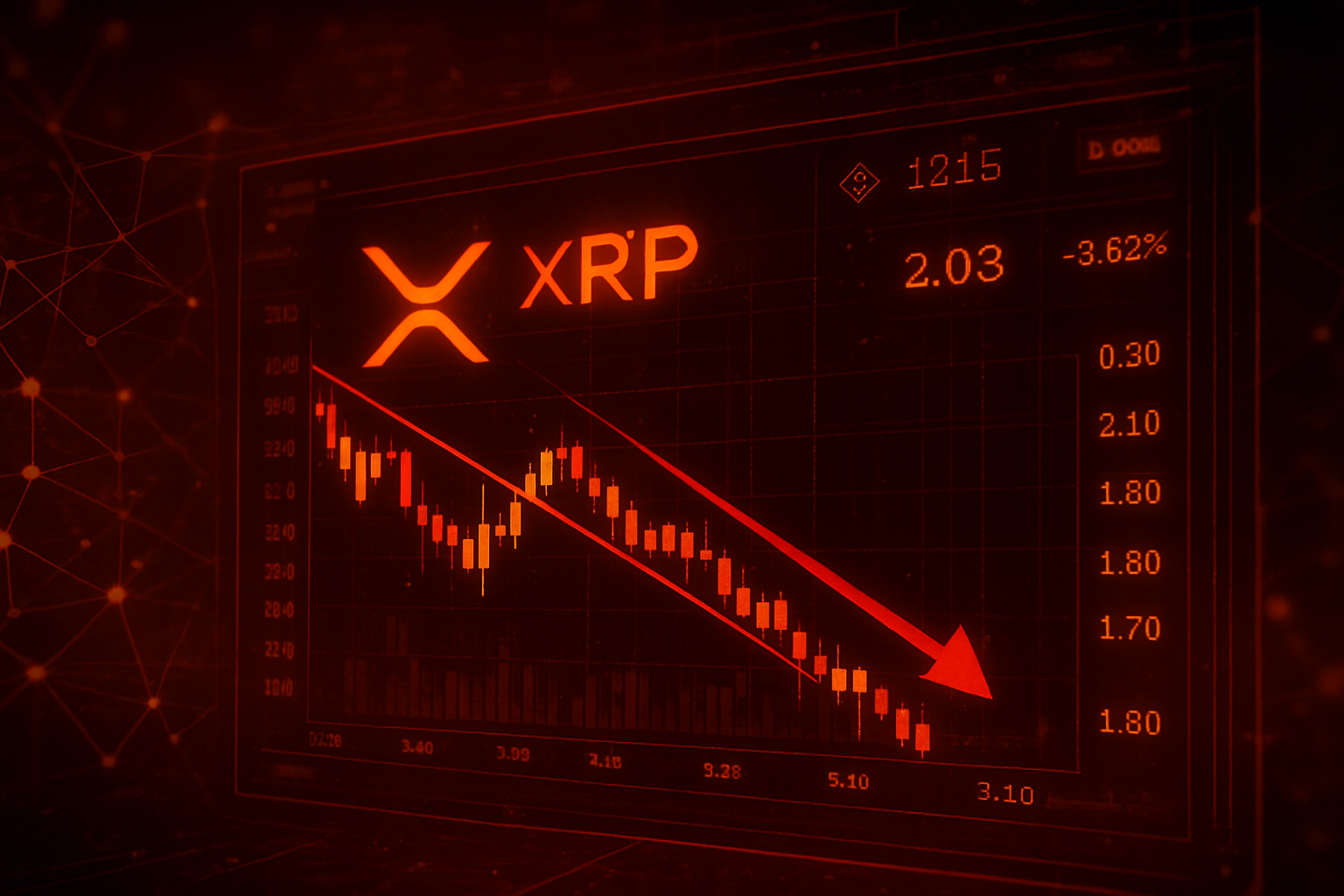

  • XRP’s ‘Death Cross’ Signals Deeper Corrections as Analysts Eye $1.80-$2.10 Range

    XRP’s ‘Death Cross’ Signals Deeper Corrections as Analysts Eye $1.80-$2.10 Range

    New York, NY – December 1, 2025 – The cryptocurrency market is abuzz as XRP, the digital asset associated with Ripple (private), has confirmed a significant 'Death Cross' technical pattern on its daily chart in late November, extending into the first days of December 2025. This ominous signal, where XRP's short-term 50-day moving average (SMA) plunged below its long-term 200-day SMA, has sent ripples of concern through the investor community, prompting technical analysts to warn of potential price drops towards the $1.80-$2.10 range.

    The immediate market reaction has been predominantly bearish, with XRP experiencing a notable decline as the crossover materialized. On December 1, 2025, XRP's price fell approximately 7%, hitting session minimums around $2.01, further cementing the bearish sentiment that had been building throughout November. This technical event is significant because it is widely interpreted as a strong indicator of a potential shift towards a long-term bearish trend, suggesting that downward momentum is likely to continue or intensify, influencing both retail and algorithmic trading strategies across the crypto ecosystem.

    Market Impact and Price Action

    The formation of the 'Death Cross' for XRP has been a culmination of sustained selling pressure and a broader market downturn. Leading up to the confirmation, XRP had already seen considerable weakness, with reports in early November highlighting its vulnerability. The 50-day moving average, a key indicator of short-term momentum, had been steadily declining, setting the stage for its eventual cross below the more stable 200-day moving average.

    In the immediate aftermath, XRP's price movements have been characterized by a struggle to hold key support levels. The confirmed 'Death Cross' on December 1, 2025, saw XRP's price drop to around $2.05, establishing new session lows. This decline followed earlier warnings from late November that predicted a slide towards the $1.50 range, drawing parallels to historical instances where similar patterns preceded drops of up to 15% for XRP. Trading volume surged by 92% within 24 hours on December 1, accompanying the price drop, indicating aggressive repositioning and liquidation waves that erased recent gains. This high volume during a price decline further underscores the strong bearish sentiment dominating the market.

    Technical analysis points to critical support levels that XRP must defend to prevent steeper losses. Analysts have identified significant floors around $2.20, with stronger support at $2.15, $2.10, and $2.05 based on classical pivot points. The much-discussed $1.80 and $2.00 levels are also cited as important demand zones, with $1.80 historically acting as a robust area of buyer interest. Should these levels fail, a breach below $2.20 could open the door to the $1.80-$2.10 range, or even deeper corrections towards $1.50 or the psychological $1.00 mark. Conversely, resistance levels are noted at $2.26, $2.31, and a formidable barrier between $2.30-$2.40. A decisive break above $2.40 would be needed to signal any potential bullish reversal.

    Comparing this event to past 'Death Crosses' reveals a mixed bag of outcomes. A similar pattern for XRP in May 2025 preceded several weeks of sideways and negative price action. However, some analysts, like EGRAG, caution against drawing direct parallels to severe past crashes, such as the 2018 bear market. They argue that a "true" bearish 'Death Cross' leading to steep declines requires the token to be trading below both moving averages with significantly slowing momentum, which was not entirely the case for XRP as it held above the 200 MA with an upward trend in late November. This suggests that while a 'Death Cross' is a bearish indicator, its impact can vary based on the broader market context and other underlying factors.

    Community and Ecosystem Response

    The XRP 'Death Cross' has ignited a firestorm of discussion across social media platforms, with crypto Twitter (X) and Reddit serving as primary hubs for analysis, predictions, and emotional reactions. The sentiment has been largely bearish, reflecting the technical warnings from analysts.

    Crypto influencers and thought leaders have largely converged on a cautious to bearish outlook. Analysts like "Umair" on X highlighted the 'Death Cross' on XRP's daily chart, projecting a potential 15% crash that could push XRP into the $1.50 range, citing historical precedents. Others forecasted even more significant corrections, with some suggesting a 50% drop to $1.25 if key support levels fail to hold. This widespread bearish prognostication from prominent voices has undoubtedly amplified market anxiety. FXEmpire and Finance Magnates also confirmed the 'Death Cross', supporting a bearish narrative and price predictions of $1.82 and $1.61, respectively, despite some ongoing XRP ETF inflows.

    However, not all sentiment was uniformly negative. A contrarian view emerged from influencers such as "Steph Is Crypto" on X, who pointed out that a similar 'Death Cross' pattern in 2017 actually preceded a substantial 10x rally for XRP. This perspective offered a glimmer of hope for some, suggesting that the event could be a capitulation point before a significant rebound. Nonetheless, the immediate trading activity on December 1, characterized by a 92% surge in volume alongside a price drop, indicated aggressive profit-taking and liquidation waves, underscoring the prevailing fear in the market.

    The XRP 'Death Cross' coincided with a broader market downturn. On December 1, 2025, major cryptocurrencies, including Bitcoin and Ethereum, experienced losses ranging from 5% to 9%, with nearly $638 million in leveraged positions liquidated across exchanges, almost 90% of which were long positions. This market-wide correction, attributed to thin liquidity and macro uncertainty, exacerbated XRP's struggles. While direct, specific impacts on XRP-related DeFi protocols, NFT projects, or Web3 applications were not explicitly detailed in the immediate aftermath, the general market caution would undoubtedly lead to a more conservative approach within these sectors. Ripple (private) itself continued to advance its ecosystem, with its APAC entity receiving expanded payment licenses from the Monetary Authority of Singapore (MAS) and its stablecoin, RLUSD, gaining recognition. Several spot XRP ETFs, including those from Grayscale (private), Bitwise (private), Franklin Templeton (NYSE: BEN), and Canary Capital (private), also launched in mid-November, suggesting ongoing institutional infrastructure development despite token volatility.

    What's Next for Crypto

    The confirmed 'Death Cross' for XRP, occurring amidst a broader market 'risk-off' environment, paints a cautious short-term outlook for the digital asset and the wider cryptocurrency space. In the immediate weeks, sustained selling pressure is anticipated for XRP, potentially retesting lower support levels and solidifying the $1.80-$2.10 range as a critical battleground. Similarly, Bitcoin (BTC) is grappling with its own 'Death Cross' confirmation from mid-November, trading near $93,000 after falling from October highs of $126,000, signaling potential further downside towards $83,500 and a major support zone at $74,000-$76,000.

    However, the long-term implications for the crypto market remain nuanced. While technical indicators suggest immediate pain, many analysts view 'Death Crosses' as lagging indicators that often appear after significant price drops have already occurred, potentially marking local market bottoms rather than the start of prolonged bear markets. Therefore, a period of consolidation followed by a gradual recovery into early to mid-2026 remains a medium-high likelihood scenario, contingent on improving macroeconomic conditions and a slow but steady increase in institutional interest.

    Several potential catalysts could shift the market's trajectory. Anticipated Federal Reserve rate cuts in late 2025 or throughout 2026 could inject significant liquidity into risk assets. Continued demand and adoption of Spot Bitcoin ETFs, alongside the growth of XRP-spot ETFs, are expected to fuel institutional participation. Regulatory advancements, such as the potential passing of the CLARITY Act by 2026, could provide much-needed confidence and integration. For XRP specifically, the ongoing resolution of the SEC vs. Ripple lawsuit remains a pivotal event, with a favorable outcome potentially unleashing renewed confidence. Technological innovations within Ethereum (e.g., Pectra and Fusako upgrades), advancements in DeFi, and the expansion of real-world asset (RWA) tokenization on platforms like the XRPL will also drive fundamental value.

    Strategic considerations for investors during this volatile period include short-term caution, diversification of holdings, and disciplined risk management, such as using trailing stop-losses. However, significant dips, especially around key support levels, could also present accumulation opportunities for long-term investors who believe in the underlying fundamentals and future growth of the crypto market. For projects, the emphasis should be on developing real-world utility, particularly in areas like AI, DeFi, and core blockchain infrastructure, to attract serious investors and withstand market downturns.

    Bottom Line

    The XRP 'Death Cross' signal, confirmed in late November and early December 2025, serves as a stark reminder of the inherent volatility and technical sensitivities within the cryptocurrency market. For crypto investors and enthusiasts, the key takeaway is to approach the current market with heightened caution, recognizing the potential for further price declines in the short term, with analysts eyeing the $1.80-$2.10 range as a critical support zone. The immediate aftermath has seen significant selling pressure and liquidations, indicating a prevailing 'risk-off' sentiment exacerbated by broader market weakness and macroeconomic uncertainties.

    Despite the immediate bearish technical signals, the long-term significance for XRP and the wider crypto market appears more resilient. The 'Death Cross' is a lagging indicator, and historical precedents suggest it can sometimes mark temporary downturns before eventual rebounds. Crucially, underlying drivers such as increasing institutional adoption, particularly through spot ETFs from entities like Franklin Templeton (NYSE: BEN) and Grayscale (private), and the ongoing pursuit of regulatory clarity are bolstering the long-term outlook. Ripple's (private) advancements in real-world asset (RWA) tokenization and the expansion of its stablecoin, RLUSD, continue to enhance XRP's utility and institutional appeal.

    Ultimately, this period of technical weakness does not fundamentally derail the long-term trend of crypto adoption. Instead, it highlights the maturation of the market, its growing sensitivity to macroeconomic factors, and the ongoing shift towards a more regulated and utility-driven ecosystem. While retail investor sentiment may fluctuate, institutional players often view such corrections as strategic accumulation opportunities. The path to broader crypto adoption will likely involve navigating these cyclical downturns, emphasizing the importance of robust fundamental development and clear regulatory frameworks.

    Important Dates, Events, or Metrics to Monitor:

    • XRP Price Levels: Watch for XRP's ability to hold support at $2.00, $1.90, and $1.61, and attempts to reclaim resistance at $2.19-$2.29 and $2.45.
    • XRP ETF Inflows/Outflows: Monitor institutional capital flows into XRP ETFs for signs of renewed demand.
    • Federal Reserve Interest Rate Decisions: Upcoming Fed meetings and any indications of rate cuts will significantly influence market liquidity.
    • SEC vs. Ripple Lawsuit: Any definitive outcome or significant progress in the lawsuit remains a pivotal event for XRP.
    • Regulatory Developments: Keep an eye on U.S. legislative progress (e.g., CLARITY Act) and global regulatory frameworks.
    • Ripple Ecosystem: Track RWA tokenization initiatives (2025-2026) and RLUSD stablecoin expansion (Q1 2026).
    • Bitcoin Price Action: Bitcoin's ability to hold $80,000-$85,000 support and overall crypto market capitalization will provide critical context.

    This article is for informational purposes only and does not constitute financial or investment advice. Cryptocurrency investments carry significant risk.

  • Tom Lee Predicts Ethereum “Super Cycle” with $60,000 Long-Term Target, Anticipates Short-Term Dip Recovery

    Tom Lee Predicts Ethereum “Super Cycle” with $60,000 Long-Term Target, Anticipates Short-Term Dip Recovery

    New York, NY – November 25, 2025 – Tom Lee, co-founder and head of research at Fundstrat Global Advisors (FSG), has once again ignited the cryptocurrency market with an audacious long-term price prediction for Ethereum (ETH), forecasting a potential surge to an astounding $60,000 to $62,500 within the next decade to fifteen years. Lee's bullish outlook, revealed amidst a recent market pullback, posits that Ethereum is on the cusp of a "super cycle," driven by unprecedented institutional adoption and its pivotal role in tokenizing global finance.

    The announcement, coming after a period of market volatility in October and early November 2025, has sent ripples through the crypto community. While many investors were grappling with recent price corrections, Lee's unwavering confidence and specific long-term targets have provided a much-needed jolt of optimism, underscoring the underlying strength he perceives in Ethereum's fundamentals. This forecast is significant as it not only outlines a potential parabolic growth trajectory for ETH but also offers a strategic roadmap for investors navigating current market conditions, emphasizing a "buy the dip" mentality for long-term holders.

    Market Impact and Price Action

    Ethereum's price action has been a rollercoaster in recent weeks. Following a sharp market pullback in October and early November 2025, attributed by Lee to a "software bug" on an exchange that triggered a cascade of liquidations and thinned liquidity, ETH experienced a notable dip. Lee specifically predicted a potential short-term dip towards $2,500, which largely materialized during this period of "crypto QT" (quantitative tightening) induced by the technical glitch. This event, which Lee compared to the 2022 market washout, created a period of forced selling.

    However, as of mid-November 2025, Lee indicated that Ethereum was "pretty close to bottoming," citing metrics such as the ratio of Ethereum's market value to assets locked on its network approaching 50%, and its price-to-Bitcoin ratio falling below its eight-year average of 0.032. These technical indicators, according to Fundstrat's analysis, signal an opportune moment for accumulation. The market is currently showing signs of stabilization, with trading volumes gradually recovering as investors digest Lee's long-term vision and potential year-end targets of $10,000 to $12,000, or even $15,000 in a more optimistic scenario, by December 2025.

    Compared to similar past events, such as the market corrections preceding Bitcoin's major bull runs, the current dip appears to be a temporary setback rather than a fundamental flaw. Lee's analysis suggests that the underlying demand and institutional interest are robust, creating a strong foundation for recovery and future growth. Key support levels around the $2,500-$3,000 range have been tested and shown resilience, while resistance levels will likely be tested as ETH attempts to reclaim its previous highs en route to Lee's ambitious year-end targets.

    Community and Ecosystem Response

    The crypto community's reaction to Tom Lee's latest prediction has been a mix of excitement and cautious optimism. On platforms like Crypto Twitter and Reddit, discussions are rife with investors debating the feasibility of a $60,000 Ethereum. Many long-term ETH holders and proponents of the network's technological superiority have embraced the forecast as validation of their thesis, sharing memes and analyses supporting the "super cycle" narrative. Influencers and thought leaders in the Web3 space have largely echoed Lee's sentiment regarding Ethereum's foundational role in decentralized finance (DeFi) and tokenization.

    The impact on related DeFi protocols, NFT projects, and Web3 applications built on Ethereum has been subtly positive. Despite the recent market volatility, the underlying development activity and user engagement across these sectors have remained strong, reinforcing Lee's argument about Ethereum's robust ecosystem. Projects continue to innovate, and stablecoin adoption on the network is growing, which Fundstrat highlights as a key driver for ETH's future value. This sustained activity, even during a dip, suggests that the community believes in the long-term viability and utility of the Ethereum blockchain, regardless of short-term price fluctuations.

    What's Next for Crypto

    The implications of Tom Lee's forecast for the broader crypto market are significant, pointing towards a future where Ethereum plays an increasingly central role in global finance. In the short term, attention will be focused on Ethereum's ability to recover from the recent dip and push towards Lee's year-end 2025 targets of $10,000-$15,000. This recovery will likely be fueled by continued institutional inflows, especially with the sustained demand generated by Ethereum spot ETFs, which launched in January 2024.

    Long-term, the "super cycle" narrative suggests a multi-year expansion for ETH, potentially lasting 10 to 15 years. Key catalysts to watch include the continued integration of Wall Street firms utilizing Ethereum for tokenized funds, the exponential growth of the stablecoin market (projected to increase eightfold by 2028), and further advancements in Ethereum's scalability and efficiency. Strategic considerations for projects and investors involve recognizing Ethereum's potential as a global payment rail and its capacity to capture a significant fraction of global financial assets. Possible scenarios range from a steady, organic growth driven by utility to more rapid parabolic surges as institutional adoption accelerates, with Lee emphasizing the latter due to Ethereum's current undervaluation relative to Bitcoin and its expanding ecosystem.

    Bottom Line

    Tom Lee's latest Ethereum price prediction offers a compelling vision for the future of the second-largest cryptocurrency. For crypto investors and enthusiasts, the key takeaway is the emphasis on Ethereum's long-term fundamental strength, driven by its critical role in asset tokenization and institutional integration. While short-term dips and volatility are to be expected, Lee views these as opportune "buy the dip" moments for those with a long-term horizon.

    The long-term significance of this forecast lies in its potential to solidify Ethereum's position as a cornerstone of the evolving financial landscape, potentially transforming it into a global payment rail. Investors should closely monitor institutional adoption trends, the growth of stablecoin markets on Ethereum, and the ETH/BTC ratio as key metrics. The year-end 2025 targets of $10,000-$15,000 represent immediate milestones, while the ultimate $60,000-$62,500 target underscores the profound belief in Ethereum's transformative power over the next decade. This forecast serves as a powerful reminder that despite market fluctuations, the underlying technological and economic shifts driven by blockchain technology continue to gain momentum, paving the way for wider crypto adoption.


    This article is for informational purposes only and does not constitute financial or investment advice. Cryptocurrency investments carry significant risk.

  • Bitcoin’s Volatile Dance: Skepticism Mounts as Ambitious Price Predictions Clash with Market Reality

    Bitcoin’s Volatile Dance: Skepticism Mounts as Ambitious Price Predictions Clash with Market Reality

    November 21, 2025 – The cryptocurrency world is once again grappling with the inherent unpredictability of Bitcoin (BTC) as ambitious price predictions face a harsh reality check amidst a period of extreme market volatility. While some analysts and enthusiasts have long touted Bitcoin reaching six or even seven figures, the current market downturn, characterized by a sharp price correction and widespread "extreme fear," is casting a long shadow of skepticism over these lofty forecasts. This ongoing debate highlights Bitcoin's unique position as a speculative asset, heavily influenced by a complex interplay of macroeconomic forces, regulatory uncertainty, and investor sentiment.

    The immediate market reaction has been swift and brutal. Bitcoin's price plummeted in late November 2025, triggering widespread liquidations and substantial outflows from institutional investment vehicles. This significant correction underscores the fragile nature of market sentiment and the inherent risks associated with an asset whose valuation often relies more on speculative fervor than traditional fundamentals. The current environment forces a critical re-evaluation of how realistic these optimistic projections truly are, especially as global economic headwinds continue to buffet the broader financial landscape.

    Market Impact and Price Action

    The past few weeks have seen a dramatic shift in Bitcoin's market dynamics. As of November 21, 2025, Bitcoin is trading around $82,605, representing a staggering decline of over 10% in the last 24 hours and more than 23% for the month. This marks Bitcoin's worst monthly performance since the devastating crypto-sector collapse of 2022, signaling a significant bearish trend that has caught many by surprise. The rapid depreciation has liquidated billions of dollars in leveraged long positions across various exchanges, amplifying the downward pressure.

    Trading volumes have surged during this period of intense selling, indicating a rush for the exits. Liquidity has been tested, and the sheer volume of sell orders has overwhelmed buying interest, leading to sharp price discovery downwards. Technical analysis reveals Bitcoin breaching key support levels established earlier in the year, with the current price point acting as a new, albeit fragile, floor. The market is searching for stability, but with significant institutional outflows, particularly from US-listed Bitcoin Exchange Traded Funds (ETFs), confidence remains low. On November 20, 2025, these ETFs recorded a staggering $903 million in redemptions, marking their second-largest daily outflow since their inception.

    Comparing this to past events, the current downturn echoes the sharp corrections seen in previous bear markets, where overleveraged positions and a loss of confidence led to cascading sell-offs. While previous halving cycles have historically preceded bull runs, the current macroeconomic climate and the sheer scale of institutional participation introduce new variables that challenge historical models like "Stock-to-Flow," which have faced increasing criticism for their predictive accuracy. The confluence of traditional market pressures and crypto-specific events is creating a uniquely challenging environment.

    Community and Ecosystem Response

    The prevailing sentiment within the crypto community has shifted dramatically from cautious optimism to outright "extreme fear." The Bitcoin Fear & Greed Index, a widely referenced metric, plummeted from a "greed" reading of 62.7 on November 14, 2025, to a stark "extreme fear" level of 11 by November 21, 2025. This rapid decline in sentiment is palpable across social media platforms like Crypto Twitter and Reddit, where discussions are dominated by concerns over further price drops, calls for calm, and a re-evaluation of investment strategies.

    Crypto influencers and thought leaders, who earlier in 2025 had often echoed bullish long-term predictions of Bitcoin reaching $150,000 to $200,000, are now largely emphasizing caution and risk management. While the long-term bullish thesis for Bitcoin as a store of value remains for many, the immediate focus is on weathering the storm. The current market conditions have also had a ripple effect on the broader Web3 ecosystem. Decentralized Finance (DeFi) protocols have seen reduced total value locked (TVL) as investors withdraw assets, and NFT projects are experiencing depressed trading volumes and floor prices. The overall mood is one of retrenchment, as market participants brace for continued volatility.

    What's Next for Crypto

    The short-term outlook for Bitcoin and the broader crypto market remains highly uncertain. Continued macroeconomic headwinds, particularly concerns over "higher-for-longer" interest rates from the U.S. Federal Reserve, are likely to keep speculative assets like Bitcoin under pressure. The increasing correlation between Bitcoin and traditional equity markets, which are also experiencing broad sell-offs, suggests that a significant recovery may be contingent on a broader improvement in global economic sentiment.

    Potential catalysts to watch include any shifts in the Federal Reserve's monetary policy, particularly signals of future rate cuts, which could re-ignite investor appetite for risk assets. Furthermore, regulatory clarity, especially in major jurisdictions like the United States, could unlock further institutional investment and provide a much-needed foundation for sustainable growth. Strategic considerations for projects and investors in this environment include prioritizing robust risk management, diversifying portfolios, and focusing on projects with strong fundamentals and clear utility rather than purely speculative plays.

    Possible scenarios range from a prolonged period of consolidation and lower prices if macroeconomic pressures persist, to a gradual recovery in the first half of 2026 if inflation subsides and central banks adopt a more dovish stance. The long-term implications for crypto adoption will depend on how the industry navigates this volatility, demonstrating resilience and continuing to build innovative solutions despite market fluctuations.

    Bottom Line

    The current market turmoil serves as a potent reminder of the inherent risks and unpredictable nature of cryptocurrency investments. For crypto investors and enthusiasts, the key takeaway is the critical importance of skepticism towards overly ambitious price predictions and a deep understanding of the numerous factors that influence Bitcoin's volatility. While Bitcoin's finite supply, halving cycles, and growing institutional interest continue to underpin its long-term potential as a strategic digital asset, its journey will undoubtedly be fraught with significant price swings.

    The long-term significance of this period will likely be a maturation of the market, where investors become more discerning and less susceptible to hype. It underscores the need for robust regulatory frameworks that can provide stability without stifling innovation. As of late 2025, the market is closely monitoring the Bitcoin Fear & Greed Index, Federal Reserve announcements, and the ongoing flows into and out of Bitcoin ETFs. These metrics will offer crucial insights into the evolving sentiment and institutional participation that will shape Bitcoin's trajectory in the coming months and years.


    This article is for informational purposes only and does not constitute financial or investment advice. Cryptocurrency investments carry significant risk.

  • JPMorgan Eyes $170,000 Bitcoin Amidst “Extreme Fear” in Crypto Market

    JPMorgan Eyes $170,000 Bitcoin Amidst “Extreme Fear” in Crypto Market

    November 17, 2025 – In a striking dichotomy that underscores the current volatility and conflicting signals within the cryptocurrency market, analysts at JPMorgan (NYSE: JPM) have reiterated a bold Bitcoin (BTC) price target of $170,000. This optimistic long-term projection, reaffirmed on November 15 and 17, 2025, arrives at a time when the broader crypto market is gripped by what can only be described as "extreme fear," with Bitcoin's price languishing around its production cost of $94,000.

    The juxtaposition of a major financial institution's bullish long-term outlook against a backdrop of widespread short-term panic highlights the complex forces at play in the digital asset space. While JPMorgan's assessment provides a potential beacon of hope for long-term holders, the immediate market reaction reflects deep-seated concerns over macroeconomic headwinds, regulatory uncertainty, and a significant retreat of institutional capital. This divergence between fundamental valuation and prevailing sentiment is a critical indicator of the current state of the crypto ecosystem, signaling both the enduring belief in Bitcoin's future potential and the acute sensitivity to present-day market pressures.

    Market Impact and Price Action

    The prevailing "extreme fear" has translated directly into significant downward pressure on Bitcoin's price. As of November 2025, Bitcoin has fallen to approximately $94,000, marking a six-month low and firmly establishing its position in an official bear market. This price point is particularly significant as JPMorgan analysts have identified Bitcoin's production cost, estimated at around $94,000, as a crucial price floor. While this suggests limited downside risk from a cost-basis perspective, the fact that BTC is trading near this level underscores the severity of the current downturn.

    Trading volumes have seen a notable shift, largely influenced by a significant institutional retreat. November 2025 is on track to record some of the largest outflows from Bitcoin Exchange-Traded Funds (ETFs), indicating a reduction in institutional participation and a corresponding decline in market depth. This outflow dynamic, coupled with observed profit-taking by long-term holders, contributes to decreased liquidity and heightened price volatility. Technically, the $94,000 level is acting as a critical support, coinciding with the production cost. A sustained break below this level could signal further capitulation, while a rebound would require a strong influx of buying pressure to overcome the current bearish momentum. Historically, periods of "extreme fear" and price consolidation around key cost bases have often preceded significant accumulation phases, though the duration and catalysts for such a turnaround remain uncertain.

    Community and Ecosystem Response

    The "extreme fear" gripping the market is palpable across crypto communities. The Crypto Fear & Greed Index, a widely watched sentiment indicator, has plummeted to 10, its lowest point since February 2025, reflecting widespread investor panic and a pervasive "risk-off sentiment." Social media platforms like Crypto Twitter and Reddit are awash with discussions centered on capitulation, bearish predictions, and the impact of macroeconomic factors. While some long-term holders and maximalists express unwavering conviction, the dominant sentiment among retail investors is one of caution and anxiety.

    Crypto influencers and thought leaders are largely echoing the concerns over macroeconomic pressures, particularly the hawkish stance of the Federal Reserve and global liquidity constraints. Many are advising caution, emphasizing the importance of dollar-cost averaging and focusing on fundamental strength rather than short-term price movements. The downturn has also had ripple effects across the broader crypto ecosystem. Decentralized Finance (DeFi) protocols have seen reduced total value locked (TVL) as investors withdraw capital from riskier ventures, and NFT projects are experiencing a significant cool-down in sales and floor prices. Web3 applications, while continuing to build, face a more challenging environment for user acquisition and funding amidst the prevailing market pessimism.

    What's Next for Crypto

    The immediate future for the crypto market appears to be a continuation of the current "risk-off sentiment," with Bitcoin and other digital assets likely to remain under pressure in the short term. The primary drivers of this outlook are the ongoing macroeconomic headwinds, including persistent hawkish messaging from the Federal Reserve and global liquidity constraints, which continue to divert capital away from volatile assets. Investors should anticipate continued price volatility and a cautious market environment.

    However, the long-term implications, as suggested by JPMorgan's $170,000 target, remain constructive for those who believe in Bitcoin's fundamental value proposition. Potential catalysts for a rebound include a stabilization or resurgence of institutional demand, particularly evidenced by a reversal in Bitcoin ETF outflows. A shift in the Federal Reserve's monetary policy stance, perhaps signaling an end to interest rate hikes or even future cuts, could also provide a significant boost. Strategic considerations for projects and investors during this period include focusing on building robust fundamentals, enhancing security, and maintaining strong community engagement. Possible scenarios range from a prolonged bear market lasting several more months to a gradual recovery as macroeconomic conditions improve and institutional interest rekindles, with the latter gaining likelihood if key support levels hold and ETF inflows stabilize.

    Bottom Line

    The current crypto landscape presents a stark contrast: a long-term bullish outlook from a major financial player like JPMorgan against a backdrop of acute short-term fear. Key takeaways for crypto investors and enthusiasts include recognizing the significance of Bitcoin's $94,000 production cost as a potential floor, but also acknowledging the powerful influence of macroeconomic factors and institutional capital flows on market sentiment. The current "extreme fear" reflected by the Crypto Fear & Greed Index at 10 is a strong indicator of prevailing market psychology, often preceding periods of potential accumulation for those with a long-term horizon.

    The long-term significance of Bitcoin's resilience and continued institutional interest, despite current pressures, remains a cornerstone for its future adoption. While the path to mainstream integration may be bumpy, the underlying technology and growing global recognition of digital assets persist. Important metrics to monitor include the Crypto Fear & Greed Index for sentiment, Bitcoin ETF inflow/outflow data for institutional participation, and announcements from the Federal Reserve regarding monetary policy. As the market navigates these turbulent waters, patience and a clear understanding of both short-term dynamics and long-term potential will be crucial for all participants.


    This article is for informational purposes only and does not constitute financial or investment advice. Cryptocurrency investments carry significant risk.

  • Ethereum’s $60,000 Dream or Delusion? Tom Lee’s RWA Thesis Faces Fierce Scrutiny

    Ethereum’s $60,000 Dream or Delusion? Tom Lee’s RWA Thesis Faces Fierce Scrutiny

    November 10, 2025 – A bold long-term prediction for Ethereum (ETH) to reach an astounding $60,000, put forth by Fundstrat Global Advisors (NASDAQ: FSTR) Managing Partner Tom Lee, has ignited a fervent debate within the crypto community. Lee, a well-known figure for his optimistic market outlooks, reiterated this ambitious target as recently as August 2025, anchoring his thesis heavily on the anticipated explosion of Real World Assets (RWAs) tokenized on the Ethereum blockchain. However, his projections have swiftly drawn sharp criticism from prominent analysts, most notably Andrew Kang, co-founder of Mechanism Capital, who publicly challenged Lee's underlying RWA assumptions in September 2025.

    The contention surrounding Lee's forecast is far from a minor disagreement; it strikes at the core of how value accrues in decentralized networks and the realistic potential of blockchain technology to absorb traditional finance. This high-stakes debate is crucial for the entire crypto ecosystem, as it not only influences investor sentiment around Ethereum's future valuation but also shapes the narrative and strategic direction for the burgeoning RWA sector. As the industry grapples with the practicalities of bridging the gap between traditional and decentralized finance, the scrutiny of such a significant price prediction highlights fundamental questions about institutional adoption, network revenue generation, and the inherent value proposition of tokenized assets on-chain.

    Market Impact and Price Action

    The immediate market reaction to Tom Lee's reaffirmed $60,000 Ethereum prediction was a mix of renewed optimism among long-term holders and a healthy dose of skepticism from more conservative investors. While specific dramatic price surges directly attributable to the August 2025 reiteration were not observed, the pronouncement did contribute to a generally bullish sentiment for Ethereum, which had been performing steadily in the preceding months. However, the subsequent emergence of strong counter-arguments from figures like Andrew Kang in September 2025 introduced a new layer of complexity, prompting a more cautious re-evaluation among some market participants.

    Despite the heated debate, Ethereum's price action has largely remained within a multi-year trading range, oscillating between key support and resistance levels. Analysts point to ETH's consistent performance around the $3,800 to $4,500 mark throughout late 2025, with trading volumes reflecting sustained interest but no explosive breakout directly tied to the $60,000 prediction or its criticisms. Liquidity for ETH remains robust, indicating a mature market capable of absorbing significant news flows without extreme volatility. From a technical analysis perspective, the $4,800 level continues to serve as a formidable resistance, while the $3,000-$3,200 zone has provided strong support. This range-bound behavior, as noted by critics, suggests that current fundamentals may not yet justify the parabolic growth envisioned by Lee, at least in the short to medium term.

    Comparing this event to past high-profile predictions, the market's response has been relatively measured. Unlike earlier cycles where a single analyst's bullish call could trigger significant short-term rallies, the current crypto market, particularly for established assets like Ethereum, demonstrates greater resilience and a more discerning approach to price targets. While Lee's reputation ensures his predictions garner attention, the market appears to be weighing his long-term vision against the immediate, tangible metrics of network utility and revenue generation, especially in the context of RWA tokenization. The debate itself, rather than the prediction alone, has become a significant market factor, influencing how investors perceive the realistic trajectory of Ethereum's integration with traditional finance.

    Community and Ecosystem Response

    The crypto community's reaction to Tom Lee's $60,000 Ethereum prediction and the subsequent critique has been robust and multi-faceted, largely playing out across social media platforms and within the commentary of prominent industry thought leaders. On platforms like X (formerly Twitter) and Reddit, discussions surged, with users dissecting Lee's "The Alchemy of 5%" investor presentation from his ETH-focused treasury firm, BitMine Immersion Technologies (NASDAQ: BTMI). While many acknowledged the sheer ambition of the target, a significant portion of the discourse quickly shifted to the validity of the underlying Real World Asset (RWA) assumptions, reflecting a healthy, albeit sometimes confrontational, skepticism.

    Andrew Kang, co-founder of Mechanism Capital, emerged as the most vocal and detailed critic, launching a "brutal takedown" of Lee's thesis across social media in September 2025. Kang labeled Lee's arguments as "deeply flawed" and "financially illiterate," specifically targeting the assumption that a massive increase in tokenized RWA and stablecoin activity would directly translate into proportional revenue for the Ethereum network. Kang highlighted that despite a 100-1000x increase in tokenized asset value since 2020, Ethereum's transaction fees have remained relatively stagnant, attributing this to network efficiency upgrades and the migration of some stablecoin and RWA activity to alternative blockchains like Solana and Arbitrum. He further challenged Lee's "digital oil" analogy, arguing that unlike oil, ETH's long-term price potential is not infinite, and disputed the notion that institutions would accumulate and stake ETH in the same way they might stock up on a commodity.

    Despite the pointed criticisms, Tom Lee has humorously embraced some of the pushback, playfully adopting the label "ETH-tarded" at a recent Token 2049 forum, a move that resonated with a segment of the crypto-native community who often view such strong reactions as a badge of honor. Beyond Kang, other influential figures, including Cathie Wood of ARK Invest (NASDAQ: ARKK), have engaged in discussions with Lee, exploring Ethereum's rising influence as a financial infrastructure layer. Interestingly, Lee's firm has even played a role in solving regulatory bottlenecks for ARK's crypto exposure, suggesting a complex interplay of collaboration and critical assessment within the institutional crypto landscape. While the $60,000 target remains contentious, the debate has undeniably spurred a deeper examination of Ethereum's value accrual mechanisms and its true potential in a tokenized future.

    What's Next for Crypto

    The ongoing debate surrounding Tom Lee's $60,000 Ethereum prediction and the validity of its Real World Asset (RWA) assumptions carries significant short and long-term implications for the broader crypto market. In the short term, such a high-profile forecast, even with its detractors, tends to fuel speculative interest, potentially increasing trading volumes and price volatility for ETH. It also intensifies scrutiny on Ethereum's underlying fundamentals – its network upgrades, stablecoin volumes, and application revenues – as market participants seek to justify or refute such an ambitious valuation. Key resistance levels, such as the August highs around $4,960 and the psychological $5,000 mark, will be closely watched for signs of a sustained breakout or consolidation.

    Looking further ahead, the long-term implications are profound. Should Ethereum indeed move towards such a valuation, driven by RWA tokenization, it would solidify its status as a global settlement layer for finance, transcending its current perception as primarily a speculative asset. This trajectory hinges on broader institutional adoption, particularly through regulated products like spot Ethereum Exchange Traded Funds (ETFs), which have already begun to see significant accumulation. Such growth would enhance Ethereum's network effects, attracting more developers and decentralized applications (dApps), and further intensify the deflationary pressure on ETH through its proof-of-stake and fee-burning mechanisms.

    The most direct impact of this debate centers on the RWA tokenization sector itself. Lee's vision, supported by major financial players like BlackRock (NYSE: BLK), JPMorgan Chase & Co. (NYSE: JPM), Apollo Global Management (NYSE: APO), and Franklin Templeton (NYSE: BEN), suggests a validation and acceleration of RWA growth, with projections of the market expanding to $2 trillion by 2028 and potentially $30 trillion by 2034. Ethereum is currently the dominant infrastructure for RWA tokenization, holding over 50% of market activity, and a thriving Ethereum ecosystem would reinforce this dominance. This would lead to increased liquidity and accessibility for traditionally illiquid assets and foster new DeFi protocols that integrate tokenized assets for various financial services. While scalability and gas fees remain a concern, Layer 2 solutions like Arbitrum, Optimism, and Polygon are actively addressing these challenges, making tokenization more economically viable.

    Several catalysts could drive Ethereum towards higher valuations and accelerate RWA tokenization. Continued Ethereum upgrades, such as the Dencun upgrade which significantly reduced Layer 2 transaction costs, and upcoming developments like Pectra and full sharding, are crucial for scalability. Regulatory clarity, particularly in the U.S. with potential spot Ethereum ETF approvals and the SEC's possible reclassification of Ethereum as a utility token in 2025, would de-risk institutional participation. The sheer explosion of RWA tokenization, with traditional finance actively integrating with blockchain, alongside the projected growth of the stablecoin market to $2 trillion in the next five years, provides a strong tailwind. Technological advancements in token standards (e.g., ERC-1400 for compliance) and enhanced cross-chain interoperability will also play a pivotal role, potentially augmented by the convergence of AI and blockchain for smarter financial systems.

    For projects, especially those in the RWA space, strategic considerations include a strong focus on compliance, security, and leveraging Layer 2 solutions. Interoperability across different blockchain networks and robust investor education are paramount. For investors, diversification, a keen understanding of the evolving regulatory landscape, and identifying promising RWA platforms like Ondo and Maple Finance are key. The future could unfold in several scenarios: an optimistic path sees ETH reaching $60,000 or higher within five years, driven by widespread institutional RWA adoption and regulatory clarity; a base scenario projects ETH between $6,000-$12,000 by 2026-2028 with gradual RWA integration; while a more conservative outlook suggests consolidation or decline due to regulatory tightening or intense competition. The current trends, however, lean towards the more optimistic scenarios, positioning Ethereum at the forefront of a transformative financial shift.

    Bottom Line

    The debate ignited by Tom Lee's $60,000 Ethereum price prediction, fundamentally rooted in the growth of Real World Asset (RWA) tokenization, underscores a pivotal moment in the cryptocurrency landscape. For crypto investors and enthusiasts, the key takeaway is that while ambitious price targets generate excitement, a critical assessment of the underlying assumptions is paramount. The rigorous challenge from analysts like Andrew Kang highlights that the mere tokenization of trillions in assets does not automatically translate into proportionate value accrual for the underlying blockchain network, especially if transaction fees remain low or activity migrates to other chains. This emphasizes the need for investors to look beyond headline figures and delve into the economic models and revenue generation mechanisms of blockchain protocols.

    The long-term significance of this discussion extends far beyond a single price target. It represents a fundamental assessment of Ethereum's role in the future of finance and the viability of the RWA sector. If Ethereum can indeed become the "New Wall Street" by effectively tokenizing a significant portion of global financial assets, its value proposition would be immense. However, this hinges on overcoming significant hurdles, including achieving greater scalability, ensuring regulatory clarity, and demonstrating a clear path for institutions to not only utilize the network but also directly contribute to its economic value through ETH accumulation and staking. The ongoing evolution of Ethereum's upgrades, the increasing institutional interest in spot Ethereum ETFs, and the active participation of major TradFi players in RWA tokenization are all critical metrics to monitor.

    Ultimately, what this means for crypto adoption is a maturation of the market. The days of uncritical acceptance of bullish predictions are waning, replaced by a more sophisticated discourse that demands tangible evidence and robust economic models. The RWA narrative, despite the criticisms of its direct impact on ETH fees, remains one of the most compelling bridges between traditional finance and blockchain, promising enhanced liquidity, fractional ownership, and global accessibility for a vast array of assets. The successful integration of RWAs, supported by scalable and compliant blockchain infrastructure, will be a defining factor in crypto's mainstream adoption.

    Key dates and events to monitor include the progress of upcoming Ethereum network upgrades (e.g., Pectra, full sharding), further regulatory pronouncements from bodies like the SEC regarding Ethereum's classification and spot ETF approvals, and quarterly reports from major financial institutions detailing their RWA tokenization initiatives. Investors should also closely track the Total Value Locked (TVL) in RWA-focused DeFi protocols and the growth in tokenized assets by financial institutions. These metrics, rather than speculative price targets alone, will provide a clearer picture of Ethereum's true trajectory and the transformative potential of Real World Assets in the years to come.


    This article is for informational purposes only and does not constitute financial or investment advice. Cryptocurrency investments carry significant risk.

  • XRP Soars 9% as Analysts Eye $10 Target, Outperforming Major Cryptos Amidst Market Buzz

    XRP Soars 9% as Analysts Eye $10 Target, Outperforming Major Cryptos Amidst Market Buzz

    November 9, 2025 – XRP has once again captured the cryptocurrency world's attention with an impressive rally of over 9% in the past 24 hours, significantly outperforming market leaders Bitcoin (BTC) and Dogecoin (DOGE). This sudden surge, observed around November 10, 2025, has ignited fervent discussions among investors and analysts, with many rekindling predictions of XRP potentially reaching the coveted $10 mark.

    The immediate market reaction to XRP's robust performance has been palpable, with trading volumes spiking and a noticeable increase in speculative interest. This rally is not merely a fleeting moment; it underscores XRP's inherent strength and its capacity for independent price action, even as the broader crypto market navigates its typical fluctuations. For the wider crypto ecosystem, XRP's individual success highlights the diverse drivers of value within the digital asset space and reinforces the notion that utility-driven tokens can carve out significant gains.

    Market Impact and Price Action

    XRP's recent price action has been a standout event. In the 24 hours leading up to November 10, 2025, XRP's value climbed by more than 9%, demonstrating a clear lead over its peers. During the same period, Bitcoin (BTC) saw a more modest gain of 4.16%, while Dogecoin (DOGE) increased by 5.26%. This decisive outperformance by XRP was accompanied by a remarkable 38% surge in its trading volume, reaching an impressive $3.89 billion, indicating strong buying pressure and heightened investor engagement. The open interest for XRP futures also jumped by 6.70%, with a significant majority (over 70%) of Binance traders holding long positions, signaling a strong belief in continued upward momentum.

    Technically, several analysts are pointing to bullish indicators. Prominent analyst Ali Martinez highlighted a "bullish flag formation" for XRP, suggesting that a potential correction to $1.90 could serve as a springboard for a rally toward $10, representing a staggering 309% upside from its then-current level of $2.44. Another analyst, Dark Defender, anticipates a "fifth-wave rally," setting a target between $5.85 and $10 in the next market cycle, with a key primary support zone identified around $2.22.

    It's important to note that XRP has experienced some volatility recently. For instance, following Ripple's (XRP) Swell event, which took place from November 4-5, 2025, XRP initially saw a 4% gain but then experienced a decline of over 9%, illustrating a classic "buy the rumor, sell the news" scenario. However, the subsequent rally around November 10th quickly reasserted its bullish potential, showcasing the token's resilience and the underlying demand that continues to fuel its movements.

    Community and Ecosystem Response

    The crypto community has reacted with renewed enthusiasm to XRP's rally. Social media platforms, including Crypto Twitter and Reddit, are abuzz with discussions about XRP's potential, with many speculative traders expressing optimism for further gains. The strong open interest in XRP futures and the high percentage of long positions on exchanges like Binance reflect a collective bullish sentiment.

    Crypto influencers and thought leaders have been quick to weigh in. Beyond the technical analysis from figures like Ali Martinez and Dark Defender, analyst Steph Crypto has linked XRP's potential uptick to $10 to the US central bank's possible re-entry into a period of quantitative easing (QE). Drawing parallels to the 2020 QE period that saw XRP surge from $0.1 to $1.7, Steph Crypto considers a $10 target "fair" given XRP's trading price of $2.33 at the time of his prediction.

    While the research didn't explicitly detail effects on specific DeFi protocols or NFT projects, the broader positive sentiment surrounding XRP is likely to ripple through the ecosystem. The long-term case for XRP reaching $10 is also significantly tied to real-world asset tokenization and Ripple's strategic initiatives. The announcement of Ripple's RLUSD stablecoin being linked to major finance partners such as Mastercard (NASDAQ: MA), WebBank, BlackRock (NYSE: BLK), and VanEck has bolstered confidence, suggesting that if even a fraction of the future tokenization wave settles on the XRP Ledger, a path toward $10 by 2025 is considered plausible by some.

    What's Next for Crypto

    The recent XRP rally and the accompanying analyst predictions have significant short and long-term implications for the broader crypto market. In the short term, XRP is likely to experience continued volatility as traders attempt to capitalize on momentum and potential profit-taking occurs. However, the strong underlying sentiment and technical indicators suggest that further upward movement is a distinct possibility, especially if key resistance levels are breached.

    Looking ahead, several potential catalysts could drive XRP and the wider crypto market. The prospect of the US central bank resuming quantitative easing could inject significant liquidity, historically a bullish signal for risk assets like cryptocurrencies. More importantly, institutional adoption remains a critical factor. The potential approval of XRP exchange-traded funds (ETFs) would open the floodgates for traditional finance capital, significantly boosting demand. Ripple's ongoing partnerships with financial giants for its RLUSD stablecoin and its broader push into real-world asset tokenization on the XRP Ledger are strategic developments to watch closely.

    For projects and investors, this period necessitates strategic consideration. Projects leveraging the XRP Ledger or those in the real-world asset tokenization space might see increased interest. Investors should monitor regulatory developments, particularly concerning Ripple's legal standing, as clarity here would undoubtedly reduce uncertainty and potentially unlock further institutional investment. Possible scenarios range from a direct surge towards the $10 target if catalysts align swiftly, to a more gradual ascent punctuated by corrections, reflecting the inherent volatility of the crypto market.

    Bottom Line

    XRP's impressive 9% rally serves as a powerful reminder of its resilience and potential for significant gains within the dynamic cryptocurrency landscape. For crypto investors and enthusiasts, the key takeaway is that XRP's value proposition extends beyond speculative trading, deeply rooted in its utility for cross-border payments and its growing role in real-world asset tokenization.

    The long-term significance of XRP hinges on the continued success of Ripple's strategic partnerships and the broader adoption of the XRP Ledger for institutional use cases. The involvement of major players like Mastercard, WebBank, BlackRock, and VanEck with Ripple's RLUSD stablecoin underscores the growing mainstream acceptance and utility of the XRP ecosystem. These developments are crucial for fostering greater crypto adoption and integrating digital assets into traditional financial systems.

    As we move forward, important dates, events, and metrics to monitor include any further announcements from Ripple regarding partnerships or technological advancements, regulatory decisions impacting XRP, and key technical levels such as the $2.22 support and the ambitious $10 target. The market will also be watching global macroeconomic factors, particularly central bank policies, which could provide additional tailwinds or headwinds for the crypto market.


    This article is for informational purposes only and does not constitute financial or investment advice. Cryptocurrency investments carry significant risk.

  • Beyond the Bull: Bitcoin’s Long-Term Potential Clashes with Immediate Market Pressures

    Beyond the Bull: Bitcoin’s Long-Term Potential Clashes with Immediate Market Pressures

    The cryptocurrency world is currently grappling with a fascinating dichotomy: the enduring, sky-high long-term price projections for Bitcoin (BTC) from prominent institutional figures, starkly contrasted by the immediate, often volatile, realities of the short-term market. A prime example of this dynamic emerged recently with Cathie Wood, CEO of ARK Invest (NYSE: ARKK), who revised her firm's most aggressive Bitcoin price target for 2030, lowering it from an eye-watering $1.5 million to a still incredibly bullish $1.2 million.

    This adjustment, while still representing immense growth, has sparked considerable discussion within the crypto community. Wood attributed the revision primarily to the unexpected and rapid proliferation of stablecoins, which are increasingly fulfilling payment and savings roles, particularly in emerging markets, faster than ARK Invest had initially anticipated Bitcoin would. This development underscores a maturing crypto ecosystem where different digital assets are carving out specialized niches. While Wood maintains unwavering conviction in Bitcoin's "digital gold" narrative and its role as a superior store of value, the rise of stablecoins suggests a diversification of functions that impacts even the most optimistic long-term models. This evolving perspective is crucial for investors, demanding a more nuanced understanding of how various crypto assets contribute to and shape the broader digital economy.

    Market Impact and Price Action

    In the immediate term, Bitcoin has faced significant headwinds, demonstrating a clear divergence from the ambitious long-term forecasts. The cryptocurrency recently dipped below the $100,000 mark for the first time in over four months, undergoing a notable 20% correction from its October peak. This downturn is not isolated but rather a symptom of a "perfect storm" of macroeconomic factors that have squeezed liquidity and fostered risk aversion across global markets.

    Central banks maintaining elevated interest rates have increased borrowing costs, pushing investors towards safer assets. Furthermore, the ongoing U.S. government shutdown has frozen liquidity in the Treasury General Account (TGA), effectively draining capital from the financial system and disproportionately impacting speculative assets like Bitcoin. This liquidity crunch, coupled with deleveraging events in perpetual futures markets and major DeFi exploits, has exerted downward pressure on Bitcoin's price. Trading volumes have seen fluctuations, with periods of reduced liquidity exacerbating price swings, while key support levels have been tested repeatedly.

    Historically, Bitcoin has demonstrated resilience following significant corrections, often bouncing back stronger once macroeconomic conditions stabilize or new catalysts emerge. However, the current environment presents a more complex picture, with some firms like Galaxy Digital (TSE: BRPH) even trimming their 2025 Bitcoin price targets, citing a "maturity era" characterized by lower volatility and increased institutional absorption. This suggests that while the long-term bullish narrative remains intact for many, the path to those lofty price targets may be less volatile but also more influenced by traditional financial market dynamics.

    Community and Ecosystem Response

    The contrasting narratives surrounding Bitcoin's future price have ignited lively debates across social media platforms and crypto forums. On Crypto Twitter, sentiment is divided. Long-term "HODLers" and maximalists often dismiss short-term price fluctuations as noise, reiterating their conviction in Bitcoin's ultimate trajectory towards becoming a global reserve asset. They frequently point to the consistent accumulation by long-term holders, with over 75% of the total BTC supply held by such investors, and reserves on centralized exchanges reaching multi-year lows, as evidence of underlying strength.

    Conversely, a segment of the community, including some technical analysts and day traders, expresses caution, highlighting bearish technical indicators and the immediate impact of macroeconomic pressures. Discussions on Reddit often revolve around the implications of stablecoin growth for Bitcoin's utility, with some viewing it as a complementary development that expands the overall crypto market, while others express concern about potential competition for transactional dominance. Crypto influencers and thought leaders, while generally maintaining a bullish long-term outlook, are increasingly emphasizing the importance of understanding the broader economic landscape and its short-term effects on asset prices. The debate also touches upon related DeFi protocols and Web3 applications, as a sustained Bitcoin downturn could impact overall market sentiment and liquidity, potentially slowing innovation or investment in these nascent sectors.

    What's Next for Crypto

    The immediate future for Bitcoin and the broader crypto market appears to be a delicate balance between persistent long-term optimism and the tangible challenges of current economic conditions. In the short term, market participants will be closely watching for any signs of a shift in central bank policies, particularly regarding interest rates, and the resolution of governmental liquidity issues like the U.S. government shutdown. A loosening of monetary policy or a return of liquidity to the system could serve as significant catalysts for a Bitcoin recovery.

    Long-term implications remain robust, driven by Bitcoin's increasing scarcity due to halving cycles, growing global adoption, and its solidifying role as "digital gold." Regulatory clarity, such as the EU's Markets in Crypto-Assets (MiCA) framework, and the continued approval and success of spot Bitcoin ETFs in major markets, are expected to facilitate further institutional inflows and reinforce long-term holding patterns. Strategic considerations for projects and investors will involve navigating this dual reality: projects may focus on building robust ecosystems that can withstand market volatility, while investors might adopt a diversified approach, balancing long-term accumulation with tactical short-term positioning based on evolving macroeconomic indicators. Possible scenarios range from a continued consolidation phase until macro conditions improve, to a rapid rebound if unexpected positive catalysts emerge, or a more gradual ascent driven by sustained institutional adoption.

    Bottom Line

    For crypto investors and enthusiasts, the key takeaway from the current market dynamic is the necessity of a balanced perspective. While the long-term bullish case for Bitcoin, championed by figures like Cathie Wood, remains compelling due to its inherent scarcity, growing institutional acceptance, and "digital gold" narrative, ignoring short-term market realities would be imprudent. Macroeconomic headwinds, including high interest rates and liquidity squeezes, are powerful forces that can temporarily override even the strongest fundamental arguments.

    The long-term significance of Bitcoin as a transformative asset remains undiminished, even with revised price targets that acknowledge the evolving roles of other crypto assets like stablecoins. This nuanced understanding is vital for crypto adoption, as it demonstrates the market's increasing maturity and specialization. Important dates and metrics to monitor include upcoming central bank meetings for interest rate decisions, any developments regarding government liquidity, and on-chain metrics such as exchange reserves and long-term holder accumulation. Bitcoin's journey is a marathon, not a sprint, and while the finish line may be further out or slightly adjusted, the conviction in its ultimate destination remains strong for many.


    This article is for informational purposes only and does not constitute financial or investment advice. Cryptocurrency investments carry significant risk.

  • Stablecoins Ascend: Reshaping Bitcoin’s Future and the Broader Crypto Landscape

    Stablecoins Ascend: Reshaping Bitcoin’s Future and the Broader Crypto Landscape

    As of November 2025, stablecoins have firmly established themselves as the bedrock of the cryptocurrency ecosystem, transcending their initial role as mere trading tools to become a critical component of global financial infrastructure. Their meteoric rise, fueled by increasing regulatory clarity and expanding real-world utility, is profoundly reshaping market dynamics, influencing liquidity, and prompting a significant re-evaluation of the future price predictions and fundamental roles of major cryptocurrencies like Bitcoin (BTC). The total stablecoin market capitalization now exceeds an impressive $307 billion, with annual transaction volumes eclipsing those of traditional payment giants, signaling a pivotal shift in how value is transferred and stored in the digital age.

    The immediate market reaction to this stablecoin surge is multifaceted. While the enhanced liquidity and transactional efficiency they provide are largely welcomed, there's a growing debate within the crypto community about their long-term impact on Bitcoin's "digital gold" narrative. Influencers and analysts are actively discussing whether stablecoins are complementing or subtly competing with Bitcoin, particularly in emerging markets where they offer stability for everyday transactions that Bitcoin's inherent volatility cannot match. This evolving dynamic is crucial for the crypto ecosystem, as it dictates capital flows, investment strategies, and the pace of mainstream adoption.

    Market Impact and Price Action

    The explosive growth of stablecoins has exerted a complex influence on Bitcoin's price movements and the overall market structure. With a total stablecoin market capitalization crossing $307 billion by early November 2025, these assets represent a substantial pool of liquidity within the crypto space. This liquidity is critical for efficient trading, allowing market participants to move swiftly between volatile assets and stable-value digital dollars without needing to convert back to fiat.

    Tether (USDT) continues to dominate the stablecoin market, holding nearly 60% of the total share with its market capitalization reaching approximately $174 billion by October 2025. Its sustained growth, partly attributed to rising U.S. interest rates boosting returns on its reserves, underscores its pervasive use in trading and as a global settlement layer. USD Coin (USDC), the second-largest stablecoin, maintains a market cap between $70 billion and $76 billion, with strong institutional backing and a focus on regulatory compliance. Notably, newer entrants like Ripple's (XRP) RLUSD, launched in December 2024, have rapidly gained traction, surpassing $1 billion in market capitalization by November 2025, demonstrating the ongoing innovation and competition in the stablecoin sector.

    Bitcoin's price action in 2025 has been influenced by these stablecoin dynamics. While stablecoins provide a "safe haven" during market downturns, allowing traders to park capital without exiting the crypto ecosystem, this also contributes to a "self-funded phase" where liquidity circulates internally rather than expanding through fresh external inflows. As of November 2025, Bitcoin has been hovering around $110,000, showing signs of fatigue and selling pressure, partly due to a "higher for longer" interest rate scenario in traditional finance, which encourages profit-taking from volatile assets. On-chain data reveals a retreat from speculative assets, with rising Bitcoin reserves on exchanges and a record number of stablecoin withdrawal transactions, signaling a move towards dollar-pegged safety. This suggests that while stablecoins enable efficient trading, their growth doesn't always directly translate to Bitcoin's price appreciation, especially when broader macroeconomic conditions favor caution.

    Historically, large stablecoin issuances have often correlated with positive, immediate impacts on Bitcoin's trading volumes and returns. However, the current environment, marked by significant regulatory advancements like the U.S. Guiding and Establishing National Innovation for U.S. Stablecoins (GENIUS) Act in July 2025 and the EU's Markets in Crypto-Assets (MiCA) framework, is introducing new complexities. While regulatory clarity is generally seen as beneficial for institutional adoption, stricter rules and the delisting of non-compliant stablecoins can cause temporary liquidity shifts. The October 10, 2025, crypto selloff, which saw nearly $20 billion in leveraged positions liquidated, serves as a recent reminder of how stablecoin-fueled leverage in DeFi can amplify Bitcoin's downside volatility during sharp price drops.

    Community and Ecosystem Response

    The crypto community's sentiment towards stablecoins in November 2025 is largely positive, recognizing their indispensable role in facilitating efficient trading, cross-border payments, and as a stable asset within the volatile digital landscape. Discussions across platforms like X (formerly Twitter) and Reddit frequently highlight the operational advantages of stablecoins in DeFi, where they serve as the backbone for lending, borrowing, and yield-generating protocols. The expansion of Layer-2 solutions on Ethereum (ETH), such as Arbitrum, Optimism, and Base, has significantly boosted stablecoin transfer volumes, reaching over $2.82 trillion in October 2025, marking Ethereum's highest monthly volume ever. This indicates a strong embrace of stablecoins for scalable and cost-effective on-chain transactions.

    However, the rapid pace of regulatory developments has introduced a layer of apprehension and intense discussion among crypto influencers and thought leaders. While many commend the regulatory clarity provided by landmark legislation like the US GENIUS Act, which defines payment stablecoins as regulated instruments and mandates 1:1 backing, concerns persist about potential over-regulation. Influencers debate whether strict rules, such as the GENIUS Act's prohibition on yield for payment stablecoins or MiCA's caps on daily payment volumes, could stifle innovation and lead to increased centralization. The community is closely watching how these frameworks will be implemented, with discussions on Reddit's r/CryptoCurrency revolving around the practicalities of converting stablecoins to fiat for everyday spending and the transparency of Proof of Reserve mechanisms for various issuers.

    Beyond DeFi, stablecoins are making significant inroads into real-world utility, impacting Web3 applications and even traditional finance. Companies like DeCard are partnering with Polygon Labs (MATIC) to enable stablecoin payments that function similarly to traditional card transactions for merchants. Western Union, in collaboration with Anchorage Digital, launched USDPT on Solana (SOL) to streamline global payments, bridging regulated digital finance with traditional payment infrastructure. Ripple's (XRP) RLUSD, rapidly gaining market share, is also a testament to new competition and innovation in the stablecoin space. These developments signal a broader shift where stablecoins are increasingly seen as the practical payment rail for the digital economy, indirectly benefiting the entire Web3 ecosystem by fostering a more stable and accessible financial environment.

    The growing influence of stablecoins is also directly impacting Bitcoin price predictions. Ark Invest founder Cathie Wood notably revised her 2030 Bitcoin price target downwards from $1.5 million to $1.2 million, citing stablecoins' increasing fulfillment of roles she initially envisioned for Bitcoin, particularly in emerging markets and payment scenarios. This reflects a consensus that while Bitcoin remains a premier store of value, stablecoins are proving more suitable for transactional heavy lifting due to their inherent price stability. This nuanced perspective is shaping long-term investment strategies and discussions within the crypto community, emphasizing a clearer differentiation between Bitcoin's role as "digital gold" and stablecoins' function as "digital cash."

    What's Next for Crypto

    The trajectory of stablecoins in the coming years is poised to profoundly redefine the cryptocurrency market, solidifying their role as a central pillar of global finance. In the short term, stablecoins will continue to enhance market liquidity and trading efficiency, acting as the critical bridge between traditional finance (TradFi) and decentralized finance (DeFi). The integration of stablecoins by major financial institutions like Visa (V), JPMorgan Chase (JPM), and PayPal (PYPL) through products like PYUSD, is rapidly expanding their reach to hundreds of millions of users, facilitating faster and cheaper cross-border payments and corporate treasury operations. This widespread adoption, coupled with the "flight-to-safety" sentiment seen in November 2025 due to a "higher for longer" interest rate environment, means stablecoins will remain a crucial parking spot for capital during market uncertainties, often influencing Bitcoin's short-term price movements as dry powder awaits redeployment.

    Looking further ahead, the long-term implications are even more transformative. Stablecoins are projected to become ubiquitous global payment rails, with market volumes potentially reaching $100 trillion within five years and issuance hitting $1.9 trillion by 2030 in a base-case scenario. This growth is expected to reinforce, rather than challenge, the dominance of the US dollar globally, as over 99% of stablecoins are dollar-pegged. This shift will fundamentally redefine Bitcoin's role, increasingly solidifying its position as a strategic reserve asset and a long-term store of value, while stablecoins handle the transactional heavy lifting. This evolution promotes financial inclusion for billions worldwide, offering access to stable digital value and efficient payment services in regions with volatile local currencies.

    Several key catalysts and developments will shape this future. Foremost among them is continued regulatory clarity and global harmonization. The US GENIUS Act, implemented in July 2025, and the EU's MiCA regulation, fully effective by mid-2025, provide crucial blueprints for compliant stablecoin adoption. Monitoring the implementation of these acts, alongside emerging regulations in the UK, Canada, and Asia, will be vital for understanding market access and operational requirements. Increased institutional adoption and the tokenization of real-world assets (RWAs), settled with stablecoins, will further integrate digital assets into TradFi. Technological advancements, particularly in Layer-2 solutions and the convergence of crypto with AI, will enhance scalability and create novel use cases for stablecoins in messaging apps and automated finance. The macroeconomic environment, including interest rate policies and the development of Central Bank Digital Currencies (CBDCs), will also play a significant role, with the US strategy currently favoring private stablecoin innovation over a CBDC.

    For projects, strategic considerations include prioritizing regulatory compliance with frameworks like MiCA and GENIUS, focusing on interoperability to bridge diverse financial systems, and exploring yield-bearing stablecoin solutions to attract and retain users. Investors, meanwhile, should diversify stablecoin holdings across issuers, closely monitor regulatory shifts, evaluate use cases beyond speculation, and carefully assess how stablecoin growth influences Bitcoin's evolving role within their portfolios. Possible scenarios include stablecoins driving broad crypto market growth (high likelihood), market fragmentation due to divergent regulations (medium likelihood), stablecoins becoming dominant payment rails while Bitcoin shifts to a primary store of value (medium-high likelihood), and significant disruption from CBDCs (low-medium in the short term, medium-high in the long term). The most probable future sees stablecoins acting as a net positive for the broader crypto market, enhancing liquidity and fostering institutional adoption, while necessitating a re-evaluation of Bitcoin's traditional roles.

    Bottom Line

    The ascent of stablecoins represents a monumental shift in the cryptocurrency landscape, fundamentally altering how investors and enthusiasts perceive and interact with digital assets. As of November 2025, stablecoins are no longer just a niche trading instrument but a critical piece of global financial infrastructure, poised to drive the next wave of crypto adoption. The key takeaway for all market participants is the undeniable trend towards utility and regulatory integration, moving beyond pure speculation.

    The long-term significance of stablecoins for crypto adoption cannot be overstated. They serve as the essential bridge between the traditional financial system and the burgeoning decentralized economy, offering the stability that businesses and consumers demand for everyday transactions. Their increasing use in cross-border payments, remittances, and corporate treasury management is a testament to their practical value, addressing the volatility concerns that have historically hindered broader crypto adoption. Regulatory clarity, spearheaded by landmark legislation like the US GENIUS Act and the EU MiCA framework, is the primary catalyst accelerating this mainstream integration, legitimizing stablecoins and attracting unprecedented institutional interest. This convergence of TradFi and DeFi, facilitated by stablecoins, is creating a more efficient, global, and inclusive financial system.

    For crypto adoption, this means a more mature and accessible ecosystem. The industry is visibly shifting its focus from speculative trading to tangible utility, with stablecoins leading the charge in real-world applications. While Bitcoin (BTC) will likely solidify its role as "digital gold" or a strategic reserve asset, stablecoins are emerging as the preferred medium for daily transactions and liquidity provision. This differentiation allows each asset to fulfill its optimal function, ultimately strengthening the entire digital asset class.

    Important Dates, Events, or Metrics to Monitor (as of November 2025):

    • Regulatory Developments:

      • US GENIUS Act Implementation: Ongoing issuance of final regulations and full implementation within 18 months of enactment (July 2025).
      • EU MiCA Regulation Enforcement: Full enforcement by national regulators by the end of Q1 2025.
      • UK Stablecoin Regulations: Bank of England's consultation on November 10, 2025, with expected rapid implementation of new rules.
      • Canada's Stablecoin Legislation: Consultations and draft legislation expected in late 2025 or early 2026.
      • CBDC Progress: Monitor the acceleration of Central Bank Digital Currency initiatives globally.
    • Market Metrics:

      • Total Stablecoin Market Capitalization: Currently exceeding $307 billion; track growth towards $400 billion by year-end 2025 and $1 trillion by 2030.
      • On-chain Transaction Volume: Monitor continued growth from $15.6 trillion in Q3 2025, especially for retail transfers and non-speculative use cases.
      • Stablecoin Market Share by Blockchain: Observe shifts in distribution across Ethereum (ETH), Solana (SOL), Tron (TRX), and Layer-2 networks.
      • Institutional Adoption Metrics: Track corporate stablecoin adoption (around 25% in H1 2025) and integrations by fintech and TradFi firms, including JPMorgan's (JPM) plans to accept Bitcoin and Ethereum as loan collateral by late 2025.
      • Emergence of Non-USD Stablecoins: Monitor the growth of stablecoins pegged to other fiat currencies or assets.
    • Impact on Bitcoin Price Predictions:

      • Revised Bitcoin Price Targets: Observe any further adjustments to long-term Bitcoin price predictions by prominent analysts, similar to Cathie Wood's revised $1.2 million target for 2030.
      • Capital Flow: Monitor whether the substantial capital held in stablecoins translates into inflows for Bitcoin and other volatile assets.

    This article is for informational purposes only and does not constitute financial or investment advice. Cryptocurrency investments carry significant risk.

  • XRP’s Ambitious Ascent: Can Ripple’s Digital Asset Truly Overtake Ethereum in Market Cap by 2025?

    XRP’s Ambitious Ascent: Can Ripple’s Digital Asset Truly Overtake Ethereum in Market Cap by 2025?

    As the cryptocurrency landscape continues its relentless evolution, a persistent question lingers among investors and enthusiasts: can XRP, the digital asset championed by Ripple (XRP), realistically challenge and even surpass Ethereum (ETH) in market capitalization? As of October 31, 2025, with Ethereum's market cap hovering around $450 billion USD and XRP's at approximately $28 billion USD, the gap appears substantial. However, a confluence of factors, including regulatory clarity for Ripple, aggressive institutional adoption, and the expanding utility of the XRP Ledger (XRPL), presents a compelling narrative for a potential seismic shift in the crypto hierarchy.

    This article delves into the intricate market dynamics, divergent use cases, and unique growth potentials of both XRP and Ethereum, exploring the pathways and obstacles that could lead to such a monumental reordering of the top cryptocurrencies. The discussion goes beyond mere price speculation, examining the fundamental strengths and weaknesses that underpin each network's claim to future dominance.

    Market Impact and Price Action

    Ethereum (ETH), launched in 2015, has cemented its position as the leading smart contract platform, boasting a robust ecosystem that underpins the vast majority of decentralized finance (DeFi) protocols, non-fungible tokens (NFTs), and decentralized applications (dApps). Its market capitalization has demonstrated a general upward trajectory, punctuated by significant bull runs in 2017 and 2021. This growth has been largely fueled by continuous technological advancements, notably the successful transition to a Proof-of-Stake (PoS) consensus mechanism with "The Merge" and subsequent upgrades like Shanghai and Cancun, which have aimed to enhance scalability, security, and sustainability. These upgrades, along with the proliferation of Layer 2 scaling solutions such as Arbitrum and Optimism, have solidified Ethereum's network effect and utility, directly contributing to its impressive market valuation.

    Conversely, XRP's market journey has been more volatile, significantly impacted by external pressures. While XRP saw considerable surges in late 2017 and early 2018, its trajectory has been overshadowed by the protracted legal battle with the U.S. Securities and Exchange Commission (SEC) since December 2020. This regulatory overhang has suppressed investor confidence and institutional interest, despite Ripple's (XRP) consistent focus on leveraging XRP for fast, low-cost cross-border payments through its RippleNet network. Positive developments in the SEC lawsuit have historically triggered temporary price rallies, illustrating the market's sensitivity to regulatory clarity. The current disparity in market capitalization ($450 billion for Ethereum vs. $28 billion for XRP) reflects Ethereum's established ecosystem dominance versus XRP's potential largely tied to a favorable regulatory outcome and broader institutional adoption.

    From a technical perspective, Ethereum's price action often correlates with the overall health and innovation within the broader crypto market, particularly in the DeFi and NFT sectors. Its strong community support and continuous development pipeline provide fundamental support levels. For XRP, key resistance and support levels are frequently influenced by legal news and announcements regarding RippleNet partnerships. A definitive resolution to the SEC lawsuit, especially one favorable to Ripple, is widely considered the most significant catalyst that could fundamentally alter XRP's market dynamics, potentially triggering a substantial influx of institutional capital and a sustained upward price movement, akin to a "re-rating" of the asset.

    Community and Ecosystem Response

    The crypto community's perception of XRP and Ethereum presents a stark contrast, reflecting their divergent philosophies and target markets. Ethereum enjoys widespread support from developers, crypto influencers, and a vast user base who view it as the foundational layer for Web3, decentralized innovation, and the future of digital finance. Social media platforms like Twitter and Reddit are abuzz with discussions about Ethereum's latest upgrades, new DeFi protocols, and groundbreaking NFT projects. The sentiment is largely one of continuous growth, innovation, and a belief in the network's long-term vision for a decentralized internet. Influencers often highlight Ethereum's robust security, growing scalability through Layer 2s, and its role as a global settlement layer.

    XRP, on the other hand, garners a dedicated but different kind of support. Its community, often referred to as the "XRP Army," is fiercely loyal, driven by the asset's clear utility in cross-border payments and its potential to disrupt traditional financial systems. Discussions frequently revolve around the SEC lawsuit, Ripple's partnerships with financial institutions, and the anticipation of XRP's widespread adoption for remittances and Central Bank Digital Currencies (CBDCs). While Ethereum's ecosystem thrives on open, permissionless innovation, XRP's appeal often lies in its promise of efficient, enterprise-grade solutions for the existing financial infrastructure. Crypto thought leaders are divided; some see XRP's institutional focus as its ultimate strength, while others remain skeptical due to its perceived centralization and the ongoing regulatory cloud. The broader crypto sentiment often views XRP through the lens of its legal battle, with significant swings in opinion based on court developments.

    What's Next for Crypto

    The future trajectory of both XRP and Ethereum, and thus the potential for a market cap flip, hinges on several critical developments. For XRP, the most immediate and impactful catalyst remains a definitive and favorable resolution to the U.S. SEC lawsuit. A clear victory for Ripple (XRP) could remove a significant regulatory overhang, unlock institutional capital, and pave the way for accelerated adoption of RippleNet by financial institutions globally. Furthermore, Ripple's active engagement in Central Bank Digital Currency (CBDC) pilot programs and discussions positions the XRP Ledger (XRPL) as a potential backbone for national digital currencies. Success in securing major CBDC partnerships would massively expand XRP's utility and could dramatically increase its market capitalization. Continued development on the XRPL, including features like Hooks and Automated Market Makers (AMMs), also aims to broaden its use cases beyond payments, attracting more developers and projects.

    For Ethereum, continued technological advancements are paramount. The ongoing roadmap for Ethereum 2.0, including the implementation of sharding, aims to significantly enhance its scalability and reduce transaction costs, further solidifying its position as the premier platform for dApps, DeFi, and NFTs. The success and widespread adoption of Layer 2 scaling solutions will also be crucial in maintaining Ethereum's competitive edge and accommodating growing user demand. Strategic considerations for projects and investors include monitoring the pace of Ethereum's upgrades, the growth of its Layer 2 ecosystem, and the evolving regulatory landscape, which could impact its classification and use globally. For XRP, vigilance over the SEC case, new RippleNet partnerships, and any CBDC announcements will be key. A scenario where XRP overtakes Ethereum would likely require a perfect storm of positive regulatory outcomes and massive institutional adoption for XRP, coupled with a significant slowdown or unforeseen challenges for Ethereum's development and ecosystem growth.

    Bottom Line

    For crypto investors and enthusiasts, the potential for XRP to overtake Ethereum in market capitalization presents a fascinating, albeit challenging, long-term prospect. Key takeaways include recognizing Ethereum's (ETH) entrenched network effect, its vast developer ecosystem, and its continuous innovation in the DeFi and NFT space as formidable strengths. Its transition to Proof-of-Stake and ongoing scalability solutions underpin its current market leadership. Conversely, XRP's (XRP) strength lies in its clear, institutional-grade utility for cross-border payments and its potential role in the future of CBDCs.

    The long-term significance of this rivalry extends beyond mere market cap figures; it represents a fundamental debate about the future direction of crypto – whether it will be dominated by decentralized, permissionless innovation (Ethereum) or by efficient, enterprise-focused solutions integrated with traditional finance (XRP). Important dates to monitor include any rulings or settlements in the SEC v. Ripple lawsuit, announcements of new RippleNet partnerships, and progress on Ethereum's sharding implementation. Metrics to watch include the growth in total value locked (TVL) on Ethereum's Layer 2s, the transaction volume on RippleNet, and the overall adoption rate of CBDCs utilizing XRPL technology. While the current market cap disparity is significant, the unique catalysts for XRP, particularly regulatory clarity, hold the potential for a dramatic revaluation, making this a narrative worth following closely in the evolving crypto landscape.


    This article is for informational purposes only and does not constitute financial or investment advice. Cryptocurrency investments carry significant risk.