Tag: Piyush Goyal

  • India Balances on the Crypto Tightrope: Cautious Stance on Private Assets, Full Steam Ahead for Digital Rupee

    India Balances on the Crypto Tightrope: Cautious Stance on Private Assets, Full Steam Ahead for Digital Rupee

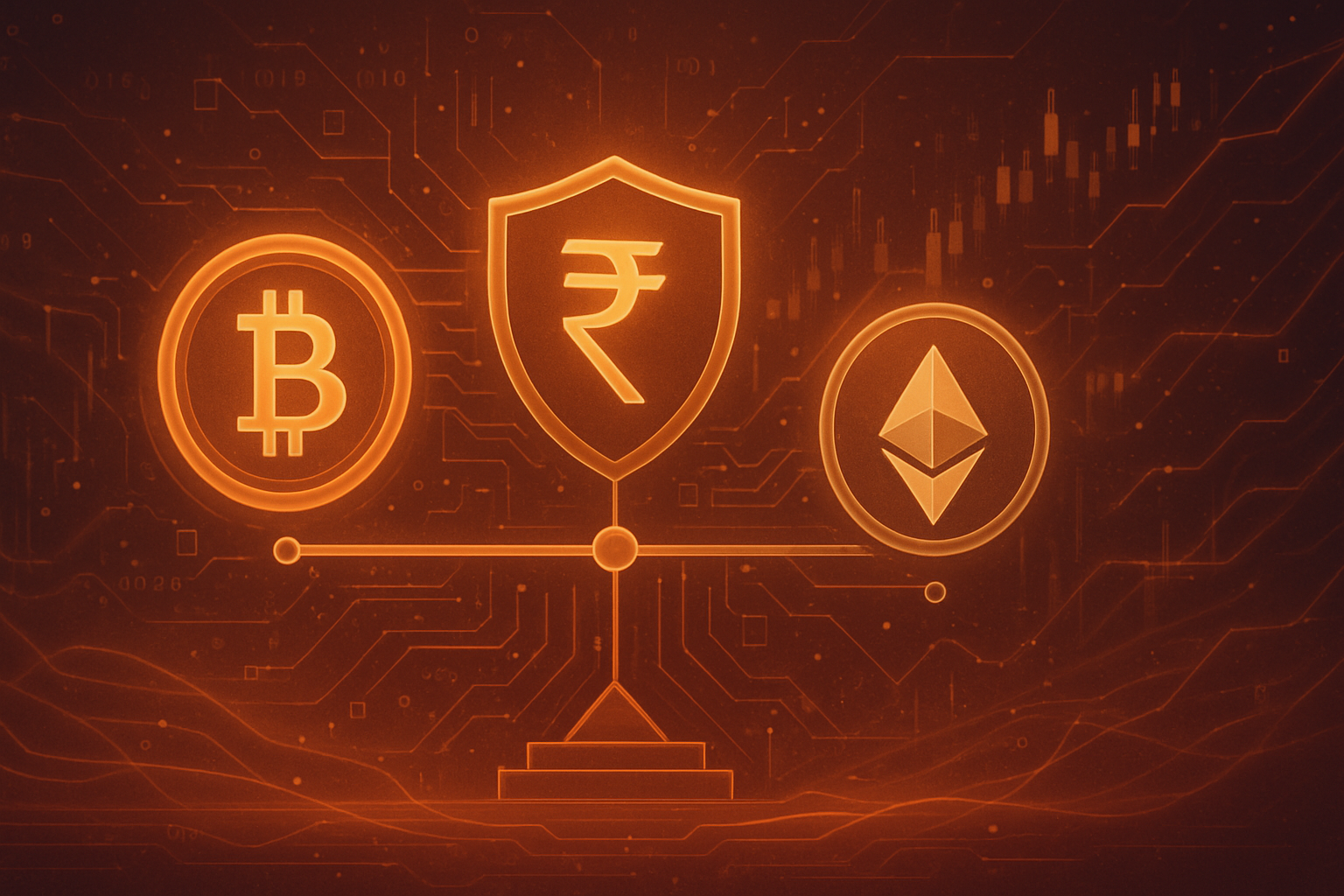
    New Delhi, India – October 7, 2025 – India continues to navigate the complex waters of digital finance with a clear two-pronged strategy: maintaining a cautious, highly regulated approach to private cryptocurrency assets while aggressively pushing for the adoption and development of its central bank digital currency (CBDC), the Digital Rupee (e₹). This stance was recently underscored by Union Commerce Minister Piyush Goyal, who, speaking from Doha, Qatar, reiterated India's commitment to regulating rather than outright banning private digital assets, while simultaneously advising citizens against speculative investments in unbacked cryptocurrencies.

    Minister Goyal's comments, made around October 6-7, 2025, emphasized that India cannot endorse cryptocurrencies lacking sovereign or asset backing, highlighting the stringent taxation and oversight in place to discourage their use. This sentiment reinforces the long-standing position of the Reserve Bank of India (RBI) regarding the inherent risks of private cryptos. Coming just days after Union Finance Minister Nirmala Sitharaman's nuanced statement on October 3, 2025, at the Kautilya Economic Conclave, where she acknowledged the inevitability of nations engaging with stablecoins, India's approach appears to be evolving, but still firmly rooted in control and sovereign backing. This dual narrative signals a maturing regulatory philosophy that seeks to harness the benefits of blockchain technology through the e₹, while mitigating the perceived risks of decentralized private assets.

    Market Impact and Price Action

    While specific, immediate price movements directly attributable to Minister Goyal's latest remarks are challenging to isolate in the broader global crypto market, India's consistent regulatory narrative undoubtedly contributes to a foundational sentiment. The continued emphasis on high taxation (30% on gains, 1% TDS) for Virtual Digital Assets (VDAs) acts as a persistent dampener on speculative trading within the country. This regulatory clarity, however restrictive, has arguably prevented the kind of wild market swings seen in other jurisdictions facing sudden, unexpected bans.

    The market's reaction within India often manifests as a subdued trading environment for private cryptocurrencies on domestic exchanges. Volumes remain constrained compared to global counterparts, and liquidity is generally lower. While Bitcoin (BTC) and Ethereum (ETH) prices on Indian exchanges largely mirror international rates due to arbitrage, the significant tax burden erodes potential profits, making long-term holding and strategic investment more appealing than day trading. The absence of specific "affected tokens" in response to these general policy reiterations suggests that the market has largely priced in India's cautious stance. Instead, traders and investors are more attuned to global macroeconomic factors and major regulatory shifts from larger economies. The underlying technical analysis for major cryptocurrencies remains dictated by global trends, with India's domestic policies primarily influencing investor behavior and adoption rates rather than direct price action.

    Community and Ecosystem Response

    The Indian crypto community, accustomed to the government's cautious stance, largely views Minister Goyal's recent comments as a reinforcement of the status quo rather than a new development. Social media sentiment on platforms like Twitter and Reddit often reflects a mix of resignation and continued advocacy for a more progressive regulatory framework. Crypto influencers and thought leaders within India frequently call for clearer distinctions between different types of digital assets, arguing that a blanket approach fails to recognize the innovation potential of certain projects, especially those in the DeFi and Web3 space.

    Reactions to Finance Minister Sitharaman's acknowledgment of stablecoins, however, sparked a glimmer of hope among some. This subtle shift suggests a potential future where certain asset-backed cryptocurrencies might receive a more favorable regulatory treatment, distinct from volatile, unbacked tokens. For related DeFi protocols, NFT projects, and Web3 applications, the challenge remains significant. Without clearer legal recognition and a more conducive tax environment, widespread adoption and institutional investment within India are hampered. Many Indian developers and entrepreneurs in the Web3 space often look to international markets for growth and funding, as the domestic regulatory uncertainty creates a difficult operating environment. The broader crypto Twitter and Reddit sentiment outside India often views the country as a market with immense potential but significant regulatory hurdles, with many watching closely for any signs of a more open approach.

    What's Next for Crypto

    The short-term implications for the Indian crypto market suggest a continuation of the current environment: high taxation, cautious trading, and a strong government push for the Digital Rupee. However, the long-term outlook might see a gradual, nuanced evolution. Finance Minister Sitharaman's comments on stablecoins could be a crucial catalyst. If India develops a framework to differentiate stablecoins from other private cryptocurrencies, it could unlock new avenues for adoption, particularly in cross-border payments and remittances, areas where the e₹ is also being targeted.

    Potential developments to watch include the finalization and passage of a comprehensive cryptocurrency bill, which has been under discussion for years. Such a bill, if it provides clear definitions and a tiered regulatory approach, could bring much-needed certainty. Strategic considerations for projects and investors involve closely monitoring government whitepapers, RBI statements, and parliamentary discussions. Projects aiming to enter the Indian market would do well to align with the government's broader digital economy goals and explore use cases that complement, rather than directly compete with, the Digital Rupee. Possible scenarios range from a continued restrictive environment, with the e₹ gaining dominance, to a more open, albeit regulated, market for specific types of private digital assets. The latter scenario, while less likely in the immediate future, gains slightly more traction with recent ministerial acknowledgments of global crypto trends.

    Bottom Line

    For crypto investors and enthusiasts, the key takeaway from India's current stance is the emphasis on sovereign control and risk mitigation. While private crypto assets are not banned, they operate under a regime designed to discourage speculative activity and ensure traceability. The Indian government's unwavering commitment to the Digital Rupee (e₹), evidenced by successful pilot programs and expanding user bases (4.6 million customers and 400,000 businesses by April 2024), signals its belief in a sovereign-backed digital future. The e₹ is poised to become a significant player in India's financial landscape, offering a secure, efficient, and traceable alternative to both physical cash and potentially, private digital assets.

    The long-term significance lies in India's ability to set a precedent for other developing nations grappling with similar regulatory challenges. Its approach of leveraging blockchain for a national CBDC while maintaining a tight leash on decentralized assets could become a model. Final thoughts suggest that while India's market for private cryptocurrencies may remain challenging, the country is undeniably a major player in the global digital finance narrative, largely through its ambitious CBDC project. Important metrics to monitor include the expansion of the e₹'s use cases, particularly in cross-border payments, and any further legislative clarity on the classification and regulation of different types of private digital assets, especially stablecoins.

    This article is for informational purposes only and does not constitute financial or investment advice. Cryptocurrency investments carry significant risk.

  • India’s Stance on Crypto Solidifies: Goyal Signals Caution on Private Assets, Pushes RBI Digital Rupee

    India’s Stance on Crypto Solidifies: Goyal Signals Caution on Private Assets, Pushes RBI Digital Rupee

    NEW DELHI, India – October 6, 2025 – Union Minister Piyush Goyal has delivered a definitive statement regarding India's evolving approach to the burgeoning cryptocurrency landscape, emphasizing a cautious stance on private digital assets while affirming the nation's commitment to an RBI-backed digital currency. Speaking during a recent roundtable visit to Doha, Qatar, Goyal underscored that India does not encourage cryptocurrencies lacking sovereign or asset backing, clarifying that while there is no outright ban, such assets are subject to heavy taxation, placing the onus of risk squarely on investors. This pronouncement, coming as it does from a key figure in the Indian government around October 6-7, 2025, provides crucial insight into the future regulatory trajectory of crypto in one of the world's largest economies.

    The immediate market reaction to Goyal's statements is still unfolding but is expected to reinforce existing sentiment within the Indian crypto community. The clarity on heavy taxation, rather than an outright ban, might offer a semblance of stability, albeit within a restrictive framework. This development is significant for the global crypto ecosystem, as India's regulatory decisions often set precedents or influence discussions in other major economies grappling with similar challenges of digital asset integration and oversight. The government's dual approach – discouraging private, unregulated crypto while actively developing its own central bank digital currency (CBDC) – highlights a strategic effort to harness blockchain technology's benefits within a controlled, sovereign framework.

    Market Impact and Price Action

    Union Minister Piyush Goyal's recent pronouncements, echoing India's long-held skepticism towards private cryptocurrencies, are expected to solidify existing market trends rather than trigger dramatic new shifts. While the statements, delivered around October 6-7, 2025, are still fresh, the reinforcement of a cautious stance and heavy taxation is generally perceived negatively by the private crypto market. Historically, similar regulatory signals from India have led to significant market reactions. For instance, reports of a potential crypto ban in March 2021 saw Bitcoin's (BTC) price dip by several thousand dollars within hours, and the implementation of a 30% tax on gains and a 1% Tax Deducted at Source (TDS) in 2022 resulted in an approximate 80% decrease in trading volume on major Indian exchanges like SunCrypto, WazirX, and CoinDCX.

    The current reiteration of these policies suggests that major cryptocurrencies such as Bitcoin and Ethereum (ETH) are unlikely to see a positive surge within the Indian market due to this news. Instead, the statements could exert continued downward pressure or hinder any potential upward momentum. India-specific tokens, if they lack RBI backing, would likely face similar or even greater negative sentiment, as the government explicitly discourages unbacked digital assets. Trading volumes on Indian exchanges, which have already seen a substantial migration to overseas platforms in response to the stringent tax regime, are unlikely to recover and may even experience further stagnation or decline for private cryptocurrencies.

    Technical analysis in the wake of such regulatory clarity (or lack thereof, from a private crypto perspective) often shows increased resistance levels for major assets in the Indian market, as local investors face higher hurdles to participation. The continuous push for an RBI-backed digital currency (e₹) by the Indian government further contrasts with the private crypto space, positioning the CBDC as the preferred, sovereign-backed alternative. This bifurcated approach means that while the global crypto market might absorb India's stance without major tremors, the domestic Indian market for private digital assets will likely continue to operate under a cloud of fiscal disincentives, with investors increasingly seeking offshore avenues or turning their attention to the upcoming e₹.

    Community and Ecosystem Response

    Union Minister Piyush Goyal's recent statements around October 6-7, 2025, while consistent with India's long-standing cautious approach, have continued to elicit a mixed, yet largely frustrated, reaction from the vibrant Indian crypto community. With India boasting an estimated 119 million crypto owners, the reiterated stance on heavy taxation—a 30% capital gains tax and a 1% Tax Deducted at Source (TDS)—remains a significant point of contention. Social media platforms like Crypto Twitter and Reddit's r/CryptoIndia are abuzz with discussions reflecting a deep-seated frustration over the high tax burden and the persistent regulatory uncertainty, which many believe stifles domestic innovation and investment.

    The community's sentiment towards the government's strong push for an RBI-backed digital currency (CBDC) is often characterized by skepticism. While the government champions the e₹ for its traceability and efficiency, many crypto enthusiasts view CBDCs with apprehension regarding privacy and decentralization, preferring the fundamental tenets of blockchain technology. This divergence is leading some users to actively seek alternatives, such as investing in US stocks with exposure to Bitcoin mining or prioritizing self-custody solutions like hardware wallets, as a means to navigate the restrictive domestic environment. Finance Minister Nirmala Sitharaman's recent acknowledgment of the "inevitability of engaging with stablecoins" has offered a glimmer of cautious hope for some regulatory clarity, though the specifics of such a framework remain eagerly anticipated.

    Industry leaders and experts continue to advocate for a more nuanced and innovation-friendly regulatory framework for private cryptocurrencies. They argue that the current approach risks hindering India's burgeoning Web3 ecosystem, potentially leading to a "brain drain" as talent and projects seek more crypto-friendly jurisdictions. Despite these challenges, India's Web3 sector, particularly in hubs like Bengaluru, continues to attract significant venture capital funding and boasts a rapidly growing developer base, focusing on areas like DeFi, real-world assets (RWAs), and staking solutions. This resilience underscores a community determined to build and innovate, even as it navigates the tightrope between compliance and the pursuit of decentralized ideals. The upcoming India Blockchain Week 2025 in December is expected to be a critical forum for further discussions on these regulatory developments.

    What's Next for Crypto

    Union Minister Piyush Goyal's recent statements, delivered around October 6-7, 2025, during his visit to Doha, Qatar, unequivocally signal India's ongoing dual strategy: maintaining a cautious, heavily taxed environment for private cryptocurrencies while aggressively pushing for its own sovereign digital currency. This approach has significant short and long-term implications for the crypto market in India.

    In the short term, the market can expect continued regulatory uncertainty for private, unbacked cryptocurrencies. While Goyal clarified there's "no outright ban," the emphasis on "heavy taxation" (30% on gains, 1% TDS) reinforces the government's revenue-generating and discouragement strategy, making speculative trading less appealing. This will likely keep trading volumes on Indian exchanges subdued for private crypto assets. Conversely, the explicit push for the RBI-backed digital currency (e₹) will accelerate its development and adoption, expanding its pilot projects and use cases, including features like offline payments and programmability. Market sentiment for private crypto will likely remain cautious, with a continued focus on compliance and regulated entities.

    Looking at the long term, India's digital currency is poised to become a significant component of its financial system, potentially transforming payment infrastructure with its secure, traceable, and efficient nature. Private cryptocurrencies may persist in a legally ambiguous but taxed niche, catering to a smaller, more risk-tolerant investor segment. India appears to be moving towards a "walled garden" approach, where approved blockchain applications and potentially regulated digital assets (like stablecoins, as hinted by Finance Minister Sitharaman) are integrated, while truly decentralized and unregulated private cryptocurrencies remain outside the formal financial system. This strategy aims to mitigate systemic financial risks and bolster the internationalization of the Rupee.

    Potential catalysts to watch include the eventual introduction of a more detailed Crypto Bill or specific regulations that classify cryptocurrencies as digital assets under existing laws like FEMA, providing much-needed legal clarity beyond just taxation. The expansion and success of the e₹'s use cases, particularly in cross-border payments, will be crucial. India's alignment with emerging global regulatory consensus, especially concerning stablecoins and DeFi, could also prompt policy adjustments. Judicial interventions or significant technological advancements that address government concerns about private crypto could also influence future policy.

    For crypto projects, strategic considerations include focusing on CBDC compatibility, ensuring stringent regulatory compliance (AML/KYC), developing utility-driven solutions over purely speculative assets, and engaging in continuous education and advocacy with policymakers. Investors must prioritize thorough risk assessment given the high regulatory risk and taxation, ensure meticulous tax compliance, consider portfolio diversification, and familiarize themselves with the e₹ as a government-backed digital asset.

    Several scenarios are possible. The most likely is a continuation of the "cautious but tolerant" stance, where private crypto is taxed but not banned, and the CBDC is actively promoted. A medium likelihood scenario involves partial legalization and regulation of select private cryptocurrencies, such as asset-backed stablecoins, aligning with global trends. An outright ban on private cryptocurrencies has a low likelihood, given the current "no ban" rhetoric. Finally, full integration and innovation across all crypto types remains a very low likelihood in the short term, though it could evolve in the long term with significant global and domestic shifts.

    Bottom Line

    Union Minister Piyush Goyal's statements around October 6-7, 2025, offer clear takeaways for crypto investors and enthusiasts: India is firmly committed to a sovereign-controlled digital financial future, with the RBI-backed Digital Rupee at its core. Private cryptocurrencies, while not outright banned, will continue to operate under a regime of "heavy taxation" (30% capital gains, 1% TDS) and regulatory skepticism, reflecting the government's deep-seated concerns about financial stability and the risks associated with unbacked digital assets. The recent crackdown on non-compliant offshore exchanges further underscores India's resolve to channel crypto activity through regulated, domestic channels.

    The long-term significance of India's stance lies in its prioritization of sovereign control and risk aversion. This approach aims to integrate blockchain technology within a centralized framework, potentially shaping a "walled garden" digital economy where approved applications and the CBDC thrive, while decentralized private crypto occupies a legally ambiguous niche. For crypto adoption, this means a challenging environment for private assets to gain mainstream transactional acceptance, but a strong push for the Digital Rupee. Despite these hurdles, India's resilient and growing investor base, driven by young, tech-savvy individuals, continues to engage with crypto, ranking first globally in adoption.

    Important metrics and events to monitor include the rollout and adoption rates of the Digital Rupee, any further legislative developments (e.g., a detailed Crypto Bill or formal classification of digital assets), and potential changes in the stringent taxation policy. Enforcement actions by the Financial Intelligence Unit (FIU-IND) against non-compliant platforms will continue to shape the operational landscape. Globally, India's alignment with emerging international crypto regulations, especially concerning stablecoins, could also signal future domestic policy shifts. Ultimately, India's path forward signals a future where digital finance is embraced, but with a strong preference for centrally controlled and regulated digital assets over their decentralized counterparts, forcing private crypto participation to adapt to a strict, high-tax, and compliance-focused environment.

    This article is for informational purposes only and does not constitute financial or investment advice. Cryptocurrency investments carry significant risk.