Tag: Hong Kong

  • JPMorgan Shepherds HashKey’s Landmark $215 Million IPO, Signaling New Era for Regulated Crypto Finance

    JPMorgan Shepherds HashKey’s Landmark $215 Million IPO, Signaling New Era for Regulated Crypto Finance

    HONG KONG – December 9, 2025 – In a monumental development poised to reshape the landscape of regulated cryptocurrency finance, global banking giant JPMorgan Chase (NYSE: JPM) is leading the charge as a joint sponsor for the highly anticipated Initial Public Offering (IPO) of Hong Kong-based crypto firm HashKey. The move, which sees HashKey aiming to raise up to $215 million (approximately HK$1.67 billion), marks a critical juncture for the integration of digital assets into traditional financial markets and solidifies Hong Kong's position as a leading hub for compliant crypto operations.

    HashKey, Hong Kong's largest licensed crypto exchange, passed its listing hearing with the Hong Kong Stock Exchange (HKEX) in late November/early December 2025, with the subscription period for its shares officially opening today, December 9, 2025, and set to conclude on December 13, 2025. Trading of HashKey's shares is anticipated to commence on December 17, 2025. This landmark event has been met with overwhelmingly positive sentiment across both traditional finance and the crypto community, hailing it as a "seminal moment for compliant crypto finance across the entire Asian region." The involvement of cornerstone investors such as UBS Asset Management (SWX: UBSG) and Fidelity International, committing a combined $75 million, underscores a robust vote of confidence from institutional players in Hong Kong's stringent yet supportive regulatory framework.

    The significance of this IPO cannot be overstated. JPMorgan's prominent role in shepherding a crypto firm to a public listing acts as a powerful bridge between the often-disparate worlds of traditional finance (TradFi) and the burgeoning decentralized economy. It not only grants HashKey access to public capital markets but also signals a growing mainstream acceptance and integration of digital assets. Furthermore, a successful listing will serve as a strong endorsement of Hong Kong's progressive regulatory approach, potentially inspiring other jurisdictions and licensed crypto platforms to explore similar avenues, thereby fostering greater institutional participation and capital inflow into the regulated crypto space globally.

    Market Impact and Price Action

    The immediate market impact of HashKey's IPO, while not yet reflected in post-listing price action, is profoundly positive for the broader crypto ecosystem. The sheer fact that a major financial institution like JPMorgan Chase (NYSE: JPM) is sponsoring a crypto exchange's public offering sends a strong signal of legitimacy and maturity to the market. This move is expected to inject a significant dose of institutional confidence, potentially attracting more traditional capital into the regulated digital asset sector. While there are no specific token or coin price movements directly tied to HashKey's listing (as it's an equity IPO), the sentiment generated is likely to create a bullish undertone for compliant crypto platforms and services.

    The $215 million fundraising target, though revised down from earlier reports of $500 million, is still substantial and demonstrates investor appetite for well-regulated crypto ventures. The pricing of shares between HK$5.95 and HK$6.95, valuing HashKey at up to HK$19 billion, sets a benchmark for future crypto firm valuations in public markets. The involvement of cornerstone investors like UBS Asset Management (SWX: UBSG) and Fidelity International, committing significant capital pre-listing, further de-risks the IPO and indicates a strong belief in HashKey's business model and the long-term potential of regulated crypto. This can be compared to the Coinbase (NASDAQ: COIN) direct listing in April 2021, which, despite being a different mechanism, also generated immense market excitement and saw a surge in overall crypto market capitalization around its debut, driven by the narrative of institutional adoption.

    From a technical analysis perspective, while HashKey's shares are new to the market, the success of this IPO could establish a new "support level" for the broader narrative of regulated crypto. It suggests that despite market volatility, there is a fundamental demand for secure, compliant avenues for digital asset investment and trading. Increased liquidity in traditional markets for crypto-related equities could indirectly enhance the overall perceived liquidity and stability of the crypto market itself, as more institutional participants gain exposure through regulated channels. This event acts as a critical stress test for the viability of public market listings for crypto firms, and a successful outcome would pave the way for a new class of crypto-related assets on traditional exchanges.

    Community and Ecosystem Response

    The crypto community's response to JPMorgan (NYSE: JPM) shepherding HashKey's IPO has been overwhelmingly positive, bordering on celebratory. Across platforms like Crypto Twitter, Reddit, and various Telegram and Discord channels, the sentiment is largely one of validation and optimism. Many view this as a significant step towards mainstream adoption and a clear sign that traditional finance is not only acknowledging but actively embracing the digital asset space, albeit under a regulated framework. Influencers and thought leaders are highlighting the "institutional stamp of approval" that JPMorgan's involvement brings, emphasizing that such a move by a banking behemoth lends immense credibility to the crypto industry.

    Discussions frequently revolve around Hong Kong's proactive regulatory stance, with many praising the jurisdiction for creating an environment conducive to such landmark events. The IPO is seen as a proof point for the argument that robust regulation, rather than stifling innovation, can actually foster growth and attract serious capital. Effects on related DeFi protocols, NFT projects, or Web3 applications are more indirect but significant: the successful listing of a major regulated exchange could increase overall trust and capital flow into the broader crypto ecosystem, potentially benefiting compliant projects within these sectors. It signals a maturation of the industry, moving beyond speculative retail trading to more structured, institutionally-backed ventures.

    Broader crypto Twitter and Reddit sentiment reflects a sense of optimism that this IPO could set a precedent for other regulated crypto entities seeking public market access globally. There's a strong belief that this event will encourage more traditional financial institutions to explore partnerships and investments within the digital asset space, ultimately leading to greater liquidity, deeper markets, and enhanced legitimacy for the entire Web3 movement. While some purists might express reservations about centralized entities entering the decentralized space, the prevailing mood is that of progress and the opening of new avenues for growth and investment.

    What's Next for Crypto

    The successful IPO of HashKey, backed by JPMorgan (NYSE: JPM), heralds a new chapter for the crypto market, with profound short and long-term implications. In the short term, the market is likely to experience a surge in confidence, particularly in regulated crypto entities and jurisdictions that embrace a forward-thinking regulatory approach like Hong Kong. This could lead to increased institutional investment flows into other licensed exchanges, custodians, and tokenization platforms. We might also see a renewed focus on regulatory clarity and compliance as a key differentiator for projects and companies seeking to attract traditional capital.

    Looking further ahead, the HashKey IPO could serve as a powerful catalyst for a wave of similar public listings by other established crypto firms globally. This would significantly broaden the investment avenues for traditional investors seeking exposure to digital assets without directly holding volatile cryptocurrencies. Potential developments to watch include other major financial centers following Hong Kong's lead in developing clear regulatory frameworks for crypto equities, and an acceleration in the tokenization of real-world assets (RWAs) as more regulated platforms emerge to facilitate such activities. HashKey's stated intention to use funds for product development, including regulated derivatives and yield products, also points towards a future where sophisticated financial products based on digital assets become more commonplace and accessible through regulated channels.

    Strategically, this event underscores the importance for crypto projects and investors to prioritize regulatory compliance and robust governance. Projects that can demonstrate adherence to established financial standards will likely find it easier to attract institutional partners and capital. For investors, it highlights the growing bifurcation of the crypto market into regulated and unregulated segments, suggesting that future growth may be increasingly concentrated within the former. Possible scenarios include a gradual convergence of TradFi and crypto, where traditional financial instruments and digital assets coexist and interact seamlessly within regulated ecosystems. The likelihood of this scenario is significantly increased by landmark events such as the HashKey IPO.

    Bottom Line

    The HashKey IPO, shepherded by JPMorgan (NYSE: JPM), represents a watershed moment for the cryptocurrency industry, offering key takeaways for both crypto investors and enthusiasts. Foremost, it unequivocally demonstrates the increasing integration of digital assets into the traditional financial system. This is not merely a niche market anymore; it's a sector attracting serious institutional backing and capital, validating the long-term potential of compliant crypto ventures. For investors, this event signals a maturation of the market, where regulatory adherence and robust corporate governance are becoming as crucial as technological innovation.

    The long-term significance of this IPO cannot be overstated. It establishes a viable pathway for crypto firms to access public equity markets, potentially unlocking vast pools of capital and accelerating the industry's growth and legitimacy. It also serves as a powerful endorsement of Hong Kong's proactive and comprehensive regulatory framework for digital assets, likely positioning the region as a global leader in regulated crypto finance. This could inspire other jurisdictions to develop similar frameworks, fostering a more secure and predictable environment for crypto businesses worldwide.

    Ultimately, this means a significant leap forward for crypto adoption. As more regulated entities enter public markets, the barriers to entry for traditional investors decrease, leading to greater liquidity, transparency, and mainstream acceptance of digital assets. Important dates to monitor include December 17, 2025, when HashKey shares are expected to commence trading on the HKEX, and the subsequent performance metrics of the stock, which will serve as a crucial barometer for investor appetite in regulated crypto equities. This IPO is a clear indicator that the future of crypto is increasingly intertwined with traditional finance, moving towards a hybrid ecosystem built on compliance, innovation, and institutional participation.


    This article is for informational purposes only and does not constitute financial or investment advice. Cryptocurrency investments carry significant risk.
  • Hong Kong Rocked by HK$1.6 Billion JPEX Crypto Fraud: A Watershed Moment for Regulation and Investor Trust

    Hong Kong Rocked by HK$1.6 Billion JPEX Crypto Fraud: A Watershed Moment for Regulation and Investor Trust

    Hong Kong, November 6, 2025 – Hong Kong's burgeoning cryptocurrency landscape has been severely shaken by the unfolding HK$1.6 billion (approximately US$205 million) JPEX fraud case, now the city's largest alleged financial fraud. In a significant development this week, 16 individuals appeared in Eastern Court on November 5th and 6th, 2025, facing a litany of charges including conspiracy to defraud, fraudulent inducement to invest in virtual assets, and money laundering. This high-profile case, which has ensnared over 2,700 victims, underscores the inherent risks in unregulated crypto investments and the urgent need for robust regulatory frameworks in the rapidly evolving Web3 ecosystem.

    The immediate aftermath of the initial investigations in September 2023 saw a palpable shift in market sentiment within Hong Kong, with investor confidence plummeting. The recent court proceedings, however, have amplified the gravity of the situation, signaling a decisive move by Hong Kong authorities to clamp down on illicit activities within the digital asset space. This pivotal moment not only tests Hong Kong's ambition to become a leading crypto hub but also sets a critical precedent for regulatory enforcement and investor protection in the global crypto market.

    Market Impact and Price Action

    The most direct and devastating market impact of the JPEX fraud was felt by its native token, JPC. Designed to be exclusively traded on the JPEX platform, the JPC token has reportedly lost virtually all its value since the unraveling of the fraud. Initial reports from September 2023 indicated a sharp 24% decline to $0.0228, a precursor to its eventual collapse as the platform suspended operations and liquidity evaporated. For thousands of investors, the promise of high returns turned into total loss, highlighting the extreme volatility and lack of recourse associated with tokens on unregulated exchanges.

    While specific aggregate data on trading volume and liquidity across all Hong Kong-based exchanges post-JPEX fraud is not yet fully quantifiable, the overall sentiment points to a significant negative impact on the broader market. JPEX allegedly misrepresented its trading volumes and liquidity through deceptive tactics, contributing to its fraudulent scheme. With the platform's collapse and the subsequent regulatory crackdown, unlicensed crypto operations in Hong Kong have undoubtedly ceased or significantly diminished their activity. This has likely led to a decrease in overall speculative trading volume and a more cautious approach to liquidity provision, as risk perception has heightened considerably.

    The JPEX fraud shares unsettling similarities with other major crypto collapses, such as those of FTX (FTT) and Terra Luna (LUNA). Like JPEX, FTX, once a prominent cryptocurrency exchange, collapsed in November 2022 due to mismanagement and alleged fraud, leaving billions in customer funds unaccounted for. Similarly, the Terra Luna ecosystem's implosion in May 2022 wiped out an estimated $40 billion in investor wealth, exposing the fragility of certain crypto models. In all these cases, the market effects were characterized by massive investor losses, a severe decline in retail investor trust, and, crucially, intensified calls for stricter cryptocurrency regulations globally. Hong Kong's robust response to JPEX, including the formation of a police task force and updated policies, mirrors the global regulatory shift seen after these prior incidents.

    Community and Ecosystem Response

    The JPEX scandal has sent shockwaves through Hong Kong's crypto community and ecosystem, sparking widespread discussions on social media and prompting strong reactions from influencers and thought leaders. Sentiment on platforms like Reddit and local Hong Kong forums has been overwhelmingly negative, characterized by anger, disappointment, and urgent calls for enhanced regulation. A significant portion of this frustration has been directed at the social media influencers who aggressively promoted JPEX, often without disclosing its unlicensed status or the inherent risks.

    Prominent online personalities, including influencer Joseph Lam Chok and actor Cheng Chun-hei, were among those arrested and charged, marking a critical turning point in holding crypto promoters accountable. The Securities and Futures Commission (SFC) had previously urged Key Opinion Leaders (KOLs) and Over-The-Counter (OTC) crypto shops to cease promoting JPEX. As a direct consequence of the crackdown, many Hong Kong-based influencers who previously endorsed digital asset products have reportedly deleted their marketing content or suspended their campaigns, indicating a cautious retreat from endorsement activities and a recognition of the severe legal ramifications.

    While direct impacts on specific DeFi protocols, NFT projects, or Web3 applications explicitly linked to JPEX are not widely detailed, the scandal has cast a long shadow over Hong Kong's broader digital asset sector. The case serves as the first significant test of Hong Kong's new regulatory framework for virtual assets, highlighting gaps, particularly concerning the oversight of OTC shops and the need for clearer guidance on decentralized finance (DeFi). The message from authorities is unequivocal: "licensing is not optional." Investor confidence, which Hong Kong officials had actively sought to build, suffered a substantial blow, coming just months after the government promoted the city as a regional hub for compliant exchanges. Victims have called for regulators to extend supervision beyond just unlicensed platforms to include all facets of the crypto ecosystem, including crypto education centers and related advertising, advocating for a more comprehensive regulatory system to protect virtual assets.

    What's Next for Crypto

    The HK$1.6 billion JPEX fraud case represents a pivotal moment for Hong Kong's crypto market and its aspirations as a global digital asset hub. In the short term, the market will continue to grapple with dampened retail investor trust and heightened regulatory scrutiny. However, in the long term, this incident is expected to catalyze a significant strengthening and acceleration of Hong Kong's regulatory enforcement, ultimately aiming to foster a more mature and secure crypto ecosystem.

    Authorities are expected to rigorously enforce existing Anti-Money Laundering and Counter-Terrorist Financing Ordinance (AMLO) and Securities and Futures Ordinance (SFO) provisions, with the JPEX case being the first time AMLO has been applied to a cryptocurrency-related prosecution. The SFC has committed to enhancing transparency by publishing various lists, including licensed VATPs, closing-down VATPs, deemed licensed entities, and a dedicated list of suspicious VATPs. Furthermore, the incident has underscored the urgent need for stablecoin regulation, with the Hong Kong Monetary Authority (HKMA) expected to introduce a regulatory regime for stablecoins, potentially restricting retail trading until its implementation. The legal precedent set by charging influencers also signals a new era of accountability for crypto promoters.

    Hong Kong remains committed to its Web3 vision, but the approach will undoubtedly be more cautious, prioritizing investor protection and market integrity over rapid expansion. This could lead to higher entry barriers for new crypto entrants and a consolidation of smaller over-the-counter crypto operators. By demonstrating a strong response and implementing robust regulatory measures, Hong Kong aims to restore public and institutional trust, ultimately strengthening its position as a credible and secure digital asset hub in the long run. The legal recognition of cryptocurrency as "property" under Hong Kong law, established in previous cases, further MRP this evolving regulatory environment.

    Bottom Line

    The JPEX fraud case serves as a stark and expensive lesson for crypto investors and enthusiasts alike. The primary takeaway is the absolute necessity of verifying the licensing status of any platform with regulatory bodies like the SFC. JPEX operated without a valid license, despite allegedly making misleading claims, and its aggressive marketing through influencers and OTC shops, promising unrealistic returns, should have been immediate red flags. This case underscores the critical importance of conducting thorough due diligence, understanding the inherent risks of volatile crypto assets, and never investing more than one can afford to lose.

    The long-term significance of this event for Hong Kong is profound. It has forced a critical re-evaluation of its crypto regulatory framework and accelerated the implementation of stricter enforcement measures. While it has undoubtedly damaged retail investor confidence in the short term, the decisive actions by Hong Kong authorities, including numerous arrests, charges, and asset seizures, demonstrate a strong commitment to combating financial crime in the digital age. This proactive stance, coupled with enhanced investor education and clearer regulatory guidelines, could ultimately pave the way for a more robust, transparent, and trustworthy crypto ecosystem in Hong Kong, fostering sustainable adoption among institutional and discerning retail investors.

    Globally, the JPEX case serves as a powerful cautionary tale, highlighting the universal challenges of unregulated platforms, the deceptive power of social media influence in promoting scams, and the complexities of cross-border crypto fraud. Other jurisdictions developing their own crypto regulatory frameworks will undoubtedly look to Hong Kong's response as a precedent for tackling similar issues.

    Important dates to monitor include the ongoing court proceedings, with the next mention scheduled for December 15, 2025, and the progress of Interpol red notices issued for the alleged masterminds who have fled overseas. Further regulatory announcements from the SFC regarding stablecoins, OTC crypto businesses, and clearer rules for influencer marketing will also be crucial indicators of the evolving landscape. The continuous updating of the SFC's public lists of licensed, applicant, and suspicious virtual asset trading platforms will be key metrics for assessing regulatory effectiveness and market transparency.


    This article is for informational purposes only and does not constitute financial or investment advice. Cryptocurrency investments carry significant risk.

  • Hong Kong Unlocks Global Crypto Access: Will Investors Bite?

    Hong Kong Unlocks Global Crypto Access: Will Investors Bite?

    Hong Kong, a long-standing titan of global finance, made a landmark announcement on Monday, November 3, 2025, signaling a pivotal shift in its approach to digital assets. During Hong Kong Fintech Week, Julia Leung, Chief Executive Officer of the Securities and Futures Commission (SFC), revealed that the city would permit its licensed virtual asset trading platforms (VATPs) to connect with global markets, moving away from its previously insular trading environment. This strategic pivot allows Hong Kong-licensed exchanges to integrate their order books with affiliated overseas platforms, a move poised to dramatically enhance global liquidity and trading efficiency within the crypto ecosystem.

    This groundbreaking policy reversal is expected to have immediate and far-reaching implications. It not only broadens the product offerings available to investors—including Hong Kong Monetary Authority (HKMA)-licensed stablecoins and tokenized securities, alongside virtual assets for professional investors without the prior 12-month track record requirement—but also aims to attract a wave of international crypto firms. By aligning its digital asset regulations more closely with its robust traditional financial framework, Hong Kong is aggressively reasserting its ambition to become a premier global digital asset and fintech hub. The SFC has emphasized that these liberalizations come with stringent safeguards, including prefunding requirements, delivery-versus-payment (DVP) settlements, local compensation reserves, and joint surveillance with overseas affiliates from Financial Action Task Force (FATF) and International Organization of Securities Commissions (IOSCO)-compliant jurisdictions, underscoring a commitment to both innovation and investor protection.

    This development matters immensely for the broader crypto ecosystem. It signals a strong regulatory endorsement from a major financial center, potentially accelerating institutional adoption by fostering greater trust and transparency. Hong Kong's move could also set a significant precedent for other jurisdictions contemplating how to integrate digital assets into mainstream finance responsibly. As global competition for crypto business intensifies, Hong Kong's proactive steps are designed to solidify its competitive edge, drive innovation, and attract capital and talent back into its burgeoning digital asset landscape.

    Market Impact and Price Action

    As Hong Kong's pivotal announcement on November 3, 2025, reverberates through the global financial landscape, the immediate market reaction is still in its nascent stages of unfolding. While concrete, real-time price movements and trading volumes require several hours to days for a definitive assessment, the broader crypto market is poised to react with cautious optimism, drawing parallels from historical responses to significant regulatory clarity. Major cryptocurrencies, including Bitcoin (BTC) and Ethereum (ETH), are anticipated to experience upward momentum or increased trading volumes as institutional confidence is bolstered by Hong Kong's progressive stance.

    The policy shift, which enables licensed platforms to extend their reach globally, is a strong signal for enhanced liquidity and institutional participation. Historically, regulatory frameworks that support legitimate growth and foster institutional involvement tend to drive positive sentiment. Increased access to a regulated environment in a major financial hub like Hong Kong is likely to attract more sophisticated investors and traditional financial institutions, potentially leading to increased capital inflow into the broader crypto market. This could translate into a more robust demand for leading digital assets, influencing their price action positively.

    While there isn't a widely recognized category of "Hong Kong-related crypto assets," local exchange tokens or projects with significant ties to the region might see a more direct and immediate impact. Their utility and investor interest could surge as Hong Kong solidifies its position as a global virtual asset hub. The expectation is that broader operational scope for these platforms will lead to increased trading volumes and improved market liquidity, potentially reducing price volatility over time as the market matures within a regulated framework.

    This scenario echoes past events in other jurisdictions where regulatory clarity, such as the European Union's Markets in Crypto-Assets (MiCA) regulation, has been met with initial positive sentiment and a subsequent rise in institutional interest. Such developments often lead to a shift in trading activity towards compliant platforms as investors prioritize security and regulatory assurance. The full magnitude of Hong Kong's impact on specific price movements, trading volumes, and liquidity across various cryptocurrencies will become clearer in the days and weeks following this landmark announcement, but the foundational elements for a positive market response are firmly in place.

    Community and Ecosystem Response

    While the full spectrum of social media sentiment and community discussions around Hong Kong's November 3, 2025, announcement is still in its nascent stages, the crypto community is widely expected to greet this development with considerable optimism. Given Hong Kong's proactive and increasingly clear stance on digital asset regulation, crypto Twitter and Reddit forums are likely to buzz with discussions centered on the profound implications of enhanced global liquidity and market efficiency. Thought leaders and influencers are anticipated to highlight Hong Kong's commitment to regulatory certainty as a critical catalyst for mainstream crypto adoption and long-term sustainability, particularly in the Asian market.

    The prevailing sentiment is expected to underscore Hong Kong's potential to become a pivotal bridge between traditional finance and the decentralized world, attracting global crypto players and fostering an environment conducive to innovation. Discussions will likely revolve around the specific platforms that will leverage these new global operational capabilities, the benefits for institutional investors seeking regulated gateways, and how Hong Kong's framework compares to other burgeoning crypto-friendly jurisdictions like Singapore or even the more fragmented landscape of the United States. Influencers may also offer cautious optimism, emphasizing the delicate balance required between fostering innovation and upholding robust investor protection and Anti-Money Laundering (AML)/Counter-Terrorist Financing (CTF) measures.

    The ripple effects of this policy are poised to extend across the broader Web3 ecosystem, significantly impacting DeFi protocols, NFT projects, and Web3 applications. For DeFi, increased institutional participation, facilitated by regulated platforms, could lead to a surge in Total Value Locked (TVL) and overall market capitalization, as traditional financial institutions gain a clearer pathway to engage with decentralized finance. Enhanced liquidity from global order books would directly benefit DeFi protocols reliant on deep markets for stable swaps, lending, and borrowing. However, this could also bring increased regulatory scrutiny to DeFi itself, potentially driving the development of "permissioned" DeFi or identity-focused solutions.

    NFT projects could also gain significant legitimacy and trust. A globally integrated, regulated environment in Hong Kong might attract a new wave of institutional collectors and investors who have previously been hesitant due to regulatory uncertainties. This could particularly boost the tokenization of Real-World Assets (RWAs), such as art and real estate, represented as NFTs. For Web3 applications, the regulatory clarity provides certainty for developers, fostering innovation and attracting increased funding and investment for startups across sectors like decentralized social media and gaming. Hong Kong's "LEAP" framework—focused on legal clarity, ecosystem growth, adoption, and public trust—is set to accelerate the development of a robust Web3 ecosystem, leveraging this global policy to drive innovation and cross-border operations.

    What's Next for Crypto

    Hong Kong's bold regulatory pivot on November 3, 2025, sets the stage for a dynamic period of evolution within the global crypto market, with both immediate and long-term implications. In the short term, the most pronounced effect will be a significant enhancement of liquidity and price discovery. By allowing SFC-licensed platforms to share global order books, Hong Kong directly taps into international capital flows, promising more competitive pricing and a broader array of trading opportunities for investors. The immediate expansion of product offerings, including new tokens and HKMA-licensed stablecoins for professional investors without the prior 12-month track record, will swiftly diversify the market. This proactive encouragement of crypto trading and investment is expected to generate a palpable boost in market activity and foster positive sentiment among digital asset firms and investors, potentially drawing new global players to the Hong Kong market.

    Looking to the long term, this move is a crucial step towards solidifying Hong Kong's ambition as a leading global fintech and digital asset hub. The enhanced regulatory clarity and expanded product offerings are poised to attract a greater influx of institutional investment, further legitimizing the crypto market and fostering a deeper convergence between traditional finance and the crypto world. A particularly intriguing long-term implication is Hong Kong's potential to serve as a crucial gateway for Chinese capital, should mainland China's digital-asset restrictions ever ease, even subtly. This supportive environment is also expected to nurture a vibrant crypto ecosystem, encouraging startups, fostering innovation, and driving talent development, thereby strengthening Hong Kong's competitive edge against other major global crypto hubs.

    Several potential catalysts and developments will be critical to watch. Further regulatory liberalization, such as allowing licensed crypto brokers to access global liquidity pools, could significantly broaden market access. The successful implementation of HKMA-licensed stablecoins, with the first approvals anticipated in early 2026, will be a key confidence booster. Additionally, the HKMA's "Fintech 2030" roadmap emphasizes tokenization, and the successful tokenization of real-world assets (RWAs) could unlock new investment opportunities. Global regulatory shifts, particularly in major financial centers, and any subtle changes in Beijing's stance on digital assets, will continue to profoundly impact Hong Kong's trajectory. Continued investment in virtual asset infrastructure and talent, alongside the development of advanced financial products like futures and ETFs, will also be crucial for sustained growth.

    For projects and investors, strategic considerations are paramount. Projects must prioritize obtaining an SFC-issued VASP license, implementing robust compliance measures, and leveraging Hong Kong's global connectivity. Innovating with regulation in mind, particularly in tokenized assets and stablecoins, and forming strategic partnerships will be key. Investors, on the other hand, should prioritize investing through SFC-licensed platforms for enhanced protection, explore the expanded product offerings, and consider portfolio diversification through Hong Kong's integrated environment. While the global regulatory landscape remains fragmented, understanding these nuances is crucial.

    Possible scenarios paint a picture of Hong Kong's future in crypto. The high-likelihood scenario sees Hong Kong successfully attracting a significant influx of global crypto platforms, institutional investors, and talent, establishing itself as a critical bridge between traditional finance and crypto, potentially facilitating controlled capital flows from mainland China. A medium-likelihood scenario suggests moderate growth, with Hong Kong becoming a robust regional leader in Asia, albeit facing intense competition from other hubs. The low-likelihood scenario involves limited impact due to unforeseen bureaucratic hurdles or a prolonged "crypto winter." Given Hong Kong's proactive regulatory adaptations and clear governmental support, the high-likelihood scenario appears to be the most probable outcome.

    Bottom Line

    Hong Kong's strategic decision on November 3, 2025, to allow licensed crypto platforms to operate globally represents a monumental stride towards integrating digital assets into mainstream finance. For crypto investors and enthusiasts, the key takeaways are clear: expect enhanced global liquidity and more efficient price discovery through interconnected order books. The expanded product offerings for professional investors, including new virtual assets and HKMA-approved stablecoins without a lengthy track record, signify a maturing market with greater access and diversification opportunities. Crucially, while liberalizing, Hong Kong maintains a strong focus on investor protection, mandating safeguards like prefunding, delivery-versus-payment settlements, and local compensation reserves. The comprehensive Stablecoins Ordinance, effective August 1, 2025, further reinforces this commitment, aiming to provide a stable and regulated medium for digital transactions.

    The long-term significance of this policy cannot be overstated. It is a calculated move to cement Hong Kong's status as a premier global digital asset and tokenization hub, building upon initiatives like the SFC's 'A-S-P-I-Re' roadmap and the government's 'LEAP' framework. By aligning digital asset rules with traditional financial markets, Hong Kong is poised to attract substantial institutional capital and global crypto firms, fostering a powerful synergy between conventional and decentralized finance. The proactive stance on tokenization, including explorations into tokenized government bonds and ETFs, positions the city at the forefront of the rapidly growing real-world asset (RWA) tokenization market.

    In final thoughts on crypto adoption, Hong Kong's global crypto policy is a powerful catalyst. By providing regulatory clarity and robust frameworks, it addresses a major barrier to institutional participation, building trust and confidence that can accelerate mainstream adoption worldwide. The ability to connect with global liquidity and offer a wider range of regulated crypto products makes Hong Kong an exceptionally attractive jurisdiction for both businesses and investors. This strategic opening is expected to drive increased trading volumes, greater capital inflows, and accelerated innovation. Hong Kong's balanced approach, demonstrating a viable, regulated model for digital assets, could well set a precedent for other jurisdictions, fostering broader global crypto adoption. The potential for efficient, low-cost remittances through the interplay with mainland China's payment networks also holds significant promise for global financial efficiency.

    Important dates, events, or metrics to monitor include the ongoing implementation of the Stablecoins Ordinance, particularly the expected issuance of the first HKMA stablecoin licenses in early 2026. The progress of the HKMA's "Fintech 2030" roadmap and the SFC's 'A-S-P-I-Re' roadmap will indicate Hong Kong's broader digital transformation. Key metrics will be trading volumes on licensed platforms, institutional capital inflows, and the development of new tokenized assets. The number of major international crypto exchanges and brokers applying for and obtaining licenses will signal the city's success in attracting global players. Finally, the evolution of the e-HKD pilot program, especially its focus on wholesale use cases for tokenized asset settlement, will be crucial for integrating central bank digital currencies into the digital asset ecosystem.


    This article is for informational purposes only and does not constitute financial or investment advice. Cryptocurrency investments carry significant risk.
  • Ant Group’s Renewed Crypto Push: Hong Kong Trademark Filings Signal Major Web3 Ambitions

    Ant Group’s Renewed Crypto Push: Hong Kong Trademark Filings Signal Major Web3 Ambitions

    Hong Kong, October 27, 2025 – Ant Group, the Chinese fintech behemoth behind the ubiquitous Alipay payment platform, has unequivocally signaled its renewed and ambitious foray into the cryptocurrency and Web3 ecosystem. Recent trademark filings in Hong Kong, publicly revealed in October 2025, indicate a strategic and comprehensive move to secure its position within the burgeoning digital asset space, particularly within Hong Kong's increasingly crypto-friendly regulatory environment. These filings, initially submitted in June 2025, cover a broad spectrum of virtual currencies, blockchain technology, and stablecoins, igniting widespread speculation and cautious optimism across the global crypto community.

    The news of Ant Group's (a private company, affiliate of Alibaba (NYSE: BABA)) aggressive intellectual property protection in Hong Kong has generated immediate buzz, particularly on social media platforms like X (formerly Twitter). Industry observers and enthusiasts alike view this as a potential "game-changer" for mainstream crypto adoption, given Alipay's colossal user base of over a billion individuals. This strategic maneuver by one of Asia's largest fintech players underscores a calculated pivot towards regulated digital finance, navigating the complex interplay between Hong Kong's permissive stance and mainland China's stringent crypto prohibitions. It highlights a clear intent to bridge traditional finance with decentralized digital assets, setting the stage for significant developments in the coming years.

    Market Impact and Price Action

    Ant Group's trademark filings, while not directly tied to a specific crypto token (as the company does not currently have its own), have nevertheless sent ripples through the broader crypto market, primarily influencing sentiment and institutional confidence. The filings, including names like "ANTCOIN," were perceived as a strong signal of institutional validation from a major Chinese fintech entity, leading to speculative discussions about a "seismic shift in China's crypto stance" across various online forums.

    The immediate market reaction was characterized by anticipation and curiosity, contributing to a general positive sentiment regarding institutional adoption, particularly in Asia. While no specific tokens experienced dramatic price surges directly attributable to Ant Group's announcement, the overall crypto market has shown signs of increasing confidence. This aligns with a broader trend of rising Bitcoin market sentiment, growing accumulation wallets, and increasing exchange outflows, indicating a recovery in market activity and liquidity. Ant Group's potential entry into stablecoin issuance is expected to spur competition and innovation, potentially driving significant growth in the global stablecoin market, which is projected to reach trillions by 2030. The company's existing blockchain initiatives, such as piloting USDC-based cross-border payments via Alipay+ and tokenizing energy assets on its AntChain platform, further validate the real-world utility of blockchain, indirectly benefiting related projects.

    Comparing this to past announcements from major tech companies, such as Facebook's (now Meta Platforms (NASDAQ: META)) Diem (formerly Libra) project in 2019, reveals a more nuanced approach from Ant Group. While Diem generated immense initial excitement, it faced immediate and intense global regulatory scrutiny, ultimately leading to its demise. Ant Group, in contrast, is strategically focusing on Hong Kong's established and increasingly clear regulatory framework for digital assets, suggesting a more pragmatic and compliant path to market entry. This localized, regulatory-first strategy may lead to a more sustainable, albeit slower, influence on the crypto landscape, validating the long-term potential of blockchain and stablecoins rather than causing short-term speculative price spikes.

    Community and Ecosystem Response

    The crypto community's response to Ant Group's Hong Kong trademark filings has been a mix of cautious optimism and intense speculation. The news "lit up X (formerly Twitter)," with discussions revolving around the potential implications for China's broader crypto policy and the future of digital assets in Asia. Prominent crypto influencers, such as Coin Bureau, amplified the news, further fueling community engagement across social media and industry outlets.

    Crypto thought leaders and legal experts have weighed in, with Joshua Chu, co-chair of the Hong Kong Web3 Association, characterizing the filings as a "strategic brand protection" measure. This perspective suggests that while Ant Group is laying legal groundwork for future ventures, it's also a proactive step to safeguard its brand in the evolving virtual asset sector against unauthorized usage. The broader sentiment across crypto communities reflects excitement about a major fintech player with Alipay's vast user base potentially driving mainstream adoption, but this enthusiasm is tempered by a keen awareness of the complex regulatory environment, particularly Beijing's historical stance on private digital currencies.

    Ant Group's existing involvement in the Web3 ecosystem provides context for these filings. Its subsidiary Zan aims to be a Web3 infrastructure provider in Asia, and AntChain is a significant blockchain platform in mainland China. The company's crypto wallet, TOPNOD, is currently undergoing overseas public testing, facilitating crypto trading through third-party platforms. Ant Group has also engaged with non-fungible tokens, referring to them as "digital collectibles" in China to navigate regulatory restrictions. While these past endeavors faced limitations, the Hong Kong filings indicate a renewed and potentially more expansive push into the regulated digital asset space. However, it's crucial to note that Ant Group CEO Cyril Han Xinyi explicitly stated in September 2025 that the company would not issue virtual currencies, instead focusing on building blockchain infrastructure. This clarifies that while Ant Group is preparing for future possibilities in a regulated environment, immediate, full-scale virtual currency issuance might remain constrained by mainland Chinese policy.

    What's Next for Crypto

    Ant Group's strategic moves in Hong Kong carry significant short-term and long-term implications for the crypto market. In the short term, the filings foster positive sentiment around Hong Kong's burgeoning Web3 economy, signaling serious institutional interest. However, the immediate future remains uncertain due to recent reports that Beijing has instructed Ant Group and other mainland firms to pause their stablecoin initiatives in Hong Kong, highlighting persistent regulatory risks emanating from mainland China.

    Long-term, should Ant Group successfully navigate these regulatory complexities, its entry could be a transformative force, accelerating mainstream crypto adoption through Alipay's extensive user base. This could bridge Ant Group's existing payment ecosystem with Hong Kong's global financial corridors, unlocking substantial cross-border transaction volumes and positioning the company to capture a significant share of the projected multi-trillion-dollar global stablecoin market by 2030.

    Several potential catalysts and developments warrant close observation:

    • Hong Kong FinTech Week: Ant Group Chairman Eric Jing is slated to speak at this event, which has an increasing focus on crypto and Web3. His address could provide crucial clarity on Ant Group's specific blockchain strategies and timelines.
    • Stablecoin Licensing Approvals: The Hong Kong Monetary Authority (HKMA) plans to issue its initial stablecoin licenses by early 2026. Ant Group securing such a license would be a significant catalyst, affirming its operational legitimacy.
    • Evolution of Beijing's Stance: Any softening or clearer guidance from mainland Chinese regulators regarding private-sector stablecoins in Hong Kong would profoundly impact Ant Group's progress, as Beijing currently views private stablecoins as a threat to monetary sovereignty.
    • Alipay Integration: The successful integration of regulated digital assets or stablecoins with Alipay's vast consumer payments network would provide unparalleled distribution and foster widespread adoption.
    • Real-World Asset (RWA) Tokenization Expansion: Ant Group is already active in RWA tokenization via AntChain and its Jovay (an Ethereum-based Layer 2 network) platform. Expanding these efforts into Hong Kong under a clear regulatory framework could be a key development.

    For projects, strategic considerations include prioritizing stringent regulatory compliance in Hong Kong, focusing on utility and infrastructure (e.g., software, compliance solutions, payment infrastructure), and developing cross-border capabilities. For investors, a long-term perspective is crucial, alongside vigilant monitoring of regulatory shifts in both Hong Kong and mainland China. Identifying compliant ventures and watching for further institutional entry will be key.

    Possible scenarios for Ant Group's future involvement range from becoming a regulated stablecoin powerhouse in Hong Kong, leveraging Alipay+ for cross-border payments, to evolving into an enterprise blockchain and tokenization leader, or even an overall Web3 ecosystem integrator. However, due to ongoing pressure from Beijing, a more limited, controlled expansion focusing on specific, tightly regulated blockchain applications that align with mainland China's economic objectives (e.g., boosting RMB internationalization) remains a strong possibility.

    The interplay between Hong Kong's crypto-friendly environment and mainland China's prohibitive stance is a delicate balancing act. Hong Kong serves as a "regulatory sandbox" for blockchain innovation, but Beijing retains influence, particularly concerning capital controls and monetary sovereignty. Ant Group's actions represent strategic hedging, preparing for future expansion while navigating these complex regulatory signals.

    Bottom Line

    Ant Group's recent trademark filings in Hong Kong mark a pivotal moment for the crypto industry, signaling a calculated and significant move by a global fintech leader into the regulated digital asset space. For crypto investors and enthusiasts, the key takeaways are clear: Ant Group is strategically positioning itself within a regulated hub, diversifying its digital asset ambitions away from mainland China's restrictions, and aiming to leverage its vast Alipay ecosystem for broader Web3 adoption. The focus on stablecoins, digital asset custody, and real-world asset (RWA) tokenization highlights a pragmatic approach aimed at practical, institutional-grade blockchain applications rather than speculative ventures.

    The long-term significance of Ant Group's actions cannot be overstated. A successful foray by such a prominent player into regulated digital assets could accelerate institutional adoption and mainstream integration of blockchain technology and cryptocurrencies globally, particularly in the Asian market. By navigating Hong Kong's clear regulatory framework, Ant Group could establish a blueprint for other large traditional finance (TradFi) entities seeking compliant entry into the Web3 space, fostering innovation while ensuring investor protection.

    Ultimately, Ant Group's "AntCoin" trademark filings represent a crucial juncture in the ongoing convergence of traditional finance and decentralized finance. This move indicates that major TradFi players are actively seeking to integrate blockchain and digital assets into their core services through regulated channels. The emphasis on practical applications like stablecoins and RWA tokenization suggests a future where the lines between TradFi and DeFi become increasingly blurred, driven by established entities that can command the trust and regulatory compliance necessary for widespread adoption.

    Important dates, events, and metrics to monitor include:

    • Early 2026: The Hong Kong Monetary Authority (HKMA) plans to issue its first batch of stablecoin licenses.
    • Hong Kong FinTech Week: Anticipate significant announcements or detailed roadmaps from Ant Group Chairman Eric Jing.
    • Progress of Jovay and RWA Tokenization: Monitor the adoption and transaction volumes on Ant Group's Layer 2 blockchain and the expansion of its RWA tokenization initiatives.
    • Regulatory Developments: Closely watch for any shifts in Hong Kong's digital asset framework and, crucially, any changes in Beijing's stance towards private stablecoins.
    • Alipay Integration: Look for announcements or pilot programs detailing how blockchain-based services will be integrated into the Alipay platform.
    • Ant Group's Patent Filings: Continued monitoring of new blockchain patent applications can reveal future strategic directions.

    This article is for informational purposes only and does not constitute financial or investment advice. Cryptocurrency investments carry significant risk.

  • Asian Regulators Clamp Down on Corporate Crypto Holdings, Reshaping Institutional Investment Landscape

    Asian Regulators Clamp Down on Corporate Crypto Holdings, Reshaping Institutional Investment Landscape

    Hong Kong, Singapore, and South Korea Lead the Charge with Stricter Rules as Japan Offers Tax Incentives

    Across Asia, a significant regulatory shift is underway, with major financial hubs and exchanges implementing stringent measures to limit corporate digital-asset holdings. This concerted effort, which has intensified throughout 2024 and 2025, aims to mitigate risks associated with crypto volatility, enhance investor protection, and integrate digital assets more responsibly into the traditional financial ecosystem. The move marks a pivotal moment for institutional crypto investment in the region, steering it towards more regulated pathways and away from direct, speculative corporate treasuries.

    The tightening grip by regulators, particularly evident in Hong Kong, India, Australia, South Korea, and Singapore, signals a maturing, albeit more restrictive, environment for corporate engagement with cryptocurrencies. While some jurisdictions like Japan are offering tax incentives to foster Web3 growth, the overarching trend is one of increased scrutiny and compliance. This divergence highlights a fragmented but evolving landscape, forcing companies and investors to navigate a complex web of rules that prioritize stability and transparency over unchecked speculation. The immediate market reaction has been a cautious recalibration, with institutions seeking clarity and adapting their strategies to align with the new regulatory realities.

    Market Impact and Price Action

    The tightening regulatory landscape in Asia, particularly the resistance to direct corporate digital-asset treasury (DAT) models, has had a nuanced but discernible impact on the crypto market throughout 2024 and 2025. While specific price movements directly attributable solely to these regulations are difficult to isolate amidst broader market dynamics, the overarching sentiment has been one of increased institutional caution and a shift towards regulated investment vehicles.

    Major cryptocurrencies like Bitcoin (BTC) and Ethereum (ETH) have experienced periods of volatility, but the regulatory announcements, such as Hong Kong Exchanges and Clearing Ltd. (HKEX) blocking companies with extensive crypto holdings or South Korea's phased opening of corporate crypto trading, have contributed to a more measured institutional approach. Trading volumes on exchanges in regulated jurisdictions like Singapore and Hong Kong have seen a gradual shift, with an emphasis on compliant trading pairs and institutional-grade products. This has led to a potential increase in liquidity for regulated offerings, while less regulated, direct corporate holdings might see a decrease in new capital inflows. Technical analysis suggests that while long-term bullish trends for major assets remain, the regulatory uncertainties have at times created resistance levels, forcing a consolidation phase as the market digests these new rules.

    Comparing this to past events, such as China's blanket ban on crypto trading, the current Asian regulatory trend is more granular and adaptive. Instead of outright prohibition (except for mainland China), the focus is on how companies can hold and trade crypto, rather than if. This has prevented a sharp, dramatic market downturn akin to previous FUD (fear, uncertainty, doubt) events. Instead, the market is undergoing a structural adjustment, with a gradual flow of capital into more compliant channels. The approval of spot Bitcoin and Ether ETFs in Hong Kong, for instance, serves as a counter-narrative, showing that while direct corporate treasuries are being curtailed, regulated pathways for institutional exposure are actively being developed and embraced.

    The long-term effect is expected to foster greater market stability and confidence, attracting a more traditional institutional investor base that prioritizes regulatory certainty. However, in the short term, this means that companies seeking to list with significant crypto on their balance sheets, especially in Hong Kong, will face an uphill battle, potentially limiting the direct corporate demand for digital assets as a treasury reserve.

    Community and Ecosystem Response

    The crypto community's response to Asia's tightening regulations has been a mix of apprehension and cautious optimism, reflecting the region's diverse regulatory approaches. On social media platforms like X (formerly Twitter) and Reddit, discussions frequently revolve around the implications for decentralization and the future of institutional participation. While some purists express concern that increased regulation stifles innovation and centralizes control, a growing segment acknowledges the necessity of clear rules for mainstream adoption and investor protection.

    Crypto influencers and thought leaders have largely echoed this sentiment, emphasizing the "maturation" of the market. Figures like Arthur Hayes, co-founder of BitMEX, have often highlighted the push and pull between regulatory oversight and market freedom. Many see the development of robust regulatory frameworks in jurisdictions like Singapore and Hong Kong as a crucial step towards attracting traditional finance, even if it means higher compliance costs. The narrative is shifting from "wild west" speculation to a more structured financial ecosystem.

    The effects on related DeFi protocols, NFT projects, and Web3 applications are particularly interesting. While direct corporate crypto holdings are being limited, the focus on regulated stablecoins and tokenized assets, as seen in Singapore's Project Guardian, suggests a strategic pivot. DeFi protocols are increasingly exploring ways to become compliant or operate within regulated perimeters, recognizing that institutional capital will demand such assurances. NFT projects and Web3 applications, especially those seeking broader corporate partnerships or integration, are also starting to factor regulatory compliance into their development roadmaps, moving towards more transparent and auditable frameworks. The broader crypto Twitter and Reddit sentiment, while still valuing decentralization, appears to be gradually accepting that a degree of regulation is inevitable for widespread adoption and sustained growth.

    What's Next for Crypto

    The short-term implications of Asia's tightening crypto regulations are likely to include continued scrutiny on corporate digital-asset holdings and a preference for regulated investment vehicles. Projects and companies operating in the region will face heightened compliance demands, potentially leading to increased operational costs and a need for robust legal and risk management frameworks. We can expect a continued flow of institutional capital into regulated products like spot Bitcoin and Ether ETFs, particularly in jurisdictions that have approved them, such as Hong Kong. This suggests a more cautious, but potentially more stable, period for institutional engagement.

    In the long term, these regulatory shifts are poised to fundamentally reshape the crypto market in Asia. The establishment of clear rules, while initially restrictive, is likely to foster greater confidence among traditional financial institutions, potentially unlocking a new wave of institutional investment that prioritizes regulatory certainty. Potential catalysts to watch include further clarity on stablecoin regulations, the expansion of corporate crypto trading pilot programs in South Korea, and Japan's continued efforts to incentivize corporate crypto holdings through tax reforms. The ongoing development of tokenized assets and CBDCs (Central Bank Digital Currencies) across the region will also play a significant role in defining the future landscape.

    Strategic considerations for projects and investors must center on adaptability and compliance. Projects should focus on building robust, auditable, and regulatory-compliant solutions, especially if they aim for institutional adoption or operate in regulated jurisdictions. Investors, particularly institutional ones, will need to conduct thorough due diligence on the regulatory standing of crypto assets and service providers. Possible scenarios include a "two-tiered" market where highly regulated assets and services thrive, while less compliant, more speculative ventures face increasing pressure. Another scenario could see a continued divergence in regulatory approaches across Asian nations, creating opportunities for regulatory arbitrage but also demanding sophisticated jurisdictional strategies from market participants. The likelihood of a fully unrestricted "wild west" crypto market in Asia is diminishing rapidly, replaced by a future defined by structured innovation and regulated growth.

    Bottom Line

    The wave of tightening cryptocurrency regulations across Asia, particularly concerning corporate digital-asset holdings, represents a critical juncture for the global crypto ecosystem. For crypto investors and enthusiasts, the key takeaway is a clear signal that the era of unfettered corporate speculation in digital assets is giving way to a more structured and regulated environment. While this might temper some of the rapid, speculative gains seen in previous cycles, it lays the groundwork for greater long-term stability and institutional acceptance.

    The long-term significance of these changes cannot be overstated. By imposing stricter disclosure requirements, limiting direct speculative holdings, and fostering regulated investment products, Asian regulators are aiming to build a more resilient and trustworthy digital asset market. This shift is crucial for crypto adoption, as it addresses core concerns around market integrity, investor protection, and financial stability, which have historically deterred mainstream institutions. The ongoing development of regulated stablecoins and the phased opening of corporate crypto trading in some nations indicate a nuanced approach that seeks to harness the benefits of blockchain technology while mitigating its inherent risks.

    Important dates and metrics to monitor include the implementation dates of new regulations, such as Hong Kong's Stablecoins Ordinance taking effect on August 1, 2025, and South Korea's phased corporate crypto trading rollout throughout 2025. Investors should also closely watch trading volumes and institutional inflows into regulated crypto ETFs, as these will be key indicators of how capital is reallocating within the new regulatory framework. Ultimately, Asia's regulatory trajectory suggests a future where crypto plays a significant, but carefully controlled, role in the broader financial landscape.


    This article is for informational purposes only and does not constitute financial or investment advice. Cryptocurrency investments carry significant risk.
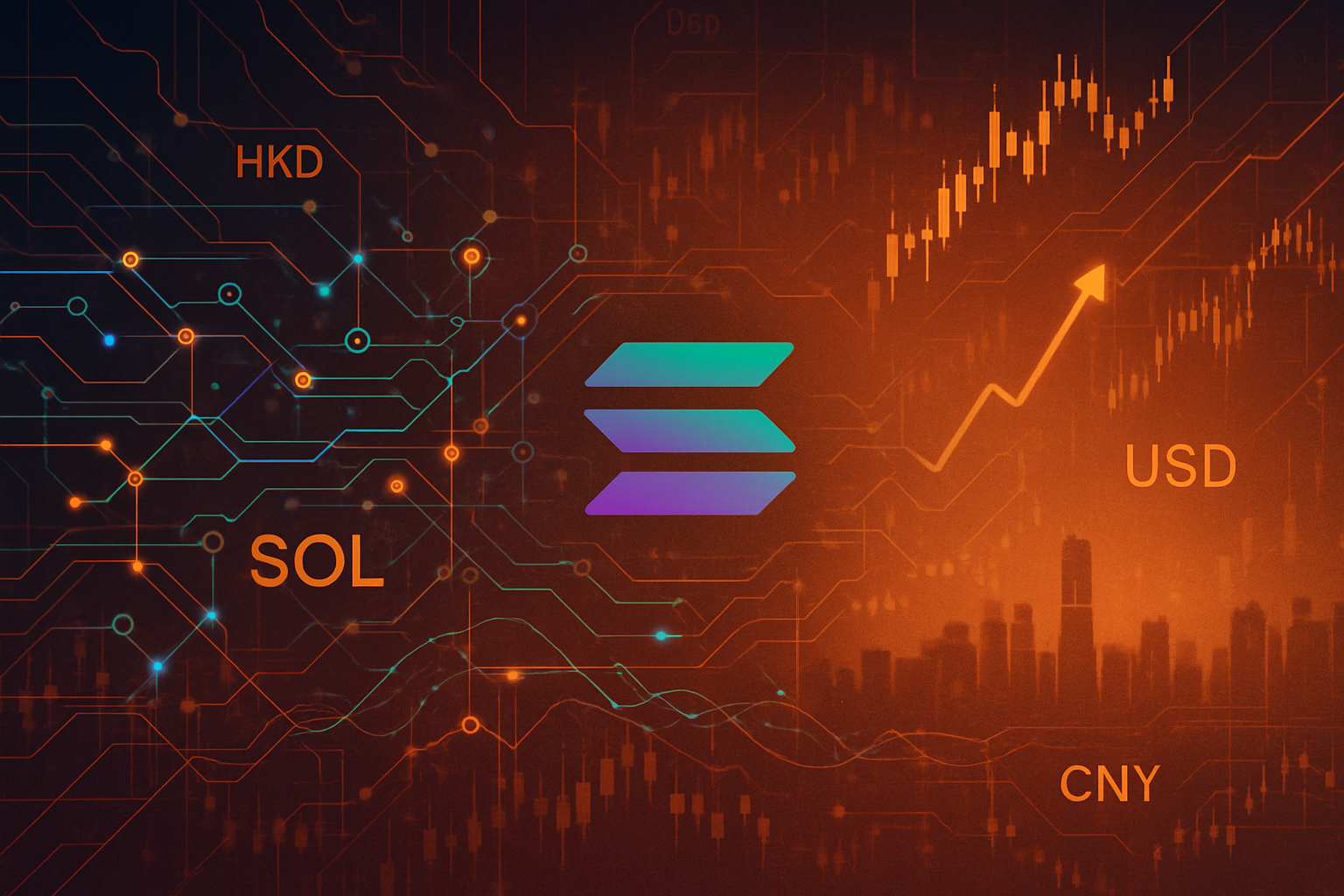
  • Solana Soars: Institutional Partnerships and Historic ETF Approval Mark a New Era for the High-Performance Blockchain

    Solana Soars: Institutional Partnerships and Historic ETF Approval Mark a New Era for the High-Performance Blockchain

    October 22, 2025 – Today marks a watershed moment for the Solana ecosystem, as a dual thrust of institutional validation propels the high-performance blockchain into an unprecedented era of mainstream adoption. SOL Strategies, a leading provider of enterprise-grade validator infrastructure, announced a strategic partnership with Netcoins, a fully regulated Canadian cryptocurrency exchange and subsidiary of BIGG Digital Assets Inc. (CSE: BIGG) (OTCQB: BBKCF). Simultaneously, the Hong Kong Securities and Futures Commission (SFC) officially greenlit the region's first spot Solana Exchange-Traded Fund (ETF), to be issued by China Asset Management (Hong Kong) (ChinaAMC).

    This synergistic confluence of events on October 22, 2025, is poised to dramatically reshape Solana's trajectory. The SOL Strategies and Netcoins collaboration aims to significantly boost institutional Solana staking by offering enhanced yields under stringent Canadian regulatory compliance and security standards, providing a crucial on-ramp for traditional finance. The Hong Kong Solana ETF approval, meanwhile, positions Solana alongside Bitcoin and Ethereum as one of the few cryptocurrencies to achieve spot ETF status in a major financial hub, providing unprecedented regulated access for institutional and retail investors alike. These developments collectively signal a profound shift in how the financial world views and interacts with Solana, promising increased liquidity, heightened legitimacy, and accelerated ecosystem growth.

    Market Impact and Price Action

    The market's immediate reaction to this dual institutional embrace for Solana (SOL) has been a complex but ultimately bullish one, despite some "buy the rumor, sell the news" dynamics observed in short-term price movements. While SOL's price experienced some initial volatility and a brief stabilization around the $180-$185 support level following the news, the underlying market indicators point to a robust influx of capital and heightened investor interest.

    Crucially, the approval of Hong Kong's first Solana ETF on the same day triggered a massive surge in market activity. Solana's trading volume skyrocketed by an astounding 40% to 46.73% within 24 hours, pushing daily volumes to approximately $8.29 billion. This dramatic increase in trading volume, coupled with a notable 15% increase in open interest for Solana futures products, underscores a significant surge in speculative and hedging activities from institutional players and sophisticated traders, indicating strong underlying demand.

    Both the ETF approval and the Netcoins partnership are expected to significantly enhance SOL's liquidity. The ETF provides a regulated and accessible pathway for both institutional and retail investors to gain exposure, leading to increased capital inflows that improve market depth and reduce price impact for larger trades. The Netcoins partnership, by bringing more Solana staking operations under a regulated institutional framework, also contributes to a more robust and liquid staking ecosystem, further strengthening SOL's market position. Historically, institutional involvement lends credibility to cryptocurrencies, transforming them from speculative assets into recognized investment classes, which typically attracts sustained investment and can lead to long-term price appreciation.

    While specific price targets are speculative, the establishment of regulated investment vehicles and compliant staking solutions creates a strong foundation for future growth. The current market action, characterized by high volume and increased open interest despite minor price consolidation, suggests that investors are accumulating and positioning themselves for a sustained uptrend, with key support levels likely to hold firm as institutional money flows in.

    Community and Ecosystem Response

    The Solana community and its broader ecosystem are abuzz with a sentiment that is overwhelmingly positive, tempered by the usual short-term market analysis. While some discussions on social media platforms like Crypto Twitter and Reddit touched upon the "buy the rumor, sell the news" phenomenon regarding SOL's immediate price action, the overarching narrative is one of significant institutional validation and profound confidence in Solana's future.

    The Hong Kong Solana ETF approval is widely hailed as a pivotal moment, signaling robust and growing institutional acceptance of digital assets beyond Bitcoin and Ethereum. Crypto influencers and thought leaders have largely celebrated this decision, emphasizing its role in providing a regulated pathway for traditional finance to gain exposure to the high-performance Solana blockchain. Posts on Reddit communities and discussions among analysts had already anticipated such approvals, reflecting widespread community excitement and the strategic accumulation of SOL by whales in the lead-up to these announcements.

    For related DeFi protocols, NFT projects, and Web3 applications built on Solana, these developments are highly beneficial. Increased institutional capital and mainstream adoption through an ETF provide greater liquidity, enhanced credibility, and a larger potential user base. Solana has already established itself as a major platform for DeFi and GameFi, supported by an active developer ecosystem. This institutional validation is expected to further bolster confidence in Solana's technological advancements, scalability solutions, and its competitive edge against other Layer 1 blockchains. The regulatory clarity and influx of institutional capital are likely to attract even more developers and investment, fostering innovation and growth for both existing and new projects within the ecosystem.

    The SOL Strategies and Netcoins partnership further reinforces this positive outlook. It is seen as a move that strengthens Solana's underlying infrastructure by expanding SOL Strategies' validator operations, which already serve over 15,000 unique wallets, including institutional clients. Andrew McDonald, COO of SOL Strategies, highlighted the demand from regulated entities like Netcoins for compliant and high-yielding staking solutions, underscoring Solana's increasing role in enabling institutional-grade infrastructure for staking. This partnership, following SOL Strategies' earlier collaboration with Crypto.com for custody and validator services in October 2025, fits into a broader trend of strategic alliances that enhance the overall institutional credibility of the Solana network, attracting more traditional finance players and contributing to the network's long-term stability and adoption.

    What's Next for Crypto

    The dual announcements on October 22, 2025—the SOL Strategies and Netcoins partnership and the Hong Kong Solana ETF approval—represent a profound inflection point for Solana and carry significant short-term and long-term implications for the broader crypto market. In the short term, Solana (SOL) is poised for continued price discovery and increased liquidity, driven by the immediate institutional demand channeled through the ETF and the enhanced staking pathways. While initial volatility is expected as the market digests these developments, the overall sentiment points towards a sustained positive trajectory for SOL. The success of a Solana ETF in Hong Kong could also pave the way for other altcoin ETFs globally, diversifying institutional digital asset portfolios beyond just Bitcoin and Ethereum.

    Looking ahead, the long-term implications are even more transformative. These events are expected to solidify Solana's position as a legitimate and investable asset class, leading to sustained institutional capital inflows. This will accelerate ecosystem growth and innovation across DeFi, NFTs, gaming, and Decentralized Physical Infrastructure Networks (DePIN), with Solana's high throughput and low fees making it an attractive foundational layer. The integration with traditional finance (TradFi) will deepen, as regulated products like ETFs allow easier inclusion in traditional investment vehicles, and partnerships like the one with Netcoins embed Solana into existing financial systems for payments and tokenized assets.

    Potential catalysts for Solana's continued growth include the full implementation of Firedancer, a new validator client aimed at significantly improving throughput and network resilience, which will directly address past criticisms and enhance institutional appeal. Further innovations in DeFi and dApps, coupled with the ongoing tokenization of real-world assets (RWAs) on Solana, will drive utility and adoption. Additionally, the expansion of Solana Mobile initiatives and the growth of DePIN projects will broaden its user base and demonstrate real-world utility at scale. Strategic considerations for projects on Solana should focus on reliability, scalability, and building institutional-grade, compliant solutions, while investors should consider a long-term horizon for SOL, explore ecosystem projects, and remain vigilant about market developments.

    Possible scenarios for Solana's future adoption range from becoming a "Mainstream Financial Backbone," serving as a primary settlement layer for global finance and consumer Web3, to a "Niche Institutional Powerhouse," excelling in specific high-performance use cases. For network security, the bullish scenario sees "Enhanced Robustness and Decentralization" through upgrades like Firedancer and ongoing audits. However, challenges regarding centralization concerns and an evolving threat landscape will require continuous vigilance and innovation. These developments collectively position Solana for substantial short-term gains and robust long-term growth, cementing its role as a pivotal player in the future of the crypto market.

    Bottom Line

    The confluence of SOL Strategies' partnership with Netcoins and the landmark approval of Hong Kong's first Solana ETF on October 22, 2025, marks a definitive turning point for the Solana ecosystem. For crypto investors and enthusiasts, the key takeaway is the undeniable acceleration of institutional adoption and regulatory acceptance for Solana. This dual validation provides a strong foundation for sustained capital inflows, enhanced liquidity, and increased legitimacy, transforming SOL into a more mature and integrated asset within the broader financial landscape.

    The long-term significance of these events cannot be overstated. Solana is now firmly positioned as a leading contender for institutional-grade blockchain infrastructure, capable of handling the demands of traditional finance while fostering a vibrant decentralized ecosystem. The compliant staking solutions offered through the Netcoins partnership and the accessible investment avenue provided by the Hong Kong ETF are critical steps towards bringing Solana to a wider audience, both retail and institutional. This will likely fuel further innovation, attract more developers, and solidify Solana's role in the tokenization of real-world assets and the expansion of Web3 applications.

    What this means for crypto adoption is a clearer pathway for other altcoins to gain similar institutional traction, potentially ushering in a new wave of regulated investment products. Important metrics to monitor include SOL's trading volume and liquidity, the inflow of capital into the Hong Kong Solana ETF post-launch (scheduled for October 27, 2025), and the continued growth of staking participation through compliant platforms. The success of these initiatives will be a bellwether for the broader institutionalization of the crypto market.


    This article is for informational purposes only and does not constitute financial or investment advice. Cryptocurrency investments carry significant risk.

  • Hong Kong Greenlights First Spot Solana ETF, Outpacing US in Crypto Innovation Race

    Hong Kong Greenlights First Spot Solana ETF, Outpacing US in Crypto Innovation Race

    Hong Kong, October 22, 2025 – In a landmark move poised to reshape the global cryptocurrency investment landscape, Hong Kong's Securities and Futures Commission (SFC) has officially approved the region's first spot Solana (SOL) Exchange-Traded Fund (ETF). The approval, announced today, positions Solana as the third cryptocurrency, following Bitcoin (BTC) and Ethereum (ETH), to receive spot ETF status in the city. This decisive action by Hong Kong further cements its ambition as a leading global crypto hub and notably places it ahead of the United States in offering a regulated investment product for the high-performance blockchain.

    The newly approved ETF, spearheaded by China Asset Management (Hong Kong) (ChinaAMC), is scheduled to commence trading on the Hong Kong Stock Exchange (HKEX) on Monday, October 27, 2025. It will offer investors exposure to Solana's native token across multiple currency counters: Hong Kong dollars (ticker 03460), Chinese yuan (83460), and US dollars (9460), with an estimated minimum investment of approximately US$100. The fund is designed to track the performance of SOL by directly holding the token, with OSL Exchange serving as the virtual asset trading platform. This development is being hailed by the crypto community as a significant step towards mainstream institutional adoption, promising to unlock new avenues for capital inflow and validate Solana's growing prominence in the digital asset ecosystem.

    Market Impact and Price Action

    The immediate market reaction to the announcement of Hong Kong's spot Solana ETF has been a blend of nuanced price action and a dramatic surge in underlying market activity. While Solana's (SOL) price experienced some initial volatility today, largely continuing a short-term downtrend and holding around the $180-$185 support level, the broader market metrics tell a more compelling story. Data indicates a substantial 40-46.73% increase in SOL trading volume within 24 hours of the news, coupled with a 15% increase in open interest for Solana futures.

    This dynamic suggests a classic "buy the rumor, sell the news" scenario for immediate price movements, where some investors may have realized profits on earlier speculative positions. However, the explosion in trading volume and open interest unequivocally points to a significant influx of capital and heightened investor interest in Solana as an asset class. The ability of SOL to maintain its critical support levels amidst this volatility further underscores underlying strength and conviction from institutional players and long-term holders.

    Comparing this to past crypto ETF approvals, such as the initial spot Bitcoin and Ethereum ETFs in the US and other jurisdictions, a similar pattern often emerges where the immediate price pump might be modest or even negative, but the long-term institutional inflows and increased liquidity prove to be substantial. JPMorgan analysts, for instance, anticipate approximately $1.5 billion in net inflows into Solana ETFs during their first year, building on existing inflows into Solana ETPs in other markets. This institutional validation from a major financial hub like Hong Kong is expected to bolster Solana's liquidity, potentially reducing its inherent volatility over time and attracting a broader base of traditional investors.

    Community and Ecosystem Response

    The Solana community and the broader crypto ecosystem have responded with widespread celebration and optimism to Hong Kong's pioneering approval of a spot Solana ETF. On social media platforms like X (formerly Twitter) and Reddit, sentiment is overwhelmingly positive, with discussions centering on the legitimization of Solana as an asset class and the potential for a new wave of capital inflow into the ecosystem. Many users and prominent crypto influencers are highlighting this as a strong validation for SOL and the wider digital asset space, drawing parallels to the transformative impact of Bitcoin and Ethereum ETF approvals.

    Crypto thought leaders are emphasizing how this ETF opens doors for traditional finance investors to gain exposure to Solana without the complexities of direct asset management. This increased accessibility is expected to foster greater institutional adoption and accelerate Solana's integration into mainstream financial portfolios. Discussions also revolve around anticipated price speculation, with many predicting a bullish trend for SOL in the mid to long term, driven by this new regulated investment vehicle.

    The ripple effects are expected to extend throughout Solana-related DeFi protocols, NFT projects, and Web3 applications. The influx of new capital from institutional investors via the ETF could indirectly lead to increased liquidity and Total Value Locked (TVL) within Solana's DeFi ecosystem. This could manifest as higher demand for Solana-based lending protocols, decentralized exchanges (DEXs), and other financial applications. Furthermore, a general bullish sentiment around Solana often translates to increased activity in its NFT market, potentially boosting trading volumes and floor prices for popular collections. Enhanced visibility and a healthier ecosystem are also likely to attract more developers, driving innovation and growth across Solana's Web3 applications, including gaming, social platforms, and decentralized autonomous organizations (DAOs).

    What's Next for Crypto

    Hong Kong's approval of the spot Solana ETF on October 22, 2025, marks a pivotal moment, signaling a maturation of the crypto market beyond just Bitcoin and Ethereum. In the short term, this move is expected to attract significant institutional capital into Solana, enhancing its liquidity and potentially stabilizing its price volatility over time. For other altcoins, the Hong Kong Solana ETF sets a powerful precedent, suggesting that regulatory comfort is expanding. It validates the potential for other large-cap networks to achieve spot ETF status, accelerating the pipeline for such products and offering investors greater diversification opportunities within their crypto portfolios.

    In the long term, this development will accelerate institutional adoption of Solana globally and could pressure other regulators, particularly the US Securities and Exchange Commission (SEC), to expedite their review of altcoin ETFs. Hong Kong's proactive and clear regulatory approach, which emphasizes a compulsory licensing system for Virtual Asset Service Providers (VASPs) and distinguishes between security, utility, and commodity tokens, stands in stark contrast to the US regulatory landscape. While the US has approved spot Bitcoin and Ethereum ETFs, approvals for other altcoin ETFs have faced delays and regulatory uncertainty. Hong Kong's "first-mover edge" in altcoin ETFs underscores its strategic positioning to become the global benchmark for cryptocurrency hubs.

    Potential future catalysts for the broader crypto market include continued altcoin ETF approvals, especially in the US, for tokens like XRP, Litecoin, and Cardano, which could unlock billions in new capital. Favorable regulatory shifts globally, coupled with macroeconomic factors such as expected Federal Reserve interest rate cuts in late 2025 and 2026, could create a conducive "risk-on" environment for digital assets. Technological innovations, particularly the convergence of artificial intelligence (AI) and blockchain, the evolution of Decentralized Finance (DeFi), and the growing tokenization of real-world assets (RWA), are also expected to redefine the crypto ecosystem and drive significant growth.

    For projects, strategic considerations should focus on scalability, regulatory compliance, and continued innovation to meet the demands of institutional capital. Investors, on the other hand, should prioritize thorough research, diversification, and a long-term perspective, while closely monitoring ETF inflows and global regulatory developments. Asia, already accounting for over 60% of worldwide crypto users, is poised to solidify its market leadership, with Hong Kong potentially emerging as the premier regulated hub, attracting institutional capital and fostering innovation, further driving an "eastward flow" of liquidity.

    Bottom Line

    Hong Kong's greenlight for the first spot Solana ETF is a monumental step, offering key takeaways for crypto investors and enthusiasts alike. It represents a significant leap in increasing accessibility and driving mainstream adoption for Solana, providing a regulated and familiar pathway for both institutional and retail investors to gain exposure. This institutional validation from a major financial hub underscores growing confidence in Solana's robust technology and its potential as a diversified asset class, extending investment opportunities beyond Bitcoin and Ethereum.

    The long-term significance of this approval cannot be overstated. It provides a crucial regulated conduit for traditional finance to engage with the high-performance Solana blockchain, signaling a robust and growing institutional acceptance of digital assets. JPMorgan's projection of over $1.5 billion in first-year inflows for Solana ETFs highlights the potential for enhanced liquidity, reduced volatility, and accelerated development within Solana's burgeoning ecosystem of DeFi protocols, NFT projects, and Web3 applications. This strategic move aligns Hong Kong with other progressive jurisdictions and sets a global precedent for altcoin institutionalization.

    This development also vividly illustrates the evolving global regulatory environment, with Hong Kong demonstrating a proactive and welcoming stance towards digital asset innovation under a supervised framework. This contrasts sharply with the US, where regulatory caution has historically slowed the approval of similar products. Hong Kong's leadership in launching spot crypto ETFs is expected to exert additional pressure on the US SEC to expedite its own approvals for Solana and other altcoin ETFs, potentially accelerating a broader shift in global crypto policy.

    Important dates, events, or metrics to monitor moving forward:

    • October 27, 2025: The official launch and commencement of trading for the ChinaAMC Solana ETF (HKEX: 03460, 83460, 9460) on the Hong Kong Stock Exchange.
    • ETF Trading Volumes and Net Inflows: Closely monitor these metrics for insights into actual investor demand and the rate of institutional adoption.
    • Solana (SOL) Price Performance: Observe SOL's ability to hold key support levels and break through resistance, potentially towards new highs.
    • US SEC Decisions: Keep a close watch on any announcements from the US SEC regarding spot Solana ETF applications, as Hong Kong's move may influence their timeline.
    • Solana Ecosystem Growth: Monitor the continued development of Solana's DeFi, NFT, and Web3 sectors, which will likely benefit from increased capital inflow.

    This article is for informational purposes only and does not constitute financial or investment advice. Cryptocurrency investments carry significant risk.
  • Hong Kong Greenlights First Solana ETF, Igniting 40% Trading Volume Surge

    Hong Kong Greenlights First Solana ETF, Igniting 40% Trading Volume Surge

    Hong Kong, October 22, 2025 – In a landmark decision poised to reshape the institutional cryptocurrency landscape, Hong Kong's Securities and Futures Commission (SFC) has officially greenlighted the region's first spot Solana Exchange-Traded Fund (ETF). The approval, granted to China Asset Management (Hong Kong) (ChinaAMC), marks a significant regulatory milestone, allowing the ChinaAMC Solana ETF to commence trading on the Hong Kong Stock Exchange (HKEX) on October 27, 2025. This move positions Solana (SOL) alongside Bitcoin (BTC) and Ethereum (ETH) as one of the few cryptocurrencies to achieve spot ETF status in a major financial hub, making it the first Solana ETF in Asia.

    The immediate market reaction to the news was a tale of two narratives: while Solana's (SOL) price experienced some initial volatility and continued a short-term downtrend, holding near the $180-$185 support level, its trading volume exploded. Data indicated a massive 40-46.73% surge in SOL trading volume within 24 hours of the announcement, alongside a 15% increase in open interest for Solana futures. This divergence underscores a significant influx of capital and investor interest, even as price discovery stabilizes.

    This approval is not merely a regional development; it carries profound implications for the entire crypto ecosystem. It signals a robust and growing institutional acceptance of digital assets, providing a regulated conduit for traditional finance to access the high-performance Solana blockchain. For Hong Kong, it solidifies its ambition to become a leading global crypto hub, demonstrating a proactive regulatory approach that could set a precedent for other jurisdictions. Furthermore, it offers investors greater diversification opportunities within their crypto portfolios and is projected to attract substantial net inflows, potentially reaching $1.5 billion in its first year, according to JPMorgan (NYSE: JPM) analysts.

    Market Impact and Price Action

    The immediate aftermath of Hong Kong's Solana ETF approval presented a nuanced picture for SOL's market performance. While the announcement on October 22, 2025, sparked a significant surge in investor interest, Solana's (SOL) price experienced some initial volatility, largely continuing a short-term downtrend and holding firm around the $180-$185 support level. This muted price action in the face of such positive news suggests that some of the anticipated upside may have been "bought the rumor" in preceding weeks, leading to a "sell the news" dynamic where early investors opted to realize profits.

    However, the true indicator of heightened activity was the explosive growth in trading volume and liquidity. Data from various sources confirmed a staggering 40% to 46.73% soar in SOL trading volume within the 24 hours following the approval. This massive influx of trading activity, pushing daily volumes to approximately $8.29 billion, signals a dramatic increase in market participation and liquidity. Furthermore, open interest for Solana futures products saw a notable 15% increase, indicating a surge in speculative and hedging activities from institutional players and sophisticated traders positioning themselves for future price movements.

    From a technical analysis perspective, SOL's ability to hold the $180-$185 range post-announcement, despite some downward pressure, suggests a critical support level is being tested. Should institutional inflows materialize as expected with the ETF's launch on October 27, breaking through immediate resistance levels, potentially towards the $200 mark and beyond, would be the next key indicator of a sustained bullish trend. Analysts are now closely watching the volume accompanying any future price appreciation; a strong move upward on high volume would confirm robust buying pressure, while a weak rally on low volume could signal a temporary bounce.

    Comparing this event to past Bitcoin (BTC) and Ethereum (ETH) ETF approvals reveals both similarities and distinctions. The US Bitcoin spot ETF approval in January 2024, for instance, saw a significant "buy the rumor" rally followed by an initial "sell the news" dip, largely due to profit-taking and Grayscale (GBTC) outflows. Similarly, Solana might be experiencing an initial profit-taking phase. However, the long-term impact for Bitcoin was overwhelmingly positive, attracting billions in inflows and contributing to new all-time highs. For Solana, a younger and more growth-oriented asset, the Hong Kong ETF could similarly serve as a long-term catalyst, attracting a new wave of institutional capital and validating its position as a major player in the blockchain ecosystem, despite the initial price stabilization.

    Community and Ecosystem Response

    The crypto community's reaction to Hong Kong's Solana ETF approval has been largely celebratory and optimistic, even amidst the immediate price stability. On platforms like Crypto Twitter and Reddit, sentiment has been overwhelmingly positive, with users hailing the move as a significant validation for Solana and the broader digital asset space. Discussions are rife with "to the moon" memes and bullish price predictions, reflecting a collective belief in Solana's long-term growth trajectory.

    Crypto influencers and thought leaders have been quick to amplify the news, offering extensive commentary on its implications. Many are emphasizing the increased legitimacy and institutional access that the ETF provides, positioning Solana as a prime contender for mainstream adoption. Analysts are highlighting Hong Kong's progressive stance, suggesting it could spur other jurisdictions to follow suit, further accelerating the integration of digital assets into traditional finance. While some discussions touch upon the "sell the news" phenomenon observed in SOL's immediate price action, the overarching consensus remains that this is a net positive for the ecosystem.

    The ripple effects are anticipated to extend deeply into Solana's vibrant ecosystem. DeFi protocols built on Solana are poised to see a potential boost in Total Value Locked (TVL) as increased capital inflows and broader investor interest could lead to more users bridging assets to the network. This enhanced liquidity would foster more robust lending, borrowing, and trading activities. Similarly, Solana-based NFT projects could experience a surge in demand and floor prices, as a rising SOL valuation and greater ecosystem visibility attract new participants to the NFT market. Web3 applications, from gaming to social platforms, are also expected to benefit from increased user adoption and developer interest, solidifying Solana's position as a high-performance blockchain for decentralized innovation.

    What's Next for Crypto

    The Hong Kong Solana ETF approval on October 22, 2025, sets the stage for significant short-term and long-term implications for Solana and the broader crypto market. In the immediate future, while the market may still experience some "buy the rumor, sell the news" volatility, the sheer volume surge indicates a strong undercurrent of interest. The actual trading launch of the ChinaAMC Solana ETF on October 27, 2025, will be a critical date to watch, as real capital inflows begin to materialize. This period will likely see continued price discovery for SOL, with analysts closely monitoring if the $180-$185 support holds and if significant resistance levels, particularly towards $200 and potentially $250, can be breached on sustained high volume.

    Looking further ahead, the long-term implications are overwhelmingly positive. This regulatory nod from a major financial hub is expected to accelerate institutional adoption of Solana globally. JPMorgan (NYSE: JPM) analysts project that Solana ETFs could attract over $1.5 billion in net inflows within their first year, building on the already impressive $2.8 billion year-to-date inflows into Solana ETPs as of mid-October 2025. This influx of capital will not only enhance Solana's liquidity and reduce its inherent volatility but also fuel further development within its ecosystem, benefiting DeFi protocols, NFT projects, and Web3 applications. Moreover, Hong Kong's progressive stance could pressure other regulators, notably the US Securities and Exchange Commission (SEC), to expedite their review of altcoin ETFs, potentially paving the way for a broader crypto ETF market beyond Bitcoin and Ethereum.

    Strategic considerations for projects and investors are paramount. Solana-based projects should capitalize on this increased visibility by focusing on scalability, robustness, and regulatory compliance to meet institutional demands. For investors, the Solana ETF offers a new avenue for portfolio diversification. However, a balanced approach with other cryptocurrencies and traditional assets is advisable, recognizing that while regulated, crypto ETFs still carry market-related risks. Monitoring actual institutional inflows, Solana network upgrades (like Firedancer and Tower BFT), and the potential for staking services within ETFs will be crucial. Possible scenarios range from a moderate, sustained bullish growth (most likely) to a more explosive bull run towards new all-time highs (moderately likely), driven by continued institutional demand and ecosystem expansion. A muted impact or bearish scenario is considered less likely given the strong fundamentals and growing institutional interest.

    Bottom Line

    The greenlighting of Hong Kong's first Solana ETF on October 22, 2025, represents a pivotal moment for crypto investors and enthusiasts alike. It signifies increased accessibility and mainstream adoption, offering a regulated and familiar pathway for both institutional and retail investors to gain exposure to Solana (SOL) without the complexities of direct ownership. This institutional validation from a major financial hub like Hong Kong underscores growing confidence in Solana's technology and its potential as a diversified asset class, solidifying Hong Kong's leadership in the regulated digital finance sector. While potential market inflows are significant, with JPMorgan (NYSE: JPM) estimating $1.5 billion in its first year, investors must remain cognizant of inherent cryptocurrency volatility, as ChinaAMC (HK) itself warns of potential significant value declines.

    The long-term significance of this development cannot be overstated. It marks a critical step in the ongoing integration of digital assets into traditional financial systems, moving cryptocurrencies further from niche investments towards widely accepted financial products. This legitimization is crucial for broader crypto adoption, as it paves the way for greater institutional participation, potentially leading to enhanced liquidity, reduced volatility, and a more mature overall crypto market. For Solana specifically, it reinforces its position as a high-performance blockchain with robust institutional appeal, rivaling Ethereum (ETH) in certain use cases and offering a compelling alternative for decentralized applications and real-world asset tokenization.

    In conclusion, Hong Kong's approval of the Solana ETF is a resounding affirmation of a global shift towards embracing regulated cryptocurrency investment products. It acknowledges Solana's technological prowess and expanding ecosystem, sending a strong positive signal not just for SOL, but for the broader altcoin market, suggesting that regulatory comfort is expanding beyond just Bitcoin (BTC) and Ethereum. This move is a testament to the maturation of the digital asset space and its inevitable convergence with traditional finance.

    Investors and enthusiasts should closely monitor several key metrics and dates. The official launch and commencement of trading for the ChinaAMC Solana ETF on the Hong Kong Stock Exchange (HKEX) on October 27, 2025, is paramount. Following this, consistent observation of the ETF's daily trading volumes and net inflows will provide crucial insights into investor demand. Solana (SOL) price performance, particularly its ability to hold key support levels and break through resistance, will be a direct reflection of market sentiment. Furthermore, keeping an eye on regulatory developments in other major jurisdictions, especially the U.S. Securities and Exchange Commission (SEC), regarding altcoin ETFs, as well as the continued growth and innovation within the Solana ecosystem, will be vital for understanding the evolving landscape of digital asset investments.


    This article is for informational purposes only and does not constitute financial or investment advice. Cryptocurrency investments carry significant risk.

  • HashKey Targets Landmark $500M IPO in Hong Kong, Signaling New Era for Crypto Growth

    HashKey Targets Landmark $500M IPO in Hong Kong, Signaling New Era for Crypto Growth

    Hong Kong's aspirations as a global digital asset hub are receiving a significant boost as HashKey Group, a leading cryptocurrency exchange operator, has confidentially filed for an Initial Public Offering (IPO) in the city, aiming to raise a substantial $500 million. Reports of this ambitious plan emerged around October 9th and 10th, 2025, sending ripples of excitement and anticipation across the crypto landscape. This strategic move is poised to inject considerable capital into the burgeoning digital asset ecosystem, primarily to fuel HashKey's global expansion, enhance institutional services, and bolster its recently launched $500 million Digital Asset Treasury (DAT) fund.

    The news has been met with immediate enthusiasm within the crypto community, with many viewing it as a pivotal moment for mainstream acceptance of digital assets. A successful listing would not only validate Hong Kong's proactive regulatory framework but also set a crucial precedent for other crypto-native enterprises seeking to bridge the gap between traditional financial markets and the innovative world of Web3. This landmark IPO underscores the increasing maturity of the cryptocurrency industry and its growing appeal to institutional investors, marking a potential inflection point for capital inflows into the sector.

    Market Impact and Price Action

    The announcement of HashKey's impending IPO has already begun to resonate through the crypto markets, particularly impacting its native token, HSK. Following the initial reports of the IPO filing, HSK experienced an immediate and notable surge of 13%. This short-term price movement is indicative of investor confidence in HashKey's growth trajectory and the broader positive sentiment surrounding its public listing. Over the past seven days, HSK's value reportedly climbed by approximately 90%, a testament to not only the IPO news but also other favorable developments within Hong Kong's dynamic crypto environment.

    While specific price movements for other major cryptocurrencies like Bitcoin (BTC) and Ethereum (ETH) haven't shown dramatic shifts directly attributable to HashKey's IPO alone, the overall market sentiment has been buoyed. The potential for a significant influx of institutional capital into the crypto space, catalyzed by a successful HashKey IPO, is a long-term bullish indicator. Trading volumes for HSK have naturally seen an uptick, reflecting increased investor interest and speculative activity. For the broader market, this event contributes to a more optimistic outlook, potentially attracting new retail and institutional participants.

    From a technical analysis perspective, the HSK token is currently in a strong uptrend, with the IPO news acting as a powerful catalyst. Key support levels have been established during its recent rally, and resistance levels are being tested as the market absorbs the implications of the public offering. Compared to similar past events, such as Coinbase's (NASDAQ: COIN) direct listing in 2021, HashKey's IPO in Hong Kong carries unique significance due to the specific regulatory environment and its potential to solidify Asia's role in the global crypto economy. While Coinbase's listing brought significant attention to the US market, HashKey's move could similarly galvanize the Asian market, attracting capital and fostering innovation within the region.

    Community and Ecosystem Response

    The crypto community's response to HashKey's IPO plans has been overwhelmingly positive, particularly across social media platforms like X (formerly Twitter) and Reddit. Discussions are rife with optimism, highlighting the significance of a regulated, licensed exchange pursuing a traditional public listing. Many users are expressing excitement about the potential for increased institutional adoption and the validation it brings to the digital asset space. Crypto influencers and thought leaders have largely echoed this sentiment, emphasizing the role this IPO could play in mainstreaming cryptocurrency investments and attracting a new wave of capital.

    The news has also sparked conversations about its potential effects on related DeFi protocols, NFT projects, and Web3 applications operating within the Hong Kong and broader Asian markets. A successful HashKey IPO is seen as a strong endorsement of the region's commitment to fostering a vibrant digital asset ecosystem, which could indirectly benefit projects seeking funding or user adoption in Asia. The increased visibility and legitimacy brought by a major crypto firm going public are expected to create a more favorable environment for innovation and investment across the entire Web3 spectrum.

    Broader crypto Twitter and Reddit sentiment reflects a sense of anticipation for what this means for the future of crypto. The general consensus points towards this event as a step forward in integrating digital assets with traditional finance, potentially paving the way for more such listings globally. The focus is not just on HashKey's success but on the precedent it sets for the industry at large, fostering a belief that the crypto market is moving towards greater maturity and regulatory clarity.

    What's Next for Crypto

    HashKey's planned $500 million IPO in Hong Kong carries significant short-term and long-term implications for the crypto market. In the short term, a successful listing could lead to increased positive sentiment and potentially drive further investment into Hong Kong's crypto sector. It might also encourage other established crypto firms in Asia and beyond to explore similar traditional funding avenues, thereby accelerating the convergence of traditional finance and digital assets. The HSK token will likely remain a focal point for traders and investors, with its performance closely watched as a proxy for the market's reaction to the IPO.

    Looking further ahead, the IPO serves as a powerful catalyst for Hong Kong's ambition to become a premier digital asset hub. The capital raised will enable HashKey to expand its global footprint and enhance its institutional offerings, potentially attracting more institutional clients to the crypto space. This move could also intensify competition among digital asset firms, spurring innovation and better services for users. Key developments to watch include the finalization of the IPO details, the actual listing date, and the subsequent performance of HashKey's stock on the exchange.

    Strategic considerations for projects and investors include closely monitoring regulatory developments in Hong Kong, as the success of this IPO could influence future policy decisions. Projects might find a more welcoming environment for growth and funding within Hong Kong, while investors could see new opportunities in publicly traded crypto-native companies. Possible scenarios range from a highly successful IPO that sparks a wave of similar listings, further integrating crypto into mainstream finance, to a more subdued reception that still validates the underlying business model but with less immediate market euphoria. The likelihood of a successful IPO appears high, given HashKey's licensed status and Hong Kong's supportive regulatory stance.

    Bottom Line

    HashKey's pursuit of a $500 million IPO in Hong Kong represents a critical juncture for the cryptocurrency industry, particularly for investors and enthusiasts seeking greater mainstream adoption and institutional validation. The key takeaway is the increasing legitimacy and maturity of the digital asset market, demonstrated by a regulated entity seeking capital through traditional financial channels. This move not only underscores Hong Kong's commitment to fostering a robust crypto ecosystem but also provides a potential blueprint for other global crypto firms considering public listings.

    The long-term significance of this event lies in its ability to bridge the gap between conventional finance and the on-chain world. A successful IPO will likely attract new capital, drive innovation, and set a precedent for how crypto companies can integrate into the global financial system. It signals a shift from a niche, speculative market to a more established and regulated industry.

    For crypto adoption, this IPO is a powerful testament to the industry's growth and its increasing acceptance by regulators and institutional investors. It could accelerate the onboarding of new users and businesses into the Web3 space, driven by increased trust and accessibility. Important dates to monitor include the official IPO date and the subsequent financial reports from HashKey, which will offer insights into its performance and the broader investor appetite for crypto-related equities. Metrics such as trading volume, stock performance, and the impact on Hong Kong's overall crypto market capitalization will be crucial indicators of success.


    This article is for informational purposes only and does not constitute financial or investment advice. Cryptocurrency investments carry significant risk.