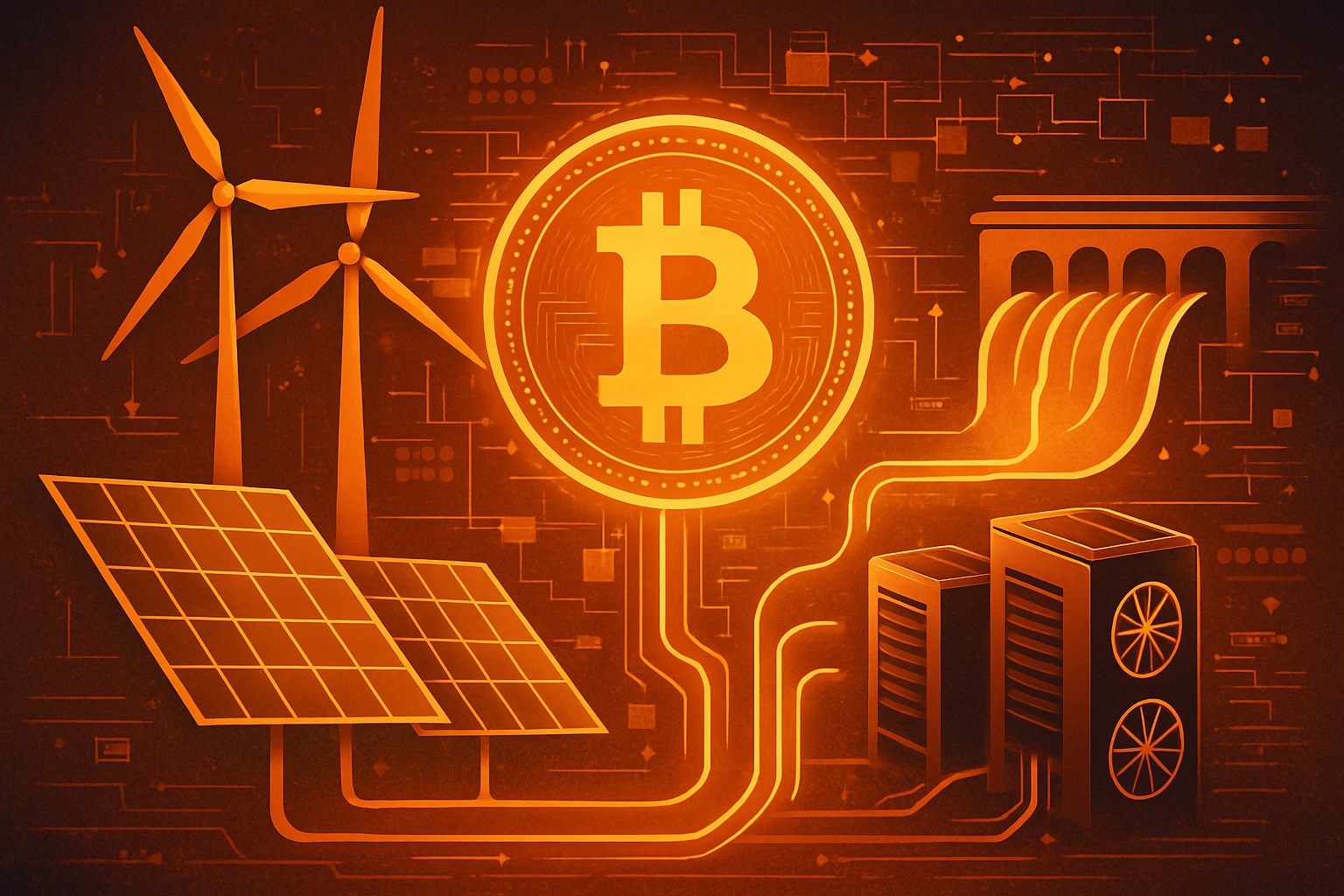
San Francisco, CA – October 7, 2025 – In a landmark move poised to redefine sustainable asset appreciation within the digital economy, PioneerHash has officially launched its XRP flexible mining contracts, placing a strong emphasis on green energy. This innovative initiative, which went live today, October 7, 2025, allows XRP holders to leverage their assets for mining other mainstream cryptocurrencies like Bitcoin (BTC), Litecoin (LTC), Dogecoin (DOGE), and Solana (SOL) through a novel hybrid cloud mining model powered predominantly by renewable energy sources. The launch has been met with overwhelmingly positive reactions from the crypto community, signaling a pivotal moment where financial innovation converges with ecological responsibility, significantly enhancing XRP's utility and attracting a broader, environmentally conscious investor base.
PioneerHash's commitment to sustainability is at the forefront of this offering, with its global data centers utilizing wind, solar, and hydropower. This strategic alignment addresses long-standing environmental concerns surrounding cryptocurrency mining and positions XRP as a leader in the burgeoning "green crypto" movement. By enabling accessible, low-risk, and high-potential earning opportunities without the need for expensive hardware or technical expertise, PioneerHash is democratizing mining and setting a new standard for sustainable blockchain practices, which is expected to catalyze further growth and adoption within the XRP ecosystem and beyond.
Market Impact and Price Action
As PioneerHash’s green energy mining initiative for XRP officially launched today, October 7, 2025, a comprehensive, long-term analysis of specific price movements, trading volume, and liquidity changes directly attributable to this launch is still developing. However, early market sentiment is robustly positive, suggesting that this development could serve as a significant bullish catalyst for XRP.
Prior to today's launch, XRP experienced a notable surge, doubling in value after a favorable court ruling in its ongoing legal battle with the U.S. Securities and Exchange Commission (SEC), which dismissed several SEC claims. This legal victory triggered a "buying frenzy" and saw XRP's trading volume exceed 100 million tokens, contributing to increased liquidity and setting a buoyant backdrop for current market activity. Today, XRP has been observed trading near the $2.98 mark, consolidating within a tightening symmetrical triangle pattern, holding above key support around $2.85–$2.88, with resistance near $3.10–$3.20. Some reports even indicate XRP's price briefly exceeding $3 amidst the surging market and the prospect of its first spot ETF.
Technically, analysts view XRP as being in a strong uptrend. Converging Exponential Moving Averages (20-day, 50-day, 100-day) around $2.94-$2.85 suggest potential high-volatility movements ahead. The On-Balance Volume (OBV) line trending higher indicates accumulation despite any short-term price stagnation. While a direct historical comparison to a "green energy mining launch" for XRP is unique, the broader crypto industry has seen significant shifts towards sustainable energy, notably with Bitcoin's (BTC) mining becoming over 54.5% renewable by January 2024, and Ethereum's (ETH) transition to Proof-of-Stake significantly reducing its energy consumption. These trends have enhanced market perception and attracted environmentally conscious investors, suggesting PioneerHash’s initiative could similarly position XRP favorably in the long term, potentially boosting its utility and market value.
Community and Ecosystem Response
The launch of PioneerHash's XRP green energy mining contracts has generated considerable excitement and an overwhelmingly positive social media sentiment across the cryptocurrency community. Platforms like Crypto Twitter and Reddit are buzzing with discussions, highlighting the dual appeal of passive income generation and environmental responsibility. Community members are particularly appreciative of the platform's ease of entry, which bypasses the technical complexities and significant hardware costs typically associated with traditional mining, making crypto mining more accessible to a broader audience. This accessibility, coupled with the reliance on renewable energy sources, is fostering "global confidence" and is expected to attract institutional interest that prioritizes ESG (Environmental, Social, and Governance) factors.
Crypto influencers and thought leaders are anticipated to further amplify the conversation, delving into the implications for XRP's utility beyond its traditional role in cross-border payments and its contribution to the broader green crypto movement. While the integration of financial innovation with environmental stewardship is largely seen as a "low risk, high potential" investment model, some critics have raised concerns about potential risks associated with cloud mining, including similarities to high-yield investment schemes and regulatory uncertainties.
Within the XRP ecosystem, the PioneerHash launch is expected to positively impact related DeFi protocols, NFT projects, and Web3 applications by fostering new integrations and increasing liquidity. XRP's integration into DeFi is already expanding, with innovations like mXRP (a liquid-staking token by Midas and Interop Labs) converting dormant XRP into yield-bearing assets. Similarly, Flare Network's FXRP tokenization is expanding XRP's utility in the DeFi space, competing with established ecosystems like Ethereum through fast transactions and low fees. PioneerHash’s emphasis on transparency through real-time profit tracking, multi-currency withdrawals, and robust security features aligns with the core principles of trustlessness in DeFi, marking a significant step toward financial inclusivity and redefining how users can participate in blockchain-based value creation.
What's Next for Crypto
PioneerHash’s foray into XRP green energy mining represents a significant inflection point for the broader crypto market, signaling a robust convergence of financial innovation and ecological responsibility. In the short term, the market will closely monitor XRP's performance and the immediate success metrics of the PioneerHash platform. The promise of "unprecedented new asset appreciation opportunities" through green energy-linked mining is expected to act as a substantial bullish catalyst for XRP, potentially driving its price upwards and expanding its market capitalization. Early reports of rapid platform adoption and significant interest underscore this immediate positive outlook.
Long-term, PioneerHash's hybrid mining model—linking XRP deposits to renewable energy-powered hash power for mining mainstream cryptocurrencies—could become a blueprint for future asset-backed mining endeavors. This approach fosters innovation in how digital assets generate value and aligns perfectly with global energy transition trends. By combining accessible cloud mining with DeFi innovations like staking and liquidity pools, PioneerHash and XRP are redefining blockchain-based value creation, promoting financial inclusivity, and evolving XRP beyond its payment-focused origins.
Key catalysts and developments to watch include PioneerHash's continued user acquisition and expansion of its global data center network, particularly any new strategic partnerships. The expansion of supported cryptocurrencies for mining would also broaden its appeal. Regulatory environments that support sustainable blockchain operations will provide a significant boost, as will the potential approval of an XRP spot Exchange Traded Fund (ETF), which is identified as a major catalyst for institutional inflows. Strategic considerations for projects include adopting similar eco-friendly, asset-backed mining models and investing in low-carbon infrastructure, while investors should consider diversifying portfolios with platforms committed to eco-friendly practices, evaluating them based on transparency, security, and compliance. Possible scenarios include PioneerHash becoming a dominant player in green cloud mining (high likelihood), widespread adoption of similar green mining models (high likelihood), and a significant positive impact on the "green crypto" narrative and XRP's ecosystem (high likelihood), with XRP price appreciation being a possible, though not assured, outcome contingent on various market factors.
Bottom Line
PioneerHash's launch of XRP flexible mining contracts, powered by green energy, marks a transformative moment for crypto investors and enthusiasts. The key takeaway is the emergence of a novel and accessible pathway for XRP holders to generate passive income by participating in the mining of other major cryptocurrencies like Bitcoin, Litecoin, Dogecoin, and Solana, all while supporting environmentally responsible practices. This "one-click mining" approach significantly lowers the barrier to entry, making crypto mining available to a broader audience without the typical burdens of hardware costs or technical complexity. The platform's emphasis on sustainability, utilizing renewable energy sources across its global data centers, aligns investments with crucial ESG mandates, appealing to a new wave of environmentally conscious investors.
In the long term, this initiative holds profound significance for crypto adoption. It redefines value creation for digital assets, moving beyond XRP's traditional payment utility to integrate it deeply into decentralized finance (DeFi) for passive income generation. By championing "profitability + responsibility," PioneerHash sets a powerful precedent for sustainable blockchain practices, potentially inspiring widespread adoption of similar models across the industry and contributing to global carbon neutrality goals. This democratization of mining, combined with robust security and transparency features, can accelerate mainstream crypto adoption by building trust and demonstrating tangible, eco-friendly utility.
Investors and enthusiasts should closely monitor several critical metrics and events. The immediate focus will be on October 7, 2025, the launch date, and the subsequent initial market reactions and platform adoption rates for PioneerHash. XRP's price performance post-launch will be a key indicator, as will the growth in PioneerHash's user base and Total Value Locked (TVL). Broader market responses to green crypto mining solutions and ongoing regulatory developments concerning green initiatives and DeFi will also provide crucial insights into the long-term viability and impact of this pioneering approach.
This article is for informational purposes only and does not constitute financial or investment advice. Cryptocurrency investments carry significant risk.