Tag: Government Policy

  • BitMine’s Multi-Million Dollar ETH Accumulation Signals Institutional Confidence Amidst Market Turmoil, Tom Lee Points to Market Maker Distress

    New York, NY – November 17, 2025 – In a bold move that has sent ripples across the cryptocurrency landscape, BitMine Immersion Technologies (NASDAQ: BMNR), a prominent player in digital asset management, has significantly expanded its Ethereum (ETH) holdings, acquiring an additional 110,288 ETH in the week leading up to November 10, 2025. This massive acquisition, valued at over $400 million at the time, brings BitMine's total Ethereum treasury to more than 3.5 million tokens, solidifying its position as the largest institutional holder of ETH globally, controlling nearly 2.9% of the total circulating supply. This aggressive "buying the dip" strategy comes amidst a period of pronounced market weakness, which Tom Lee, Chairman of BitMine and CIO of Fundstrat Capital, attributes primarily to "market maker distress" and opportunistic "sharks" looking to trigger liquidations.

    The strategic accumulation by BitMine is a powerful testament to institutional conviction in Ethereum's long-term value proposition, even as the broader crypto market navigates a challenging environment characterized by a deliberate draining of liquidity and heightened volatility. BitMine's actions, following even larger purchases of over 200,000 ETH in October 2025, have provided crucial support to market sentiment, demonstrating a clear belief in the underlying fundamentals of the second-largest cryptocurrency. This counter-cyclical investment strategy underscores a growing trend among institutional players to leverage market downturns as opportunities for strategic asset accumulation, potentially setting the stage for future growth as market conditions stabilize.

    Market Impact and Price Action

    BitMine's substantial ETH purchases, particularly the October acquisition of approximately 202,037 ETH following a $19 billion liquidation event, had an immediate and noticeable impact on Ethereum's price action. Following the October announcement, ETH experienced a nearly 7% rebound within 48 hours, demonstrating the power of institutional buying to stem declines and inject confidence into a battered market. The more recent November acquisition, though occurring within a broader context of market weakness, continued to signal strong underlying demand, helping to prevent steeper drops in ETH's value.

    Despite these significant inflows, the broader crypto market, including Ethereum, has faced headwinds. ETH prices, while showing resilience post-BitMine announcements, have been subject to the prevailing market structure issues highlighted by Tom Lee. The "market maker distress" and the actions of "sharks" targeting liquidations have contributed to increased volatility and a general downward pressure on prices. Trading volumes have seen fluctuations, with spikes during liquidation events and subsequent recovery attempts, often amplified by large institutional buys like BitMine's.

    Technically, Ethereum has been grappling with key support and resistance levels. The aggressive buying in October and November helped establish new psychological support levels, particularly around the $3,600-$3,700 range, preventing a more severe capitulation. However, sustained upward momentum has been challenged by selling pressure, with resistance often forming around the $4,000-$4,200 marks. Comparisons to past bear market cycles reveal a similar pattern of institutional accumulation during periods of maximum pessimism, often preceding significant rallies. The current environment, while challenging, mirrors historical instances where strong hands have positioned themselves for future gains.

    This period of tightening liquidity, although attributed by Lee more to market maker issues than new central bank rate hikes, still reflects a broader environment where capital is less freely available. This contrasts with earlier phases of crypto bull runs fueled by abundant liquidity. The current scenario demands a more cautious approach from traders, with a focus on fundamental strength and strategic accumulation rather than speculative leverage. BitMine's stock (NASDAQ: BMNR) has also shown positive momentum, reflecting investor confidence in its aggressive accumulation strategy despite the broader market's struggles.

    Community and Ecosystem Response

    The crypto community's response to BitMine's massive ETH acquisitions has been largely positive, viewing it as a strong vote of confidence from a major institutional player. Social media platforms like Crypto Twitter and Reddit buzzed with discussions, interpreting the moves as a bullish signal for Ethereum's long-term trajectory. Many commentators highlighted BitMine's "alchemy of 5%" strategy, aiming to own 5% of the total ETH supply, as an ambitious yet potentially transformative goal for the network's decentralization and value proposition.

    Crypto influencers and thought leaders echoed Tom Lee's long-term bullish sentiment on Ethereum, even while acknowledging the current market difficulties. While some expressed concerns about potential centralization risks if a single entity holds too much ETH, the prevailing sentiment focused on the positive implications for price stability and institutional validation. The acquisitions were seen as a crucial counter-narrative to the prevailing FUD (fear, uncertainty, and doubt) surrounding the market, reminding participants of the significant institutional capital flowing into the ecosystem.

    The impact on related DeFi protocols and Web3 applications has been more nuanced. While the underlying sentiment improved, the immediate operational effects were limited. However, the increased institutional holding of ETH could indirectly benefit DeFi by providing a more stable base asset for lending, borrowing, and other financial primitives. Furthermore, the growing institutional interest in Ethereum, as evidenced by BitMine's actions and the increasing inflows into spot ETH ETFs, is expected to accelerate Wall Street's adoption of blockchain for asset tokenization, ultimately bolstering the entire Web3 ecosystem. The broader sentiment, despite the short-term pain, remains cautiously optimistic, with many believing that the current "existential moment" of pessimism is a necessary phase before exponential gains.

    What's Next for Crypto

    The coming months for the crypto market are poised to be a test of resilience and a period of strategic positioning. Tom Lee's prediction of a potential rebound or rally post-Thanksgiving (late November/early December 2025) suggests a short-term resolution to the current market maker distress, potentially within 6-8 weeks of the October 10 deleveraging event. This outlook provides a glimmer of hope for investors weary of the recent volatility.

    Long-term implications for the crypto market, particularly for Ethereum, remain overwhelmingly positive in Lee's view. He continues to champion Ethereum's "supercycle," driven by increasing institutional interest, the burgeoning adoption of blockchain by Wall Street for asset tokenization, and sustained inflows into spot ETH ETFs. These fundamental drivers are expected to underpin a new phase of growth, transcending the current market structure issues.

    Potential catalysts to watch include any signs of resolution in market maker balance sheet issues, a significant decrease in liquidation events, and clearer signals from macroeconomic factors, particularly regarding future interest rate policies from central banks like the Federal Reserve. While Lee downplays new rate hikes as the immediate cause of current weakness, a definitive shift towards rate cuts, as previously anticipated by Lee for a September 2025 catalyst, would undoubtedly provide a more flexible and growth-oriented environment for digital assets.

    Strategic considerations for projects and investors during this period include a focus on strong fundamentals, avoiding excessive leverage, and potentially accumulating high-conviction assets during dips. For projects, continuing to build and innovate, regardless of market conditions, will be crucial for long-term success. Possible scenarios range from a swift rebound if market maker issues are resolved quickly, to a more prolonged period of consolidation if liquidity remains tight and "shark" activity persists. However, the underlying institutional confidence, exemplified by BitMine, suggests that significant downside might be limited, with accumulation phases leading to future appreciation.

    Bottom Line

    BitMine's aggressive accumulation of Ethereum, now holding over 3.5 million ETH, serves as a powerful signal of institutional conviction in the face of prevailing market weakness. This strategic "buying the dip" approach, combined with Tom Lee's insightful analysis of market maker distress as a primary driver of current volatility, provides crucial context for crypto investors and enthusiasts. While the short-term outlook may remain challenging due to liquidity drains and opportunistic selling, the long-term narrative for Ethereum and the broader crypto market remains robust, fueled by increasing institutional adoption and technological advancements.

    Key takeaways for investors include the importance of differentiating between short-term market noise and long-term fundamental strength. BitMine's actions underscore that sophisticated investors view current downturns as opportunities for strategic positioning. The assessment of long-term significance points towards an accelerating integration of digital assets into traditional finance, with Ethereum at the forefront of this transformation.

    Final thoughts on what this means for crypto adoption are overwhelmingly positive. The continued institutionalization, evidenced by BitMine's moves and the growth of ETH ETFs, paves the way for broader mainstream acceptance and utility of blockchain technology. Important metrics to monitor include on-chain liquidity, market maker balance sheets, institutional inflow reports, and any further statements or actions from central banks regarding monetary policy. The period post-Thanksgiving 2025 will be particularly telling, as Lee anticipates a potential market rebound.


    This article is for informational purposes only and does not constitute financial or investment advice. Cryptocurrency investments carry significant risk.
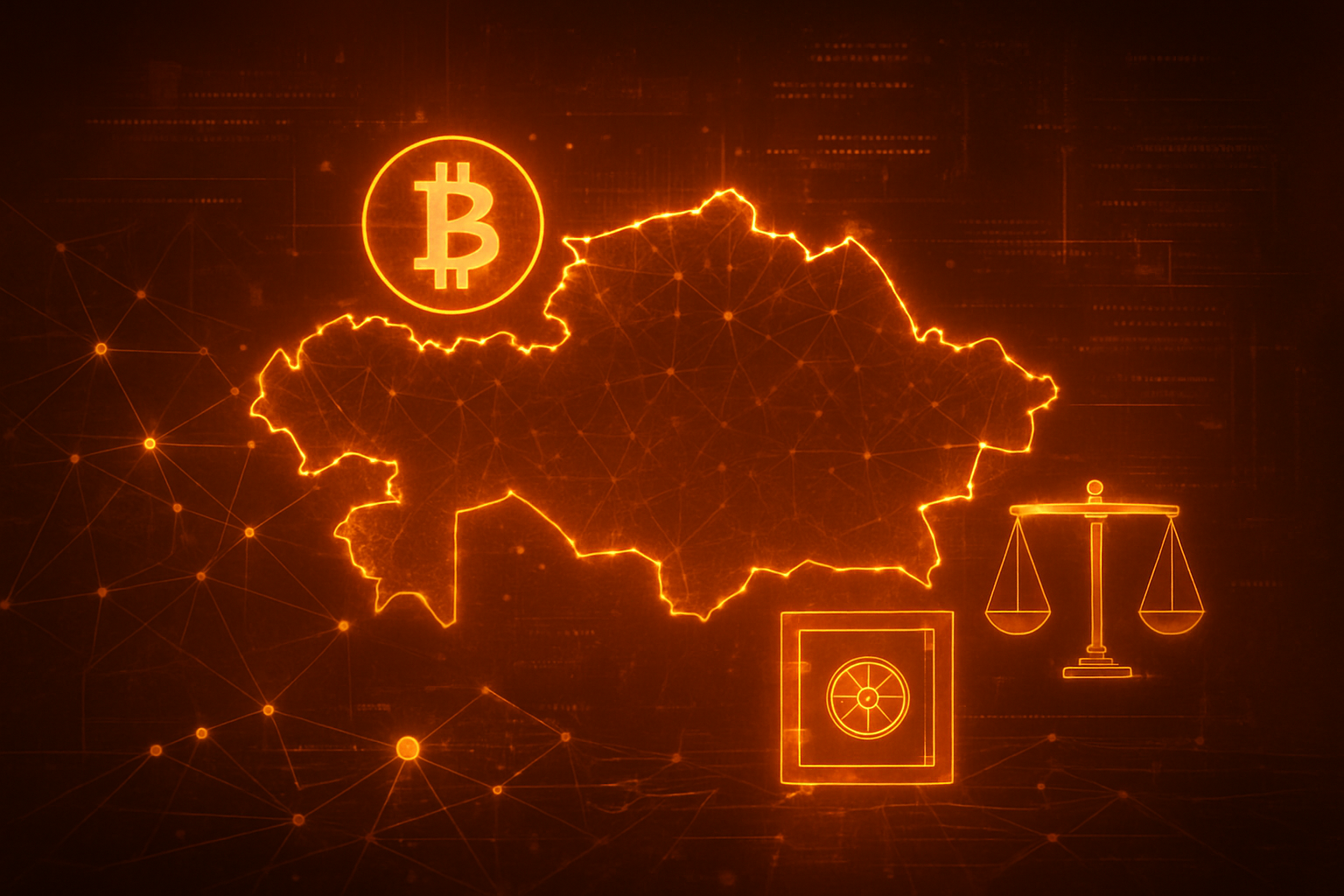
  • Kazakhstan Forges New Path: Regulated Crypto Framework and Sovereign Fund Set to Redefine Global Legitimation

    Kazakhstan Forges New Path: Regulated Crypto Framework and Sovereign Fund Set to Redefine Global Legitimation

    ASTANA, Kazakhstan – November 9, 2025 – Kazakhstan is poised to become a pivotal player in the global digital asset landscape with its pioneering regulated framework for crypto assets and the imminent launch of a national cryptocurrency reserve fund. This strategic move, which sees seized illicit digital assets integrated into a state-managed fund, is not merely a local policy shift but a bold precedent that could significantly influence how other governments approach the legitimization and management of cryptocurrencies within their financial systems.

    The national digital asset reserve fund, projected to reach between $500 million and $1 billion, is expected to be fully operational by early 2026. Funded by cryptocurrencies confiscated from illicit activities, repatriated digital assets, and revenues from licensed crypto-mining operations, the fund will adopt a cautious investment strategy. Notably, it will avoid direct holdings of volatile cryptocurrencies like Bitcoin (BTC) or Ethereum (ETH), opting instead for regulated instruments such as crypto exchange-traded funds (ETFs) and equity shares in blockchain-focused companies. This approach aims to mitigate risks associated with price volatility and custody while still gaining exposure to the burgeoning digital asset sector. The announcement of this fund, generating considerable discussion around November 2025, has been met with widespread optimism, viewed as a long-term bullish indicator and a significant step toward institutional recognition.

    Market Impact and Price Action

    The crypto market's reaction to Kazakhstan's nuanced approach has been largely anticipatory rather than an immediate, direct surge in prices. As the fund is still in its preparatory stages and designed with an indirect investment strategy, sudden price spikes directly attributable to its inception are unlikely. However, the strategic intent has fostered a long-term bullish sentiment among analysts and investors, lending inherent credibility to the entire digital asset sector.

    In early November 2025, the broader crypto market reportedly experienced some bearish undertones, with Bitcoin hovering around $101,472 and Ethereum at approximately $3,325, both seeing slight downturns not directly linked to Kazakhstan's news. However, some reports noted Bitcoin trading comfortably above the $100,000 mark, underscoring its resilience. The focus on regulated crypto ETFs and equity shares of blockchain companies by the fund is seen as a de-risked entry point, potentially setting a precedent for attracting more conservative capital into the ecosystem over time.

    Specific developments indicate a positive, albeit indirect, market response. Kazakhstan notably approved Central Asia's first spot Bitcoin ETF, the Fonte Bitcoin Exchange Traded Fund (BETF), on August 13, 2025, which is available on the Astana International Exchange and physically backed by Bitcoin. Furthermore, the launch of the Alem Crypto Fund, another state-supported digital asset initiative, saw a favorable market response, with its value reportedly increasing from around $1,000 to $1,100 between September 30 and October 3, 2025. On-chain data from November 2025 also indicates rising transaction volumes, correlating with the fund's announcement and suggesting accumulation phases.

    This measured market response contrasts with the direct, often volatile reactions seen in past governmental crypto initiatives. For instance, major pro-crypto policy announcements have historically triggered intraday gains of 5-10% for Bitcoin, while negative actions, like China's comprehensive crypto ban in 2021, led to significant market downturns. Kazakhstan's indirect investment strategy is a novel approach for sovereign funds, aligning with a growing institutional preference for structured, liquid instruments, mirroring strategies observed in more developed markets.

    It is worth noting that earlier regulatory changes, specifically the "Law on Digital Assets" which came into effect on April 1, 2023, initially led to a significant capital outflow of approximately $15 billion by May 2025. This was attributed by the Deputy Chairman of the National Bank to "insufficient regulatory frameworks," highlighting the market's negative reaction to unclear regulation, in stark contrast to the positive anticipation surrounding the new, clearly defined framework.

    Community and Ecosystem Response

    The crypto community, including prominent influencers and thought leaders, has largely welcomed Kazakhstan's strategic decision. The initiative is widely seen as a significant endorsement of digital assets on a national level. Influencers like Mario Nawfal have expressed considerable enthusiasm, anticipating a "domino effect" of similar state-level crypto engagements from other nations and highlighting the "snowball effect" such initiatives could trigger globally.

    Sentiment across social media platforms like Crypto Twitter (X) and Reddit (r/CryptoCurrency, r/CryptoMarkets) is predominantly bullish. Discussions frequently emphasize the potential for other nations to emulate Kazakhstan's strategic move, boosting institutional Bitcoin flows and signaling global confidence in crypto as a reserve asset. While broader market volatility and some bearish undertones were observed in early November 2025, the fund is largely perceived as a strategically important initiative that transcends short-term fluctuations, reinforcing the narrative of a global shift towards digital asset integration. Discussions on r/Kazakhstan also reflect local awareness, with users noting the legality of P2P trading only on AIFC-regulated exchanges and advising against undeclared holdings.

    The impact on related DeFi protocols, NFT projects, and broader Web3 applications is expected to be generally positive, albeit largely indirect. Increased institutional confidence and the legitimization of the crypto space are anticipated to bring more liquidity and stability to DeFi protocols, indirectly spurring further innovation and adoption. There is speculation that if the fund were to expand its scope to direct DeFi protocol investments, Ethereum (ETH) trading volumes could see a significant surge. The fund's initial investment in Binance's (BNB) BNB token, in partnership with Binance Kazakhstan, also hints at future potential for DeFi participation through staking and yield aggregation.

    While direct investment from the national reserve fund into individual NFT projects is unlikely due to its cautious investment strategy, the overall influx of institutional capital and enhanced credibility are expected to indirectly benefit the NFT market by fostering greater liquidity and investor confidence in the broader digital asset space.

    Furthermore, the fund's establishment is viewed as a significant catalyst for Web3 applications and development. Kazakhstan's broader commitment includes creating a "Blockchain Economic Zone" in Alatau, in partnership with the Solana (SOL) Foundation. This initiative explicitly aims to promote Web3 technologies and attract global talent. This comprehensive, sovereign-backed approach is expected to encourage innovation and attract more capital into the Web3 sector, potentially boosting interest in AI-related tokens given the growing intersection with blockchain technology. Kazakhstan is also rolling out its digital tenge stablecoin and integrating its national digital currency into the public budget, further solidifying its leadership in digital finance and supporting Web3 infrastructure.

    What's Next for Crypto

    Kazakhstan's proactive and regulated approach, particularly with its innovative reserve fund, positions it as a significant player in the evolving global digital finance landscape. Its actions are likely to influence international regulatory discussions, institutional investment strategies, and potentially serve as a scalable model for other nations looking to responsibly integrate digital assets into their economic frameworks.

    In the short term, the establishment of a state-backed crypto reserve and a clear regulatory framework is widely seen as a significant endorsement of digital assets, lending them increased legitimacy. This could foster positive market sentiment and attract traditional institutional investors who have been waiting for clearer regulatory signals and de-risked entry points. The "game theory" effect is also a strong possibility, where Kazakhstan's move compels other nations, particularly resource-dependent economies, to accelerate their own explorations into sovereign crypto reserves.

    Longer term, Kazakhstan's model, combining institutional investment with a regulated environment, could serve as a blueprint for other nations seeking responsible, transparent, and low-risk ways to integrate crypto into their formal financial systems. For resource-dependent economies, this offers a strategy to diversify beyond traditional assets like oil and gas. Widespread sovereign adoption, inspired by Kazakhstan, could lead to a more robust and clear global regulatory framework, facilitating broader institutional integration and potentially shifting global financial power dynamics as Bitcoin (BTC) is further positioned as a hedge against inflation.

    Several key catalysts and developments will be crucial to monitor. These include the drafting and approval of comprehensive legislation for the "State Fund of Digital Assets" by 2026, along with the specific details of the National Bank's investment strategy. The progress of "CryptoCity" in Alatau, envisioned as a blockchain-centric city, and the successful integration of the Digital Tenge into the public budget by year-end 2025, alongside the adoption of the tenge-backed stablecoin Evo (launched September 2025), will indicate the maturity of Kazakhstan's digital asset ecosystem. International reactions, partnerships, and the actions of other major economies, particularly the United States and Switzerland, will also serve as vital indicators of broader global acceptance.

    For projects, strategic considerations include robust regulatory compliance, particularly within the Astana International Financial Centre (AIFC), and demonstrating clear utility and strong security features. Aligning with Kazakhstan's broader digital transformation strategy can also prove beneficial. For investors, a long-term perspective is advised, recognizing the potential for gradual, sustained growth. Diversification, including both direct crypto holdings and crypto-adjacent instruments like ETFs and equities of blockchain companies, can help mitigate volatility risks.

    Regarding other governments adopting similar frameworks, several scenarios are likely. A "Positive Precedent and Widespread Adoption" scenario holds high likelihood for emerging markets and moderate for developed nations, as Kazakhstan's model offers a balanced approach to risk. A "Game Theory" effect leading to accelerated exploration by other nations is also moderately to highly likely, driven by the competitive nature of global finance. Most probable is "Selective Adoption with Customization," where other governments adopt elements of Kazakhstan's framework but tailor them to their unique economic, political, and regulatory landscapes. Limited or delayed adoption due to persistent market volatility or international regulatory hurdles is a lower likelihood, as the trend towards digital asset integration in national strategies appears to be growing.

    Bottom Line

    Kazakhstan's forward-thinking move to integrate seized crypto assets into a regulated, state-managed framework marks a significant milestone in the global journey toward crypto legitimation. For crypto investors and enthusiasts, the key takeaway is the increasing institutional endorsement of digital assets, even if through indirect investment strategies. This cautious approach by a sovereign nation provides a template for de-risked entry into the crypto economy, potentially unlocking a new wave of institutional capital.

    The long-term significance lies in the potential for Kazakhstan's model to serve as a blueprint for other nations, particularly those looking to diversify their economies and integrate digital assets responsibly. This could lead to a more robust and clear global regulatory landscape, fostering greater stability and trust in the crypto ecosystem. While immediate speculative gains directly from the fund's launch are not anticipated, the strategic implications for broader crypto adoption and institutional integration are profound.

    Investors should monitor the detailed legislation for the "State Fund of Digital Assets" by 2026, the progress of "CryptoCity" in Alatau, and the successful rollout of the Digital Tenge. The performance of the Fonte Bitcoin Exchange Traded Fund (BETF) and the Alem Crypto Fund will also offer early insights into Kazakhstan's institutional crypto investment strategy. These developments, coupled with international reactions, will be crucial indicators of what this means for the future of crypto adoption globally.


    This article is for informational purposes only and does not constitute financial or investment advice. Cryptocurrency investments carry significant risk.