Tag: EU Regulation

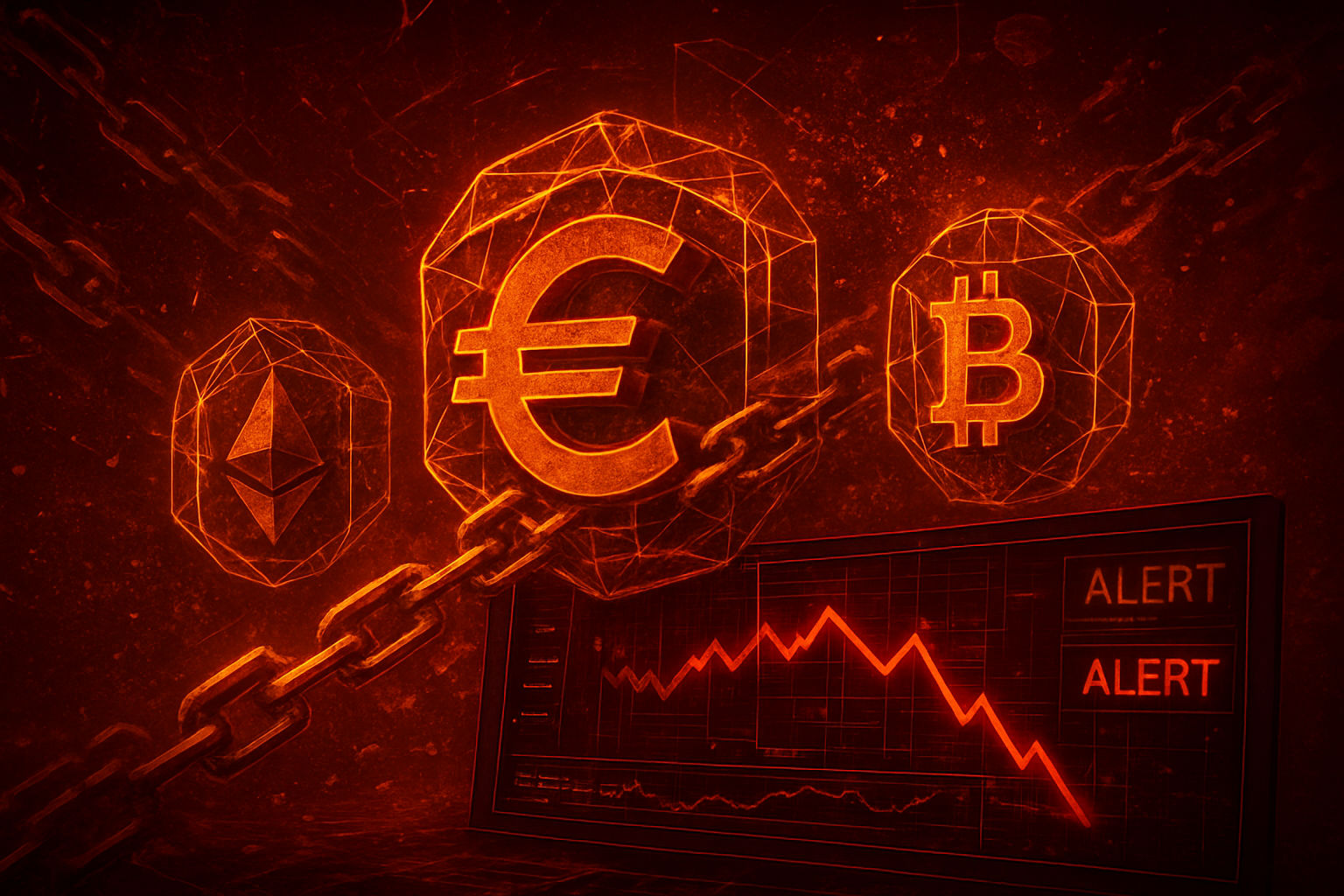
  • EU Regulatory Cliff Triggers $50 Billion Altcoin Wipeout as ‘Leverage Trap’ Snaps Shut

    EU Regulatory Cliff Triggers $50 Billion Altcoin Wipeout as ‘Leverage Trap’ Snaps Shut

    The digital asset market has entered a period of intense turbulence as the European Union’s new regulatory mandates for 2026 began their full enforcement phase this January. What many analysts dubbed the "Regulatory Cliff" has quickly turned into a market-wide deleveraging event. On January 1, 2026, the implementation of the DAC8 tax reporting directive and the tightening of Markets in Crypto-Assets (MiCA) Phase 2 rules for stablecoins converged, catching over-leveraged traders off guard.

    The immediate reaction has been a brutal sell-off across the altcoin sector, resulting in a staggering $50 billion wipeout in total altcoin market capitalization within the first twelve days of the year. Investors are scrambling to adjust to a new reality where anonymity is virtually non-existent for EU-based users, and liquidity for non-compliant stablecoins has evaporated almost overnight. While Bitcoin (BTC) and Ethereum (ETH) have shown relative resilience due to institutional ETF support, the broader altcoin market is reeling from what some are calling the "Great Compliance Crunch."

    Market Impact and Price Action

    The $50 billion wipeout was not merely a result of regulatory fear, but a systemic "leverage trap" that snapped shut as liquidity conditions shifted. According to market data, the "fragility coefficient" in early January reached a multi-year high; a relatively small $200 million in net spot outflows triggered a cascading liquidation event of over $2.2 billion in leveraged positions. This 10-to-1 amplification of selling pressure was exacerbated by the delisting of several non-compliant stablecoins, most notably Tether (USDT), from major European platforms like Coinbase Global, Inc. (NASDAQ: COIN) and Robinhood Markets, Inc. (NASDAQ: HOOD).

    Specific altcoins, particularly those tied to "pseudo-decentralized" finance (DeFi) protocols, have seen price drops ranging from 15% to 30%. Trading volumes on regulated European exchanges have surged as users exit unverified private wallets to meet the new Transfer of Funds Regulation (TFR) requirements, which now mandate identity verification for any transaction exceeding €1,000. This has created a "bottleneck effect," where liquidity is concentrated in a few regulated silos, leaving the rest of the market vulnerable to massive slippage.

    Technical analysis suggests that the altcoin market cap has breached several key support levels that had held since the recovery of 2025. The total market cap (excluding BTC and ETH) is currently testing the psychological floor of the 2024 lows. Unlike previous crashes driven by exchange failures or protocol hacks, this downturn is fundamentally driven by a structural shift in how capital is allowed to flow within the Eurozone, leading to a permanent "selective extinction" of projects that cannot meet the EU’s stringent transparency standards.

    Community and Ecosystem Response

    The response from the crypto community has been a mix of outrage and resignation. On social media platforms and decentralized forums, the hashtag #EUForbiddenCrypto has trended as users grapple with the end of anonymity. Influencers have pointed out that the DAC8 directive—which allows national authorities to potentially seize digital assets directly from service provider accounts for tax non-compliance—is the "death knell" for the cypherpunk ethos in Europe.

    Jeremy Allaire, CEO of Circle, noted that the industry is currently witnessing "the decentralized ethos meeting compliance reality in 2026." While Circle has positioned its stablecoins, USDC and EURC, as the primary compliant alternatives in the region, the community remains divided. Hardline proponents of self-custody argue that the new "gated endpoints" for non-custodial wallets turn the blockchain into a permissioned system, effectively isolating European users from the global DeFi ecosystem.

    Meanwhile, leaders of major DAOs (Decentralized Autonomous Organizations) are reportedly scrambling to restructure. The European Securities and Markets Authority (ESMA) has signaled that any protocol with a centralized interface or a governing body reachable by law enforcement will no longer be exempt from MiCA's licensing requirements. This has led several prominent DeFi projects to "geofence" EU IP addresses, further fragmenting global liquidity and sparking fears of a "Splinternet" for decentralized finance.

    What's Next for Crypto

    Looking ahead, the next six months will be a trial by fire for the European crypto sector. The newly established Anti-Money Laundering Authority (AMLA) is expected to begin direct supervision of high-risk crypto service providers by mid-2026. This means that the "wild west" era of regulatory arbitrage—where firms could "forum shop" for the most lenient EU member state—is officially over.

    Investors should watch for a "flight to quality," where capital migrates toward projects that have proactively sought MiCA 2.0 compliance. We are likely to see a surge in "Institutional DeFi" platforms that integrate KYC/AML directly into the smart contract layer. While this may offend decentralization purists, it is the only viable path forward for projects seeking to tap into the trillions of euros held by European institutional investors who have been waiting for this exact level of regulatory certainty.

    Furthermore, the "MiCA 2" framework is already in the works, specifically targeting the remaining gaps in NFT regulation and truly decentralized lending. Projects that fail to adapt to these transparency mandates by the end of Q2 2026 risk being completely barred from the world’s largest single market, potentially leading to further market cap erosions.

    Bottom Line

    The January 2026 regulatory tightening marks a historic turning point. For investors, the takeaway is clear: the "compliance premium" is now a real factor in asset valuation. The $50 billion wipeout serves as a harsh reminder that regulatory shifts can be as volatile as any market cycle. While the loss of anonymity is a bitter pill for the community to swallow, proponents argue that these rules are the necessary "growing pains" for mass adoption and the eventual integration of crypto into the global financial system.

    In the long term, the EU’s aggressive stance may set the blueprint for other major jurisdictions, including the United States and the UK. For now, the focus remains on liquidity and survival. Crypto enthusiasts should monitor the "decentralization spectrum" guidelines expected from ESMA later this month, as these will determine which DeFi protocols can continue to operate in the shadows and which must step into the light of regulation.


    This article is for informational purposes only and does not constitute financial or investment advice. Cryptocurrency investments carry significant risk.

  • Circle Sounds Alarm: EU’s Dual Stablecoin Licensing Looms as a “Regulatory Own Goal”

    Brussels, Belgium – October 31, 2025 – Circle, a leading global financial technology firm and the principal operator of the USDC stablecoin, has issued a stark warning regarding the European Union’s impending dual licensing requirements for stablecoins. With the March 2026 deadline fast approaching, the company cautions that an overlap between the Markets in Crypto-Assets (MiCA) regulation and the Payment Services Directive 2 (PSD2) could create a significant regulatory hurdle, potentially stifling innovation and deterring stablecoin providers from the EU market.

    The alarm was raised by Circle's Senior Director of EU Strategy and Policy, Patrick Hansen, on October 31, 2025, and publicly endorsed by CEO Jeremy Allaire. Their concerns highlight a critical oversight where stablecoin issuers may be forced to secure both a MiCA crypto-asset service provider (CASP) license and a separate payment institution license under PSD2 (or its upcoming iteration, PSD3). This regulatory duplication, according to Circle, risks becoming a "regulatory own goal" for the EU, undermining its efforts to establish a clear and unified framework for digital assets. The immediate market reaction, though not reflected in specific price movements given the future nature of the deadline, is one of growing concern among industry players who anticipate increased operational burdens and compliance costs.

    Market Impact and Anticipated Adjustments

    While direct price movements of stablecoins like USDC are not yet observable due to the future implementation date, the anticipated market impact is significant. The dual licensing requirement will impose substantial financial and operational burdens on stablecoin issuers. Firms will need to meet minimum capital requirements for both licenses, totaling at least €250,000 (€125,000 for MiCA CASP and an additional €125,000 for PSD2 payment services). Beyond capital, companies face escalating expenses related to compliance, reporting, and supervisory fees under two distinct regulatory regimes for what are essentially the same activities.

    This increased cost structure and regulatory complexity could lead to several market adjustments. Smaller stablecoin providers might find the EU market unfeasible, potentially driving them out or discouraging new entrants. This could also hinder the adoption of euro-denominated stablecoins, which the EU has actively sought to promote. For established players like Circle, who already navigate a dual issuance model for USDC to comply with MiCA (issuing from both US and European entities), the additional layer of regulation introduces further complexity in managing reserves and cross-border operations. The fragmentation of regulatory oversight could also lead to fragmented liquidity and a less cohesive European digital asset market, potentially impacting trading volumes and the overall efficiency of stablecoin transactions within the region.

    The current situation, with less than five months until the dual licensing becomes mandatory, draws parallels to other instances where regulatory uncertainty has caused market apprehension. In the past, unclear guidance or overlapping regulations in other jurisdictions has led to a temporary withdrawal of services or a slowdown in investment, demonstrating the sensitivity of the crypto market to regulatory clarity.

    Community and Ecosystem Response

    The crypto community and ecosystem have responded with a mix of concern and calls for action. Circle's executives, Patrick Hansen and Jeremy Allaire, have been at the forefront, articulating the potential pitfalls of the current regulatory trajectory. Their public statements underscore a sentiment shared by many industry experts who caution that the stringent and overlapping regulations could impede the growth of the European digital asset space.

    Social media platforms like Crypto Twitter and Reddit are buzzing with discussions centered on the EU's regulatory approach. Many users express frustration over what they perceive as bureaucratic inefficiencies that contradict the spirit of innovation that MiCA initially aimed to foster. Crypto influencers and thought leaders have amplified Circle's warning, emphasizing the potential for the EU to fall behind other regions in the global race for digital finance leadership.

    The potential effects extend beyond stablecoin issuers to related DeFi protocols, NFT projects, and Web3 applications that rely on stablecoins for liquidity and transactional stability. Any disruption or increased cost associated with stablecoin operations in the EU could ripple through these interconnected sectors, impacting their ability to operate efficiently and attract users within the European market. The overarching sentiment points towards a collective desire for a more streamlined and coherent regulatory environment that supports, rather than hinders, the development of the crypto ecosystem.

    What's Next for Crypto

    The coming months are critical for the future of stablecoins in the European Union. In the short term, the primary focus will be on whether EU regulators and policymakers will address the conflict between MiCA and PSD2 before the March 2026 deadline. Industry stakeholders, including Circle, are actively advocating for legislative amendments to upcoming frameworks like PSD3 or to MiCA itself, or at the very least, an extension of the transition period to allow for a more harmonized approach.

    In the long term, the implications for the crypto market are profound. Failure to resolve this regulatory clash could significantly undermine the EU's competitiveness in the rapidly evolving digital finance sector. A fragmented and overly burdensome regulatory landscape could deter international stablecoin issuers, leading to a less diverse and less innovative European crypto market. Conversely, a proactive resolution that streamlines the licensing process could solidify the EU's position as a leader in crypto regulation, fostering a more robust and attractive environment for digital assets.

    Strategic considerations for projects and investors will revolve around closely monitoring regulatory developments. Projects operating or planning to operate in the EU will need to assess their compliance strategies, potentially needing to allocate significant resources to navigate the dual licensing requirements if no amendments are made. Investors, on the other hand, will likely seek greater clarity and regulatory certainty before committing capital to EU-based stablecoin ventures or projects heavily reliant on stablecoin liquidity within the region. Possible scenarios range from a "regulatory own goal" leading to a diminished EU stablecoin market to a last-minute legislative fix that creates a more rational and unified framework.

    Bottom Line

    Circle's urgent warning about the EU's dual stablecoin licensing requirements serves as a critical inflection point for the European digital asset landscape. The core takeaway for crypto investors and enthusiasts is that the regulatory environment in the EU is facing a significant challenge that could either pave the way for a robust stablecoin market or severely hinder its growth. The current trajectory, if unaddressed, threatens to impose substantial compliance costs and operational burdens, potentially stifling innovation and discouraging stablecoin providers.

    The long-term significance of this issue cannot be overstated. It will ultimately determine the EU's global competitiveness in the digital finance arena and its ability to foster a thriving crypto ecosystem. A failure to harmonize MiCA and PSD2 risks creating a regulatory quagmire that contradicts the very principles of legal certainty and proportionality that the EU aims to uphold. For crypto adoption, particularly of euro-denominated stablecoins, a fragmented regulatory approach could significantly slow progress and limit their utility within the region.

    Key dates and events to monitor include any further guidance from the European Banking Authority (EBA), legislative proposals for amendments to MiCA or PSD3, and public statements from EU policymakers. The most crucial date remains March 2, 2026, when the transition period for national authorities to refrain from enforcing dual licensing ends, making the dual requirements mandatory. The coming months will reveal whether the EU can effectively navigate this complex regulatory challenge and secure its position as a leader in the global digital asset space.


    This article is for informational purposes only and does not constitute financial or investment advice. Cryptocurrency investments carry significant risk.

  • France Demands Centralized EU Crypto Oversight: ESMA Set to Wield Direct Power Over Major Firms

    France Demands Centralized EU Crypto Oversight: ESMA Set to Wield Direct Power Over Major Firms

    Brussels, EU – October 9, 2025 – A pivotal moment in European cryptocurrency regulation is unfolding today as France, with strong backing from Italy and Austria, intensifies its call for the European Securities and Markets Authority (ESMA) to assume direct supervisory control over major crypto firms across the European Union. This significant push was underscored by a prominent address from François Villeroy de Galhau, the Governor of the Bank of France, at the ACPR-AMF Fintech Forum in Paris, emphasizing the urgent need to transfer oversight responsibility from national regulators to a unified EU body.

    The crypto market is currently bracing for potential shifts, with an immediate atmosphere of caution and uncertainty expected, particularly among firms that have benefited from the previously fragmented national oversight under the Markets in Crypto-Assets (MiCA) regulation, which became fully effective for most crypto-asset service providers (CASPs) in December 2024. This concerted effort by leading EU economies aims to prevent regulatory arbitrage, ensure a consistent application of MiCA rules, protect the EU’s financial sovereignty – especially concerning the prevalence of dollar-backed stablecoins – and ultimately enhance investor protection across the bloc. This initiative signals a profound step towards a more harmonized and centralized regulatory approach for digital assets in Europe, potentially reshaping the future of the continent's crypto ecosystem.

    Market Impact and Price Action

    Given the immediacy of this regulatory development, the crypto market's initial reaction is anticipated to be one of cautious re-evaluation rather than dramatic price swings. Investor sentiment is likely to oscillate between apprehension and a long-term view of increased legitimacy. In the short term, a degree of nervousness could prompt a "flight to quality," with investors potentially shifting assets towards larger, more established crypto firms perceived as better equipped to navigate stringent ESMA oversight. Conversely, entities that have historically thrived by seeking licenses in jurisdictions with lighter regulatory touch could face negative sentiment and increased scrutiny.

    Trading volumes may experience an initial dip as market participants pause to assess the full implications of a centralized ESMA regime. However, over the short to medium term, platforms that are robustly compliant or proactively adapting to anticipated ESMA standards might see increased activity as investors gravitate towards perceived safer venues. The proposal explicitly targets "regulatory arbitrage," meaning business models reliant on exploiting differing national rules are now at significant risk. This could lead to a reassessment of existing "passporting" rights and the validity of licenses obtained in certain member states, potentially impacting firms that have leveraged these mechanisms.

    The perception of regulatory risk within the EU crypto market is undoubtedly heightened in the immediate aftermath of France's announcement. While this could initially deter some speculative capital, it simultaneously paves the way for a more mature and integrated market. For institutional investors, greater regulatory clarity and consistent oversight from a respected body like ESMA could be a net positive, reducing the perceived risks of market manipulation and fragmented rules, thereby attracting more traditional finance players into the EU crypto space over time. A specific focus on stablecoins, driven by concerns over the euro's monetary sovereignty, is also expected, potentially prompting a re-evaluation of risks associated with non-compliant stablecoins and influencing operational strategies for stablecoin issuers and users within the EU.

    Community and Ecosystem Response

    The crypto community's reaction to France's call for ESMA direct oversight is expected to be mixed, yet generally apprehensive, reflecting the ongoing ideological tension between regulatory legitimacy and the ethos of decentralization.

    On one side, institutional investors, larger, more established crypto firms, and consumer protection advocates are likely to welcome the proposal. They view centralized supervision by ESMA as a crucial step towards greater regulatory clarity, reduced market manipulation, and enhanced investor protection, which can ultimately integrate crypto into the broader financial system and foster long-term stability. For these stakeholders, a unified EU-wide supervisory approach simplifies operations by removing the complexities of navigating disparate national regulations and creates a more level playing field.

    However, significant concerns are anticipated from the decentralized finance (DeFi) community, NFT projects, and the broader social media landscape, including Crypto Twitter and Reddit. DeFi protocols, inherently permissionless and autonomous, fear that stringent, centralized regulation could fundamentally alter their nature, imposing heavy compliance costs, Know-Your-Customer (KYC) requirements, and traditional legal structures that stifle innovation and limit participation. Similarly, NFT creators and communities, who value artistic freedom and digital ownership, worry that increased regulatory scrutiny could impose unnecessary burdens and hinder the growth of new use cases for non-fungible tokens.

    Crypto influencers, already facing stricter guidelines on promotions in some EU countries, are likely to express apprehension about further limitations on their ability to freely discuss and promote projects. On social media, discussions are expected to revolve around fears of "regulatory overreach," reduced anonymity, increased surveillance, and the potential for smaller projects or individual users to be priced out due to compliance burdens. While some may acknowledge the necessity of investor protection, the prevailing sentiment will likely lean towards defending the core tenets of decentralization and resisting what is perceived as excessive control by centralized authorities.

    What's Next for Crypto

    The path forward for the European crypto market, post-France's assertive push for ESMA direct oversight, is poised for significant transformation. In the short term, major crypto firms across the EU will face heightened and more uniform regulatory scrutiny, leading to potentially higher compliance costs and a push towards consolidation as smaller players may struggle to adapt. Stablecoins, particularly those with multi-issuance models, are expected to come under much stricter regulation, possibly facing outright bans to protect the euro's monetary sovereignty. While this transition may introduce temporary disruption and legal uncertainty, it promises improved investor protection through consistent enforcement.

    Long-term, the implementation of ESMA direct oversight is intended to foster a more integrated and globally competitive EU crypto market. A unified regulatory framework is expected to significantly bolster market stability and increase institutional investor confidence, potentially positioning the EU as a global leader in comprehensive crypto regulation. However, the impact on Decentralized Finance (DeFi) remains a critical area of concern, with the challenge lying in how ESMA can effectively regulate without stifling the permissionless innovation that defines the sector. The primary objective is to eliminate "regulatory shopping," ensuring a level playing field across the bloc.

    Key catalysts to watch include the formal proposals from the European Commission regarding the shift in supervisory authority, and crucially, the ability to gain consensus among all EU member states, some of whom (like Malta) have expressed resistance to ceding national control. ESMA's capacity to build the necessary expertise and supervisory teams will also be vital. Any further ESMA reviews criticizing national licensing standards or significant market abuse incidents could accelerate the push for centralized supervision. Strategic considerations for crypto projects involve proactive compliance, reassessment of jurisdictional strategies, and active engagement with regulators. Investors, meanwhile, must conduct rigorous due diligence on service providers, understand the regulatory status of products, and closely monitor legislative updates and stablecoin policy evolution.

    Bottom Line

    France's compelling call for ESMA to assume direct oversight of major crypto firms marks a watershed moment for the European crypto industry. It underscores a clear commitment from leading EU nations to establish a more unified, robust, and investor-protective regulatory environment. The current fragmentation under national MiCA supervision has proven problematic, necessitating this push for centralization to combat regulatory arbitrage and bolster the integrity of the EU's financial system.

    The long-term significance of this initiative cannot be overstated. Should ESMA successfully implement direct supervision, it will significantly boost institutional adoption, foster greater public trust, and solidify the EU's position as a leader in responsible crypto innovation. However, the delicate balance between rigorous oversight and the imperative to foster innovation, particularly in nascent areas like DeFi, will be crucial for the sustained health and competitiveness of the European crypto ecosystem.

    For crypto investors and enthusiasts, the key takeaway is that the EU crypto landscape is rapidly maturing towards a more regulated future. Important metrics to monitor include the legislative progress of the European Commission's proposals, the expansion of ESMA's central register of authorized crypto-asset service providers, and any shifts in the market capitalization of euro-denominated stablecoins. Furthermore, observing ESMA's enforcement actions and institutional investment flows into regulated EU crypto products will provide valuable insights into the effectiveness and impact of this new regulatory paradigm.


    This article is for informational purposes only and does not constitute financial or investment advice. Cryptocurrency investments carry significant risk.