
Tag: ETFs

  • Smart Money Shifts: Why Institutional Investors Are Increasingly Favoring XRP Over TRON

    Smart Money Shifts: Why Institutional Investors Are Increasingly Favoring XRP Over TRON

    November 18, 2025 – In a significant recalibration of institutional investment strategies within the cryptocurrency landscape, a discernible trend is emerging: "smart money" investors are reportedly pivoting towards XRP, the digital asset associated with Ripple (XRP), over TRON (TRX). This shift is largely attributed to XRP's newfound regulatory clarity, particularly in the United States, and its purpose-built infrastructure for institutional finance, contrasting sharply with TRON's ongoing regulatory challenges and its more retail-centric stablecoin utility.

    The culmination of Ripple's protracted legal battle with the U.S. Securities and Exchange Commission (SEC) in August 2025 marked a pivotal moment, providing unprecedented regulatory certainty for XRP in retail markets. This landmark resolution, coupled with the recent debut of the first U.S. spot XRP Exchange-Traded Fund (ETF) in November 2025, has opened the floodgates for institutional capital, establishing XRP as a more compliant and accessible investment vehicle. Meanwhile, TRON continues to grapple with its own SEC lawsuit, creating a cloud of uncertainty that deters risk-averse institutional players, despite its robust stablecoin ecosystem. This divergence in regulatory standing and strategic focus is fundamentally reshaping how sophisticated investors allocate capital in the ever-evolving digital asset space.

    Market Impact and Price Action

    The market has reacted decisively to these developments. Following the conclusion of the SEC lawsuit in August 2025, XRP experienced a significant surge in price, reflecting renewed investor confidence and the removal of a major regulatory overhang. Trading volumes for XRP saw a substantial increase, as major exchanges, which had previously delisted or restricted XRP trading, began to re-enable full support. The launch of the first U.S. spot XRP ETF in November 2025 further propelled this momentum, providing a regulated and familiar entry point for institutional investors. Analysts predict these ETFs could channel between $5-8 billion into XRP by 2026, solidifying its position as a mainstream institutional asset. On-chain data indicates that "smart money" traders have aggressively added net long positions in XRP, signaling a strong bullish sentiment.

    In contrast, TRON's price action has been more subdued and volatile, heavily influenced by the ongoing SEC lawsuit against its founder, Justin Sun, and the Tron Foundation, which commenced in March 2024. While TRON (TRX) maintains a significant market capitalization of approximately $32 billion, largely driven by its dominance in stablecoin transactions, its price performance has been hampered by regulatory fears. The discontinuation of support for USDC on the TRON blockchain by Circle (USDC) in February 2024, followed by Binance (BNB) halting USDC deposits and withdrawals via the TRON network, further highlighted institutional concerns regarding its regulatory environment. Despite the SEC acknowledging filings for two TRON-focused ETFs in July 2025, the underlying regulatory uncertainty continues to act as a significant resistance level, preventing the kind of sustained institutional inflows seen by XRP.

    Community and Ecosystem Response

    The sentiment across crypto communities and among thought leaders reflects the divergent paths of XRP and TRON. For XRP, the resolution of the SEC lawsuit was met with widespread jubilation and a sense of vindication among its long-standing community, often referred to as the "XRP Army." Crypto influencers and legal experts largely hailed the ruling as a victory for regulatory clarity in the broader digital asset space. This sentiment has been amplified by the subsequent ETF approvals and Ripple's strategic moves, such as the launch of its USD-backed stablecoin, RLUSD, and the acquisition of prime brokerage firm Hidden Road (now Ripple Prime). The XRP Ledger (XRPL) is also gaining traction for tokenized real-world assets (RWAs), with over $326 million hosted on-chain, fostering a growing developer community focused on institutional-grade applications.

    Conversely, the TRON community, while resilient and active, particularly in emerging markets where its low-fee stablecoin transfers are highly valued, faces a more cautious outlook from a regulatory perspective. Social media discussions often revolve around the ongoing SEC lawsuit and its potential implications. While TRON's ecosystem boasts over 338 million user accounts and 11 billion transactions by October 2025, surpassing Ethereum (ETH) in network activity, and hosts a significant Total Value Locked (TVL) in DeFi, the shadow of regulatory uncertainty looms large. The withdrawal of support for USDC by Circle and Binance has been a point of concern, leading to debates about TRON's long-term viability for institutional partners who prioritize regulatory compliance above all else. Influencers often highlight TRON's utility for retail payments and dApps but acknowledge the significant hurdles it faces in attracting traditional finance.

    What's Next for Crypto

    The current landscape sets a precedent for the broader crypto market, emphasizing the critical importance of regulatory clarity for institutional adoption. For XRP, the path forward appears increasingly integrated with traditional finance. The successful launch of spot XRP ETFs is likely to pave the way for more regulated investment products, encouraging further institutional inflows. Ripple's strategic expansion into prime brokerage services with Ripple Prime and its stablecoin RLUSD positions XRP as a key player in compliant cross-border payments and tokenized finance. We can expect to see continued development on the XRPL for real-world asset tokenization and potential central bank digital currency (CBDC) pilots, solidifying its role as an institutional financial backbone.

    For TRON, the immediate future hinges on the outcome of its ongoing legal battles. A favorable resolution, similar to XRP's, could significantly de-risk the asset and potentially unlock greater institutional interest, especially given its proven utility in high-volume stablecoin transfers. However, continued regulatory pressure could further isolate TRON from compliant financial ecosystems, potentially limiting its growth in established markets. The acknowledgment of TRON ETF filings by the SEC offers a glimmer of hope, suggesting that regulators are at least considering broader altcoin products, but approval will likely depend heavily on the resolution of existing legal challenges. The broader crypto market will keenly observe how these regulatory narratives evolve, as they will undoubtedly influence future investment trends, project development, and the overall trajectory of Web3 adoption. The trend towards tokenized RWAs and compliant DeFi infrastructure will likely accelerate, favoring platforms that can demonstrate strong regulatory adherence.

    Bottom Line

    The current divergence between XRP and TRON serves as a potent case study in the evolving cryptocurrency market, underscoring that regulatory compliance and institutional-grade infrastructure are paramount for attracting "smart money." For investors and enthusiasts, the key takeaway is that while innovation and technological prowess are important, navigating the complex global regulatory landscape is increasingly the deciding factor for long-term success and widespread adoption. XRP's decisive victory against the SEC and subsequent ETF approvals have positioned it as a front-runner for institutional integration, offering a more predictable and compliant investment thesis.

    TRON, despite its impressive ecosystem statistics and utility in stablecoin payments, faces an uphill battle to regain institutional trust until its regulatory uncertainties are resolved. The long-term significance of this trend is a clear signal that the crypto market is maturing, with a growing emphasis on legitimate, compliant pathways for capital. Investors should monitor the progress of TRON's legal proceedings, the performance and inflow into XRP ETFs, and the continued development of tokenized real-world assets on platforms like the XRPL. The next phase of crypto adoption will undoubtedly be driven by assets that can seamlessly bridge the gap between decentralized innovation and traditional financial regulatory frameworks.


    This article is for informational purposes only and does not constitute financial or investment advice. Cryptocurrency investments carry significant risk.

  • Altcoin Market Roiled by Selloff While Zcash Defies Trend Amidst XRP ETF Debut

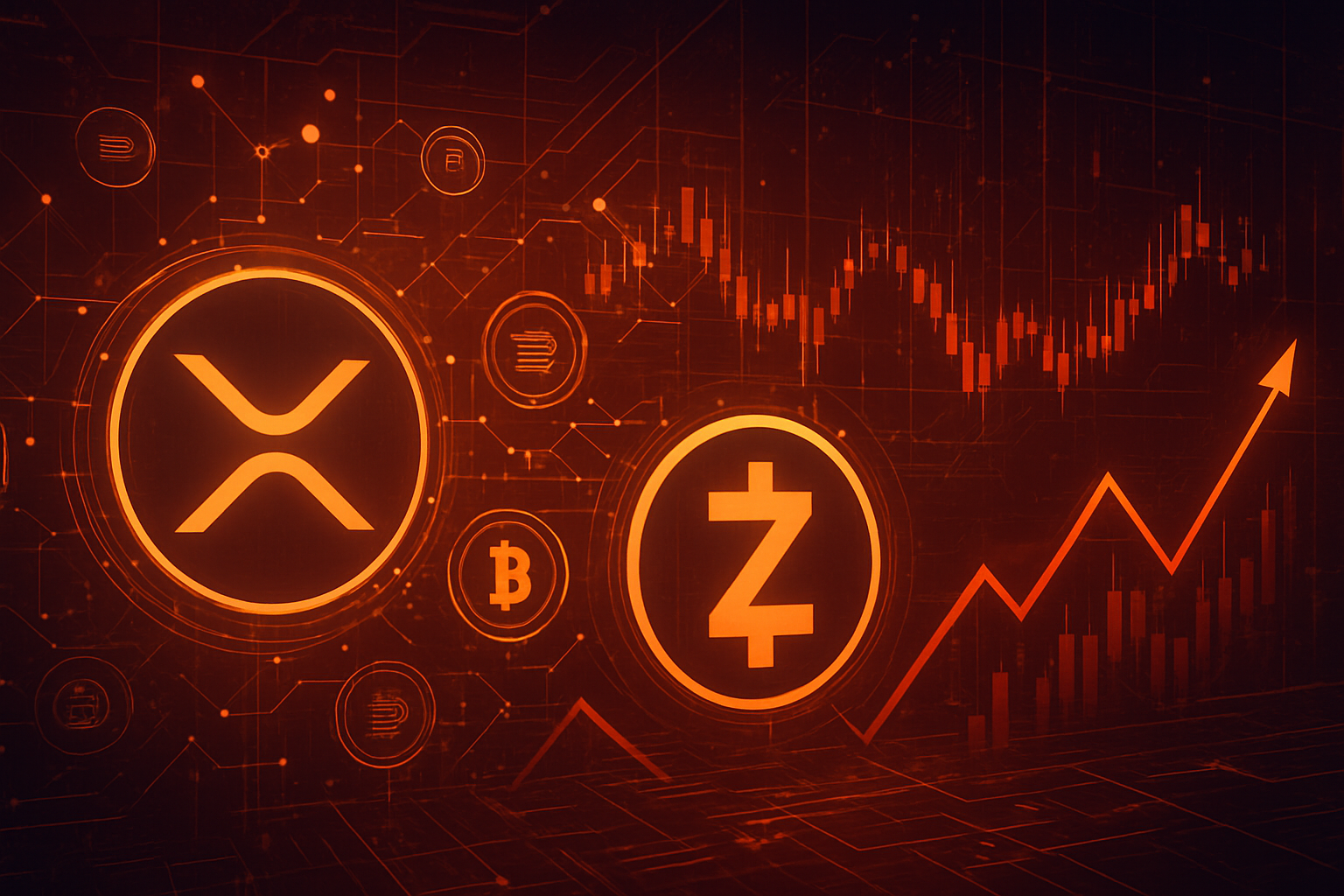
    Altcoin Market Roiled by Selloff While Zcash Defies Trend Amidst XRP ETF Debut

    November 2025 has ushered in a period of significant volatility and divergence within the altcoin market, as a broader selloff has seen Bitcoin (BTC) dip below the $95,000 mark, reaching a six-month low. This market contraction, which saw the total cryptocurrency market capitalization decrease by 5.6% on November 14, impacted a staggering 96 out of the top 100 digital assets, including major players like Solana and Ethereum. Amidst this widespread downturn, XRP experienced a notable "sell-the-news" event following the highly anticipated launch of its first spot ETFs, while Zcash (ZEC) remarkably defied the bearish sentiment, surging dramatically on the back of strong fundamentals and unique market demand.

    This contrasting performance underscores a maturing crypto landscape where macroeconomic pressures, regulatory shifts, and project-specific catalysts can lead to vastly different outcomes for individual assets. The immediate market reaction was one of caution and deleveraging across most altcoins, signaling a collapse in risk appetite, yet for Zcash, it ignited a fervent bullish rally. This period is critical for the broader crypto ecosystem, highlighting an evolving market structure where fundamental narratives and institutional interest are increasingly driving selective asset performance, even against prevailing market headwinds.

    Market Impact and Price Action

    The market-wide selloff in November 2025 has painted a grim picture for many altcoins, with Bitcoin's structural weakness below the $100,000 threshold setting a cautious tone. Layer-1 tokens, gaming assets, and memecoins bore the brunt of the declines, following an October meltdown that wiped out over $1 trillion in market value. This widespread deleveraging has led to small-cap indices hitting multi-year lows, indicating a significant pullback in speculative appetite.

    XRP, despite a momentous week, found itself caught in the broader market's downward pull. Trading around the $2.2 region, it struggled to reclaim the $2.5 threshold and experienced a 7.91% decrease on November 14. This decline occurred directly after the launch of seven spot XRP ETFs on November 13, 2025. While these ETFs collectively generated approximately $58 million in first-day volume, the market reacted with a classic "sell-the-news" event, causing an immediate dip. The launch of the first spot XRP ETF by Canary Capital (NASDAQ: CNRY) attracted $250 million on its debut, signaling significant institutional interest, yet this inflow was offset by substantial withdrawals from US spot Bitcoin and Ethereum ETFs on the same day, indicating a rotation or general risk-off sentiment. Analysts note XRP's consolidation near $2.38–$2.50, with a potential rebound if it can stabilize above $2.55, but liquidation risks loom if prices fall towards $2.10.

    In stark contrast, Zcash (ZEC) has been a beacon of bullish momentum throughout November 2025. The privacy-focused cryptocurrency surged an astonishing 24% in a single day around November 7 and over 66.55% for the month, reaching a peak of $683.14 on November 15. On November 14, while the wider crypto market tumbled, ZEC rallied over 16%, trading around $574. This incredible resilience has positioned Zcash as the best-performing privacy coin, with its market capitalization surpassing $8 billion. On-chain indicators support this bullish trend, showing a decline in exchange reserves, suggesting reduced selling pressure and a strong holding sentiment among investors. Derivatives markets also reflected this optimism, with rising Open Interest signaling increased speculative activity and reinforcing the positive outlook for ZEC.

    Community and Ecosystem Response

    The contrasting performances of XRP and Zcash have elicited divergent reactions across the crypto community and ecosystem. For XRP, the launch of spot ETFs, while a monumental step towards mainstream adoption, was met with a mixed sentiment. Initial anticipation and optimism for a price surge quickly turned into disappointment for short-term traders as the "sell-the-news" event unfolded. Social media channels saw discussions oscillating between frustration over the immediate price action and long-term bullish outlooks, with many pointing to the institutional inflows as a sign of future growth. On-chain data revealed a nuanced picture, with some long-term holders cashing out in late October, while "mega whales" simultaneously accumulated, suggesting a sophisticated market dynamic where different investor cohorts reacted to the ETF news with varying strategies.

    Conversely, the Zcash community's response has been overwhelmingly positive and enthusiastic. The significant price surge has fueled widespread optimism on platforms like Crypto Twitter and Reddit, with influencers and thought leaders actively promoting ZEC's potential. This bullish sentiment is largely driven by the anticipation of Zcash's November 2025 halving event, which is set to reduce block rewards by 50% and tighten supply, creating a classic supply-shock narrative. Furthermore, the increasing global demand for privacy-centric cryptocurrencies, particularly in light of tightening regulations such as the new EU AML rules, has bolstered confidence in Zcash's optional privacy layer. Institutional interest has also played a crucial role, with Cypherpunk Technologies launching a $50 million treasury to acquire ZEC, and endorsements from prominent investors like BitMEX's Arthur Hayes, who has publicly expressed a bullish stance on Zcash reaching $1,000. The Electric Coin Company (ECC)'s Q4 2025 roadmap, focusing on privacy and user experience upgrades, has further cemented positive community sentiment.

    What's Next for Crypto

    The current market dynamics, characterized by a broad altcoin selloff and a few standout performers like Zcash, present a complex outlook for the crypto market. In the short term, the market will likely remain sensitive to macroeconomic factors, particularly any shifts in Federal Reserve interest rate expectations. A sustained stabilization of Bitcoin above $100,000 would be a crucial catalyst for renewed altcoin rallies, indicating a return of risk appetite. However, until then, selective investment in fundamentally strong projects with unique narratives or upcoming catalysts, such as Zcash's halving, is likely to outperform the broader market.

    Long-term implications suggest a continued maturation of the crypto ecosystem. The "sell-the-news" reaction to the XRP ETF launch, despite significant institutional interest, indicates that regulatory approvals, while positive for adoption, may not always lead to immediate price pumps. Instead, they lay the groundwork for long-term liquidity and broader institutional integration. Projects will need to focus on genuine utility, robust technology, and clear regulatory compliance to attract sustained investment. The rising demand for privacy coins like Zcash, driven by global regulatory trends, highlights a growing niche that could see further expansion. Investors should strategically consider diversification, focusing on assets with strong use cases and clear value propositions, rather than purely speculative plays. Possible scenarios include a prolonged period of consolidation for most altcoins, a "flight to quality" towards established large-caps and fundamentally strong mid-caps, or continued divergence where specific narratives drive individual asset performance.

    Bottom Line

    The November 2025 altcoin market has delivered a potent reminder of the cryptocurrency landscape's inherent volatility and increasing complexity. Key takeaways for investors and enthusiasts include the critical importance of understanding project-specific fundamentals and upcoming catalysts, as evidenced by Zcash's remarkable surge amidst a market-wide downturn. The "sell-the-news" phenomenon surrounding the XRP ETF launch also serves as a crucial lesson: while institutional adoption is a long-term positive, immediate price reactions can be unpredictable, requiring a patient and strategic investment approach.

    The long-term significance of this period lies in the evolving market structure, where macroeconomic influences, regulatory developments (especially those concerning privacy), and the maturation of institutional investment are playing increasingly dominant roles. This environment favors projects with clear utility, strong community support, and robust development roadmaps. As crypto adoption continues to expand, investors will need to monitor key metrics such as Bitcoin's price stability, institutional inflow/outflow trends in new ETF products, and significant regulatory announcements. Important events like Zcash's halving and ongoing developments in privacy technology will be crucial dates to watch. The divergence observed this month suggests that a more discerning approach to altcoin investment is not just advisable, but essential for navigating the dynamic future of the crypto market.


    This article is for informational purposes only and does not constitute financial or investment advice. Cryptocurrency investments carry significant risk.

  • Institutional Tsunami: Digital Assets Surge into Mainstream Finance as Traditional Giants Embrace Crypto

    Institutional Tsunami: Digital Assets Surge into Mainstream Finance as Traditional Giants Embrace Crypto

    The cryptocurrency landscape has undergone a monumental transformation from late 2023 through November 2025, witnessing an unprecedented surge in mainstream acceptance and institutional interest. What was once considered a niche, speculative asset class has rapidly evolved into a legitimate component of global finance, driven by landmark regulatory approvals, innovative financial products, and a growing recognition of blockchain's inherent value. This period has been defined by the pivotal launch of spot Bitcoin and Ethereum Exchange-Traded Funds (ETFs) in the U.S., the explosive growth of Real-World Asset (RWA) tokenization, the maturation of stablecoins, and significant shifts in global regulatory postures, particularly in Europe and the United States.

    The immediate market reaction to this institutional embrace has been overwhelmingly positive, characterized by substantial capital inflows, record-breaking price appreciation for major digital assets like Bitcoin and Ethereum, and a notable expansion of the total crypto market capitalization, which has surpassed the $4 trillion threshold by November 2025. However, this journey has not been without its periods of intense volatility, as institutional profit-taking and strategic repositioning have led to significant, albeit temporary, market corrections. The increasing integration of digital assets into traditional financial frameworks signals a profound shift, lowering barriers to entry for a vast pool of conventional investors and fundamentally reshaping the future of the wider financial market.

    Market Impact and Price Action

    The relentless march of institutional capital into the cryptocurrency space has profoundly reshaped market dynamics and price action over the past two years. The approval of U.S. spot Bitcoin ETFs in January 2024 served as a monumental catalyst, igniting a fresh bull run that saw Bitcoin (BTC) surge from approximately $44,000 at the start of 2024 to an all-time high of around $109,000 in January 2025, and further to over $124,000 by August 2025. Similarly, Ethereum (ETH) experienced significant appreciation, surpassing $4,600 by August 2025, fueled by "unprecedented institutional capital" and the subsequent launch of spot Ethereum ETFs. The cumulative Assets Under Management (AUM) in Bitcoin and Ethereum exchange-traded products alone exceeded $175 billion by October 2025, demonstrating the sheer scale of institutional investment.

    Trading volumes and liquidity have seen a dramatic increase, reflecting deeper market participation from institutional players. Firms like BlackRock (NYSE: BLK), with its iShares Bitcoin Trust (IBIT) amassing nearly $100 billion in AUM by October 2025, and Fidelity (NYSE: FNF), have acted as primary conduits for this capital. While the influx has largely been bullish, it has also introduced new patterns of volatility. For instance, February 2025 saw a record $3.54 billion in monthly net outflows from Bitcoin ETFs as some institutions took profits, leading to temporary price corrections. A "flash crash" in October 2025 also served as a stark reminder of crypto's inherent volatility, yet the market's rapid rebound underscored its increasing resilience and deeper liquidity pools.

    Technical analysis across major digital assets indicates strong underlying support levels being established by consistent institutional buying, particularly around the $100,000 mark for Bitcoin. Resistance levels are continually being tested and broken as new capital flows in. This period contrasts sharply with earlier bull runs, which were often retail-driven and more susceptible to sudden, dramatic collapses. The current environment, while still volatile, shows signs of more mature market behavior, with institutional hedging and strategic repositioning playing a larger role. For example, in November 2025, significant outflows from Ethereum spot ETFs coincided with inflows into Bitcoin spot ETFs, indicating a strategic shift rather than panic selling, influenced by macroeconomic pressures and risk aversion.

    Community and Ecosystem Response

    The crypto community's response to the mainstreaming of digital assets has been a complex tapestry of excitement, validation, and strategic adaptation. On platforms like X (formerly Twitter) and Reddit, sentiment has largely been one of cautious optimism. There's a palpable sense of vindication among long-time enthusiasts, who view institutional adoption as the ultimate legitimization of their conviction in the asset class. Major announcements, such as the approval of spot Bitcoin ETFs or the U.S. government's consideration of a strategic crypto reserve, consistently trigger waves of positive sentiment, often accompanied by celebratory memes and discussions about "moon" targets.

    Crypto influencers and thought leaders have played a crucial role in shaping this narrative, often amplifying news of institutional involvement and interpreting its long-term implications. Figures like Michael Saylor of MicroStrategy (NASDAQ: MSTR), a prominent corporate Bitcoin holder, continue to advocate for Bitcoin as a superior treasury asset, influencing both corporate and retail investors. However, there's also an undercurrent of concern regarding the potential centralization of power and influence as traditional finance giants enter the space. Discussions often revolve around how the influx of institutional capital might impact the decentralized ethos of the ecosystem and whether retail investors will be sidelined.

    The effects on related DeFi protocols, NFT projects, and Web3 applications have been multifaceted. While direct institutional investment often targets blue-chip assets like Bitcoin and Ethereum, the broader market uplift has indirectly benefited the entire ecosystem. Increased liquidity and investor confidence have trickled down, fostering innovation and development in DeFi, leading to a greater focus on institutional DeFi solutions. Similarly, some NFT projects and Web3 applications have seen renewed interest, benefiting from the overall positive sentiment and the expanding user base. However, the direct impact on these more nascent sectors is less pronounced compared to the immediate effects on major cryptocurrencies.

    What's Next for Crypto

    The trajectory of cryptocurrency, propelled by its increasing mainstream acceptance and institutional embrace, points towards a future deeply integrated with traditional finance, albeit with its unique characteristics. In the short term, the market is poised for continued volatility, but with an underlying bullish bias driven by ongoing institutional inflows and anticipated regulatory milestones. The Commodity Futures Trading Commission (CFTC)'s plans to approve regulated spot trading products for digital assets by December 2025 is a significant development to watch, promising further legitimization and accessibility for institutional players. Additionally, the potential for further spot altcoin ETF approvals (e.g., Solana, XRP) in 2025 could unlock new avenues for capital deployment.

    Long-term implications suggest a maturation of the crypto market, characterized by deeper liquidity, more sophisticated financial products, and a greater emphasis on regulatory compliance. The widespread adoption of Real-World Asset (RWA) tokenization, as evidenced by BlackRock's BUIDL fund, is expected to continue bridging traditional and blockchain finance, creating new investment opportunities and efficiencies. Strategic considerations for projects and investors will increasingly revolve around regulatory adherence, robust security measures, and interoperability across various blockchain networks. Projects that can demonstrate clear utility, strong governance, and compliance will likely attract sustained institutional interest.

    Possible scenarios include a continued "financialization" of crypto, where digital assets become a standard component of diversified investment portfolios, similar to commodities or emerging market equities. This could lead to a more stable, albeit potentially less explosive, growth trajectory. Another scenario involves further governmental embrace, such as the U.S. establishing a strategic crypto reserve or expanding crypto inclusion in retirement plans, which would solidify its status as a national asset. However, regulatory headwinds, geopolitical tensions, or unforeseen technological vulnerabilities could still pose challenges. The most likely scenario is a continued, albeit sometimes bumpy, integration into the global financial system, with digital assets gradually becoming indispensable.

    Bottom Line

    The past two years have unequivocally cemented cryptocurrency's place in the mainstream financial landscape, moving digital assets from the periphery to a core component of institutional investment strategies. For crypto investors and enthusiasts, the key takeaway is the undeniable validation of the asset class, which has attracted significant capital from some of the world's largest financial institutions. This institutional adoption provides a stronger foundation for long-term growth, reducing the existential risk once associated with the nascent industry. However, it also means adapting to a market increasingly influenced by traditional finance's rhythms, including macroeconomic factors and institutional repositioning.

    The long-term significance of this shift cannot be overstated. We are witnessing the birth of a new financial paradigm where blockchain technology is not just a niche innovation but a fundamental layer for global finance. The integration of tokenized assets, stablecoins, and digital currencies into established financial plumbing promises greater efficiency, transparency, and accessibility. This means a future where digital assets are not merely speculative instruments but integral tools for payments, asset management, and capital markets.

    Final thoughts on crypto adoption point towards continued expansion, driven by both retail interest and the ever-growing appetite of institutional players. The market is becoming more sophisticated, offering a wider array of regulated products that cater to diverse investor needs. Important metrics to monitor include the total crypto market capitalization, the AUM of institutional crypto products (especially ETFs), stablecoin market dominance, and the ongoing development of regulatory frameworks globally. Key events like further regulatory approvals, major corporate treasury announcements, and technological advancements in scalability and security will continue to shape the narrative.


    This article is for informational purposes only and does not constitute financial or investment advice. Cryptocurrency investments carry significant risk.

  • Ethereum Eyes Potential Year-End Rally as Analysts Forecast Significant Upside Amidst Key Upgrades and Institutional Inflows

    Ethereum Eyes Potential Year-End Rally as Analysts Forecast Significant Upside Amidst Key Upgrades and Institutional Inflows

    November 12, 2025 – As 2025 draws to a close, the cryptocurrency market is buzzing with speculation surrounding a potential year-end rally for Ethereum (ETH). Despite a recent market dip that saw ETH briefly fall below the $3,000 mark in early November, the asset has demonstrated remarkable resilience, quickly rebounding above $3,400. This immediate recovery, coupled with a confluence of encouraging technical indicators, robust market sentiment, and upcoming network enhancements, has fueled optimistic predictions from a diverse range of analysts and experts.

    The prospect of Ethereum reclaiming and surpassing previous highs is a significant development for the broader crypto ecosystem. As the foundational layer for decentralized finance (DeFi), non-fungible tokens (NFTs), and a burgeoning Web3 landscape, Ethereum's performance often acts as a bellwether for the entire digital asset market. A strong year-end showing for ETH could signal renewed confidence and potentially catalyze a wider altcoin surge, drawing fresh capital and attention to the innovative projects building on its network.

    Market Impact and Price Action

    Ethereum's recent price action has been a testament to its underlying strength and investor conviction. Following a momentary dip below $3,000 earlier this month, ETH swiftly corrected upwards, demonstrating significant buying interest and pushing its value back above $3,400. This rebound was largely driven by renewed investment, particularly from institutional players, often referred to as "whales," who capitalized on the temporary price reduction.

    Technical analysis reveals a cautiously optimistic picture. Ethereum is currently trading above its 20, 50, 100, and 200 Exponential Moving Averages (EMAs), signaling short-term strength with mild bullish undertones. The 14-day Relative Strength Index (RSI) hovers in a neutral to moderately bullish range (40.23 to 61), indicating room for upward movement without being overbought. For a confirmed uptrend, analysts emphasize the importance of ETH converting the $3,572 resistance level into robust support. A decisive close above $3,900 is identified as a potential trigger for a "triangle breakout," with projected targets extending towards $4,400 and potentially even $4,800–$5,000. Conversely, a failure to maintain positions above $3,555 could see a pullback towards the $3,250–$3,300 range. Ethereum's price correlation with Bitcoin (BTC) (NASDAQ: MSTR) has also tightened to 0.89, underscoring its sensitivity to broader market movements.

    Despite the prevailing "Extreme Fear" sentiment reflected in the Fear & Greed Index (scores of 24-26 as of November 12, 2025), a significant portion of traders remain bullish, with the ETH long/short ratio showing approximately 73.7% to 76.3% holding long positions. This contrarian indicator suggests that the current fear might precede a market reversal, potentially fueled by institutional fund managers looking to boost their year-end performance.

    Community and Ecosystem Response

    The Ethereum community has responded with enthusiasm to recent network developments and analyst predictions. A significant milestone of 24,192 transactions per second (TPS) was recently celebrated, largely attributed to the robust scaling capabilities of Layer 2 solutions. Ethereum co-founder Vitalik Buterin, alongside Bankless podcast host Ryan Sean Adams, lauded this achievement, with Adams boldly predicting that the network could eventually scale to 100,000 TPS and even 1 million TPS. This highlights a strong collective belief in Ethereum's technological roadmap and its ability to overcome scalability challenges.

    Social media platforms like Crypto Twitter and Reddit reflect an increasingly upbeat sentiment among traders and enthusiasts. Discussions often revolve around the potential for ETH to lead the next bull run, with renewed attention on its fundamental strengths and upcoming upgrades. This positive sentiment is also anticipated to create a ripple effect, potentially spilling over into newer, smaller altcoins and meme tokens built within the Ethereum ecosystem, fostering broader market participation and innovation.

    What's Next for Crypto

    The short-to-long-term implications for the crypto market, particularly for Ethereum, appear promising, albeit with inherent risks. Several key catalysts are on the horizon. The highly anticipated "Fusaka" upgrade, scheduled for December 3rd, is expected to significantly enhance Ethereum's scalability, efficiency, and transaction throughput, especially benefiting Layer 2 solutions. This will be followed by the "Pectra" upgrade, further solidifying the network's long-term viability.

    Institutional adoption continues to be a powerful driver. The approval of spot Ethereum ETFs by the U.S. Securities and Exchange Commission (SEC) in July 2024 has already unlocked substantial capital inflows from traditional finance. The commencement of options trading on these ETFs in October 2025 further legitimizes Ethereum as an investable asset class. Moreover, supply dynamics play a crucial role, with approximately 40% of the total ETH supply currently locked in staking and corporate treasuries, creating a "liquidity-sapping" effect that could amplify price movements with increased demand. The continued growth of decentralized finance (DeFi) and Ethereum's expanding role in tokenizing real-world assets through collaborations like State Street (NYSE: STT) and Taurus, further bolster its long-term value proposition.

    However, challenges remain. Competition from faster and cheaper blockchains like Solana (SOL) and Sui (SUI) could pose a threat. Regulatory uncertainties, particularly regarding the classification of staking as a security in the U.S., also introduce potential headwinds. Macroeconomic factors, such as high interest rates and recession fears, could temper overall market enthusiasm. Investors should also monitor the "Layer 2 problem," where increasing activity on scaling solutions could potentially divert fee revenue from the mainnet.

    Bottom Line

    For crypto investors and enthusiasts, the current landscape suggests a cautiously optimistic outlook for Ethereum's year-end performance. The confluence of strong technical indicators, a resilient market response to recent dips, and the anticipation of significant network upgrades like "Fusaka" and "Pectra" create a compelling narrative for potential upside. Institutional capital, driven by the approval of spot Ethereum ETFs and subsequent options trading, is providing a robust foundation for sustained growth.

    The long-term significance of these developments cannot be overstated. Ethereum's continuous evolution in scalability and efficiency, coupled with its central role in the burgeoning Web3 economy, reinforces its position as a cornerstone of the digital asset space. Increased adoption by traditional finance and the ongoing expansion of its DeFi and NFT ecosystems are crucial for broader crypto adoption. Investors should closely monitor the success of the "Fusaka" upgrade on December 3rd, track institutional inflow data for Ethereum ETFs, and observe the percentage of ETH locked in staking as key metrics. While the path to a rally may be volatile, the fundamental strengths and ongoing innovation within the Ethereum ecosystem present a strong case for optimism as 2025 concludes.


    This article is for informational purposes only and does not constitute financial or investment advice. Cryptocurrency investments carry significant risk.

  • Macroeconomic Tailwinds Propel Crypto Market: Government Shutdown Breakthrough and Tariff Dividend Hopes Fuel Surges

    Macroeconomic Tailwinds Propel Crypto Market: Government Shutdown Breakthrough and Tariff Dividend Hopes Fuel Surges

    The cryptocurrency market is currently experiencing a significant surge, buoyed by a confluence of positive macroeconomic developments, most notably the recent breakthrough in the U.S. government shutdown and the tantalizing prospect of a "tariff dividend" plan. As of November 10, 2025, these events have injected a fresh wave of optimism into the digital asset space, signaling a potential shift from a period of uncertainty to renewed growth.

    The resolution of a protracted 40-day government shutdown, which had cast a shadow of fiscal gridlock over the markets since October 2025, has been met with palpable relief. Concurrently, discussions surrounding President Donald Trump's proposed tariff dividend plan, aiming to distribute direct payments to American citizens, are generating considerable excitement. These dual catalysts are widely seen as pivotal in restoring investor confidence and injecting much-needed liquidity into the crypto ecosystem, setting the stage for what many analysts predict could be a robust end to the year.

    Market Impact and Price Action

    The immediate market reaction to the government shutdown breakthrough was swift and decisive. Following the U.S. Senate's advancement of a bipartisan funding bill on November 9-10, 2025, aiming to fund federal operations through January 2026, major cryptocurrencies experienced significant rebounds. Bitcoin (BTC) surged past the $106,000 mark, while Ethereum (ETH) successfully crossed the $3,600 threshold. This upward momentum was a stark contrast to the liquidity thinning and general price dips observed during the shutdown period, where the Fear & Greed Index had reportedly plunged into "Extreme Fear."

    Trading volumes have seen a healthy increase, indicating renewed investor participation and a rotation back into risk assets. Technical analysis suggests that Bitcoin has successfully retested and held key support levels, now eyeing further resistance around the $108,000-$110,000 range. Ethereum, similarly, is consolidating above its $3,500 support, with analysts watching for a sustained break above $3,700 to confirm a stronger bullish trend. The broader market capitalization has also expanded significantly, reflecting a widespread positive sentiment across altcoins.

    Historical precedents lend credence to the current bullish outlook. Market observers often recall the 2019 government shutdown, after which Bitcoin witnessed an impressive nearly 300% surge in five months. While the crypto market is undoubtedly more mature and institutionally integrated today, this historical pattern provides a powerful psychological boost, fueling expectations of a similar relief rally driven by renewed liquidity and policy clarity.

    The anticipation of a "tariff dividend" has further amplified this positive price action. The mere announcement and ongoing discussions around President Trump's plan to distribute at least $2,000 to most Americans, funded by tariff revenues, sparked immediate price jumps across the board, including Bitcoin, Ethereum, Solana (SOL), and XRP. This proposal is viewed by many as a modern-day stimulus check, reminiscent of the COVID-19 stimulus packages that significantly boosted crypto prices and fueled a powerful bull run in 2020-2021.

    Community and Ecosystem Response

    The crypto community has reacted with overwhelming enthusiasm to these macroeconomic shifts. Social media platforms, particularly Crypto Twitter and Reddit, are abuzz with optimistic discussions. Sentiment, which had been cautiously pessimistic during the shutdown, has rapidly flipped to bullish, with memes and celebratory posts reflecting the market's upward trajectory. Influencers and thought leaders across the space are highlighting the renewed potential for institutional inflows and retail participation.

    Reactions from prominent crypto figures have largely been positive, emphasizing the importance of a stable regulatory environment and increased liquidity. Many are pointing to the potential "opening of the floodgates" for spot crypto Exchange-Traded Funds (ETFs) now that the Securities and Exchange Commission (SEC) can resume processing registration statements. This development is expected to unlock significant institutional capital, further validating crypto as a legitimate asset class.

    The positive macroeconomic climate is also having a ripple effect across the broader crypto ecosystem. Decentralized Finance (DeFi) protocols are seeing increased total value locked (TVL) as liquidity flows back into the market, driving up lending, borrowing, and trading activities. NFT projects, which often thrive on speculative sentiment, are experiencing renewed interest and floor price stability. Web3 applications, from gaming to decentralized social media, are benefiting from the general uptick in user engagement and capital availability, fostering an environment ripe for innovation and expansion.

    What's Next for Crypto

    The short-term implications for the crypto market appear overwhelmingly positive. The resolution of the government shutdown is expected to ease liquidity constraints in broader financial markets, directly benefiting risk assets like cryptocurrencies. With a high correlation between Bitcoin's price and dollar liquidity (reportedly 0.85), expanding liquidity typically translates to price increases. The potential for spot crypto ETF approvals in the near future could trigger substantial institutional inflows, providing a robust foundation for sustained growth.

    In the long term, the proposed tariff dividend, if approved by Congress, could inject hundreds of billions of dollars (estimated over $400 billion by early 2026, possibly up to $1.2 trillion) into the economy. A portion of this capital is highly likely to find its way into higher-risk assets such as cryptocurrencies, significantly boosting retail investor purchasing power and willingness to engage in speculative investments. This could fuel another powerful bull run, similar to those seen during previous stimulus periods.

    Strategic considerations for projects and investors include closely monitoring regulatory developments, particularly regarding ETF approvals and any advancements in crypto market structure bills. Projects should focus on scaling their infrastructure to accommodate increased user activity and capital flows. Investors might consider diversifying portfolios to capture potential gains across various sectors, from major cryptocurrencies to promising altcoins and DeFi projects, while remaining mindful of market volatility.

    Possible scenarios include a continued upward trend if both the ETF approvals materialize and the tariff dividend plan gains traction, potentially pushing Bitcoin to new all-time highs. Conversely, legislative hurdles for the tariff dividend or unexpected macroeconomic headwinds (such as persistent inflation leading to aggressive Federal Reserve policies) could temper the current bullish sentiment. However, the current likelihood favors continued growth, supported by improving sentiment and anticipated liquidity injections.

    Bottom Line

    For crypto investors and enthusiasts, the key takeaway from recent events is the profound impact of macroeconomic stability and potential liquidity injections on digital asset valuations. The government shutdown breakthrough has restored a crucial layer of predictability, while the tariff dividend discussions offer a tantalizing glimpse into future capital inflows. This confluence of factors underscores the increasing interconnectedness of the crypto market with traditional finance and government policy.

    The long-term significance of these events cannot be overstated. The anticipated "opening of the floodgates" for crypto ETFs post-shutdown marks a critical step in mainstream adoption and institutional legitimization. Furthermore, the potential for direct stimulus, even if derived from tariffs, highlights a growing awareness of crypto as a viable investment avenue for retail participants. These developments contribute to a more robust, mature, and resilient crypto ecosystem.

    Final thoughts suggest that while the current sentiment is overwhelmingly bullish, vigilance remains crucial. Investors should monitor important dates such as congressional votes on the tariff dividend, SEC decisions on ETF applications, and upcoming inflation reports. Metrics like trading volume, institutional capital flows, and the Fear & Greed Index will continue to be vital indicators of market health and direction. The current period represents a pivotal moment, potentially ushering in a new era of growth and adoption for the cryptocurrency space.


    This article is for informational purposes only and does not constitute financial or investment advice. Cryptocurrency investments carry significant risk.

  • Government Shutdown Resolution Ignites Crypto Market Rally, XRP Leads the Charge

    Government Shutdown Resolution Ignites Crypto Market Rally, XRP Leads the Charge

    Washington D.C., November 9, 2025 – After a protracted standoff that paralyzed federal operations for over 40 days, the United States government shutdown officially reached a resolution today. News of a bipartisan Senate deal to end the impasse immediately sent a wave of optimism through financial markets, triggering a significant rally across the cryptocurrency ecosystem. This pivotal development underscores the increasing sensitivity of digital asset markets to macroeconomic and political stability, demonstrating a growing integration with traditional finance.

    The resolution, which brings an end to a shutdown that commenced on October 1, 2025, was met with an immediate and enthusiastic response from crypto investors. Bitcoin (BTC) and Ethereum (ETH) saw substantial gains, but it was XRP that emerged as a standout performer, fueled by renewed hopes for regulatory clarity and the anticipated approval of spot XRP Exchange-Traded Funds (ETFs). The prolonged shutdown had previously introduced considerable uncertainty, disrupted traditional financial markets, and delayed critical economic data and regulatory processes, making the return to normalcy a powerful bullish catalyst for the entire crypto space.

    Market Impact and Price Action

    During the government shutdown, the cryptocurrency market experienced a period of heightened volatility and downward pressure. Bitcoin (BTC) had seen a 5% drop and fell over 17% from its high since October 6, while altcoins generally recorded even higher losses. The broader crypto market also saw considerable outflows, attributed to reduced market liquidity from halted government spending and an exodus of institutional investors. XRP, in particular, faced significant pressure, with its price dropping by 15% during the shutdown period, losing key support lines.

    However, the tide turned dramatically with the news of the impending resolution. Bitcoin (BTC) climbed 4.4% in the 24 hours leading up to the announcement, trading at a robust $106,119, recovering from an earlier 10% dip. Ethereum (ETH) also saw a substantial jump of 7.8%, reaching $3,632. This swift rebound was largely fueled by expectations of liquidity flowing back into the system and a much-anticipated return to policy clarity.

    XRP's performance was especially noteworthy in this rally. Having been significantly impacted by the shutdown's delays in regulatory processes for XRP ETFs, the resolution reignited investor confidence. The anticipated "floodgates" opening for XRP-spot ETFs post-shutdown was seen as setting a significant precedent for market growth. Technical analysts are now closely watching key resistance levels for XRP, with a break above its pre-shutdown highs potentially signaling a strong bullish continuation, while previous support levels around the $1.80 mark will be critical to hold in any future pullbacks. This event echoes past government shutdown resolutions, such as the 2013 and 2018-2019 shutdowns, which also saw Bitcoin surge over 80% and 265% respectively in the months following their conclusions, suggesting a historical pattern of crypto market recovery post-political stability.

    Community and Ecosystem Response

    The crypto community's reaction to the government shutdown resolution was overwhelmingly positive, marked by a palpable sense of relief and optimism across social media platforms. On X (formerly Twitter) and Reddit, sentiment quickly shifted from apprehension to excitement, with numerous discussions centered on the potential for renewed institutional investment and regulatory progress.

    Crypto influencers and thought leaders were quick to highlight the significance of the event. Many emphasized that the resumption of government operations, particularly at the Securities and Exchange Commission (SEC), would unblock crucial regulatory advancements, most notably the review and potential approval of various crypto ETF applications. The delay in these decisions had been a major concern, stalling market growth and investor confidence. The reopening is expected to expedite these processes, providing much-needed clarity for the market.

    Beyond price action, the resolution is anticipated to have positive ripple effects across the broader crypto ecosystem. While direct impacts on Decentralized Finance (DeFi) protocols and Non-Fungible Token (NFT) projects might not be immediately visible, the overall increase in market confidence and liquidity is likely to benefit these sectors indirectly. A stable macroeconomic environment typically encourages greater participation and investment across all facets of Web3, as investors feel more secure in allocating capital to riskier, nascent technologies. The renewed focus on regulatory frameworks is also seen as a positive for the long-term maturation and mainstream adoption of these innovative applications.

    What's Next for Crypto

    The resolution of the US government shutdown marks a significant turning point for the cryptocurrency market, with both short-term and long-term implications. In the immediate future, the market is likely to sustain its bullish momentum, driven by the return of liquidity and the anticipated progress on regulatory fronts. Investors will be closely watching for announcements regarding spot XRP ETFs and other pending crypto-related regulatory decisions from the SEC. The resumption of economic data releases will also provide clearer insights into the health of the US economy, which can further influence market sentiment.

    Looking ahead, the event reinforces the growing maturity of the crypto market and its sensitivity to global macroeconomic conditions. Potential catalysts to watch include further institutional adoption, particularly if major financial institutions (NYSE: ICE), (NASDAQ: COIN) continue to expand their crypto offerings, and ongoing technological advancements within blockchain networks. The strategic considerations for projects and investors now pivot towards adapting to a potentially more regulated environment, with an emphasis on compliance and robust governance.

    Possible scenarios include a continued upward trend if regulatory clarity is achieved swiftly and consistently, attracting more institutional capital. Conversely, any new political instability or unexpected regulatory hurdles could temper the rally. However, the current outlook leans towards a period of renewed growth, as the market shakes off the uncertainty of the shutdown and embraces a more predictable operational landscape for government agencies.

    Bottom Line

    The resolution of the US government shutdown serves as a powerful reminder of the intricate connections between traditional finance, government policy, and the burgeoning cryptocurrency market. For crypto investors and enthusiasts, the key takeaway is the demonstrated resilience of digital assets and their capacity for rapid recovery once macro-economic uncertainties dissipate. The rally, particularly XRP's strong performance, underscores the importance of regulatory progress as a primary driver for market valuation and investor confidence.

    The long-term significance of this event lies in its reinforcement of crypto's increasing integration into the global financial system. While cryptocurrencies offer decentralization, they are not entirely insulated from governmental actions and broader economic trends. This incident highlights that political stability and clear regulatory frameworks are crucial for fostering widespread adoption and attracting mainstream investment.

    Moving forward, important metrics to monitor include trading volumes, institutional capital inflows, and crucially, any official announcements from the SEC regarding crypto ETFs. The coming months will be critical in observing how quickly regulatory backlogs are cleared and how this translates into new product offerings and market expansions. This period could well set the stage for the next phase of growth and institutionalization within the crypto space.


    This article is for informational purposes only and does not constitute financial or investment advice. Cryptocurrency investments carry significant risk.

  • Institutional Tide Rises: How Wall Street’s Embrace is Reshaping the Crypto Landscape

    Institutional Tide Rises: How Wall Street’s Embrace is Reshaping the Crypto Landscape

    The cryptocurrency market is undergoing a seismic shift, propelled by an unprecedented surge in institutional investment and adoption. What was once a speculative frontier for retail investors has rapidly matured into a recognized asset class, drawing significant capital from traditional finance giants. As of late 2024 and extending into 2025, a staggering 71% of institutional investors have already diversified into digital assets, with a substantial portion planning to increase their allocations further. This institutional influx, particularly highlighted by the groundbreaking approval of spot Bitcoin and Ethereum ETFs in the U.S. in early 2024, has fundamentally altered market dynamics, injecting substantial liquidity and bestowing a new layer of legitimacy upon the crypto ecosystem.

    This growing institutional presence has been met with a mix of cautious optimism and strategic adaptation within the crypto community. While periods of significant institutional inflows have fueled price rallies and bolstered market confidence, large-scale movements, such as the historic $19-20 billion liquidation event in late October and early November 2025, have also demonstrated the potential for heightened volatility. This duality underscores a critical juncture for the crypto space: the promise of mainstream integration balanced against concerns about potential centralization and market manipulation by powerful traditional players. The ongoing influx of institutional capital matters profoundly, as it not only validates cryptocurrencies as a legitimate asset class but also accelerates the development of robust infrastructure, clear regulatory frameworks, and ultimately, the modernization of global finance.

    Market Impact and Price Action

    The escalating institutional engagement has had a profound and multifaceted impact on cryptocurrency market dynamics, directly influencing price action, trading volumes, and liquidity. The approval and subsequent launch of spot Bitcoin (BTC) and Ethereum (ETH) Exchange Traded Funds (ETFs) in the U.S. in January 2024 served as a pivotal catalyst, opening the floodgates for a new wave of capital from pensions, Registered Investment Advisors (RIAs), and other conservative portfolios. These ETFs quickly became some of the most successful ETP launches in history, driving significant inflows into the market. By July 2025, Bitcoin, fueled by massive global policy shifts and sustained institutional adoption, had surged to a new all-time high of $123,015.

    However, the path of institutional integration has not been without its challenges and periods of volatility. The late October and early November 2025 period witnessed a significant institutional sell-off, leading to widespread price declines across the market. This intense pressure culminated in a historic $19-20 billion liquidation event, causing substantial withdrawals from both spot Bitcoin and Ethereum ETFs. This period of "Extreme Fear," as reflected by the plummeting Crypto Fear & Greed Index, highlighted that while institutional capital brings stability, large-scale movements can still trigger significant market corrections.

    Despite these episodic corrections, the overall trend points towards increased market depth and liquidity. Institutional trading strategies have become more sophisticated, with 57% of institutional traders now preferring futures and options over spot markets for enhanced risk management. The growth of hedge fund strategies in digital assets, up 21% in 2025, further underscores this maturation. While Bitcoin and Ethereum remain the most widely held assets, institutions are increasingly diversifying into other cryptocurrencies like Solana, Cardano, and Ripple, with 73% now holding alternative assets, contributing to broader market liquidity.

    Comparing these events to past market cycles reveals a distinct difference. While previous bull runs were often retail-driven and characterized by rapid, speculative pumps and dumps, the current cycle is increasingly influenced by longer-term institutional holders. This shift implies that while volatility will persist, major corrections might be met with institutional buying interest, potentially establishing higher support levels. Key technical analysis points now often revolve around institutional entry and exit points, with significant capital flows dictating critical support and resistance levels. The projected institutional holdings of Bitcoin to reach $414 billion by August 2025 further signals a fundamental re-structuring of market ownership, gradually shifting from retail dominance to a more institutionalized landscape.

    Community and Ecosystem Response

    The crypto community's response to the accelerating institutional embrace is a complex tapestry woven with threads of validation, cautious optimism, and underlying concerns. On one hand, the influx of capital from traditional finance (TradFi) is largely seen as a powerful legitimizing force. Many long-term crypto enthusiasts and retail investors view the adoption by financial behemoths like BlackRock (NYSE: BLK) and Fidelity (NYSE: FNF) as a definitive step towards mainstream acceptance, validating the asset class they've championed for years. Social media platforms like Crypto Twitter and Reddit often erupt with celebratory posts during periods of significant institutional inflows or positive regulatory news, viewing it as a clear signal of long-term price appreciation and broader utility.

    However, this enthusiasm is tempered by a healthy dose of skepticism and concern about the potential for centralization. Influential figures and thought leaders within the decentralized finance (DeFi) and Web3 space frequently voice worries that the growing power of institutions could dilute the foundational ethos of decentralization that underpins the crypto movement. Discussions often revolve around the fear that large institutions could exert undue influence over governance protocols, or that their preference for regulated, centralized solutions might stifle true innovation in the open-source, permissionless spirit of Web3. The significant institutional outflows and subsequent market crash in late October/early November 2025, for instance, sparked intense debates about the fragility of a market increasingly reliant on TradFi capital and the potential for 'whales' to manipulate prices.

    Beyond sentiment, the ecosystem is actively adapting. DeFi protocols are witnessing increased institutional interest, with engagement expected to triple from 24% to 75% within two years, as institutions explore yield generation and transactional efficiencies. This demand is pushing DeFi projects to enhance security, compliance, and institutional-grade infrastructure. Similarly, the tokenization of Real-World Assets (RWAs) is gaining significant traction, with 91% of institutions expressing interest. This trend is fostering new collaborations between blockchain developers and traditional asset managers, potentially bringing vast amounts of off-chain value onto blockchain networks. While NFT projects and other Web3 applications are still largely retail-driven, the underlying blockchain technology is being explored by institutions for various use cases, promising a gradual, albeit indirect, impact on the broader Web3 landscape as infrastructure matures to accommodate institutional needs.

    What's Next for Crypto

    The trajectory of institutional investment points towards a future where cryptocurrencies are not just an alternative asset class but an integrated component of global financial portfolios. In the short term, the market will likely continue to experience periods of heightened volatility as institutional capital ebbs and flows, similar to the significant liquidation event observed in late 2025. However, the long-term implications are overwhelmingly positive for market maturation and stability. The continuous influx of institutional funds, driven by factors like diversification benefits, the potential for high returns, and the role of Bitcoin as an inflation hedge, is expected to deepen market liquidity and gradually reduce overall volatility. Experts predict that digital assets could become a standard component of institutional portfolios beyond 2026.

    Several key catalysts and developments are on the horizon. The ongoing evolution of regulatory frameworks, particularly in major jurisdictions like the U.S. and the EU (with MiCA), will continue to provide clarity and build confidence for institutional entry. Further approvals of spot ETFs for other cryptocurrencies, beyond Bitcoin and Ethereum, could unlock new tranches of institutional capital. The continued advancements in secure custodial solutions, institutional-grade trading platforms, and risk management tools are also crucial. Furthermore, the burgeoning trend of tokenization of real-world assets (RWAs) is poised to be a game-changer, potentially bringing trillions of dollars in traditional assets onto blockchain networks and creating entirely new investment opportunities for institutions.

    For projects and investors, strategic considerations are paramount. Projects must prioritize robust security, regulatory compliance, and scalable infrastructure to attract institutional partners. Developing user-friendly interfaces and clear governance models will also be essential. Investors should focus on understanding the long-term value proposition of various digital assets, moving beyond short-term speculative plays. Diversification beyond just Bitcoin and Ethereum into other promising alternative cryptocurrencies and exploring opportunities in the evolving DeFi and RWA tokenization sectors could prove beneficial. Possible scenarios range from a steady, gradual integration into traditional finance, leading to sustained growth, to more rapid adoption driven by unforeseen technological breakthroughs or shifts in global economic policy. The likelihood of a complete retreat by institutions seems low, given the significant infrastructure already in place and the clear strategic advantages cryptocurrencies offer.

    Bottom Line

    The current wave of institutional investment marks a pivotal turning point for the cryptocurrency market, signaling its undeniable maturation and growing legitimacy within the global financial landscape. For crypto investors and enthusiasts, the key takeaway is that the asset class is no longer a fringe phenomenon but a recognized and increasingly integrated component of sophisticated portfolios. While the journey will undoubtedly involve continued price fluctuations, the long-term significance of this institutional embrace cannot be overstated. It underscores a fundamental shift in perception, moving cryptocurrencies from speculative assets to legitimate stores of value, hedges against inflation, and innovative tools for financial modernization.

    The assessment of long-term significance points towards a future where digital assets are a standard feature in institutional portfolios, offering diversification, growth potential, and a hedge against traditional market volatility. The drive for increased regulatory clarity, the development of robust and secure infrastructure, and the innovative applications of blockchain technology, such as RWA tokenization, are all direct consequences of this institutional push. This trend is not merely about price appreciation; it's about the fundamental re-architecting of financial systems.

    Looking ahead, important metrics to monitor include institutional net inflows into spot ETFs, the growth of tokenized assets on public blockchains, and further regulatory developments globally. Key events like new ETF approvals, significant partnerships between TradFi and crypto firms, and advancements in institutional-grade DeFi protocols will serve as crucial indicators of continued adoption. The current date of November 8, 2025, places us firmly in an accelerated phase of institutional integration, with the foundations being laid for digital assets to play an even more central role in the financial world of tomorrow.


    This article is for informational purposes only and does not constitute financial or investment advice. Cryptocurrency investments carry significant risk.

  • XRP Defies Market Sell-Off, Holds Strong at $2.20 Amidst Bullish Flag Pattern and ETF Hopes

    XRP Defies Market Sell-Off, Holds Strong at $2.20 Amidst Bullish Flag Pattern and ETF Hopes

    November 7, 2025 – In a cryptocurrency market grappling with a significant sell-off that has erased most of its 2025 gains, XRP has emerged as a beacon of resilience, holding firm around the crucial $2.20 mark. This remarkable stability, even as the broader market sheds trillions, has ignited fervent discussions among analysts and investors, who point to a compelling "bullish flag pattern" on XRP's charts, signaling a potential explosive breakout toward the $4.50 range and beyond. The confluence of regulatory clarity following its landmark legal victory against the U.S. Securities and Exchange Commission (SEC) and the imminent anticipation of spot XRP Exchange-Traded Funds (ETFs) are fueling this renewed optimism, positioning XRP as a critical player in the evolving digital asset landscape.

    This resilience matters immensely for the crypto ecosystem. In a period marked by macroeconomic headwinds, traditional market spillover, and widespread "extreme fear," XRP's ability to maintain its ground suggests a maturing asset class where fundamental utility and regulatory certainty are beginning to outweigh speculative pressures. Its performance offers a glimpse into a future where digital assets, once plagued by regulatory ambiguity, can attract substantial institutional capital and solidify their role in global finance.

    Market Impact and Price Action

    The broader cryptocurrency market has been in a state of flux, experiencing a substantial correction that saw total market capitalization slump by approximately 20% from its early October peak of nearly $4.4 trillion. This downturn was triggered by a sudden $19 billion liquidation of leveraged positions, exacerbated by a hawkish U.S. Federal Reserve stance, persistent inflation, and geopolitical uncertainties. Bitcoin (BTC) has slipped below the psychological $100,000 mark, and Ethereum (ETH) is below $3,200, with altcoins generally facing steeper losses.

    Amidst this turmoil, XRP has demonstrated exceptional fortitude. As of November 7, 2025, XRP is trading in the range of $2.18 to $2.27, consistently hovering around the $2.20 support level. This zone has proven to be a significant accumulation point, attracting buying interest, particularly from large investors, or "whales," during periods of volatility. The 24-hour trading volume for XRP is reported to be robust, fluctuating between $4.8 billion and $6.7 billion, indicating sustained liquidity and participation. On-chain data further suggests a "re-accumulation phase" since early 2025, with whale wallets (holding between 100 million and 1 billion XRP) increasing their collective balances by approximately 1.27 billion XRP since mid-October, valued at over $3.15 billion.

    Technically, XRP is forming a "bullish flag pattern," a continuation pattern typically observed during an uptrend. This pattern consists of a sharp upward price movement (the flagpole) followed by a period of consolidation in a tight range (the flag). Analysts, including Egrag Crypto and Ali Martinez, have identified this pattern, with some even pointing to a "decade-long bull flag" forming since 2015. The breakout above the flag's upper trendline, ideally with increased volume, signals a continuation of the prior uptrend.

    Current technical analysis highlights key support levels at $2.280, with a more significant line at $2.250 (near the 100-hour Simple Moving Average), and a crucial support zone around $2.10–$2.20. Resistance levels are being watched around $2.25–$2.42, with a strong close above $2.420 potentially paving the way for $2.48–$2.55 and broader resistance zones at $2.80–$3.00. A critical breakout level is identified at $2.94, with a daily close above this confirming a new leg higher.

    Historically, XRP has a precedent for significant rallies following bullish flag patterns. The 2017-2018 rally, which saw XRP surge to its all-time high of $3.5 in January 2018, was preceded by a major bull flag. More recently, XRP established a second flagpole after consolidating below $0.6 and then surged to $3.3 in January 2025. These historical precedents, coupled with the current pattern, lend credence to projections of a substantial upward surge, with many analysts forecasting a breakout towards $4.00-$4.50, and some even setting more ambitious targets of $5.60, $8, or even $15-$28, contingent on ETF approvals and sustained institutional inflows.

    Community and Ecosystem Response

    The XRP community is abuzz with a mix of cautious optimism and anticipation. On platforms like X (formerly Twitter) and Reddit, discussions frequently revolve around the token's remarkable resilience during the market downturn and the highly anticipated "bullish flag pattern." While some long-term holders express frustration over perceived stagnant price action despite positive corporate news from Ripple, the overarching sentiment is one of conviction in XRP's long-term potential, largely due to regulatory clarity and the impending launch of spot ETFs.

    Crypto influencers and thought leaders are largely amplifying this bullish sentiment. Analysts like Egrag Crypto and Ali Martinez have confidently shared their technical analyses, projecting significant price appreciation, with targets ranging from $10 to $50 based on various patterns and market symmetry. Maxwell Stein of BlackRock's (NYSE: BLK) digital assets team, speaking at Ripple's Swell 2025 conference, provided significant validation by stating that "the market is ready for large-scale blockchain adoption" and that Ripple's infrastructure could move trillions on-chain. This statement resonated deeply within the community, viewed as a major endorsement from a traditional finance giant.

    Nate Geraci, President of NovaDius Wealth Management, sees the imminent launch of XRP ETFs as a "major moment" for mainstream crypto investing, signaling an end to previous anti-crypto regulatory stances. Steven McClurg, CEO of Canary Capital, has expressed readiness to launch an XRP ETF in the coming week, projecting substantial institutional inflows of $5-10 billion in the first month. Ripple CEO Brad Garlinghouse continues to reaffirm the company's deep commitment to XRP, emphasizing its central role in Ripple's long-term plans for global payments.

    Broader community discussions also frequently touch upon the ISO 20022 global payments messaging standard, with the "coexistence period" ending around November 22, 2025. Many community members are observing XRP's historical performance in November, which has traditionally been its strongest month, fueling optimism for a potential rally. While "mega whales" have been accumulating XRP since mid-October, some short-term holders have shown increased outflows, reflecting diverse investment strategies.

    What's Next for Crypto

    XRP's current trajectory holds significant short and long-term implications for the broader crypto market. In the short term (next 3-6 months), approved XRP ETFs could unleash billions of dollars in institutional investment, significantly boosting liquidity and market capitalization, not just for XRP but potentially triggering a broader altcoin recovery. This could lead to selective regulatory optimism, as XRP's clarity may pressure regulators to provide similar frameworks for other utility tokens. However, market volatility around ETF approval dates is expected, characteristic of "buy the rumor, sell the news" events.

    Longer term (beyond 6-12 months), XRP's regulatory clarity sets a powerful precedent for other utility-focused digital assets, potentially fostering more favorable regulatory environments across the industry and attracting more traditional financial institutions. Its growing adoption through RippleNet and On-Demand Liquidity (ODL) could fundamentally disrupt traditional cross-border payment systems like SWIFT, making global transactions faster and cheaper. Increased institutional participation, driven by XRP's success, would signal a more mature and integrated crypto market, bridging the gap between traditional finance and decentralized innovation. This could lead to increased specialization within the crypto market, with different assets carving out niches based on their utility and regulatory standing.

    Potential catalysts to watch include the decisions on the seven pending U.S. spot XRP ETF applications, with high probabilities of approval by year-end 2025. Increased institutional adoption beyond ETFs, macroeconomic shifts like potential Federal Reserve interest rate cuts, and continued technological advancements on the XRP Ledger (XRPL), such as Real-World Asset (RWA) tokenization and DeFi integrations, are all critical drivers. The Ripple Swell 2025 conference is also a traditional event to monitor for major announcements.

    Strategic considerations for crypto projects involve embracing regulatory compliance, focusing on real-world utility, forging strategic partnerships with established financial institutions, and investing in ecosystem development. For investors, a long-term perspective, diversification, close monitoring of regulatory developments, and evaluating institutional engagement are paramount.

    Possible scenarios for XRP's future include:

    • Moderate/Base-Case (45-60% likelihood): XRP continues a gradual upward trajectory, driven by steady institutional use and anticipated ETF approvals. Price ranges from $2.90-$3.25 by late November 2025, potentially reaching $4.50 by year-end and $5-$8 by 2026.
    • Bullish (10-40% likelihood): Multiple major XRP spot ETFs are approved and launched by year-end 2025, coinciding with a strong Bitcoin bull run. XRP surges to $4.00-$5.50+ in the short term, with long-term potential of $10-$12, and extreme bull run predictions reaching $22.
    • Bearish (20-30% likelihood): Macroeconomic downturns, aggressive interest rate hikes, or unexpected delays/rejections for XRP ETFs trigger a broad crypto sell-off. XRP retreats towards $1.85-$2.20 in the short term, potentially slipping further to $1.20-$1.25 in a prolonged downturn.

    Bottom Line

    XRP's journey, particularly its recent resilience and the resolution of its prolonged legal battle with the SEC, marks a significant turning point for crypto investors and enthusiasts. The landmark decision classifying XRP as not a security when traded on secondary markets provides crucial regulatory clarity, removing a major impediment to institutional engagement and setting a precedent for other utility tokens.

    Key takeaways include XRP's proven ability to navigate legal hurdles, its deepening integration into traditional finance through cross-border payments (ODL processed over $1.3 trillion in Q2 2025) and Central Bank Digital Currency (CBDC) initiatives (collaborating with multiple central banks). Its relatively low correlation with Bitcoin and Ethereum also positions it as a strategic diversifier in institutional portfolios. The potential approval of spot XRP ETFs is widely anticipated to unlock billions in institutional capital, accelerating mainstream integration and confidence in digital assets.

    Final thoughts on crypto adoption suggest that XRP's focus on real-world use cases—efficient cross-border payments, facilitating CBDCs, and enabling institutional DeFi—positions it as a foundational component of the evolving global financial infrastructure. This utility-driven approach, now bolstered by regulatory certainty, is crucial for transitioning cryptocurrencies from speculative assets to indispensable tools in the global economy.

    Important dates, events, and metrics to monitor include:

    • XRP Spot ETF Approvals: Decisions are anticipated between October 18 and November 18, 2025, with high probabilities for Q4 2025 approval.
    • Ripple's (XRP) National Bank Charter Decision: October 19, 2025, was a critical date for this decision, which would further validate Ripple's position in traditional finance.
    • XRP Ledger (XRPL) Developments: Monitor the EVM sidechain and advancements in credit-based DeFi expected in 2025, along with the launch of XRPL V3.0.0 for Ripple's native lending protocol.
    • Ripple's RLUSD Stablecoin: Track the continued growth and adoption of this USD-pegged stablecoin, especially its pilot integration with Mastercard (NYSE: MA).
    • Partnerships and ODL Expansion: Watch for new partnership announcements and the expansion of Ripple's On-Demand Liquidity service globally.
    • Regulatory Environment: Although the SEC lawsuit is settled, ongoing global regulatory clarity and the development of clear frameworks for digital assets will remain crucial for XRP's sustained growth and broader acceptance.
    • Market Sentiment and Price Action: While XRP has shown short-term volatility, a cautious bullish sentiment prevails, with predictions for 2025 ranging from an average of $2.27-$2.80 to optimistic targets of $5 or more, contingent on ETF approvals and institutional interest. Key price levels to monitor include support at $2.05-$2.10 and resistance at $2.45-$2.50, $2.75, $3.00, and $3.50.
    • On-chain Metrics: Monitoring the Network Value to Transactions (NVT) ratio, Short-Term Holder Net Unrealized Profit/Loss (STH-NUPL) ratio, daily active addresses, and overall transaction volume on the XRPL can provide insights into network health and potential price movements.

    This article is for informational purposes only and does not constitute financial or investment advice. Cryptocurrency investments carry significant risk.

  • Bitcoin’s Ascent Continues: Analysts Predicted 2-6 Month Path to New Highs, and the Data Delivered

    Bitcoin’s Ascent Continues: Analysts Predicted 2-6 Month Path to New Highs, and the Data Delivered

    In late 2024 and early 2025, the cryptocurrency world buzzed with optimistic forecasts regarding Bitcoin's (BTC) trajectory. A consensus emerged among leading analysts and financial institutions: Bitcoin was poised to achieve new all-time highs within a 2 to 6-month window, or by mid-to-late 2025. These predictions, largely fueled by the dual catalysts of the Bitcoin halving event and the groundbreaking success of U.S. spot Bitcoin Exchange-Traded Funds (ETFs), have largely materialized. As of November 7, 2025, Bitcoin has not only surpassed its previous peaks but has demonstrated robust growth, validating much of the earlier market sentiment.

    The immediate market reaction to these forecasts and the underlying fundamental shifts was overwhelmingly bullish, marked by significant capital inflows and soaring investor confidence. This period represented a pivotal moment for the crypto ecosystem, signaling a new era of institutional acceptance and mainstream integration for the flagship digital asset. The materialization of these predictions underscores the increasing maturity of the Bitcoin market and its growing responsiveness to fundamental supply-demand dynamics and institutional interest.

    Market Impact and Price Action

    The period from late 2024 through early November 2025 has been a testament to Bitcoin's evolving market dynamics, marked by both exhilarating surges to new all-time highs and significant, albeit expected, corrections. The predictions of a 2-6 month path to unprecedented values largely materialized, with Bitcoin surging past its previous all-time high of approximately $69,000 in late 2024. By November 2024, BTC exceeded $93,000, and by December of the same year, it had decisively breached the $100,000 psychological barrier. This upward momentum culminated in a historic peak of over $126,270 on October 6, 2025.

    This remarkable price action was underpinned by a dramatic increase in trading volume and liquidity, predominantly driven by institutional adoption. The approval of spot Bitcoin ETFs in January 2024 proved to be a game-changer, funneling unprecedented capital into the asset. Cumulative inflows into these ETFs soared, surpassing $28 billion and by the fourth quarter of 2025, reaching a staggering $149.96 billion. This influx not only provided robust demand but also significantly reduced the available supply of Bitcoin on exchanges, creating a powerful supply-demand imbalance. Over-the-counter (OTC) trading volumes also witnessed a more than 200% increase in 2024, further indicating strong institutional engagement.

    Technically, the market displayed strong bullish signals throughout late 2024 and much of 2025. The Relative Strength Index (RSI) frequently indicated strong buying momentum, and Bitcoin's price consistently traded above key moving averages. Fidelity Digital Assets identified distinct "Appreciation" and "Acceleration" phases, characterized by low volatility and high profitability, followed by increased volatility and continued gains. However, the market has not been without its challenges. Late October and early November 2025 saw a notable correction, with Bitcoin's price dipping below $100,000 and registering a 22% decline from its early October peak. This downturn was accompanied by net outflows of $986 million from ETFs since October 27, 2025, marking the first time in seven months that institutional net buying dropped below the daily mined Bitcoin supply.

    Comparing this cycle to past events reveals both continuities and significant deviations. While the April 2024 halving, which reduced mining rewards to 3.125 BTC, historically precedes bull runs, its immediate impact was less explosive than in previous cycles, partly due to a weaker supply shock and stronger macroeconomic influences. Crucially, Bitcoin broke its previous all-time high before the 2024 halving, a departure from prior cycles. The institutionalization via ETFs has introduced a new dynamic, making the current cycle more responsive to traditional financial markets and macroeconomic trends. Recent market fluctuations, for instance, have been influenced by global economic uncertainties and central bank policies, highlighting Bitcoin's increasing integration into the broader financial system rather than operating in isolation.

    Community and Ecosystem Response

    The rollercoaster ride of Bitcoin's price from late 2024 to early November 2025 profoundly shaped sentiment across social media, influenced key crypto thought leaders, and rippled through the broader Web3 ecosystem. As Bitcoin surged past the $100,000 mark in December 2024 and achieved a new all-time high exceeding $125,000 in early October 2025, the community's response oscillated between euphoria and cautious re-evaluation.

    Social media platforms, particularly X (formerly Twitter) and Reddit, became barometers of market sentiment. When Bitcoin reached its peaks, discussions were dominated by "fear of missing out" (FOMO), with a significant spike in social dominance for Bitcoin, as noted by sentiment analysis platforms. This surge in retail interest often signaled potential local tops, leading some analysts to advise patience until the "euphoria cooled down." Conversely, during the corrections, such as the dip below $100,000 in early November 2025, sentiment shifted to "fear" among retail traders. While some expressed anxiety about further declines, a strong undercurrent of long-term bullishness persisted, with many viewing corrections as opportune moments to "buy the dip."

    Crypto influencers largely maintained a bullish outlook, though with varying degrees of immediate caution. Prominent figures like venture capitalist Tim Draper continued to champion Bitcoin's long-term potential, while Michael Saylor (MicroStrategy – NASDAQ: MSTR) demonstrated unwavering conviction, notably acquiring an additional $45.6 million worth of BTC amidst recent market sell pressure. However, some, like Charles Edwards of Capriole Investments, highlighted "concerning metrics," such as institutional buying temporarily dropping below the daily mined Bitcoin supply in November 2025, suggesting potential market exhaustion.

    Beyond price discussions, Bitcoin's performance had a tangible impact on related sectors. The Decentralized Finance (DeFi) space witnessed the emergence of "Bitcoin Finance" or BTC-Fi, characterized by a significant increase in Total Value Locked (TVL) as Bitcoin holders sought yield opportunities. The amount of BTC deployed in DeFi protocols surged by approximately 2,700% year-on-year by mid-2025, indicating growing interest in Bitcoin-based staking and lending services. The NFT market also experienced a resurgence, with renewed optimism translating into increased floor prices for "blue-chip" collections and a strong focus on Bitcoin-native Ordinals, which gained considerable traction throughout 2025. Furthermore, the overall Web3 ecosystem, encompassing GameFi, SocialFi, and AI-powered applications, benefited from the heightened market capitalization and increased investor confidence, with expectations of broader mass adoption fueled by a more crypto-friendly regulatory environment.

    What's Next for Crypto

    As Bitcoin navigates the final quarter of 2025, the crypto market stands at a critical juncture, poised between short-term macroeconomic headwinds and robust long-term growth prospects. The journey from late 2024, which saw Bitcoin surge past $108,000 by mid-December, to its all-time high near $125,000 in October 2025, has demonstrated both the asset's immense potential and its inherent volatility. Currently, as of early November 2025, Bitcoin is consolidating around $101,000 to $104,706 after a recent correction, prompting a re-evaluation of its immediate trajectory while reinforcing its long-term appeal.

    In the short term, the market faces potential pressures from lingering macroeconomic uncertainties, including the ongoing U.S. government shutdown, which could dampen liquidity and risk appetite. Traditional year-end tax-loss selling might also introduce some downward pressure. However, historically, November has been a strong month for Bitcoin, and a swift resolution to the government shutdown could provide an immediate bullish catalyst. The residual effects of the April 2024 Bitcoin halving are also expected to continue influencing market sentiment positively through at least April 2026, suggesting underlying support for price appreciation.

    Looking further ahead, the long-term implications for Bitcoin and the broader crypto market remain overwhelmingly positive. The market is projected to mature significantly, characterized by deeper institutional integration and a stronger focus on fundamental utility, robust governance, and stringent regulatory compliance. This maturation process is expected to enhance opportunities for portfolio diversification and yield generation, cementing Bitcoin's role as a strategic asset and a potential hedge against inflation. Several powerful catalysts are anticipated to drive this growth, including the continued success of spot Bitcoin ETFs, which have already paved the way for other crypto-based investment products, and the increasing clarity in regulatory frameworks, such as the proposed GENIUS Act, which aims to classify mature blockchains like Bitcoin and Ethereum as commodities.

    Moreover, a more crypto-friendly political environment, particularly in the U.S., is expected to foster further adoption. Technological advancements in Decentralized Finance (DeFi), Web3 applications, and the burgeoning tokenization of real-world assets (RWAs), alongside the development of Bitcoin Layer-2 solutions, will continue to expand utility and attract investment. Strategic considerations for investors include thorough due diligence, robust risk management, and portfolio diversification, with Bitcoin increasingly viewed as a core holding. Many experts remain highly optimistic, with JPMorgan (NYSE: JPM) analysts, for instance, forecasting Bitcoin could climb to $170,000 within the next six to twelve months from November 2025. Other institutions, like Standard Chartered (LSE: STAN), maintain an even higher target of $200,000 by year-end 2025, underscoring the widespread belief that Bitcoin's journey to new, significant highs is far from over.

    Bottom Line

    The period spanning late 2024 to early November 2025 has marked a pivotal era for Bitcoin and the broader cryptocurrency market, characterized by unprecedented institutional adoption, significant regulatory advancements, and shifting macroeconomic influences. These developments have reshaped Bitcoin's "bottom line" from a speculative asset to an increasingly legitimate and integral component of global finance.

    Key takeaways for crypto investors include the undeniable trend of institutional integration, with spot Bitcoin ETFs driving massive capital inflows and validating Bitcoin's role in diversified portfolios. Regulatory clarity, epitomized by the U.S. GENIUS Act for stablecoins and Europe's MiCA regulation, is unlocking new institutional capital and fostering confidence. Bitcoin is increasingly recognized as a macroeconomic hedge against inflation and currency debasement. While volatility remains inherent, strategic investment approaches emphasizing diversification, long-term holding, and risk management are crucial.

    The long-term significance of Bitcoin's price action for crypto adoption cannot be overstated. Its consistent performance to new all-time highs, supported by institutional demand, has solidified its mainstream legitimacy and paved the way for broader crypto acceptance. This includes democratized access through ETFs for retail investors, enhanced real-world utility via stablecoins for payments, and even discussions about Bitcoin's potential as a sovereign reserve asset.

    To effectively navigate Bitcoin's future, investors should closely monitor several critical factors. Regulatory developments in the U.S. (e.g., CLARITY Act, GENIUS Act implementation) and globally (e.g., MiCA in EU, UK regulations, Basel Committee standards by January 2026) will continue to shape the market. Macroeconomic factors, such as Federal Reserve interest rate decisions, global liquidity, and inflation trends, will exert significant influence. Key on-chain and market metrics like Bitcoin Dominance, ETF inflows, Long-Term Holder (LTH) supply, network activity, hash rate, and Total Value Locked (TVL) in DeFi will provide vital insights into market health and sentiment. Finally, major industry events and conferences throughout 2025 and 2026 often feature critical announcements and gauge industry momentum.


    This article is for informational purposes only and does not constitute financial or investment advice. Cryptocurrency investments carry significant risk.

  • Institutional Titans Double Down on Ethereum Amidst Market Volatility: A Long-Term Bet on the Future of Finance

    Institutional Titans Double Down on Ethereum Amidst Market Volatility: A Long-Term Bet on the Future of Finance

    November 6, 2025 – The cryptocurrency landscape around early November 2025 has been marked by a significant, albeit volatile, trend: increasing institutional investment in Ethereum (ETH). Despite a period of price fluctuations and macroeconomic headwinds, major players, including corporate treasuries and large "whale" investors, have been aggressively accumulating ETH. This influx of institutional capital, alongside fluctuating activity in spot Ethereum Exchange-Traded Funds (ETFs), underscores a deepening conviction in Ethereum's long-term potential, even as short-term market sentiment remains cautious.

    This surge in institutional interest is not merely a fleeting trend; it represents a structural shift towards the mainstream adoption of digital assets by traditional financial entities. While Ethereum's price experienced an 18% slide in early November from its late October peak, the underlying accumulation by sophisticated investors signals a strategic play. The approval of Ethereum ETFs in July 2024 has already unlocked billions in inflows, solidifying Ethereum's position as a foundational asset for the evolving Web3 ecosystem and the burgeoning tokenization of real-world assets. This persistent institutional engagement, even amidst market choppiness, highlights Ethereum's growing importance as a critical infrastructure layer for the future of finance.

    Market Impact and Price Action

    The period leading up to and around November 6, 2025, saw a fascinating interplay of institutional accumulation and market volatility for Ethereum. In late October, significant "whale" activity and initial positive inflows into spot Ethereum ETFs propelled ETH to a high of $4,252.99. However, this upward momentum proved short-lived. By early November, Ethereum experienced a notable price correction, sliding by approximately 18% from its peak. On November 3, 2025, ETH fell by about 7%, dropping from $3,910 to $3,610, reaching a low of around $3,579. As of November 6, 2025, Ethereum was trading around $3,421, showing a modest 3.72% gain in the preceding 24 hours but remaining below its local top.

    Despite this short-term price decline, institutional buying remained robust. BitMine Immersion Technologies (NASDAQ: BTMI), for instance, was a prominent institutional buyer, acquiring approximately $113 million worth of Ethereum in late October. By early November, BitMine continued its aggressive accumulation, purchasing an additional 40,718 ETH, valued at approximately $137 million, signaling renewed institutional confidence. The company's total Ethereum acquisitions reached nearly 40,718 ETH, totaling approximately $137 million by November 6, 2025, with an ambitious goal to secure 5% of Ethereum's total supply. Beyond specific corporate treasuries, large institutional investors, often referred to as "whales," acquired nearly 400,000 ETH, equivalent to over $1.3 billion, in just three days leading up to November 6, 2025, with an average buying price of $3,462.

    Spot Ethereum ETFs also saw a mixed bag of activity. October 2025 recorded net inflows of approximately $380 million, reversing a previous period of outflows. BlackRock's iShares Ethereum Trust ETF (ETHA) emerged as the largest spot Ethereum ETF, boasting over $15.68 billion in Assets Under Management (AUM) and $1.2 billion in traded volume. Grayscale's Ethereum Mini Trust ETF also registered a significant inflow of $56.05 million between October 27 and October 31, 2025. However, early November witnessed a shift, with US Ethereum ETFs recording an outflow of $837 million over six sessions, including a single-day outflow of $118.5 million on November 5, led by BlackRock's ETHA. This suggests some institutional investors reduced their exposure, possibly due to broader macroeconomic headwinds, including uncertainty surrounding the US Federal Reserve's December rate cut and weak US manufacturing data.

    Community and Ecosystem Response

    The recent institutional movements in Ethereum have elicited a nuanced response across the crypto community and ecosystem. On social media platforms like Crypto Twitter and Reddit, sentiment appears to be a mix of cautious optimism and frustration over the short-term price volatility. While the consistent accumulation by "whales" and companies like BitMine Immersion Technologies (NASDAQ: BTMI) is seen as a long-term bullish signal, the immediate price dips have led to some FUD (fear, uncertainty, and doubt) among retail investors. Expectations for Ethereum to reach $5,000 by the end of 2025 have notably dropped from over 40% earlier in the month to 34%, reflecting broader economic uncertainty and a divergence in sentiment between institutional and retail participants.

    Crypto influencers and thought leaders largely maintain a positive long-term outlook, emphasizing the significance of sustained institutional adoption despite transient market fluctuations. Many highlight that institutional accumulation during price dips often precedes major uptrends, suggesting that the current period is one of strategic positioning. The approval and subsequent activity in spot Ethereum ETFs are consistently cited as monumental achievements that validate Ethereum's status as a legitimate asset class, drawing parallels to the impact of Bitcoin ETFs.

    The broader Ethereum ecosystem, including Decentralized Finance (DeFi) protocols, Non-Fungible Token (NFT) projects, and Web3 applications, continues to see robust development and innovation. Major financial institutions like UBS (SWX: UBSG) accelerating Ethereum's institutional adoption by completing live tokenized fund transactions on the network further validates the underlying technology. This demonstrates how tokenization can enhance fund operations, improve transparency, and expand access to digital asset markets, marking a milestone for the $100 trillion fund industry. Ethereum's strong fundamentals, its dominance in DeFi and NFTs, and upcoming network upgrades like the anticipated "Fusaka upgrade" in December 2025, are seen as key drivers that will continue to attract institutional interest and foster ecosystem growth, irrespective of short-term price movements.

    What's Next for Crypto

    The continued institutional investment in Ethereum, despite recent price volatility, paints a compelling picture for the short and long-term future of the crypto market. In the short term, the market may continue to experience choppiness, influenced by macroeconomic factors such as global interest rate policies and broader financial market sentiment. The divergence between institutional accumulation and some retail hesitation, coupled with fluctuating ETF flows, suggests a period of price discovery and consolidation for ETH. However, the consistent "smart money" accumulation by entities like BitMine Immersion Technologies (NASDAQ: BTMI) and large individual investors indicates a strong underlying demand that could absorb selling pressure and set the stage for future rallies.

    Looking further ahead, the long-term implications for Ethereum and the broader crypto market are profoundly bullish. The structural shift towards crypto asset adoption by large financial entities, catalyzed by the approval of Ethereum ETFs, is irreversible. Potential catalysts to watch include the successful implementation of the "Fusaka upgrade" in December 2025, which is expected to bring significant performance and scalability improvements to the Ethereum network. Further regulatory clarity and the continued expansion of real-world asset (RWA) tokenization on Ethereum, as evidenced by initiatives from institutions like UBS (SWX: UBSG), will also serve as powerful drivers for adoption and value appreciation.

    Strategic considerations for projects and investors should focus on building and investing in robust, utility-driven applications within the Ethereum ecosystem. For investors, accumulating ETH during periods of weakness, guided by the long-term conviction demonstrated by institutional players, could prove to be a sound strategy. Possible scenarios range from a gradual, steady ascent driven by increasing utility and institutional integration to more explosive rallies once macroeconomic conditions become more favorable and retail sentiment catches up to institutional conviction. The likelihood of Ethereum playing an even more central role in the global financial infrastructure through tokenization and DeFi is high, making it a critical asset to monitor.

    Bottom Line

    The recent trend of increasing institutional investment in Ethereum, characterized by significant purchases from corporate treasuries and large "whales," underscores a critical juncture for the cryptocurrency market. Despite short-term price volatility and some ETF outflows, the underlying message is clear: sophisticated investors are making a long-term bet on Ethereum's foundational technology and its pivotal role in the future of finance. Key takeaways for crypto investors and enthusiasts include recognizing that market fluctuations are often temporary, while the fundamental shift towards institutional adoption is a more enduring trend.

    The long-term significance of this institutional embrace cannot be overstated. Ethereum's robust staking infrastructure, its dominance in Decentralized Finance (DeFi) and Non-Fungible Tokens (NFTs), and its accelerating role in the tokenization of real-world assets position it as a cornerstone of the evolving digital economy. The competitive fee structures of major spot Ethereum ETFs and the ongoing development of the network, including the anticipated "Fusaka upgrade," further solidify its appeal. This means continued progress in crypto adoption, as Ethereum becomes increasingly integrated into traditional financial systems.

    Important dates, events, or metrics to monitor include the progress of the "Fusaka upgrade" in December 2025, further announcements regarding institutional tokenization initiatives, and the sustained net flows into spot Ethereum ETFs. Investors should also keep a close eye on macroeconomic indicators, particularly interest rate decisions from central banks, which will continue to influence broader market sentiment. While the road ahead may have its bumps, the institutional conviction in Ethereum suggests a bright, transformative future for the asset and the entire crypto ecosystem.


    This article is for informational purposes only and does not constitute financial or investment advice. Cryptocurrency investments carry significant risk.