Tag: Crypto Trends

  • Bitcoin’s American Ascent: States Leading the Charge in Digital Gold Adoption

    Bitcoin’s American Ascent: States Leading the Charge in Digital Gold Adoption

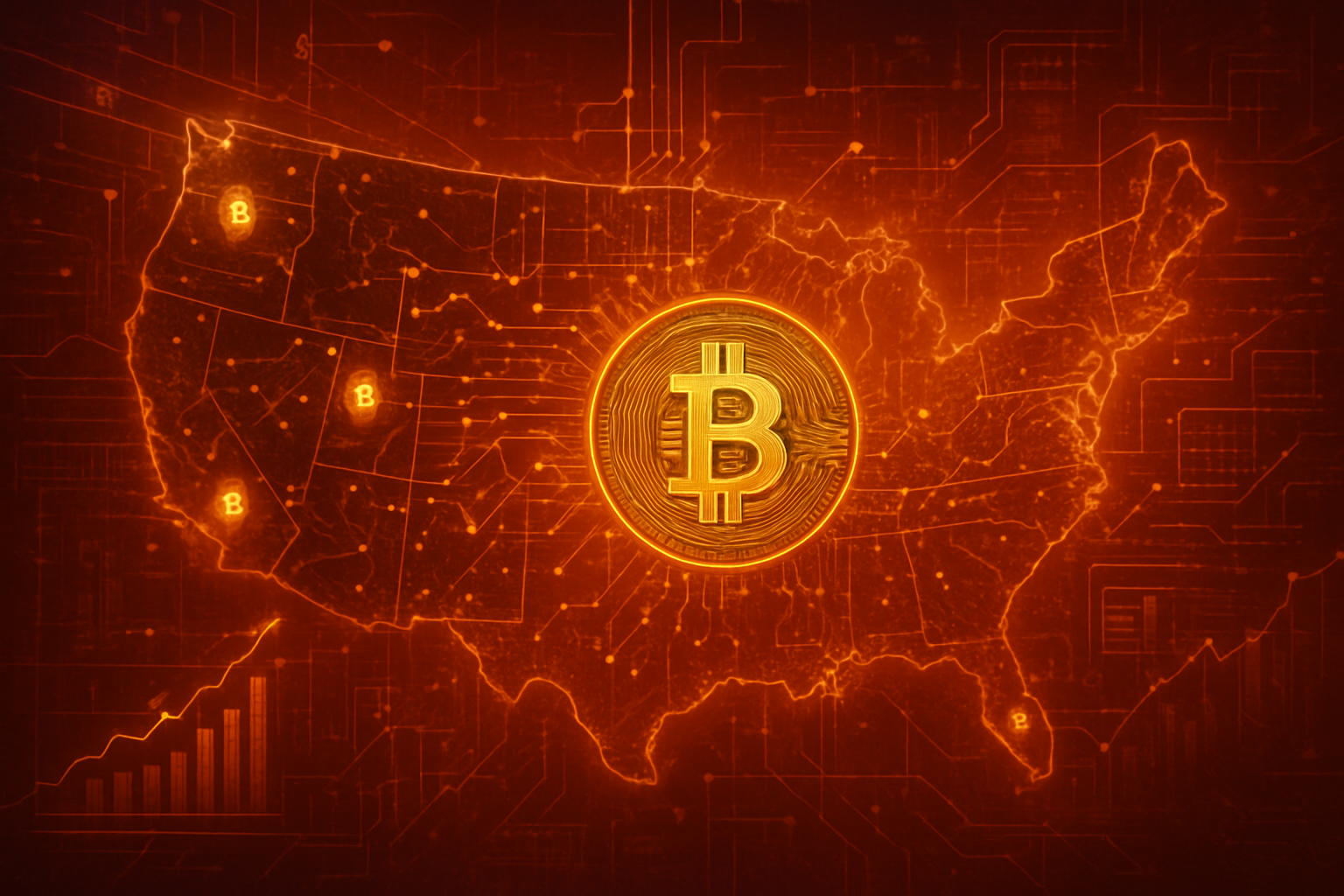
    November 4, 2025 – The United States is witnessing an unprecedented surge in Bitcoin adoption, solidifying its position as a global leader in the cryptocurrency landscape. As of late 2025, a confluence of favorable regulatory developments, increasing institutional confidence, and strategic state-level initiatives has propelled digital assets into mainstream consciousness, with specific states emerging as frontrunners in this financial revolution. This widespread acceptance marks a pivotal moment for the crypto ecosystem, transforming Bitcoin from a niche investment into a widely embraced digital asset class.

    The dramatic uptick in adoption follows a multi-year growth trajectory, underscored by the U.S. Securities and Exchange Commission's approval of the first spot Bitcoin Exchange-Traded Funds (ETFs) in early 2024. This landmark decision by the SEC provided a regulated and accessible avenue for traditional investors, significantly boosting market confidence and attracting a fresh wave of capital. The subsequent "crypto-friendly" stance of the Trump administration, elected in November 2024, has further fueled optimism, promising greater regulatory clarity and fostering an environment conducive to innovation. This shift is not merely about investment; it signifies a deeper integration of Bitcoin into the American financial fabric, driven by both individual enthusiasm and strategic governmental support.

    Market Impact and Price Action

    The escalating adoption of Bitcoin across the U.S. has had a profound impact on market dynamics, contributing to a robust bullish sentiment that has seen the cryptocurrency reach new all-time highs throughout 2024 and 2025. The approval and subsequent success of spot Bitcoin ETFs, particularly those listed on major U.S. exchanges like those managed by BlackRock (NYSE: BLK) and Fidelity (NYSE: FNF), have been instrumental in channeling significant institutional capital into the market. As of mid-July 2025, global Bitcoin ETF Assets Under Management (AUM) surged to approximately $179.5 billion, with U.S.-listed products accounting for a substantial portion, demonstrating a clear appetite for regulated Bitcoin exposure.

    This influx of institutional investment, coupled with growing retail participation, has led to increased trading volumes and enhanced liquidity across major exchanges. Bitcoin's price movements have largely mirrored this expanding confidence, often outperforming traditional assets like the S&P 500. Technical analysis reveals strong support levels forming around key psychological thresholds, with resistance levels consistently being tested and broken as market participants increasingly view Bitcoin as a legitimate store of value and an inflation hedge. The current market environment draws parallels to the post-halving rallies of previous cycles, but with the added weight of significant institutional backing and a more mature regulatory framework, suggesting a more sustained growth trajectory.

    The sustained upward momentum is also influenced by broader economic factors and the perceived stability that regulated investment vehicles offer. Unlike previous cycles driven primarily by speculative retail interest, the current rally is underpinned by a more diverse investor base, including high-net-worth individuals and corporate treasuries. This diversification is contributing to a more resilient market, less prone to extreme volatility from single events, and indicates a maturing asset class that is increasingly decoupled from the "wild west" narrative of its early days.

    Community and Ecosystem Response

    The burgeoning Bitcoin adoption in the U.S. has ignited a vibrant response across the crypto community and ecosystem. Social media platforms like X (formerly Twitter) and Reddit are abuzz with discussions, analyses, and celebratory posts about Bitcoin's mainstreaming. The sentiment is overwhelmingly positive, with many long-time enthusiasts expressing vindication for their early belief in digital assets. Influencers and thought leaders, such as Michael Saylor (NASDAQ: MSTR) and Cathie Wood, have amplified this enthusiasm, often highlighting the increasing institutional validation and the long-term potential of Bitcoin as a global reserve asset.

    This surge in adoption is not limited to investment; it's also fostering innovation within related Web3 applications and DeFi protocols. While Bitcoin's direct integration into these ecosystems is often through wrapped versions or sidechains, the overall positive sentiment surrounding BTC adoption indirectly benefits the broader crypto space. Developers are exploring new ways to leverage Bitcoin's security and liquidity, leading to renewed interest in solutions that bridge Bitcoin with DeFi and NFT projects. The "policy blitz" at the state level, with numerous states introducing crypto-friendly legislation, is also a significant talking point, showcasing a bottom-up approach to fostering a conducive environment for blockchain technology.

    Broader crypto Twitter and Reddit communities frequently discuss the implications of state-level adoption, particularly in crypto-friendly states like Wyoming and Florida, which are seen as blueprints for future regulatory environments. The narrative has shifted from mere speculation to a focus on utility, infrastructure development, and the long-term societal impact of decentralized finance. This collective response underscores a maturing ecosystem that is increasingly focused on sustainable growth and widespread utility, moving beyond speculative trading to embrace the foundational principles of blockchain technology.

    What's Next for Crypto

    The current trajectory of Bitcoin adoption in the U.S. points towards significant short and long-term implications for the entire crypto market. In the short term, continued institutional inflows via ETFs, coupled with a supportive regulatory environment at both federal and state levels, are likely to sustain Bitcoin's price momentum. The "policy blitz" expected in 2025, with at least 40 states considering crypto-friendly legislation, could unlock new avenues for adoption, including allowing public pension funds and treasuries to invest in digital assets, further legitimizing the asset class.

    Looking ahead, the long-term implications are even more profound. The U.S. is poised to become an undeniable global hub for crypto innovation and investment. Potential catalysts include further clarity on digital asset classification through acts like the Digital Asset Market Clarity Act (CLARITY Act), which would define whether crypto assets are commodities or securities, providing much-needed certainty for developers and investors. The ongoing discussions around preventing a central bank digital currency (CBDC) through the Anti-CBDC Act also highlight a preference for decentralized alternatives, potentially reinforcing Bitcoin's role.

    For projects and investors, strategic considerations will involve closely monitoring legislative developments, both federally and at the state level. States that actively foster innovation through favorable tax policies and clear regulatory frameworks, such as Wyoming, Florida, and Texas, will likely attract significant investment and talent. Investors should consider diversified portfolios that include exposure to Bitcoin through regulated products, while projects should prioritize compliance and seek to build utility within these evolving regulatory landscapes. Possible scenarios range from continued steady growth driven by institutional adoption to more rapid expansion if federal regulations become even more explicitly supportive, making the U.S. an even more attractive market for crypto businesses and investors alike.

    Bottom Line

    The current wave of Bitcoin adoption in the United States represents a pivotal moment for the cryptocurrency industry, driven by a powerful combination of institutional acceptance, a favorable regulatory environment, and proactive state-level initiatives. For crypto investors and enthusiasts, the key takeaway is the increasing mainstreaming of Bitcoin, which is no longer a fringe asset but a legitimate component of diversified investment portfolios. The approval of spot Bitcoin ETFs and the supportive stance of the Trump administration have been game-changers, paving the way for broader public and institutional engagement.

    The long-term significance of these trends cannot be overstated. The U.S. is rapidly establishing itself as a global leader in crypto innovation and investment, with states like Washington, Utah, California, Colorado, and Oregon showing high individual adoption rates, and states like Wyoming, Florida, and Texas leading in creating crypto-friendly legislative environments. This dual approach—organic user growth coupled with strategic policy support—is creating a robust ecosystem for digital assets.

    Final thoughts suggest that Bitcoin's journey in the U.S. is moving towards deeper integration into the traditional financial system, potentially leading to increased stability and reduced volatility in the long run. Important metrics to monitor include the continued growth of Bitcoin ETF AUM, the passage of further crypto-friendly legislation at both federal and state levels, and the evolving sentiment of institutional investors. The ongoing "policy blitz" in state legislatures, particularly in 2025, will be crucial in shaping the future landscape of Bitcoin and digital asset adoption across the nation.


    This article is for informational purposes only and does not constitute financial or investment advice. Cryptocurrency investments carry significant risk.

  • NFT Market Navigates Volatility with a Resilient Rebound: Utility and Maturation Define October 2025 Landscape

    NFT Market Navigates Volatility with a Resilient Rebound: Utility and Maturation Define October 2025 Landscape

    The Non-Fungible Token (NFT) market finds itself in a period of significant transformation as October 2025 unfolds, demonstrating a remarkable resilience in the face of recent volatility. After experiencing a sudden crash in early October, which saw approximately $1.2 billion wiped from its market capitalization due to geopolitical tensions and broader crypto liquidations, the sector has staged a swift and robust recovery. This rapid rebound, aligning with a broader "Uptober" rally across the cryptocurrency landscape, signals a maturing market where discerning investors are increasingly prioritizing utility and long-term value over speculative gains.

    This shift is not merely a fleeting trend but a fundamental reorientation of the digital collectibles space. The market's ability to absorb a significant downturn and recover quickly underscores a growing confidence among participants, suggesting a deeper integration of NFTs into the Web3 ecosystem. The focus has decisively moved from "flipping JPEGs" to leveraging NFTs for tangible benefits, including exclusive access, in-game functionality, and the tokenization of real-world assets. This evolution is crucial, as it lays the groundwork for a more sustainable and impactful future for digital ownership, influencing not only art and collectibles but also gaming, DeFi, and broader digital economies.

    Market Impact and Price Action

    The early October 2025 market saw a dramatic dip, with the total NFT market capitalization plummeting from $6.2 billion to $5 billion. This sharp contraction was primarily attributed to external macroeconomic pressures, specifically a U.S.-China trade tariff shock, which triggered liquidations across the broader crypto market. However, the subsequent recovery was equally striking, with the market regaining roughly 10% of its value within days, settling around the $5.4 billion to $5.5 billion mark. This rapid bounce-back capacity, particularly in conjunction with Bitcoin's (BTC) strong performance, has instilled a renewed, albeit cautious, optimism among investors.

    Despite this volatility, overall activity in the NFT market has shown a strong rebound throughout 2025. The third quarter alone witnessed over 18.1 million NFTs sold, generating a substantial $1.6 billion in trading volume. The first week of October proved to be a standout, recording over $250 million in weekly sales, marking the highest weekly trading volume for the year. This surge in sales volume, while not necessarily indicative of a massive influx of new users—as much of the activity is driven by existing participants—highlights a sustained demand and liquidity within the ecosystem.

    The performance of blue-chip NFT collections has been notably divergent. Pudgy Penguins (PENGU) has emerged as a beacon of resilience, with its associated token experiencing upward momentum and its floor price demonstrating robust growth. Similarly, CryptoPunks has shown strong signs of recovery, consistently commanding high-value sales, with individual pieces like CryptoPunk #2406 fetching upwards of $218,540 in late September. In stark contrast, the once-dominant Bored Ape Yacht Club (BAYC) has faced a significant downturn, experiencing a notable decrease in its floor price, reflecting a shift in market preference and a re-evaluation of perceived value.

    The market's technical indicators suggest a consolidation phase, with key support levels holding firm despite the recent scare. The swift recovery above the $5.4 billion market cap indicates strong buyer interest at these levels. Comparison to past events, such as the initial NFT boom and subsequent corrections, reveals a more mature market less prone to the irrational exuberance of earlier cycles. Instead, the current landscape suggests a more fundamental-driven valuation, where projects with clear roadmaps, strong communities, and tangible utility are gaining traction.

    Community and Ecosystem Response

    Social media platforms like X (formerly Twitter) and Reddit are buzzing with discussions that reflect the evolving sentiment within the NFT community. The narrative has shifted dramatically from the speculative "flipping JPEGs" mentality of previous bull runs to a deeper focus on utility, innovation, and long-term value. Crypto influencers and thought leaders are increasingly emphasizing the importance of sustainable projects, real-world applications, and the integration of NFTs into broader Web3 ecosystems. This intellectual pivot indicates a collective maturation, where the community is actively seeking projects that offer more than just digital aesthetics.

    Reactions from the broader crypto community have been mixed but generally lean towards cautious optimism. While the early October crash sparked a brief period of fear, the market's swift rebound quickly quelled widespread panic, reinforcing the belief among many that the NFT space is here to stay and continues to evolve. This resilience has positively impacted related DeFi protocols and Web3 applications, particularly those integrating NFTs for identity, lending, or gaming. Projects built around strong utility and community engagement are seeing sustained interest, even as others struggle to maintain relevance.

    A significant development bolstering community confidence was a recent legal victory in October 2025, which saw the dismissal of a class-action lawsuit alleging that BAYC NFTs were unregistered securities. This ruling has provided a much-needed dose of regulatory clarity, potentially paving the way for renewed investor interest and reducing the legal ambiguities that have historically clouded the space. This clarity, combined with the emergence of new, vibrant ecosystems like Monad—driven by strategic airdrop initiatives and a robust NFT market—is fostering an environment ripe for innovation and growth, with early projects in these ecosystems reporting substantial gains.

    OpenSea, a prominent NFT marketplace, is strategically remaking itself into a crypto trading aggregator. In the first two weeks of October 2025, it facilitated an impressive $1.6 billion in cryptocurrency trades alongside $230 million in NFT transactions. This strategic pivot suggests a broader vision for the platform, aiming to capture a larger share of the digital asset trading market, and could mark its biggest month in over three years, further solidifying its role as a central hub for digital collectibles and crypto trading.

    What's Next for Crypto

    The short-term implications for the NFT market suggest a continued focus on utility-driven projects and a potential consolidation phase for existing blue-chip collections. Investors will likely scrutinize projects more closely, prioritizing those with clear roadmaps, strong development teams, and demonstrable real-world applications. The ongoing "Uptober" rally in the broader crypto market provides a favorable backdrop, potentially encouraging renewed capital inflow into the NFT space, especially as regulatory clarity continues to improve.

    In the long term, the NFT market is poised for significant growth and deeper integration into the mainstream. Projections estimate the NFT sector's market capitalization to reach $49 billion in 2025, with continued expansion anticipated. Potential catalysts include further advancements in blockchain technology, increased corporate adoption of NFTs for branding and loyalty programs, and the continued proliferation of play-to-earn gaming models. Strategic considerations for projects involve prioritizing interoperability, enhancing user experience, and exploring novel use cases beyond traditional art and collectibles. Investors, on the other hand, should focus on diversification, thorough due diligence, and understanding the intrinsic value and utility of the NFTs they acquire.

    Possible scenarios for the future range from a steady, organic growth fueled by innovation and utility, to more rapid expansion driven by institutional adoption and significant technological breakthroughs. The likelihood of a return to the purely speculative frenzy of 2021 seems low, as the market has matured significantly. Instead, a more sustainable trajectory, characterized by thoughtful development and real-world impact, appears to be the most probable path forward. The continued evolution of regulatory frameworks will also play a crucial role in shaping the market's trajectory, potentially unlocking new avenues for investment and adoption.

    Bottom Line

    For crypto investors and enthusiasts, the key takeaway from the current NFT market landscape is the undeniable shift towards utility and maturation. The era of pure speculation is giving way to a more discerning market that values tangible benefits and sustainable ecosystems. The recent market volatility and subsequent rebound serve as a powerful reminder of the market's inherent risks but also its underlying resilience and growth potential. Investors should prioritize projects that demonstrate clear utility, strong community engagement, and a robust technological foundation.

    The long-term significance of NFTs continues to grow, extending far beyond digital art to encompass gaming, identity, real estate, and intellectual property. This evolution is crucial for the broader adoption of Web3 technologies, as NFTs provide a tangible and verifiable mechanism for digital ownership. As the market continues to mature and regulatory clarity improves, NFTs are poised to play an increasingly integral role in the digital economy, bridging the gap between digital and physical assets.

    To monitor the market effectively, investors should keep an eye on key metrics such as overall market capitalization, trading volumes on major marketplaces like OpenSea, and the floor prices of leading blue-chip collections. Important events to watch include further regulatory developments, major technological upgrades (e.g., Ethereum's next phases), and significant partnerships between traditional brands and Web3 projects. The ongoing user engagement trends, particularly the balance between existing participant activity and the influx of new users, will also be a critical indicator of the market's health and future growth trajectory.


    This article is for informational purposes only and does not constitute financial or investment advice. Cryptocurrency investments carry significant risk.