
Tag: Crypto News

  • Blockchain Unleashed: Breakthroughs in Scalability and Interoperability Pave Way for Mass Adoption by 2025

    Blockchain Unleashed: Breakthroughs in Scalability and Interoperability Pave Way for Mass Adoption by 2025

    The cryptocurrency and blockchain ecosystem is experiencing an unprecedented era of innovation, fundamentally reshaping its capabilities and future trajectory. As of November 11, 2025, the persistent challenges of blockchain scalability—slow transaction speeds, prohibitive costs, and isolated networks—are rapidly being addressed by a confluence of groundbreaking technological advancements. The past year has seen significant strides in Layer 2 (L2) solutions, the strategic implementation of sharding, the emergence of novel consensus mechanisms, and a robust push towards true cross-chain interoperability. These developments are not merely incremental improvements; they represent a concerted effort to transform blockchain from a niche technology into a cornerstone of the global digital economy.

    The immediate market and community response to these innovations has been overwhelmingly positive, marked by a surge in Total Value Locked (TVL) on Layer 2 networks, increased developer activity, and a growing influx of institutional capital into projects spearheading these solutions. This wave of progress is crucial, as it directly tackles the bottlenecks that have hindered mainstream adoption, promising a future where decentralized applications (dApps), DeFi protocols, and Web3 experiences are not only secure and decentralized but also fast, affordable, and seamlessly interconnected. The collective aim is clear: to enhance transaction speed, drastically reduce costs, and elevate the overall efficiency and accessibility of blockchain networks, thereby accelerating their integration into everyday life and enterprise operations.

    Market Impact and Price Action

    The continuous advancements in blockchain scalability and interoperability have had a profound and generally positive impact on the crypto market, albeit without a single, dramatic price action event. Instead, the influence has been more systemic, driving long-term confidence and attracting sustained investment into the ecosystem. Projects at the forefront of these innovations, particularly those developing robust Layer 2 solutions, sharding mechanisms, and cross-chain bridges, have seen significant capital inflows and increased investor interest throughout 2024 and 2025.

    Specific Layer 2 tokens, such as Arbitrum (ARBITRUM: ARB) and Optimism (OPTIMISM: OP), have demonstrated resilience and growth, reflecting the substantial increase in their network usage and TVL. Arbitrum, for instance, has maintained a dominant position, holding over 50% of the total Layer 2 TVL as of mid-2025, a clear indicator of market confidence in its optimistic rollup technology. Similarly, Polygon (POLYGON: MATIC), with its diverse ecosystem encompassing sidechains and zkRollups like Polygon zkEVM, has solidified its position as a scalability powerhouse, with its token benefiting from increased utility and adoption across various dApps and enterprise solutions. The continuous development and deployment of features like Ethereum's Proto-Danksharding (EIP-4844) in 2025 have further bolstered the value proposition of these L2s by making data availability cheaper and more efficient, indirectly supporting their token valuations.

    Trading volumes across these scaling solution tokens have seen healthy growth, indicating strong liquidity and active participation from both retail and institutional investors. While direct comparisons to single past events are challenging given the continuous nature of these technological advancements, the current market sentiment mirrors the enthusiasm seen during early DeFi summers, where foundational infrastructure improvements spurred widespread growth. Technical analysis for leading L2 tokens often shows strong support levels forming around key adoption milestones and protocol upgrades, suggesting a market that values fundamental development over speculative hype. The overall trend indicates a maturation of the crypto market, where utility and scalability are increasingly prioritized, leading to sustained demand for assets underpinning these critical solutions.

    Community and Ecosystem Response

    The crypto community's response to the rapid evolution of blockchain scalability and interoperability has been overwhelmingly enthusiastic and optimistic. Social media platforms like Twitter (now X), Reddit, and various Discord channels are abuzz with discussions about the practical benefits of these advancements: cheaper transactions, faster confirmations, and the promise of a truly seamless Web3 experience. Crypto influencers and thought leaders consistently highlight the critical role of Layer 2s, sharding, and cross-chain protocols in achieving mass adoption, often framing them as the necessary infrastructure for the next wave of decentralized innovation.

    The impact on related DeFi protocols, NFT projects, and Web3 applications has been transformative. Many DeFi platforms are increasingly migrating to or building on Layer 2 solutions, leveraging their lower fees and higher throughput to offer more competitive and user-friendly services. This has led to a significant increase in daily unique users interacting with Layer 2 solutions, reportedly a 250% increase from the previous year by Q1 2025, demonstrating tangible user adoption. NFT marketplaces are also benefiting, with reduced minting and trading costs making digital collectibles more accessible to a broader audience. Gaming ecosystems are particularly excited about cross-chain interoperability, envisioning a future where in-game assets can move freely between different blockchain environments, enhancing player experience and asset liquidity.

    Broader crypto Twitter and Reddit sentiment reflects a growing confidence that the "scalability trilemma" (the challenge of balancing decentralization, security, and scalability) is being systematically addressed. Discussions frequently praise the modular approach of Ethereum's (ETHEREUM: ETH) roadmap, the innovative consensus mechanisms of high-throughput chains like Solana (SOLANA: SOL), and the unifying potential of interoperability protocols such as Cosmos' (COSMOS: ATOM) IBC and Chainlink's (CHAINLINK: LINK) CCIP. The community sees these developments as essential steps towards a future where blockchain technology can support global-scale applications without compromise, fostering a more inclusive and efficient digital economy.

    What's Next for Crypto

    The short-term implications of these ongoing advancements in blockchain scalability and interoperability point towards continued growth in user adoption and a diversification of dApp development. We can expect to see further migration of existing protocols to Layer 2 networks and the launch of new, innovative applications that were previously unfeasible due to high gas fees or slow transaction times. The competition among Layer 2 solutions will intensify, driving further innovation in efficiency, security, and developer tooling. As of late 2025, the focus will increasingly shift from if these solutions work to how well they integrate and perform under real-world stress, especially as more enterprise-grade solutions and Real World Assets (RWAs) leverage these platforms.

    In the long term, these developments are foundational for the crypto market's maturation and its eventual integration into traditional finance and everyday life. The continuous improvements in transaction speed and cost reduction will make blockchain a viable backend for a myriad of applications, from micropayments and supply chain management to digital identity and tokenized securities. Potential catalysts to watch include the full implementation of Ethereum's sharding roadmap, particularly the PeerDAS (EIP-7594) upgrade scheduled for December 2025, which promises to significantly enhance data availability. Further advancements in ZK-rollup technology, making them even more performant and developer-friendly, will also be a key driver.

    Strategic considerations for projects and investors should center on identifying ecosystems that are not only scalable but also truly interoperable and secure. Projects that build with an "omnizain" mindset, leveraging protocols like LayerZero (LAYERZERO: ZRO) or Chainlink's CCIP, will be well-positioned for future growth. Investors should monitor metrics such as TVL on L2s, daily active users, and the volume of cross-chain transactions as indicators of genuine adoption and ecosystem health. Possible scenarios range from a steady, organic growth fueled by technological refinement to a rapid acceleration if a "killer app" emerges that fully capitalizes on these new capabilities. The likelihood of the latter increases with every improvement in underlying infrastructure, making the crypto space an exciting, albeit complex, arena for strategic engagement.

    Bottom Line

    For crypto investors and enthusiasts, the key takeaway from the latest advancements in blockchain technology and scalability solutions is clear: the foundational infrastructure for mass adoption is rapidly being built and refined. The era of prohibitive gas fees and slow transaction times is drawing to a close, replaced by a landscape of efficient, cost-effective, and increasingly interconnected networks. Solutions like Layer 2 rollups (Optimistic and ZK-Rollups), sharding, innovative consensus mechanisms, and robust cross-chain interoperability protocols are not just theoretical concepts; they are actively deployed and demonstrating tangible benefits, evidenced by the significant growth in user engagement and TVL on these platforms.

    The long-term significance of these developments cannot be overstated. By addressing the core limitations of early blockchain iterations, these innovations are paving the way for a decentralized future that is accessible to everyone, not just early adopters. The ability to process thousands of transactions per second at minimal cost, coupled with seamless asset and data transfer between different blockchains, transforms the potential of Web3. This means more fluid DeFi, richer NFT experiences, and enterprise solutions that can finally leverage blockchain's security and transparency at scale.

    As we move forward, important dates and metrics to monitor include the progress of Ethereum's sharding implementation, particularly the upcoming PeerDAS upgrade in December 2025, which will be crucial for further data availability enhancements. The continued growth in daily active users on Layer 2 networks, the expansion of interoperability protocols like IBC and CCIP, and the increasing volume of Real World Assets (RWAs) tokenized on these scalable platforms will serve as vital indicators of sustained progress and broader crypto adoption. The future of a truly interconnected, efficient, and user-friendly decentralized digital economy is not just a dream; it is becoming a tangible reality, block by block.


    This article is for informational purposes only and does not constitute financial or investment advice. Cryptocurrency investments carry significant risk.

  • Dogecoin Eyes Historic $1-$2 Surge as Bitwise ETF Looms and Whales Accumulate

    Dogecoin Eyes Historic $1-$2 Surge as Bitwise ETF Looms and Whales Accumulate

    November 9, 2025 – The cryptocurrency world is buzzing with anticipation as Dogecoin (DOGE) finds itself at the precipice of a potentially historic price surge, with technical analysis, notably the Elliott Wave theory, pointing towards a target range of $1 to $2. This ambitious forecast is gaining significant traction amidst strategic whale accumulation and the imminent approval of a spot Dogecoin Exchange-Traded Fund (ETF) from Bitwise. Currently trading around $0.17-$0.18, Dogecoin's market is showing renewed interest and strategic positioning, hinting at a transformative period for the popular altcoin.

    This confluence of technical indicators and institutional developments is not just a speculative fantasy; it represents a maturing narrative for Dogecoin. The market's immediate reaction is one of cautious optimism, with increased trading volumes and strategic repositioning by large investors. The potential for a regulated investment vehicle like an ETF, coupled with significant whale activity, signals a shift in how Dogecoin, once considered a mere parody, is perceived within the broader financial ecosystem. For the crypto community, this could mark a pivotal moment, validating the asset's enduring appeal and its growing integration into mainstream finance.

    Market Impact and Price Action

    As of November 9, 2025, Dogecoin's price has been hovering in the range of $0.17 to $0.18. While it has shown short-term gains, including an 8.52% climb over the last week, it has also experienced a 5.57% decline over the past month and a more substantial 44.28% drop over the previous year. The cryptocurrency's market capitalization stands robustly between $27.35 billion and $27.55 billion.

    The Elliott Wave analysis, a cornerstone of this bullish outlook, suggests Dogecoin is nearing the completion of a macro five-wave pattern, poised for a significant Wave V rally. Some detailed analyses identify a "1-2, 1-2" nesting pattern on the weekly chart, considered a highly explosive setup, potentially propelling the third wave to $1.10, a fourth-wave retrace to $0.65, and a final fifth wave completing in the $1.50–$1.80 range. This technical structure is further reinforced by the observation of a "bull flag" pattern, combined with on-chain accumulation and trend reversal signals, which could confirm a breakout above the critical $0.182 resistance and pave the way for a rally towards $0.20 and beyond.

    Whale activity has been a defining feature of Dogecoin's market dynamics in recent months. While earlier in the year saw significant accumulation, with whales viewing prices as a "discount opportunity," the period leading up to November 2025 has witnessed a substantial shift. Over 3 billion DOGE have been withdrawn from exchanges in the last month, indicating long-term holders are repositioning. However, early November also saw aggressive selling, with approximately 1 billion DOGE offloaded by large holders, erasing about $5 billion from its market capitalization. This dual activity suggests a complex interplay of strategic accumulation by some and profit-taking by others, amplifying bearish momentum in the short term while potentially setting the stage for future accumulation phases.

    A monumental development is the progress of the Bitwise Dogecoin ETF. Bitwise Asset Management filed an 8(a) form with the SEC on November 7, 2025, a strategic move that initiates a 20-day automatic timeframe for the ETF to become effective. Unless the SEC intervenes, the Bitwise Dogecoin ETF could automatically go live around November 26, 2025. This approach bypasses traditional regulatory delays and follows previous SEC holds on similar applications. The approval of such an ETF is expected to catalyze institutional adoption, bringing a surge of new liquidity and potentially driving up Dogecoin's price, mirroring the momentum seen with Bitcoin (BTC) and Ethereum (ETH) ETFs in 2024.

    Community and Ecosystem Response

    The Dogecoin community, often a powerful force in its price movements, is currently navigating a period of mixed emotions. Social media platforms like Twitter and Reddit reflect an "unsettled" sentiment, with pervasive panic and frustration, especially amidst a broader crypto market downturn. However, threads of resilience and hope for a "DOGE November pump" persist, with official Dogecoin accounts and Google Trends searches indicating sustained interest. Interestingly, even a recent "It's time" tweet from Tesla (NASDAQ: TSLA) CEO Elon Musk, historically a catalyst for DOGE rallies, saw a largely muted reaction on the original Dogecoin, suggesting a maturing market that is becoming less reliant on celebrity endorsements for sustained gains.

    Sentiment regarding the $1-$2 surge is varied. While some analysts are bullish, predicting an upsurge towards $1 within the next two months due to renewed social interest, others are more conservative, forecasting a modest increase to around $0.1853 by early December 2025. The long-promised $1 milestone appears increasingly remote to some due to recent price drops and a shift in institutional interest towards larger-cap assets. However, many remain optimistic, citing Dogecoin's historical tendency to surprise and key technical indicators that suggest a rebound if crucial support levels are maintained.

    The Bitwise Dogecoin ETF has generated considerable buzz, with the community largely reacting positively. Crypto enthusiasts are hailing it as a historic step, believing an approved ETF will open new doors for institutional participation and drive new buying interest. The news of the filing prompted an instantaneous, albeit cautious, positive reaction in DOGE's market, with a slight price increase and rising derivatives activity. Industry analysts view a Dogecoin ETF as a significant milestone, signifying broader acceptance of alternative digital assets in regulated markets and potentially influencing future filings for other non-Bitcoin digital assets.

    Prominent crypto influencers have offered diverse views. While some, like Ali Martinez, have highlighted the bearish implications of recent whale selling, others, like blockchain analyst Rachel Kim, emphasize the Dogecoin community's ability to turn bearish moments into buying opportunities. Crypto strategist VisionPulsed cautiously predicts a possible recovery for Dogecoin in November, linking it to broader market trends in equities, Bitcoin, and Ethereum, but also warns of significant downside risk if altcoins fail to attract inflows.

    The broader crypto ecosystem, particularly the Decentralized Finance (DeFi) sector, has experienced heightened volatility and a "risk-off" sentiment in early November 2025. A significant security breach, the Balancer protocol exploit on November 3, 2025, which resulted in the theft of approximately $128.6 million, further intensified concerns about smart contract security and contributed to a broader de-risking trend. This general downturn has seen a rotation of investor interest away from pure speculation towards projects with clearer utility, such as PayFi-focused solutions, indicating a maturing market where fundamental value is increasingly sought.

    What's Next for Crypto

    The period from November 2025 onwards promises to be dynamic for Dogecoin and the broader crypto market, shaped by institutional adoption, evolving regulatory landscapes, and ongoing technological advancements.

    In the short term, a successful Dogecoin surge to $1-$2, particularly if driven by the Bitwise ETF approval, could ignite an "altcoin season," drawing capital into other speculative assets and improving overall market risk appetite. However, short-term volatility is almost guaranteed as the market adjusts to new institutional demand and retail speculation. Long-term, Dogecoin's sustainability at these higher price points hinges on its ability to integrate genuine utility and sustainable tokenomics beyond its meme status. Efforts to improve scalability, transaction speed, and integrate it with major blockchain ecosystems like Litecoin (LTC), Ethereum (ETH), or BNB Smart Chain (BNB) will be crucial.

    The approval of the Bitwise Dogecoin ETF is a major catalyst. It will likely attract significant institutional and retail capital, boosting market sentiment and legitimizing altcoins within regulated markets. This could encourage other asset managers to explore ETF offerings for other tokens, accelerating mainstream adoption and making digital assets more accessible to a wider range of investors, including institutions and retirement funds. The U.S. Securities and Exchange Commission (SEC)'s evolving stance, with a track record of approving single-asset crypto ETFs, points towards increasing market maturity.

    Key catalysts to watch include:

    • Regulatory Clarity and Harmonization: Further clarity on federal-level frameworks for spot crypto asset trading in the U.S., particularly the division of authority between the SEC and Commodity Futures Trading Commission (CFTC). Global regulatory frameworks, like the EU's MiCA, will also influence the market.
    • Macroeconomic Factors: Central bank policies on interest rates and inflation from institutions like the U.S. Federal Reserve will significantly impact crypto liquidity and investor risk appetite.
    • Technological Advancements: Continued improvements in Dogecoin's ecosystem, such as Metalpha's partnership with DogeOS to integrate it into gaming, DeFi, and AI applications, will be vital for its long-term utility.
    • Institutional Adoption Trends: Sustained inflows into crypto ETFs and filings for new altcoin ETFs, and the evaluation of Bitcoin ETFs by major financial institutions like Schwab (NYSE: SCHW) and Vanguard, will continue to drive institutional participation.
    • Elon Musk's Influence: While less impactful on the original DOGE token recently, any further corporate integration of DOGE by his companies could be a major catalyst.

    For investors, strategic considerations include diversification across blue-chip cryptocurrencies and high-potential altcoins, employing long-term holding (HODLing) and dollar-cost averaging (DCA) strategies to mitigate volatility, and robust risk management. Projects, especially meme coins, must prioritize utility and innovation, regulatory compliance, and strong community building for long-term sustainability.

    Possible scenarios range from an optimistic outlook where Dogecoin sustains a $1-$2 surge due to robust utility and institutional interest, to a moderate scenario of continued volatility with short-term surges followed by corrections, and a pessimistic scenario where it fails to maintain gains due to lack of utility or adverse market conditions. The moderate scenario, reflecting gradual institutional integration and ongoing regulatory evolution, currently appears to have the highest likelihood.

    Bottom Line

    The current confluence of Elliott Wave technical predictions, significant whale activity, and the imminent launch of a Bitwise Dogecoin ETF marks a critical juncture for Dogecoin and the broader cryptocurrency market. For crypto investors and enthusiasts, the key takeaway is the increasing legitimization of digital assets, even those originating as memes, within traditional financial structures. The potential for a $1-$2 surge for Dogecoin, while ambitious, is underpinned by both speculative interest and a growing institutional embrace.

    The long-term significance of these events lies in their contribution to broader crypto adoption. An approved Dogecoin ETF, following in the footsteps of Bitcoin and Ethereum ETFs, signifies a maturation of the regulatory landscape and a growing acceptance of alternative digital assets as legitimate investment vehicles. This move bridges the gap between traditional finance and the crypto world, making digital assets more accessible to a wider range of investors, including institutions and retirement funds. While Dogecoin's inherent challenges, such as its inflationary supply, persist, the institutional validation and potential for increased utility could transform its narrative.

    Ultimately, Dogecoin's journey from a parody to a potential institutional asset underscores the dynamic and often unpredictable nature of the crypto space. It highlights how community strength, brand recognition, and evolving regulatory frameworks can converge to create significant financial and mainstream impact. The ongoing integration of cryptocurrencies into regulated financial products is a powerful driver of adoption, fostering greater trust and participation from both individual and institutional investors.

    Important Dates, Events, or Metrics to Monitor:

    • November 26, 2025: Potential automatic effectiveness date for the Bitwise Dogecoin ETF. Monitor SEC announcements closely.
    • Ongoing: Global regulatory developments, particularly in the U.S. regarding crypto classifications and DeFi.
    • Continuously: Institutional inflows into crypto ETFs and filings for new altcoin ETFs.
    • Regularly: Dogecoin's on-chain metrics such as Daily Active Addresses, new addresses, whale accumulation/selling patterns, and exchange netflows.
    • Macroeconomic Calendar: Interest rate decisions from central banks and inflation reports, which impact overall market sentiment.
    • Elon Musk's Activities: Any further corporate integration of DOGE by his companies.

    This article is for informational purposes only and does not constitute financial or investment advice. Cryptocurrency investments carry significant risk.

  • Government Shutdown Resolution Ignites Crypto Market Rally, XRP Leads the Charge

    Government Shutdown Resolution Ignites Crypto Market Rally, XRP Leads the Charge

    Washington D.C., November 9, 2025 – After a protracted standoff that paralyzed federal operations for over 40 days, the United States government shutdown officially reached a resolution today. News of a bipartisan Senate deal to end the impasse immediately sent a wave of optimism through financial markets, triggering a significant rally across the cryptocurrency ecosystem. This pivotal development underscores the increasing sensitivity of digital asset markets to macroeconomic and political stability, demonstrating a growing integration with traditional finance.

    The resolution, which brings an end to a shutdown that commenced on October 1, 2025, was met with an immediate and enthusiastic response from crypto investors. Bitcoin (BTC) and Ethereum (ETH) saw substantial gains, but it was XRP that emerged as a standout performer, fueled by renewed hopes for regulatory clarity and the anticipated approval of spot XRP Exchange-Traded Funds (ETFs). The prolonged shutdown had previously introduced considerable uncertainty, disrupted traditional financial markets, and delayed critical economic data and regulatory processes, making the return to normalcy a powerful bullish catalyst for the entire crypto space.

    Market Impact and Price Action

    During the government shutdown, the cryptocurrency market experienced a period of heightened volatility and downward pressure. Bitcoin (BTC) had seen a 5% drop and fell over 17% from its high since October 6, while altcoins generally recorded even higher losses. The broader crypto market also saw considerable outflows, attributed to reduced market liquidity from halted government spending and an exodus of institutional investors. XRP, in particular, faced significant pressure, with its price dropping by 15% during the shutdown period, losing key support lines.

    However, the tide turned dramatically with the news of the impending resolution. Bitcoin (BTC) climbed 4.4% in the 24 hours leading up to the announcement, trading at a robust $106,119, recovering from an earlier 10% dip. Ethereum (ETH) also saw a substantial jump of 7.8%, reaching $3,632. This swift rebound was largely fueled by expectations of liquidity flowing back into the system and a much-anticipated return to policy clarity.

    XRP's performance was especially noteworthy in this rally. Having been significantly impacted by the shutdown's delays in regulatory processes for XRP ETFs, the resolution reignited investor confidence. The anticipated "floodgates" opening for XRP-spot ETFs post-shutdown was seen as setting a significant precedent for market growth. Technical analysts are now closely watching key resistance levels for XRP, with a break above its pre-shutdown highs potentially signaling a strong bullish continuation, while previous support levels around the $1.80 mark will be critical to hold in any future pullbacks. This event echoes past government shutdown resolutions, such as the 2013 and 2018-2019 shutdowns, which also saw Bitcoin surge over 80% and 265% respectively in the months following their conclusions, suggesting a historical pattern of crypto market recovery post-political stability.

    Community and Ecosystem Response

    The crypto community's reaction to the government shutdown resolution was overwhelmingly positive, marked by a palpable sense of relief and optimism across social media platforms. On X (formerly Twitter) and Reddit, sentiment quickly shifted from apprehension to excitement, with numerous discussions centered on the potential for renewed institutional investment and regulatory progress.

    Crypto influencers and thought leaders were quick to highlight the significance of the event. Many emphasized that the resumption of government operations, particularly at the Securities and Exchange Commission (SEC), would unblock crucial regulatory advancements, most notably the review and potential approval of various crypto ETF applications. The delay in these decisions had been a major concern, stalling market growth and investor confidence. The reopening is expected to expedite these processes, providing much-needed clarity for the market.

    Beyond price action, the resolution is anticipated to have positive ripple effects across the broader crypto ecosystem. While direct impacts on Decentralized Finance (DeFi) protocols and Non-Fungible Token (NFT) projects might not be immediately visible, the overall increase in market confidence and liquidity is likely to benefit these sectors indirectly. A stable macroeconomic environment typically encourages greater participation and investment across all facets of Web3, as investors feel more secure in allocating capital to riskier, nascent technologies. The renewed focus on regulatory frameworks is also seen as a positive for the long-term maturation and mainstream adoption of these innovative applications.

    What's Next for Crypto

    The resolution of the US government shutdown marks a significant turning point for the cryptocurrency market, with both short-term and long-term implications. In the immediate future, the market is likely to sustain its bullish momentum, driven by the return of liquidity and the anticipated progress on regulatory fronts. Investors will be closely watching for announcements regarding spot XRP ETFs and other pending crypto-related regulatory decisions from the SEC. The resumption of economic data releases will also provide clearer insights into the health of the US economy, which can further influence market sentiment.

    Looking ahead, the event reinforces the growing maturity of the crypto market and its sensitivity to global macroeconomic conditions. Potential catalysts to watch include further institutional adoption, particularly if major financial institutions (NYSE: ICE), (NASDAQ: COIN) continue to expand their crypto offerings, and ongoing technological advancements within blockchain networks. The strategic considerations for projects and investors now pivot towards adapting to a potentially more regulated environment, with an emphasis on compliance and robust governance.

    Possible scenarios include a continued upward trend if regulatory clarity is achieved swiftly and consistently, attracting more institutional capital. Conversely, any new political instability or unexpected regulatory hurdles could temper the rally. However, the current outlook leans towards a period of renewed growth, as the market shakes off the uncertainty of the shutdown and embraces a more predictable operational landscape for government agencies.

    Bottom Line

    The resolution of the US government shutdown serves as a powerful reminder of the intricate connections between traditional finance, government policy, and the burgeoning cryptocurrency market. For crypto investors and enthusiasts, the key takeaway is the demonstrated resilience of digital assets and their capacity for rapid recovery once macro-economic uncertainties dissipate. The rally, particularly XRP's strong performance, underscores the importance of regulatory progress as a primary driver for market valuation and investor confidence.

    The long-term significance of this event lies in its reinforcement of crypto's increasing integration into the global financial system. While cryptocurrencies offer decentralization, they are not entirely insulated from governmental actions and broader economic trends. This incident highlights that political stability and clear regulatory frameworks are crucial for fostering widespread adoption and attracting mainstream investment.

    Moving forward, important metrics to monitor include trading volumes, institutional capital inflows, and crucially, any official announcements from the SEC regarding crypto ETFs. The coming months will be critical in observing how quickly regulatory backlogs are cleared and how this translates into new product offerings and market expansions. This period could well set the stage for the next phase of growth and institutionalization within the crypto space.


    This article is for informational purposes only and does not constitute financial or investment advice. Cryptocurrency investments carry significant risk.
  • DeFi’s New Frontier: Real-World Assets, Institutional Influx, and Scalability Drive a Financial Revolution

    DeFi’s New Frontier: Real-World Assets, Institutional Influx, and Scalability Drive a Financial Revolution

    The Decentralized Finance (DeFi) ecosystem is undergoing an unprecedented transformation as of November 2025, marked by a surge of innovations poised to fundamentally reshape traditional finance. At the forefront of this evolution is the burgeoning trend of Real-World Asset (RWA) tokenization, which is rapidly bridging the chasm between conventional financial systems and the decentralized world. This paradigm shift, coupled with increasing institutional adoption and significant advancements in scalability and user experience, signals a maturation of DeFi, moving beyond its speculative origins towards a more integrated and impactful role in the global economy.

    The immediate market reaction has been one of cautious optimism, with a notable uptick in interest and investment flowing into protocols at the intersection of TradFi and DeFi. The expansion of the RWA market, which has grown nearly five-fold in three years to approximately $24 billion by mid-2025, underscores the tangible value proposition these innovations bring. This period marks a critical juncture where DeFi's promise of efficiency, transparency, and accessibility is beginning to materialize into concrete applications, attracting a broader spectrum of participants and setting the stage for a new era of financial services.

    Market Impact and Price Action

    The latest wave of DeFi innovations, particularly the robust growth in Real-World Asset (RWA) tokenization and the increasing institutional engagement, has instilled a renewed sense of confidence within the cryptocurrency market. While specific token price movements can be volatile, the overarching sentiment for DeFi-related assets has been positive. Tokens associated with protocols actively developing RWA solutions, institutional-grade DeFi platforms, and advanced Layer-2 scaling solutions have generally seen increased investor interest and trading volume. This reflects the market's recognition of the long-term value proposition these developments offer in integrating DeFi with traditional finance.

    The influx of capital into the RWA sector, projected to reach $2 trillion by 2028, has naturally led to enhanced liquidity for related assets and platforms. New financial products emerging from this trend, such as tokenized bonds, real estate, and private credit, are creating novel yield-generating opportunities that appeal to a wider investor base, including institutional players. This diversification of investment avenues within DeFi is contributing to a more resilient and less speculative market environment.

    From a technical analysis perspective, the broader DeFi market appears to be establishing stronger support levels, driven by fundamental utility rather than purely speculative fervor. Resistance levels are being tested as institutional capital gradually makes its way into the ecosystem, often through permissioned DeFi models and compliant frameworks. This current phase draws parallels to earlier DeFi booms, but with a crucial difference: the emphasis is now firmly on sustainable growth, regulatory compliance, and tangible integration with real-world economic activities, suggesting a more enduring market impact than previous cycles.

    Community and Ecosystem Response

    The crypto community has met these developments with significant enthusiasm, particularly around the potential of Real-World Asset (RWA) tokenization. Discussions across social media platforms like X (formerly Twitter) and Reddit are buzzing with excitement over the prospect of unlocking trillions in illiquid assets and making high-value investments accessible to a global audience. Crypto influencers and thought leaders are largely championing RWAs as the next major catalyst for DeFi adoption, highlighting projects like Centrifuge and MakerDAO's (MKR) increasing reliance on RWA collateral as proof of concept.

    Beyond RWAs, the community is also keenly following advancements in scalability and user experience. Vitalik Buterin's endorsement of ZKsync's Atlas upgrade in November 2025, promising over 15,000 transactions per second (TPS) with near-zero fees, has generated considerable excitement about Ethereum's (ETH) future. The push for smart wallets and account abstraction (ERC-4337) is also widely celebrated as a critical step towards making DeFi more intuitive and accessible for mainstream users, reducing the often-steep learning curve.

    The broader Web3 ecosystem is also responding by integrating these innovations. NFT projects are exploring RWA applications, such as fractionalized ownership of physical art or real estate. Related DeFi protocols are adapting to offer new lending and borrowing opportunities against tokenized assets. There's a strong sentiment that compliance and security, once seen as hindrances, are now becoming "brand assets" for successful protocols, driving a collective effort to enhance security audits, implement emergency governance protocols, and develop robust DeFi insurance options to build user trust and attract institutional capital.

    What's Next for Crypto

    The short-term implications for the crypto market are likely to involve continued growth in the RWA sector, with more traditional financial institutions (TradFi) exploring and implementing tokenization solutions. This will likely lead to increased liquidity and diversification within DeFi, making it a more attractive proposition for a wider range of investors. In the long term, these innovations are paving the way for a truly integrated global financial system where the efficiencies of blockchain technology underpin both traditional and decentralized markets.

    Potential catalysts to watch include the full implementation of regulatory frameworks like the EU's MiCA, which, while creating initial hurdles, will ultimately provide clarity and confidence for institutional participation. Further advancements in Layer-2 scaling solutions and cross-chain interoperability, such as the ongoing developments in sharding for Ethereum and new protocols like Kyo Finance consolidating liquidity, will be crucial for handling increased transaction volumes and fostering a seamless multi-chain environment. The growing synergy between AI and DeFi, enhancing security, risk management, and personalized user experiences, also represents a significant development to monitor.

    Strategic considerations for projects and investors should focus on protocols that prioritize security, regulatory compliance, and tangible utility through RWA integration. Projects that can effectively bridge the gap between TradFi and DeFi, offering permissioned access and robust KYC/AML frameworks, are well-positioned for success. Investors should look for opportunities in established RWA protocols, innovative Layer-2 solutions, and projects leveraging AI for enhanced DeFi functionality. Possible scenarios include a rapid acceleration of institutional DeFi adoption, leading to a significant expansion of the overall crypto market capitalization, or a more gradual, but steady, integration as regulatory clarity solidifies globally.

    Bottom Line

    The current wave of innovation within the Decentralized Finance (DeFi) ecosystem marks a pivotal moment, signaling its maturation and increasing integration with traditional finance. The tokenization of Real-World Assets (RWAs) stands out as a key driver, transforming illiquid assets into accessible, transparent, and globally tradable digital tokens. This trend, combined with growing institutional interest and significant technological advancements in scalability, user experience, and security, is fundamentally reshaping how financial services are delivered and consumed.

    For crypto investors and enthusiasts, the key takeaway is the shift from purely speculative plays to value-driven investments underpinned by real-world utility and institutional participation. The long-term significance of these developments lies in DeFi's potential to create a more efficient, inclusive, and transparent global financial system. As regulatory frameworks evolve and technology continues to advance, DeFi is poised to become an increasingly integral component of the financial landscape, offering unparalleled opportunities for innovation and economic growth.

    Important metrics to monitor include the continued growth of the RWA market, the adoption rate of institutional DeFi solutions, and the progress of Layer-2 scaling technologies. Upcoming events, such as the full implementation of global crypto regulations and further upgrades to major blockchain networks like Ethereum, will also be critical indicators of DeFi's trajectory. This period represents a compelling opportunity for those who understand the evolving dynamics of decentralized finance and its profound implications for the future of money.


    This article is for informational purposes only and does not constitute financial or investment advice. Cryptocurrency investments carry significant risk.

  • XRP Tundra Pioneers a New Era of Transparency in DeFi with Audits, Public KYC, and Secure Presales

    XRP Tundra Pioneers a New Era of Transparency in DeFi with Audits, Public KYC, and Secure Presales

    In a significant move poised to redefine trust and accountability in the often-opaque world of Decentralized Finance (DeFi), XRP Tundra has unveiled a comprehensive suite of transparency measures. These initiatives, which became publicly known in early November 2025, include rigorous triple-audited smart contracts, public Know Your Customer (KYC) verification for its development team, and an innovative, secure presale model designed for unparalleled on-chain visibility. This proactive approach by XRP Tundra aims to directly address the pervasive concerns of security vulnerabilities, rug pulls, and lack of accountability that have historically plagued the DeFi landscape.

    The immediate community response has been overwhelmingly positive, with many hailing XRP Tundra's efforts as a potential blueprint for future projects seeking to build investor confidence. This development arrives at a critical juncture for the crypto ecosystem, where regulatory scrutiny is intensifying and investor demand for verifiable security and legitimate projects is at an all-time high. By setting a new standard for openness, XRP Tundra is not only bolstering its own credibility but also contributing to the broader maturation and mainstream adoption of DeFi, signaling a pivotal shift towards a more trustworthy and sustainable decentralized future.

    Market Impact and Price Action

    The unveiling of XRP Tundra's robust transparency framework in early November 2025 has sent a ripple of confidence through the DeFi market, setting a precedent for how projects can cultivate trust and attract substantial capital. While the full market impact will unfold as the project moves beyond its presale phases, early indicators suggest a strong positive reception, particularly in investor sentiment and presale traction. The general market trend in 2025 increasingly favors projects that offer verifiable security and accountability, a narrative that XRP Tundra is actively championing.

    For XRP Tundra's native tokens, TUNDRA-S and TUNDRA-X, the immediate effect has been a notable surge in wallet activity and robust presale performance. As of early November 2025, the project's presale has successfully raised over $2 million, with TUNDRA-S currently in Phase 10 priced at $0.158 and TUNDRA-X at $0.079. This represents a consistent and progressive price increase through its various presale stages, signaling strong investor appetite. The confirmed listing prices of $2.50 for TUNDRA-S and $1.25 for TUNDRA-X further underscore a structured appreciation curve, offering clear, quantifiable upside for early participants and distinguishing it from more speculative ventures.

    The market's positive reaction to XRP Tundra's transparency measures aligns with broader research indicating that projects undergoing rigorous, independent audits often experience higher Total Value Locked (TVL) and increased token values. Public KYC for core teams, though a point of debate for some decentralization purists, is increasingly viewed by mainstream and institutional investors as a critical safeguard against malfeasance, contributing to enhanced credibility and attracting more significant capital. This "trust insurance" can also provide greater resilience during market downturns, a lesson learned from past crypto cycles.

    While specific post-listing trading volumes are yet to be observed as the tokens are still in presale, the strong investor interest and the "surge of wallet activity" point towards a high potential for robust trading liquidity upon listing. The dual-chain architecture across Solana and the XRP Ledger, combined with an audited ecosystem and transparent economics, positions XRP Tundra to attract investors seeking verifiable yield rather than purely speculative gains. However, some short-term volatility for TUNDRA-S is anticipated due to the ongoing nature of the presale and the yet-to-be-confirmed exact listing dates and exchanges. The market will be closely watching for these developments as they will be crucial in determining immediate post-listing price action and trading dynamics.

    Community and Ecosystem Response

    XRP Tundra's unwavering commitment to transparency, publicly showcased in early November 2025 through its verified audits, public KYC, and secure presale model, has resonated deeply within the cryptocurrency community, eliciting a largely positive and supportive response. There's a palpable shift in investor sentiment across the DeFi landscape, moving decisively away from speculative promises towards verifiable, documented evidence. "Proof of audit" and "proof of identity" are rapidly becoming as crucial as "proof of stake" in determining a project's credibility, and XRP Tundra is being hailed as a reference point for this critical transition.

    Discussions across social media platforms, including Crypto Twitter and Reddit, frequently highlight XRP Tundra as one of the few presales operating under "institutional-grade validation." The community views the project as a direct and necessary response to the historical volatility and prevalence of scams that have plagued the presale market, where projects often disappear before listing or suffer from hidden vulnerabilities. The project's clear mission to expand XRP's utility into DeFi staking and smart contracts, backed by its transparent framework, is driving significant interest and fostering a sense of trust among potential investors.

    Prominent crypto influencers have been quick to acknowledge and commend XRP Tundra's pioneering efforts. Influencers like "HotCuppaCrypto" have reviewed the project's extensive audit findings, noting that XRP Tundra "represents what presale security should look like when documentation takes priority over narrative." Similarly, "Ben Crypto" has identified XRP Tundra's transparency as a "new benchmark for credible DeFi launches," while another influential voice remarked that "transparency is the strongest form of marketing," emphasizing that XRP Tundra is "showing proof not promises." These endorsements from thought leaders further amplify the project's message and validate its approach within the broader crypto discourse.

    The ripple effects of XRP Tundra's transparency initiatives extend beyond its immediate community, influencing the wider DeFi and Web3 ecosystems. The project's "5-layer audit framework" and transparent practices are being recognized as a potential blueprint for the next generation of crypto ventures, demonstrating that verifiable security and accountability can indeed coexist with innovation. This heightened visibility is increasing scrutiny on all presales, pushing other projects to adopt similar transparency standards to attract capital and trust. Furthermore, this trend aligns with a broader industry push towards on-chain transparency, as evidenced by groups like the Ethereum Protocol Advocacy Alliance (EPAA), and resonates with ongoing regulatory discussions, positioning proactive compliance and transparent operations as a significant competitive advantage in the evolving Web3 landscape.

    What's Next for Crypto

    XRP Tundra's groundbreaking transparency initiatives, introduced in early November 2025, are not merely a project-specific development but a powerful harbinger of the evolving landscape for the entire cryptocurrency market. In the short term, this intensified focus on verifiable security and accountability is poised to dramatically increase investor confidence, significantly reduce the prevalence of scams and rug pulls, and accelerate a fundamental shift from speculative narratives towards a demand for concrete, verifiable evidence. Projects that embrace this paradigm, as XRP Tundra has, are rapidly establishing themselves as benchmarks, attracting more sophisticated capital and fostering a more mature and stable market environment.

    Looking further ahead, the long-term implications are profound, suggesting a transformative evolution for the entire financial system. Enhanced transparency is a critical bridge for DeFi to integrate seamlessly with traditional finance (TradFi), with institutional engagement surging as major players leverage blockchain for efficiency and trust. This trajectory points towards the potential for DeFi to democratize finance, create a more efficient global financial system, and expand access to banking, lending, and investment opportunities for a broader global population. Regulatory clarity, driven by industry best practices and legislative developments like the U.S. GENIUS Act and proposed Clarity Act, will further solidify this integration, albeit with an ongoing challenge to balance privacy with transparency.

    Several catalysts are expected to accelerate this trend over the next one to five years. Ongoing regulatory evolution will provide much-needed legal frameworks, while technological advancements such as zero-knowledge proofs will enable enhanced privacy alongside transparency, and improved Layer 2 scaling solutions will boost efficiency. The continued embrace of blockchain by major financial institutions and the tokenization of real-world assets (RWAs) will further drive demand for transparent and compliant DeFi solutions. Investors and projects alike must strategically adapt: projects must prioritize rigorous audits, embrace public KYC, maintain open communication, and build robust risk management systems. Investors, in turn, must conduct thorough due diligence, verify audit reports and KYC certifications, and focus on projects offering measurable, traceable data for all critical functions.

    Possible scenarios for the future of crypto include a rapid "Mainstream Integration," where DeFi seamlessly merges with TradFi, driven by universal adoption of high transparency standards. Alternatively, "Regulated Decentralization" might see a more gradual expansion, with a balance between decentralization and compliance, potentially through innovative "compliant privacy solutions." A "Fragmented Markets" scenario remains a possibility, where differing global regulatory approaches create bifurcated markets – highly transparent DeFi in regulated jurisdictions attracting institutions, and less transparent, pseudonymous DeFi persisting in unregulated niches with higher risks. XRP Tundra, with its multi-layer audits, public KYC, transparent presale, dual-chain architecture, and yield-based utility for XRP, is clearly positioning itself for the mainstream integration scenario, setting a new standard for how projects can bridge innovation with compliance and attract a new wave of trust-demanding investors.

    Bottom Line

    XRP Tundra's bold move to champion transparency in early November 2025 serves as a critical inflection point for the Decentralized Finance ecosystem. For crypto investors and enthusiasts, the key takeaway is clear: the era of blind trust in DeFi is rapidly drawing to a close. Projects that offer verifiable due diligence, through comprehensive audits and public KYC, are not just differentiating themselves; they are setting a new standard for risk reduction and trust-building. This shift empowers participants with greater confidence in the underlying technology and the teams behind it, moving away from speculative hype towards informed decision-making.

    The long-term significance of this transparency push is profound, signaling a maturation of the entire crypto industry. It's highly probable that robust transparency measures will soon become an expected industry standard, making it challenging for projects lacking such safeguards to gain traction. This fosters sustainable growth, as investors are more likely to commit long-term capital to secure and legitimate ventures, shifting the ecosystem towards utility-driven development. Furthermore, by embracing transparency, projects like XRP Tundra demonstrate that innovation can thrive within responsible guardrails, ensuring that new financial primitives are built on auditable and secure foundations.

    Ultimately, enhanced transparency is an indispensable catalyst for broader crypto adoption. It directly counters the perception of crypto as a "Wild West" filled with scams, making the space appear safer, more reliable, and thus more appealing to a mainstream audience, including both retail users and institutional entities. This commitment to accountability also facilitates a more constructive dialogue with regulators, potentially paving the way for clearer and more favorable regulatory frameworks globally. By empowering users with verifiable documentation and on-chain clarity, transparency fosters financial literacy and confidence, crucial elements for onboarding the next wave of crypto users.

    As XRP Tundra continues its journey, several important dates and metrics warrant close monitoring. The November 5, 2025, public release of its comprehensive audit and KYC reports marked a pivotal moment, establishing a concrete foundation of verifiable trust. Investors should observe ongoing presale milestones, including how raised funds are strategically deployed for critical infrastructure and liquidity. Key performance indicators for the Cryo Vaults, which offer native XRP staking, such as locked XRP, reward distribution, and user participation, will be vital for assessing the project's core utility. Further developments on GlacierChain, XRP Tundra's planned Layer-2 network, will also be crucial for its long-term scalability and utility. Continuous community engagement, developer updates, and independent security reviews will provide ongoing insights into this project that is actively shaping the future of transparent DeFi.


    This article is for informational purposes only and does not constitute financial or investment advice. Cryptocurrency investments carry significant risk.
  • XRP Defies Market Sell-Off, Holds Strong at $2.20 Amidst Bullish Flag Pattern and ETF Hopes

    XRP Defies Market Sell-Off, Holds Strong at $2.20 Amidst Bullish Flag Pattern and ETF Hopes

    November 7, 2025 – In a cryptocurrency market grappling with a significant sell-off that has erased most of its 2025 gains, XRP has emerged as a beacon of resilience, holding firm around the crucial $2.20 mark. This remarkable stability, even as the broader market sheds trillions, has ignited fervent discussions among analysts and investors, who point to a compelling "bullish flag pattern" on XRP's charts, signaling a potential explosive breakout toward the $4.50 range and beyond. The confluence of regulatory clarity following its landmark legal victory against the U.S. Securities and Exchange Commission (SEC) and the imminent anticipation of spot XRP Exchange-Traded Funds (ETFs) are fueling this renewed optimism, positioning XRP as a critical player in the evolving digital asset landscape.

    This resilience matters immensely for the crypto ecosystem. In a period marked by macroeconomic headwinds, traditional market spillover, and widespread "extreme fear," XRP's ability to maintain its ground suggests a maturing asset class where fundamental utility and regulatory certainty are beginning to outweigh speculative pressures. Its performance offers a glimpse into a future where digital assets, once plagued by regulatory ambiguity, can attract substantial institutional capital and solidify their role in global finance.

    Market Impact and Price Action

    The broader cryptocurrency market has been in a state of flux, experiencing a substantial correction that saw total market capitalization slump by approximately 20% from its early October peak of nearly $4.4 trillion. This downturn was triggered by a sudden $19 billion liquidation of leveraged positions, exacerbated by a hawkish U.S. Federal Reserve stance, persistent inflation, and geopolitical uncertainties. Bitcoin (BTC) has slipped below the psychological $100,000 mark, and Ethereum (ETH) is below $3,200, with altcoins generally facing steeper losses.

    Amidst this turmoil, XRP has demonstrated exceptional fortitude. As of November 7, 2025, XRP is trading in the range of $2.18 to $2.27, consistently hovering around the $2.20 support level. This zone has proven to be a significant accumulation point, attracting buying interest, particularly from large investors, or "whales," during periods of volatility. The 24-hour trading volume for XRP is reported to be robust, fluctuating between $4.8 billion and $6.7 billion, indicating sustained liquidity and participation. On-chain data further suggests a "re-accumulation phase" since early 2025, with whale wallets (holding between 100 million and 1 billion XRP) increasing their collective balances by approximately 1.27 billion XRP since mid-October, valued at over $3.15 billion.

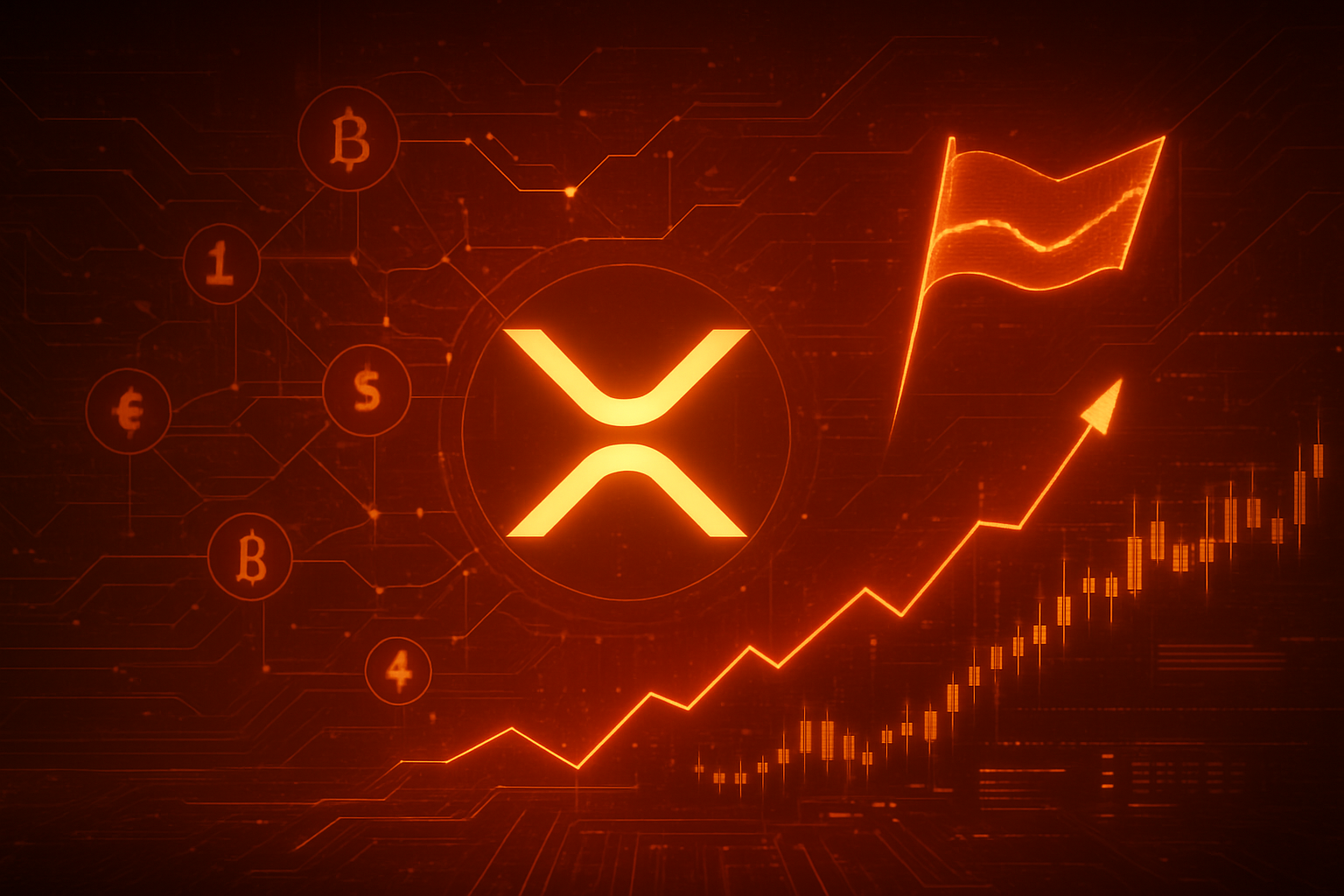
    Technically, XRP is forming a "bullish flag pattern," a continuation pattern typically observed during an uptrend. This pattern consists of a sharp upward price movement (the flagpole) followed by a period of consolidation in a tight range (the flag). Analysts, including Egrag Crypto and Ali Martinez, have identified this pattern, with some even pointing to a "decade-long bull flag" forming since 2015. The breakout above the flag's upper trendline, ideally with increased volume, signals a continuation of the prior uptrend.

    Current technical analysis highlights key support levels at $2.280, with a more significant line at $2.250 (near the 100-hour Simple Moving Average), and a crucial support zone around $2.10–$2.20. Resistance levels are being watched around $2.25–$2.42, with a strong close above $2.420 potentially paving the way for $2.48–$2.55 and broader resistance zones at $2.80–$3.00. A critical breakout level is identified at $2.94, with a daily close above this confirming a new leg higher.

    Historically, XRP has a precedent for significant rallies following bullish flag patterns. The 2017-2018 rally, which saw XRP surge to its all-time high of $3.5 in January 2018, was preceded by a major bull flag. More recently, XRP established a second flagpole after consolidating below $0.6 and then surged to $3.3 in January 2025. These historical precedents, coupled with the current pattern, lend credence to projections of a substantial upward surge, with many analysts forecasting a breakout towards $4.00-$4.50, and some even setting more ambitious targets of $5.60, $8, or even $15-$28, contingent on ETF approvals and sustained institutional inflows.

    Community and Ecosystem Response

    The XRP community is abuzz with a mix of cautious optimism and anticipation. On platforms like X (formerly Twitter) and Reddit, discussions frequently revolve around the token's remarkable resilience during the market downturn and the highly anticipated "bullish flag pattern." While some long-term holders express frustration over perceived stagnant price action despite positive corporate news from Ripple, the overarching sentiment is one of conviction in XRP's long-term potential, largely due to regulatory clarity and the impending launch of spot ETFs.

    Crypto influencers and thought leaders are largely amplifying this bullish sentiment. Analysts like Egrag Crypto and Ali Martinez have confidently shared their technical analyses, projecting significant price appreciation, with targets ranging from $10 to $50 based on various patterns and market symmetry. Maxwell Stein of BlackRock's (NYSE: BLK) digital assets team, speaking at Ripple's Swell 2025 conference, provided significant validation by stating that "the market is ready for large-scale blockchain adoption" and that Ripple's infrastructure could move trillions on-chain. This statement resonated deeply within the community, viewed as a major endorsement from a traditional finance giant.

    Nate Geraci, President of NovaDius Wealth Management, sees the imminent launch of XRP ETFs as a "major moment" for mainstream crypto investing, signaling an end to previous anti-crypto regulatory stances. Steven McClurg, CEO of Canary Capital, has expressed readiness to launch an XRP ETF in the coming week, projecting substantial institutional inflows of $5-10 billion in the first month. Ripple CEO Brad Garlinghouse continues to reaffirm the company's deep commitment to XRP, emphasizing its central role in Ripple's long-term plans for global payments.

    Broader community discussions also frequently touch upon the ISO 20022 global payments messaging standard, with the "coexistence period" ending around November 22, 2025. Many community members are observing XRP's historical performance in November, which has traditionally been its strongest month, fueling optimism for a potential rally. While "mega whales" have been accumulating XRP since mid-October, some short-term holders have shown increased outflows, reflecting diverse investment strategies.

    What's Next for Crypto

    XRP's current trajectory holds significant short and long-term implications for the broader crypto market. In the short term (next 3-6 months), approved XRP ETFs could unleash billions of dollars in institutional investment, significantly boosting liquidity and market capitalization, not just for XRP but potentially triggering a broader altcoin recovery. This could lead to selective regulatory optimism, as XRP's clarity may pressure regulators to provide similar frameworks for other utility tokens. However, market volatility around ETF approval dates is expected, characteristic of "buy the rumor, sell the news" events.

    Longer term (beyond 6-12 months), XRP's regulatory clarity sets a powerful precedent for other utility-focused digital assets, potentially fostering more favorable regulatory environments across the industry and attracting more traditional financial institutions. Its growing adoption through RippleNet and On-Demand Liquidity (ODL) could fundamentally disrupt traditional cross-border payment systems like SWIFT, making global transactions faster and cheaper. Increased institutional participation, driven by XRP's success, would signal a more mature and integrated crypto market, bridging the gap between traditional finance and decentralized innovation. This could lead to increased specialization within the crypto market, with different assets carving out niches based on their utility and regulatory standing.

    Potential catalysts to watch include the decisions on the seven pending U.S. spot XRP ETF applications, with high probabilities of approval by year-end 2025. Increased institutional adoption beyond ETFs, macroeconomic shifts like potential Federal Reserve interest rate cuts, and continued technological advancements on the XRP Ledger (XRPL), such as Real-World Asset (RWA) tokenization and DeFi integrations, are all critical drivers. The Ripple Swell 2025 conference is also a traditional event to monitor for major announcements.

    Strategic considerations for crypto projects involve embracing regulatory compliance, focusing on real-world utility, forging strategic partnerships with established financial institutions, and investing in ecosystem development. For investors, a long-term perspective, diversification, close monitoring of regulatory developments, and evaluating institutional engagement are paramount.

    Possible scenarios for XRP's future include:

    • Moderate/Base-Case (45-60% likelihood): XRP continues a gradual upward trajectory, driven by steady institutional use and anticipated ETF approvals. Price ranges from $2.90-$3.25 by late November 2025, potentially reaching $4.50 by year-end and $5-$8 by 2026.
    • Bullish (10-40% likelihood): Multiple major XRP spot ETFs are approved and launched by year-end 2025, coinciding with a strong Bitcoin bull run. XRP surges to $4.00-$5.50+ in the short term, with long-term potential of $10-$12, and extreme bull run predictions reaching $22.
    • Bearish (20-30% likelihood): Macroeconomic downturns, aggressive interest rate hikes, or unexpected delays/rejections for XRP ETFs trigger a broad crypto sell-off. XRP retreats towards $1.85-$2.20 in the short term, potentially slipping further to $1.20-$1.25 in a prolonged downturn.

    Bottom Line

    XRP's journey, particularly its recent resilience and the resolution of its prolonged legal battle with the SEC, marks a significant turning point for crypto investors and enthusiasts. The landmark decision classifying XRP as not a security when traded on secondary markets provides crucial regulatory clarity, removing a major impediment to institutional engagement and setting a precedent for other utility tokens.

    Key takeaways include XRP's proven ability to navigate legal hurdles, its deepening integration into traditional finance through cross-border payments (ODL processed over $1.3 trillion in Q2 2025) and Central Bank Digital Currency (CBDC) initiatives (collaborating with multiple central banks). Its relatively low correlation with Bitcoin and Ethereum also positions it as a strategic diversifier in institutional portfolios. The potential approval of spot XRP ETFs is widely anticipated to unlock billions in institutional capital, accelerating mainstream integration and confidence in digital assets.

    Final thoughts on crypto adoption suggest that XRP's focus on real-world use cases—efficient cross-border payments, facilitating CBDCs, and enabling institutional DeFi—positions it as a foundational component of the evolving global financial infrastructure. This utility-driven approach, now bolstered by regulatory certainty, is crucial for transitioning cryptocurrencies from speculative assets to indispensable tools in the global economy.

    Important dates, events, and metrics to monitor include:

    • XRP Spot ETF Approvals: Decisions are anticipated between October 18 and November 18, 2025, with high probabilities for Q4 2025 approval.
    • Ripple's (XRP) National Bank Charter Decision: October 19, 2025, was a critical date for this decision, which would further validate Ripple's position in traditional finance.
    • XRP Ledger (XRPL) Developments: Monitor the EVM sidechain and advancements in credit-based DeFi expected in 2025, along with the launch of XRPL V3.0.0 for Ripple's native lending protocol.
    • Ripple's RLUSD Stablecoin: Track the continued growth and adoption of this USD-pegged stablecoin, especially its pilot integration with Mastercard (NYSE: MA).
    • Partnerships and ODL Expansion: Watch for new partnership announcements and the expansion of Ripple's On-Demand Liquidity service globally.
    • Regulatory Environment: Although the SEC lawsuit is settled, ongoing global regulatory clarity and the development of clear frameworks for digital assets will remain crucial for XRP's sustained growth and broader acceptance.
    • Market Sentiment and Price Action: While XRP has shown short-term volatility, a cautious bullish sentiment prevails, with predictions for 2025 ranging from an average of $2.27-$2.80 to optimistic targets of $5 or more, contingent on ETF approvals and institutional interest. Key price levels to monitor include support at $2.05-$2.10 and resistance at $2.45-$2.50, $2.75, $3.00, and $3.50.
    • On-chain Metrics: Monitoring the Network Value to Transactions (NVT) ratio, Short-Term Holder Net Unrealized Profit/Loss (STH-NUPL) ratio, daily active addresses, and overall transaction volume on the XRPL can provide insights into network health and potential price movements.

    This article is for informational purposes only and does not constitute financial or investment advice. Cryptocurrency investments carry significant risk.

  • Bitcoin Defies Gravity: Brief Recovery to $103,000 Sparks Hope Amidst Extreme Fear

    Bitcoin Defies Gravity: Brief Recovery to $103,000 Sparks Hope Amidst Extreme Fear

    November 7, 2025 – In a dramatic turn of events, Bitcoin (BTC) briefly surged above the $103,000 mark earlier this week, specifically around November 5-6, 2025, providing a much-needed glimmer of hope after a period of significant market turbulence and substantial liquidations. This short-lived but impactful recovery saw the flagship cryptocurrency bounce back from a dip below the critical $100,000 threshold, reigniting discussions about market resilience and the potential for a bottom.

    The immediate market reaction was a complex mix of renewed confidence among high-leverage traders, who swiftly reopened positions, and a prevailing sentiment of "Extreme Fear" as indicated by the Fear & Greed Index. Despite the underlying apprehension, the rebound triggered a surge in trading volumes, initially driven by panic selling and opportunistic "buy the dip" strategies. This move is significant for the broader crypto ecosystem as it underscores Bitcoin's enduring appeal as a store of value and highlights the continued, albeit volatile, institutional interest in the asset, even amidst global economic uncertainties.

    Market Impact and Price Action

    Bitcoin's journey around the $103,000 level has been marked by intense volatility. The most recent recovery on November 5-6, 2025, followed a period of heavy losses that saw approximately $1.7 billion in long liquidations. Prior to this, Bitcoin had already made headlines by first breaching $100,000 in December 2024, reaching a historic high of $103,679, and again in May 2025, setting a new record at that time.

    The specific price movements during this recent rebound saw Bitcoin climb back above $103,000, fluctuating around $101,576 to $102,678 as of November 7, 2025. This rapid ascent from below $100,000 suggested to some analysts that the market might have found a temporary floor. Trading volumes initially spiked as investors reacted to the sharp decline and subsequent recovery, but liquidity subsequently thinned, particularly within decentralized finance (DeFi) protocols, as the sell-off intensified before the bounce.

    Technically, the $100,000 level has proven to be a psychological and structural support zone. Bitcoin's ability to quickly reclaim the $103,000 mark after falling below $100,000 suggests strong underlying demand, though the broader market remains sensitive to macroeconomic factors. This pattern of a sharp dip followed by a swift recovery has been observed in previous cycles, often signaling a period of consolidation before a potential upward trend, provided external conditions are favorable.

    Community and Ecosystem Response

    The crypto community's response to Bitcoin's brief recovery was a dichotomy of emotions. On one hand, the "Extreme Fear" sentiment, reflected by the Fear & Greed Index hitting a seven-month low, dominated broader discussions. Many retail investors and traders expressed anxiety over the recent downturn and the significant liquidations. However, beneath this fear, a subset of high-leverage traders demonstrated renewed confidence, quickly reopening positions and betting on a continued rebound, suggesting a belief that the worst might be over.

    Reactions from crypto influencers and thought leaders were mixed. While some cautiously celebrated Bitcoin's resilience, others warned against premature optimism, citing the thin liquidity and institutional outflows that preceded the bounce. The broader crypto Twitter and Reddit communities saw a surge in discussions, ranging from "buy the dip" calls to debates about the stability of the current market structure.

    The effects on related sectors were also notable. Decentralized finance (DeFi) protocols experienced thinning liquidity during the sell-off, indicating a flight of capital from riskier assets. While specific impacts on NFT projects and Web3 applications were less immediately pronounced, the overall market sentiment affects investor appetite across the entire digital asset spectrum. The recovery, however brief, provided a psychological boost that could help stabilize these interconnected ecosystems.

    What's Next for Crypto

    The recent bounce above $103,000 has significant short and long-term implications for the crypto market. In the short term, Bitcoin's ability to reclaim this level after a sharp correction reinforces its narrative as a resilient asset, potentially signaling a period of consolidation rather than a prolonged bear market. However, the prevailing "Extreme Fear" sentiment indicates that fragility remains, and further volatility cannot be ruled out.

    Several potential catalysts could influence Bitcoin's trajectory. The ongoing impact of pro-crypto policies, particularly those proposed by U.S. President Donald Trump (NYSE: DJT), including pledges to make the U.S. a "crypto capital" and create a "Strategic Bitcoin Reserve," continue to fuel long-term optimism. The sustained institutional demand, evidenced by record-breaking derivatives trading and the continued accessibility provided by U.S.-listed spot Bitcoin ETFs, is also a crucial factor. Furthermore, the long-term effects of the April 2024 halving event are still expected to play out, potentially driving scarcity and price appreciation.

    Strategic considerations for projects and investors involve navigating this volatile period with caution. Projects may focus on building robust fundamentals and community engagement, while investors might consider dollar-cost averaging and diversifying portfolios. Possible scenarios range from a continued choppy market with Bitcoin oscillating around the $100,000-$105,000 range, to a more sustained recovery towards predictions of $120,000-$150,000 by late 2025, especially if macroeconomic conditions improve and institutional adoption deepens.

    Bottom Line

    Bitcoin's brief but impactful recovery to $103,000 serves as a critical reminder of the cryptocurrency's inherent volatility and its remarkable resilience. For crypto investors and enthusiasts, the key takeaway is that while market sentiment can quickly shift to "Extreme Fear," Bitcoin has repeatedly demonstrated its capacity to rebound from significant corrections. This reinforces its growing narrative as "digital gold" and a viable store of value in an increasingly uncertain global economy.

    The long-term significance of this event lies in its contribution to validating Bitcoin's maturity and its increasing integration into traditional finance. The consistent push past $100,000, despite significant headwinds, signals that major institutional players are committed to the asset. This continued institutional interest, coupled with the potential for crypto-friendly regulatory environments, bodes well for crypto adoption in the years to come.

    Investors should closely monitor several important metrics, including institutional inflows into Spot Bitcoin ETFs, open interest in derivatives markets, and global macroeconomic indicators. Key dates include any further regulatory announcements from major economies and the ongoing development of Web3 infrastructure. While short-term fluctuations are inevitable, Bitcoin's ability to recover from recent challenges suggests a robust long-term outlook for the crypto market.


    This article is for informational purposes only and does not constitute financial or investment advice. Cryptocurrency investments carry significant risk.

  • Bitcoin’s Ascent Continues: Analysts Predicted 2-6 Month Path to New Highs, and the Data Delivered

    Bitcoin’s Ascent Continues: Analysts Predicted 2-6 Month Path to New Highs, and the Data Delivered

    In late 2024 and early 2025, the cryptocurrency world buzzed with optimistic forecasts regarding Bitcoin's (BTC) trajectory. A consensus emerged among leading analysts and financial institutions: Bitcoin was poised to achieve new all-time highs within a 2 to 6-month window, or by mid-to-late 2025. These predictions, largely fueled by the dual catalysts of the Bitcoin halving event and the groundbreaking success of U.S. spot Bitcoin Exchange-Traded Funds (ETFs), have largely materialized. As of November 7, 2025, Bitcoin has not only surpassed its previous peaks but has demonstrated robust growth, validating much of the earlier market sentiment.

    The immediate market reaction to these forecasts and the underlying fundamental shifts was overwhelmingly bullish, marked by significant capital inflows and soaring investor confidence. This period represented a pivotal moment for the crypto ecosystem, signaling a new era of institutional acceptance and mainstream integration for the flagship digital asset. The materialization of these predictions underscores the increasing maturity of the Bitcoin market and its growing responsiveness to fundamental supply-demand dynamics and institutional interest.

    Market Impact and Price Action

    The period from late 2024 through early November 2025 has been a testament to Bitcoin's evolving market dynamics, marked by both exhilarating surges to new all-time highs and significant, albeit expected, corrections. The predictions of a 2-6 month path to unprecedented values largely materialized, with Bitcoin surging past its previous all-time high of approximately $69,000 in late 2024. By November 2024, BTC exceeded $93,000, and by December of the same year, it had decisively breached the $100,000 psychological barrier. This upward momentum culminated in a historic peak of over $126,270 on October 6, 2025.

    This remarkable price action was underpinned by a dramatic increase in trading volume and liquidity, predominantly driven by institutional adoption. The approval of spot Bitcoin ETFs in January 2024 proved to be a game-changer, funneling unprecedented capital into the asset. Cumulative inflows into these ETFs soared, surpassing $28 billion and by the fourth quarter of 2025, reaching a staggering $149.96 billion. This influx not only provided robust demand but also significantly reduced the available supply of Bitcoin on exchanges, creating a powerful supply-demand imbalance. Over-the-counter (OTC) trading volumes also witnessed a more than 200% increase in 2024, further indicating strong institutional engagement.

    Technically, the market displayed strong bullish signals throughout late 2024 and much of 2025. The Relative Strength Index (RSI) frequently indicated strong buying momentum, and Bitcoin's price consistently traded above key moving averages. Fidelity Digital Assets identified distinct "Appreciation" and "Acceleration" phases, characterized by low volatility and high profitability, followed by increased volatility and continued gains. However, the market has not been without its challenges. Late October and early November 2025 saw a notable correction, with Bitcoin's price dipping below $100,000 and registering a 22% decline from its early October peak. This downturn was accompanied by net outflows of $986 million from ETFs since October 27, 2025, marking the first time in seven months that institutional net buying dropped below the daily mined Bitcoin supply.

    Comparing this cycle to past events reveals both continuities and significant deviations. While the April 2024 halving, which reduced mining rewards to 3.125 BTC, historically precedes bull runs, its immediate impact was less explosive than in previous cycles, partly due to a weaker supply shock and stronger macroeconomic influences. Crucially, Bitcoin broke its previous all-time high before the 2024 halving, a departure from prior cycles. The institutionalization via ETFs has introduced a new dynamic, making the current cycle more responsive to traditional financial markets and macroeconomic trends. Recent market fluctuations, for instance, have been influenced by global economic uncertainties and central bank policies, highlighting Bitcoin's increasing integration into the broader financial system rather than operating in isolation.

    Community and Ecosystem Response

    The rollercoaster ride of Bitcoin's price from late 2024 to early November 2025 profoundly shaped sentiment across social media, influenced key crypto thought leaders, and rippled through the broader Web3 ecosystem. As Bitcoin surged past the $100,000 mark in December 2024 and achieved a new all-time high exceeding $125,000 in early October 2025, the community's response oscillated between euphoria and cautious re-evaluation.

    Social media platforms, particularly X (formerly Twitter) and Reddit, became barometers of market sentiment. When Bitcoin reached its peaks, discussions were dominated by "fear of missing out" (FOMO), with a significant spike in social dominance for Bitcoin, as noted by sentiment analysis platforms. This surge in retail interest often signaled potential local tops, leading some analysts to advise patience until the "euphoria cooled down." Conversely, during the corrections, such as the dip below $100,000 in early November 2025, sentiment shifted to "fear" among retail traders. While some expressed anxiety about further declines, a strong undercurrent of long-term bullishness persisted, with many viewing corrections as opportune moments to "buy the dip."

    Crypto influencers largely maintained a bullish outlook, though with varying degrees of immediate caution. Prominent figures like venture capitalist Tim Draper continued to champion Bitcoin's long-term potential, while Michael Saylor (MicroStrategy – NASDAQ: MSTR) demonstrated unwavering conviction, notably acquiring an additional $45.6 million worth of BTC amidst recent market sell pressure. However, some, like Charles Edwards of Capriole Investments, highlighted "concerning metrics," such as institutional buying temporarily dropping below the daily mined Bitcoin supply in November 2025, suggesting potential market exhaustion.

    Beyond price discussions, Bitcoin's performance had a tangible impact on related sectors. The Decentralized Finance (DeFi) space witnessed the emergence of "Bitcoin Finance" or BTC-Fi, characterized by a significant increase in Total Value Locked (TVL) as Bitcoin holders sought yield opportunities. The amount of BTC deployed in DeFi protocols surged by approximately 2,700% year-on-year by mid-2025, indicating growing interest in Bitcoin-based staking and lending services. The NFT market also experienced a resurgence, with renewed optimism translating into increased floor prices for "blue-chip" collections and a strong focus on Bitcoin-native Ordinals, which gained considerable traction throughout 2025. Furthermore, the overall Web3 ecosystem, encompassing GameFi, SocialFi, and AI-powered applications, benefited from the heightened market capitalization and increased investor confidence, with expectations of broader mass adoption fueled by a more crypto-friendly regulatory environment.

    What's Next for Crypto

    As Bitcoin navigates the final quarter of 2025, the crypto market stands at a critical juncture, poised between short-term macroeconomic headwinds and robust long-term growth prospects. The journey from late 2024, which saw Bitcoin surge past $108,000 by mid-December, to its all-time high near $125,000 in October 2025, has demonstrated both the asset's immense potential and its inherent volatility. Currently, as of early November 2025, Bitcoin is consolidating around $101,000 to $104,706 after a recent correction, prompting a re-evaluation of its immediate trajectory while reinforcing its long-term appeal.

    In the short term, the market faces potential pressures from lingering macroeconomic uncertainties, including the ongoing U.S. government shutdown, which could dampen liquidity and risk appetite. Traditional year-end tax-loss selling might also introduce some downward pressure. However, historically, November has been a strong month for Bitcoin, and a swift resolution to the government shutdown could provide an immediate bullish catalyst. The residual effects of the April 2024 Bitcoin halving are also expected to continue influencing market sentiment positively through at least April 2026, suggesting underlying support for price appreciation.

    Looking further ahead, the long-term implications for Bitcoin and the broader crypto market remain overwhelmingly positive. The market is projected to mature significantly, characterized by deeper institutional integration and a stronger focus on fundamental utility, robust governance, and stringent regulatory compliance. This maturation process is expected to enhance opportunities for portfolio diversification and yield generation, cementing Bitcoin's role as a strategic asset and a potential hedge against inflation. Several powerful catalysts are anticipated to drive this growth, including the continued success of spot Bitcoin ETFs, which have already paved the way for other crypto-based investment products, and the increasing clarity in regulatory frameworks, such as the proposed GENIUS Act, which aims to classify mature blockchains like Bitcoin and Ethereum as commodities.

    Moreover, a more crypto-friendly political environment, particularly in the U.S., is expected to foster further adoption. Technological advancements in Decentralized Finance (DeFi), Web3 applications, and the burgeoning tokenization of real-world assets (RWAs), alongside the development of Bitcoin Layer-2 solutions, will continue to expand utility and attract investment. Strategic considerations for investors include thorough due diligence, robust risk management, and portfolio diversification, with Bitcoin increasingly viewed as a core holding. Many experts remain highly optimistic, with JPMorgan (NYSE: JPM) analysts, for instance, forecasting Bitcoin could climb to $170,000 within the next six to twelve months from November 2025. Other institutions, like Standard Chartered (LSE: STAN), maintain an even higher target of $200,000 by year-end 2025, underscoring the widespread belief that Bitcoin's journey to new, significant highs is far from over.

    Bottom Line

    The period spanning late 2024 to early November 2025 has marked a pivotal era for Bitcoin and the broader cryptocurrency market, characterized by unprecedented institutional adoption, significant regulatory advancements, and shifting macroeconomic influences. These developments have reshaped Bitcoin's "bottom line" from a speculative asset to an increasingly legitimate and integral component of global finance.

    Key takeaways for crypto investors include the undeniable trend of institutional integration, with spot Bitcoin ETFs driving massive capital inflows and validating Bitcoin's role in diversified portfolios. Regulatory clarity, epitomized by the U.S. GENIUS Act for stablecoins and Europe's MiCA regulation, is unlocking new institutional capital and fostering confidence. Bitcoin is increasingly recognized as a macroeconomic hedge against inflation and currency debasement. While volatility remains inherent, strategic investment approaches emphasizing diversification, long-term holding, and risk management are crucial.

    The long-term significance of Bitcoin's price action for crypto adoption cannot be overstated. Its consistent performance to new all-time highs, supported by institutional demand, has solidified its mainstream legitimacy and paved the way for broader crypto acceptance. This includes democratized access through ETFs for retail investors, enhanced real-world utility via stablecoins for payments, and even discussions about Bitcoin's potential as a sovereign reserve asset.

    To effectively navigate Bitcoin's future, investors should closely monitor several critical factors. Regulatory developments in the U.S. (e.g., CLARITY Act, GENIUS Act implementation) and globally (e.g., MiCA in EU, UK regulations, Basel Committee standards by January 2026) will continue to shape the market. Macroeconomic factors, such as Federal Reserve interest rate decisions, global liquidity, and inflation trends, will exert significant influence. Key on-chain and market metrics like Bitcoin Dominance, ETF inflows, Long-Term Holder (LTH) supply, network activity, hash rate, and Total Value Locked (TVL) in DeFi will provide vital insights into market health and sentiment. Finally, major industry events and conferences throughout 2025 and 2026 often feature critical announcements and gauge industry momentum.


    This article is for informational purposes only and does not constitute financial or investment advice. Cryptocurrency investments carry significant risk.

  • Bitcoin’s $100K Tango: A New Normal or a Pre-Halving Pause?

    Bitcoin’s $100K Tango: A New Normal or a Pre-Halving Pause?

    November 7, 2025 – Bitcoin (BTC) is currently navigating a pivotal phase, hovering around the $100,000 mark after a significant surge that saw it reach an all-time high of over $126,270 on October 6, 2025. This recent price action, characterized by a struggle to maintain the six-figure threshold and periods of sideways trading, has sparked intense debate within the crypto community: does this signal a new era of stability for Bitcoin at elevated valuations, or is it merely a strategic consolidation before its next major move?

    The immediate market reaction to Bitcoin's recent dip below $100,000, hitting lows near $98,700 in early November, has been a mix of retail fear and institutional accumulation. While the Crypto Fear & Greed Index has plunged to "extreme fear" levels, large Bitcoin holders, or "whales," have been observed buying the dip, adding significant amounts of BTC. This divergence in sentiment underscores the critical nature of the current market environment and its profound implications for the broader cryptocurrency ecosystem.

    Market Impact and Price Action

    Since early November 2025, Bitcoin's price action around $100,000 has been a rollercoaster, marked by a notable decline from its October peak and a struggle to reclaim and sustain the six-figure level. After touching an all-time high of $126,270, Bitcoin shed nearly 15% in two weeks, falling below $100,000 for the first time since June 2025. As of November 7, 2025, BTC hovers around $102,200, but its inability to decisively reclaim $103,000 suggests persistent bearish pressure. This period of consolidation follows a substantial sell-off, with the asset fluctuating between $95,000 and $115,000 for several months, making the recent breach of $100,000 a critical shift.

    Trading volume saw a significant surge as prices broke down around November 3rd and 4th, indicating genuine selling pressure. However, subsequent minor rebounds have been accompanied by low trading volume, suggesting these recoveries may be short-lived. Spot market activity has generally weakened over the past month, with the Cumulative Volume Delta (CVD) Bias trending downwards across major exchanges, highlighting sustained net selling and a lack of aggressive buying. This contrasts sharply with earlier periods of high demand.

    Liquidity has also experienced significant shifts. An extended series of equal lows below $100,000 suggests that this liquidity has likely been "harvested," purging excessive leverage from the system. Macroeconomic tightening, including hawkish Federal Reserve signals and fewer anticipated rate cuts, has drained liquidity from the crypto market. Funding rates on Bitcoin futures have fallen, and open interest has dropped from $26 billion to $24.6 billion in a week, with over $1 billion in leveraged long positions liquidated during the early November sell-off. Additionally, the Coinbase (NASDAQ: COIN) Premium index dropped to a seven-month low, signaling reduced demand in the U.S. and significant outflows from U.S. spot Bitcoin ETFs, totaling over $2 billion in the days leading up to November 7th.

    The $100,000 level itself has transitioned from a strong psychological support to a formidable resistance zone. Immediate support levels are now identified around $99,000 to $100,000, with a critical point at $99,500 (the 50% Fibonacci retracement). A failure to hold this could see Bitcoin slide to $93,600 or even $86,000. Conversely, reclaiming $100,000-$102,000 is crucial, with significant resistance at $106K-$108K and $110K. The 365-day Moving Average, historically a strong support at $102,000, has been breached, and Bitcoin is currently trading below its 50-day and 200-day moving averages, typically signaling sustained downtrends. This current market behavior draws comparisons to past mid-cycle slowdowns and prolonged periods of stagnation, where low volatility often precedes significant price movements.

    Community and Ecosystem Response

    Bitcoin's sideways trading around $100,000 has created a turbulent but dynamic environment, eliciting a complex response across the crypto community and ecosystem. Social media platforms, particularly X (formerly Twitter) and Reddit, are abuzz with discussions reflecting a blend of fear, anxiety, and unwavering long-term conviction. The Crypto Fear & Greed Index has plunged to "extreme fear" levels, with many traders expressing "max pain" due to liquidations. However, a significant portion of the community, especially on Reddit, maintains a "HODL" mentality, viewing dips as typical Bitcoin volatility and potential buying opportunities. This period is often described as "The Great Shakeout of 2025," testing conviction and flushing out over-leveraged positions.

    Crypto influencers and thought leaders present a divided front. Staunch long-term bullish figures like Michael Saylor of MicroStrategy (NASDAQ: MSTR) and Anthony Pompliano are likely to reiterate Bitcoin's role as a superior store of value, viewing corrections as temporary. They point to continued institutional accumulation, with MicroStrategy recently acquiring more BTC. Conversely, some prominent analysts, such as Merlijn The Trader, have issued stark warnings, suggesting a potential start to a prolonged bear market, echoing historical technical signals. Analysts like Altcoin Sherpa predict a drop to "low $90ks minimum" if the $100,000 support fails definitively.

    The effects on related DeFi protocols, NFT projects, and Web3 applications have been tangible. Bitcoin's price uncertainty has led to a decline in Total Value Locked (TVL) within DeFi, with investors withdrawing liquidity or facing liquidations. "Contagion fears" are spreading, exacerbated by reports of bad debt exposure in lending markets. The NFT market is experiencing decreased trading volumes and lower floor prices, reflecting a "risk-off" environment. However, amidst the caution, there's significant interest and investment flowing into Bitcoin Layer-2 solutions, such as "Bitcoin Hyper" (HYPER), aiming to integrate Solana-level speed and smart contract capabilities directly with Bitcoin. While altcoins have generally followed Bitcoin's decline, some, like Zcash (ZEC) and Internet Computer (ICP), are showing early signs of activity, hinting at a potential rotation into smaller assets if Bitcoin stabilizes.

    What's Next for Crypto

    The crypto market is at a critical juncture in November 2025, with Bitcoin's $100,000 tango setting the stage for significant short and long-term implications. In the short term (late 2025 – early 2026), the market is expected to remain defensive but not broken. Bitcoin's dip below $100,000 serves as a "crucial stress test" for DeFi and Web3, leading to widespread liquidations. While some warn of a potential plunge to $56,000 if $100,000 fails, on-chain data suggests this is a healthy adjustment rather than panic. Altcoins are generally lagging, with a "Bitcoin Season" dynamic prevailing, where capital concentrates in BTC. Macroeconomic factors, such as the resolution of the US government shutdown and upcoming Federal Open Market Committee (FOMC) decisions on interest rates, will be immediate catalysts. Technically, Bitcoin struggles below its 100-day and 200-day moving averages, with key support at $97,500-$99,000.

    Looking long-term (2026 and beyond), the outlook remains fundamentally optimistic, driven by institutional embrace and increasing mainstream appeal. Institutional participation has reached new heights in 2025, with Spot Bitcoin ETFs and expanded regulatory clarity significantly broadening the investor base. Seventy-five percent of financial institutions anticipate needing to progress their digital asset activity within the next two years. Regulatory clarity, particularly in the US with potential legislation like the CLARITY Act and GENIUS Act, and the EU's Markets in Crypto-Assets (MiCA) regulation, is expected to accelerate institutional adoption and unlock significant capital inflows.

    Technological advancements in blockchain scalability, security, and real-world utility, coupled with the integration of AI, are expected to drive long-term value. Asset tokenization, involving the use of blockchain to record ownership of digital, financial, or real-world assets, is receiving significant interest from financial institutions and is expected to expand, redefining asset management. Stablecoins are increasingly recognized as a quality source of liquid collateral and are being widely adopted for payment and treasury operations, rivaling traditional payment systems. The total crypto market cap crossed the $4 trillion threshold in 2025, indicating broad progress and market maturation.

    Potential catalysts to watch include further regulatory clarity, the approval of Spot ETFs for altcoins like Solana (SOL) and Ripple (XRP), the expansion of Real-World Asset (RWA) tokenization, and potential interest rate cuts by central banks, which could create a "risk-on" environment. The convergence of AI and blockchain technology is also expected to spark new narratives. For projects, the focus should be on utility, innovation, and regulatory compliance. Investors should prioritize thorough due diligence, diversification, strategic profit-taking, and monitoring key metrics like ETF inflows, miner selling activity, and macroeconomic indicators. Possible scenarios range from a gradual recovery and continued growth (high likelihood), to prolonged stagnation (medium likelihood), or a deeper significant downturn (low-medium likelihood), with some analysts challenging the traditional halving cycle, suggesting an extended bull cycle into 2026 is also a possibility.

    Bottom Line

    Bitcoin's current dance around the $100,000 mark, characterized by volatility and consolidation, serves as a critical stress test for the entire crypto ecosystem. For investors and enthusiasts, the key takeaway is a nuanced market sentiment: cautious in the short term due to profit-taking and macroeconomic pressures, yet underpinned by a strong conviction in Bitcoin's long-term value. The $100,000 level has emerged as a pivotal psychological and technical battleground, with dips often met by buying interest, albeit with weak rebounds. This period of sideways action, or rather, the struggle to maintain a six-figure valuation, could pave the way for altcoin momentum if Bitcoin stabilizes.

    The long-term significance of this price action is profound. It solidifies Bitcoin's maturity as a significant asset class, establishing a new baseline for institutional portfolio allocations. Despite recent outflows from ETFs, institutional interest remains a fundamental driver. This current phase, even if corrective, is viewed by many as a healthy reset, clearing out speculative leverage and setting the stage for future growth, potentially pushing Bitcoin towards $1 million in a "fast and violent" rally, with a peak perhaps in 2026. This reinforces its "digital gold" narrative and its role as an inflation hedge.

    For broader crypto adoption, Bitcoin's ability to contend with a six-figure valuation, even with corrections, demonstrates the market's resilience and growing mainstream appeal. This visibility, coupled with the continued approval of spot Bitcoin ETFs and evolving regulatory frameworks, creates more accessible and regulated on-ramps for traditional investors. The increasing integration of Bitcoin into corporate treasuries and crypto payment systems further cements its role in a broader financial ecosystem.

    Investors should closely monitor several key metrics and events. Price levels, particularly Bitcoin's ability to reclaim and sustain above $100,000-$102,000, and downside support at $99,000, $95,000, and potentially lower, are crucial. Tracking ETF inflows and outflows, miner selling activity, and overall trading volumes will provide insights into market dynamics. Macroeconomic factors, especially Federal Reserve monetary policy decisions regarding interest rates and the resolution of the US government shutdown, will significantly influence market liquidity and risk appetite. Key dates include late 2025 for a potential bull market peak, October 2026 for a possible bear market bottom, and the December FOMC meeting. The planned launch of crypto trading by Charles Schwab (NYSE: SCHW) in Q1 2026 could also introduce significant new institutional capital.


    This article is for informational purposes only and does not constitute financial or investment advice. Cryptocurrency investments carry significant risk.