
Tag: Crypto Analysis

  • Crypto Analysts Eye October 2026 for Bitcoin Bear Market Bottom, Signaling Strategic Accumulation Phase

    Crypto Analysts Eye October 2026 for Bitcoin Bear Market Bottom, Signaling Strategic Accumulation Phase

    November 5, 2025 – As the cryptocurrency market navigates its inherent volatility, prominent analysts are already looking ahead, with a significant focus on October 2026 as a potential inflection point for Bitcoin (BTC). Leading this long-term foresight is Benjamin Cowen, founder of Into The Cryptoverse, whose cyclical analysis suggests that the latter half of 2026 could mark the bottom of the next bear market, presenting a crucial accumulation opportunity for investors.

    Cowen's detailed projections, based on historical market cycles and quantitative metrics, anticipate a market peak in late 2025, naturally followed by a corrective bear market throughout 2026. This forward-looking analysis is resonating across the crypto community, prompting discussions about strategic positioning and risk management well in advance. For the broader crypto ecosystem, these long-term predictions underscore the cyclical nature of digital assets and emphasize the importance of a disciplined, data-driven approach to investment in a rapidly evolving landscape.

    Market Impact and Price Action

    While October 2026 is still a year away from the current date of November 5, 2025, the anticipation of a bear market bottom in that timeframe already influences long-term investor sentiment and strategic planning. Cowen's methodology, rooted in Bitcoin's historical four-year cycles, suggests that 2026 will be a "midterm year" characterized by a significant downturn, similar to 2014, 2018, and 2022. This implies that after a potential bull market peak in late 2025, Bitcoin's price action throughout 2026 could see a substantial retracement from its all-time highs.

    During such a predicted bear market, trading volumes typically decrease, and liquidity can become thinner, leading to more volatile price swings. Technical analysis, according to Cowen, would likely show Bitcoin trading below its Bull Market Support Band (the 20-week SMA and 21-week EMA), a key indicator he uses to signal the end of a bull cycle. Key support levels established during previous cycles would be retested, and a definitive bottom would likely be characterized by a prolonged period of consolidation at lower price points. Historically, bear market bottoms have been periods of capitulation, followed by gradual accumulation before the next bull run.

    Furthermore, Cowen's analysis points to the concept of "diminishing returns," where each successive cycle yields smaller percentage gains from low to high. This suggests that while the market will recover, the parabolic rallies of earlier cycles might be less pronounced. Investors are advised to monitor Bitcoin dominance during this period, as it typically rises during bear markets when capital flows from altcoins back into Bitcoin for perceived safety, indicating altcoins will likely underperform significantly against BTC.

    Community and Ecosystem Response

    The crypto community, always abuzz with market predictions, views long-term forecasts like Cowen's with a mix of anticipation and caution. On platforms like Crypto Twitter and Reddit, discussions around a "2026 bottom" are already shaping investment theses, particularly among those who adhere to cyclical market theories. Influencers and thought leaders often amplify such analyses, leading to widespread debate on the validity of historical patterns in an increasingly complex and regulated market. While some embrace the idea of a predictable cycle, others argue that new macroeconomic factors, institutional adoption, and regulatory changes could disrupt traditional patterns.

    Reactions from the broader ecosystem tend to be strategic. DeFi protocols and Web3 applications, while not directly tied to Bitcoin's price action in the short term, are sensitive to overall market sentiment. A prolonged bear market, as predicted for 2026, could lead to reduced liquidity, lower user engagement, and a "building phase" where projects focus on development rather than aggressive growth. NFT projects, often more speculative, could see further price corrections and a flight to quality, with only the most robust and innovative collections retaining value. Social media sentiment during such a period typically shifts from "moonboy" enthusiasm to more pragmatic discussions about fundamentals, technology, and long-term value propositions. The overarching sentiment would likely be one of "survival of the fittest" for projects and a focus on capital preservation for investors.

    What's Next for Crypto

    Looking towards October 2026, the short-term implications involve preparing for the potential market peak in late 2025 and the subsequent downturn. For investors, this means considering profit-taking strategies during the bull run and accumulating stablecoins or traditional assets to preserve liquidity. The long-term implications, however, are more profound: a confirmed bear market bottom in 2026 would reset the cycle, laying the groundwork for the next major bull run. This period would be characterized by strategic accumulation, giving patient investors an opportunity to acquire assets at potentially discounted prices.

    Potential catalysts and developments to watch include the ongoing evolution of regulatory frameworks globally, which could provide clearer guidelines and attract more institutional capital, potentially influencing the severity and duration of bear markets. Technological advancements in scalability, security, and interoperability across various blockchain networks will also play a crucial role in driving the next wave of adoption. Strategic considerations for projects involve focusing on product development, user experience, and sustainable tokenomics, rather than relying on speculative pumps. Investors might consider dollar-cost averaging (DCA) into Bitcoin and high-conviction altcoins throughout 2026. Possible scenarios include a "soft landing" bear market where prices correct but don't capitulate violently, or a more traditional "crypto winter" with significant price depreciation. The likelihood of a traditional bear market remains high given historical precedent, but increasing institutional involvement could temper extreme volatility.

    Bottom Line

    The predictions surrounding a Bitcoin bear market bottom in October 2026, heavily influenced by analysts like Benjamin Cowen, offer a critical long-term perspective for crypto investors and enthusiasts. The key takeaway is the importance of understanding Bitcoin's cyclical nature and preparing for both the peaks and troughs. This means developing a disciplined investment strategy, avoiding excessive leverage, and prioritizing capital preservation during periods of market euphoria. The anticipated bear market of 2026 is not merely a period of decline but a strategic window for accumulation, where patient investors can position themselves for the subsequent bull run.

    The long-term significance of such a cycle bottom lies in its role as a reset mechanism, flushing out speculative excesses and allowing fundamental value to reassert itself. For crypto adoption, a healthy market cycle, including bear phases, demonstrates resilience and maturity, potentially attracting more mainstream interest in the long run. Important metrics to monitor include Bitcoin's price action relative to its Bull Market Support Band, Bitcoin dominance, and on-chain metrics like the MVRV Z-Score or Puell Multiple, which can signal undervalued periods. Investors should also pay close attention to global macroeconomic indicators and regulatory developments. While specific dates are always subject to change, the overarching theme of 2026 as a potential accumulation year remains a central focus for strategic crypto participants.


    This article is for informational purposes only and does not constitute financial or investment advice. Cryptocurrency investments carry significant risk.
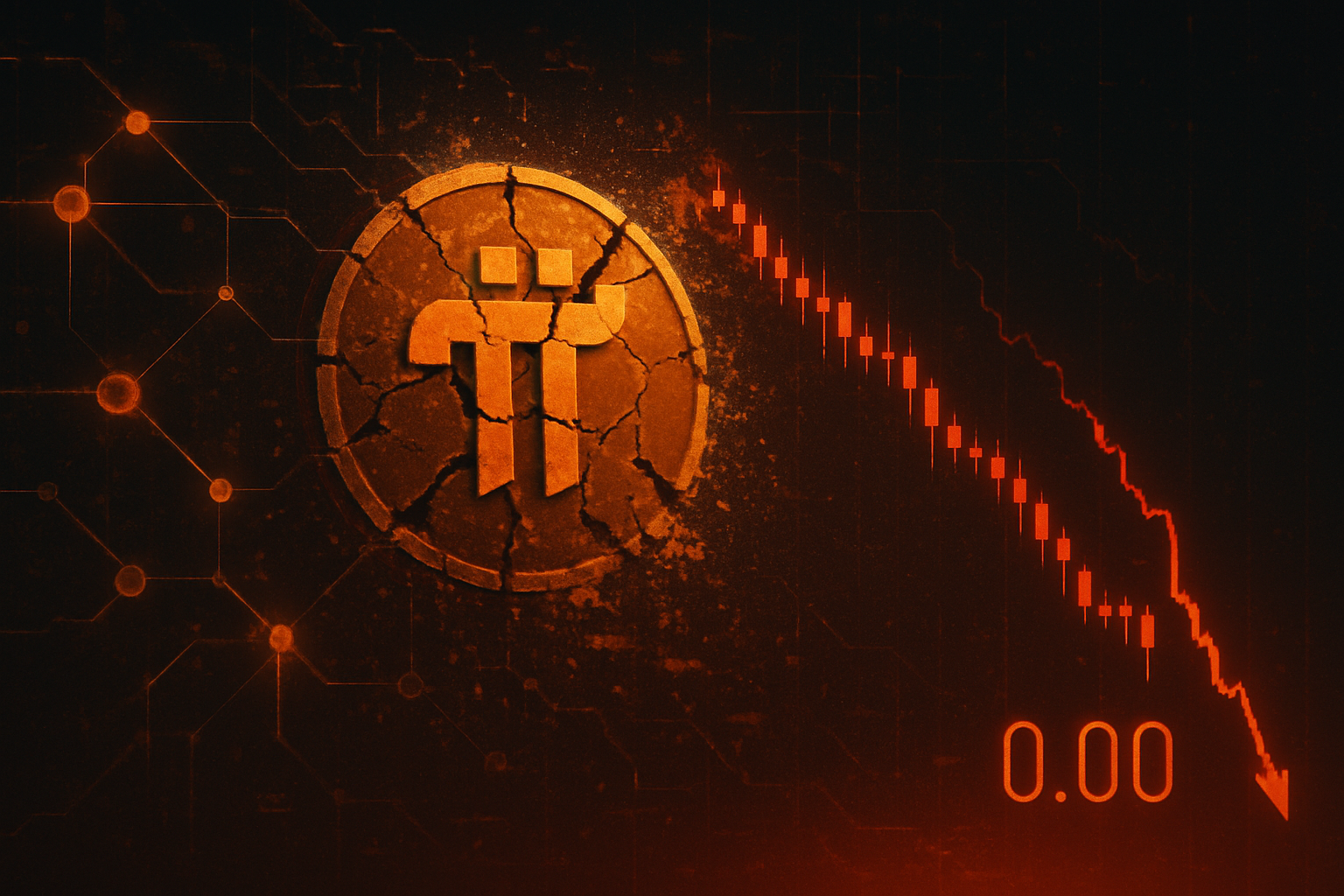

  • Pi Coin’s Looming Crisis: Analysts Predict Collapse to $0 by 2026 Amidst Utility, Regulatory, and Tokenomic Woes

    Pi Coin’s Looming Crisis: Analysts Predict Collapse to $0 by 2026 Amidst Utility, Regulatory, and Tokenomic Woes

    The cryptocurrency world is abuzz with a dire prediction concerning Pi Coin, the digital currency associated with the Pi Network. A growing chorus of crypto analysts and market observers foresee a potential collapse of Pi Coin's value to $0 by 2026. This stark bearish outlook, emerging in late 2025, stems from a confluence of critical issues including a problematic mainnet launch, a perceived lack of real-world utility, escalating regulatory hurdles, and an inflationary tokenomics model that continues to flood the market with supply. The implications of such a collapse extend beyond Pi Network's user base, potentially casting a shadow on other nascent blockchain projects struggling with similar foundational challenges.

    The prediction, while still a year away from its projected outcome, highlights significant structural weaknesses that have plagued the project since its highly anticipated transition to an open, tradeable mainnet in early 2025. The initial euphoria surrounding the mainnet launch quickly dissipated, giving way to a sustained period of decline and disillusionment among its vast, yet increasingly frustrated, community. This scenario underscores the importance of tangible utility, robust infrastructure, and transparent governance in the fiercely competitive and rapidly evolving crypto ecosystem.

    Market Impact and Price Action

    The journey of Pi Coin since its mainnet launch in February 2025 has been a cautionary tale of volatility and decline. Following its listing on select exchanges like Bitget, OKX, Gate.io, and MEXC, Pi Coin experienced a fleeting surge, briefly touching nearly $3. However, this peak was short-lived, with the price plummeting to approximately $0.65 by April 2025 and hovering around $0.50-$0.60 by mid-2025. As of October 2025, its value has further eroded to a range of $0.26-$0.35, representing a staggering 90% decrease from its all-time high. This dramatic downturn is a primary driver behind the $0 prediction for 2026.

    Trading volumes and liquidity for Pi Coin remain alarmingly thin, largely due to its limited listings on major, tier-one exchanges such as Binance. The rigorous assessment processes of these platforms have kept Pi Coin at bay, contributing to an unstable market where even relatively small trades can trigger significant price swings. Technical analysis reveals a consistent pattern of lower highs and lower lows, with key support levels repeatedly breached, indicating a strong bearish momentum. The current price range of $0.26-$0.35 now acts as a critical resistance, with little identifiable support below, making the path to $0 a distinct possibility should selling pressure continue.

    A significant factor contributing to this market instability is the highly concentrated ownership of Pi Coin. Reports indicate that the top 100 Pi Coin wallets control approximately 96% of the total supply. This extreme concentration not only exacerbates liquidity issues but also raises concerns about potential market manipulation and the ability of a few large holders to dictate price movements, creating an environment ripe for further collapse. This situation draws parallels to other speculative assets that have seen rapid rises and falls due to concentrated ownership and a lack of genuine market depth.

    Community and Ecosystem Response

    The Pi Network boasts an enormous user base, estimated to be over 60 million individuals globally. However, the community's response to the post-mainnet developments has been largely characterized by frustration and disappointment. A major bottleneck has been the Know Your Customer (KYC) verification process, with only about 14 million users reportedly completing it and migrating their tokens in time to access or sell them. This has left a vast majority of users unable to realize the value of their mined coins, fueling widespread discontent across social media platforms like X (formerly Twitter) and Reddit.

    Crypto influencers and thought leaders have largely adopted a skeptical, if not outright critical, stance on Pi Coin. Many point to the project's slow development, perceived lack of innovation, and the absence of compelling decentralized applications (dApps) as fundamental flaws. While the Pi Network claims a growing ecosystem of apps and merchant adoption in various countries, critics argue that the existing Pi Browser and Wallet offer only basic functionalities, failing to provide the robust utility needed to sustain a large-scale cryptocurrency. The narrative on broader crypto Twitter and Reddit often oscillates between fervent belief from dedicated 'Pioneers' and harsh criticism from external observers who label it as an 'hype-driven' project lacking substance.

    The limited practical utility of Pi Coin has also prevented any significant integration with related DeFi protocols or NFT projects. Without a strong foundation of dApps that leverage the token for specific functions, the Pi ecosystem remains largely isolated from the broader Web3 landscape. This insular nature further contributes to the bearish outlook, as external demand drivers are virtually non-existent, leaving the token's value reliant almost solely on speculative interest and the dwindling hope of its massive user base.

    What's Next for Crypto

    The predictions surrounding Pi Coin serve as a critical reminder for the broader crypto market about the importance of utility, regulatory compliance, and sound tokenomics. In the short term, continued selling pressure from newly KYC'd users and ongoing token unlocks could further accelerate Pi Coin's decline. The absence of major exchange listings and a clear roadmap for significant dApp development are likely to keep institutional and even retail investor interest at bay, maintaining its status as a highly speculative asset.

    Long-term implications for the crypto market, particularly for projects that rely heavily on community growth and mobile mining without immediate utility, are significant. Pi Coin's potential collapse could reinforce the market's preference for projects with proven technology, clear use cases, and transparent development. Potential catalysts that could alter Pi Coin's trajectory include a sudden and substantial integration with a widely adopted dApp, a listing on a top-tier exchange, or a comprehensive overhaul of its tokenomics to introduce scarcity or burning mechanisms. However, the likelihood of these developments occurring in time to avert the predicted collapse appears slim, given the project's historical pace.

    For investors and projects alike, strategic considerations must revolve around due diligence and fundamental analysis. Projects need to prioritize tangible value creation over user acquisition numbers alone, while investors must scrutinize whitepapers for sustainable tokenomics and realistic roadmaps. Possible scenarios range from a gradual bleed to $0 as predicted, to a more drawn-out existence as a low-value, niche token, or, less likely, a sudden revival driven by unforeseen developments. The former two scenarios appear far more probable given the current trajectory and existing challenges.

    Bottom Line

    The looming prediction of Pi Coin's price collapsing to $0 by 2026 presents a stark warning for crypto investors and enthusiasts. The core takeaways are clear: a massive user base alone does not guarantee success without corresponding utility, robust infrastructure, and market accessibility. The project's struggles with KYC, limited exchange listings, and a lack of compelling dApps have severely hampered its ability to establish a sustainable value proposition in the competitive crypto landscape.

    The long-term significance of Pi Coin's trajectory lies in its potential to serve as a case study for the pitfalls of hype-driven projects lacking fundamental value. Its fate could influence how future mobile-first or community-centric crypto initiatives are perceived and developed. For broader crypto adoption, such events, while painful for those involved, can ultimately lead to a more mature market that prioritizes substance over speculation.

    Important metrics to monitor include the rate of KYC completion and token migration, any new major exchange listings, and crucially, the development and adoption of genuine dApps within the Pi ecosystem that can drive demand for the token. The ongoing token unlock schedule and its impact on circulating supply will also be a critical factor in determining Pi Coin's price action in the coming months. As of October 2025, the path ahead for Pi Coin appears fraught with peril, making the $0 prediction for 2026 a sobering possibility.


    This article is for informational purposes only and does not constitute financial or investment advice. Cryptocurrency investments carry significant risk.

  • Crypto Forecast 2025: XRP and Cardano Poised for Growth, Analysts Unveil 3 Under-$1 ‘Hidden Gems’

    Crypto Forecast 2025: XRP and Cardano Poised for Growth, Analysts Unveil 3 Under-$1 ‘Hidden Gems’

    October 5, 2025 – As the cryptocurrency market navigates a complex landscape of evolving regulations, technological innovation, and shifting investor sentiment, leading analysts are casting optimistic long-term price predictions for established giants like XRP and Cardano (ADA). Simultaneously, the hunt for the next big breakout has intensified, with several "hidden gems" priced under $1 capturing significant attention for their potential to deliver exponential returns. This confluence of factors—renewed confidence in major altcoins and the allure of high-growth, low-cap projects—is shaping the investment narrative for late 2025 and beyond, signaling a dynamic period for the broader crypto ecosystem.

    The immediate market reaction to these analyses is a blend of cautious optimism and speculative excitement. While XRP continues to benefit from anticipated regulatory clarity and institutional interest, and Cardano builds on its robust development roadmap, the buzz around under-$1 tokens reflects a broader market hunger for disruptive innovation and early-stage opportunities. This trend underscores a maturing ecosystem where both foundational infrastructure and novel applications are driving value, prompting investors to diversify their portfolios with a mix of established assets and high-risk, high-reward ventures.

    Market Impact and Price Action

    XRP, the digital asset associated with Ripple (XRP), continues to be a focal point for market watchers, largely due to its ongoing legal saga with the U.S. Securities and Exchange Commission (SEC). While the court ruling in 2023 that XRP is not a security when sold on exchanges provided significant relief, a definitive resolution or favorable settlement is still seen as the ultimate catalyst. Analysts are projecting XRP to trade within a range of $3.50 to $4.50 by October 2025, with more aggressive long-term forecasts reaching $10-$100 by 2030. This bullish outlook is heavily predicated on potential XRP Exchange-Traded Fund (ETF) approvals, which could unlock billions in institutional capital, fundamentally altering XRP's market dynamics. Ripple's (XRP) strategic partnerships for cross-border payments further bolster its utility and adoption, driving organic demand.

    Cardano (ADA), known for its rigorous, peer-reviewed development approach, also presents a compelling case for growth. For October 2025, ADA is anticipated to trade between $0.85 and $1.14, with some optimistic forecasts pushing it towards $1.30 to $2.05 by year-end. Long-term, some analysts foresee ADA reaching $10 to $15, and even $30-$50 by 2050, contingent on sustained bullish market conditions. The driving force behind Cardano's potential lies in its continuous technological advancements, particularly the upcoming Chang upgrade, which will usher in the Voltaire era of full on-chain governance. This, combined with the expansion of its smart contract ecosystem (Plutus), increasing adoption of DeFi and NFT applications, and strategic institutional collaborations like those with Midnight Foundation and Google Cloud (GOOG), positions ADA for significant value appreciation. Speculation around potential spot ADA ETF approvals is also contributing to the positive market sentiment.

    Beyond these established players, a new wave of cryptocurrencies under the $1 mark is drawing significant attention from analysts who believe they possess the fundamentals for substantial growth. Among these, Mutuum Finance (MUTM) stands out as a utility-driven altcoin aiming to disrupt the lending space with its twin-lending network, real-yield tokenomics, and non-custodial design. Having garnered fervent investor interest in its presale, raising over $16.8 million from 16,750+ investors, its forthcoming lending and borrowing protocol launch is expected to be a major turning point. Another promising contender is BlockchainFX (BFX), a "crypto trading super app" that has already gone live and is generating revenue. Combining crypto, stocks, forex, and commodities, BFX boasts over 10,000 daily users, has passed a CertiK audit, and offers daily USDT rewards to holders. Its BFX Visa cards enable global crypto spending, and with a presale jump from $0.01 to $0.026 and a confirmed launch price of $0.05, analysts are predicting potential 100x returns and a climb to $1 within its first year post-launch. Lastly, AIOZ Network (AIOZ), a Layer-1 blockchain focused on decentralized content delivery and streaming utilizing AI and edge computing, is gaining traction. Its growth potential is linked to increasing partnerships with media platforms, the rising demand for decentralized storage solutions, and recent integrations within broader Web3 ecosystems.

    Community and Ecosystem Response

    The crypto community's response to these predictions is largely positive, albeit with the usual dose of skepticism for the more ambitious targets. On platforms like Crypto Twitter and Reddit, discussions around XRP are dominated by the anticipation of a definitive SEC resolution and the potential for ETF approvals, fueling a robust bullish sentiment among its dedicated "XRP Army." Many believe that once regulatory hurdles are fully cleared, XRP's true utility and institutional adoption will be unleashed, leading to substantial price discovery.

    Cardano's community, known for its intellectual and long-term vision, is actively engaged in the upcoming Voltaire era and the implications of full on-chain governance. The focus remains on the network's technological advancements, scalability solutions like Hydra, and the continuous expansion of its dApp ecosystem. Influencers and thought leaders often highlight Cardano's methodical development approach as a key differentiator, attracting developers and users who prioritize security, sustainability, and decentralization. The positive sentiment is also buoyed by strategic partnerships and real-world applications, particularly in Africa, which reinforce Cardano's mission to provide financial identity to the unbanked.

    The "hidden gems under $1" have sparked considerable excitement, particularly among retail investors seeking high-growth opportunities. Social media is abuzz with analysis and speculation around projects like Mutuum Finance, BlockchainFX, and AIOZ Network, with many discussions centering on their unique value propositions and potential for disruption. While the enthusiasm is palpable, seasoned investors and influencers also emphasize the inherent risks associated with early-stage projects, advocating for thorough due diligence and a balanced investment approach. The sentiment reflects a broader market trend of seeking out projects with strong utility and tangible roadmaps, moving beyond purely speculative ventures.

    What's Next for Crypto

    The coming months and years for the crypto market are set to be defined by a delicate interplay of regulatory clarity, technological innovation, and mainstream adoption. For XRP, the most significant catalyst remains the final outcome of the SEC lawsuit and the subsequent wave of potential ETF approvals. A positive resolution could not only propel XRP's price but also set a crucial precedent for the regulatory classification of other cryptocurrencies in the U.S., potentially ushering in a new era of institutional investment across the altcoin market.

    Cardano's trajectory will largely depend on the successful implementation of its Voltaire era and the continued growth of its decentralized applications. The ability to demonstrate real-world utility and scalability will be paramount in attracting a broader user base and solidifying its position as a leading smart contract platform. The ongoing development of its Midnight privacy sidechain and collaborations with major tech players like Google Cloud (GOOG) suggest a strategic focus on enterprise solutions and expanding its ecosystem's reach.

    For the "hidden gems" like Mutuum Finance, BlockchainFX, and AIOZ Network, their future success hinges on executing their roadmaps, achieving significant user adoption, and delivering on their promised utility. Key developments to watch include the launch of Mutuum's lending protocol, the expansion of BlockchainFX's user base and platform offerings, and AIOZ Network's ability to secure more partnerships and integrate further into Web3 infrastructure. These projects represent the innovative frontier of crypto, and their performance will be indicative of the market's appetite for new, disruptive technologies. Investors should closely monitor project milestones, community engagement, and tokenomics as these projects evolve.

    Bottom Line

    For crypto investors and enthusiasts, the current landscape offers a compelling mix of established growth potential and high-risk, high-reward opportunities. XRP and Cardano represent mature projects with significant long-term upside, driven by regulatory advancements, institutional interest, and continuous technological development. Their price movements will be critical indicators of broader market sentiment and the progress of the regulatory environment.

    The emergence of "hidden gems" under $1, such as Mutuum Finance, BlockchainFX, and AIOZ Network, underscores the vibrant innovation within the Web3 space. While these projects carry higher risk due to their nascent stage, their unique value propositions and strong analyst recommendations suggest considerable growth potential. Diversification across these categories—balancing established assets with speculative plays—may be a prudent strategy.

    Important dates and metrics to monitor include any further developments in the XRP vs. SEC case, announcements regarding XRP and ADA ETF applications, major Cardano network upgrades (especially the Chang hard fork), and the successful launch and adoption phases for projects like Mutuum Finance and BlockchainFX. The long-term significance of these developments extends beyond individual token prices; they collectively contribute to the maturation and wider adoption of the entire cryptocurrency ecosystem, bringing us closer to a decentralized future.

    This article is for informational purposes only and does not constitute financial or investment advice. Cryptocurrency investments carry significant risk.