
Tag: Crypto Adoption

  • Crypto Cards Cross the Mainstream Threshold: Over 60% of Users Now Spending with Digital Assets

    Crypto Cards Cross the Mainstream Threshold: Over 60% of Users Now Spending with Digital Assets

    October 1, 2025 – A groundbreaking collaborative study released today by leading cryptocurrency exchange Changelly and European crypto wallet provider Simple has sent ripples through the Web3 ecosystem, revealing a pivotal shift in how digital assets are perceived and utilized. The report, titled "Over 60% of users already spend with crypto cards," definitively demonstrates that cryptocurrency is no longer merely an investment vehicle but a tangible medium for everyday transactions. With a staggering 60.6% of surveyed users confirming active engagement with crypto-linked payment cards, this research underscores a significant leap towards real-world utility and mass adoption, marking a critical milestone in the journey of digital currencies.

    The study, which combines anonymized transactional data from Simple Wallet cardholders with a global survey of Changelly users, paints a clear picture: crypto is rapidly integrating into daily financial lives. This immediate validation of crypto's practical application is a powerful narrative, moving beyond speculative trading to tangible economic activity. For an ecosystem constantly striving to prove its value beyond the digital realm, these findings provide robust evidence that the bridge between crypto and traditional commerce is not only built but actively being traversed by a growing user base.

    Market Impact and Price Action

    While a study of this nature is unlikely to trigger immediate, dramatic price movements in specific tokens, its long-term implications for market sentiment and the valuation of utility-focused cryptocurrencies are profound. The report highlights that the primary uses for crypto cards are online transactions (66%) and everyday purchases (61%), with an average transaction size in Europe around €40. This consistent, routine spending represents a fundamental demand driver that differs significantly from speculative trading.

    Projects and tokens associated with payment infrastructure, stablecoins, and those offering cashback and rewards programs through card partnerships are likely to see sustained positive attention. The shift from occasional crypto cash-outs to daily spending suggests a more stable and predictable demand for digital assets that can be readily converted or spent. While no specific tokens were named as beneficiaries of immediate price surges, the broader market narrative of increasing utility could bolster confidence in the stability and long-term growth potential of the crypto market as a whole, particularly for projects focused on seamless user experience and low transaction fees. The sustained volume of small, everyday transactions, as opposed to large, infrequent trades, contributes to a healthier, more mature market environment, potentially reducing volatility over time.

    Community and Ecosystem Response

    The findings of the Changelly x Simple study are expected to resonate deeply within the crypto community, validating years of effort by developers, entrepreneurs, and advocates to bring digital assets into everyday use. Social media platforms like Crypto Twitter and Reddit are likely to buzz with discussions celebrating this milestone, reinforcing the narrative that crypto is maturing beyond its early, often speculative, phases. Influencers and thought leaders are expected to highlight the report as a testament to crypto's inherent utility and its potential to revolutionize traditional finance.

    The study also provides crucial insights for developers and service providers. The identified barriers to adoption—lack of knowledge (58%), setup complexity (36%), high fees (35%), and security concerns (32%)—offer a clear roadmap for future innovation. Companies like Visa (NYSE: V), which is already working with over 60 crypto platforms, and other card providers such as CEX.IO, Oobit, and Crypto.com, will likely leverage these insights to refine their offerings, focusing on user education, streamlining processes, and enhancing security. The emphasis on cards that function like traditional bank cards, offering tap-to-pay and instant conversion without pre-swaps, signals a strong user preference for seamless integration, pushing the ecosystem to prioritize user-friendly design and robust infrastructure.

    What's Next for Crypto

    The implications of this study are far-reaching, setting the stage for accelerated adoption and innovation in the crypto space. In the short term, we can expect a renewed focus from projects and developers on improving the crypto card experience, addressing the identified pain points such as fees, transaction speed, and merchant acceptance. Educational initiatives are likely to ramp up, aiming to demystify crypto cards for the uninitiated and broaden the user base.

    Longer term, this trend could catalyze greater involvement from traditional financial institutions, as they recognize the undeniable demand for crypto-linked payment solutions. Regulatory bodies, observing the increasing real-world usage, may also be prompted to develop clearer frameworks for digital asset payments, which could further legitimize and stabilize the market. We might see a proliferation of new crypto card products, enhanced reward programs, and deeper integrations with existing financial ecosystems. Strategic considerations for projects and investors will revolve around identifying platforms that offer superior user experience, robust security, and tangible benefits like cashback, which were highlighted as key drivers of adoption. The continued evolution of stablecoins and their integration into payment rails will also be a critical development to watch.

    Bottom Line

    The Changelly x Simple study is a watershed moment for the cryptocurrency industry, providing irrefutable evidence that crypto's utility for everyday spending has moved from theoretical to practical reality. The key takeaway for crypto investors and enthusiasts is clear: the narrative of "digital gold" is expanding to include "digital cash" for daily commerce. This assessment of long-term significance positions crypto cards as a crucial bridge between the decentralized digital economy and the traditional financial world, fostering greater accessibility and functionality for digital assets.

    Final thoughts underscore that crypto adoption is not just about institutional investment or speculative trading, but increasingly about empowering individuals with new, efficient ways to manage and spend their money. Important dates and metrics to monitor moving forward include quarterly reports on crypto card transaction volumes, the launch of new card products by major players, and any regulatory announcements pertaining to digital asset payments. This study serves as a powerful reminder that the true potential of cryptocurrency lies in its ability to solve real-world problems and enhance financial freedom for users globally.

    This article is for informational purposes only and does not constitute financial or investment advice. Cryptocurrency investments carry significant risk.


  • Crypto Goes Mainstream: Changelly x Simple Study Reveals Over 60% of Users Already Spending with Crypto Cards

    Crypto Goes Mainstream: Changelly x Simple Study Reveals Over 60% of Users Already Spending with Crypto Cards

    October 1, 2025 – A groundbreaking joint study by leading instant cryptocurrency exchange Changelly and Simple Wallet, released today, October 1, 2025, has sent ripples through the crypto community, confirming what many have long anticipated: real-world cryptocurrency utility is not just a future aspiration, but a present reality. The comprehensive research reveals that a staggering 60.6% of crypto users are actively utilizing crypto-linked cards for their everyday spending, marking a pivotal moment in the journey towards mainstream digital asset adoption.

    This significant finding underscores a fundamental shift in how individuals interact with their digital holdings, moving beyond speculative trading and investment to practical, daily transactions. The study’s immediate impact highlights the growing maturity of the crypto ecosystem, signaling a robust demand for solutions that seamlessly bridge the gap between volatile digital assets and traditional fiat economies. For an industry often scrutinized for its perceived lack of real-world application, this report serves as a powerful validation of the ongoing efforts to integrate cryptocurrencies into the fabric of global commerce.

    Market Impact and Price Action

    While the release of the Changelly x Simple study today is unlikely to trigger immediate, dramatic price swings in individual cryptocurrencies, its long-term implications for market sentiment and underlying fundamentals are profound. The validation of widespread crypto card usage provides a strong bullish signal for the broader market, reinforcing the narrative of increasing utility. This fundamental shift could contribute to a more stable and mature market environment over time, as the value proposition of cryptocurrencies extends beyond speculative trading to tangible economic activity.

    The study's findings indirectly support the demand for stablecoins and other low-volatility digital assets often used in card transactions, as well as the utility tokens of platforms facilitating these services. Increased adoption of crypto cards means a greater need for efficient, low-cost conversion mechanisms and secure wallet solutions, potentially benefiting projects focused on payment infrastructure and interoperability. Trading volumes might see a gradual uplift in assets commonly used for spending, as users convert other cryptocurrencies or fiat into spendable digital assets. This trend suggests a foundational strengthening of the market, moving away from purely speculative drivers towards a more utility-driven valuation model.

    Community and Ecosystem Response

    The crypto community's response to the Changelly x Simple study is expected to be overwhelmingly positive, resonating deeply with the long-held vision of a world where digital assets are as ubiquitous as traditional currencies. Social media platforms like Crypto Twitter and Reddit are likely to buzz with discussions celebrating this milestone, with many influencers and thought leaders highlighting the validation of years of development in the Web3 space. The sentiment will largely be one of triumph and renewed optimism, as the data provides concrete evidence of crypto's practical application.

    This report will undoubtedly invigorate developers and projects focused on enhancing user experience, improving transaction speeds, and expanding merchant acceptance for crypto payments. Related DeFi protocols might see increased interest as users seek efficient ways to manage and leverage their assets for spending, while Web3 applications could benefit from a growing user base accustomed to interacting with digital assets in their daily lives. The study's emphasis on ease of use, cashback rewards, and flexibility as key benefits cited by users will likely spur further innovation in these areas, driving competition among crypto card providers and financial service platforms to offer superior solutions.

    What's Next for Crypto

    The revelations from the Changelly x Simple study paint a clear picture of what's next for the crypto ecosystem: an accelerated push towards practical, everyday utility. In the short term, we can expect a heightened focus on reducing the identified barriers to adoption, particularly addressing the lack of awareness about crypto cards and expanding merchant acceptance. This will likely involve more educational campaigns from industry players and strategic partnerships between crypto card issuers and traditional payment networks.

    Long-term implications include a continued surge in the development and deployment of sophisticated crypto card programs, potentially leading to more competitive rewards, lower fees, and enhanced integration with existing financial systems. Regulatory clarity will be a crucial catalyst, as clearer guidelines could encourage more financial institutions to enter the crypto card market, further legitimizing and expanding its reach. Strategic considerations for projects and investors should center on platforms that facilitate seamless conversions, offer robust security, and provide genuine value through rewards or unique features. We can anticipate a future where crypto cards are not just a niche product but a standard offering, potentially challenging traditional credit and debit card markets.

    Bottom Line

    The Changelly x Simple study is a landmark report for the cryptocurrency industry, providing irrefutable evidence of crypto's increasing real-world utility. For crypto investors and enthusiasts, the key takeaway is that the fundamental value proposition of digital assets is strengthening, moving beyond speculative trading to tangible economic activity. This shift signifies a maturation of the market and an encouraging sign for long-term adoption.

    The long-term significance of this study cannot be overstated; it validates years of innovation and investment in bridging the gap between digital assets and traditional finance. It underscores the importance of user-friendly interfaces, robust security, and compelling incentives (like cashback) in driving adoption. Moving forward, important metrics to monitor will include the growth rate of crypto card transactions, the expansion of merchant acceptance, and ongoing regulatory developments that could either accelerate or impede this progress. The era of crypto as a viable medium of exchange for everyday spending is not just on the horizon—it has arrived.

    This article is for informational purposes only and does not constitute financial or investment advice. Cryptocurrency investments carry significant risk.
  • Kazakhstan Unveils State-Backed Alem Crypto Fund in Landmark Partnership with Binance

    Kazakhstan Unveils State-Backed Alem Crypto Fund in Landmark Partnership with Binance

    Astana, Kazakhstan – September 30, 2025 – Kazakhstan has officially debuted its first state-backed cryptocurrency reserve, the Alem Crypto Fund, in a groundbreaking strategic partnership with Binance Kazakhstan. The monumental initiative, publicly announced on September 29, 2025, and widely reported today, September 30, 2025, positions the Central Asian nation at the forefront of governmental digital asset adoption. The fund, managed by the Qazaqstan Venture Group under the regulatory oversight of the Astana International Financial Centre (AIFC), aims to build long-term digital asset reserves, with its inaugural investment notably in Binance Coin (BNB).

    This move signifies a profound shift in how nations perceive and integrate digital assets into their financial frameworks. It immediately signals increased institutional legitimacy for the crypto market and underscores Kazakhstan's ambition to become a leading hub for digital finance in Eurasia. The partnership with Binance, a global blockchain giant, further solidifies the fund's operational foundation and regulatory compliance, setting a precedent for future collaborations between sovereign entities and major crypto exchanges. The broader crypto ecosystem is now closely watching how this pioneering venture will unfold, anticipating its ripple effects on global adoption and regulatory landscapes.

    Market Impact and Price Action

    The announcement of Kazakhstan's Alem Crypto Fund and its strategic investment in Binance Coin (BNB) triggered an immediate and positive reaction across the cryptocurrency market. BNB, the native token of the BNB Chain, experienced a significant price rally, underscoring the market's favorable response to state-backed institutional interest. On September 29, 2025, BNB's price surged by nearly 3% to approximately $1,023 during the mid-North American trading session. By September 30, BNB was trading around $1,023.16, reflecting a 1.41% gain over 24 hours and a 3.83% increase over the week, with some reports indicating a broader climb from $840 earlier in September to a peak of $1,075.

    This upward price movement was accompanied by a substantial increase in trading volume, with daily BNB trading volumes surging by 19% to $3.2 billion. This heightened activity demonstrates a significant uptick in investor interest and confidence following the fund's launch. Technical analysis suggested that BNB was trading within an ascending parallel channel, a bullish continuation pattern, indicating strong underlying momentum fueled by increased institutional activity and targeted adoption.

    The general market sentiment towards government-backed crypto funds, as exemplified by Kazakhstan's initiative, is overwhelmingly positive. Analysts view this as a crucial step towards the institutional recognition of cryptocurrencies, signaling a growing global trend among nations to consider integrating digital assets into their national treasuries for long-term strategic reserves and financial stability. Kazakhstan's model could influence other countries, particularly in Central Asia, to explore similar economic diversification strategies. This trend echoes past events such as El Salvador's adoption of Bitcoin as legal tender in 2021 and Bhutan's reported accumulation of Bitcoin through state-backed mining operations since 2019, further solidifying the narrative of sovereign entities moving towards strategic digital asset integration.

    Community and Ecosystem Response

    The launch of Kazakhstan's Alem Crypto Fund and its partnership with Binance has been met with a largely positive reception across the crypto community and among industry thought leaders. Social media sentiment quickly reflected the market's immediate positive reaction, particularly concerning BNB's price rebound, which often correlates with favorable online discussions.

    A notable endorsement came from former Binance CEO Changpeng "CZ" Zhao, who publicly acknowledged the fund's initial BNB purchase on Twitter, sharing a photo from 2022 discussions and commenting, "Kazakhstan buys #BNB for long-term holding." This highlights a long-standing relationship between Binance and Kazakhstan and serves as a significant vote of confidence from a highly influential figure in the crypto space. Major crypto news outlets, including Cointelegraph, BeInCrypto, and The Cryptonomist, have extensively covered the development, underscoring its importance within the industry. Broader discussions on platforms like Crypto Twitter and Reddit generally interpret such institutional adoptions as positive indicators for mainstream acceptance and potential market growth.

    While direct, immediate impacts on specific DeFi protocols, NFT projects, or Web3 applications are yet to be extensively detailed, the fund's mandate and future plans suggest substantial long-term effects. The fund is expected to diversify its portfolio, potentially including "DeFi participation via staking and yield aggregation," indicating a prospective institutional engagement with decentralized finance protocols. This could inject significant capital and legitimacy into the DeFi space, especially for projects compatible with the BNB Chain or other major blockchains. Furthermore, the broader move by a sovereign entity into digital assets is viewed as a positive for the entire Web3 ecosystem. The Alem Crypto Fund is anticipated to enhance Kazakhstan's credibility among "Web3 operators" and could accelerate the development of local infrastructure and a more robust regulatory framework for digital assets, indirectly benefiting NFT projects and Web3 applications looking to operate within the region. This governmental validation is a significant step towards "Web3 institutionalization," where digital assets are increasingly recognized as "infrastructure-grade financial instruments."

    What's Next for Crypto

    Kazakhstan's Alem Crypto Fund represents a calculated and strategic pivot into the digital asset economy, with profound short and long-term implications for the crypto market. In the short term, the fund significantly boosts the legitimacy of cryptocurrencies, especially from an institutional perspective, potentially encouraging other emerging markets to follow suit. The inaugural investment in BNB highlights a strategic focus on utility tokens, suggesting that nations may prioritize assets with inherent ecosystem functionality over purely speculative holdings. This will also accelerate regulatory development, as the fund's operation within the AIFC's strict framework will necessitate clear governance and compliance standards.

    Long-term, this initiative could inspire nations to diversify their national reserves beyond traditional assets, using digital assets as a hedge against inflation and fiat currency volatility. Kazakhstan is actively positioning itself as a regional hub for digital finance, aiming to attract institutional capital, blockchain startups, and foreign investment. Its methodical approach could become a model for other emerging economies seeking to integrate digital assets while maintaining regulatory stability. The fund also aligns with Kazakhstan's goal to finalize comprehensive digital asset legislation by 2026, which will formalize the sector and address risks like money laundering, while incentivizing compliance.

    Several catalysts and developments bear watching. The fund's future diversification and growth in size will indicate its long-term strategy. The success of Kazakhstan's "CryptoCity," a pilot zone for digital asset payments, will demonstrate real-world utility. The full-scale rollout of the Digital Tenge, Kazakhstan's central bank digital currency (CBDC), by December 2025, could further integrate blockchain into the country's traditional financial system. Additionally, ongoing efforts to align with international regulatory frameworks, such as the EU's MiCA, will be crucial for attracting global institutional capital. How other nations respond to Kazakhstan's pioneering moves could also ignite a competitive environment for crypto adoption and regulatory innovation.

    Bottom Line

    Kazakhstan's launch of the Alem Crypto Fund, in partnership with Binance (BNB), marks a pivotal moment for the global cryptocurrency landscape. For crypto investors and enthusiasts, this initiative serves as a powerful validation of digital assets at the sovereign level, potentially reducing perceived risks for other institutional players. The strategic choice of BNB as the inaugural investment also highlights the growing importance of utility tokens and encourages a broader diversification strategy beyond just Bitcoin and Ethereum. This development firmly places Kazakhstan as a key emerging market for tech and crypto exposure, offering unique opportunities for those navigating early-stage risks.

    The long-term significance of the Alem Crypto Fund cannot be overstated. It signals a future where national treasuries may routinely hold digital assets, fundamentally altering global financial infrastructure. This initiative is a testament to Kazakhstan's commitment to becoming a leader in digital finance, and its success will largely hinge on careful execution, transparent governance, and effective navigation of market volatilities. Important metrics to monitor include the fund's future asset acquisitions, the progress of the "CryptoCity" and Digital Tenge initiatives, and the evolution of Kazakhstan's comprehensive digital asset legislation by 2026. This bold step by Kazakhstan could very well be the blueprint for a new era of national crypto adoption.

    This article is for informational purposes only and does not constitute financial or investment advice. Cryptocurrency investments carry significant risk.

  • Visa Direct Ignites Stablecoin Revolution: Pilot Program Poised to Transform Global Payments

    Visa Direct Ignites Stablecoin Revolution: Pilot Program Poised to Transform Global Payments

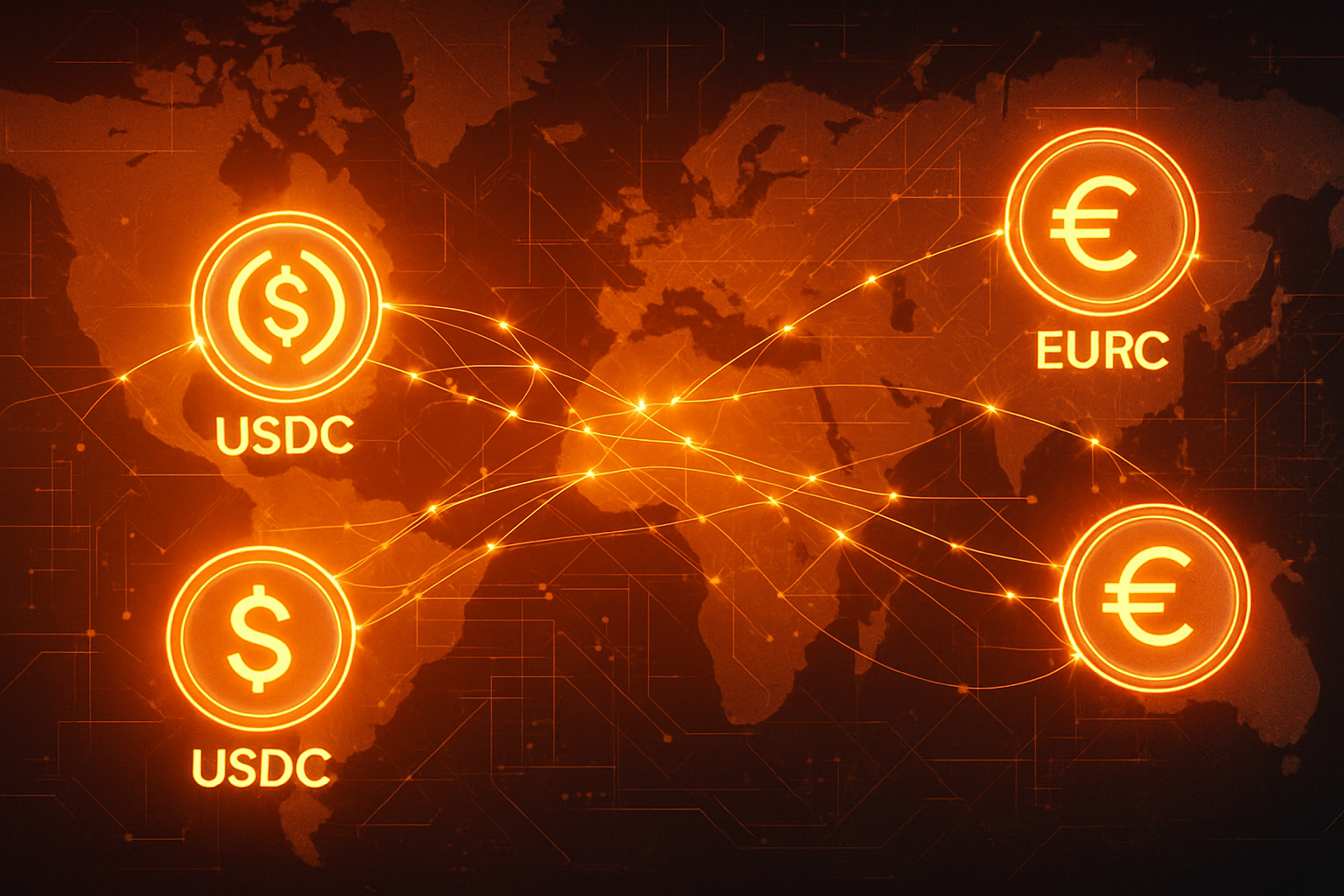
    SIBOS 2025, September 30, 2025 – In a landmark announcement at the prestigious SIBOS conference today, Visa (NYSE: V) unveiled a groundbreaking pilot program for its Visa Direct service, integrating USD Coin (USDC) and Euro Coin (EURC) stablecoins to facilitate instant cross-border transfers. This pivotal initiative marks a significant leap forward in bridging the gap between traditional finance and the burgeoning digital asset ecosystem, promising to revolutionize how businesses and financial institutions manage global payouts.

    The pilot, revealed on September 30, 2025, is a direct response to the inefficiencies plaguing conventional international payment systems, which are often characterized by slow settlement times, high costs, and complex liquidity management. By leveraging the speed and transparency of blockchain-based stablecoins for pre-funding, Visa is setting the stage for a new era of global money movement. While recipients will still receive funds in their local fiat currency, the underlying use of stablecoins for settlement aims to dramatically accelerate the process and unlock significant working capital for participating institutions. The crypto ecosystem has reacted with cautious optimism, viewing this as a powerful validation of stablecoins' utility and a strong signal of increasing institutional adoption.

    Market Impact and Price Action

    The immediate market impact on the stablecoins themselves, USDC and EURC, is unlikely to manifest in significant price fluctuations, given their peg to fiat currencies. However, the announcement's profound implications lie in the validation and legitimization it brings to the broader stablecoin market. This move by a global payments giant like Visa is expected to bolster confidence in stablecoins as reliable and efficient instruments for financial transactions, potentially leading to increased demand and market capitalization over the long term.

    While direct price action for USDC and EURC will remain stable, the news is anticipated to positively influence the valuations of other major stablecoins and potentially even the underlying blockchain networks that support them. This institutional embrace could drive up trading volumes for stablecoin pairs against various cryptocurrencies, as more financial entities look to stablecoins for efficient treasury management and cross-border operations. The comparison to past events, such as PayPal's (NASDAQ: PYPL) entry into crypto or institutional adoption of Bitcoin (BTC) by major corporations, suggests a long-term bullish sentiment for the digital asset space, particularly for assets with clear utility and regulatory compliance.

    The move also subtly shifts the narrative around stablecoins from a speculative asset class to a foundational layer for global financial infrastructure. This could attract more institutional capital into the stablecoin ecosystem, increasing liquidity and fostering deeper integration with traditional financial markets. While technical analysis on stablecoin price is irrelevant, the overall sentiment shift could be a significant bullish signal for the broader crypto market, indicating a growing acceptance and utility of digital assets beyond speculative trading.

    Community and Ecosystem Response

    The crypto community's response to Visa's stablecoin pilot is largely enthusiastic, reflecting a widespread belief that such initiatives are crucial for mainstream adoption. Social media platforms like Crypto Twitter and Reddit are buzzing with discussions highlighting the significance of a global payments behemoth integrating digital assets into its core services. Influencers and thought leaders are championing the move as a monumental step towards legitimizing stablecoins and showcasing their real-world utility beyond decentralized finance (DeFi).

    Many in the community see this as a powerful endorsement of blockchain technology's potential to solve real-world problems. The fact that Visa is treating USDC and EURC as "money in the bank" for pre-funding purposes resonates strongly, underscoring the trust being placed in these digital assets. While some purists may lament the focus on centralized stablecoins over decentralized alternatives, the pragmatic view is that this institutional gateway will ultimately pave the way for broader acceptance and innovation across the entire Web3 ecosystem. The long-term implications for DeFi protocols that rely on stablecoin liquidity and for various Web3 applications that could benefit from faster, cheaper global payments are overwhelmingly positive, signaling a future where digital and traditional finance are increasingly intertwined.

    What's Next for Crypto

    Visa's stablecoin pilot is a harbinger of significant short-term and long-term implications for the crypto market. In the short term, it is expected to accelerate the trend of institutional interest in stablecoins and blockchain-based payment solutions. We can anticipate more financial institutions exploring similar integrations, potentially leading to a "stablecoin race" among payment providers and banks. The pilot's limited availability by April 2026 and broader rollout later in 2026 will be crucial milestones to watch, as successful implementation could trigger a cascade of similar initiatives.

    Longer term, this development could fundamentally reshape global remittances and cross-border trade. The reduction in settlement times and costs, coupled with improved liquidity management, offers a compelling alternative to SWIFT and other legacy systems. Potential catalysts to watch include further partnerships between stablecoin issuers and payment networks, clearer regulatory frameworks for stablecoins in major jurisdictions, and the expansion of the pilot to include other stablecoins or even central bank digital currencies (CBDCs). Projects and investors should strategically consider stablecoin-centric solutions and infrastructure, as the demand for compliant, efficient digital payment rails is set to soar. The most likely scenario involves a gradual but steady integration of stablecoins into mainstream financial services, with Visa's pilot serving as a powerful proof of concept.

    Bottom Line

    Visa Direct's stablecoin pilot program represents a pivotal moment for the cryptocurrency industry. For crypto investors and enthusiasts, the key takeaway is the undeniable validation of stablecoins as a critical component of the future financial landscape. This initiative moves stablecoins beyond speculative trading instruments and firmly into the realm of practical, institutional-grade payment infrastructure. The long-term significance cannot be overstated: it signals a convergence of traditional finance and blockchain technology, where the efficiencies of digital assets are harnessed to solve real-world payment challenges.

    As the pilot progresses, important metrics to monitor will include the volume of stablecoin transactions processed, the number of participating financial institutions, and any feedback regarding efficiency gains and cost reductions. The date of broader rollout in late 2026 will be a key event, marking a potential inflection point for stablecoin adoption on a global scale. This is not just a pilot; it's a blueprint for the future of money movement.

    This article is for informational purposes only and does not constitute financial or investment advice. Cryptocurrency investments carry significant risk.

  • Bybit Forges Ahead in South Africa with Strategic Partnerships and Education Drive

    Bybit Forges Ahead in South Africa with Strategic Partnerships and Education Drive

    Johannesburg, South Africa – September 29, 2025 – Leading global cryptocurrency exchange Bybit has significantly amplified its presence in South Africa through a series of strategic maneuvers, including key local partnerships, enhanced fiat accessibility, and robust Corporate Social Responsibility (CSR) initiatives. Kicking off its official foray with the launch of derivatives products and a fiat on-ramp service on October 2, 2023, Bybit has since solidified its commitment to the region throughout 2025, aiming to drive mainstream crypto adoption and financial inclusion in one of Africa's most dynamic emerging markets.

    This multi-pronged expansion is poised to reshape the South African crypto landscape, offering a more compliant, accessible, and educational pathway for both seasoned traders and new entrants. By leveraging local expertise and investing in human capital, Bybit is not just expanding its user base but also actively contributing to the development of a resilient and informed crypto ecosystem, setting a precedent for responsible global expansion within the Web3 space.

    Market Impact and Price Action

    While Bybit's strategic expansion in South Africa may not trigger immediate, dramatic price movements for specific tokens on a global scale, its localized impact is profound. The introduction and continuous enhancement of ZAR fiat on-ramp and off-ramp solutions, initially launched in October 2023 and expanded throughout 2025, directly addresses one of the primary barriers to crypto adoption: seamless access to local currency. This improved liquidity for ZAR pairs on Bybit is expected to boost trading volumes for popular cryptocurrencies like Bitcoin (BTC), Ethereum (ETH), and USDT within the South African market.

    The partnerships with authorized financial services providers like Money Doc (Proprietary) Limited (FSP no. 52081) and, more recently in 2025, Altify Capital (Pty) Ltd (FSP no. 52727), lend significant credibility and regulatory compliance to Bybit's operations. This focus on a regulated environment can attract more institutional players and traditional investors who prioritize legal certainty, potentially increasing overall market capitalization and stability in the local crypto sector. Furthermore, Bybit's robust Peer-to-Peer (P2P) marketplace offers a vital alternative for users, circumventing traditional banking limitations and fostering a more resilient and decentralized trading environment that could see increased organic growth in transaction volumes. The integration with Riskbloq, a South African blockchain analytics firm, further embeds Bybit into the local financial technology infrastructure, enhancing security and trust, which are critical for sustained market growth.

    Community and Ecosystem Response

    The South African crypto community has largely responded positively to Bybit's concerted efforts. The emphasis on localized fiat solutions has been particularly well-received, as it simplifies the onboarding process for new users and provides greater convenience for existing ones. Social media discussions often highlight the importance of accessible ZAR options and the perceived security benefits of trading on a platform that prioritizes local regulatory compliance through its partnerships.

    Crypto influencers and thought leaders in the region have acknowledged Bybit's strategic approach, particularly commending its investment in education. The launch of the Bybit Rising Fund in August 2025, a global CSR initiative with a significant focus on education in over 15 geographies including South Africa, is seen as a crucial step towards demystifying blockchain technology. Additionally, the $100,000 scholarship fund for 1,000 AltSchool Africa students, announced in March 2025 as part of the Bybit Academy partnership, has garnered widespread praise. While not exclusively for South Africa, this initiative directly contributes to empowering African talent and fostering a new generation of crypto-literate individuals across the continent, including South Africa. These educational programs are vital for addressing the knowledge gap that often hinders mainstream adoption, fostering a more informed and engaged community.

    What's Next for Crypto

    Bybit's strategic expansion signals a significant trend towards localized and compliant operations in emerging markets, which will have both short-term and long-term implications for the broader crypto market. In the short term, South Africa can expect increased liquidity, heightened trading activity, and a more competitive exchange landscape. This could drive innovation among local fintechs and potentially lead to more favorable trading conditions for users.

    Looking ahead, Bybit's commitment to regulatory compliance through its partnerships with authorized FSPs like Altify Capital suggests a future where crypto exchanges operate more closely within established financial frameworks. This approach could serve as a model for other global exchanges looking to enter regulated markets, potentially accelerating the development of clearer regulatory guidelines in South Africa and beyond. The ongoing educational initiatives, such as the Bybit Rising Fund and the AltSchool Africa partnership, are long-term catalysts for sustainable adoption. By nurturing local talent and enhancing crypto literacy, Bybit is investing in the foundational elements necessary for a thriving Web3 economy, creating a pipeline of developers, entrepreneurs, and informed users. Strategic considerations for projects and investors will revolve around leveraging these growing markets, exploring local partnerships, and adapting to evolving regulatory landscapes.

    Bottom Line

    Bybit's strategic expansion into South Africa, characterized by its robust local partnerships, seamless fiat access, and impactful CSR scholarship programs, marks a pivotal moment for crypto adoption in emerging markets. For crypto investors and enthusiasts, the key takeaway is the increasing institutionalization and localization of global exchanges, which brings enhanced security, liquidity, and regulatory clarity to regional markets. This approach fosters a more mature and accessible ecosystem, reducing entry barriers and building trust among a broader demographic.

    The long-term significance of Bybit's initiatives lies in their potential to accelerate financial inclusion and technological empowerment in South Africa. By providing educational resources and skill-building opportunities, Bybit is not just attracting users but also cultivating a knowledgeable workforce capable of driving future innovation within the blockchain space. Important metrics to monitor will include the growth in ZAR trading volumes on Bybit, the number of participants in its educational programs, and any subsequent regulatory developments in South Africa that might be influenced by the growing presence of compliant international players. As of September 29, 2025, Bybit's actions demonstrate a clear path for global exchanges to successfully integrate into local economies, paving the way for a more inclusive and educated global crypto community.

    This article is for informational purposes only and does not constitute financial or investment advice. Cryptocurrency investments carry significant risk.