
Tag: Cross-Border Payments

  • Brazil’s Crypto Crossroads: A Landmark Shift in Digital Asset Taxation and Adoption

    Brazil’s Crypto Crossroads: A Landmark Shift in Digital Asset Taxation and Adoption

    Brasília, Brazil – November 18, 2025 – Brazil is navigating a pivotal moment in its journey to integrate cryptocurrencies into the national financial framework, marked by both a significant legislative victory for the crypto community and an ongoing debate that could redefine the cost of cross-border digital transactions. While the nation has emerged as a powerhouse in Latin American crypto adoption, its government is concurrently striving to formalize the market, prevent illicit activities, and enhance revenue through a series of regulatory initiatives.

    The most recent and impactful development for the Brazilian crypto ecosystem came on October 8, 2025, when the Brazilian Congress decisively defeated Provisional Measure 1303 (MP 1303). This measure, introduced by President Luiz Inácio Lula da Silva in June 2025, proposed a flat 17.5% capital gains tax on all cryptocurrency profits and, critically, sought to eliminate the R$35,000 (approximately $6,300 USD) monthly tax exemption for small-scale investors. Its defeat, with 251 votes in favor of withdrawal, was widely celebrated by the crypto industry, which had vociferously lobbied against it, fearing an exodus of smaller investors and a chilling effect on local innovation. This legislative outcome preserves a more favorable tax environment for retail participants, affirming Brazil's commitment to grassroots crypto adoption.

    However, the regulatory spotlight has immediately shifted to the ongoing consideration of extending Brazil's Imposto sobre Operações Financeiras (IOF), or Financial Transactions Tax, to cross-border cryptocurrency payments. This move, primarily targeting stablecoins, is driven by the Central Bank of Brazil's (BCB) November 10, 2025, classification of stablecoin operations as foreign exchange transactions, with these new rules set to take effect in February 2026, and forex-specific stablecoin provisions beginning on May 4, 2026. The Finance Ministry is now reviewing the precise application of the IOF to these digital asset transfers. This initiative aims to close regulatory loopholes that officials estimate cost the government over $30 billion annually in lost revenue, particularly from customs evasion schemes facilitated by unregulated crypto flows. The implications for crypto users, market dynamics, and the broader digital asset ecosystem in Brazil are substantial, poised to introduce new layers of cost and compliance to international digital asset transactions.

    Market Impact and Price Action

    The Brazilian cryptocurrency market has demonstrated remarkable resilience and growth amidst this evolving regulatory landscape. Prior to the November 2025 discussions regarding the IOF tax extension, stablecoins had already witnessed a significant surge in adoption and trading volume. This increase was largely driven by Brazilian citizens seeking to circumvent existing IOF taxes on traditional foreign payments, which had seen earlier increases in 2025. Stablecoins, particularly Tether (USDT), became a preferred method for accessing dollar-equivalent assets and facilitating international payments.

    Data from local exchanges underscores this trend. Biscoint reported a striking 78% increase in stablecoin trading volumes between 2024 and 2025, with total turnover climbing from $9.84 billion to $13.74 billion. Similarly, Bitybank observed a 36% rise in stablecoin trading between June and July 2025. In the first half of 2025, USDT alone accounted for a dominant two-thirds of Brazil's total crypto transaction volume, while Bitcoin (BTC) represented only 11%. This highlights a clear demand for stable, dollar-pegged digital assets for transactional purposes. Despite this surge in utility, there have been no reported de-pegging events or unusual volatility of stablecoins directly attributable to the November 2025 announcements, indicating their continued function as stable mediums of exchange.

    The overall Brazilian crypto market has shown robust activity, with total crypto transactions reaching 227 billion reais ($42.8 billion) in the first half of 2025, a 20% increase from the same period in 2024. Between July 2024 and June 2025, Brazil recorded over $318.8 billion in cryptocurrency transactions, marking a 109.9% year-over-year increase and cementing its position as the fifth-largest crypto market globally by transaction volume. While the defeat of the 17.5% flat capital gains tax was a positive market signal, specific immediate price movements of major cryptocurrencies like Bitcoin (BTC) or Ethereum (ETH) directly tied to these Brazilian regulatory developments in November 2025 have not been explicitly detailed. Broader market fluctuations, such as Bitcoin's (BTC) 4.3% drop in late October 2025, were primarily linked to global macroeconomic factors rather than localized Brazilian news. The market's primary reaction appears to be a behavioral shift in stablecoin usage and trading patterns in anticipation of regulatory changes, rather than immediate speculative price action on major digital assets.

    Community and Ecosystem Response

    The Brazilian crypto community has proven to be an active and influential voice in the nation's digital asset policy debates. The most significant recent outcome for the community was the legislative defeat of Provisional Measure 1303 (MP 1303) on October 8, 2025. This proposed flat 17.5% capital gains tax, which would have eliminated the R$35,000 monthly exemption, was met with widespread condemnation from stakeholders. Crypto influencers and thought leaders, alongside prominent trade groups like ABCripto, vehemently argued that the measure would disproportionately harm small investors and could "destroy Brazil's national crypto market" by driving users to offshore platforms. Bernardo Srur, CEO of ABCripto, was a vocal critic, emphasizing the negative impact on the average Brazilian crypto investor. The sentiment across crypto Twitter and Reddit during this period reflected deep apprehension about the measure's potential to stifle innovation and adoption.

    The defeat of MP 1303 was met with widespread relief and applause from local crypto groups, who celebrated it as a crucial victory for the broader Brazilian cryptocurrency ecosystem. This outcome has likely alleviated immediate concerns for smaller participants and projects in the DeFi, NFT, and Web3 sectors that would have faced significantly increased tax burdens.

    However, the community's vigilance remains high as the focus shifts to the potential application of the IOF tax to cross-border crypto payments. While specific social media sentiment directly following the November 2025 announcements regarding the IOF extension is still emerging, the historical backlash against previous increases in the IOF on traditional foreign payments suggests similar concerns within the crypto community regarding increased taxation and regulatory oversight. Critics are already warning that such measures could harm Brazil's competitiveness in the global digital asset space. The Central Bank of Brazil's classification of stablecoins as foreign-exchange operations, effective February 2026, will also introduce higher compliance costs for crypto firms, including those operating in the DeFi and Web3 sectors, as they will need to acquire licenses and adhere to stringent governance, security, and reporting standards.

    Further adding to the evolving landscape, Bill 458/21, approved by Congress in October 2025 and awaiting a final Senate vote, proposes a 30% regularization tax for previously undeclared or undervalued crypto assets. This initiative, while aiming to bring hidden wealth into the tax system, has sparked considerable public and political debate, reflecting the ongoing tension between regulatory control and fostering a vibrant crypto economy. While the defeat of the flat capital gains tax was a positive signal, the overall ecosystem continues to adapt to a progressively more regulated environment, with increased operational and compliance costs becoming a reality for local crypto businesses and projects.

    What's Next for Crypto

    Brazil's digital asset market stands at a critical juncture, with recent legislative outcomes and ongoing policy debates shaping its trajectory for the foreseeable future. The unexpected defeat of the proposed 17.5% flat capital gains tax, Provisional Measure 1303 (MP 1303), on October 8, 2025, has sent a clear signal of relief to retail investors and the broader crypto community, preserving the crucial R$35,000 monthly tax exemption for smaller gains. This outcome is expected to bolster grassroots crypto adoption, allowing everyday Brazilians to continue engaging with digital assets without immediate punitive tax burdens. For larger investors, the existing progressive capital gains tax rates (ranging from 15% to 22.5%) remain in effect, offering a predictable, albeit higher, framework for significant profits.

    However, the spotlight has now shifted to the impending decision regarding the Imposto sobre Operações Financeiras (IOF) tax on cross-border cryptocurrency payments, particularly stablecoins. The Finance Ministry's active consideration, coupled with the Central Bank of Brazil's (BCB) November 10, 2025, classification of stablecoin operations as foreign exchange transactions (effective February 2026), introduces a significant layer of uncertainty. This move, supported by expanded reporting requirements for foreign exchanges by the Federal Revenue Service on November 14, 2025, aims to formalize cross-border crypto flows, combat illicit activities, and recover an estimated $30 billion in annual lost revenue.

    Short and Long-Term Implications:
    In the short term, the ongoing IOF debate will likely create apprehension among stablecoin users and businesses reliant on them for international transactions. Crypto firms operating in Brazil are already bracing for increased compliance scrutiny, licensing requirements, and potential operational costs. This could lead to a temporary shift in payment methods as users explore alternatives to pre-empt new levies. Long-term, if the IOF tax is implemented, it will further integrate cross-border crypto into Brazil's formal financial system, enhancing transparency. However, it could also diminish the cost-effectiveness of stablecoins for international payments, potentially reducing their appeal as a cheaper alternative to traditional foreign exchange services. The overall impact hinges on the final rates and specific application of the tax.

    Potential Catalysts and Developments to Watch:
    Several catalysts will shape Brazil's crypto future. The definitive outcome of the IOF tax debate is paramount, as its implementation or rejection will profoundly alter cross-border payment dynamics. Global crypto market trends, the volatility of the Brazilian Real (BRL) (which could drive further stablecoin adoption as a hedge), and the development of Brazil's own Central Bank Digital Currency (CBDC) will also play significant roles. Further regulatory clarity on Virtual Asset Service Providers (VASPs), DeFi, and NFTs could attract more institutional investment. The increasing involvement of major financial institutions like Itaú Unibanco (ITUB), which launched Bitcoin (BTC) and Ether (ETH) trading in late 2023 and a crypto fund in September 2025, continues to legitimize the market and will be a key indicator of institutional confidence.

    Strategic Considerations for Projects and Investors:
    For crypto projects, prioritizing robust compliance infrastructure to meet new reporting obligations and potential licensing requirements is crucial. Localized offerings that leverage Brazil's successful Pix instant payment system will remain vital. Engaging with policymakers and industry associations (such as ABToken) can help shape favorable regulations. Investors, meanwhile, must meticulously track all crypto transactions for accurate capital gains calculations and remain vigilant about IOF tax developments. Diversification, risk management, and a thorough understanding of reporting requirements (e-CAC for monthly off-exchange volumes, DIRPF for annual returns) are paramount.

    Possible Scenarios:

    • Optimistic: A balanced IOF outcome, coupled with a comprehensive yet innovation-friendly regulatory framework, positions Brazil as a global crypto hub, fostering increased adoption and technological integration.
    • Moderate: The IOF tax is implemented at reasonable rates, leading to a more formalized but still growing crypto market, with gradual regulatory evolution and sustained adoption.
    • Pessimistic: High IOF rates and overly restrictive regulations stifle innovation, deter new projects, and slow crypto adoption, potentially pushing users towards less regulated or offshore alternatives, thereby diminishing Brazil's competitive edge.

    Brazil's strong domestic adoption drivers, combined with its proactive regulatory stance, suggest a path towards a more integrated and transparent crypto market. However, the exact nature of this integration, particularly regarding the taxation of cross-border stablecoin payments, will be a defining factor in determining the market's growth and innovation trajectory.

    Bottom Line

    Brazil's journey in regulating its burgeoning cryptocurrency market exemplifies a global trend towards formalizing digital assets within existing financial systems. The recent legislative developments underscore a complex interplay between governmental objectives for revenue generation and illicit activity prevention, and the crypto community's demand for a conducive environment for innovation and adoption.

    Key Takeaways for Crypto Investors and Enthusiasts:
    The most significant takeaway is the defeat of the 17.5% flat capital gains tax (MP 1303) on October 8, 2025. This preserves the crucial R$35,000 monthly tax exemption for smaller crypto disposals, providing significant relief for retail investors and likely encouraging continued grassroots participation. For larger gains, the progressive tax rates (15% to 22.5%) remain. However, the ongoing debate around extending the IOF tax to cross-border crypto payments, especially stablecoins, introduces a new layer of potential cost and complexity for international transactions. This indicates a clear governmental intent to regulate all facets of crypto activity. Furthermore, a two-tiered capital gains tax system is in place for foreign holdings, with a maximum of 15% tax on annual profits exceeding R$6,000 from foreign exchanges, effective January 1, 2024.

    Assessment of Long-Term Significance:
    The long-term significance of these developments is the undeniable formalization of Brazil's crypto market. The defeat of MP 1303 demonstrates a legislative responsiveness to industry concerns, potentially preventing an exodus of smaller investors and fostering local innovation. However, the broader regulatory push, including the Central Bank's classification of stablecoins as foreign exchange operations (effective February 2026) and expanded reporting requirements for foreign exchanges (November 14, 2025), signifies a robust move towards legal certainty, enhanced transparency, and combating illicit finance. While increasing compliance burdens, this formalization is expected to attract more institutional investment and create a more secure operating environment, potentially positioning Brazil as a model for responsible crypto integration in Latin America.

    Final Thoughts on Crypto Adoption:
    The impact on crypto adoption in Brazil is mixed but leans towards a more mature and regulated ecosystem. The preservation of the R$35,000 exemption is a strong positive for retail adoption. However, the potential IOF tax on cross-border payments could diminish the cost-effectiveness of stablecoins for international transfers, potentially affecting their utility and liquidity for this specific use case. Stricter reporting requirements and the tax on foreign crypto holdings might also prompt some users to seek less regulated alternatives or reconsider foreign investments, though the government is actively working to close these gaps. Ultimately, while initial friction and compliance costs may rise, the long-term trend points to a more legitimate, secure, and integrated crypto market in Brazil, which could attract a broader base of users and capital.

    Important Dates, Events, and Metrics to Monitor:

    • November 2025: Central Bank of Brazil (BCB) published resolutions (519, 520, 521) operationalizing the 2022 Virtual Assets Law. Finance Ministry actively considering IOF tax for cross-border crypto. Federal Revenue Service expanded crypto reporting requirements for foreign exchanges.
    • February 2026: All crypto exchanges and Virtual Asset Service Providers (VASPs) must register with the BCB and become authorized "Sociedades Prestadoras de Serviços de Ativos Virtuais (SPSAVs)." BCB's new stablecoin regulations take effect.
    • May 2026: Forex-specific stablecoin rules are scheduled to begin, with crypto companies mandated to submit monthly transaction data to the Central Bank.
    • November 2026: Deadline for non-compliant crypto platforms to cease operations in Brazil.
    • Ongoing Monitoring:
      • IOF Tax Decision: The Finance Ministry's final decision on applying the IOF tax to cross-border crypto payments.
      • Crypto Adoption Metrics: Growth in Brazilian crypto transaction volume (e.g., $42.8 billion in H1 2025), number of regulated VASPs, and overall user adoption.
      • Regulatory Evolution: Further public consultations and development of operational standards by the Central Bank, including Brazil's adoption of the OECD's Crypto-Asset Reporting Framework (CARF).
      • Payroll in Digital Assets: Review of proposals allowing employers to pay up to 50% of salaries in cryptocurrencies.

    This article is for informational purposes only and does not constitute financial or investment advice. Cryptocurrency investments carry significant risk.

  • Brazil Considers Sweeping Crypto Tax on Cross-Border Payments, Targeting Stablecoins to Bridge Regulatory Gaps

    Brazil Considers Sweeping Crypto Tax on Cross-Border Payments, Targeting Stablecoins to Bridge Regulatory Gaps

    Brasília, Brazil – November 18, 2025 – In a significant move that could reshape the landscape of cryptocurrency transactions in one of Latin America's largest economies, Brazil's Finance Ministry is reportedly considering the extension of its financial transaction tax (IOF) to cross-border cryptocurrency payments, with a particular focus on stablecoin transfers. This initiative, unveiled through confidential government discussions today, November 18, 2025, aims to close existing regulatory loopholes, bolster public revenue, and enhance oversight of the nation's burgeoning digital asset market.

    The proposal comes hot on the heels of the Banco Central do Brasil's (Brazil's Central Bank) new regulatory framework, published on November 10, 2025, which explicitly classifies stablecoin operations as foreign exchange (forex) transactions. This reclassification, set to take full effect on February 2, 2026, with mandatory reporting beginning on May 4, 2026, lays the groundwork for the proposed tax. Should it be implemented, the measure would subject international crypto transfers to the same levies currently applied to traditional forex operations, potentially impacting the substantial volume of stablecoin transactions that reached 227 billion reais (approximately $42.8 billion) in the first half of 2025 alone.

    Market Impact and Price Action

    The news of Brazil's Finance Ministry considering a tax on crypto cross-border payments, particularly stablecoin transfers, has just broken today, November 18, 2025. As such, immediate, definitive market reactions in terms of specific price movements or trading volume shifts are still developing and largely speculative. However, the anticipation of such a regulatory change in a major emerging market like Brazil is likely to introduce a degree of uncertainty and cautious sentiment across the global crypto ecosystem, especially for stablecoins and cryptocurrencies heavily utilized in international trade and remittances.

    Historically, regulatory announcements from significant economies often lead to short-term volatility. While direct price impacts on major cryptocurrencies like Bitcoin (BTC) and Ethereum (ETH) might be muted initially, stablecoins such as Tether (USDT), USD Coin (USDC), and Binance USD (BUSD) – which constitute a significant portion of Brazil's crypto transaction volume – could experience increased scrutiny. Any perceived impediment to their utility as a frictionless medium for cross-border payments could lead to temporary dips in demand or shifts in trading patterns within the Brazilian market, potentially influencing local exchange rates against the Brazilian Real (BRL).

    The long-term market impact will hinge on the final details of the tax, its implementation, and the broader response from crypto users and businesses in Brazil. If the tax is perceived as burdensome, it could lead to reduced liquidity for certain stablecoin pairs on Brazilian exchanges and potentially drive some activity to peer-to-peer (P2P) networks or less regulated avenues. Conversely, if the regulatory clarity provided by the tax is seen as a step towards greater institutional adoption and legitimacy, it could eventually attract more traditional financial players, albeit with higher operational costs. The market will be closely watching for any official statements from the Finance Ministry or the Central Bank that provide further clarity on the scope and rate of the proposed IOF tax.

    Community and Ecosystem Response

    The nascent proposal from Brazil's Finance Ministry, though only surfacing today, November 18, 2025, is already beginning to ripple through the global crypto community, drawing anticipatory concern and criticism. Building on a history of increasingly stringent crypto tax reforms in Brazil, including a flat 17.5% capital gains tax introduced earlier in 2025, the community's initial sentiment is predominantly negative, fearing a further stifling of innovation and adoption.

    Social media channels and crypto forums are abuzz with discussions, with many users expressing apprehension that taxing cross-border stablecoin transfers will disproportionately affect everyday Brazilians who utilize these assets for remittances, international trade, or as a hedge against local economic volatility. Industry leaders, who previously vocalized concerns over the 17.5% capital gains tax, are expected to echo similar sentiments. For instance, in response to earlier tax measures, figures like Bernardo Srur, CEO of ABCripto (Brazilian Association of Cryptoeconomy), warned that such proposals "could destroy Brazil's national crypto market" by harming average investors. This new tax is likely to exacerbate those fears, especially as stablecoins like USDT account for a significant portion of Brazil's crypto transaction volume.

    The potential effects on Brazil's burgeoning DeFi protocols, NFT projects, and broader Web3 applications are also a significant concern. Increased transaction costs and regulatory complexities associated with stablecoin transfers could lead to a reduction in liquidity and overall activity within the Brazilian decentralized finance ecosystem. There's a palpable fear that these measures could inadvertently drive users towards offshore platforms or less regulated, self-custodial solutions to circumvent the new taxes, making effective oversight even more challenging for authorities. Furthermore, the cumulative burden of taxation and compliance could hinder the growth of local Web3 startups and innovation, potentially disadvantaging domestic operators compared to international entities with more flexible structures.

    What's Next for Crypto

    The consideration of a new tax on cross-border crypto payments, particularly stablecoin transfers, by Brazil's Finance Ministry marks a pivotal moment for the nation's digital asset landscape and could set a precedent for other developing economies. In the short term, the crypto market in Brazil is likely to experience heightened uncertainty and speculative trading as stakeholders await further clarification on the proposed tax's scope, rate, and implementation timeline. The period leading up to the Central Bank's new regulatory framework taking full effect on February 2, 2026, and mandatory reporting beginning on May 4, 2026, will be critical. During this time, we can anticipate intense lobbying efforts from crypto industry associations and an ongoing public debate.

    In the long term, the implications could be profound. Should the tax be implemented, it would significantly increase the cost of using stablecoins for international transactions within Brazil, potentially impacting their utility as a frictionless medium for remittances and trade. This could lead to a strategic shift among projects and investors, with some potentially exploring alternative blockchain solutions that offer lower transaction fees or seeking regulatory-friendly jurisdictions. For companies like Coinbase (NASDAQ: COIN) and other international exchanges operating in Brazil, navigating these new tax regulations will be crucial for their market strategy and compliance efforts.

    Potential catalysts or developments to watch include the specific legislative process for this tax proposal, any public consultations, and the reactions of major crypto exchanges and payment processors to the new regulatory environment. The Brazilian government's ultimate goal of integrating digital assets into the formal financial system, while closing regulatory gaps and boosting revenue, will be a delicate balancing act. If the tax is perceived as overly punitive, it risks stifling legitimate innovation and pushing economic activity underground. Conversely, a well-calibrated tax, combined with clear regulatory guidelines, could eventually foster greater institutional confidence and attract more traditional finance players into the regulated Brazilian crypto space. Strategic considerations for projects and investors will involve a thorough analysis of cost-benefit ratios, compliance requirements, and exploring innovative solutions to maintain efficiency while adhering to new regulations.

    Bottom Line

    Brazil's proactive stance on regulating and taxing its burgeoning cryptocurrency market signals a clear intent to integrate digital assets more formally into its financial system. For crypto investors and enthusiasts, the immediate key takeaway is the Finance Ministry's serious consideration of extending the Imposto sobre Operações Financeiras (IOF) to cross-border crypto payments, particularly stablecoin transfers. If implemented, this would eliminate the current loophole allowing stablecoins to bypass taxes applied to traditional foreign exchange, significantly impacting the cost-effectiveness of international transactions using digital assets.

    Crucially, while previous reports indicated a flat 17.5% capital gains tax on all cryptocurrency gains, it's vital for investors to note that Provisional Measure 1303, which proposed this and abolished the R$35,000 monthly exemption for small traders, was reportedly defeated in Congress. This means the previous, more progressive capital gains tax regime, with rates from 15% to 22.5% depending on profit amounts and the R$35,000 exemption for smaller monthly disposals, is likely still in effect for general crypto trading profits. Investors must closely monitor official announcements for definitive clarity on capital gains taxation. Beyond taxes, enhanced reporting requirements, aligning with the OECD's Crypto Asset Reporting Framework (CARF), are coming into force, compelling individuals and service providers to disclose transactions more rigorously. Furthermore, the Central Bank's new comprehensive framework mandates licensing, minimum capital, and robust AML/CFT measures for all crypto service providers, including foreign platforms operating in Brazil.

    The long-term significance of these developments is profound. Brazil is moving towards a more mature and transparent crypto market, aiming to combat illicit activities, level the playing field between traditional finance and digital assets, and potentially boost public revenue. While the short-term may see adjustments and increased compliance burdens, particularly for those who leveraged cryptocurrencies for arbitrage or tax evasion, a regulated environment is generally viewed as beneficial for sustainable growth. It can foster greater consumer protection, reduce scams, and pave the way for increased institutional adoption, ultimately building a more robust and trusted crypto ecosystem. Brazil's comprehensive approach could even serve as a model for other nations grappling with similar challenges.

    Key dates and metrics to monitor include the ongoing legislative progress on the proposed IOF tax, the official implementation of the Central Bank's new regulations for crypto service providers on February 2, 2026, and the commencement of forex-specific rules for stablecoins on May 4, 2026. The new "Declaração de Criptoativos" (DeCripto) reporting model, aligning with CARF, will replace the current system in July 2026. Investors should also watch Brazil's crypto transaction volume, especially stablecoin usage, to gauge the market's adaptation to the evolving regulatory landscape. The coming months will be critical in defining the future of crypto in Brazil, balancing innovation with stringent oversight.


    This article is for informational purposes only and does not constitute financial or investment advice. Cryptocurrency investments carry significant risk.

  • Visa Direct Ignites Stablecoin Revolution: Pilot Program Poised to Transform Global Payments

    Visa Direct Ignites Stablecoin Revolution: Pilot Program Poised to Transform Global Payments

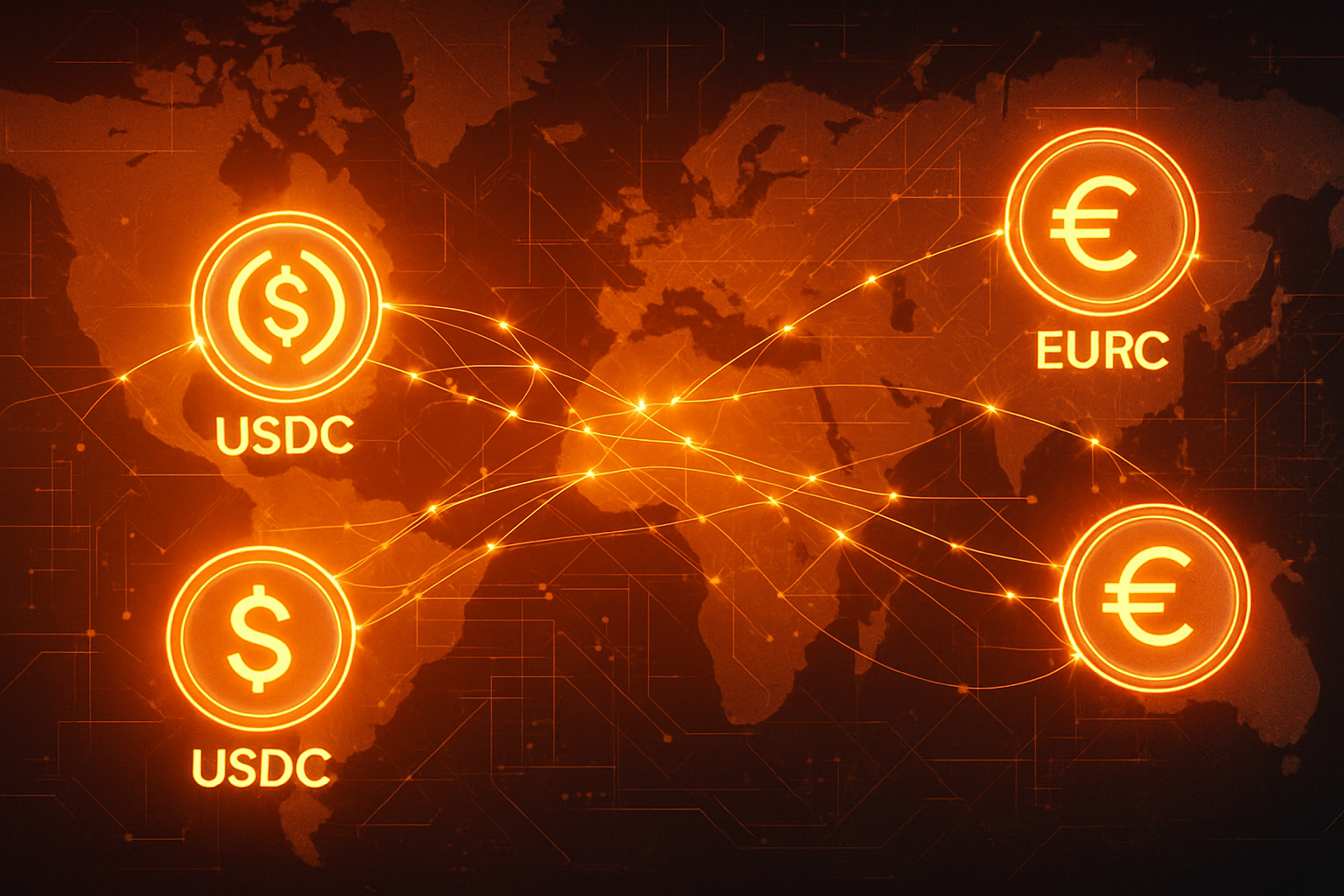
    SIBOS 2025, September 30, 2025 – In a landmark announcement at the prestigious SIBOS conference today, Visa (NYSE: V) unveiled a groundbreaking pilot program for its Visa Direct service, integrating USD Coin (USDC) and Euro Coin (EURC) stablecoins to facilitate instant cross-border transfers. This pivotal initiative marks a significant leap forward in bridging the gap between traditional finance and the burgeoning digital asset ecosystem, promising to revolutionize how businesses and financial institutions manage global payouts.

    The pilot, revealed on September 30, 2025, is a direct response to the inefficiencies plaguing conventional international payment systems, which are often characterized by slow settlement times, high costs, and complex liquidity management. By leveraging the speed and transparency of blockchain-based stablecoins for pre-funding, Visa is setting the stage for a new era of global money movement. While recipients will still receive funds in their local fiat currency, the underlying use of stablecoins for settlement aims to dramatically accelerate the process and unlock significant working capital for participating institutions. The crypto ecosystem has reacted with cautious optimism, viewing this as a powerful validation of stablecoins' utility and a strong signal of increasing institutional adoption.

    Market Impact and Price Action

    The immediate market impact on the stablecoins themselves, USDC and EURC, is unlikely to manifest in significant price fluctuations, given their peg to fiat currencies. However, the announcement's profound implications lie in the validation and legitimization it brings to the broader stablecoin market. This move by a global payments giant like Visa is expected to bolster confidence in stablecoins as reliable and efficient instruments for financial transactions, potentially leading to increased demand and market capitalization over the long term.

    While direct price action for USDC and EURC will remain stable, the news is anticipated to positively influence the valuations of other major stablecoins and potentially even the underlying blockchain networks that support them. This institutional embrace could drive up trading volumes for stablecoin pairs against various cryptocurrencies, as more financial entities look to stablecoins for efficient treasury management and cross-border operations. The comparison to past events, such as PayPal's (NASDAQ: PYPL) entry into crypto or institutional adoption of Bitcoin (BTC) by major corporations, suggests a long-term bullish sentiment for the digital asset space, particularly for assets with clear utility and regulatory compliance.

    The move also subtly shifts the narrative around stablecoins from a speculative asset class to a foundational layer for global financial infrastructure. This could attract more institutional capital into the stablecoin ecosystem, increasing liquidity and fostering deeper integration with traditional financial markets. While technical analysis on stablecoin price is irrelevant, the overall sentiment shift could be a significant bullish signal for the broader crypto market, indicating a growing acceptance and utility of digital assets beyond speculative trading.

    Community and Ecosystem Response

    The crypto community's response to Visa's stablecoin pilot is largely enthusiastic, reflecting a widespread belief that such initiatives are crucial for mainstream adoption. Social media platforms like Crypto Twitter and Reddit are buzzing with discussions highlighting the significance of a global payments behemoth integrating digital assets into its core services. Influencers and thought leaders are championing the move as a monumental step towards legitimizing stablecoins and showcasing their real-world utility beyond decentralized finance (DeFi).

    Many in the community see this as a powerful endorsement of blockchain technology's potential to solve real-world problems. The fact that Visa is treating USDC and EURC as "money in the bank" for pre-funding purposes resonates strongly, underscoring the trust being placed in these digital assets. While some purists may lament the focus on centralized stablecoins over decentralized alternatives, the pragmatic view is that this institutional gateway will ultimately pave the way for broader acceptance and innovation across the entire Web3 ecosystem. The long-term implications for DeFi protocols that rely on stablecoin liquidity and for various Web3 applications that could benefit from faster, cheaper global payments are overwhelmingly positive, signaling a future where digital and traditional finance are increasingly intertwined.

    What's Next for Crypto

    Visa's stablecoin pilot is a harbinger of significant short-term and long-term implications for the crypto market. In the short term, it is expected to accelerate the trend of institutional interest in stablecoins and blockchain-based payment solutions. We can anticipate more financial institutions exploring similar integrations, potentially leading to a "stablecoin race" among payment providers and banks. The pilot's limited availability by April 2026 and broader rollout later in 2026 will be crucial milestones to watch, as successful implementation could trigger a cascade of similar initiatives.

    Longer term, this development could fundamentally reshape global remittances and cross-border trade. The reduction in settlement times and costs, coupled with improved liquidity management, offers a compelling alternative to SWIFT and other legacy systems. Potential catalysts to watch include further partnerships between stablecoin issuers and payment networks, clearer regulatory frameworks for stablecoins in major jurisdictions, and the expansion of the pilot to include other stablecoins or even central bank digital currencies (CBDCs). Projects and investors should strategically consider stablecoin-centric solutions and infrastructure, as the demand for compliant, efficient digital payment rails is set to soar. The most likely scenario involves a gradual but steady integration of stablecoins into mainstream financial services, with Visa's pilot serving as a powerful proof of concept.

    Bottom Line

    Visa Direct's stablecoin pilot program represents a pivotal moment for the cryptocurrency industry. For crypto investors and enthusiasts, the key takeaway is the undeniable validation of stablecoins as a critical component of the future financial landscape. This initiative moves stablecoins beyond speculative trading instruments and firmly into the realm of practical, institutional-grade payment infrastructure. The long-term significance cannot be overstated: it signals a convergence of traditional finance and blockchain technology, where the efficiencies of digital assets are harnessed to solve real-world payment challenges.

    As the pilot progresses, important metrics to monitor will include the volume of stablecoin transactions processed, the number of participating financial institutions, and any feedback regarding efficiency gains and cost reductions. The date of broader rollout in late 2026 will be a key event, marking a potential inflection point for stablecoin adoption on a global scale. This is not just a pilot; it's a blueprint for the future of money movement.

    This article is for informational purposes only and does not constitute financial or investment advice. Cryptocurrency investments carry significant risk.