Tag: Altcoins

  • Riskiest Crypto Tokens Plummet to Pandemic-Era Lows Amidst Macroeconomic Headwinds and Record Liquidations

    Riskiest Crypto Tokens Plummet to Pandemic-Era Lows Amidst Macroeconomic Headwinds and Record Liquidations

    The cryptocurrency market has recently endured a brutal correction, with its riskiest tokens plunging to levels not seen since the height of the COVID-19 pandemic. From early October through mid-November 2025, a confluence of macroeconomic pressures, a pervasive flight from risk, and unprecedented leveraged liquidations triggered a widespread sell-off that erased billions from the market and sent investor sentiment plummeting into "extreme fear" territory. This significant downturn has not only rattled the foundations of the volatile small-cap and meme coin sectors but has also impacted major cryptocurrencies like Bitcoin and Ethereum, signaling a potentially pivotal moment for the broader crypto ecosystem.

    The severity of this correction, particularly the scale of liquidations, marks it as a standout event, drawing stark comparisons to the March 2020 crash. The immediate reaction saw panic selling proliferate across exchanges, as traders, particularly those with highly leveraged positions, scrambled to de-risk. This systemic unwinding of speculative bets underscores the market's vulnerability to external economic forces and its inherent volatility, raising critical questions about the path forward for digital assets.

    Market Impact and Price Action

    The recent market downturn, spanning from early October to mid-November 2025, saw a dramatic repricing of digital assets, with the MarketVector Digital Assets 100 Small-Cap Index reaching its lowest point since November 2020. This metric alone highlights the extent to which the riskiest segments of the crypto market have been decimated, effectively returning them to "pandemic-era territory."

    Meme coins, often considered the canary in the coal mine for speculative fervor, bore the brunt of the sell-off. The meme coin market capitalization contracted significantly, falling from an impressive $74 billion to approximately $48 billion. Dogecoin (DOGE), a long-standing favorite, has been identified as the worst-performing cryptocurrency year-to-date in 2025, registering a substantial -48.26% loss and hovering around the $0.16 mark. Newer entrants also suffered, with Pepe (PEPE) down 12% in a single day, trading near $0.00000515, and a staggering 81% below its December 2024 all-time high. Toshi (TOSHI) experienced a 12% decline in the past week and a 42% drop over the last month, now 80% below its January all-time high, priced at approximately $0.00043. Beyond meme coins, numerous other altcoins saw losses of up to 40% in minutes during the height of the October 2025 crash. For instance, Cardano (ADA) dropped -38.05% over a ten-week period, and Solana (SOL) was the worst-performing cryptocurrency for two consecutive weeks, declining -11.96% to $141, a significant fall from its August peak of $4,954.

    Even the titans of the crypto world were not immune. Bitcoin (BTC), the leading cryptocurrency, slipped below the psychological $100,000 mark and further dropped below $94,000, effectively erasing most of its 2025 gains. It declined 25% in the last month and over 4% in October 2025, with a particularly sharp plunge on October 11, 2025, from around $120,000 to approximately $102,000. Ethereum (ETH) followed suit, falling over 7% in October 2025, dropped more than 35% from its August peak of $4,954, and plunged about 21% from its peak on October 11, 2025. Around November 13, it saw a further dip from $3,400 to $3,150. The trading volumes during this period were notably thin, exacerbating price swings as even relatively small trades could trigger significant movements. This lack of liquidity, combined with a staggering $19.2 billion in forced selling on October 10—a record liquidation event—created a domino effect that amplified the downturn across the board. The scale of these liquidations was an order of magnitude larger than those experienced during both the March 2020 COVID crash and the November 2022 FTX collapse, underscoring the extreme leverage prevalent in the market.

    Community and Ecosystem Response

    The crypto community's response to the plummet was swift and largely characterized by widespread panic, reflected in a dramatic shift in investor sentiment. The Crypto Fear & Greed Index, a key indicator of market sentiment, plummeted to 22, then to 16, and even touched 10, signaling "extreme fear." This level of fear was reportedly deeper than that observed during the FTX collapse in November 2022, indicating the profound psychological impact of the current downturn.

    On social media platforms like Crypto Twitter and Reddit, discussions quickly devolved into a mix of despair, speculation, and cautious optimism. Many retail investors, who had previously adhered to a "buy the dip" mentality, showed reluctance to re-enter the market, with some opting to cash out gains or rethink their investment strategies entirely. Influencers and thought leaders in the space offered varied perspectives. While some warned of a prolonged bear market, others viewed the extreme fear as a unique opportunity for savvy investors to accumulate assets at discounted prices, echoing sentiments often heard during previous market corrections.

    The effects rippled through the broader Web3 ecosystem. Decentralized Finance (DeFi) protocols experienced increased liquidations and reduced total value locked (TVL) as asset prices fell. NFT projects, already facing a cooling market, saw further declines in floor prices and trading volumes, with many speculative collections losing significant value. Web3 applications, particularly those reliant on tokenomics tied to the affected small-cap assets, faced challenges in maintaining user engagement and funding. The prevailing sentiment shifted from optimistic growth narratives to a more cautious, survival-focused outlook, as projects and investors alike grappled with the implications of a contracting market.

    What's Next for Crypto

    The recent plummet of crypto's riskiest tokens presents both short-term challenges and long-term implications for the broader market. In the short term, the market is likely to remain highly volatile, with continued sensitivity to macroeconomic data, interest rate decisions from central banks like the Federal Reserve, and any further announcements regarding US tariffs. The current "risk-off" sentiment is expected to persist until there are clear signs of economic stabilization or a definitive shift in monetary policy. Investors should brace for potential further price corrections, particularly if liquidity remains thin and leveraged positions are still being unwound.

    Looking further ahead, the long-term implications could be significant. This severe correction might act as a cleansing event, flushing out over-leveraged participants and unsustainable projects, ultimately leading to a more resilient and mature market. Potential catalysts for a recovery could include a dovish pivot from central banks, a decrease in global inflation, renewed institutional interest, or significant technological breakthroughs within the blockchain space. The upcoming 2026 Bitcoin halving, while still distant, could also serve as a longer-term bullish catalyst, historically preceding bull runs.

    Strategic considerations for projects and investors are paramount. Projects may need to focus on sustainable tokenomics, robust utility, and community building rather than relying solely on speculative hype. Investors, particularly those in the small-cap and altcoin sectors, might consider re-evaluating their risk exposure, diversifying portfolios, and adopting a long-term investment horizon. Possible scenarios include a prolonged bear market, a gradual recovery throughout 2026, or a swift rebound if a major positive catalyst emerges. The likelihood of a swift rebound, however, appears diminished given the structural nature of the current downturn and the depth of the macroeconomic pressures. A more probable scenario involves a period of consolidation followed by a gradual, more sustainable recovery.

    Bottom Line

    The recent plunge of crypto's riskiest tokens to pandemic-era levels serves as a stark reminder of the inherent volatility and interconnectedness of the digital asset market with global macroeconomic forces. For crypto investors and enthusiasts, the key takeaway is the critical importance of risk management, particularly in highly leveraged positions. The record-breaking liquidations underscore the dangers of excessive leverage and the domino effect it can trigger during market downturns.

    The long-term significance of this event lies in its potential to reshape market dynamics. It may usher in an era where fundamental value, sustainable development, and robust regulatory frameworks gain precedence over speculative fervor. The resilience of the underlying blockchain technology and the continued innovation in DeFi, NFTs, and Web3 applications will be crucial in determining the market's trajectory. Important metrics to monitor include the Crypto Fear & Greed Index for sentiment, global inflation rates, central bank interest rate policies, and institutional inflows into Bitcoin and Ethereum ETFs. Any significant shifts in these areas could signal a change in market direction.

    While the current landscape appears challenging, periods of significant correction have historically paved the way for future growth by weeding out weak projects and attracting more serious, long-term builders and investors. The path to broader crypto adoption will undoubtedly involve navigating such volatile cycles. This downturn, while painful, could ultimately contribute to a more mature and sustainable cryptocurrency ecosystem in the years to come.


    This article is for informational purposes only and does not constitute financial or investment advice. Cryptocurrency investments carry significant risk.
  • Crypto Market Trembles: XRP Plunges Amidst Widespread Altcoin Correction

    Crypto Market Trembles: XRP Plunges Amidst Widespread Altcoin Correction

    The cryptocurrency market has been gripped by a significant downturn in late October and early November 2025, witnessing a broad-based decline across major digital assets. While market leaders like Bitcoin (BTC) and Ethereum (ETH) experienced substantial corrections from their recent highs, XRP found itself particularly vulnerable, seeing its price plummet to and subsequently break the critical $2.46 support level. This widespread decline during U.S. morning trading hours signaled a sharp reversal from the bullish sentiment that characterized much of the preceding year.

    This sudden market contraction triggered immediate and stark reactions across the crypto ecosystem. Sentiment quickly pivoted from euphoria to extreme caution, as evidenced by the Fear and Greed Index plunging into "Extreme Fear" territory. The downturn was marked by widespread liquidations, with a staggering $19.16 billion wiped out on October 11, 2025, indicating significant leverage unwinding and heightened volatility. For the crypto ecosystem, this correction serves as a crucial test of resilience, prompting a reevaluation of market stability and investor strategies following a period of robust growth and record-breaking valuations.

    Market Impact and Price Action

    The recent market downturn, unfolding across late October and early November 2025, inflicted substantial damage across the board, reverberating through the portfolios of investors in both blue-chip cryptocurrencies and altcoins alike. Bitcoin (BTC) saw a significant pullback from its all-time highs of over $124,000 in August and $126,000 in October, sliding below $106,000 in early November and even briefly dipping under $100,000. Ethereum (ETH) mirrored this trajectory, plummeting from approximately $3,908 to $3,579 on November 3, 2025, marking a sharp 7.5% decline in a single day and placing it 27% below its August peak.

    XRP, however, bore a particularly heavy brunt during this correction. After trading near $2.90, the token experienced a rapid descent, reaching $2.46 by October 14, 2025, a 6% drop in 24 hours. The critical $2.46 support level, which had previously demonstrated resilience, was decisively breached on November 4, 2025, as XRP plunged from $2.65 to $2.26 within hours. This breakdown on significant selling pressure signaled a strong bearish continuation, leaving many traders to eye lower support zones. By November 10, 2025, XRP was down 6.2% over the preceding seven days, underscoring the sustained selling pressure.

    Trading volumes during this period surged, particularly on the sell side, as evidenced by the record-breaking $19.16 billion in liquidations recorded on October 11, 2025. This massive liquidation event highlights the prevalence of leveraged positions being unwound, exacerbating price declines and contributing to increased market volatility. On-chain data for XRP revealed substantial "whale" selling, with 2.23 billion XRP being offloaded since the sell-off began, effectively wiping over $10 billion from XRP's market capitalization in less than a week. This outflow of large holdings further underscores the institutional and large-investor profit-taking that contributed significantly to the downturn.

    This correction shares characteristics with previous market cycles where extended bullish runs are followed by sharp pullbacks, often triggered by macroeconomic shifts or significant profit-taking. While not as catastrophic as the Terra (LUNA) collapse or the FTX (FTX) bankruptcy, which were driven by specific project failures, the current downturn is more akin to broader market corrections seen in May 2021, influenced by a confluence of factors including shifting interest rate expectations and a strengthening US dollar. The widespread nature of the decline suggests a systemic re-evaluation of risk across the crypto asset class rather than an isolated incident.

    Community and Ecosystem Response

    The recent crypto market downturn ignited a firestorm of discussion across social media platforms, with Crypto Twitter and Reddit awash in a mix of panic, frustration, and cautious optimism. The Crypto Fear & Greed Index plummeted to "extreme fear" levels, reflecting the pervasive anxiety among investors grappling with significant losses. While many lamented the swift and brutal nature of the market correction, some communities, particularly on Reddit, advocated for dollar-cost averaging (DCA) and long-term holding strategies, viewing the dip as a potential accumulation opportunity for resilient assets.

    XRP's community sentiment presented a more nuanced picture. While initially caught in the broader market's downdraft, the "XRP Army" also rallied around several unique catalysts. Optimism surrounding spot XRP Exchange-Traded Fund (ETF) approvals intensified, with multiple asset managers, including Franklin Templeton and Bitwise, filing revised S-1 applications. The Depository Trust & Clearing Corporation (DTCC) even listed five spot-XRP ETFs in its "active/pre-launch" category, fueling hopes for institutional adoption. Ripple's (XRP) ongoing regulatory clarity, stemming from its August 2025 legal victory against the SEC, continued to bolster confidence, positioning XRP as a potentially transformative asset. However, despite this bullish undercurrent, XRP's price action remained volatile, with profit-taking observed post-ETF launches and whale selling contributing to its declines, even as some analysts predicted XRP could reach $25 by year-end.

    Crypto influencers responded with a range of advice and perspectives. Many, like Julien Bittel of Global Macro Investor, stressed risk management, urging followers to avoid leverage and FOMO, focus on top cryptocurrencies, and prioritize self-custody. Polygon (MATIC) CEO Sandeep Nailwal echoed the call to avoid leverage, emphasizing that the crash represented a temporary setback for unleveraged investors. Some influencers, such as James Wynn, speculated on "coordinated manipulation" or "psychological warfare" at play, attributing market behavior to more than just economic factors. Conversely, long-term proponents like Raoul Pal viewed the volatility as "noise," suggesting that a continued rise in global liquidity would eventually lead to a market recovery, framing the crash as a buying opportunity.

    The broader crypto ecosystem, including Decentralized Finance (DeFi) protocols, Non-Fungible Token (NFT) projects, and Web3 applications, felt the profound impact of the downturn. The DeFi sector experienced a sharp contraction, with its Total Value Locked (TVL) plummeting over 21% since early October. Protocols like Aave underwent significant stress tests, automatically liquidating a record $180 million in collateral during a flash crash. The first week of November saw a wave of stablecoin de-pegging incidents, notably Stream Finance's xUSD plummeting after a $93 million loss, alongside a catastrophic $116-$128 million exploit on Balancer, deepening investor apprehension about DeFi's security. Meanwhile, the NFT market was severely impacted, with its total market capitalization falling by a staggering 46% in a single month, and even "blue-chip" collections losing substantial value, exacerbating a prolonged downturn. Web3 applications experienced a temporary dip in user engagement, though security incidents in October showed a notable decrease compared to the previous month, suggesting improving resilience in some areas. While the general market downturn affected these ecosystems, XRP's unique regulatory position and traditional finance integrations showed some decoupling from the broader BTC and ETH trends, hinting at its strategic diversification potential.

    What's Next for Crypto

    The recent market turbulence in late October and early November 2025 has set the stage for a period of continued re-evaluation and consolidation within the cryptocurrency ecosystem. In the short term, market participants should anticipate sustained volatility, with sentiment heavily influenced by global macroeconomic indicators, particularly evolving expectations around U.S. interest rates and the trajectory of the U.S. dollar. The significant deleveraging event, marked by unprecedented liquidations, has purged some speculative excesses, potentially paving the way for a healthier, albeit more cautious, market. Bitcoin's ability to defend crucial support levels around $100,000 to $106,000 will be paramount in determining immediate market direction, while altcoins are likely to continue underperforming, facing increased scrutiny and capital rotation towards AI-related stocks.

    Looking further ahead into 2026 and beyond, the long-term outlook for crypto remains cautiously optimistic, predicated on several maturing trends. The market is increasingly characterized by institutional entrenchment, with robust inflows into U.S. spot Bitcoin (BTC) ETFs and anticipated demand for Ethereum (ETH) ETFs driving structural adoption. This period is expected to foster a shift towards utility-driven cryptocurrencies and Non-Fungible Tokens (NFTs), including Real-World Asset (RWA) tokenization and AI-generated digital assets, moving beyond pure speculation. Crucially, growing regulatory clarity in major jurisdictions is poised to de-risk the asset class, attracting broader mainstream investment. Macroeconomic factors, such as an anticipated weakening U.S. dollar cycle until mid-2026 and increasing global liquidity, could provide significant tailwinds, further bolstered by the full impact of the 2024 Bitcoin halving cycle materializing by 2026.

    Potential catalysts for a significant recovery are multifaceted. A pivotal shift towards more accommodative fiscal and monetary policies globally, including further interest rate cuts by the Federal Reserve, would typically inject liquidity into risk assets. Continued strong inflows into existing and newly approved spot Bitcoin and Ethereum ETFs are vital for price discovery and institutional validation. Furthermore, ongoing technological innovations, such as Ethereum's upcoming Fusaka upgrade in early December 2025 and advancements in scaling solutions like the Lightning Network, will enhance network efficiency and utility. Regulatory advancements, particularly in the U.S. with pro-crypto policies, will reduce uncertainty and foster wider adoption. For projects, strategic considerations involve prioritizing real-world utility, robust treasury management, transparent community engagement, and proactive regulatory compliance. Investors, on the other hand, are advised to assess their risk appetite, employ dollar-cost averaging, diversify portfolios across high-cap assets and stablecoins, stay informed, and maintain a long-term perspective while prudently managing risk through tools like stop-loss orders.

    Several scenarios could unfold. A "gradual recovery and maturation" appears to be the base case, characterized by near-term sideways consolidation followed by a steady rebound driven by institutional adoption and easing policies. An "optimistic V-shaped recovery" could materialize with strong spot demand and decisive regulatory approvals, potentially pushing Bitcoin towards $135,000-$140,000 by year-end 2025. Conversely, a "pessimistic extended crypto winter" could ensue if macroeconomic headwinds persist, leading to a deeper downturn and Bitcoin retesting lower supports around $94,000 or even $50,000. Another scenario involves "divergence," where Bitcoin demonstrates resilience as "digital gold" while altcoins struggle more, increasing Bitcoin dominance. Ultimately, while short-term volatility is likely, the underlying structural momentum suggests a period of re-evaluation and consolidation that could set the stage for a more mature and resilient market in the years to come.

    Bottom Line

    The recent cryptocurrency market downturn in late October and early November 2025 serves as a potent reminder of the inherent volatility and macroeconomic sensitivity of digital assets. Key takeaways for investors and enthusiasts include the undeniable influence of global events—such as U.S.-China trade tensions and Federal Reserve policy—on crypto prices. This period highlighted that while decentralized, the crypto market is not immune to broader financial currents. The widespread liquidations underscored the perils of excessive leverage and acted as a necessary market cleansing, setting a foundation for more sustainable growth. Furthermore, the downturn showcased a nuanced shift in institutional behavior, with some diversifying into assets like Solana (SOL) and an increasing focus on projects demonstrating tangible real-world utility and integration with emerging technologies like AI.

    In the long term, this market correction is largely viewed as a critical phase of maturation and resilience rather than a prolonged "crypto winter." Bitcoin's (BTC) ability to withstand significant shocks reinforces its narrative as "digital gold" and a macro asset, attracting cautious "buy the dip" strategies from long-term institutional players. The continued march of institutional adoption, particularly through regulated products like U.S. spot Bitcoin (BTC) ETFs, remains a structural driver for the market. While regulatory scrutiny presents short-term challenges, it is ultimately expected to pave the way for clearer frameworks, de-risking the asset class and accelerating mainstream adoption. The emphasis is shifting towards projects with strong fundamentals, robust security, and genuine utility, underscoring the importance of disciplined investment strategies like dollar-cost averaging and diversification.

    For crypto adoption, this period signifies a strengthening of the ecosystem's foundations. The market's resilience in the face of significant headwinds, combined with ongoing institutional integration and a growing focus on utility-driven applications, positions crypto for broader acceptance. As the market matures, the distinction between speculative assets and value-driven projects will become increasingly clear, guiding both retail and institutional capital.

    Looking ahead, several important dates, events, and metrics warrant close monitoring. Investors should keep a keen eye on the resolution of the U.S. government shutdown, upcoming U.S. Federal Reserve policy decisions (especially regarding interest rates), and any developments in U.S.-China trade relations. Within the crypto sphere, continued tracking of spot Bitcoin (BTC) ETF flows will be crucial, as will the U.S. Securities and Exchange Commission's (SEC) decisions on the numerous altcoin ETF filings expected in late October or November. The Ethereum (ETH) Pectra upgrade, anticipated in early December 2025, is another significant event. On-chain metrics like the Crypto Fear and Greed Index, active Bitcoin (BTC) addresses, and network revenues for major blockchains will provide real-time insights into market sentiment and underlying health.


    This article is for informational purposes only and does not constitute financial or investment advice. Cryptocurrency investments carry significant risk.
  • Market Wizard’s Playbook: Unpacking Adib Noorani’s Proposed 10% Crypto Portfolio Allocation

    Market Wizard’s Playbook: Unpacking Adib Noorani’s Proposed 10% Crypto Portfolio Allocation

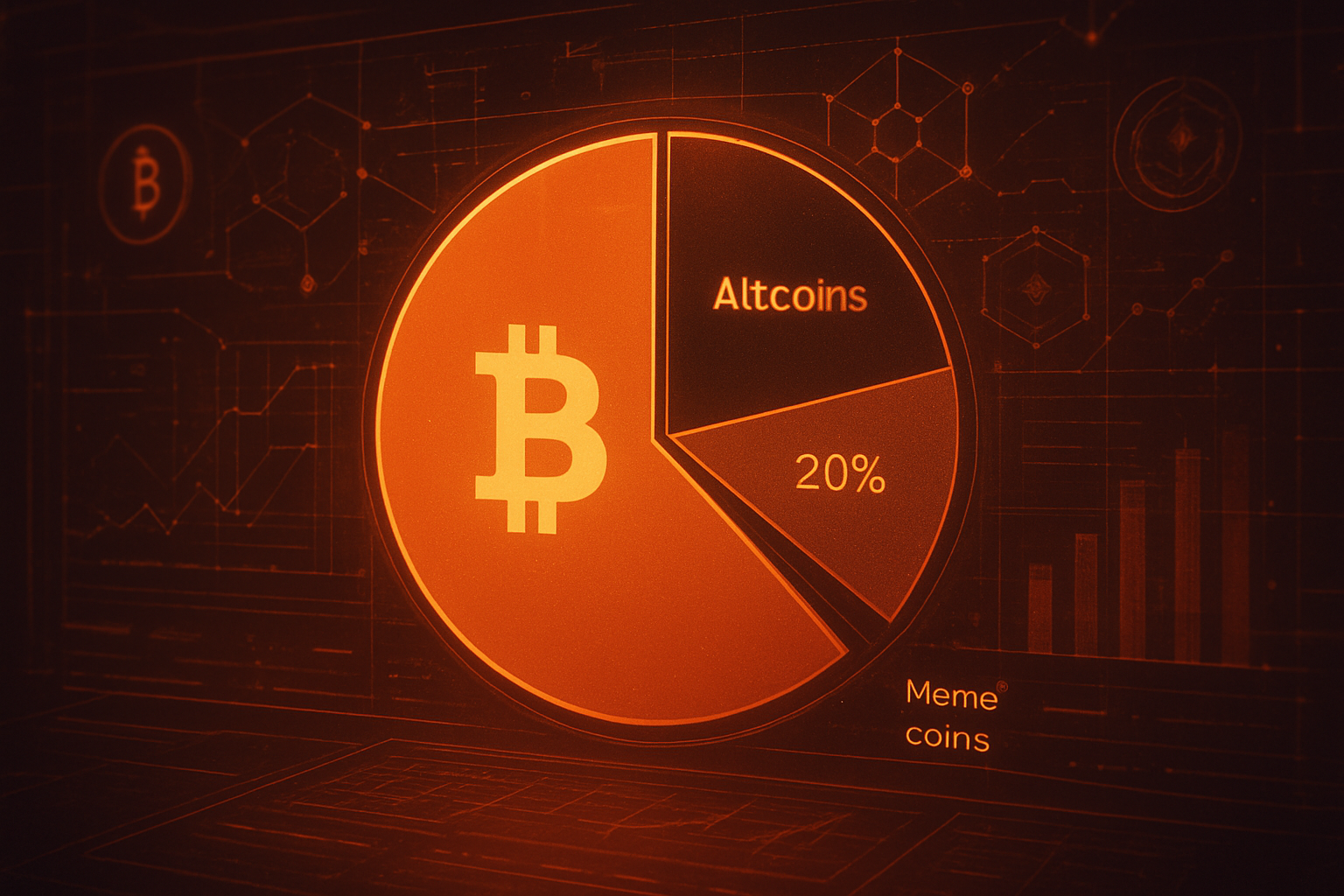
    A meticulously structured cryptocurrency portfolio allocation strategy, reportedly put forth by market wizard Adib Noorani, is capturing the attention of investors seeking a balanced yet growth-oriented approach in the volatile digital asset landscape. The strategy advises dedicating 10% of a total investment portfolio to cryptocurrency, further segmented into a dominant 75% allocation to Bitcoin (BTC), 20% to a diversified basket of Altcoins, and a speculative 5% to Meme coins. While specific public documentation directly attributing this precise breakdown to Adib Noorani was not found in recent research, the proposed framework offers a compelling blueprint for navigating the complexities of the crypto market as of November 2025.

    This allocation model emerges at a crucial juncture for the crypto ecosystem, offering a pragmatic blend of stability through Bitcoin and high-growth potential through altcoins and meme coins. Its significance lies in providing a clear, risk-managed entry point for both seasoned and nascent investors, potentially influencing capital flows and shaping investment narratives in a market increasingly seeking structured guidance amidst its inherent dynamism. The strategy's emphasis on Bitcoin as a foundational asset, complemented by calculated exposure to higher-risk, higher-reward segments, reflects a maturing perspective on digital asset investing.

    Market Impact and Price Action

    Should a significant portion of the investment community adopt a strategy akin to the one reportedly outlined by Adib Noorani, the market impact would likely reinforce existing trends while providing targeted support to specific sectors. With 75% of the crypto allocation directed towards Bitcoin, this strategy inherently strengthens BTC's market dominance and liquidity. As of November 2025, Bitcoin has been trading around $105,334, navigating a period of consolidation after fluctuating between $104,667 and $107,500. Despite a recent pullback from October highs, BTC maintains critical support near $100,000, with resistance at $110,000. A sustained influx of capital into Bitcoin, as suggested by this allocation, would likely bolster these support levels and provide a strong foundation for potential breakouts beyond $112,000, especially if institutional investments, which have shown cautious yet strategic interest in Bitcoin's infrastructure, continue to flow.

    The 20% allocation to Altcoins, while smaller than Bitcoin's share, represents a substantial commitment to the broader digital asset landscape. In November 2025, the altcoin market is characterized by heightened volatility and a "critical recalibration phase," with many altcoins still significantly below their all-time highs. However, selective strength is evident, with some assets like Humanity Protocol (H) seeing 300% surges and privacy coins like Zcash (ZEC) performing well ahead of halving events. This 20% allocation would likely fuel capital rotation from Bitcoin into promising altcoin projects, particularly those with strong fundamentals, developing ecosystems (like Solana and XRP), or those identified as undervalued. Such a sustained flow could help reverse the trend of altcoins trailing Bitcoin's performance, potentially igniting an "Altcoin Season" if Bitcoin dominance (currently around 58.69%) continues to show bearish signals, hinting at capital shifting towards higher-beta assets.

    The 5% allocation to Meme coins, while seemingly small, is strategically significant, acknowledging their role in attracting retail interest and generating high-risk, high-reward opportunities. As of November 2025, the meme coin market is experiencing a resurgence of speculative interest, with projections of over 150% growth since the beginning of the month and an 11% increase in combined market capitalization in the past week. Major meme coins like Dogecoin (DOGE), Shiba Inu (SHIB), and Pepe (PEPE) are exhibiting diverse trends, from DOGE's sideways consolidation around $0.178 to SHIB's 10.4% weekly gain and PEPE's mixed signals with observed whale accumulation. This consistent, albeit small, allocation could provide a steady stream of liquidity to the meme coin sector, maintaining speculative interest and potentially amplifying price movements in these highly volatile assets, which are primarily driven by social sentiment and community engagement rather than fundamental utility.

    Community and Ecosystem Response

    The proposed portfolio allocation strategy, with its clear delineation of risk and reward across different crypto asset classes, would likely resonate positively within the broader crypto community, particularly among those advocating for structured investment approaches. The strong emphasis on Bitcoin (75%) aligns with the "digital gold" narrative and its growing acceptance as a store of value and a hedge against inflation. This would likely be lauded by Bitcoin maximalists and traditional investors seeking a more conservative entry into crypto. Social media sentiment would likely reflect discussions around the prudence of such a dominant BTC position, especially in times of market uncertainty.

    The inclusion of a 20% allocation to Altcoins would be welcomed by developers and enthusiasts of various blockchain ecosystems, signaling continued confidence in technological innovation beyond Bitcoin. This could stimulate discussions on which altcoins best fit this category, focusing on projects with strong utility, growing developer communities, and clear roadmaps. Influencers and thought leaders might debate the criteria for selecting altcoins, potentially driving interest towards specific DeFi protocols, NFT projects, or Web3 applications that offer tangible value and adoption. The strategy implicitly encourages due diligence in the altcoin space, moving beyond pure speculation.

    The controversial yet pragmatic 5% allocation to Meme coins would likely spark lively debates across crypto Twitter and Reddit. While some might view it as an unnecessary exposure to highly speculative assets, others would see it as a realistic acknowledgment of the market's speculative appetite and the potential for outsized returns. This small allocation could be interpreted as a "fun money" or "high-risk, high-reward" component, catering to a segment of the retail investor base. It might also encourage further development of utility within the meme coin sector, as projects strive to justify even a small, structured allocation. Overall, the strategy fosters a balanced dialogue around risk management and diversification within the crypto space.

    What's Next for Crypto

    The widespread adoption of a portfolio allocation strategy similar to the one reportedly recommended by Adib Noorani could have profound short and long-term implications for the crypto market. In the short term, it would likely reinforce Bitcoin's position as the primary capital magnet and a benchmark for the broader market. This could lead to periods where Bitcoin outperforms altcoins, especially during market corrections, as investors "flock back to safety." For altcoins, the consistent 20% allocation would provide a steady demand floor, encouraging innovation and development in various sectors like DeFi, NFTs, and Web3, as projects compete to attract this dedicated capital. Meme coins would continue to thrive on speculative interest, with the 5% allocation ensuring a baseline of liquidity for this high-beta segment.

    Long-term implications include a potential normalization of crypto investing within traditional finance. A clear, expert-backed allocation strategy could lower the barrier to entry for institutional investors and wealth managers, who often seek structured approaches to new asset classes. This could accelerate broader crypto adoption by making digital assets seem less daunting and more integrated into conventional portfolio management. Potential catalysts to watch include further regulatory clarity globally, which could de-risk institutional participation across all crypto categories. Bitcoin halving events (like the one in April 2024, still being absorbed) will continue to influence supply dynamics, while major technological upgrades in altcoin ecosystems (e.g., Ethereum's scalability solutions) could drive significant capital inflows.

    Strategic considerations for projects and investors will revolve around demonstrating value and utility. Bitcoin projects will focus on strengthening its infrastructure and layer-2 solutions. Altcoin projects will need to clearly articulate their use cases, adoption metrics, and competitive advantages to attract the 20% allocation. For meme coins, the challenge will be to evolve beyond pure speculation, potentially by integrating utility or developing sustainable ecosystems, to retain and grow their 5% share. Possible scenarios include a continued "flight to quality" favoring Bitcoin during economic uncertainty, or a robust "Altcoin Season" if global risk sentiment improves and capital rotates into higher-growth assets.

    Bottom Line

    The proposed crypto portfolio allocation strategy, reportedly from market wizard Adib Noorani, offers key takeaways for crypto investors and enthusiasts: a disciplined approach to managing risk while capitalizing on the diverse opportunities within the digital asset space. The heavy weighting towards Bitcoin underscores its established role as a foundational asset and a primary store of value, making it the bedrock of a diversified crypto portfolio. The calculated exposure to altcoins allows for participation in technological innovation and potentially higher growth, while the small, speculative allocation to meme coins acknowledges their unique market dynamics and the potential for outsized, albeit risky, returns.

    This strategy holds significant long-term implications for crypto adoption. By providing a clear, structured framework, it demystifies crypto investing for a broader audience, potentially encouraging more mainstream participation. It signals a maturation of the market, where even volatile assets can be integrated into a balanced portfolio. The strategy implicitly advocates for continuous research and adaptation, as the specific altcoins and meme coins within the 20% and 5% allocations would require active management based on evolving market conditions and project developments.

    As of November 2025, investors should monitor Bitcoin's dominance and its ability to hold key support levels around $100,000. For altcoins, watching for signs of sustained capital rotation from BTC and the performance of projects with strong fundamentals will be crucial. In the meme coin space, monitoring social media sentiment, trading volumes, and any attempts by projects to build utility will be key metrics. The evolution of regulatory frameworks and macroeconomic indicators will also continue to play a pivotal role in shaping the overall crypto market trajectory.


    This article is for informational purposes only and does not constitute financial or investment advice. Cryptocurrency investments carry significant risk.
  • Crypto Market Quakes: Bitcoin and Ethereum Face $1.2 Billion Exodus as Solana Surges with $118 Million Inflow

    Crypto Market Quakes: Bitcoin and Ethereum Face $1.2 Billion Exodus as Solana Surges with $118 Million Inflow

    The cryptocurrency market witnessed a dramatic reallocation of capital in the week ending November 8, 2025, as a staggering $1.17 billion flowed out of digital asset investment products. The brunt of this exodus was borne by Bitcoin (BTC) and Ethereum (ETH) funds, which collectively saw approximately $1.37 billion in withdrawals, signaling a significant shift in investor sentiment away from the market's two largest assets. In stark contrast, Solana (SOL) emerged as a clear beneficiary, attracting a robust $118 million in inflows during the same period, underscoring a growing appetite for alternative blockchain investments.

    This pivotal week, immediately preceding November 11, 2025, highlights a complex interplay of macroeconomic anxieties, lingering market volatility, and evolving investor preferences. The substantial capital flight from established giants like Bitcoin and Ethereum, coupled with Solana's remarkable ascent, suggests a broader re-evaluation of risk and opportunity within the crypto ecosystem. This development carries profound implications for the future trajectory of altcoins, the stability of major cryptocurrencies, and the overall landscape of digital asset investments.

    Market Impact and Price Action

    The substantial outflows from Bitcoin and Ethereum funds in the week ending November 8, 2025, exerted considerable downward pressure on their respective prices. Bitcoin, already grappling with a preceding week's $946 million outflow, saw its price action reflect sustained bearish sentiment. While specific price figures for that exact week are still being analyzed, the consistent capital withdrawal indicates a weakening demand, pushing BTC towards key support levels. Conversely, Short Bitcoin ETPs experienced their highest weekly inflows since May 2025, attracting $11.8 million, a clear indicator that some institutional investors were actively positioning for a price decline, further exacerbating the selling pressure.

    Ethereum, facing $438 million in outflows, also experienced a notable downturn. The combined impact of these withdrawals on both BTC and ETH suggests a broader de-risking strategy among institutional investors, leading to increased selling volume and potential breaks below critical technical support zones. This widespread capital flight from the market leaders signals a cautious environment, where even minor negative news can trigger significant price corrections due to reduced liquidity and heightened investor sensitivity.

    In stark contrast, Solana (SOL) demonstrated remarkable resilience and upward momentum. The $118 million inflow into Solana-focused products, contributing to a year-to-date total of $3.4 billion, propelled SOL's price performance. This surge in investor interest, particularly driven by strong demand for newly launched U.S. spot Solana ETFs like Bitwise's BSOL and Grayscale's GSOL, indicates a robust buying appetite. The consistent net inflows into these products suggest that Solana is capturing a significant portion of capital seeking diversification and exposure to high-growth alternative layer-1 blockchains, potentially establishing new support levels and setting the stage for further price appreciation.

    Comparing this event to past market cycles reveals a distinct pattern of capital rotation during periods of uncertainty. While previous downturns often saw capital consolidating in Bitcoin as a "safe haven," the current trend suggests a more nuanced approach, with investors actively seeking out perceived growth opportunities in altcoins like Solana. This shift could signify a maturing market where investors are becoming more discerning, moving beyond purely speculative plays to evaluate underlying technology, ecosystem development, and potential staking yields, thereby influencing price action across the board.

    Community and Ecosystem Response

    The dramatic fund flow shifts, particularly the significant outflows from Bitcoin and Ethereum and the robust inflows into Solana, have ignited fervent discussions across crypto social media platforms. On Crypto Twitter, the sentiment has been a mix of concern for the market leaders and bullish enthusiasm for Solana. Hashtags related to "Solana Season" and "ETH Killer" saw increased traction, reflecting a growing narrative that Solana is gaining significant ground as a viable alternative to Ethereum. Many influencers, while acknowledging the broader market headwinds, highlighted Solana's technological advancements, lower transaction fees, and expanding ecosystem as key drivers for its newfound institutional interest.

    Reddit communities, particularly those focused on specific cryptocurrencies, displayed similar reactions. Bitcoin and Ethereum subreddits grappled with discussions surrounding the macroeconomic factors and the implications of sustained outflows, with some users expressing frustration over the lack of immediate catalysts for recovery. Conversely, Solana subreddits buzzed with optimism, celebrating the inflows as validation of the network's potential and predicting further growth. Thought leaders like Cathie Wood (Ark Invest) and other prominent analysts have also weighed in, with some suggesting that institutional investors are increasingly looking for diversified exposure beyond the top two, while others caution that the macroeconomic environment remains a dominant factor influencing overall market sentiment.

    Beyond price action and social media chatter, the capital reallocation has tangible effects on the broader crypto ecosystem. For DeFi protocols, particularly those heavily reliant on Ethereum's liquidity, sustained outflows could lead to reduced total value locked (TVL) and potentially higher gas fees if network congestion persists despite the withdrawals. Conversely, Solana's growing capital base is likely to fuel further development and innovation within its own DeFi and NFT ecosystems, attracting more developers and users. This shift could accelerate the migration of projects and users to alternative chains, challenging Ethereum's long-standing dominance in the dApp space and fostering a more multi-chain future for Web3 applications.

    What's Next for Crypto

    The recent significant fund flows, characterized by substantial outflows from Bitcoin and Ethereum and robust inflows into Solana, herald a period of re-evaluation and potential realignment within the cryptocurrency market. In the short term, the macroeconomic uncertainties, particularly surrounding the U.S. Federal Reserve's interest rate policy, will likely continue to dictate broader market sentiment. Should hawkish rhetoric persist or if a December interest rate cut becomes less probable, traditional risk-off sentiment could further impact Bitcoin and Ethereum, potentially leading to continued capital flight or sideways price action as investors remain cautious. For Solana, however, the momentum from recent inflows could sustain its upward trajectory, making it a compelling alternative for investors seeking growth in a challenging market.

    Looking further ahead, the long-term implications suggest a maturing market where diversification beyond the top two cryptocurrencies is becoming a strategic imperative for institutional investors. The strong demand for U.S. spot Solana ETFs indicates a growing appetite for well-regulated and accessible investment vehicles for altcoins. Potential catalysts to watch include clearer regulatory frameworks for digital assets globally, further institutional product launches for other promising altcoins, and continued technological advancements within blockchain ecosystems that offer superior scalability or efficiency. Developments in Ethereum's Layer 2 solutions and its ability to attract and retain developer talent will also be crucial in stemming outflows and regaining investor confidence.

    For projects and investors, strategic considerations must adapt to this evolving landscape. Projects built on Bitcoin and Ethereum may need to redouble efforts in innovation, user experience, and community engagement to retain and attract capital. Developers might explore multi-chain strategies or focus on niche applications that leverage the unique strengths of each blockchain. Investors, on the other hand, should consider diversifying their portfolios to include promising altcoins with strong fundamentals and clear growth narratives, rather than solely relying on the performance of Bitcoin and Ethereum. The current environment also highlights the importance of monitoring global economic indicators and central bank policies, as these macro factors increasingly influence crypto market movements.

    Possible scenarios include a continued "altcoin season" where capital rotates into high-growth alternatives, or a consolidation phase where the market awaits clearer macroeconomic signals before a decisive move. A less likely but still plausible scenario could see a resurgence of Bitcoin and Ethereum if macroeconomic conditions improve drastically or if significant positive regulatory news emerges. However, the current trend suggests that investors are becoming more discerning, and the "flight to quality" might now encompass a broader array of digital assets beyond just the market leaders, favoring those with strong use cases and established ecosystems like Solana.

    Bottom Line

    The recent capital reallocation in the cryptocurrency market, marked by significant outflows from Bitcoin and Ethereum and substantial inflows into Solana, represents a pivotal moment for investors and enthusiasts alike. The key takeaway is a clear shift in investor sentiment, driven by a confluence of macroeconomic anxieties and a growing appetite for diversification into high-growth altcoins. This trend underscores that while Bitcoin and Ethereum remain foundational, the market is maturing, and capital is increasingly flowing towards projects demonstrating robust technology, active development, and clear value propositions, particularly those with accessible institutional investment products.

    The long-term significance of this event cannot be overstated. It challenges the long-held belief that Bitcoin and Ethereum are the sole "safe havens" in times of uncertainty and signals a potential paradigm shift towards a more diversified digital asset landscape. Solana's emergence as a significant capital magnet highlights the increasing importance of scalability, transaction efficiency, and a thriving ecosystem in attracting institutional and retail investment. This dynamic will likely foster greater competition among blockchain platforms, driving innovation across the board.

    For crypto adoption, this shift implies a broadening appeal of digital assets beyond the established top two. As more diverse investment products become available and alternative chains prove their utility, the overall market is likely to attract a wider range of participants. Important dates and metrics to monitor include upcoming U.S. Federal Reserve meetings for interest rate decisions, quarterly earnings reports from publicly traded crypto companies like Coinbase (NASDAQ: COIN) and MicroStrategy (NASDAQ: MSTR), and the continued performance and inflow/outflow data for various digital asset investment products. The evolution of regulatory frameworks globally will also play a critical role in shaping future capital flows and investor confidence.


    This article is for informational purposes only and does not constitute financial or investment advice. Cryptocurrency investments carry significant risk.

  • Dogecoin Roars: ETF Hopes Ignite Altcoin Market with Potential Listing on NYSE Arca

    Dogecoin Roars: ETF Hopes Ignite Altcoin Market with Potential Listing on NYSE Arca

    November 9, 2025 – The cryptocurrency market is abuzz with renewed optimism as the prospect of Exchange Traded Funds (ETFs) for altcoins gains significant traction, a trend powerfully exemplified by recent developments surrounding Dogecoin (DOGE). In a move that could redefine institutional engagement with meme coins, Bitwise Asset Management has taken a pivotal step towards launching a spot Dogecoin ETF, igniting an immediate price surge and widespread excitement across the digital asset landscape. This development is not merely a win for Dogecoin holders but signals a maturing ecosystem where regulated investment vehicles are increasingly legitimizing a broader spectrum of cryptocurrencies, potentially ushering in a new era of institutional capital inflow into the altcoin market.

    The latest catalyst arrived in early November 2025 when Bitwise Asset Management filed a fourth amendment to its S-1 registration statement for a spot Dogecoin ETF. This strategic maneuver initiated a 20-day automatic effectiveness period under Section 8(a) of the Securities Act, setting the stage for a potential launch around November 26, 2025, on NYSE Arca under the proposed ticker symbol BWOW, absent any objection from the U.S. Securities and Exchange Commission (SEC). This action follows months of anticipation, with other major players like Grayscale and 21Shares also having active or pending Dogecoin ETF applications, underscoring a growing institutional appetite for diversified crypto exposure. The immediate market reaction saw Dogecoin's price jump by 8-11% in the first week of November, climbing above $0.17 and touching approximately $0.18, signaling the profound impact that traditional financial product integration can have on even the most community-driven digital assets. This trend is critical because it lowers barriers for institutional investors, bringing significant capital and legitimacy to altcoins, and potentially paving the way for a broader "altseason" in the near future.

    Market Impact and Price Action

    The news surrounding Bitwise's aggressive pursuit of a spot Dogecoin ETF sent immediate ripples through the market in early November 2025, triggering a notable price surge for DOGE. Following the filing of the fourth amendment to its S-1, Dogecoin's value climbed significantly, registering an 8-11% increase within the first week of November. The meme coin successfully pushed above the $0.17 mark, briefly touching approximately $0.18. This rapid ascent underscores the market's sensitivity to institutional validation and the potential for increased liquidity that regulated investment products can bring.

    Trading volumes for Dogecoin witnessed a substantial uptick, reflecting heightened investor interest and speculative activity. Data from Glassnode, a prominent on-chain analytics firm, revealed significant whale accumulation during this period, with approximately 11.12 billion DOGE reportedly bought around the $0.20 price level. This concentration of buying at a key resistance point indicates strong conviction from large holders anticipating further upside. Furthermore, over 3 billion DOGE were withdrawn from exchanges in the preceding month, a move often interpreted as long-term holders transferring assets to cold storage, signaling an expectation of future price appreciation rather than immediate selling.

    From a technical analysis perspective, the short-term momentum for Dogecoin turned bullish. The Moving Average Convergence Divergence (MACD) indicator showed bullish crossovers, a classic signal of increasing positive momentum, reinforcing the upward trajectory observed in the price. However, amidst this optimism, some analysts noted a "death cross" technical signal for DOGE earlier in November 2025, which typically suggests a bearish long-term trend. This divergence highlights the ongoing battle between short-term speculative fervor driven by ETF hopes and underlying longer-term market dynamics. The $0.20 level remains a critical resistance point; a sustained break above it could pave the way for further rallies towards $0.22 or even $0.25, while failure to do so might see profit-taking.

    Comparing Dogecoin's reaction to similar past events, such as the anticipation and approval of Bitcoin (BTC) and Ethereum (ETH) spot ETFs, reveals both parallels and distinctions. Bitcoin and Ethereum historically experienced significant price rallies in the lead-up to their ETF approvals, driven by institutional interest and the promise of broader accessibility. While Dogecoin's recent surge mirrors this anticipatory behavior, its inherent volatility and "meme coin" status mean its price movements can be more exaggerated and potentially more susceptible to rapid corrections. The "sell the news" phenomenon, observed post-approval for some Bitcoin ETFs, remains a potential scenario for DOGE, where initial gains might consolidate or retrace as early investors take profits. Nevertheless, the sustained institutional engagement and the sheer volume of DOGE being accumulated suggest a more robust foundation than previous, purely speculative rallies.

    Community and Ecosystem Response

    The prospect of a spot Dogecoin ETF has ignited a fervent response across the cryptocurrency community, particularly on social media platforms like X (formerly Twitter) and Reddit. Sentiment has been overwhelmingly bullish, with many hailing the development as a "historic step" that signifies Dogecoin's evolution "from just jokes" into a "regulated asset class." The community views this as a critical validation, anticipating a new wave of institutional participation that could further propel Dogecoin's mainstream adoption. Elon Musk's cryptic but timely tweet, "It is time," in response to discussions about Dogecoin's future, further fueled the excitement, albeit with some acknowledging that his influence on price might be maturing. Reddit forums, especially r/dogecoin, buzzed with optimism, drawing parallels to the positive market shifts seen with Bitcoin ETFs and hoping for a similar trajectory for DOGE, though some users wisely cautioned against overly exuberant expectations.

    Crypto influencers and thought leaders have largely amplified this positive sentiment, while also offering nuanced perspectives. Bloomberg ETF analyst Eric Balchunas has been a frequently cited authority, providing crucial timelines and insights into the potential effectiveness of the Bitwise Dogecoin spot ETF by late November. Figures like Trader Tardigrade have expressed strong optimism, even predicting a potential surge to $0.32 for DOGE, while market analyst BitGuru noted the ETF announcement's role in breaking Dogecoin out of a consolidation phase. This collective enthusiasm underscores a belief that a Dogecoin ETF would unlock significant institutional capital, boosting both demand and legitimacy.

    However, the discourse wasn't entirely devoid of caution. Prominent Dogecoin influencer Mishaboar issued a "critical warning" in early October 2025, advising DOGE holders to be wary of aggressive promotions for high-leverage trading platforms, emphasizing the inherent volatility of holding spot crypto. Similarly, crypto analyst Ali Martinez highlighted a strong resistance level at $0.20 and observed whale sell-offs, suggesting that despite the ETF optimism, potential challenges and profit-taking activities could temper sustained rallies. These cautionary voices reflect a maturing market that, while excited by institutional integration, remains mindful of speculative risks.

    Interestingly, the direct impact of the Dogecoin ETF news on related Decentralized Finance (DeFi) protocols, NFT projects, or broader Web3 applications appears to be less pronounced in early November 2025. While the ETF news was a significant catalyst for DOGE itself, the wider DeFi sector experienced a downturn, marked by a drop in Total Value Locked (TVL), largely due to a major security breach involving the Balancer protocol (BAL) on November 3, 2025, which resulted in a loss of approximately $128.6 million. Concurrently, the global NFT market suffered a dramatic decline, losing about 45% of its total value. These broader market challenges indicate that while an altcoin ETF can boost its underlying asset, the interconnected Web3 ecosystem remains susceptible to security vulnerabilities and general market "risk-off" sentiment. Nonetheless, the continued emergence of new meme coins like Maxi Doge and utility-focused projects like Remittix, which aims to bridge crypto and fiat payments, demonstrates sustained innovation and investor interest within the broader crypto landscape, irrespective of specific ETF developments.

    What's Next for Crypto

    The burgeoning trend of altcoin ETFs, particularly the advancements with Dogecoin, is poised to reshape the crypto market significantly in both the short and long term. In the immediate future, we can expect a surge in liquidity as traditional finance participants gain easier access to these assets. This influx of capital will likely fuel heightened price volatility, especially around critical regulatory decision dates and ETF launches. For Dogecoin, analysts project that if its ETF attracts even a fraction of the inflows seen by Bitcoin ETFs, its market value could double or triple, potentially pushing DOGE to $0.34-$0.50, representing a 95% to 190% gain from current levels. This institutional legitimization will continue to shift the narrative around "meme coins," positioning them as credible, albeit higher-risk, investment assets.

    Looking further ahead, altcoin ETFs are expected to drive the crypto market towards greater maturity and mainstream integration. By providing regulated investment vehicles, they will make digital assets a more regular component of diversified portfolios, encouraging more stable price dynamics over time as long-term institutional capital enters the fray. This evolution will also likely spur altcoin projects to focus more on utility, robust on-chain fundamentals, and regulatory alignment to attract and retain institutional interest. The development of diversified basket ETFs and other innovative crypto investment products will further expand the market's reach and sophistication.

    Several key catalysts and developments warrant close observation. Paramount among these are the ongoing SEC decisions for various altcoin ETFs. While Bitwise's Dogecoin ETF is on an accelerated path, other significant decisions are due, including Grayscale's Hedera (HBAR) ETF by November 12, 2025, and 21Shares' XRP ETF, which could see approval by November 27, 2025. Litecoin (LTC), Solana (SOL), and Cardano (ADA) also have high probabilities of gaining ETF approval in the coming months. The success and performance of existing Bitcoin and Ethereum ETFs, which have collectively attracted over $40 billion in assets under management since January 2024, will continue to set precedents and build confidence for subsequent altcoin products. Furthermore, broader macroeconomic factors, such as anticipated interest rate cuts by central banks, could inject additional liquidity into riskier assets like cryptocurrencies, boosting altcoin demand.

    For projects, the strategic imperative is clear: focus on developing tangible use cases, maintaining strong fundamentals, and ensuring robust regulatory alignment. Projects that demonstrate clear utility and adhere to evolving compliance standards will be best positioned to attract institutional capital. For investors, due diligence and risk management are paramount. Altcoins remain inherently volatile, and even with an ETF wrapper, significant price swings are possible. Diversification across a range of crypto assets, distinguishing between speculative hype and fundamental value, and a keen eye on regulatory developments will be crucial. While short-term gains are possible, a long-term perspective, coupled with an understanding of Dogecoin's inflationary nature and historical volatility, is advisable.

    Possible scenarios for the crypto market's future, as of November 9, 2025, include a high-to-moderate likelihood of widespread altcoin ETF approval and success, building on the precedent of Bitcoin and Ethereum ETFs and new generic listing standards. This could usher in a new "altseason." A limited altcoin ETF approval scenario, where only a few major altcoins gain approval, remains a moderate possibility if regulatory caution prevails. While less likely now, regulatory roadblocks and slow adoption could still occur. Specifically for Dogecoin, a double-edged sword scenario has a high likelihood within its own approval context: an initial significant price rally driven by institutional legitimacy and retail FOMO, followed by a potential correction due to its inflationary nature and continued volatility.

    Bottom Line

    The current landscape, dominated by the imminent possibility of a spot Dogecoin ETF, marks a pivotal moment for crypto investors and enthusiasts. The key takeaway is the accelerating institutionalization of the altcoin market. While Bitcoin and Ethereum have paved the way, a Dogecoin ETF signifies a profound shift, extending traditional finance's embrace to even the most community-driven and once-parody assets. This development underscores a growing recognition of digital assets as a legitimate, albeit volatile, asset class. Investors should prepare for increased market liquidity and potential price surges, but also heightened volatility, as new capital flows in and market dynamics adjust to this institutional presence.

    The long-term significance of altcoin ETFs cannot be overstated. They are not just about individual asset price pumps; they represent a fundamental maturation of the crypto ecosystem. By offering regulated and accessible investment vehicles, ETFs lower the barrier to entry for a vast pool of traditional capital, from pension funds to wealth managers. This integration fosters greater stability, deeper liquidity, and enhanced legitimacy for the entire digital asset space. While the immediate focus is on Dogecoin, the success of such an ETF will undoubtedly set a precedent for a wider array of altcoins, potentially ushering in an era of diversified crypto portfolios within traditional finance.

    Ultimately, this trend means a significant leap forward for crypto adoption. The ability for mainstream investors to gain exposure to altcoins through familiar, regulated products like ETFs removes many of the complexities and perceived risks associated with direct crypto ownership. This bridges the gap between the nascent digital asset world and established financial markets, paving the way for broader public acceptance and utility. It signals that cryptocurrencies, in their diverse forms, are here to stay and will increasingly intertwine with global financial infrastructure.

    For those monitoring the market, several important dates, events, and metrics are crucial. The proposed launch of the Bitwise Dogecoin Spot ETF around November 26, 2025, on NYSE Arca (BWOW), pending SEC objection, is the most immediate and critical event. Keep a close watch on SEC decisions regarding other altcoin ETF filings, particularly those for XRP (XRP), Hedera (HBAR), Litecoin (LTC), Solana (SOL), and Cardano (ADA), which are expected in late 2025 and early 2026. Monitor Dogecoin's price action around the psychological $0.20 resistance level and beyond, as well as trading volumes and on-chain whale activity for signs of sustained institutional interest or profit-taking. Finally, observe the overall performance and inflows into existing Bitcoin and Ethereum ETFs, as their success continues to validate the broader crypto ETF thesis. This is an exciting, albeit complex, period for the crypto market, demanding informed and strategic participation.


    This article is for informational purposes only and does not constitute financial or investment advice. Cryptocurrency investments carry significant risk.
  • The Crypto Phoenix Rises: Market Rebounds 4% After Multi-Month Lows, Signaling Cautious Optimism and Institutional Resilience

    The Crypto Phoenix Rises: Market Rebounds 4% After Multi-Month Lows, Signaling Cautious Optimism and Institutional Resilience

    The cryptocurrency market has staged a significant comeback, experiencing a broad 4% rebound around November 9-10, 2025, after enduring a prolonged period of multi-month lows and widespread investor apprehension. This resurgence, marked by key digital assets like Bitcoin and Ethereum leading the charge, has injected a much-needed dose of cautious optimism into the ecosystem, prompting a flurry of activity from institutional players and retail investors alike. The immediate market reaction saw a notable uptick in whale activity and volatile swings in the derivatives market, signaling a dynamic shift in sentiment.

    This recovery is a pivotal event for the crypto ecosystem, moving it away from a phase characterized by "Extreme Fear" on the Fear & Greed Index. It suggests a growing maturity in the market, where dips are increasingly met with strategic accumulation rather than panic selling. Furthermore, the rebound underscores the deepening influence of institutional capital, with renewed inflows into Bitcoin Exchange-Traded Funds (ETFs) playing a crucial role, and positions the market for potential further integration into traditional finance.

    Market Impact and Price Action

    The recent market uplift saw Bitcoin (BTC) gain approximately 4%, managing to stabilize around the US$106,000 mark after briefly dipping below the psychologically significant US$100,000 level. Ethereum (ETH) demonstrated even stronger performance, climbing an impressive 7% to reach around US$3,640. This robust showing by Ethereum, outperforming Bitcoin in the initial rebound, highlighted its pivotal role in the broader blockchain infrastructure. Other major altcoins, including XRP, BNB, Solana, and Dogecoin, also registered significant gains, contributing to the overall market capitalization recovery.

    Trading volume saw a notable increase, particularly from crypto whales who became highly active, moving millions in BTC, ETH, Chainlink (LINK), and Zcash (ZEC) across various markets. The derivatives market experienced "wild swings," leading to substantial gains for some long-position holders while inflicting losses on others. Despite a large outflow from BlackRock's (NYSE: BLK) iShares Bitcoin Trust, the overall trend indicated a return of institutional inflows, with Bitcoin ETFs registering a significant US$240 million rebound in inflows on November 6, halting a streak of outflows. This improved liquidity, coupled with easing political uncertainty in the United States, bolstered investor sentiment.

    From a technical perspective, the market's rebound was preceded by the Stochastic RSI indicating extreme oversold conditions, historically a precursor to market reversals. Bitcoin's ability to consolidate and maintain support above the US$100,000 level proved crucial for stemming further declines and establishing a foundation for the recovery. This market behavior, where dips are met with accumulation, increasingly points to Bitcoin evolving into a more structural asset rather than purely speculative, potentially decoupling from traditional assets like gold and the Nasdaq. Comparisons to similar past events suggest this could be a "structural clean-out" of over-leveraging, setting the stage for renewed momentum.

    Community and Ecosystem Response

    The 4% market rebound has sparked a wave of cautious optimism across crypto social media channels, including Twitter (now X) and Reddit. Initial discussions have revolved around whether this marks the beginning of a sustained uptrend or merely a temporary relief rally. The "WAGMI" (We're All Gonna Make It) sentiment has seen a resurgence, with many celebrating green portfolios, though seasoned participants often temper this enthusiasm with reminders of market volatility. Technical analysts within the community are actively sharing charts, debating key support and resistance levels, and scrutinizing volume to discern the sustainability of the recovery.

    Crypto influencers and thought leaders have largely responded with a mix of positive reinforcement and analytical commentary. Those with a long-term bullish outlook are leveraging the rebound to validate their positions, emphasizing the market's inherent resilience. Many are providing immediate technical breakdowns, highlighting on-chain metrics and macroeconomic factors that contributed to the price action. While some might use the positive sentiment to promote specific projects, reputable voices generally advise caution, stressing the importance of risk management and due diligence, even during a recovery phase.

    Across the broader ecosystem, the rebound is expected to have a positive ripple effect. Decentralized Finance (DeFi) protocols could see an increase in Total Value Locked (TVL) as asset values rise and users deposit more capital for lending, borrowing, and yield farming. Decentralized exchanges (DEXs) would likely experience a spike in trading volumes. For NFT projects, renewed interest could translate into increased sales volumes and potentially higher floor prices for popular collections, as discretionary spending returns to the space. Web3 applications, including decentralized gaming and metaverse platforms, might observe an uptick in user engagement and developer activity, fueled by improved market confidence and the prospect of a more favorable investment climate for new startups.

    What's Next for Crypto

    The recent 4% rebound, while a welcome respite, ushers in a period of cautious optimism rather than an immediate, full-blown bull run. In the short term (late 2025), the market is expected to remain volatile. Bitcoin's ability to maintain its position above the US$106,000 level will be critical, with a sustained break above potentially reinforcing a bullish structure, while a dip below could signal renewed weakness. Ethereum, with its stronger technical setup defending the US$3,600 region, eyes a potential move towards US$4,000. This period is seen by some analysts as a "healthy reset," where liquidity is pausing, not fleeing, yet the market remains highly sensitive to US Federal Reserve policies, regulatory shifts, and global risk sentiment.

    Looking further out (2026 and beyond), the long-term outlook for crypto appears more robust, largely driven by accelerating institutional adoption and a maturing market structure. Bitcoin is increasingly viewed as evolving into a portfolio hedge and treasury instrument. Projections, bolstered by the 2024 Bitcoin halving, suggest Bitcoin could reach US$150,000–US$180,000 by mid-2026. Ethereum is similarly poised for significant long-term growth, underpinning the future of tokenization, DeFi, and broader infrastructure development. The market may gradually transition towards more measured growth, reducing the severity of extreme "boom and bust" cycles.

    Several potential catalysts and developments warrant close monitoring. Regulatory clarity remains paramount, with the U.S. Securities and Exchange Commission (SEC) expected to make crucial decisions on altcoin Exchange-Traded Funds (ETFs), including Grayscale's Hedera (HBAR) ETF by November 12 and 21Shares' XRP ETF by November 27. The passing of the US GENIUS Act in July 2025, formalizing stablecoin regulation, and the Asset Market Clarity Act, which aims to classify digital assets, are significant steps towards enhancing institutional confidence. Continued substantial inflows into US crypto ETFs, particularly Bitcoin ETFs from firms like Fidelity (NYSE: FNF), Ark Invest (NYSE: ARKK), Bitwise, and VanEck, will be key indicators of sustained institutional demand. Macroeconomic factors, such as easing US political uncertainty and potential dovish shifts from the Federal Reserve, could inject further liquidity. Technological advancements in Layer 2 solutions, interoperability, and Real-World Asset (RWA) tokenization, along with specific altcoin developments like Mastercard's (NYSE: MA) partnership with MetaMask on a self-custody crypto payment card and XRP's pilot of the RLUSD stablecoin on the XRP Ledger, are also expected to drive growth.

    For projects, strategic considerations include prioritizing utility, robust security, regulatory alignment, and sustainable tokenomics. Investors are advised to focus on risk management, diversification (including regulated ETFs), a long-term perspective, and identifying catalysts. Emerging narratives like AI, DeFi 2.0, and RWAs offer potential growth opportunities. Possible scenarios range from a continued mild recovery (most likely short-term) to range-bound consolidation, with a deeper pullback being less likely but still possible if macroeconomic conditions deteriorate or significant whale selling occurs.

    Bottom Line

    The 4% cryptocurrency market rebound around November 9-10, 2025, after hitting multi-month lows, serves as a critical indicator of the market's resilience and its ongoing evolution. For crypto investors and enthusiasts, the key takeaway is that while this offers short-term relief, it is crucial to view it as a "healthy reset" within a broader, albeit volatile, landscape, rather than an immediate harbinger of an explosive bull run. The market's increasing sensitivity to macroeconomic and political factors underscores the need for a holistic investment approach that considers global economic indicators alongside crypto-specific developments.

    The long-term significance of this rebound for crypto adoption remains profoundly positive. It reinforces the narrative of continued institutionalization, with regulatory progress (like stablecoin frameworks and asset classification acts) and sustained ETF inflows steadily de-risking the asset class for traditional finance. The expansion of use cases beyond mere speculation, particularly in DeFi, AI, Layer 2 solutions, and Real-World Asset tokenization, signifies a maturing ecosystem poised for deeper integration into various industries. Despite short-term fluctuations, the underlying structural bullish signals—such as Bitcoin's established price floor, Ethereum's growing institutional footprint, and renewed altcoin momentum—collectively point towards a sustained upward trajectory and broader adoption into 2026 and beyond.

    To navigate this dynamic environment, several important dates, events, and metrics warrant close monitoring. November 14, 2025, is a crucial date, with the U.S. Securities and Exchange Commission (SEC) expected to announce decisions on spot ETFs for Solana and XRP, which could serve as significant market catalysts. Investors should also diligently track upcoming macroeconomic data, including inflation reports and interest rate policy statements from central banks. Major industry conferences throughout November 2025, such as the Blockchain Futurist Conference and Web3 Summit, can reveal new partnerships and technological advancements. Furthermore, monitoring token unlocks for projects like SUI and EIGEN, institutional capital flows into ETFs, on-chain metrics (transaction volumes, active addresses, DeFi TVL), and developments in RWA tokenization will provide critical insights into the market's health and future direction.


    This article is for informational purposes only and does not constitute financial or investment advice. Cryptocurrency investments carry significant risk.

  • Beyond Bitcoin: The Multi-Asset Broker Boom Reshapes Crypto Trading Landscape

    Beyond Bitcoin: The Multi-Asset Broker Boom Reshapes Crypto Trading Landscape

    The cryptocurrency market, once dominated by Bitcoin-only platforms, has undergone a profound transformation, ushering in an era defined by the "multi-asset broker boom." This pivotal shift, which gained significant momentum from 2023 through 2024 and now firmly characterizes the 2025 landscape, reflects a maturing ecosystem driven by increasing investor demand for diversification, rapid technological advancements, and a broader understanding of digital assets beyond just BTC. This evolution is fundamentally reshaping how traders interact with the crypto space, offering unparalleled access to a diverse range of digital currencies, traditional financial instruments, and derivatives from unified interfaces.

    As of November 8, 2025, this trend is particularly relevant amidst recent market dynamics. The late October and early November period has seen considerable institutional headwinds, leading to widespread price corrections across the crypto complex. Despite this short-term volatility, the underlying narrative of multi-asset integration remains strong, signaling a long-term trajectory towards a more sophisticated and accessible financial market. This shift is critical for the crypto ecosystem, bridging the gap between traditional finance and digital assets, enhancing liquidity, and fostering greater institutional adoption by providing diversified investment avenues and streamlined portfolio management.

    Market Impact and Price Action

    The proliferation of multi-asset brokers has had a tangible impact on market dynamics, influencing price action, trading volumes, and liquidity across a broader spectrum of digital assets. While Bitcoin (BTC) has historically commanded the lion's share of attention, the increased accessibility of altcoins through these platforms has led to a noticeable redistribution of trading activity and capital. Brokerages that expanded their offerings during the 2023-2024 period reported significant jumps in trading volume, with some experiencing quarter-over-quarter increases of up to 40% as users flocked to diversify their portfolios.

    However, the current market context provides a nuanced picture. The first half of November 2025 has been marked by a significant downturn, largely attributed to a historic $19-20 billion liquidation event around October 10-11 and substantial withdrawals of institutional capital from U.S. spot Bitcoin and Ethereum (ETH) Exchange-Traded Funds (ETFs). Bitcoin, after reaching a new all-time high near $126,000 on October 6, experienced a sharp 13% single-day correction and subsequently fell below $100,000 by November 4th, representing a 21-21.5% drop from its October peak. This volatility underscores the interconnectedness of digital assets with broader macroeconomic forces and the re-evaluation of risk by large institutional players.

    Ethereum and various altcoins also endured significant corrections during this period, with many altcoins witnessing drawdowns exceeding 80% from their recent highs. Despite these broad market corrections, a fascinating trend has emerged: a noticeable shift in capital towards select altcoins possessing clear catalysts, particularly within decentralized infrastructure and privacy-focused assets such as Filecoin (FIL), Zcash (ZEC), and DASH (DASH). This indicates that while the overall market faced headwinds, traders are actively leveraging the expanded access provided by multi-asset platforms to strategically position themselves in assets they believe have strong fundamentals or upcoming developments, suggesting a dynamic and evolving market sentiment that extends beyond Bitcoin's immediate performance.

    The increased availability of diverse trading pairs on multi-asset platforms has generally contributed to deeper liquidity pools across various altcoins. This improved liquidity can lead to tighter spreads and more efficient price discovery, benefiting traders. While the recent downturn tested these liquidity levels, the underlying infrastructure of multi-asset brokers allowed for continued trading and positioning, even in turbulent conditions. This resilience, in contrast to earlier market phases where altcoin liquidity could evaporate quickly, signifies a maturing market structure capable of handling increased trading complexity and volume.

    Community and Ecosystem Response

    The crypto community's response to the multi-asset broker boom is largely positive, albeit tempered by recent market volatility. On social media platforms and forums like Reddit and X (formerly Twitter), discussions often highlight the convenience and expanded opportunities that come with unified trading platforms. Traders appreciate the ability to manage diversified portfolios without juggling multiple accounts, a sentiment frequently echoed by those seeking to explore beyond Bitcoin and Ethereum.

    Crypto influencers and thought leaders have also weighed in, with many emphasizing the importance of diversification in a maturing market. While some "Bitcoin maximalists" maintain their laser focus on BTC, a growing number of influential voices are advocating for a more comprehensive approach to digital asset investment, aligning with the offerings of multi-asset brokers. They often stress the educational aspect, encouraging followers to research and understand a wider array of projects now accessible through these platforms. The recent market downturn, however, has also led to calls for caution, with influencers underscoring the need for robust risk management strategies when engaging with a broader range of volatile assets.

    The impact on related DeFi protocols, NFT projects, and Web3 applications is significant. By lowering the barrier to entry for accessing a wider array of tokens, multi-asset brokers indirectly boost the visibility and liquidity of projects within these burgeoning sectors. For instance, the increased ease of acquiring governance tokens for DeFi protocols or native tokens for Web3 gaming platforms means more potential participants and investors. This enhanced accessibility can drive user adoption and engagement, fostering growth within these specific niches of the crypto ecosystem. Broader crypto Twitter and Reddit sentiment, despite the current bearish short-term outlook due to recent corrections, generally views the multi-asset trend as a positive long-term development that contributes to the overall legitimization and expansion of the digital asset space.

    What's Next for Crypto

    The multi-asset broker boom signals a clear trajectory for the crypto market's future: continued maturation and integration into the broader financial landscape. In the short term, the market will likely continue to navigate the headwinds experienced in late 2025, with institutional capital flows and macroeconomic indicators playing a crucial role. However, the enhanced accessibility and diversification offered by multi-asset platforms mean that capital, once it re-enters, can be deployed more broadly and efficiently across the ecosystem. This could lead to a quicker recovery for a wider range of altcoins once sentiment shifts, rather than just a Bitcoin-led rebound.

    Looking further ahead, the long-term implications are profound. The convergence of traditional finance (TradFi) and decentralized finance (DeFi) will accelerate, with multi-asset brokers acting as key bridges. We can expect to see further innovation in platform features, including more sophisticated cross-asset margin trading, integrated yield-generating opportunities across various digital assets, and potentially even fractionalized ownership of real-world assets alongside cryptocurrencies. Regulatory clarity will be a significant catalyst; as governments worldwide establish clearer frameworks for digital assets, multi-asset brokers will be better positioned to attract even larger institutional flows, further solidifying crypto's place in mainstream finance.

    Strategic considerations for projects and investors will revolve around adaptability and robust due diligence. Projects will need to ensure their tokens are easily listable and liquid across these diverse platforms to maximize exposure. Investors, on the other hand, must embrace a more comprehensive investment strategy, moving beyond single-asset narratives to understand the interconnectedness of various digital assets and their potential use cases. Possible scenarios include a continued expansion of asset classes offered, potentially incorporating tokenized securities or even tokenized intellectual property, further blurring the lines between traditional and digital investments. The likelihood of this continued expansion is high, driven by technological advancements and persistent investor demand for diversification and efficiency.

    Bottom Line

    The multi-asset broker boom represents a monumental shift for crypto investors and enthusiasts, marking a definitive move beyond the early, siloed days of Bitcoin-only trading. The key takeaway is the undeniable value of diversification and the enhanced efficiency offered by unified platforms. While the crypto market will always carry significant risk, the ability to spread investments across a broader range of digital assets and even traditional instruments within a single interface provides tools for more sophisticated risk management and portfolio construction.

    The long-term significance of this trend cannot be overstated. It is a critical component of crypto's journey towards mainstream adoption, fostering greater institutional interest and legitimizing digital assets as a viable asset class within a diversified investment portfolio. By facilitating the convergence of traditional and digital finance, multi-asset brokers are building the infrastructure for a more integrated and mature global financial system.

    For investors, it's crucial to monitor several key metrics and events. Keep an eye on regulatory developments globally, as favorable frameworks will accelerate institutional inflows and further platform innovation. Observe trading volumes and liquidity across various altcoins on multi-asset platforms, as these will indicate market health and investor interest beyond Bitcoin. Finally, stay informed about new asset classes or features introduced by leading brokers, as these will signal the next frontier in digital asset trading. The current market volatility serves as a reminder that even within a maturing market, prudence and continuous learning remain paramount.


    This article is for informational purposes only and does not constitute financial or investment advice. Cryptocurrency investments carry significant risk.
  • Altcoin Resurgence: Maxi Doge, XRP, Monero, and Algorand Eyeing Major Gains in 2025

    Altcoin Resurgence: Maxi Doge, XRP, Monero, and Algorand Eyeing Major Gains in 2025

    As the cryptocurrency market navigates the latter half of 2025, a palpable sense of optimism surrounds the altcoin sector. Following a period of consolidation and regulatory shifts, several alternative cryptocurrencies are positioning themselves for significant growth, drawing the attention of investors seeking the next wave of innovation and returns. Among these, Maxi Doge, XRP, Monero (XMR), and Algorand (ALGO) stand out for distinct reasons, from meme-driven hype to foundational technological advancements and crucial regulatory clarity.

    The current landscape, as of November 8, 2025, reflects a market matured by past cycles and increasingly influenced by institutional engagement and real-world utility. The resolution of major legal battles and the continuous evolution of blockchain technology are setting the stage for what many analysts predict will be a robust altcoin season. This article delves into what makes these specific altcoins noteworthy contenders for investment in the coming months, examining their unique value propositions and the factors driving their potential.

    Market Impact and Price Action

    The potential for altcoins to deliver substantial returns in 2025 is underscored by a mix of speculative interest, fundamental utility, and strategic positioning. Each of the highlighted tokens presents a unique investment thesis.

    Maxi Doge ($MAXI): Riding the Meme Wave with Utility

    Maxi Doge ($MAXI) has emerged as a compelling, albeit high-risk, play in the meme coin arena. Launched its presale in July 2025, it quickly gained traction by branding itself as the "gym bro" version of Dogecoin, appealing to the "degen trading lifestyle" with promises of "max gains." Its presale success, raising over $3.9 million across 50 stages with incrementally increasing token prices, signals strong community interest. While meme coins are inherently volatile, Maxi Doge differentiates itself with a staking program offering a high Annual Percentage Yield (APY) of up to 81% for early buyers, providing a form of utility beyond pure speculation. The project's smart contract, audited by Coinsult and SolidProof, aims to prevent common scam tactics, and a substantial 40% of the token supply is earmarked for aggressive marketing. In a market anticipating a broader bull cycle in 2025, meme coins like Maxi Doge, with their viral appeal and community-driven growth, could see explosive movements, though investors must exercise extreme caution due to the inherent risks.

    XRP: Regulatory Clarity Fuels Institutional Adoption

    XRP, the digital asset associated with Ripple Labs, has witnessed a transformative year, largely defined by the definitive resolution of its protracted legal battle with the U.S. Securities and Exchange Commission (SEC). In March 2025, Ripple CEO Brad Garlinghouse confirmed that XRP is not considered a security for public exchange sales, a landmark ruling solidified by the mutual dismissal of all appeals by Ripple Labs and the SEC in August 2025. This settlement, which included a $125 million penalty for Ripple and the removal of business restrictions, has provided unprecedented regulatory clarity.

    This newfound clarity has propelled XRP's utility and adoption prospects for 2025. Ripple's core offering, the On-Demand Liquidity (ODL) service, leverages XRP for rapid, low-cost cross-border payments, settling transactions in 3-5 seconds with minimal fees. The company's strategic moves include the introduction of its U.S. dollar-backed stablecoin, Ripple USD (RLUSD), which operates on the XRP Ledger (XRPL). RLUSD is currently being piloted in collaboration with major players like Mastercard (NYSE: MA), WebBank, and Gemini for fiat card transaction settlements, positioning the XRPL as a backbone for mainstream payment systems.

    Significant partnerships in 2025 further bolster XRP's standing: BNY Mellon (NYSE: BK) was appointed as the primary custodian for RLUSD in July; Ripple acquired prime brokerage firm Hidden Road for $1.25 billion in April, rebranding it as Ripple Prime to bridge traditional finance and digital assets; and collaborations with the Dubai Land Department, Canadian Imperial Bank of Commerce (CIBC) (NYSE: CM), and SBI Remit in Japan expand its global reach. With multiple issuers filing for U.S. spot XRP ETFs, an approval as early as November 2025 could unlock substantial institutional and retail demand, potentially driving significant price appreciation and solidifying XRP's role in global financial infrastructure.

    Monero (XMR): The Enduring Appeal of Privacy

    Monero (XMR) continues to command attention as the leading privacy coin, with its unwavering commitment to anonymity proving increasingly valuable in a world grappling with digital surveillance. XMR's core strength lies in its mandatory privacy features, including ring signatures, stealth addresses, and Ring Confidential Transactions (RingCT), which obscure sender, recipient, and transaction amounts by default. Unlike competitors offering optional privacy, Monero's "always-on" approach ensures true fungibility.

    However, Monero operates within a challenging regulatory environment. Governments globally, particularly in the EU, have intensified scrutiny of privacy coins, leading to delistings from major centralized exchanges like Binance and Kraken. Despite these headwinds, Monero's decentralized governance and community-driven development foster resilience. The upcoming Seraphis upgrade, anticipated for 2025/2026, aims to significantly enhance its anonymity set and fortify its technical defenses against tracking. Recent updates like Fluorine Fermi and Cuprate node have improved security and network efficiency. Efforts to expand atomic swaps with Bitcoin and integrate with decentralized exchanges (DEXs) like Haveno are critical for maintaining accessibility. In a climate of increasing financial surveillance, Monero's role as "digital privacy gold" is expected to grow, with analysts projecting price ranges from $175-$250 to potentially over $700 by December 2025, driven by demand for financial confidentiality.

    Algorand (ALGO): Scalability, Security, and Real-World Assets

    Algorand (ALGO) is making significant strides in 2025, cementing its position as a high-performance, secure, and sustainable blockchain platform. Its Pure Proof-of-Stake (PPoS) consensus mechanism enables instant transaction finality (under five seconds) and high throughput (over 1,000 TPS, with potential for 10,000 TPS), crucial for enterprise-grade applications. The January 2025 Algorand 4.0 upgrade introduced advanced cryptographic tools, including Zero-Knowledge Proof (ZKP) support for privacy-focused dApps, and laid the groundwork for quantum-resistant security.

    The Algorand ecosystem is flourishing, particularly in Real-World Asset (RWA) tokenization, with TVL growing by 34.6% in the latter half of 2024. Platforms like Lofty are leveraging Algorand for tokenizing real estate, and analysts predict Algorand's dominance in this niche due to its low fees and institutional-grade infrastructure. Key metrics highlight robust growth: monthly active users increased by 24.6% in March 2025, stablecoin market capitalization grew by 20% in July 2025, and the number of smart contracts more than doubled. The launch of xGov in Q3 2025 further enhances community-driven governance.

    Strategic partnerships are driving ALGO's adoption. Bitpanda, Europe's largest regulated broker, staked 120 million ALGO tokens, signaling institutional confidence. A partnership with Nubank, Latin America's largest digital bank, aims to integrate ALGO into its ecosystem of 100 million users. Lavazza is using Algorand to track coffee supply chains, and collaborations with Google (NASDAQ: GOOGL) on its AP2 Aentic Payments Protocol and Hex Trust for institutional staking underscore its versatility. Algorand's 2025+ roadmap focuses on "killing complexity" for developers and enterprises, targeting mainstream adoption through tokenized financial products, agentic commerce, and self-sovereign identity. Analysts project ALGO prices ranging from $0.45 to $0.89, with some bullish predictions exceeding $2.00 or even $3-$5 by year-end, driven by continued adoption and successful partnerships.

    Community and Ecosystem Response

    The broader crypto community is buzzing with anticipation for altcoins in 2025, largely fueled by a sense of a maturing market and the potential for a new bull cycle. On social media platforms like X (formerly Twitter) and Reddit, sentiment is generally bullish, particularly around projects demonstrating clear utility or significant technological advancements.

    For XRP, the resolution of the SEC lawsuit has unleashed a wave of positive sentiment, with community discussions now shifting from legal battles to adoption narratives, particularly around Spot XRP ETFs and Ripple's expanding enterprise solutions. The "XRP Army" is reinvigorated, actively promoting its potential. Algorand's consistent technological upgrades and growing real-world use cases, especially in RWA tokenization, have garnered strong support from developers and institutional observers who value its speed, security, and sustainability. The increasing number of smart contracts deployed and the shift towards xGov governance reflect a vibrant and engaged ecosystem.

    Maxi Doge, while newer, thrives on the "degen" culture prevalent in certain segments of crypto Twitter. Its aggressive marketing and staking rewards have generated significant hype, attracting risk-tolerant investors looking for high-leverage opportunities. Monero, despite facing regulatory challenges, maintains a fiercely loyal community of privacy advocates who champion its core mission. Discussions often revolve around decentralized alternatives for trading XMR and the importance of financial privacy in an increasingly surveilled digital age. Overall, the sentiment leans towards optimism, with a collective belief that foundational projects with clear value propositions, alongside innovative newcomers, are poised for significant gains.

    What's Next for Crypto

    The remainder of 2025 and beyond holds significant implications for the altcoin market. The overall sentiment points towards a sustained bull market, potentially driven by factors such as the continued institutionalization of crypto, further regulatory clarity in key jurisdictions, and ongoing technological breakthroughs.

    For projects like XRP and Algorand, the focus will be on the execution of their strategic partnerships and the successful deployment of new products and services. The launch of Spot XRP ETFs could be a major catalyst, opening up massive new capital flows. Algorand's continued expansion in RWA tokenization and its "kill complexity" roadmap are critical for attracting mainstream enterprises. Monero's future will largely depend on its ability to enhance accessibility through decentralized avenues while navigating an evolving regulatory landscape; its Seraphis upgrade will be a key development to watch. Maxi Doge, representing the speculative end of the spectrum, will need to maintain its community engagement and marketing momentum to sustain its value, though its long-term viability remains tied to the broader meme coin trend.

    Strategic considerations for projects include prioritizing real-world utility, ensuring robust security, and fostering strong community governance. For investors, diversification across different altcoin categories – from utility tokens to privacy coins and even carefully selected meme coins – could be a prudent strategy. Potential scenarios range from a robust altcoin season with significant capital rotation from Bitcoin, to a more gradual, utility-driven growth for established projects, while newer, speculative assets could see rapid, but potentially short-lived, pumps.

    Bottom Line

    As of November 8, 2025, the altcoin market is brimming with potential. Maxi Doge offers a high-risk, high-reward opportunity within the meme coin space, driven by community hype and staking incentives. XRP stands on the cusp of a new era of institutional adoption, propelled by regulatory clarity and expanding utility in global payments and stablecoins. Monero continues to be the unwavering champion of financial privacy, appealing to those seeking true anonymity despite regulatory pressures. Algorand is establishing itself as a robust, scalable platform for real-world asset tokenization and enterprise solutions.

    Key takeaways for crypto investors and enthusiasts include the importance of due diligence, understanding the specific value proposition of each altcoin, and acknowledging the inherent volatility of the market. The resolution of the Ripple v. SEC lawsuit for XRP is a pivotal moment for the entire industry, setting a precedent for regulatory certainty. Algorand's technological advancements and partnerships in RWA are crucial metrics to monitor for its long-term significance. For Monero, the ongoing development of its privacy features and the growth of decentralized trading solutions are vital. Maxi Doge's performance will be a bellwether for the broader meme coin market. The coming months are set to be dynamic, with ongoing technological innovation and increasing mainstream integration shaping the future of these diverse altcoins and the broader crypto ecosystem.


    This article is for informational purposes only and does not constitute financial or investment advice. Cryptocurrency investments carry significant risk.

  • Bitcoin’s $100K Tango: A New Normal or a Pre-Halving Pause?

    Bitcoin’s $100K Tango: A New Normal or a Pre-Halving Pause?

    November 7, 2025 – Bitcoin (BTC) is currently navigating a pivotal phase, hovering around the $100,000 mark after a significant surge that saw it reach an all-time high of over $126,270 on October 6, 2025. This recent price action, characterized by a struggle to maintain the six-figure threshold and periods of sideways trading, has sparked intense debate within the crypto community: does this signal a new era of stability for Bitcoin at elevated valuations, or is it merely a strategic consolidation before its next major move?

    The immediate market reaction to Bitcoin's recent dip below $100,000, hitting lows near $98,700 in early November, has been a mix of retail fear and institutional accumulation. While the Crypto Fear & Greed Index has plunged to "extreme fear" levels, large Bitcoin holders, or "whales," have been observed buying the dip, adding significant amounts of BTC. This divergence in sentiment underscores the critical nature of the current market environment and its profound implications for the broader cryptocurrency ecosystem.

    Market Impact and Price Action

    Since early November 2025, Bitcoin's price action around $100,000 has been a rollercoaster, marked by a notable decline from its October peak and a struggle to reclaim and sustain the six-figure level. After touching an all-time high of $126,270, Bitcoin shed nearly 15% in two weeks, falling below $100,000 for the first time since June 2025. As of November 7, 2025, BTC hovers around $102,200, but its inability to decisively reclaim $103,000 suggests persistent bearish pressure. This period of consolidation follows a substantial sell-off, with the asset fluctuating between $95,000 and $115,000 for several months, making the recent breach of $100,000 a critical shift.

    Trading volume saw a significant surge as prices broke down around November 3rd and 4th, indicating genuine selling pressure. However, subsequent minor rebounds have been accompanied by low trading volume, suggesting these recoveries may be short-lived. Spot market activity has generally weakened over the past month, with the Cumulative Volume Delta (CVD) Bias trending downwards across major exchanges, highlighting sustained net selling and a lack of aggressive buying. This contrasts sharply with earlier periods of high demand.

    Liquidity has also experienced significant shifts. An extended series of equal lows below $100,000 suggests that this liquidity has likely been "harvested," purging excessive leverage from the system. Macroeconomic tightening, including hawkish Federal Reserve signals and fewer anticipated rate cuts, has drained liquidity from the crypto market. Funding rates on Bitcoin futures have fallen, and open interest has dropped from $26 billion to $24.6 billion in a week, with over $1 billion in leveraged long positions liquidated during the early November sell-off. Additionally, the Coinbase (NASDAQ: COIN) Premium index dropped to a seven-month low, signaling reduced demand in the U.S. and significant outflows from U.S. spot Bitcoin ETFs, totaling over $2 billion in the days leading up to November 7th.

    The $100,000 level itself has transitioned from a strong psychological support to a formidable resistance zone. Immediate support levels are now identified around $99,000 to $100,000, with a critical point at $99,500 (the 50% Fibonacci retracement). A failure to hold this could see Bitcoin slide to $93,600 or even $86,000. Conversely, reclaiming $100,000-$102,000 is crucial, with significant resistance at $106K-$108K and $110K. The 365-day Moving Average, historically a strong support at $102,000, has been breached, and Bitcoin is currently trading below its 50-day and 200-day moving averages, typically signaling sustained downtrends. This current market behavior draws comparisons to past mid-cycle slowdowns and prolonged periods of stagnation, where low volatility often precedes significant price movements.

    Community and Ecosystem Response

    Bitcoin's sideways trading around $100,000 has created a turbulent but dynamic environment, eliciting a complex response across the crypto community and ecosystem. Social media platforms, particularly X (formerly Twitter) and Reddit, are abuzz with discussions reflecting a blend of fear, anxiety, and unwavering long-term conviction. The Crypto Fear & Greed Index has plunged to "extreme fear" levels, with many traders expressing "max pain" due to liquidations. However, a significant portion of the community, especially on Reddit, maintains a "HODL" mentality, viewing dips as typical Bitcoin volatility and potential buying opportunities. This period is often described as "The Great Shakeout of 2025," testing conviction and flushing out over-leveraged positions.

    Crypto influencers and thought leaders present a divided front. Staunch long-term bullish figures like Michael Saylor of MicroStrategy (NASDAQ: MSTR) and Anthony Pompliano are likely to reiterate Bitcoin's role as a superior store of value, viewing corrections as temporary. They point to continued institutional accumulation, with MicroStrategy recently acquiring more BTC. Conversely, some prominent analysts, such as Merlijn The Trader, have issued stark warnings, suggesting a potential start to a prolonged bear market, echoing historical technical signals. Analysts like Altcoin Sherpa predict a drop to "low $90ks minimum" if the $100,000 support fails definitively.

    The effects on related DeFi protocols, NFT projects, and Web3 applications have been tangible. Bitcoin's price uncertainty has led to a decline in Total Value Locked (TVL) within DeFi, with investors withdrawing liquidity or facing liquidations. "Contagion fears" are spreading, exacerbated by reports of bad debt exposure in lending markets. The NFT market is experiencing decreased trading volumes and lower floor prices, reflecting a "risk-off" environment. However, amidst the caution, there's significant interest and investment flowing into Bitcoin Layer-2 solutions, such as "Bitcoin Hyper" (HYPER), aiming to integrate Solana-level speed and smart contract capabilities directly with Bitcoin. While altcoins have generally followed Bitcoin's decline, some, like Zcash (ZEC) and Internet Computer (ICP), are showing early signs of activity, hinting at a potential rotation into smaller assets if Bitcoin stabilizes.

    What's Next for Crypto

    The crypto market is at a critical juncture in November 2025, with Bitcoin's $100,000 tango setting the stage for significant short and long-term implications. In the short term (late 2025 – early 2026), the market is expected to remain defensive but not broken. Bitcoin's dip below $100,000 serves as a "crucial stress test" for DeFi and Web3, leading to widespread liquidations. While some warn of a potential plunge to $56,000 if $100,000 fails, on-chain data suggests this is a healthy adjustment rather than panic. Altcoins are generally lagging, with a "Bitcoin Season" dynamic prevailing, where capital concentrates in BTC. Macroeconomic factors, such as the resolution of the US government shutdown and upcoming Federal Open Market Committee (FOMC) decisions on interest rates, will be immediate catalysts. Technically, Bitcoin struggles below its 100-day and 200-day moving averages, with key support at $97,500-$99,000.

    Looking long-term (2026 and beyond), the outlook remains fundamentally optimistic, driven by institutional embrace and increasing mainstream appeal. Institutional participation has reached new heights in 2025, with Spot Bitcoin ETFs and expanded regulatory clarity significantly broadening the investor base. Seventy-five percent of financial institutions anticipate needing to progress their digital asset activity within the next two years. Regulatory clarity, particularly in the US with potential legislation like the CLARITY Act and GENIUS Act, and the EU's Markets in Crypto-Assets (MiCA) regulation, is expected to accelerate institutional adoption and unlock significant capital inflows.

    Technological advancements in blockchain scalability, security, and real-world utility, coupled with the integration of AI, are expected to drive long-term value. Asset tokenization, involving the use of blockchain to record ownership of digital, financial, or real-world assets, is receiving significant interest from financial institutions and is expected to expand, redefining asset management. Stablecoins are increasingly recognized as a quality source of liquid collateral and are being widely adopted for payment and treasury operations, rivaling traditional payment systems. The total crypto market cap crossed the $4 trillion threshold in 2025, indicating broad progress and market maturation.

    Potential catalysts to watch include further regulatory clarity, the approval of Spot ETFs for altcoins like Solana (SOL) and Ripple (XRP), the expansion of Real-World Asset (RWA) tokenization, and potential interest rate cuts by central banks, which could create a "risk-on" environment. The convergence of AI and blockchain technology is also expected to spark new narratives. For projects, the focus should be on utility, innovation, and regulatory compliance. Investors should prioritize thorough due diligence, diversification, strategic profit-taking, and monitoring key metrics like ETF inflows, miner selling activity, and macroeconomic indicators. Possible scenarios range from a gradual recovery and continued growth (high likelihood), to prolonged stagnation (medium likelihood), or a deeper significant downturn (low-medium likelihood), with some analysts challenging the traditional halving cycle, suggesting an extended bull cycle into 2026 is also a possibility.

    Bottom Line

    Bitcoin's current dance around the $100,000 mark, characterized by volatility and consolidation, serves as a critical stress test for the entire crypto ecosystem. For investors and enthusiasts, the key takeaway is a nuanced market sentiment: cautious in the short term due to profit-taking and macroeconomic pressures, yet underpinned by a strong conviction in Bitcoin's long-term value. The $100,000 level has emerged as a pivotal psychological and technical battleground, with dips often met by buying interest, albeit with weak rebounds. This period of sideways action, or rather, the struggle to maintain a six-figure valuation, could pave the way for altcoin momentum if Bitcoin stabilizes.

    The long-term significance of this price action is profound. It solidifies Bitcoin's maturity as a significant asset class, establishing a new baseline for institutional portfolio allocations. Despite recent outflows from ETFs, institutional interest remains a fundamental driver. This current phase, even if corrective, is viewed by many as a healthy reset, clearing out speculative leverage and setting the stage for future growth, potentially pushing Bitcoin towards $1 million in a "fast and violent" rally, with a peak perhaps in 2026. This reinforces its "digital gold" narrative and its role as an inflation hedge.

    For broader crypto adoption, Bitcoin's ability to contend with a six-figure valuation, even with corrections, demonstrates the market's resilience and growing mainstream appeal. This visibility, coupled with the continued approval of spot Bitcoin ETFs and evolving regulatory frameworks, creates more accessible and regulated on-ramps for traditional investors. The increasing integration of Bitcoin into corporate treasuries and crypto payment systems further cements its role in a broader financial ecosystem.

    Investors should closely monitor several key metrics and events. Price levels, particularly Bitcoin's ability to reclaim and sustain above $100,000-$102,000, and downside support at $99,000, $95,000, and potentially lower, are crucial. Tracking ETF inflows and outflows, miner selling activity, and overall trading volumes will provide insights into market dynamics. Macroeconomic factors, especially Federal Reserve monetary policy decisions regarding interest rates and the resolution of the US government shutdown, will significantly influence market liquidity and risk appetite. Key dates include late 2025 for a potential bull market peak, October 2026 for a possible bear market bottom, and the December FOMC meeting. The planned launch of crypto trading by Charles Schwab (NYSE: SCHW) in Q1 2026 could also introduce significant new institutional capital.


    This article is for informational purposes only and does not constitute financial or investment advice. Cryptocurrency investments carry significant risk.

  • Analysts Eye 700% Upside in Undervalued Utility Cryptocurrencies as Market Matures

    Analysts Eye 700% Upside in Undervalued Utility Cryptocurrencies as Market Matures

    November 7, 2025 – In a significant development for the cryptocurrency market, leading analysts have identified a burgeoning opportunity within the realm of new, fast-moving utility-based cryptocurrencies trading under the $0.1 mark. Predictions emerging in late October and early November 2025 suggest a potential for upside as high as 700% by 2026, signaling a crucial maturation in the crypto landscape. This outlook has sparked considerable investor interest, particularly in presale projects and those demonstrating tangible real-world applications.

    The immediate market reaction to these projections has been one of robust early investor engagement, evidenced by the impressive capital raised in the presale phases of several highlighted tokens. Projects like Bitcoin Hyper ($HYPER), Little Pepe (LILPEPE), and Blazpay (BLAZ) have seen millions flow into their early funding rounds, indicating strong confidence in their future prospects. This trend underscores a "rebalancing" of the market, with capital actively rotating towards smaller, utility-driven projects in pursuit of higher returns. This shift underscores a pivotal evolution within the crypto ecosystem, where the emphasis is increasingly placed on sustainable value derived from genuine utility rather than purely speculative hype, potentially paving the way for a new "altcoin season."

    Market Impact and Price Action

    The cryptocurrency market, as of November 7, 2025, is buzzing with activity around new, utility-based tokens trading under $0.1, many of which are currently in their presale stages. These early-stage investments are attracting significant capital, driven by the allure of substantial returns and the promise of innovative functionalities.

    Mutuum Finance (MUTM), a decentralized money lending and borrowing system, exemplifies this trend. Currently priced at $0.035 in Phase 6 of its presale, MUTM has already seen a 250-300% increase for early participants from its initial $0.01. The project has successfully raised over $18.4 million, attracting nearly 18,000 holders, with Phase 6 almost complete before an imminent price hike to $0.04. Analysts are eyeing a 700% upside for MUTM by 2026, bolstered by its V1 launch on the Sepolia Testnet in Q4 2025 and a strong CertiK audit score of 95.49%.

    Blazpay (BLAZ), an AI-powered DeFi platform, is another frontrunner, trading at $0.0094 in its Phase 3 presale. It has raised over $1.16 million, with projections suggesting a potential 10x-15x return for early investors, possibly reaching $0.095-$0.125 by late 2025 or 2026. Its focus on AI-driven trading, NFT management, and cross-chain transfers positions it well within the current market narrative.

    Meme coins are also evolving, with Little Pepe (LILPEPE) blending meme culture with Layer 2 blockchain utility. Trading at $0.0022 in its presale, LILPEPE's Phase 12 sold out at $25.47 million, and Phase 13 is seeing rapid uptake. Technical analysis on November 6, 2025, showed trading between $0.00200 and $0.00270, with a bullish breakout above $0.00270 being a key indicator for further gains. Similarly, PepeNode ($PEPENODE), a gamified meme coin with a "mine-to-earn" model, has surpassed $2 million in its presale, with influencers predicting 50x gains post-listing.

    Bitcoin Hyper ($HYPER), a Bitcoin Layer 2 solution built on the Solana Virtual Machine (SVM), is another project attracting substantial presale investment, having raised over $26.1 million at $0.013235 per token. While current live market data shows a discrepancy, its utility in enhancing Bitcoin's scalability and DeFi capabilities, alongside staking rewards of up to 45% APY, makes it a significant player. Best Wallet Token ($BEST), the native token for the Best Wallet ecosystem, is in its presale at $0.025905, having raised over $16.86 million. Analysts project it could reach $0.0841 by the end of 2025. Tapzi (TAPZI), a Web3 gaming platform, is priced at $0.0035 in its presale, with an expected launch price of $0.01, indicating a 3x upside. Its 206.20% price increase in the last 7 days highlights strong early momentum.

    This market behavior mirrors past cycles where low-cap, high-potential tokens, especially those in presale, attract significant speculative interest. The fixed-price, fixed-allocation models of some projects contribute to predictable price progression during presale. However, unlike pure meme coins, the current trend emphasizes utility, technical audits, and clear roadmaps, reflecting a maturing market seeking sustainable growth. Post-listing volatility remains a common pattern, as early investors may take profits, but the underlying utility narrative aims to provide more resilient long-term value.

    Community and Ecosystem Response

    The analyst predictions of a 700% upside in new, fast-moving utility-based cryptocurrencies under $0.1 have ignited a vibrant and often speculative response across the crypto community and ecosystem as of November 7, 2025. This environment is marked by a blend of cautious optimism, active speculation, and a keen focus on presales and emerging technologies, particularly those offering tangible utility or leveraging popular narratives like AI and Bitcoin Layer 2 solutions.

    Social media platforms like X (formerly Twitter) and Reddit are buzzing with discussions. Crypto X is filled with influencers and traders spotlighting "under the radar" altcoins and "low cap gems" that could deliver significant returns. Terms like "700% upside," "pump," and "x100 potential" are frequently used, with a strong emphasis on presale projects and new launches. Altcoin Buzz, a prominent crypto media channel, actively encourages community engagement on these topics. On Reddit, subreddits dedicated to crypto investing, altcoins, and DeFi are seeing increased posts, with users sharing due diligence, asking for opinions on specific projects, and discussing strategies. A palpable "fear of missing out" (FOMO) often drives sentiment, especially when a token shows early momentum or strong presale results. Even meme coins like Little Pepe (LILPEPE) are gaining traction for attempting to integrate utility, such as its planned Memes Launchpad.

    Crypto influencers and thought leaders are instrumental in amplifying these predictions. Many are actively promoting presales of new utility tokens, citing impressive staking yields or innovative features. Projects like Mutuum Finance (MUTM), Bitcoin Hyper ($HYPER), and PEPENODE have been highlighted for their high upside potential, often framed around their underlying utility or technological innovation. For instance, Bitcoin Hyper is lauded as a crucial Bitcoin Layer 2 solution, while PEPENODE is noted for its on-chain mining and high APY. However, some thought leaders also issue cautionary notes, reminding investors of the high-risk nature of micro-cap projects and the importance of balancing risk and reward.

    The intense interest in these high-upside utility tokens is having several observable effects across the broader crypto ecosystem. There's clear evidence of capital rotation into promising presale projects, driven by the allure of substantial returns. Bitcoin Hyper's presale approaching $25 million and Little Pepe's presale raising over $25.47 million are testament to this. This focus is also drawing attention to specific utility niches:

    • DeFi: Projects like Mutuum Finance (MUTM), a decentralized money lending and borrowing system, are gaining traction due to their direct utility in the DeFi space, which itself saw a significant resurgence in 2024.
    • Layer 2 Solutions: Tokens like Bitcoin Hyper are seen as crucial for enhancing scalability and functionality, attracting investors betting on Bitcoin's infrastructure growth.
    • AI Integration: Projects incorporating AI, such as Blazpay, are emerging as areas of interest, aligning with the broader trend of AI adoption in Web3.
    • Meme Coins with Utility: The trend of meme coins integrating actual utility, like Little Pepe's Memes Launchpad, signals a maturation of the meme coin sector.

    This community response signals to developers that innovative utility at a low entry price point is highly valued, likely encouraging more projects to focus on tangible use cases within DeFi, Web3 gaming, and AI-integrated applications.

    What's Next for Crypto

    The cryptocurrency market, as of November 7, 2025, is navigating a period of cautious sentiment, yet the long-term outlook for utility-based cryptocurrencies, particularly those under $0.1, remains promising. This is largely driven by ongoing technological advancements, increasing regulatory clarity, and a growing emphasis on real-world utility over pure speculation.

    In the short term (next 6-12 months), the market for these low-cap utility tokens will likely remain sensitive to broader macroeconomic conditions and Bitcoin's performance. Continued volatility is expected, but selective growth in tokens with strong utility, active development, and clear roadmaps, especially in trending sectors like AI, GameFi, and Real-World Asset (RWA) tokenization, is highly probable. Presale projects like Mutuum Finance ($MUTM), LivLive ($LIVE), and Blazpay ($BLAZ) may continue to attract early investors seeking high returns. However, investors must be acutely aware of the lower liquidity and higher risks associated with these low-cap assets.

    Looking at the long term (1-5 years+), utility cryptocurrencies, particularly those currently under $0.1, could experience substantial growth. As blockchain technology matures and its influence permeates various industries, these tokens are set to expand their reach, driven by advancements in smart contracts, interoperability, and scalability. The global blockchain market is projected to reach $94.0 billion by 2027 and $273.23 billion by 2030, underscoring this potential. Increased regulatory certainty, especially in major economies, will foster institutional trust and enable structured innovation. Enterprise adoption of blockchain across finance, retail, and supply chain will also drive demand for relevant utility tokens, while the role of decentralized identity and AI-driven systems within the blockchain ecosystem becomes foundational.

    Several potential catalysts could accelerate this growth. Further regulatory clarity in the US, EU, and UK will reduce uncertainty and encourage adoption. Technological breakthroughs in scalability (Layer 2 solutions), interoperability, and practical AI-blockchain integration could unlock new use cases. Successful RWA tokenization projects, strategic partnerships with established enterprises, and robust community growth will also be critical. A shift in institutional investment towards utility-driven altcoins, beyond just Bitcoin and Ethereum, could provide substantial capital and legitimacy.

    Strategic considerations for projects include focusing on genuine utility and product-market fit, designing robust tokenomics, ensuring active development and transparent communication, prioritizing interoperability and scalability, and adapting to regulatory compliance. For investors, thorough due diligence (DYOR) is paramount, focusing on real utility, assessing market capitalization, considering presale opportunities with caution, diversifying portfolios, and practicing stringent risk management with a long-term investment horizon.

    Possible scenarios for the market outlook include:

    1. Moderate Bullish Expansion (Likelihood: 50%): Bitcoin and Ethereum stabilize, regulatory clarity improves, and a few key utility tokens under $0.1 achieve 700%+ returns.
    2. Strong Altcoin Season Driven by Utility (Likelihood: 30%): A surge in global liquidity and bullish sentiment drive exponential growth for many utility tokens, fueled by major breakthroughs in RWA or AI-blockchain integration.
    3. Prolonged Consolidation or Bearish Downturn (Likelihood: 20%): Macroeconomic headwinds persist, regulatory uncertainty hinders growth, and most utility tokens struggle, with 700% upside remaining elusive.

    While the current market exhibits caution, the long-term outlook for utility-based cryptocurrencies remains promising, provided they demonstrate strong fundamentals, solve genuine problems, and achieve significant adoption within their niche.

    Bottom Line

    The current analyst focus on new, fast-moving utility-based cryptocurrencies trading under $0.1, with predictions of up to 700% upside, represents a critical juncture for the crypto market. This trend highlights a significant maturation, where the emphasis is firmly shifting from purely speculative assets to projects underpinned by tangible utility and robust ecosystems.

    Key takeaways for crypto investors and enthusiasts revolve around the intrinsic value and sustainable demand offered by these utility tokens. Projects like Mutuum Finance (MUTM), with its decentralized lending system, and Blazpay (BLAZ), an AI-powered DeFi platform, exemplify this shift, offering real-world solutions and transparent incentives. The integration of AI and blockchain infrastructure is a major theme for 2025, with AI agents expected to boost profits and automate trading strategies. Investors should prioritize projects with strong fundamentals, active development, and a growing community, as these factors drive organic demand and long-term price appreciation.

    The long-term significance of this trend cannot be overstated. Experts are dubbing 2025 the "Golden Age of Crypto" and an "era of transformative growth," signaling that cryptocurrencies are evolving into foundational elements for decentralized systems across various industries. The rise of tokenized securities and real-world assets (RWAs) on public blockchains is expected to inject fresh liquidity and broader utility into the DeFi ecosystem, bridging traditional finance with blockchain. Utility tokens, by creating genuine demand, are crucial for fostering resilient, self-sustaining decentralized economies and mitigating the extreme volatility often associated with the crypto market.

    For crypto adoption, this focus on utility is overwhelmingly positive. When tokens provide tangible services, facilitate efficient transactions, or grant governance rights, they transcend mere speculative tools and become integral to real-world applications. This functional integration is essential for attracting both retail and institutional users seeking practical benefits beyond price appreciation. The growing acceptance of digital assets, partly fueled by the approval of spot ETFs, and the anticipated proliferation of AI agents on-chain, underscore a future where crypto is deeply embedded in daily digital interactions, driving widespread adoption through seamless and valuable services.

    Important dates, events, or metrics to monitor include:

    • Regulatory Developments: Observe how global regulators accommodate stablecoin systems and other digital asset frameworks, particularly in major economies, as this will drive institutional involvement.
    • Cross-Chain Transaction Volume: An increase in cross-chain transactions (predicted to surpass 8% of all blockchain activity by 2025) will indicate greater interoperability and utility.
    • DeFi Total Value Locked (TVL): Monitor the TVL in decentralized finance, especially for specific chains and projects.
    • Stablecoin Market Capitalization: Track the total market cap of stablecoins (projected $250-400 billion for 2025), signifying their growing role in commerce.
    • DEX Trading Volumes: Monitor decentralized exchange (DEX) trading volumes, expected to surpass $4 trillion in 2025.
    • Tokenized Securities and Real-World Assets (RWAs): Observe the growth in the value of tokenized securities (predicted to exceed $50 billion), indicating integration with traditional finance.
    • AI Agents' On-Chain Activity: The number of active AI agents on blockchain networks (predicted over 1 million in 2025) will signal the expansion of AI-driven utility.
    • New Listings and Presale Progress: For projects like Mutuum Finance, Blazpay, Bitcoin Hyper, and Best Wallet Token, closely track their presale stages, official launches, and initial exchange listings.
    • Ecosystem Growth and User Metrics: Monitor active user bases, transaction volumes, and partnerships for specific utility tokens to gauge actual demand.
    • Crypto IPOs: The anticipation of 2025 being the "Year of the Crypto IPO," with several crypto unicorns potentially going public, will signify growing institutional acceptance.

    This article is for informational purposes only and does not constitute financial or investment advice. Cryptocurrency investments carry significant risk.