Blog

  • EU Regulatory Cliff Triggers $50 Billion Altcoin Wipeout as ‘Leverage Trap’ Snaps Shut

    EU Regulatory Cliff Triggers $50 Billion Altcoin Wipeout as ‘Leverage Trap’ Snaps Shut

    The digital asset market has entered a period of intense turbulence as the European Union’s new regulatory mandates for 2026 began their full enforcement phase this January. What many analysts dubbed the "Regulatory Cliff" has quickly turned into a market-wide deleveraging event. On January 1, 2026, the implementation of the DAC8 tax reporting directive and the tightening of Markets in Crypto-Assets (MiCA) Phase 2 rules for stablecoins converged, catching over-leveraged traders off guard.

    The immediate reaction has been a brutal sell-off across the altcoin sector, resulting in a staggering $50 billion wipeout in total altcoin market capitalization within the first twelve days of the year. Investors are scrambling to adjust to a new reality where anonymity is virtually non-existent for EU-based users, and liquidity for non-compliant stablecoins has evaporated almost overnight. While Bitcoin (BTC) and Ethereum (ETH) have shown relative resilience due to institutional ETF support, the broader altcoin market is reeling from what some are calling the "Great Compliance Crunch."

    Market Impact and Price Action

    The $50 billion wipeout was not merely a result of regulatory fear, but a systemic "leverage trap" that snapped shut as liquidity conditions shifted. According to market data, the "fragility coefficient" in early January reached a multi-year high; a relatively small $200 million in net spot outflows triggered a cascading liquidation event of over $2.2 billion in leveraged positions. This 10-to-1 amplification of selling pressure was exacerbated by the delisting of several non-compliant stablecoins, most notably Tether (USDT), from major European platforms like Coinbase Global, Inc. (NASDAQ: COIN) and Robinhood Markets, Inc. (NASDAQ: HOOD).

    Specific altcoins, particularly those tied to "pseudo-decentralized" finance (DeFi) protocols, have seen price drops ranging from 15% to 30%. Trading volumes on regulated European exchanges have surged as users exit unverified private wallets to meet the new Transfer of Funds Regulation (TFR) requirements, which now mandate identity verification for any transaction exceeding €1,000. This has created a "bottleneck effect," where liquidity is concentrated in a few regulated silos, leaving the rest of the market vulnerable to massive slippage.

    Technical analysis suggests that the altcoin market cap has breached several key support levels that had held since the recovery of 2025. The total market cap (excluding BTC and ETH) is currently testing the psychological floor of the 2024 lows. Unlike previous crashes driven by exchange failures or protocol hacks, this downturn is fundamentally driven by a structural shift in how capital is allowed to flow within the Eurozone, leading to a permanent "selective extinction" of projects that cannot meet the EU’s stringent transparency standards.

    Community and Ecosystem Response

    The response from the crypto community has been a mix of outrage and resignation. On social media platforms and decentralized forums, the hashtag #EUForbiddenCrypto has trended as users grapple with the end of anonymity. Influencers have pointed out that the DAC8 directive—which allows national authorities to potentially seize digital assets directly from service provider accounts for tax non-compliance—is the "death knell" for the cypherpunk ethos in Europe.

    Jeremy Allaire, CEO of Circle, noted that the industry is currently witnessing "the decentralized ethos meeting compliance reality in 2026." While Circle has positioned its stablecoins, USDC and EURC, as the primary compliant alternatives in the region, the community remains divided. Hardline proponents of self-custody argue that the new "gated endpoints" for non-custodial wallets turn the blockchain into a permissioned system, effectively isolating European users from the global DeFi ecosystem.

    Meanwhile, leaders of major DAOs (Decentralized Autonomous Organizations) are reportedly scrambling to restructure. The European Securities and Markets Authority (ESMA) has signaled that any protocol with a centralized interface or a governing body reachable by law enforcement will no longer be exempt from MiCA's licensing requirements. This has led several prominent DeFi projects to "geofence" EU IP addresses, further fragmenting global liquidity and sparking fears of a "Splinternet" for decentralized finance.

    What's Next for Crypto

    Looking ahead, the next six months will be a trial by fire for the European crypto sector. The newly established Anti-Money Laundering Authority (AMLA) is expected to begin direct supervision of high-risk crypto service providers by mid-2026. This means that the "wild west" era of regulatory arbitrage—where firms could "forum shop" for the most lenient EU member state—is officially over.

    Investors should watch for a "flight to quality," where capital migrates toward projects that have proactively sought MiCA 2.0 compliance. We are likely to see a surge in "Institutional DeFi" platforms that integrate KYC/AML directly into the smart contract layer. While this may offend decentralization purists, it is the only viable path forward for projects seeking to tap into the trillions of euros held by European institutional investors who have been waiting for this exact level of regulatory certainty.

    Furthermore, the "MiCA 2" framework is already in the works, specifically targeting the remaining gaps in NFT regulation and truly decentralized lending. Projects that fail to adapt to these transparency mandates by the end of Q2 2026 risk being completely barred from the world’s largest single market, potentially leading to further market cap erosions.

    Bottom Line

    The January 2026 regulatory tightening marks a historic turning point. For investors, the takeaway is clear: the "compliance premium" is now a real factor in asset valuation. The $50 billion wipeout serves as a harsh reminder that regulatory shifts can be as volatile as any market cycle. While the loss of anonymity is a bitter pill for the community to swallow, proponents argue that these rules are the necessary "growing pains" for mass adoption and the eventual integration of crypto into the global financial system.

    In the long term, the EU’s aggressive stance may set the blueprint for other major jurisdictions, including the United States and the UK. For now, the focus remains on liquidity and survival. Crypto enthusiasts should monitor the "decentralization spectrum" guidelines expected from ESMA later this month, as these will determine which DeFi protocols can continue to operate in the shadows and which must step into the light of regulation.


    This article is for informational purposes only and does not constitute financial or investment advice. Cryptocurrency investments carry significant risk.

  • Solana’s Inflation Pivot: SIMD 96 and the 4.7% Surge—A New Era for Validator Economics

    Solana’s Inflation Pivot: SIMD 96 and the 4.7% Surge—A New Era for Validator Economics

    In a move that has fundamentally reshaped the tokenomics of the world's most performant blockchain, the Solana network has fully transitioned into a high-yield validator reward model. Following the widespread implementation of Solana Improvement Document 0096 (SIMD 96) and its subsequent ecosystem adjustments, the network has seen a significant shift in its monetary policy. The most striking result: a nearly 30% jump in the annualized inflation rate, which climbed from a baseline of approximately 3.6% to 4.7% as the network entered 2026.

    This transition, which officially gathered momentum throughout 2025, marks the end of Solana’s "50/50 burn" era. Previously, 50% of all priority fees—the extra SOL users pay to ensure their transactions are processed faster—were permanently removed from circulation (burned). Under the new SIMD 96 regime, 100% of these priority fees are now directed to the validators who produce the blocks. This policy change was championed as a necessary step to secure the network and eliminate "side deals" between users and validators, but it has left the community grappling with the reality of a significantly more inflationary supply curve.

    Market Impact and Price Action

    The immediate market reaction to the inflation spike has been a complex mix of institutional resilience and retail caution. Despite the increased supply of SOL entering the market, the token has maintained strong support levels, largely due to increased demand from institutional partners such as Visa (NYSE: V) and PayPal (NASDAQ: PYPL), who continue to utilize Solana for stablecoin settlement and cross-border payments.

    However, the "burn" metrics have told a starker story. Since the 100% validator reward policy took full effect, the daily amount of SOL removed from circulation plummeted from an average of 18,000 SOL to roughly 1,000 SOL. This collapse in the burn rate effectively removed the primary deflationary counter-pressure that many investors had relied on for "sound money" narratives. Technical analysts have noted that while SOL's price has stayed buoyant, the "Real Economic Value" (REV) captured by token holders has shifted. Before the change, stakers and holders captured roughly 67% of network revenue; that figure has now dropped to approximately 46%, with validators capturing the majority of the surplus.

    Trading volumes remain high, but the liquidity profile of SOL has shifted toward institutional OTC desks and validator-run hedging programs. Key support levels have solidified around the $150-$160 range (in early 2026 prices), but the lack of a strong deflationary mechanism means that price appreciation is now more dependent on raw ecosystem growth and transaction volume than on supply-side scarcity.

    Community and Ecosystem Response

    The implementation of SIMD 96 remains one of the most polarizing events in Solana’s history. On one side, Solana co-founder Anatoly Yakovenko and major infrastructure providers like Coinbase (NASDAQ: COIN)—which operates one of the largest validator sets—have defended the move. They argue that the previous burn mechanism was a "bug" that encouraged users to pay off-chain "tips" to validators to bypass the protocol's fee structure. By bringing 100% of rewards on-chain, the network becomes more transparent and secure.

    Conversely, the retail community and DeFi enthusiasts have voiced concerns on social media platforms and governance forums. The "hard money" advocates, who once compared Solana’s potential burn rate to Ethereum’s EIP-1559, feel the goalposts have been moved. To appease these critics, the ecosystem recently passed SIMD-0123, which requires validators to share a portion of these new priority fee rewards with their stakers. This has somewhat mitigated the "retail drain," but the debate over Solana’s long-term inflation floor remains heated.

    Sentiment on "Crypto Twitter" (now X) and Reddit has been a tug-of-war between "Validators are the backbone" and "Inflation is a hidden tax on holders." This tension has spurred several new proposals aimed at finding a middle ground as the network matures.

    What's Next for Crypto

    As we move deeper into 2026, the focus has shifted from the inflation spike itself to how the network plans to manage it. The most anticipated development is SIMD-0411, also known as the "Double Disinflation" proposal. If passed, this would accelerate the rate at which Solana’s inflation naturally decays, doubling the annual disinflation rate from -15% to -30%. The goal is to reach Solana’s "terminal inflation" floor of 1.5% by early 2029, rather than the original 2032 projection.

    Furthermore, the full deployment of the Firedancer validator client is expected to act as a major catalyst. By increasing network throughput to over 1 million transactions per second, the community hopes that the sheer volume of base fees (50% of which are still burned) will eventually grow large enough to offset the current inflation rate, even without the priority fee burn.

    Investors should also keep a close eye on Shopify (NYSE: SHOP) and other merchant platforms. If Solana Pay adoption continues to scale, the increased transaction throughput could provide the organic "buy-and-burn" pressure needed to return Solana to a more neutral or even deflationary economic state.

    Bottom Line

    The 30% jump in Solana's inflation to 4.7% represents a fundamental choice: prioritizing the health and security of the validator set over the immediate scarcity of the token. For long-term investors, the takeaway is that Solana is no longer chasing the "ultra-sound money" narrative in the same way Ethereum is. Instead, it is positioning itself as a high-performance utility layer where security is paramount.

    The success of this strategy depends entirely on whether the increased validator incentives lead to a more robust, censorship-resistant network that attracts more high-value transaction volume. While the 4.7% inflation rate is a hurdle for price performance in the short term, it may be the necessary cost of building a global-scale financial infrastructure.

    Key metrics to monitor over the coming months include the "Real Staking Yield" (yield minus inflation), the progress of SIMD-0411 in governance, and whether transaction volumes on Firedancer-enabled nodes can begin to put a dent in the new supply. As of January 2026, Solana remains a high-beta bet on network activity rather than supply-side mechanics.


    This article is for informational purposes only and does not constitute financial or investment advice. Cryptocurrency investments carry significant risk.

  • The $1.5 Billion Breach: How the Lazarus Group’s Safe{Wallet} Exploit Rewrote the Rules of Crypto Security

    The $1.5 Billion Breach: How the Lazarus Group’s Safe{Wallet} Exploit Rewrote the Rules of Crypto Security

    Nearly one year ago, the cryptocurrency industry was rocked by the largest exchange heist in history: the $1.5 billion drain of Bybit. Today, as of January 12, 2026, the dust has finally settled, but the scars on the ecosystem remain visible. The attack, which targeted the core infrastructure of one of the world’s largest centralized exchanges, saw over 401,000 ETH vanished in a matter of hours, sending the global market into a tailspin and prompting an unprecedented emergency response from industry titans.

    The breach, which occurred on February 21, 2025, was quickly attributed by the FBI to the North Korean state-sponsored Lazarus Group (also known as TraderTraitor). Unlike previous hacks that targeted exchange hot wallets through simple phishing, this was a masterful supply chain attack. By compromising a developer at Safe{Wallet} (formerly Gnosis Safe) and injecting malicious code into the wallet's user interface (UI), the hackers bypassed traditional security layers, tricking Bybit’s authorized signers into unknowingly handing over full control of their "cold" storage.

    Market Impact and Price Action

    The immediate financial fallout of the February 2025 hack was catastrophic. As news of the $1.5 billion deficit broke, Bitcoin (BTC)—which had been trading near the historic $100,000 milestone—plunged over 15% in a single day, bottoming out near $85,000. The panic was exacerbated by the theft of approximately $174 million in cmETH, a liquid staking token on the Mantle Network. Consequently, the Mantle (MNT) token saw a flash crash of 10%, losing its psychological support at $1.00 as investors feared for the project’s treasury.

    Trading volume on Bybit spiked to record highs, but for all the wrong reasons. In the 72 hours following the breach, the exchange processed an estimated $10 billion in withdrawals as users scrambled to move assets to self-custody or competing platforms. The liquidity crisis was only averted when public and private firms stepped in to provide a massive backstop. Galaxy Digital (TSX: GLXY) and private firms like FalconX and Wintermute provided emergency liquidity totaling over 440,000 ETH to ensure Bybit could maintain its 1:1 reserve ratio and honor all withdrawal requests.

    While BTC has since recovered to new highs in early 2026, the "Bybit Discount" persisted for months on the exchange's perpetual markets. Technical analysts noted that the event established a "generational floor" for Ethereum and Bitcoin, as the market's ability to absorb a $1.5 billion loss without a total collapse proved the underlying resilience of crypto liquidity in the mid-2020s.

    Community and Ecosystem Response

    The crypto community’s reaction was a mix of outrage and awe at the technical sophistication of the Lazarus Group. On-chain sleuths, led by the pseudonymous investigator ZachXBT, worked in real-time with the FBI and firms like Arkham Intelligence to track the stolen funds. The sentiment on social media platforms like X (formerly Twitter) and Reddit shifted from "CEXs are unsafe" to a deeper debate about the "illusion of security" in decentralized UI components.

    The reputation of Safe{Wallet}, long considered the "gold standard" for institutional custody, took a significant hit. However, the broader DeFi ecosystem rallied around the protocol after a forensic audit by Mandiant, a subsidiary of Alphabet Inc. (NASDAQ: GOOGL), revealed that the vulnerability lay not in the smart contracts themselves, but in a compromised workstation and a subsequent injection into the Amazon.com Inc. (NASDAQ: AMZN) hosted AWS S3 buckets. This realization prompted a "UI-First" security movement, where developers began treating web interfaces with the same level of cryptographic scrutiny as the underlying blockchain code.

    Industry leaders, including Bitget CEO Gracy Chen, famously offered a $100 million interest-free loan to Bybit during the height of the crisis. This show of solidarity was viewed by many as a turning point for the industry, moving away from the "vulture culture" of the 2022 collapses toward a more collaborative, "too big to fail" approach for major infrastructure providers.

    What's Next for Crypto

    Heading into 2026, the Bybit heist has forced a fundamental shift in how centralized exchanges (CEXs) manage multi-signature wallets. Most top-tier platforms have now migrated from traditional smart-contract multi-sigs to Multi-Party Computation (MPC) technology. Unlike the Safe{Wallet} setup used in 2025, MPC splits private keys into shards that never exist in a single location, making the "UI-spoofing" or "Ice Phishing" techniques used by the Lazarus Group nearly impossible to execute.

    Regulatory pressure has also reached a fever pitch. In the wake of the hack, the European Union accelerated "Stage 2" of the Markets in Crypto-Assets (MiCA) regulation, which now mandates that any exchange operating in the Eurozone perform rigorous quarterly audits of their third-party software vendors. In the United States, the focus has shifted toward mandatory, real-time Proof-of-Reserves (PoR). Bybit itself has emerged from the fire stronger, securing the UAE’s first full Virtual Asset Platform Operator License in late 2025 after proving its new "Zero-Trust" custody architecture.

    Investors should watch for the continued rollout of "Transaction Simulation" tools. These are now being integrated into every major wallet, showing signers exactly what will happen to their funds before a transaction is executed, effectively neutralizing "delegatecall" exploits that allow hackers to overwrite wallet logic.

    Bottom Line

    The Bybit $1.5 billion hack was a watershed moment that proved the Lazarus Group remains the most formidable adversary in the digital asset space. While the recovery of the stolen funds remains minimal—with only about $50 million frozen to date—the event did not result in the "death spiral" many feared. Instead, Bybit’s survival and subsequent growth to 80 million users by January 2026 demonstrates that institutional-grade solvency and transparency can overcome even the most devastating security failures.

    The key takeaway for the 2026 investor is clear: security is no longer just about the blockchain; it is about the entire stack, from the developer’s laptop to the cloud server hosting the user interface. As we move further into this era of mainstream adoption, the industry’s shift toward MPC and real-time auditing will be the legacy of the day the Lazarus Group almost broke the world’s second-largest exchange.


    This article is for informational purposes only and does not constitute financial or investment advice. Cryptocurrency investments carry significant risk.


    Strategic Metrics to Monitor:

    • Lazarus Fund Movements: Tracked via FBI and Chainalysis alerts.
    • Bybit Proof-of-Reserves (PoR): Published monthly via Nansen.
    • MPC Adoption Rates: Industry-wide shift away from legacy multi-sig UI.

    Published on the Crypto News Blog, Jan 12, 2026.

  • Trump’s Tariff Shockwaves: Bitcoin Slumps to $89,060 as $516M Flees Spot ETFs

    Trump’s Tariff Shockwaves: Bitcoin Slumps to $89,060 as $516M Flees Spot ETFs

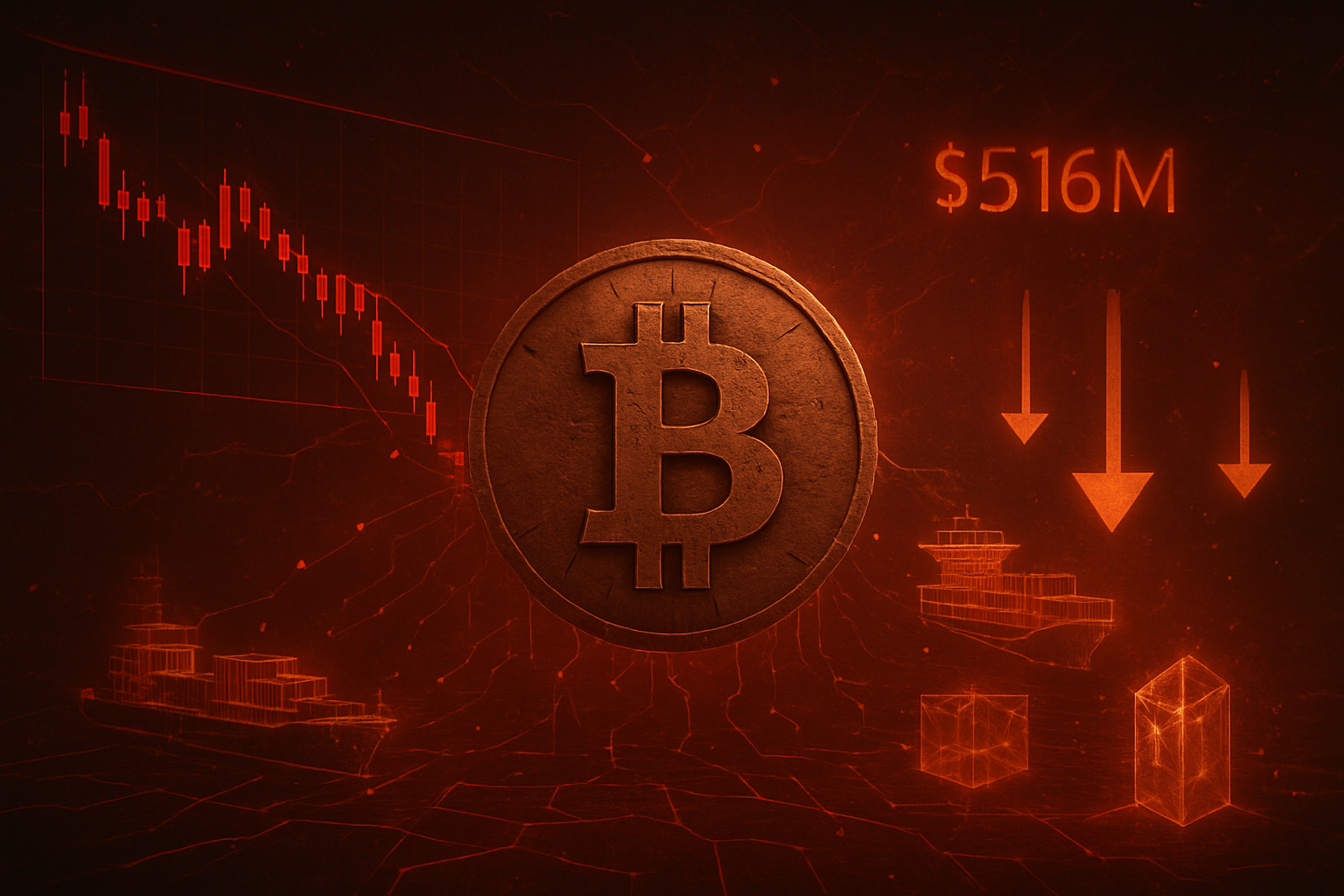
    The "Trump Trade" that propelled the cryptocurrency market to historic heights throughout 2025 has met its most formidable adversary: the reality of a global trade war. Following the administration's recent confirmation that 25% tariffs on Mexico and Canada will remain a cornerstone of its economic policy, the crypto market has entered a period of intense turbulence. In a swift reaction to the protectionist measures, Bitcoin plunged 6.9% to a local low of $89,060, a move that has erased billions in market capitalization and shaken the confidence of institutional investors.

    This sudden downturn marks a pivotal moment for the digital asset ecosystem. While proponents have long argued that Bitcoin serves as an inflation hedge or "digital gold," the market's immediate reaction suggests that in the face of aggressive trade policy, BTC still behaves primarily as a "risk-on" asset. The announcement has triggered a wave of selling across both spot and derivative markets, leading to significant outflows from the very instruments that facilitated the 2025 rally.

    Market Impact and Price Action

    The price action following the tariff announcement was swift and brutal. Bitcoin (BTC), which had been flirting with the $95,000 range earlier in the week, tumbled 6.9% to hit $89,060. This level is particularly significant as it represents a key psychological and technical support zone that had held firm throughout the late 2025 consolidation period. Trading volume surged by over 45% during the sell-off, indicating a high-conviction exit by many short-term holders.

    The institutional side of the market saw even more dramatic figures. U.S. spot Bitcoin ETFs recorded a staggering $516 million in net daily outflows. BlackRock (NYSE: BLK), through its iShares Bitcoin Trust (IBIT), and the Fidelity Wise Origin Bitcoin Fund (FBTC) bore the brunt of the exodus. This capital flight suggests that institutional desk managers are de-risking in anticipation of a strengthening U.S. Dollar and a potential pause in interest rate cuts by the Federal Reserve, as tariffs are widely viewed as inflationary.

    Technical analysts are now eyeing the $84,000 and $79,000 levels as the next major areas of support if the $89,000 floor is decisively broken. The sharp drop also led to over $1.6 billion in liquidations across the broader market, with long positions on MicroStrategy (NASDAQ: MSTR) and Coinbase (NASDAQ: COIN) also seeing significant pressure as their stock prices mirrored the Bitcoin slide.

    Community and Ecosystem Response

    The sentiment on "Crypto Twitter" and Reddit has shifted from euphoric "moon" predictions to a more sober assessment of the macro landscape. Crypto influencers and thought leaders have been divided in their response. Some, like the "maximalist" community, argue that this volatility is merely a "shakeout" that will ultimately prove Bitcoin's necessity as a non-sovereign asset. However, a growing chorus of analysts suggests that the 2025 trade policies have fundamentally changed the "Bitcoin-as-Gold" narrative.

    "The market is finally realizing that trade wars aren't just bad for stocks; they're bad for liquidity," noted one prominent DeFi architect on X. The sentiment is further dampened by the lingering effects of the recent Bybit security breach, which saw nearly $1.5 billion lost, compounding the sense of vulnerability within the ecosystem. Within the Web3 space, NFT trading volumes have stalled as investors pivot back to stablecoins or high-yield Treasury bonds, seeking safety from the "Tariff Shock."

    What's Next for Crypto

    The immediate future of the crypto market likely hinges on two major developments. First is the looming U.S. Supreme Court ruling regarding the legality of the President's use of the International Emergency Economic Powers Act (IEEPA) to bypass Congress for these tariffs. A ruling against the administration could trigger a massive "relief rally," potentially pushing Bitcoin back toward its $109,000 all-time high. Conversely, if the tariffs are upheld, analysts warn of a "stagflation" scenario where BTC might test the $74,000 support floor.

    Strategically, the establishment of the U.S. Strategic Bitcoin Reserve in March 2025 provides a unique "state-level" floor that didn't exist in previous cycles. This state-mandated buying pressure may prevent a total collapse, but it does not immunize the market from macro headwinds. Investors should closely monitor the upcoming Federal Open Market Committee (FOMC) minutes, as any indication of a "higher for longer" interest rate stance to combat tariff-driven inflation will likely keep a lid on crypto price appreciation.

    Bottom Line

    The 6.9% drop to $89,060 and the $516 million ETF outflow serve as a stark reminder that the crypto market remains inextricably linked to traditional geopolitical and economic shifts. For investors, the key takeaway is that the "Crypto President" era is not without its volatility. The honeymoon phase of the late 2024 election rally has officially ended, replaced by a complex environment where trade policy is just as influential as hash rates.

    As we move further into 2026, the long-term significance of this event will be judged by Bitcoin's ability to decouple from the broader risk-on market. For now, the focus remains on the $89,000 support level and the upcoming judicial decisions that will define the next chapter of the "America First" economy.


    This article is for informational purposes only and does not constitute financial or investment advice. Cryptocurrency investments carry significant risk.
  • The Digital Fort Knox: How the Trump Administration’s National Crypto Reserve is Redefining Global Finance

    The Digital Fort Knox: How the Trump Administration’s National Crypto Reserve is Redefining Global Finance

    WASHINGTON, D.C. — As of January 12, 2026, the global financial landscape has been irrevocably altered by a series of tectonic shifts in U.S. policy. One year into the second Trump administration, the "Strategic Bitcoin Reserve" (SBR) has transitioned from a campaign promise into a functioning pillar of national economic strategy. Following the landmark Executive Order 14233, signed in March 2025, the United States has officially reclassified its seized digital assets as a strategic national reserve, signaling the end of the "regulation-by-enforcement" era and the dawn of a new age of sovereign crypto-accumulation.

    The administration’s "pro-innovation" blitz, led by White House AI and Crypto Czar David Sacks and Treasury Secretary Scott Bessent, has effectively dismantled the previous decade's skeptical stance toward decentralized finance. By banning the development of a U.S. Central Bank Digital Currency (CBDC) and establishing a permanent Presidential Working Group on Digital Asset Markets, the administration has placed its bets squarely on private-sector stablecoins and Bitcoin as a "Digital Gold" hedge against global currency debasement.

    Market Impact and Price Action

    The formalization of the National Crypto Reserve has acted as a massive fundamental "floor" for the Bitcoin market. After hitting an all-time high of $126,199 in October 2025, Bitcoin entered a period of consolidation, ending the year near $88,000. However, the first two weeks of 2026 have seen a "January Effect" resurgence. As of mid-January 2026, Bitcoin is trading in a range between $91,000 and $94,500, buoyed by the news that the Treasury Department now officially holds over 200,000 BTC in its "Digital Fort Knox."

    Institutional heavyweights have mirrored the government's bullishness. MicroStrategy (NASDAQ: MSTR), led by Michael Saylor, has leveraged the administration’s favorable tax treatment for digital asset treasuries to expand its holdings to a staggering 687,410 BTC. Similarly, BlackRock (NYSE: BLK) has seen its iShares Bitcoin Trust (IBIT) reach over 774,000 BTC in assets under management, with net inflows of $287.4 million on January 2nd alone. The "MSCI Relief Rally" on January 6, 2026—following the index provider's decision not to exclude digital-asset-focused companies—further propelled crypto-equities like Coinbase Global (NASDAQ: COIN) and Riot Platforms (NASDAQ: RIOT) to multi-month highs.

    Community and Ecosystem Response

    The crypto community has largely hailed the administration's "anti-CBDC" stance as a victory for financial privacy. Executive Order 14178, which prohibited federal agencies from developing a retail digital dollar, was codified by the Anti-CBDC Surveillance State Act in late 2025. This move has redirected innovation toward the private sector, particularly under the GENIUS Act (Guiding and Establishing National Innovation for U.S. Stablecoins), which provides a federal framework for 1:1 Treasury-backed stablecoins.

    Industry leaders on social media and within the Presidential Working Group, including SEC Chair Paul Atkins and Commerce Secretary Howard Lutnick, have frequently highlighted the "geopolitical necessity" of the Bitcoin reserve. While some civil liberties advocates remain wary of the administration's broader use of executive power, the consensus within the Web3 ecosystem is that the U.S. has successfully captured the "first-mover advantage" in the sovereign digital asset race, forcing other nations—most notably in the EU and South America—to reconsider their own national treasury compositions.

    What's Next for Crypto

    The primary catalyst to watch in 2026 is the full implementation of the BITCOIN Act of 2025, introduced by Senator Cynthia Lummis. While the current reserve consists of seized assets, the proposed legislation seeks to authorize the purchase of up to 1 million BTC over the next five years. Negotiating the funding for this massive acquisition remains a top priority for the White House as it prepares for the spring budget cycle.

    Additionally, the market is awaiting the Digital Asset Market Clarity Act, which aims to provide a final, definitive boundary between the SEC and CFTC. If passed, this would likely trigger a wave of institutional allocations from pension funds and sovereign wealth funds that have remained on the sidelines due to lingering jurisdictional ambiguity. Strategic investors should also monitor the Treasury’s management of the SBR, specifically any friction between executive mandates and the Department of Justice's asset forfeiture protocols.

    Bottom Line

    The Trump administration's pivot to a National Bitcoin Reserve represents the most significant change in U.S. monetary rhetoric since the abandonment of the gold standard in 1971. By rejecting CBDCs and embracing Bitcoin as a strategic asset, the United States has positioned itself as the global capital for digital finance. For investors, the "sovereign bid" has changed the risk profile of Bitcoin, shifting it from a speculative tech play to a central component of national economic security.

    As we move deeper into 2026, the key metrics to monitor will be the total BTC holdings of the SBR and the pace of institutional adoption under the new regulatory framework. While volatility remains a hallmark of the asset class, the U.S. government’s role as a "HODLer of last resort" suggests that the long-term trajectory for Bitcoin and the broader crypto ecosystem is inextricably tied to the future of American financial hegemony.


    Important Dates to Watch:

    • February 2026: MSCI Global Standard Index Review (Confirmation of MSTR/crypto-equity inclusion).
    • March 6, 2026: One-year anniversary of EO 14233 and update on SBR holdings.
    • April 15, 2026: First tax filings under the new Digital Asset Treasury guidelines.

    This article is for informational purposes only and does not constitute financial or investment advice. Cryptocurrency investments carry significant risk.

  • Blog Test – 2026-01-12T18:51:10.828Z

    Blog Test – 2026-01-12T18:51:10.828Z

    This is a test post to validate blog connectivity.

  • Unlocking Everyday Crypto: The 7 Best Crypto Cards Poised to Dominate Shopping in 2026

    Unlocking Everyday Crypto: The 7 Best Crypto Cards Poised to Dominate Shopping in 2026

    As of late 2025, the cryptocurrency landscape is on the cusp of a significant transformation, with crypto debit and credit cards emerging as pivotal instruments in bridging the gap between digital assets and everyday commerce. Looking ahead to 2026, these innovative payment solutions are no longer a niche offering but are rapidly becoming an indispensable tool for consumers seeking to seamlessly integrate their crypto holdings into daily spending. The increasing clarity in global regulations, coupled with robust technological advancements, is fueling an unprecedented surge in their adoption, making 2026 a landmark year for crypto-powered shopping.

    This evolution signifies a critical turning point for the broader crypto ecosystem. The ability to spend cryptocurrencies directly, earn competitive rewards, and bypass traditional banking hurdles is democratizing access to digital assets and accelerating their mainstream acceptance. This trend is not just about convenience; it's about empowering users with greater financial autonomy and introducing a new paradigm of value exchange that promises to reshape how we perceive and interact with money. The market's embrace of these cards underscores a growing confidence in the utility and stability of digital currencies for real-world transactions.

    Market Impact and Price Action

    The anticipated proliferation of advanced crypto cards in 2026 is expected to exert a profound, albeit indirect, influence on market dynamics and price action. While direct price movements of individual tokens might not immediately correlate with a card's launch, the overarching trend of increased utility and spending will bolster the fundamental value proposition of cryptocurrencies. Stablecoins, in particular, are set to see a surge in transaction volume, solidifying their role as the backbone of everyday crypto payments. This increased demand for stablecoins for commerce could indirectly support their peg stability and overall market capitalization.

    For native tokens of card-issuing platforms (e.g., CRO for Crypto.com, BNB for Binance, NEXO for Nexo), enhanced card adoption could translate into upward price pressure. As more users stake these tokens to unlock higher reward tiers or access premium features, the circulating supply available on exchanges could decrease, potentially leading to price appreciation. Trading volumes for these ecosystem tokens are also likely to see an uptick as new users enter the ecosystem and existing users optimize their staking positions. Technical analysis in late 2025 suggests that many of these tokens are establishing strong support levels, anticipating future utility-driven demand.

    Comparing this to past cycles, where utility often lagged speculative interest, 2026 marks a shift towards tangible product-market fit. The integration of crypto into daily spending through cards provides a real-world use case that reduces reliance on purely speculative narratives. This fundamental demand can act as a stabilizing force, potentially mitigating extreme volatility seen in previous bull/bear cycles. Furthermore, the seamless conversion of crypto to fiat at the point of sale, often facilitated by cards, lessens the friction for new entrants, drawing more liquidity into the broader crypto market and fostering a more mature and resilient ecosystem.

    Community and Ecosystem Response

    The crypto community's sentiment towards the advanced crypto cards of 2026 is overwhelmingly positive, characterized by excitement over enhanced utility and mainstream integration. Discussions across platforms like Crypto Twitter and Reddit frequently highlight the convenience of using crypto for daily purchases, with many users celebrating the ability to "spend and earn" simultaneously. Influencers and thought leaders are increasingly emphasizing the role of these cards in driving mass adoption, framing them as essential tools for bridging the gap between the digital asset economy and traditional finance.

    This enthusiasm extends beyond individual users to the broader Web3 ecosystem. DeFi protocols are likely to see indirect benefits as more users are onboarded into crypto through the accessible gateway of spending cards. The increased circulation and utility of cryptocurrencies, especially stablecoins, through card transactions can stimulate activity within lending, borrowing, and yield farming protocols. NFT projects, while not directly linked to payment cards, could also benefit from a generally more crypto-savvy and spending-oriented user base, potentially leading to more fiat on-ramps and off-ramps through card-linked wallets.

    The widespread adoption of crypto cards is fostering a sense of legitimization within the community, pushing back against perceptions of crypto as solely speculative. The ability to earn substantial cashback in crypto, access exclusive perks, and manage digital assets with ease is resonating deeply, cultivating a positive feedback loop that encourages further exploration of the crypto space. This collective sentiment underscores a pivotal moment where practical application takes center stage, solidifying crypto's place in the everyday lives of millions.

    What's Next for Crypto

    The widespread adoption of advanced crypto cards in 2026 heralds a new era for the cryptocurrency market, with significant short-term and long-term implications. In the short term, we can expect a continued focus on user experience, with card providers racing to offer the most competitive rewards, lowest fees, and broadest cryptocurrency support. This competitive landscape will drive innovation, pushing features like instant crypto-to-fiat conversion, multi-asset spending, and enhanced security protocols to the forefront. Regulatory clarity, particularly around stablecoins and digital asset payments, will be a crucial catalyst, providing a stable environment for both consumers and businesses.

    Long-term, the ubiquity of crypto cards will fundamentally reshape financial habits and accelerate global crypto adoption. The seamless integration of digital assets into daily spending will normalize cryptocurrency as a viable payment method, challenging the dominance of traditional fiat currencies in certain use cases. We anticipate further technological advancements, including deeper integration with AI for personalized spending insights and rewards, as well as the emergence of truly non-custodial cards that allow users to spend directly from their self-custody wallets without relinquishing control to a third party. Strategic considerations for projects and investors will revolve around building robust ecosystems that support card utility, fostering strong partnerships with payment networks, and staying ahead of evolving regulatory frameworks.

    Possible scenarios include a future where crypto cards become the preferred payment method for specific demographics or transaction types, particularly cross-border payments due to lower fees and faster settlements. The continued growth of stablecoin adoption will be a key metric to watch, as their stability makes them ideal for everyday transactions. Projects that can effectively combine high utility, attractive rewards, and robust security will be best positioned to thrive in this evolving landscape, leading to a more interconnected and efficient global financial system.

    Bottom Line

    For crypto investors and enthusiasts, the rise of sophisticated crypto cards in 2026 represents a pivotal moment for the industry: the tangible realization of crypto's utility beyond mere speculation. The key takeaway is that these cards are not just payment instruments; they are powerful onboarding tools that are democratizing access to digital assets and driving real-world adoption. Investors should pay close attention to platforms that offer compelling card programs, as the increased utility of their native tokens through staking and rewards can be a strong indicator of long-term value.

    The long-term significance of these cards lies in their ability to seamlessly bridge the gap between the decentralized world of crypto and the centralized realm of traditional commerce. This integration is crucial for mainstream acceptance and will likely accelerate the development of more user-friendly Web3 applications. As crypto becomes easier to spend, it becomes more accessible, fostering a virtuous cycle of adoption and innovation.

    Final thoughts center on the undeniable shift towards practical application. The "best" crypto cards of 2206 will be those that master the balance of generous rewards, minimal fees, broad cryptocurrency support, robust security, and an intuitive user experience. This means looking for cards with high cashback (potentially 10-15% in crypto), zero or low conversion fees, global acceptance via Visa or Mastercard, and strong integration with popular digital wallets. Important metrics to monitor include the total transaction volume processed by crypto cards, the growth in active card users, and the increasing adoption of stablecoins for retail payments.


    This article is for informational purposes only and does not constitute financial or investment advice. Cryptocurrency investments carry significant risk.

    The 7 Best Crypto Cards for Shopping in 2026:

    Based on current trends and anticipated developments, the following crypto cards are poised to be top contenders for shopping in 2026, offering a compelling blend of rewards, utility, and innovation:

    1. Crypto.com Visa Card: Expected to maintain its strong position with tiered cashback rewards (up to 8%) in CRO, linked to staking. Its established ecosystem and global presence via Visa will continue to be a major draw for users seeking premium perks and diverse crypto support.

    2. Bybit Card: Projected to offer highly competitive cashback (up to 10% depending on VIP level) and innovative features like auto-savings on unused balances (up to 8% APY). Its focus on a seamless user experience and integration with the Bybit exchange will make it attractive to active traders and crypto enthusiasts.

    3. Gemini Credit Card: Anticipated to excel with its category-based rewards, offering high percentages on everyday spending like gas (up to 4%), dining (3%), and groceries (2%), with rewards redeemable in over 50 cryptocurrencies. Its no annual fee and strong security reputation will be key differentiators.

    4. Nexo Card: Expected to remain a strong choice, particularly for users leveraging Nexo's lending services. It offers up to 2% cashback in NEXO tokens and the unique ability to spend against crypto collateral without selling assets, optimizing for tax efficiency. Its focus on the EU market will solidify its regional dominance.

    5. Coinbase Card: (NASDAQ: COIN) While known for its crypto liquidation fee, advancements by 2026 could see this reduced or eliminated, making its up to 4% cashback in various cryptocurrencies more competitive. Its immense user base and direct integration with the Coinbase platform will ensure continued relevance.

    6. MetaMask Card (or similar non-custodial offerings): While still emerging in late 2025, cards directly linked to self-custody wallets like MetaMask are expected to gain significant traction by 2026. These cards prioritize user control, allowing spending directly from a user's wallet (e.g., on Linea or other networks) and offering enhanced privacy and security, appealing to Web3 natives.

    7. Avici Card / EtherFi Card (or other DeFi-integrated, non-custodial cards): These types of cards represent the cutting edge, offering premium perks and spending directly from smart contracts or liquid restaking protocols. By 2026, their focus on true DeFi integration and non-custodial solutions will attract users who prioritize decentralized finance principles and advanced financial strategies.

  • PNC Bank and Coinbase Forge Landmark Partnership, Launching Direct Bitcoin Trading for Private Bank Clients

    PNC Bank and Coinbase Forge Landmark Partnership, Launching Direct Bitcoin Trading for Private Bank Clients

    Pittsburgh, PA – December 9, 2025 – In a monumental leap bridging traditional finance with the burgeoning digital asset economy, PNC Bank (NYSE: PNC) has officially launched direct spot Bitcoin trading services for its eligible Private Bank® clients. This groundbreaking offering, powered by a strategic partnership with cryptocurrency exchange giant Coinbase (NASDAQ: COIN) and its robust Crypto-as-a-Service (CaaS) infrastructure, went live today, December 9, 2025. This move positions PNC as the first major U.S. bank to integrate direct Bitcoin trading capabilities into its proprietary digital banking platform, marking a pivotal moment for institutional adoption and the mainstream integration of cryptocurrencies.

    The immediate reaction from the financial sector and the crypto community has been overwhelmingly positive, heralding this as a significant validation of Bitcoin as a legitimate asset class within established financial frameworks. For years, the barrier between traditional banking and digital assets remained largely impenetrable for direct client access. PNC's initiative shatters this barrier, providing a trusted, regulated, and familiar environment for high-net-worth and ultra-high-net-worth clients to engage with Bitcoin. This development is not merely an expansion of services; it represents a fundamental shift in how large financial institutions perceive and interact with the crypto ecosystem, signaling a growing acceptance that could catalyze further institutional inflows and reshape the future of finance.

    Market Impact and Price Action

    The news of PNC Bank's direct Bitcoin trading launch, particularly on the day of its go-live, is expected to inject a fresh wave of confidence into the cryptocurrency markets. While immediate, drastic price movements are still unfolding, the long-term implications are decidedly bullish. Bitcoin (BTC) has historically reacted positively to announcements of increased institutional involvement, often seeing upward price pressure as new avenues for capital inflow open up. This partnership, specifically targeting high-net-worth individuals, implies a significant potential for substantial capital to enter the Bitcoin market through a trusted banking channel, bypassing the complexities and perceived risks of direct exchange interaction for many traditional investors.

    Trading volume and liquidity are also poised for a boost. As PNC's Private Bank clients begin to utilize the service, the aggregate demand for Bitcoin is likely to increase, contributing to healthier market depth. While the initial impact might be incremental, the precedent set by PNC could encourage other major financial institutions to follow suit, creating a domino effect that could dramatically increase overall market liquidity and reduce volatility in the long run. Technical analysts will be closely watching Bitcoin's performance against key support levels, anticipating that this news could provide a strong fundamental impetus to break through resistance points, potentially targeting new all-time highs as institutional accumulation accelerates.

    Comparing this to past events, such as the entry of institutional custodians or the launch of Bitcoin futures by CME Group, the PNC-Coinbase partnership stands out due to its direct client-facing nature within a traditional banking interface. Previous institutional integrations often involved more complex or indirect investment vehicles. This direct access simplifies the process for affluent investors, potentially leading to a more direct and sustained impact on Bitcoin's price action than prior, more indirect institutional forays. The move underscores a maturing market where traditional financial giants are no longer just observing but actively participating in the digital asset space.

    Community and Ecosystem Response

    The crypto community's response to PNC Bank's direct Bitcoin trading launch has been a blend of excitement, validation, and cautious optimism. On social media platforms like X (formerly Twitter) and Reddit, sentiment is largely positive, with many users celebrating the further "institutionalization" of Bitcoin as a sign of its inevitable mainstream adoption. Discussions highlight the significance of a major U.S. bank offering such services, viewing it as a crucial step towards legitimizing crypto for a broader, more conservative investor base.

    Crypto influencers and thought leaders are emphasizing the "bridge-building" aspect of the partnership. Many see this as a vindication of Bitcoin's long-term value proposition and a clear signal that traditional finance can no longer ignore the digital asset revolution. While some purists might express concerns about centralization or the dilution of crypto's original ethos, the overwhelming consensus is that increased accessibility through regulated entities like PNC is a net positive for the ecosystem's growth and stability.

    The effects on related DeFi protocols, NFT projects, or Web3 applications are likely to be indirect but profound. As more traditional capital flows into Bitcoin through trusted channels, it could create a halo effect across the broader crypto market. Increased confidence in Bitcoin often translates into greater interest and investment in other digital assets, potentially fueling liquidity and innovation within the wider DeFi and Web3 space. This move could also encourage traditional financial institutions to explore other digital assets and blockchain applications, paving the way for future integrations and partnerships beyond just Bitcoin.

    What's Next for Crypto

    The launch of PNC Bank's direct Bitcoin trading services heralds a new era for the cryptocurrency market, with significant short and long-term implications. In the short term, we can anticipate a heightened level of institutional interest and a potential "race to catch up" among other major U.S. banks. Competitors will likely feel pressure to offer similar digital asset services to their affluent clients, fearing loss of market share to pioneers like PNC. This competitive landscape could accelerate the integration of crypto into traditional banking, leading to a proliferation of new on-ramps for institutional capital.

    Looking further ahead, the long-term implications are transformative. This partnership sets a precedent for how traditional financial institutions can seamlessly integrate digital assets, potentially leading to the development of more sophisticated crypto-financial products within banking ecosystems, such as crypto-backed loans, yield-generating services, or even broader altcoin offerings. Regulatory clarity will remain a crucial catalyst; as more banks enter the space, regulators may be compelled to provide clearer guidelines, fostering an even more secure and robust environment for digital assets.

    Strategic considerations for projects and investors are paramount. Crypto projects should focus on building robust, secure, and compliant infrastructure that can appeal to institutional partners. Investors, meanwhile, should monitor announcements from other major banks, observe the pace of institutional capital inflows, and pay close attention to regulatory developments, particularly in the U.S. Possible scenarios include a rapid expansion of similar services across the banking sector, leading to significant market capitalization growth for Bitcoin and other major cryptocurrencies, or a more gradual, cautious approach contingent on evolving regulatory frameworks. The likelihood of a rapid expansion appears high, given the competitive nature of the financial industry and the clear demand from high-net-worth clients.

    Bottom Line

    PNC Bank's partnership with Coinbase to offer direct Bitcoin trading is a watershed moment for the cryptocurrency industry. It signifies not just an incremental step, but a major leap forward in the journey towards mainstream crypto adoption and the convergence of traditional finance with digital assets. For crypto investors and enthusiasts, the key takeaway is clear: a major U.S. bank has officially validated Bitcoin as a legitimate asset class, providing a trusted conduit for significant capital to enter the market. This move underscores the growing inevitability of digital assets becoming an integral part of the global financial system.

    The long-term significance of this development cannot be overstated. It accelerates the dismantling of barriers between TradFi and crypto, paving the way for a more integrated, efficient, and accessible financial future. This is a powerful testament to the resilience and enduring value proposition of Bitcoin, even in the face of regulatory uncertainties and market volatility. The financial industry is undergoing a profound transformation, and PNC Bank has positioned itself at the forefront of this evolution.

    Moving forward, important dates, events, or metrics to monitor include the volume of Bitcoin traded through PNC's platform, any subsequent announcements from other major banks regarding similar services, and the ongoing dialogue between financial institutions and regulatory bodies concerning digital asset integration. This is more than just a new product offering; it's a powerful signal that the future of finance will undoubtedly include digital assets at its core.


    This article is for informational purposes only and does not constitute financial or investment advice. Cryptocurrency investments carry significant risk.

  • Phoenix Group Unveils Six High-Potential Token Launches Set to Redefine Crypto Landscape Ahead of 2026

    Phoenix Group Unveils Six High-Potential Token Launches Set to Redefine Crypto Landscape Ahead of 2026

    Abu Dhabi, UAE – December 9, 2025 – Phoenix Group (ADX: PHX), a pioneering global cryptocurrency, blockchain, and digital asset infrastructure company, has sent ripples through the crypto market with its recent forecast of six high-potential token launches anticipated before 2026. This forward-looking announcement, made via the company's "Phoenix – Crypto News & Analytics" Twitter account, signals a renewed surge of innovation and capital infusion into the Web3 ecosystem as the year draws to a close. The identified projects—Zama, Lighter, Superform, Almanak, HumidiFi, and Midnight—are strategically positioned across critical sectors including privacy-preserving technology, cross-chain solutions, and AI-driven decentralized finance (DeFi), highlighting a maturing market's focus on utility and foundational advancements.

    The forecast has immediately captured the attention of investors and enthusiasts alike, eager to identify the next generation of disruptive crypto assets. Phoenix Group's endorsement, coming from a company with a multi-billion dollar valuation and a formalized digital asset treasury exceeding $150 million in Bitcoin and Solana, carries significant weight, suggesting a rigorous vetting process behind these selections. This move underscores Phoenix Group's active role not just in mining but also in shaping the digital asset revolution through strategic investments and support for promising new tokens, thereby influencing market sentiment and potentially guiding future capital flows.

    Market Impact and Price Action

    While the forecasted token launches are slated for the near future, Phoenix Group's announcement has already begun to shape investor sentiment and anticipation. As a publicly listed entity with a highly successful Initial Public Offering (IPO) that was significantly oversubscribed, Phoenix Group's pronouncements are closely watched. This strong backing for the company translates into heightened interest for its strategic forecasts, particularly for projects identified as "high-potential" in a market showing a "fresh wave of activity."

    The projects themselves have already secured substantial funding, indicating robust investor confidence prior to their Token Generation Events (TGEs). Zama, specializing in Fully Homomorphic Encryption (FHE), has closed a $57 million Series B funding round, achieving a valuation exceeding $1 billion. Lighter, an Ethereum-based Layer-2 decentralized exchange (DEX) for perpetual futures, secured $68 million at a $1.5 billion pre-TGE valuation. These figures are indicative of serious institutional backing, mirroring historical trends where strong venture capital interest often precedes significant pre-launch speculation.

    The potential impact on related sectors is substantial. Privacy-focused solutions like Zama and Midnight could usher in a new era of confidential applications on public blockchains, attracting institutional capital wary of transparency issues. DeFi and cross-chain projects such as Lighter, Superform, HumidiFi, and Almanak are set to drive innovation in scalable trading, yield management, and AI-driven financial strategies. HumidiFi, a Solana-based "dark pool" DEX, has already become the largest DEX on Solana by trading volume, demonstrating a clear market demand for efficient, high-volume DeFi trading.

    However, historical precedents also offer caution. While some projects generate immense pre-launch hype, post-launch performance can vary. Midnight, despite high anticipation and major exchange listings, experienced a significant 65% crash on its listing day due to large circulating supply from airdrops and immediate selling pressure. This highlights that while strong fundamentals and backing are crucial, tokenomics, distribution strategies, and broader market conditions remain critical determinants of actual price action. Nevertheless, the generally bullish backdrop of Bitcoin (BTC) reaching new all-time highs in 2025, fueled by institutional interest and halving effects, provides a fertile ground for well-executed token launches.

    Community and Ecosystem Response

    The crypto community's response to Phoenix Group's forecast is one of keen interest and anticipation, aligning with broader bullish trends in privacy, AI, and cross-chain technologies. While a comprehensive, aggregated sentiment across all social media platforms is still evolving, individual projects on the list have already generated considerable buzz.

    Zama, with its groundbreaking FHE technology, is lauded for addressing critical privacy needs in enterprise blockchain and AI, resonating with a community increasingly concerned about data confidentiality. Discussions highlight the long-standing interest in its potential for confidential transactions and its tokenomics designed for network security. Lighter's zk-rollup technology for scalable and secure trading on Ethereum also garners positive attention, as the demand for efficient cross-chain capabilities continues to grow. HumidiFi, having rapidly ascended to become the largest DEX on Solana, is a major talking point. Its "dark pool" model and upcoming WET token launch are closely watched by Solana's vibrant DeFi community, especially after recent revelations about its founding team, Temporal.

    Crypto influencers and thought leaders, while not explicitly endorsing Phoenix Group's entire list, have consistently pointed to the sectors these projects represent as key growth areas. The convergence of AI and blockchain, exemplified by Almanak's AI-driven financial agents, is a recurring theme, with many analysts predicting a shift towards utility-driven AI tokens. Similarly, the surging investor demand for privacy features and the critical need for seamless cross-chain solutions are widely acknowledged by experts as essential for the ecosystem's maturation.

    The most immediate and observable effect on the ecosystem is within Solana's DeFi landscape, where HumidiFi's rapid dominance indicates a significant shift in liquidity and user preference. This success could compel other Solana DEXs and DeFi protocols to innovate in capital efficiency and low-latency trading. Zama's FHE adoption could set new standards for secure data processing across various Web3 applications, influencing roadmaps for blockchain service providers. Overall, the broader crypto community appears receptive to projects that promise fundamental utility and advanced technological solutions, signaling a collective move beyond mere speculation towards more mature, infrastructure-focused growth.

    What's Next for Crypto

    Phoenix Group's forecast for six high-potential token launches ahead of 2026 acts as a powerful beacon, illuminating the short and long-term trajectory of the crypto market. In the short term, these launches are poised to inject fresh capital and excitement, potentially leading to increased market volatility and sector rotation as investors seek out innovative opportunities. The technological showcases offered by these projects, particularly in areas like FHE, zk-rollups, and AI-driven DeFi, will drive innovation across the industry and renew retail and institutional interest.

    Looking towards 2026 and beyond, the sustained impact of successful, utility-driven token launches could be transformative. The market is expected to mature, with a greater emphasis on specialization. DeFi, projected to grow significantly, will likely see its mainstream adoption accelerated by new, high-potential tokens that seamlessly integrate traditional finance with on-chain solutions. NFTs are also anticipated to evolve beyond collectibles, embracing functional utilities linked to real-world assets and identities. Crucially, the focus on interoperability among these projects will foster a more connected blockchain ecosystem, breaking down silos and enhancing overall utility.

    Beyond these specific token launches, several broader catalysts will shape the crypto market. Regulatory clarity, such as the EU's MiCAR framework, is paramount for fostering institutional confidence. The increasing participation of institutional investors, driven by the success of spot Bitcoin (BTC) and Ethereum (ETH) ETFs, is a major force, with analysts predicting Bitcoin could reach $200,000 by early 2026. Technological innovations like advanced Layer-2 scaling solutions, the tokenization of Real-World Assets (RWAs), and the deeper integration of AI into decentralized applications will dramatically improve efficiency, lower costs, and unlock new investment avenues. Furthermore, global liquidity trends and anticipated interest rate cuts by central banks could make cryptocurrencies more attractive as riskier assets.

    For projects, the strategic imperative is clear: focus on utility, scalability, robust security, and regulatory compliance. Projects must demonstrate real-world value and leverage advanced technologies to thrive. For investors, due diligence, risk management, and a long-term perspective are crucial. Prioritizing blue-chip cryptocurrencies, evaluating institutional interest, and staying informed on regulatory changes are key considerations. Possible scenarios range from a bullish market driven by mass adoption and mainstream integration, with Bitcoin potentially reaching $200,000-$300,000, to a mixed maturity scenario characterized by consolidation and niche growth, or even a bearish outlook under severe regulatory headwinds or macroeconomic crises. Ultimately, projects that enhance utility, improve user experience, and seamlessly integrate with traditional finance will significantly contribute to wider crypto adoption and institutional interest.

    Bottom Line

    Phoenix Group's forecast for six high-potential token launches ahead of 2026 underscores a pivotal moment in the cryptocurrency market. It signals a decisive shift towards projects built on robust technology, offering tangible utility in critical areas such as privacy, AI, cross-chain interoperability, and advanced DeFi infrastructure. For crypto investors and enthusiasts, the key takeaway is to focus on projects with strong fundamentals, substantial backing, and clear roadmaps for solving real-world problems within the Web3 ecosystem. The substantial funding secured by projects like Zama and Lighter, along with the rapid growth of platforms like HumidiFi, highlights that smart capital is flowing into innovation, not just speculation.

    The long-term significance of these types of projects cannot be overstated. Privacy-focused solutions are essential for a truly decentralized and financially free future, enabling confidential transactions and potentially unlocking institutional adoption in sensitive sectors. AI integration, as seen with Almanak, promises to revolutionize DeFi by automating strategies and enhancing efficiency, driving the "Dynamic DeFi era." Cross-chain solutions like Superform and Lighter are crucial for breaking down blockchain silos, fostering a more interconnected and fluid digital economy. Together, these projects are building the foundational infrastructure for a more mature, efficient, and integrated Web3.

    Ultimately, these developments mean a significant leap forward for crypto adoption. The Web3 ecosystem is evolving rapidly, moving beyond mere speculative assets towards practical applications that empower users with genuine ownership, active community participation, and influence over governance. As infrastructure becomes more robust, user experiences improve, and regulatory clarity emerges, cryptocurrencies and blockchain technology are poised for deeper integration into global finance and everyday life. The convergence of Crypto, AI, DeFi, Real-World Assets (RWAs), and Decentralized Physical Infrastructure Networks (DePIN) narratives will create an interconnected digital economy, making Web3 applications more accessible, secure, and capable of handling sensitive, real-world data and transactions.

    Important Dates, Events, or Metrics to Monitor:

    • Zama ($ZAMA): Public auction for 10% of total supply (January 12–15, 2026), token claims (January 20, 2026). Monitor integration with applications like Zaiffer Protocol and growth of privacy-focused transaction volume.
    • Lighter: Anticipated TGE and airdrop (late 2025). Monitor trading volume (exceeded $11 billion in 24 hours as of November 2025) and Total Value Locked (TVL).
    • Superform ($UP): Token sale on Cookie Launchpad (December 4, 2025). Track Total Value Locked (TVL) ($144 million in Q2 2024) and user base (over 150,000).
    • Almanak ($ALMANAK): Expected TGE (late September 2025 or between October 23 and December 11, 2025). Observe performance of its Autonomous Liquidity USD vault and post-TGE community engagement.
    • HumidiFi ($WET): Binance Alpha Trading & Airdrop (December 9, 2025, 09:00 UTC), Public Sale & Token Claiming (December 8, 2025, relaunched). Monitor trading volumes on Solana and market share among DEXs (over $1 billion daily or 35% of Solana's spot DEX activity).
    • Midnight ($NIGHT): Token launch and trading (December 9, 2025), Token distribution and exchange listings (December 8, 2025), Redemption Portal Launch (shortly before December 10, 2025), Glacier Drop Thawing Schedule (December 10, 2025, to November 29, 2026). Monitor initial trading price and ongoing token redemption.

    This article is for informational purposes only and does not constitute financial or investment advice. Cryptocurrency investments carry significant risk.

  • Ethereum’s Developer Renaissance: A Catalyst for Unprecedented Ecosystem Growth

    Ethereum’s Developer Renaissance: A Catalyst for Unprecedented Ecosystem Growth

    The Ethereum ecosystem is currently experiencing an unprecedented acceleration in its developer landscape, a trend that has solidified its position as the leading hub for blockchain innovation in 2025. This surge, particularly prominent since early 2025, is characterized by a significant influx of new talent, a robust active developer base, and a strategic pivot towards Layer 2 (L2) scaling solutions. Data from January to September 2025 reveals Ethereum attracted a staggering 16,181 new developers, surpassing rivals like Solana (SOL) (11,534) and Bitcoin (BTC) (7,494), and boasts the largest active developer pool globally with 31,869 contributors.

    This remarkable growth, building on a foundation laid in 2023 with the rise of rollup frameworks and account abstraction, marks a strong resurgence after a brief period in late 2024 when Solana momentarily outpaced Ethereum in new developer onboarding. The community has largely welcomed this expansion, viewing it as a testament to Ethereum's enduring relevance and potential. Market confidence has also been bolstered, evident in the tight price correlation between Ethereum (ETH) and other leading ecosystems, and a significant increase in Total Value Locked (TVL) within its burgeoning DeFi sector, particularly driven by re-staking innovations. However, alongside the optimism, some core developers have voiced vigilance regarding the growing influence of venture capital firms like Paradigm, urging caution to preserve Ethereum's open-source ethos. This developer renaissance is not merely a numbers game; it represents a deepening of the ecosystem's resilience and a clear signal for sustained innovation across decentralized finance (DeFi), NFTs, and the broader Web3 landscape.

    Market Impact and Price Action

    The profound acceleration in Ethereum's developer landscape throughout 2025 has undeniably reverberated across the crypto markets, particularly influencing the price action and trading dynamics of Ethereum (ETH) and its associated ecosystem tokens. While developer activity is widely considered a leading indicator of a blockchain's long-term health, the immediate market response has seen ETH navigate a period of significant growth followed by consolidation. Early to mid-2025 witnessed Ethereum's price ascend to a record high near $4,900, a surge largely fueled by an influx of institutional capital and the anticipation of favorable macroeconomic conditions, including potential Federal Reserve interest rate cuts. The passage of the U.S. GENIUS Act in August 2025, which established a legal framework for stablecoins, further bolstered investor confidence, contributing to ETH's climb.

    However, as of early December 2025, ETH has entered a phase of consolidation, trading near $3,020 on December 8th. This represents a pullback from its earlier highs, with analysts noting temporary resistance in the $3,400–$4,800 range. Technical analysis indicates that ETH is attempting to recover but remains "trapped under heavy macro resistance," specifically a descending trendline that has capped rallies since early October. Key resistance levels to watch are $3,200 and a crucial break above $3,500 to shift the broader bearish bias. Support levels have been identified at $2,900, with stronger demand zones at $2,500 and $2,200. The asset is currently trading below its 100-day and 200-day moving averages, reinforcing a short-term bearish outlook, while the Relative Strength Index (RSI) suggests market indecision.

    Trading volume and liquidity have seen dynamic shifts. In Q1 2025, Ethereum's daily trading volume averaged an impressive $17.2 billion, momentarily surpassing Bitcoin's. The Ethereum NFT market also flourished, generating $5.8 billion in trading volume in Q1 2025, a 21% year-over-year increase. Decentralized exchanges (DEXs) like Uniswap (UNI) have demonstrated robust activity, processing over $2.1 billion in daily volume in 2025, significantly boosted by its v4 release. Institutional interest, initially surging with the approval of spot Ethereum ETFs in 2024 and subsequent filings, led to over $3.1 billion in inflows to ETH investment funds/ETFs by Q1 2025. While December 8, 2025, saw a positive net inflow of $35.49 million into US spot ETH ETFs, led by BlackRock's (BLK) iShares Ethereum Trust (ETHA), the preceding week reported a net outflow of $65.4 million, indicating mixed institutional sentiment and a cautious approach. A significant long-term bullish signal is the 43% decrease in ETH balance on exchanges since early July 2025, suggesting strong holder conviction and a potential supply shock.

    The impact extends significantly to related tokens, particularly within the Layer 2 (L2) ecosystem. The tokens of L2 networks like Arbitrum and Coinbase's (COIN) Base have seen increased activity and investor interest, with Base notably accounting for 42% of new Ethereum ecosystem code in 2024. The broader DeFi sector, encompassing lending platforms like Aave (AAVE) and Compound (COMP), has seen its Total Value Locked (TVL) exceed $119 billion in Q3 2025. The boom in Liquid Staking Derivatives (LSDs) and Liquid Restaking Tokens (LRTs), with LRT TVL jumping to $16 billion in 2025, further highlights the market's response to developer-driven innovation, though it also introduces new potential technical risks. Historically, developer activity has consistently correlated with major upgrades and product launches that generate lasting market impact, as seen with the Dencun upgrade's effect on L2 activity and previous ETH price surges tied to fundamental ecosystem growth. This current wave of institutional integration, spurred by regulatory clarity and new financial products like SGX's (SGX) Ethereum futures, is viewed as a pivotal moment, akin to Bitcoin's institutional adoption, promising a new era of demand for Ethereum.

    Community and Ecosystem Response

    The palpable acceleration in Ethereum's developer landscape throughout 2025 has been met with a largely enthusiastic and proactive response from its expansive community and ecosystem. On social media platforms like Crypto Twitter and Reddit, sentiment is overwhelmingly positive, with many affirming Ethereum's foundational role as the "Internet of Blockchains." The Ethereum Foundation has actively engaged with this renewed vigor, launching new social media accounts to disseminate updates on grants and projects, fostering broader community involvement and addressing past criticisms regarding its public outreach. These platforms serve as crucial "megaphones" for influencers to share timely insights and for the community to engage in vibrant discussions about Ethereum's trajectory and innovations.

    Thought leaders within the crypto space have closely monitored and often championed this developer renaissance. Vitalik Buterin, Ethereum's co-founder, remains a pivotal voice, with his recent insights into resolving Ethereum's long-standing peer-to-peer (P2P) networking weaknesses through the rollout of Peer Data Availability Sampling (PeerDAS) met with strong positive reactions. Builders and researchers view this as a critical infrastructure upgrade, prioritizing foundational improvements over "flashy features" for enhanced scalability, lower latency, and superior user experience. The Ethereum Foundation has consistently expressed gratitude for the developer community's contributions, acknowledging them as integral to the network's strength. However, the ecosystem is not without its internal debates; a notable instance involved a prominent Ethereum developer departing to focus on artificial intelligence (AI), citing concerns about the project's decentralized leadership and perceived lack of clear strategic direction, sparking discussions about talent retention and leadership in decentralized projects.

    The effects of this developer boom are profoundly positive across Ethereum's diverse ecosystem. In Decentralized Finance (DeFi), Ethereum's developer dominance solidifies its position as the bedrock, commanding a staggering $200 billion in Total Value Locked (TVL). This increased activity fosters enhanced interoperability, better developer education, and faster innovation cycles within DeFi. The rapid maturation of Layer 2 (L2) networks like Arbitrum, Optimism, and Coinbase's (COIN) Base—which accounted for 42% of new Ethereum ecosystem code in 2024—is making dApp transactions exponentially cheaper and more accessible, propelling the DeFi market towards a projected $700 billion by the end of 2025. While Ethereum remains a primary platform for Non-Fungible Token (NFT) development, the NFT market itself has faced headwinds, with projected user declines in 2025 despite developer efforts to refine metaverse frameworks and integrate NFTs into broader Web3 applications. Crucially, Ethereum is increasingly seen as the central innovation engine behind the broader Web3 movement, encompassing gaming, real-world asset (RWA) tokenization, decentralized storage, and identity solutions. The dApp industry is experiencing explosive user growth, with daily unique active wallets increasing by 247% since early 2024, stabilizing around 24.3 million in mid-2025, indicating a massive and engaged user base ready for new applications. Future growth is anticipated to concentrate on middleware, liquidity automation, cross-chain connectivity, and consumer-facing applications, signaling a move beyond mere speed and cost efficiency to a horizontal expansion of utility.

    What's Next for Crypto

    The profound acceleration in Ethereum's developer landscape in 2025 carries significant short-term and long-term implications for the entire crypto market, solidifying its trajectory as a foundational layer for decentralized technologies. In the immediate future (the next 6-12 months), this developer influx, particularly those focused on Layer 2 (L2) solutions, is poised to drive a rapid expansion and refinement of decentralized applications (dApps). This means more user-friendly interfaces, novel applications, and improved overall performance, making the Ethereum ecosystem more accessible to a broader audience. Recent developments, such as the "Fusaka" upgrade activated on December 3, 2025, have already significantly enhanced scalability and reduced L2 transaction costs by over 35%, further boosting activity across networks like Arbitrum and Optimism. This reduction in gas fees, coupled with increased throughput and innovation in DeFi, NFTs, and Web3 applications, is expected to act as a bullish catalyst for ETH's price, with analysts predicting a short-term range of $3,500–$3,700, supported by supply scarcity and renewed institutional interest.

    Looking further ahead (1-5 years and beyond), the compounding effect of sustained developer growth is expected to have transformative impacts. Ethereum is set to cement its position as the primary foundational layer for decentralized finance, NFTs, and the next generation of Web3 applications. Future upgrades, including full Danksharding, building on the foundation laid by Proto-Danksharding (EIP-4844), are projected to dramatically increase throughput and further reduce transaction costs, potentially allowing Ethereum to handle web-scale applications without sacrificing security. This will attract further mainstream and institutional adoption, with the anticipated approval of Spot Ethereum ETFs in major jurisdictions, potentially offering staking rewards, bringing substantial capital and regulatory acceptance. Ethereum's increasing role in tokenized assets and yield generation through staking will further enhance its appeal to institutions, reshaping business models across various sectors and enabling the integration of emerging technologies like AI, IoT, and 5G.

    Several key catalysts and developments warrant close attention. The regulatory clarity and subsequent launch of Spot Ethereum ETFs in the U.S. and other major jurisdictions are paramount, expected to unlock significant institutional capital. The continued successful implementation of scaling upgrades, particularly full Danksharding, will be critical for achieving massive scalability. The increasing trend of Real-World Asset (RWA) tokenization on Ethereum is another major driver, as institutions leverage the blockchain for this purpose, potentially expanding its utility and economic value significantly. Furthermore, the sustained growth and innovation within the Layer 2 ecosystem, including Arbitrum, Optimism, and Base, will be crucial indicators of Ethereum's overall economic throughput.

    Strategic considerations for projects include prioritizing development on Layer 2 solutions for lower transaction fees and faster speeds, focusing on real-world utility, embracing composability and interoperability, and leveraging Ethereum's vast developer community and tooling. For investors, a long-term horizon with ETH is advisable, given its strong developer momentum, deflationary tokenomics, and unmatched ecosystem scale. Monitoring developer activity, evaluating Layer 2 growth, diversifying portfolios, managing risk, and staying abreast of institutional inflows and regulatory news are crucial. Possible scenarios range from a highly likely bullish outlook where Ethereum becomes the dominant Web3 infrastructure, potentially reaching $6,000-$9,500 by 2026-2028 and $18,000-$35,000 by 2030, to a moderate growth scenario with persistent competition. A bearish scenario, driven by severe regulatory crackdowns or prolonged upgrade delays, is considered less likely due to Ethereum's robust decentralization, but remains a possibility.

    Bottom Line

    Ethereum's accelerated developer landscape in 2025 signifies a pivotal moment for the crypto market, laying robust groundwork for unprecedented adoption. For investors and enthusiasts, the key takeaways are clear: Ethereum's unrivaled developer dominance, attracting over 16,000 new developers in 2025 and maintaining over 31,000 active contributors, fuels continuous innovation, particularly within the thriving Layer 2 ecosystem. This sustained activity translates into a rapidly expanding array of dApps and continuous protocol improvements, critical for long-term value appreciation.

    Crucially, the network is undergoing a fundamental transformation towards accelerated scalability and improved user experience. The successful "Fusaka" upgrade on December 3, 2025, with its Peer Data Availability Sampling (PeerDAS) technology, dramatically reduces Layer 2 transaction costs by an estimated 40-60% and increases block capacity. These improvements, combined with Layer 2s already processing over 58.5% of total Ethereum transactions, are making dApps cheaper, faster, and more accessible for mainstream users. Furthermore, growing institutional adoption and regulatory clarity, highlighted by the SEC's confirmation in July 2025 that ETH is not a security and the CFTC's approval on December 9, 2025, of Ethereum as collateral for derivatives and loans for licensed firms, are significant steps towards integrating crypto into mainstream finance. Major players like JPMorgan (JPM) are already migrating projects to public Ethereum networks, signaling increasing enterprise confidence.

    The long-term significance of this developer renaissance cannot be overstated. Ethereum is solidifying its role as the "platform of platforms," ensuring a continuous cycle of innovation and a layered development approach that prioritizes usability and interoperability. With ambitious roadmap goals of achieving 10 transactions per second (TPS) on Layer 1 and over 1 million TPS on Layer 2 by 2026, Ethereum is positioning itself to support significantly higher transaction volumes without sacrificing decentralization. This technical superiority, coupled with its DeFi leadership (over $119 billion TVL in Q3 2025) and growing institutional backing, creates a powerful flywheel effect that attracts more developers, users, and capital, cementing Ethereum's role as the foundational layer for decentralized finance, NFTs, and the broader Web3 movement. The integration of AI into Ethereum's 2026 roadmap further opens new avenues for adoption.

    In essence, Ethereum is evolving into a more accessible, powerful, and institutionally palatable platform, laying robust groundwork for an unprecedented wave of crypto adoption in the coming years.

    Important Dates, Events, and Metrics to Monitor:

    • Recent Key Events (as of 12/9/2025):

      • December 3, 2025: Successful activation of the Fusaka Upgrade, introducing PeerDAS for improved data availability and reduced Layer 2 transaction costs.
      • December 9, 2025: CFTC approval of Ethereum as collateral for derivatives and loans for licensed firms in the U.S.
      • July 2025: SEC confirmed ETH is not a security, bolstering regulatory clarity.
      • Q1 2025: Ethereum's total market cap surpassed $408 billion. Active Ethereum wallets reached a record 127 million in March 2025, adding approximately 350,000 new wallets weekly. Ethereum dApps generated over $1 billion in fees.
      • Q3 2025: Layer 2 solutions processed over 58.5% of total Ethereum transactions. Ethereum DeFi Total Value Locked (TVL) surpassed $119 billion.
    • Future Dates and Events to Monitor:

      • Q4 2025 / Early 2026: Release of the public design document for the Ethereum Interoperability Layer (EIL) and the Open Intents Framework (OIF), with implementation expected in early 2026. These aim to unify Layer 2 rollups and automate cross-chain interactions.
      • Mid to Late 2026: Scheduled Glamsterdam Upgrade, which will introduce enshrined Proposer-Builder Separation (ePBS), Block-level Access Lists (BALs, for more efficient state access and execution), significantly lower rollup fees, faster block confirmations, and improvements to account abstraction and wallet functionality.
      • 2026 Roadmap: Continued development towards achieving 6-second block times and a target of over 1 million TPS on Layer 2 networks.
      • 2026 Roadmap (AI Focus): Progress on the Ethereum Foundation's dAI Team roadmap, positioning Ethereum as a decentralized settlement and collaboration platform for AI.
    • Key Metrics to Monitor:

      • Developer Activity: Track the number of new and active developers, particularly focusing on those building on Layer 2s and in new application areas (e.g., AI, gaming, social dApps).
      • Total Value Locked (TVL): Monitor TVL across Ethereum's DeFi ecosystem and its Layer 2s as an indicator of capital flow and network utility.
      • DApp Usage and Revenue: Observe daily unique active wallets (dUAW), transaction counts, and fee revenue generated by Ethereum dApps across different categories (DeFi, NFTs, gaming).
      • Transaction Volume and Fees: Keep an eye on the average daily transaction volume and, crucially, the average gas fees on both Ethereum mainnet and Layer 2s to assess the impact of scalability upgrades.
      • New Address Creation: Monitor the rate of new Ethereum addresses being created as a proxy for user adoption.
      • Institutional Inflows: Track reports on institutional investment, ETF performance (if launched), and enterprise adoption of Ethereum-based solutions.
      • Layer 2 Adoption: Observe the growth and market share of various Layer 2 solutions (e.g., Arbitrum, Optimism, zkSync Era, Base) as they are central to Ethereum's scaling strategy.

    This article is for informational purposes only and does not constitute financial or investment advice. Cryptocurrency investments carry significant risk.