
Author: mdierolf

  • Kraken Ignites Trader Loyalty with Groundbreaking Stock Warrant Program Ahead of Anticipated IPO

    Kraken Ignites Trader Loyalty with Groundbreaking Stock Warrant Program Ahead of Anticipated IPO

    San Francisco, CA – December 1, 2025 – In a strategic move poised to redefine the relationship between cryptocurrency exchanges and their most active participants, Kraken (anticipated NYSE: KRAK) today officially launched its Market Participation Program. This innovative initiative offers stock warrants—equity-linked incentives—to high-volume traders and institutional clients, directly aligning their financial interests with Kraken's long-term success, particularly as the company gears up for an anticipated Initial Public Offering (IPO) in early 2026.

    The program, hailed by Kraken as a "first-of-its-kind" among major Tier 1 cryptocurrency exchanges, aims to cultivate deeper liquidity and a more vibrant trading environment. By granting eligible participants the right to purchase Kraken shares at a predetermined strike price before a set expiration, the exchange is actively incentivizing sustained, high-level engagement. This bold step marks a significant convergence of traditional financial mechanisms with the burgeoning digital asset market, setting a new precedent for how crypto platforms attract and retain their core user base. The announcement has already garnered considerable interest across the industry, with observers anticipating a substantial boost in Kraken's trading volume and market liquidity.

    Market Impact and Price Action

    The immediate market impact of Kraken's Market Participation Program, launched today, December 1, 2025, is primarily anticipated in the form of enhanced liquidity and increased trading activity on the Kraken exchange. The program's design, which offers stock warrants for future Kraken common stock rather than a native cryptocurrency token, means there will be no direct, observable price movements of a Kraken-specific digital asset. However, the indirect effects are expected to be profound.

    By offering a direct stake in the company's future equity, Kraken aims to attract and retain the most active trading participants, leading to a significant increase in order book depth and tighter bid-ask spreads. This improved market efficiency will benefit all traders on the platform, reducing slippage and facilitating smoother execution for both retail and institutional orders. The program is a clear signal of Kraken's commitment to becoming the most liquid and efficient venue for digital asset trading.

    Historically, Kraken has demonstrated a strong track record of successfully implementing strategic initiatives to boost its market metrics. For instance, its acquisition of Breakout in September 2025 and the earlier launch of an institutional-grade FIX API for futures in Q1 2025 both resulted in substantial increases in derivatives volume and overall market share. This new program is expected to build on that momentum, accelerating the platform's growth trajectory and solidifying its position among top-tier exchanges. While it is too early for specific technical analysis observations regarding the program's direct impact on market charts, the underlying fundamentals point towards a strengthening of Kraken's market infrastructure, which could indirectly bolster confidence across the broader crypto market.

    Community and Ecosystem Response

    As Kraken's Market Participation Program officially kicks off today, December 1, 2025, the immediate community and ecosystem response is still in its nascent stages. However, the nature of the program—offering tangible equity-linked incentives—is expected to generate significant positive sentiment among its target audience: high-volume traders and institutional clients. These participants are likely to view the warrants as a valuable opportunity to align with Kraken's pre-IPO growth, potentially fostering a deeper sense of loyalty and commitment to the platform.

    Broader crypto communities on platforms like Twitter and Reddit are anticipated to engage in discussions surrounding the innovative incentive structure. While active traders will likely express enthusiasm for the direct financial upside, others may debate the implications of an exchange offering stock warrants versus a native token, or the ongoing convergence of traditional finance (TradFi) and decentralized finance (DeFi) models. Crypto influencers and thought leaders will likely weigh in on whether this program sets a new standard for exchange incentives, potentially pressuring other major platforms to explore similar equity-based reward systems to compete for liquidity.

    Given that the incentives are tied to Kraken's future equity rather than specific DeFi protocols, NFT projects, or Web3 applications, direct immediate effects on these segments of the ecosystem are not anticipated. However, the overall strengthening of a major exchange like Kraken through enhanced liquidity and institutional participation could indirectly benefit the broader crypto ecosystem by fostering a more stable and mature trading environment, which in turn can attract more capital and innovation across all crypto verticals.

    What's Next for Crypto

    Kraken's Market Participation Program, launched today, December 1, 2025, carries significant short-term and long-term implications for the entire crypto market. In the immediate future, we anticipate a notable increase in liquidity and trading volumes on the Kraken platform as eligible high-volume traders and institutional clients compete to qualify for and maximize their warrant incentives. This could lead to tighter bid-ask spreads and more efficient price discovery on Kraken, potentially putting competitive pressure on other exchanges to innovate their own market-making programs.

    Looking further ahead, this initiative could usher in a new era for crypto exchange incentives, setting a benchmark for how platforms attract and retain their most valuable users. The long-term success of the program is intrinsically linked to Kraken's anticipated IPO in early 2026. A successful public listing would not only validate Kraken's business model but also significantly impact the value of the distributed warrants, thereby reinforcing the program's attractiveness and the loyalty of its participants. This convergence of traditional equity incentives with crypto trading further bridges the gap between TradFi and digital assets, potentially accelerating institutional adoption by offering familiar financial instruments.

    Key catalysts to watch include the performance of Kraken's IPO, the actual increase in trading volume and liquidity metrics reported by Kraken, and any regulatory responses to such equity-linked incentive programs. Competitor reactions, specifically whether other Tier 1 exchanges replicate similar models, will also be crucial in shaping the future landscape. For crypto projects, a more liquid Kraken could make the exchange a more attractive listing venue, while investors can anticipate improved trading conditions and a unique opportunity for indirect exposure to Kraken's growth ahead of its public debut. Possible scenarios range from a highly successful model that becomes an industry standard (likely) to a moderate impact depending on broader market conditions and competitive dynamics.

    Bottom Line

    Kraken's Market Participation Program, effective today, December 1, 2025, represents a landmark development for crypto investors and enthusiasts. The key takeaway is Kraken's innovative use of stock warrants to align the financial interests of its most active traders with its own corporate success, a "first-of-its-kind" approach among major crypto exchanges. This strategic move is expected to significantly boost market liquidity and trading efficiency on the Kraken platform, offering all users the benefit of potentially tighter spreads and better execution.

    The long-term significance of this program cannot be overstated. It positions Kraken as a pioneer in integrating traditional financial incentives into the digital asset space, potentially setting a new industry standard for how exchanges cultivate loyalty and liquidity. This initiative is also a crucial component of Kraken's broader strategy to prepare for its anticipated IPO in early 2026, demonstrating a robust and engaged user base to prospective public investors. By offering equity-linked rewards, Kraken is not only enhancing its market infrastructure but also signaling a mature and institutionally friendly approach to the crypto ecosystem.

    Ultimately, this program contributes significantly to the ongoing narrative of crypto adoption by fostering a more stable, liquid, and regulated trading environment. It enhances institutional confidence, improves market infrastructure, and further integrates digital assets into the broader financial world. Investors and enthusiasts should closely monitor Kraken's trading volume and liquidity metrics, the performance of its upcoming IPO in early 2026, and any competitive responses from other exchanges. The success of this program could mark a pivotal moment in the evolution of cryptocurrency exchanges and their role in mainstream finance.


    This article is for informational purposes only and does not constitute financial or investment advice. Cryptocurrency investments carry significant risk.


  • Weak November ISM Manufacturing PMI Fails to Ignite Bitcoin Recovery, Market Eyes Deeper Contraction Signals

    Weak November ISM Manufacturing PMI Fails to Ignite Bitcoin Recovery, Market Eyes Deeper Contraction Signals

    New York, NY – December 1, 2025 – The cryptocurrency market opened December with a fresh wave of uncertainty today as the November 2025 ISM Manufacturing PMI data, released this morning, registered a weaker-than-expected 48.2%. This figure marks the ninth consecutive month of contraction in the U.S. manufacturing sector and immediately sent ripples through traditional and digital asset markets alike. Bitcoin (BTC), which has been grappling with a severe downturn throughout November, saw its price dip below the critical $87,000 mark in the wake of the announcement, further dampening hopes for an immediate rebound.

    The disappointing economic indicator comes at a particularly sensitive time for Bitcoin, which has just endured a brutal November, shedding over 33% from its October peak of $126,000. This dramatic correction erased all of Bitcoin's 2025 gains and wiped out over $1 trillion from the total cryptocurrency market capitalization. While some analysts hoped that a clear signal of economic weakness might prompt the Federal Reserve to accelerate its rate-cut timeline, thereby boosting risk assets, the immediate reaction suggests that fear of sustained economic contraction currently outweighs the prospects of monetary easing.

    Market Impact and Price Action

    The release of the November ISM Manufacturing PMI at 10:00 a.m. EST today, which came in at 48.2% against a consensus forecast of 48.6%, immediately triggered a bearish response in the crypto markets. Bitcoin's price, which had shown some signs of stabilization around $91,000 in the lead-up to December, slid under $87,000 shortly after the data hit, signaling a loss of short-term structural support. This sudden downturn led to significant market shock, with reports indicating that over $640 million from leveraged bets were erased within 24 hours, reflecting intensifying selling pressure and a fragile market sentiment.

    This latest dip compounds the woes of a November that saw Bitcoin plummet from its October peak above $126,000 to approximately $84,000 by November 21, even touching lows of $80,553. The primary drivers of this substantial decline included record-breaking net outflows from U.S.-listed spot Bitcoin ETFs, totaling $3.79 billion. Macroeconomic pressures, such as rising U.S. Treasury yields and the Federal Reserve's (NASDAQ: NDAQ) delayed rate-cut timeline, further reduced risk appetite, pushing investors away from speculative assets. Technically, Bitcoin's fall below the crucial $92,000 support level triggered a cascade of liquidations, exacerbating the selloff.

    Despite the immediate negative reaction to the weak PMI data, some market participants noted that Bitcoin had shown a nascent recovery in the preceding week, breaking a strong downtrend. This suggested a potential consolidation within a new trading range of $85,000 to $95,000 for the week. However, the immediate breach of $87,000 indicates that this range might be tested on the lower end, with key support levels now being closely watched around the $84,000 to $80,000 zone.

    Community and Ecosystem Response

    The crypto community's reaction to the weak ISM Manufacturing PMI and Bitcoin's subsequent dip was a mix of apprehension and cautious optimism. On platforms like Crypto Twitter and Reddit, discussions quickly centered on the implications of sustained economic contraction. Many influencers and analysts echoed the sentiment that while weak economic data is generally negative for risk assets in the short term, it could eventually force the Federal Reserve's hand towards more dovish monetary policies.

    Prominent crypto thought leaders expressed concerns over the immediate bearish pressure but also highlighted the potential for a "pivot narrative" to emerge if economic indicators continue to deteriorate. Social media sentiment, while initially negative due to the price drop, also showed signs of users "buying the dip," albeit with reduced conviction compared to previous market corrections. There was significant discussion around the resilience of Bitcoin's underlying technology and its long-term value proposition, even amidst macroeconomic headwinds.

    DeFi protocols and NFT projects, which often mirror Bitcoin's broader market trends, also experienced increased volatility. Total Value Locked (TVL) in several major DeFi platforms saw minor contractions, while NFT floor prices continued their downward trend observed throughout November. The broader Web3 ecosystem appears to be bracing for continued market uncertainty, with a focus on building and consolidating rather than immediate speculative gains.

    What's Next for Crypto

    The immediate future for crypto, particularly Bitcoin, appears to be heavily intertwined with macroeconomic developments. Should the U.S. manufacturing sector continue its contraction, as indicated by the weak November PMI, pressure will mount on the Federal Reserve to consider earlier and more aggressive rate cuts. Such a scenario, while potentially painful in the short term for economic growth, could serve as a significant catalyst for Bitcoin and other risk assets in the mid to long term, as lower interest rates typically make speculative investments more attractive.

    Investors will be closely watching upcoming economic data releases, including the December jobs report and inflation figures, for further clues on the Fed's stance. Federal Reserve Chair Jerome Powell's anticipated speeches and the trajectory of quantitative tightening (QT) will also be critical. A sustained period of easing could propel Bitcoin towards higher resistance levels, potentially revisiting the psychological $100,000 mark or even the $108,000 level that some analysts had previously forecast.

    Strategic considerations for projects and investors now revolve around capital preservation and identifying robust long-term plays. Projects with strong fundamentals and clear utility may weather the storm better, while investors might look to dollar-cost average into positions or explore stablecoin opportunities to mitigate volatility. The possibility of Bitcoin settling into a prolonged accumulation phase between $80,000 and $95,000 remains a plausible scenario, offering opportunities for strategic entry points.

    Bottom Line

    The weak November ISM Manufacturing PMI data, released on December 1, 2025, has added another layer of complexity to Bitcoin's recovery narrative following its brutal November crash. While the immediate market reaction was bearish, pushing Bitcoin below $87,000, the broader implications of sustained economic contraction could, paradoxically, pave the way for future monetary easing – a potential long-term boon for digital assets.

    Key takeaways for crypto investors and enthusiasts include the necessity of understanding the interplay between macroeconomic indicators and crypto market movements. The long-term significance of this period lies in its potential to redefine Bitcoin's role as both a speculative asset and a hedge against traditional financial instability. As the global economy navigates these turbulent waters, Bitcoin's resilience will be continuously tested.

    Important dates and metrics to monitor include upcoming inflation reports, Federal Reserve policy meetings, and institutional flow data for spot Bitcoin ETFs. The ability of Bitcoin to reclaim and hold key support levels, particularly $87,000 and $92,000, will be crucial in determining its short-term trajectory. Ultimately, while the road to recovery may be bumpy, the underlying narrative of Bitcoin as a decentralized, scarce asset continues to resonate with a significant portion of the global investment community.


    This article is for informational purposes only and does not constitute financial or investment advice. Cryptocurrency investments carry significant risk.

  • Crypto Market Plunges Amidst “Extreme Fear” as BexBack Amplifies High-Risk Trading with No KYC and 100x Leverage Offers

    Crypto Market Plunges Amidst “Extreme Fear” as BexBack Amplifies High-Risk Trading with No KYC and 100x Leverage Offers

    December 1, 2025 – The cryptocurrency market has opened December with a sharp downturn, witnessing significant price drops across major assets and widespread liquidations. This "risk-off start to December" unfolds as BexBack, a relatively new derivatives platform, aggressively promotes its high-stakes trading features, including no Know Your Customer (KYC) requirements, up to 100x leverage, and a double deposit bonus for traders. While the broader market plunge is attributed to macroeconomic headwinds and a pervasive shift towards risk aversion, BexBack's concurrent push for amplified trading tools raises questions about their potential to exacerbate volatility and attract a specific segment of traders amidst the turmoil.

    On this pivotal day, Bitcoin (BTC) slid as much as 6% to fall below the $86,000 mark, while Ethereum (ETH) experienced an even steeper drop of over 7%, trading around $2,800. The sudden market correction triggered nearly $400 million in long position liquidations within a single hour, painting a grim picture for many investors. BexBack's offers, designed to maximize trading potential and lower entry barriers, arrive at a time when market sentiment is already characterized by "extreme fear," prompting both opportunities for daring traders and amplified risks for the broader ecosystem.

    Market Impact and Price Action

    The crypto market's recent performance has been nothing short of tumultuous. Following an all-time high of $126,251 in early October 2025, Bitcoin initiated a weeks-long downturn, culminating in a severe sell-off. October 10 saw an "unprecedented crash," with BTC and other digital assets plummeting, largely attributed to new economic measures by the U.S. President, including additional tariffs on China, which sparked widespread panic. This created a domino effect, with some altcoins crashing by over 70%.

    November offered little reprieve, as Bitcoin recorded its sharpest monthly drop in over three years, falling by more than 21% and trading near $88,000 after rebounding from a seven-month low. The overall market capitalization hovered around $3.11 trillion, with Bitcoin's market cap near $2 trillion, but persistent "extreme fear sentiment" dominated investor psychology. The current plunge on December 1st further solidifies this bearish trend, with a notable absence of "dip buyers" and meager inflows into Bitcoin exchange-traded funds (ETFs). The dramatic price swings and rapid liquidations underscore a market highly sensitive to both macroeconomic news and the inherent leverage within the system.

    While BexBack's launch and features are not the direct cause of this broader market downturn, their availability during such a volatile period can significantly influence market dynamics. The offering of 100x leverage means that even minor price fluctuations can lead to massive gains or catastrophic losses, accelerating liquidation cascades. This amplifies the inherent volatility, especially when coupled with no KYC requirements, which can attract a diverse range of traders, some potentially less experienced or more prone to high-risk strategies, further fueling rapid price movements in either direction.

    Community and Ecosystem Response

    The aggressive promotion of features like "No KYC" and "100x Leverage" by platforms like BexBack during a market downturn elicits a mixed response within the crypto community. On one hand, privacy advocates and those seeking unrestricted access to global markets welcome the absence of KYC barriers. For traders looking to capitalize on extreme volatility, 100x leverage presents an enticing, albeit perilous, opportunity to magnify potential profits from even small price movements. The double deposit bonus further sweetens the deal, effectively providing more trading capital to absorb losses or open larger positions.

    However, a significant portion of the community, including regulators and risk-averse investors, views these features with caution. The lack of KYC raises concerns about potential avenues for illicit activities and money laundering, drawing scrutiny from global financial watchdogs. High leverage, while appealing for its profit-amplifying potential, is also a double-edged sword that can lead to rapid and devastating liquidations, especially in a market characterized by "extreme fear." Crypto influencers and thought leaders often preach prudence during bear markets, emphasizing capital preservation over high-risk speculation. The sentiment across crypto Twitter and Reddit reflects a blend of opportunism from seasoned traders eyeing volatility and warnings from those concerned about new entrants being lured into excessively risky positions.

    The impact on related DeFi protocols, NFT projects, and Web3 applications is indirect but palpable. A general market downturn often leads to decreased liquidity, reduced trading volumes, and a decline in interest for speculative assets like NFTs. While BexBack primarily focuses on derivatives trading, the broader market sentiment it operates within affects the entire crypto ecosystem. Projects reliant on strong market performance for funding or user engagement may find themselves under increased pressure, while the amplified volatility encouraged by high-leverage platforms can create a more unpredictable environment for all participants.

    What's Next for Crypto

    The current market landscape, marked by significant price corrections and platforms like BexBack offering aggressive trading tools, sets the stage for several short and long-term implications. In the short term, the prevailing "extreme fear" sentiment suggests continued volatility and potential for further price discovery downwards. Traders utilizing high-leverage platforms will likely face increased liquidation risks, which could trigger further cascading sell-offs. The immediate future will depend heavily on macroeconomic data, particularly inflation reports and central bank policies, as well as any regulatory pronouncements regarding high-leverage, no-KYC platforms.

    Looking ahead, the emergence and aggressive marketing of platforms like BexBack during market downturns highlight a growing segment of the crypto trading landscape catering to high-risk appetite. This trend could lead to increased regulatory scrutiny globally, as authorities grapple with balancing innovation and consumer protection, especially concerning leverage limits and KYC bypasses. For projects and investors, strategic considerations will involve a renewed focus on fundamental value, sustainable development, and robust risk management. Projects might pivot towards utility-driven applications rather than purely speculative ventures, while investors may prioritize long-term holdings and diversified portfolios over short-term leveraged bets.

    Potential catalysts for a market recovery could include a softening of macroeconomic pressures, clearer regulatory frameworks that foster institutional adoption, or significant technological breakthroughs within the Web3 space. Conversely, continued global economic instability or a regulatory crackdown on high-risk platforms could further depress prices. The likelihood of a sustained recovery hinges on a broader return of confidence in speculative assets, which currently seems distant.

    Bottom Line

    The crypto market's sharp decline on December 1, 2025, underscores the inherent volatility and speculative nature of the asset class. Amidst this downturn, the aggressive offerings from platforms like BexBack—no KYC, 100x leverage, and substantial deposit bonuses—serve as a stark reminder of the high-risk, high-reward opportunities available to traders. While these features can attract a segment of the market eager to capitalize on price swings, they also amplify the potential for significant losses and raise important questions about market stability and regulatory oversight.

    Key takeaways for crypto investors and enthusiasts are paramount: exercise extreme caution, understand the immense risks associated with high leverage, and prioritize responsible trading practices, especially during periods of "extreme fear." The long-term significance of platforms pushing such features lies in their potential to shape market behavior and attract regulatory attention, which could ultimately lead to more stringent rules across the industry. As the crypto ecosystem matures, the balance between innovation, accessibility, and investor protection will remain a critical theme. Investors should closely monitor global macroeconomic indicators, regulatory developments concerning derivatives platforms, and the evolving sentiment within the crypto community to navigate these turbulent waters.


    This article is for informational purposes only and does not constitute financial or investment advice. Cryptocurrency investments carry significant risk.

  • WhiteBIT Unlocks U.S. Market, Igniting New Era of Crypto Accessibility Across All 50 States

    WhiteBIT Unlocks U.S. Market, Igniting New Era of Crypto Accessibility Across All 50 States

    New York, NY – December 1, 2025 – In a landmark move set to reshape the American cryptocurrency landscape, WhiteBIT, a leading European crypto exchange, has officially launched its U.S. operations today, December 1, 2025. Operating under the newly formed WhiteBIT US, an independently managed entity headquartered in New York, the exchange aims to extend its comprehensive suite of services to users across all 50 states. This strategic expansion marks a significant milestone for the global crypto ecosystem, introducing a well-established player with a strong focus on security and compliance into one of the world's largest and most dynamic markets.

    The immediate reaction from the broader crypto community has been one of optimistic anticipation, as WhiteBIT's entry is expected to intensify competition, potentially driving innovation and better services for American users. The launch, preceded by a global brand campaign featuring a prominent display in Times Square, underscores WhiteBIT's ambition to become a major force in the U.S. digital asset space. This expansion is not merely about increasing market share; it signifies a deeper integration of global crypto infrastructure with the U.S. financial system, promising enhanced liquidity, diverse trading options, and a bolstered commitment to regulatory adherence.

    This development holds profound implications for the crypto ecosystem, particularly in a market increasingly focused on regulatory clarity and secure trading environments. WhiteBIT's entry, emphasizing its robust compliance protocols and a track record of zero security incidents, could set a new benchmark for operational excellence and trust in the U.S. crypto sector.

    Market Impact and Price Action

    Given that WhiteBIT's official launch in the U.S. market is today, December 1, 2025, a definitive and measurable market impact on major cryptocurrencies like Bitcoin (BTC) or Ethereum (ETH) is not yet observable. Crypto markets often react to significant news over a period, and immediate, drastic price movements directly attributable to a single exchange's market entry are rare unless accompanied by unprecedented trading volume or a major shift in institutional sentiment.

    However, the expansion is anticipated to contribute positively to overall market liquidity in the long term by introducing a new, substantial trading venue. While specific price movements of affected tokens, trading volume, or liquidity changes are not yet quantifiable, the move is generally seen as a bullish signal for the broader crypto market. Increased accessibility and competition among exchanges typically benefit users through tighter spreads and more efficient price discovery. There has been no immediate data to analyze the performance of WhiteBIT's native token, if any, as the event is unfolding. Future analysis will be required to assess any shifts in key support/resistance levels or compare this event to past market entries of other major exchanges.

    Community and Ecosystem Response

    While immediate, real-time social media sentiment and community discussions regarding WhiteBIT's U.S. expansion on December 1, 2025, are still in their nascent stages and thus unquantifiable, the prevailing sentiment within the crypto community is anticipated to be cautiously optimistic. Crypto Twitter and Reddit are likely buzzing with discussions centered on the implications of a new, well-funded exchange entering the highly competitive U.S. market.

    Influencers and thought leaders are expected to highlight WhiteBIT's emphasis on regulatory compliance and security as a positive development, particularly in a landscape where regulatory scrutiny is intensifying. The entry of a global player with a strong track record could be seen as a validation of the U.S. market's potential, attracting more institutional interest and potentially setting higher standards for existing exchanges.

    The effect on related DeFi protocols, NFT projects, or Web3 applications would likely be indirect but beneficial in the long run. Increased accessibility to crypto through a new, compliant on-ramp could lead to a broader user base engaging with the wider Web3 ecosystem. If WhiteBIT US eventually integrates with popular DeFi protocols or offers NFT marketplace functionalities, it could significantly boost liquidity and user participation in these sectors. For now, the primary impact is on the spot trading and instant exchange market, but the foundation is being laid for broader ecosystem engagement.

    What's Next for Crypto

    WhiteBIT's (WhiteBIT US) strategic entry into the U.S. market on December 1, 2025, sets the stage for both short-term shifts and profound long-term implications for the cryptocurrency landscape. In the immediate future, the U.S. crypto exchange sector is poised for intensified competition. WhiteBIT US, offering spot trading, instant exchange, and on/off-ramp services, is expected to drive competitive fee structures and potentially boost liquidity for supported trading pairs, directly benefiting retail users seeking accessible and cost-effective digital asset access. The initial focus on robust compliance and security, a hallmark of WhiteBIT's global operations, could also elevate industry standards across the board.

    Looking further ahead, the long-term implications are even more significant. WhiteBIT US's stated plans to expand into fiat integration, Know Your Business (KYB) onboarding for institutional clients, and advanced services like custody and liquidity solutions align perfectly with the growing institutionalization of crypto. As WhiteBIT US gains regulatory approvals, the potential introduction of margin trading, perpetual futures, staking, and crypto lending—features prominent on its global platform—could dramatically increase the sophistication and breadth of offerings in the U.S. market. This product diversification, coupled with WhiteBIT's commitment to "full transparency and compliance-driven growth," could serve as a model for navigating the complex U.S. regulatory environment, potentially influencing future policy developments from bodies like the SEC, CFTC, and FinCEN.

    Several catalysts and developments warrant close observation. The speed and scope of WhiteBIT US's regulatory approvals across all 50 states will be critical, as will its success in forging robust banking partnerships for seamless fiat integration. The rollout of advanced trading products and the effectiveness of its institutional client onboarding will dictate its market penetration. Broader regulatory clarity from U.S. authorities, particularly regarding token classifications and the potential approval of more spot crypto ETFs (following a recent joint SEC and CFTC statement clarifying that registered exchanges are not prohibited from listing certain spot crypto asset products), will create a more favorable environment for all exchanges, including WhiteBIT US. Additionally, the SEC's reported work on proposals to allow blockchain-based versions of publicly traded stocks to be traded on crypto exchanges could open entirely new avenues for platforms like WhiteBIT US, blurring the lines between traditional finance and digital assets.

    Strategic considerations for crypto projects involve exploring WhiteBIT US as a potential listing venue, ensuring their offerings meet stringent U.S. regulatory and compliance standards, and investigating integration opportunities with WhiteBIT's broader W Group ecosystem. For investors, WhiteBIT US provides a new, potentially competitive, and secure platform to diversify trading venues. Investors should rigorously assess the platform's security measures (96% cold storage, 2FA, insurance fund), regulatory adherence, and customer support, while also staying informed about the evolving U.S. regulatory landscape to anticipate changes in asset and service availability.

    Possible scenarios range from a highly likely successful integration and gradual growth, leveraging WhiteBIT's established global presence and cautious, phased rollout, to a moderate likelihood of significant market share capture driven by competitive offerings and effective institutional outreach. While regulatory hurdles pose a moderate risk for slower expansion, a scenario of limited impact due to existing competition is considered less likely given WhiteBIT's scale and resources.

    Bottom Line

    WhiteBIT's (WhiteBIT US) official entry into the U.S. market on December 1, 2025, represents a pivotal moment for crypto investors and enthusiasts, signaling a new era of competition, innovation, and enhanced accessibility. The key takeaway for the community is the introduction of a globally recognized exchange with a strong emphasis on security and regulatory compliance into one of the world's most significant financial markets. This move is expected to drive down trading fees, improve service quality, and potentially increase liquidity across the board, benefiting both novice and experienced traders. Investors should consider WhiteBIT US as a new, robust platform for diversifying their trading activities, while carefully assessing its specific product offerings and compliance framework as they evolve.

    The long-term significance of this expansion for crypto adoption cannot be overstated. WhiteBIT's commitment to "full transparency and compliance-driven growth," coupled with its plans for institutional services and advanced trading features, will further mainstream cryptocurrencies within the U.S. financial ecosystem. As more reputable global players enter regulated markets, it builds greater trust and legitimacy for digital assets, encouraging broader participation from traditional investors and institutions. This increased competition will inevitably spur existing U.S. exchanges to innovate, ultimately making crypto more user-friendly, secure, and integrated into daily financial life.

    To monitor the unfolding impact, several important dates, events, and metrics should be closely watched. Key among these are WhiteBIT US's continued progress in securing comprehensive regulatory approvals and state licenses across all 50 states. The rollout schedule for advanced products such as margin trading, futures, staking, and crypto lending will be crucial indicators of its market strategy and appeal. Further, announcements regarding fiat integration and banking partnerships will be vital for assessing liquidity and ease of use. Metrics such as new user adoption rates, trading volumes across various assets, and the responsiveness of customer support will provide real-time insights into its market acceptance and operational performance. Finally, any broader regulatory developments from the SEC and CFTC, particularly concerning token classifications or new guidance for digital asset exchanges, will significantly shape the environment in which WhiteBIT US operates.


    This article is for informational purposes only and does not constitute financial or investment advice. Cryptocurrency investments carry significant risk.

  • Trust Stamp (IDAI) Unveils StableKey: A Quantum-Ready Shield Against Violent Crypto Home Invasions

    Trust Stamp (IDAI) Unveils StableKey: A Quantum-Ready Shield Against Violent Crypto Home Invasions

    ATLANTA, GA – December 1, 2025 – In a monumental stride towards fortifying the physical security of cryptocurrency holders, Trust Stamp (NASDAQ: IDAI), a leading provider of AI-powered identity services, today announced the official launch of its groundbreaking StableKey identity technology. Positioned as a "Turnkey Solution to Violent Crypto-Focused Home Invasions and “Wrench Attacks,” StableKey directly confronts the escalating threat of physical coercion against digital asset owners, promising to render forced crypto transfers cryptographically unusable to attackers. The announcement, made on the first day of December, has immediately garnered significant attention across the crypto community, hailing it as a critical innovation in an increasingly vulnerable landscape.

    This pivotal development arrives at a crucial time, following a disturbing trend of high-value crypto thefts involving physical violence, such as a recent incident in San Francisco where a victim was compelled to transfer $11 million in digital assets. StableKey's core innovation lies in its ability to irreversibly bind on-chain digital assets—including stablecoins, tokenized deposits, CBDCs, and NFTs—to the rightful owner's quantum-ready, privacy-protected biometric identity. By removing the incentive for criminals to force transfers, Trust Stamp (NASDAQ: IDAI) aims to fundamentally alter the risk calculus for both individuals and the broader crypto ecosystem, shifting the focus from mere digital key protection to the paramount importance of personal safety.

    Market Impact and Price Action

    As Trust Stamp (NASDAQ: IDAI) rolls out its StableKey solution, the immediate market reaction is keenly focused on the implications for the company's stock and the broader sentiment around crypto security. While direct price movements of major cryptocurrencies are unlikely to be immediately swayed by an identity solution rather than a new token, the long-term impact on investor confidence in the security of digital assets could be profound. Trust Stamp (NASDAQ: IDAI) stock itself is expected to see positive investor sentiment as the market digests the potential for StableKey to become an industry standard for secure digital asset ownership. This innovative approach offers a tangible solution to a problem that has plagued the crypto space, potentially attracting institutional interest and bolstering the company's position in the burgeoning Web3 security sector.

    The introduction of StableKey could also indirectly influence trading volumes and liquidity by fostering a safer environment for large-scale crypto holders. Reduced fear of physical attacks might encourage more individuals and entities to hold significant crypto assets, potentially increasing overall market capitalization and stability. Technical analysts will be closely monitoring Trust Stamp (NASDAQ: IDAI)'s performance, looking for key support and resistance levels as the market evaluates the adoption rate and efficacy of StableKey. A successful rollout and demonstrable deterrence of attacks could lead to a re-rating of the company's prospects, drawing parallels to how robust cybersecurity solutions have historically impacted traditional tech stocks.

    Compared to past events, where security breaches often led to significant price drops for affected projects or a general market downturn, StableKey represents a proactive, preventative measure. Instead of reacting to a hack, this technology aims to prevent the physical coercion that often precedes digital theft. This forward-looking approach positions Trust Stamp (NASDAQ: IDAI) as a leader in a new frontier of crypto security, potentially setting a precedent for how physical threats to digital wealth are addressed across the industry. The "no-action relief" requests submitted to the U.S. Securities and Exchange Commission (SEC) and an EU financial services regulator in November 2025 also signal a proactive engagement with regulatory bodies, which could smooth the path for wider adoption and instill further confidence in the solution's legitimacy and compliance.

    Community and Ecosystem Response

    The crypto community's initial reaction to StableKey has been overwhelmingly positive, reflecting a collective sigh of relief for a problem that has long cast a shadow over the industry. Social media platforms, particularly Crypto Twitter and Reddit, are abuzz with discussions praising Trust Stamp (NASDAQ: IDAI) for tackling such a critical and often-overlooked aspect of crypto security. Many users are highlighting the urgent need for solutions that protect individuals from physical threats, acknowledging that digital security alone is insufficient when criminals resort to violence.

    Crypto influencers and thought leaders are echoing this sentiment, with several prominent voices commending StableKey as a game-changer. There's a strong consensus that by removing the financial incentive for "wrench attacks," Trust Stamp (NASDAQ: IDAI) is not just offering a product but fundamentally shifting the paradigm of crypto security. The technology's ability to render forced transfers unusable is seen as a powerful deterrent, potentially restoring a sense of safety for high-net-worth individuals and even everyday crypto enthusiasts.

    Beyond individual sentiment, the implications for related DeFi protocols, NFT projects, and Web3 applications are significant. Increased physical security for asset holders could foster greater trust and participation in these burgeoning sectors. Furthermore, Trust Stamp (NASDAQ: IDAI) President of GovTech, John Bridge, highlighted a crucial point: insurers might justifiably refuse coverage for irrecoverable digital assets in the absence of robust solutions like StableKey. This statement suggests a potential shift in the insurance industry's approach to digital assets, possibly making StableKey an essential component for obtaining comprehensive coverage, thereby driving broader ecosystem adoption.

    What's Next for Crypto

    The launch of StableKey marks a significant inflection point for the crypto market, with both short-term and long-term implications for security, adoption, and regulatory frameworks. In the short term, the immediate focus will be on the practical implementation and real-world efficacy of StableKey. The anticipated release of the StableKey Wallet initiative in January 2026 will be a key development to watch, as it will provide a tangible interface for users to interact with this innovative identity technology. A successful rollout and demonstrable protection against forced transfers could rapidly accelerate its adoption among institutional and retail investors alike.

    Longer-term, StableKey has the potential to fundamentally reshape how security is perceived and implemented across the entire digital asset ecosystem. By introducing a robust, biometric-bound layer of physical security, it addresses a critical vulnerability that has hindered mainstream adoption and institutional participation. This could lead to a new standard for asset custody, where identity verification is inextricably linked to ownership in a way that protects against physical duress. Potential catalysts to watch include further regulatory endorsements, partnerships with major crypto exchanges or custodians, and the integration of StableKey into broader Web3 infrastructure.

    Strategic considerations for projects and investors will revolve around integrating or leveraging such identity-based security solutions. Projects might explore ways to make their assets StableKey-compatible, while investors may prioritize platforms and assets that offer enhanced physical security features. Possible scenarios range from StableKey becoming a niche, high-end security solution to it becoming a ubiquitous layer of protection for all significant digital asset holdings. The latter scenario, if realized, would represent a monumental leap forward for crypto adoption, making digital wealth far more secure and less susceptible to the brutal tactics of physical attackers.

    Bottom Line

    Trust Stamp (NASDAQ: IDAI)'s StableKey represents a pivotal advancement in the ongoing battle for crypto security, offering a novel and urgently needed defense against violent home invasions and "wrench attacks." For crypto investors and enthusiasts, the key takeaway is the emergence of a viable solution that addresses the physical safety aspect of digital asset ownership, a concern often overshadowed by discussions of cyber security. This technology has the potential to significantly de-risk holding substantial amounts of cryptocurrency, providing peace of mind in an increasingly volatile and sometimes dangerous landscape.

    The long-term significance of StableKey cannot be overstated. By rendering forced transfers unusable, it removes the primary incentive for criminals to target crypto holders with physical violence. This could pave the way for greater institutional confidence, broader retail adoption, and a more secure environment for the entire Web3 ecosystem. It underscores the industry's evolving maturity, moving beyond purely digital threats to address real-world vulnerabilities with innovative technological solutions.

    Ultimately, StableKey signifies a crucial step towards making cryptocurrency a safer and more accessible form of wealth. Important metrics to monitor in the coming months include the adoption rate of StableKey, the success of the StableKey Wallet launch in January 2026, and any further regulatory engagements or endorsements. The impact on Trust Stamp (NASDAQ: IDAI)'s market performance will also be a key indicator of how the broader market values this critical security innovation. If successful, StableKey could redefine the standards of digital asset security, ushering in an era where physical safety is as integral to crypto ownership as cryptographic integrity.


    This article is for informational purposes only and does not constitute financial or investment advice. Cryptocurrency investments carry significant risk.
  • Sui Navigates Turbulent Waters: Resilience Amidst Broader Crypto Slump, But Headwinds Remain

    Sui Navigates Turbulent Waters: Resilience Amidst Broader Crypto Slump, But Headwinds Remain

    December 1, 2025 – In a cryptocurrency market often characterized by synchronized movements, Sui (SUI) has at times emerged as a beacon of resilience, demonstrating periods of robust performance even as larger digital assets like Bitcoin (BTC) and Ethereum (ETH) succumbed to significant downturns. This ability to defy broader market trends, most notably observed in January and November of 2025, has garnered considerable attention, sparking discussions about the underlying strengths of the Sui ecosystem and its potential to carve a unique path in the volatile Web3 landscape. However, Sui's journey has not been without its own significant challenges, with the Layer 1 blockchain also experiencing dramatic corrections alongside, or even exceeding, market-wide liquidations, particularly in October and August of this year.

    This nuanced performance underscores a critical juncture for the crypto ecosystem. While Sui's technological advancements and burgeoning Total Value Locked (TVL) point to a maturing platform attracting genuine interest, its susceptibility to macroeconomic pressures and the predictable impact of large token unlocks highlight the complex interplay of fundamental strength and market dynamics. The launch of institutional products like the Grayscale Sui Trust (GSUI) in November 2025 further validates Sui's growing standing, yet as of early December 2025, the token faces renewed bearish pressure from an impending token unlock, reminding investors that even standout performers are not immune to the cyclical nature of the crypto market.

    Market Impact and Price Action

    Sui's price action throughout 2025 has been a testament to both its inherent volatility and its moments of exceptional strength. In January 2025, SUI defied a broader market slump, surging over 11% in a single 24-hour period to reach $5.11. This impressive rally coincided with the Sui Network surpassing $2 billion in Total Value Locked (TVL), signaling growing investor confidence in its Layer 1 capabilities. A similar pattern emerged in April 2024 (relative to current date 12/1/2025, this is in the past), when following a weekend crypto market crash that saw both Bitcoin and Ethereum prices slide, SUI rebounded strongly with approximately a 13% uptick in 24 hours, outpacing many of its peers in the recovery phase. More recently, in late November 2025, SUI exhibited "impressive strength," increasing by 11% during a period where Bitcoin experienced a 25% drop and the altcoin market felt significant pain, maintaining crucial support levels amidst heavy liquidation-driven selloffs.

    However, these periods of defiance have been interspersed with significant downturns. October 2025 proved particularly tumultuous for Sui, as it experienced a dramatic collapse from nearly $3.50 in early October to briefly plummeting to $0.50 on October 10 – an 87% fall. This severe correction was part of a larger market event triggered by escalating global trade tensions, which saw Bitcoin tumble and many altcoins face 40-70% crashes. By October 12, 2025, SUI had dropped 22% in 24 hours, shifting its bullish trend from 2024 to a bearish one. Earlier in August 2025, SUI lost nearly 5% on August 5, outpacing broader market losses as Bitcoin dominance climbed. This decline followed a substantial $162 million token unlock on August 1, Sui's largest to date, which contributed to significant selling pressure, with SUI shedding over 20% that month.

    As of December 1, 2025, SUI is trading at approximately $1.53, having experienced a near 70% retracement from its January 2025 peak of $5.35. Technical analysis from late November 2025 indicates a "strong bearish bias," with momentum indicators showing sell signals and the Relative Strength Index (RSI) dipping into oversold territory. This suggests that sellers remain dominant despite oversold conditions. The upcoming token unlock event, scheduled between December 1 and December 7, 2025, will release over $80 million worth of SUI tokens into circulation, creating an anticipated selling pressure that could further impact investor sentiment and price performance in the short term. This makes the current period a critical test for SUI's ability to hold key support levels around the $1.50-$1.30 range, with resistance noted around $1.70-$1.80.

    Community and Ecosystem Response

    The Sui community and broader crypto ecosystem have reacted with a mix of fervent optimism and cautious realism to the network's dynamic performance throughout 2025. During periods of SUI's resilience and growth, particularly in early 2025 and following significant ecosystem milestones, social media platforms like X (formerly Twitter) and Reddit buzzed with bullish sentiment. Many users and early adopters expressed strong belief in Sui's long-term potential, with some even predicting SUI could become the "Sol of 2025" and reach price targets of $10 to $20. Discussions often centered on Sui's technological advantages, such as its parallel processing capabilities, low transaction costs, and high scalability, which are seen as critical for mass adoption.

    Crypto influencers have largely maintained a positive, long-term outlook for Sui, often emphasizing its robust technological foundations and increasing institutional inroads. Prominent analysts like Michael van de Poppe observed in November 2025 that SUI was trading above major long-term support, potentially positioning for a reversal with targets between $2.70–$3.27, attributing this to the expanding ecosystem. Similarly, Ali Martinez observed a bullish weekly structure for SUI, signaling a potential trend reversal. Influencers such as Nic from Coin Bureau even projected SUI could reach $20-$25 in the longer term for 2025, while Brian Jung considered it a "safe and conservative crypto play" for the bull cycle. The launch of the Grayscale Sui Trust (GSUI) in November 2025 was a major catalyst for positive sentiment, with influencers like Kyledoops proclaiming "Wall Street is stepping into the SUI zone" and highlighting the accelerating momentum driven by institutional validation.

    The Sui ecosystem itself demonstrated remarkable growth and resilience, even amidst price volatility. The Total Value Locked (TVL) within its DeFi protocols experienced a tenfold increase to over $2.6 billion by October 2025, reaching an all-time high of $25.55 billion in May before stabilizing. Key DeFi protocols thrived: Suilend surged by 51.6% quarter-over-quarter in TVL, NAVI Protocol grew by 63.7%, and Bluefin exploded by 111.1%, surpassing $60 billion in cumulative trading volume. This robust growth was fueled by significant stablecoin inflows, with Sui's stablecoin supply and monthly transfer volume even outpacing Solana (SOL) in Q2 2025.

    Beyond DeFi, the NFT sector on Sui also showed strong bullish signs, with Q1 2025 recording 13.2 million SUI in trading volume across top collections like Fuddies and SuiFrens. Sui's focus on scalability and low fees made it an attractive platform for NFT development and gaming. In the broader Web3 application space, Sui aimed to bridge Web2 convenience with Web3 capabilities, with initiatives like the handheld device SuiPlay0X1 garnering over 9,000 preorders and the flagship game Pebble City generating millions of transactions. Developer activity also saw substantial growth, with over 1,400 monthly active developers by mid-2025, positioning Sui among the fastest-growing chains for builder engagement, underscoring a vibrant and expanding ecosystem committed to innovation and mass adoption.

    What's Next for Crypto

    The road ahead for Sui and the broader cryptocurrency market is marked by both significant opportunities and palpable challenges, particularly as of December 1, 2025. In the short term, all eyes are on Sui's impending token unlock event, scheduled between December 1 and December 7, 2025. This unlock will release over $80 million worth of SUI tokens into circulation, a substantial influx that is historically associated with increased selling pressure and price volatility. Given the prevailing "Fear" sentiment across the wider crypto market, characterized by macroeconomic uncertainties and institutional outflows, this unlock is expected to exert downward pressure on SUI's price, with some analysts forecasting potential dips to the $1.10-$1.15 range. This period will be a crucial test of SUI's ability to maintain key support levels and absorb the increased supply without a dramatic correction.

    Despite these short-term headwinds, the long-term outlook for Sui remains compelling, largely due to its robust technological foundation and expanding ecosystem. Sui's object-centric data model, parallel transaction processing, high throughput (demonstrating peak TPS of 297,000 in tests and 5,414 on mainnet), and low latency (390ms finality) offer a distinct competitive advantage for decentralized applications requiring speed and efficiency. These technical merits, coupled with the Move programming language, position Sui as a strong contender in the Layer-1 landscape, particularly for demanding sectors like Web3 gaming and institutional DeFi. The continued "explosive growth" of its ecosystem throughout 2024 and early 2025, marked by a rapidly increasing number of daily active addresses and a burgeoning DeFi TVL, further solidifies its long-term potential.

    For projects building on Sui, strategic considerations revolve around leveraging the platform's unique capabilities. Developers seeking to scale and provide seamless user experiences, especially in gaming, DeFi, and other real-time applications, will find Sui an attractive environment. Continued enhancements to Sui's DeFi suite, new AMMs, and the ability for developers to issue branded stablecoins are expected to boost capital efficiency and attract more liquidity. Additionally, the focus on Web3 gaming, with initiatives like the SuiPlay0X1 handheld device, could drive significant user adoption. For investors, the short term demands caution and a disciplined approach, monitoring on-chain metrics and market sentiment closely. While the December unlock presents risks, the long-term investment case for SUI is bolstered by its strong fundamentals and increasing institutional validation, exemplified by the Grayscale Sui Trust.

    Possible future scenarios for Sui range from accelerated adoption and market dominance, driven by its technical superiority and ecosystem growth, to a period of consolidation and steady growth if market conditions remain challenging. However, intense competition from other Layer-1 blockchains and broader macro-driven volatility remain inherent risks. Ultimately, Sui's ability to consistently deliver on its technological promises, attract a diverse range of dApps, and navigate market cycles will determine its trajectory in the ever-evolving crypto landscape.

    Bottom Line

    As of December 1, 2025, Sui presents a compelling case as a high-performance Layer-1 blockchain with robust underlying technology and a rapidly expanding ecosystem. While the SUI token experienced significant price volatility throughout 2025, its fundamental on-chain metrics—including surging TVL, user growth that briefly surpassed Solana (SOL), high transaction throughput, and strong developer activity—paint a picture of consistent progress and increasing adoption. Its object-centric architecture, the secure Move programming language, and user-friendly features like zkLogin are poised to address critical barriers to mainstream crypto adoption, making decentralized applications more accessible and efficient. The institutional validation through the Grayscale Sui Trust (GSUI) further underscores its growing significance within the broader financial landscape.

    For crypto investors and enthusiasts, the key takeaway is a nuanced perspective: Sui's long-term potential is substantial, driven by its technological advantages and a vibrant ecosystem. However, short-term volatility, particularly influenced by scheduled token unlocks and prevailing market sentiment, demands careful monitoring. Important dates and metrics to watch include the upcoming December 2025 token unlock, future network upgrades like Mysticeti v2, and the continued growth in daily active addresses, TVL, and developer activity. The trajectory of Sui will be a significant indicator for the broader crypto adoption narrative, demonstrating whether innovative, high-performance blockchains can successfully onboard millions of users and host the next generation of Web3 applications, even amidst market turbulence and intense competition.


    This article is for informational purposes only and does not constitute financial or investment advice. Cryptocurrency investments carry significant risk.

  • XRP’s ‘Death Cross’ Signals Deeper Corrections as Analysts Eye $1.80-$2.10 Range

    XRP’s ‘Death Cross’ Signals Deeper Corrections as Analysts Eye $1.80-$2.10 Range

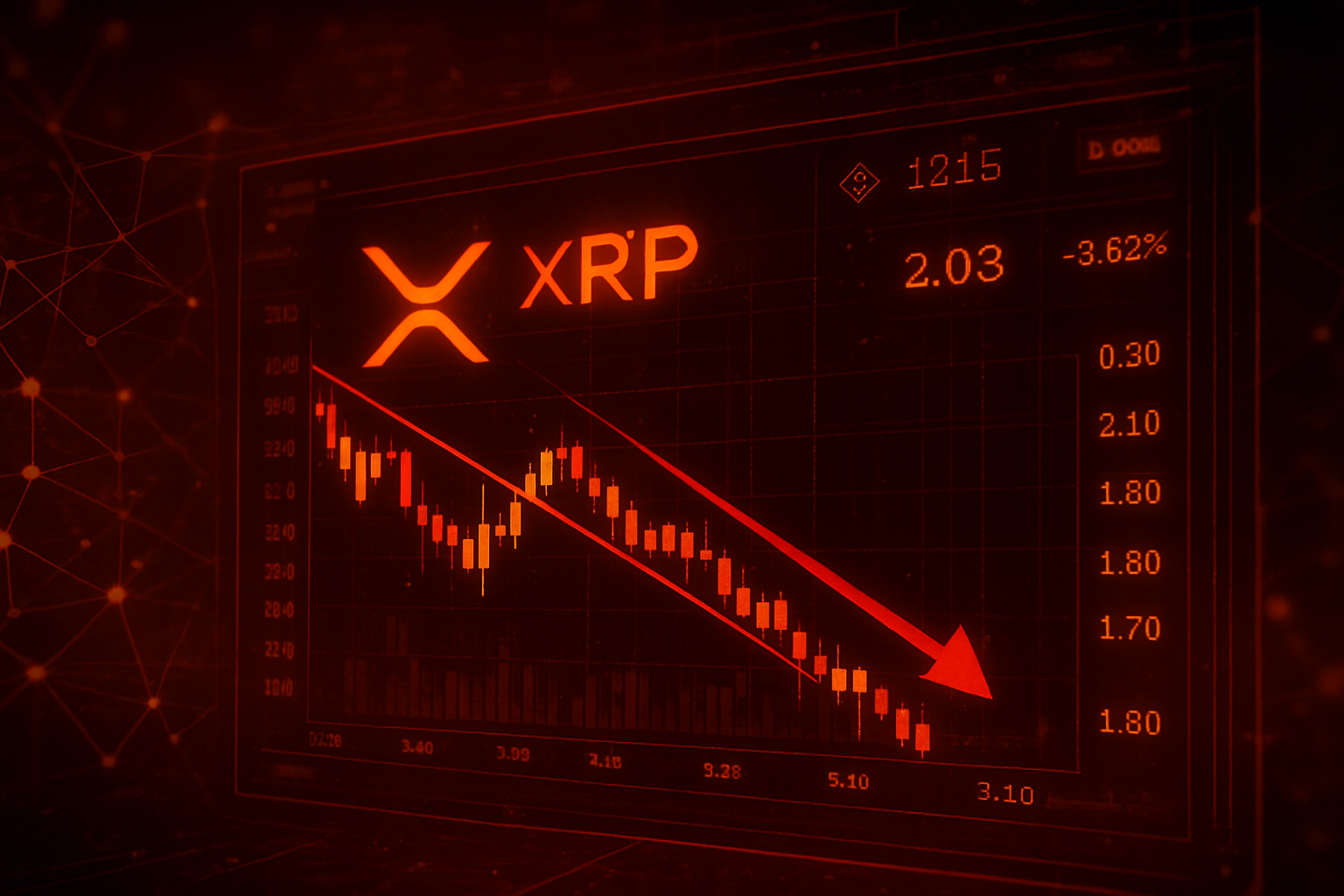
    New York, NY – December 1, 2025 – The cryptocurrency market is abuzz as XRP, the digital asset associated with Ripple (private), has confirmed a significant 'Death Cross' technical pattern on its daily chart in late November, extending into the first days of December 2025. This ominous signal, where XRP's short-term 50-day moving average (SMA) plunged below its long-term 200-day SMA, has sent ripples of concern through the investor community, prompting technical analysts to warn of potential price drops towards the $1.80-$2.10 range.

    The immediate market reaction has been predominantly bearish, with XRP experiencing a notable decline as the crossover materialized. On December 1, 2025, XRP's price fell approximately 7%, hitting session minimums around $2.01, further cementing the bearish sentiment that had been building throughout November. This technical event is significant because it is widely interpreted as a strong indicator of a potential shift towards a long-term bearish trend, suggesting that downward momentum is likely to continue or intensify, influencing both retail and algorithmic trading strategies across the crypto ecosystem.

    Market Impact and Price Action

    The formation of the 'Death Cross' for XRP has been a culmination of sustained selling pressure and a broader market downturn. Leading up to the confirmation, XRP had already seen considerable weakness, with reports in early November highlighting its vulnerability. The 50-day moving average, a key indicator of short-term momentum, had been steadily declining, setting the stage for its eventual cross below the more stable 200-day moving average.

    In the immediate aftermath, XRP's price movements have been characterized by a struggle to hold key support levels. The confirmed 'Death Cross' on December 1, 2025, saw XRP's price drop to around $2.05, establishing new session lows. This decline followed earlier warnings from late November that predicted a slide towards the $1.50 range, drawing parallels to historical instances where similar patterns preceded drops of up to 15% for XRP. Trading volume surged by 92% within 24 hours on December 1, accompanying the price drop, indicating aggressive repositioning and liquidation waves that erased recent gains. This high volume during a price decline further underscores the strong bearish sentiment dominating the market.

    Technical analysis points to critical support levels that XRP must defend to prevent steeper losses. Analysts have identified significant floors around $2.20, with stronger support at $2.15, $2.10, and $2.05 based on classical pivot points. The much-discussed $1.80 and $2.00 levels are also cited as important demand zones, with $1.80 historically acting as a robust area of buyer interest. Should these levels fail, a breach below $2.20 could open the door to the $1.80-$2.10 range, or even deeper corrections towards $1.50 or the psychological $1.00 mark. Conversely, resistance levels are noted at $2.26, $2.31, and a formidable barrier between $2.30-$2.40. A decisive break above $2.40 would be needed to signal any potential bullish reversal.

    Comparing this event to past 'Death Crosses' reveals a mixed bag of outcomes. A similar pattern for XRP in May 2025 preceded several weeks of sideways and negative price action. However, some analysts, like EGRAG, caution against drawing direct parallels to severe past crashes, such as the 2018 bear market. They argue that a "true" bearish 'Death Cross' leading to steep declines requires the token to be trading below both moving averages with significantly slowing momentum, which was not entirely the case for XRP as it held above the 200 MA with an upward trend in late November. This suggests that while a 'Death Cross' is a bearish indicator, its impact can vary based on the broader market context and other underlying factors.

    Community and Ecosystem Response

    The XRP 'Death Cross' has ignited a firestorm of discussion across social media platforms, with crypto Twitter (X) and Reddit serving as primary hubs for analysis, predictions, and emotional reactions. The sentiment has been largely bearish, reflecting the technical warnings from analysts.

    Crypto influencers and thought leaders have largely converged on a cautious to bearish outlook. Analysts like "Umair" on X highlighted the 'Death Cross' on XRP's daily chart, projecting a potential 15% crash that could push XRP into the $1.50 range, citing historical precedents. Others forecasted even more significant corrections, with some suggesting a 50% drop to $1.25 if key support levels fail to hold. This widespread bearish prognostication from prominent voices has undoubtedly amplified market anxiety. FXEmpire and Finance Magnates also confirmed the 'Death Cross', supporting a bearish narrative and price predictions of $1.82 and $1.61, respectively, despite some ongoing XRP ETF inflows.

    However, not all sentiment was uniformly negative. A contrarian view emerged from influencers such as "Steph Is Crypto" on X, who pointed out that a similar 'Death Cross' pattern in 2017 actually preceded a substantial 10x rally for XRP. This perspective offered a glimmer of hope for some, suggesting that the event could be a capitulation point before a significant rebound. Nonetheless, the immediate trading activity on December 1, characterized by a 92% surge in volume alongside a price drop, indicated aggressive profit-taking and liquidation waves, underscoring the prevailing fear in the market.

    The XRP 'Death Cross' coincided with a broader market downturn. On December 1, 2025, major cryptocurrencies, including Bitcoin and Ethereum, experienced losses ranging from 5% to 9%, with nearly $638 million in leveraged positions liquidated across exchanges, almost 90% of which were long positions. This market-wide correction, attributed to thin liquidity and macro uncertainty, exacerbated XRP's struggles. While direct, specific impacts on XRP-related DeFi protocols, NFT projects, or Web3 applications were not explicitly detailed in the immediate aftermath, the general market caution would undoubtedly lead to a more conservative approach within these sectors. Ripple (private) itself continued to advance its ecosystem, with its APAC entity receiving expanded payment licenses from the Monetary Authority of Singapore (MAS) and its stablecoin, RLUSD, gaining recognition. Several spot XRP ETFs, including those from Grayscale (private), Bitwise (private), Franklin Templeton (NYSE: BEN), and Canary Capital (private), also launched in mid-November, suggesting ongoing institutional infrastructure development despite token volatility.

    What's Next for Crypto

    The confirmed 'Death Cross' for XRP, occurring amidst a broader market 'risk-off' environment, paints a cautious short-term outlook for the digital asset and the wider cryptocurrency space. In the immediate weeks, sustained selling pressure is anticipated for XRP, potentially retesting lower support levels and solidifying the $1.80-$2.10 range as a critical battleground. Similarly, Bitcoin (BTC) is grappling with its own 'Death Cross' confirmation from mid-November, trading near $93,000 after falling from October highs of $126,000, signaling potential further downside towards $83,500 and a major support zone at $74,000-$76,000.

    However, the long-term implications for the crypto market remain nuanced. While technical indicators suggest immediate pain, many analysts view 'Death Crosses' as lagging indicators that often appear after significant price drops have already occurred, potentially marking local market bottoms rather than the start of prolonged bear markets. Therefore, a period of consolidation followed by a gradual recovery into early to mid-2026 remains a medium-high likelihood scenario, contingent on improving macroeconomic conditions and a slow but steady increase in institutional interest.

    Several potential catalysts could shift the market's trajectory. Anticipated Federal Reserve rate cuts in late 2025 or throughout 2026 could inject significant liquidity into risk assets. Continued demand and adoption of Spot Bitcoin ETFs, alongside the growth of XRP-spot ETFs, are expected to fuel institutional participation. Regulatory advancements, such as the potential passing of the CLARITY Act by 2026, could provide much-needed confidence and integration. For XRP specifically, the ongoing resolution of the SEC vs. Ripple lawsuit remains a pivotal event, with a favorable outcome potentially unleashing renewed confidence. Technological innovations within Ethereum (e.g., Pectra and Fusako upgrades), advancements in DeFi, and the expansion of real-world asset (RWA) tokenization on platforms like the XRPL will also drive fundamental value.

    Strategic considerations for investors during this volatile period include short-term caution, diversification of holdings, and disciplined risk management, such as using trailing stop-losses. However, significant dips, especially around key support levels, could also present accumulation opportunities for long-term investors who believe in the underlying fundamentals and future growth of the crypto market. For projects, the emphasis should be on developing real-world utility, particularly in areas like AI, DeFi, and core blockchain infrastructure, to attract serious investors and withstand market downturns.

    Bottom Line

    The XRP 'Death Cross' signal, confirmed in late November and early December 2025, serves as a stark reminder of the inherent volatility and technical sensitivities within the cryptocurrency market. For crypto investors and enthusiasts, the key takeaway is to approach the current market with heightened caution, recognizing the potential for further price declines in the short term, with analysts eyeing the $1.80-$2.10 range as a critical support zone. The immediate aftermath has seen significant selling pressure and liquidations, indicating a prevailing 'risk-off' sentiment exacerbated by broader market weakness and macroeconomic uncertainties.

    Despite the immediate bearish technical signals, the long-term significance for XRP and the wider crypto market appears more resilient. The 'Death Cross' is a lagging indicator, and historical precedents suggest it can sometimes mark temporary downturns before eventual rebounds. Crucially, underlying drivers such as increasing institutional adoption, particularly through spot ETFs from entities like Franklin Templeton (NYSE: BEN) and Grayscale (private), and the ongoing pursuit of regulatory clarity are bolstering the long-term outlook. Ripple's (private) advancements in real-world asset (RWA) tokenization and the expansion of its stablecoin, RLUSD, continue to enhance XRP's utility and institutional appeal.

    Ultimately, this period of technical weakness does not fundamentally derail the long-term trend of crypto adoption. Instead, it highlights the maturation of the market, its growing sensitivity to macroeconomic factors, and the ongoing shift towards a more regulated and utility-driven ecosystem. While retail investor sentiment may fluctuate, institutional players often view such corrections as strategic accumulation opportunities. The path to broader crypto adoption will likely involve navigating these cyclical downturns, emphasizing the importance of robust fundamental development and clear regulatory frameworks.

    Important Dates, Events, or Metrics to Monitor:

    • XRP Price Levels: Watch for XRP's ability to hold support at $2.00, $1.90, and $1.61, and attempts to reclaim resistance at $2.19-$2.29 and $2.45.
    • XRP ETF Inflows/Outflows: Monitor institutional capital flows into XRP ETFs for signs of renewed demand.
    • Federal Reserve Interest Rate Decisions: Upcoming Fed meetings and any indications of rate cuts will significantly influence market liquidity.
    • SEC vs. Ripple Lawsuit: Any definitive outcome or significant progress in the lawsuit remains a pivotal event for XRP.
    • Regulatory Developments: Keep an eye on U.S. legislative progress (e.g., CLARITY Act) and global regulatory frameworks.
    • Ripple Ecosystem: Track RWA tokenization initiatives (2025-2026) and RLUSD stablecoin expansion (Q1 2026).
    • Bitcoin Price Action: Bitcoin's ability to hold $80,000-$85,000 support and overall crypto market capitalization will provide critical context.

    This article is for informational purposes only and does not constitute financial or investment advice. Cryptocurrency investments carry significant risk.

  • Crypto Correction and Nvidia Slip Derail Wall Street’s Winning Streak on December 1, 2025

    Crypto Correction and Nvidia Slip Derail Wall Street’s Winning Streak on December 1, 2025

    New York, NY – December 1, 2025 – Wall Street today saw a significant reversal of fortune as a confluence of declining crypto-related stocks and a dip in tech giant Nvidia's performance pulled major indices lower, directly threatening the S&P 500's impressive five-day winning streak. The market downturn signals a fresh wave of investor caution, underscoring the interconnectedness of traditional finance with the increasingly volatile digital asset landscape.

    As trading commenced on December 1, 2025, U.S. stocks began to give back some of the previous week's rally. The S&P 500 slipped by 0.6%, putting it on track to break its recent bullish momentum. The Dow Jones Industrial Average dropped 267 points, also down 0.6%, while the Nasdaq Composite experienced a more pronounced decline of 0.8%. This broad-market retreat was largely attributed to a sharp decline in Bitcoin and its ripple effect on publicly traded crypto companies, amplified by a notable slip from a market bellwether like Nvidia (NASDAQ: NVDA). The immediate market reaction reflects a nervous sentiment, with investors re-evaluating risk in both the high-growth tech sector and the notoriously volatile cryptocurrency space. This convergence of negative pressures from both established tech and nascent digital assets highlights a critical moment for market stability and investor confidence in the broader ecosystem.

    Market Impact and Price Action

    The cryptocurrency market experienced a sharp downturn today, with Bitcoin (BTC) leading the retreat. The digital asset, which had soared to record highs near $125,000 in early October, tumbled towards $86,000. This significant price correction represents a loss of nearly a third of its value since its peak and over 17% in November alone, signaling substantial bearish pressure. This slump had a direct and immediate impact on publicly traded companies with significant exposure to the crypto ecosystem. Coinbase Global (NASDAQ: COIN) saw its shares sink by 4.8%, reflecting the broader market's apprehension towards crypto exchanges. Similarly, Robinhood Markets (NASDAQ: HOOD), a popular platform for both traditional and crypto trading, fell 4.5%. Strategy (NASDAQ: MSTR), formerly MicroStrategy, a company known for its substantial Bitcoin holdings, experienced an even steeper decline, dropping 6.9% as its primary asset faced severe headwinds.

    Beyond the crypto sector, semiconductor giant Nvidia (NASDAQ: NVDA) also contributed to the market's woes, slipping 0.6%. While seemingly modest compared to the crypto stock declines, Nvidia's considerable market capitalization means even a small percentage drop can exert significant downward pressure on major indices, acting as one of the heaviest weights on the market today. This combined pressure from both the speculative crypto market and a leading tech innovator created a potent cocktail of negative sentiment. The S&P 500, which had enjoyed a robust five-day winning streak, saw its momentum decisively broken, falling 0.6%. The Dow Jones Industrial Average also dropped 0.6%, shedding 267 points, and the tech-heavy Nasdaq Composite fared slightly worse, declining 0.8%.

    This market behavior on December 1, 2025, draws parallels to past instances where shifts in investor appetite for risk assets, particularly in the tech and crypto sectors, have reverberated across Wall Street. Historically, periods of rising bond yields and hawkish central bank rhetoric—such as the Bank of Japan's recent hint at a possible interest rate hike—often lead investors to rotate out of growth stocks and speculative assets like cryptocurrencies into safer havens. The current environment, where bonds are becoming more attractive, undercuts the appeal of higher-risk investments, exacerbating price declines across the board. The sharp correction in Bitcoin, after its parabolic run, also mirrors previous boom-and-bust cycles, where rapid gains are often followed by swift retractions, testing key support levels that, if broken, could signal further downside.

    Community and Ecosystem Response

    The crypto community reacted with a palpable mix of fear and debate as the market tumbled on December 1, 2025. The widely followed "Crypto Fear & Greed Index" plummeted to 24, signaling "Extreme Fear" among investors, a stark contrast to the bullish sentiment of recent weeks. Discussions across social media platforms, particularly on Reddit, buzzed with concerns over the sudden downturn, with many seeking explanations for Bitcoin's sharp decline and its broader market implications. While apprehension was widespread, a faction of the community and some analysts viewed the correction as a necessary, albeit painful, market reset.

    Crypto influencers and thought leaders offered varied perspectives on the day's events. Billy Markus, co-creator of Dogecoin, took to X (formerly Twitter) to dismiss claims of deliberate market manipulation, arguing that traders often attribute price drops to manipulation while considering rapid increases as organic. He emphasized that market movements are influenced by a complex interplay of financial outlooks, geopolitical news, and general sentiment, beyond just the actions of large holders. Meanwhile, analysts like Sean McNulty, APAC derivatives trading lead at FalconX, pointed to low inflows into Bitcoin ETFs and a lack of "dip buyers" as key contributors to the downward pressure. Timothy Misir, head of research at BRN, characterized Bitcoin's sharp decline as a "liquidity event driven by positioning and macro repricing," rather than a gradual correction. On the more bearish side, analyst "NoLimit" dramatically predicted that Bitcoin could crash below $50,000 by 2026, setting the stage for a "historic wealth transfer," while "Crypto Bitlord" used the volatility to criticize the Zcash rally, branding it a "scam" as it experienced a significant pullback.

    The immediate impact on the broader crypto ecosystem was most acutely felt within decentralized finance (DeFi) protocols. A significant security breach on Yearn Finance, which resulted in an estimated $9 million loss from an exploit of its yETH liquidity pool, was identified as a critical factor in triggering the market-wide "risk-off" sentiment. The Total Value Locked (TVL) within the Yearn Finance protocol reportedly decreased from $432 million to $410 million in the wake of the incident, underscoring the inherent smart contract risks that continue to plague the DeFi sector and erode investor confidence. While specific immediate effects on individual NFT projects or Web3 applications were not detailed as separate events, the broader crypto market downturn historically correlates with a negative impact on these highly speculative sectors. Liquidity tends to dry up quickly in a "risk-off" environment, making projects with less established fundamentals particularly vulnerable. However, some anticipation remains for a potential rebound in Ethereum (ETH) later in December, which could buoy many DeFi, NFT, and Web3 applications built on its foundational layer.

    What's Next for Crypto

    The immediate aftermath of the December 1, 2025, market downturn sees the crypto market firmly entrenched in a "risk-off" sentiment. Investors are shedding speculative assets, and the unwinding of leveraged positions, exacerbated by thin weekend liquidity, could lead to further cascading liquidations. The Fear & Greed Index, now deep in "extreme fear," reflects widespread anxiety, particularly among retail traders. However, some analysts suggest that December 2025 could still set the stage for a cautious recovery if broader macroeconomic conditions stabilize. A potential "Santa Claus rally" towards the end of the year, coupled with the Federal Reserve's anticipated third interest rate cut on December 15, could act as catalysts to ease market pressures and invite cautious dip-buying.

    Looking beyond the immediate volatility, the long-term outlook for the crypto market remains robust and optimistic. This enduring confidence is underpinned by increasing institutional integration, continuous technological advancements, and a progressively clearer regulatory landscape. Historically, every significant market dip has been followed by a period of recovery and substantial growth, suggesting a maturing market where experimentation is giving way to more sustained, albeit still volatile, expansion. Key long-term trends include the ubiquitous adoption of stablecoins for traditional financial transactions, the dynamic expansion of DeFi 2.0 with AI and machine learning transforming strategies, and the growth of utility-focused NFTs and metaverse economies.

    Several powerful catalysts are on the horizon. Institutional investment inflows are expected to continue their upward trajectory, with banks, hedge funds, and asset managers increasing their allocations to digital assets, driven by beliefs in blockchain's long-term value and diversification benefits. The next Bitcoin halving, projected around April 2028, will further amplify the scarcity narrative, historically a powerful driver of price appreciation. Crucially, the evolving regulatory environment, particularly in the United States under the re-elected President Donald Trump (inaugurated January 2025), aims to make the US the "crypto capital of the planet" by providing clear regulatory authority to the SEC and CFTC and exploring a national digital asset stockpile. Europe's Markets in Crypto-Assets (MiCA) regulation, which came into force on December 30, 2024, is also setting a global standard for crypto asset regulation, fostering greater investor protection and market stability.

    Bottom Line

    Today's market contraction serves as a potent reminder for crypto investors and enthusiasts of the inherent volatility and interconnectedness of the digital asset space with traditional finance. Key takeaways include the critical impact of macroeconomic factors, such as central bank policies and bond yields, on risk assets. Investors should avoid panic selling, embrace strategies like Dollar-Cost Averaging (DCA), and maintain a diversified portfolio with robust risk management. Converting volatile holdings into stablecoins can preserve capital during downturns, while focusing on projects with strong fundamentals, technological innovation, and real-world utility remains paramount.

    Despite the short-term pain, the long-term significance of today's events is likely to be viewed as another necessary correction in a maturing asset class. The underlying drivers of crypto adoption—institutional integration, regulatory clarity, and relentless technological innovation—remain firmly in place. While the market may face continued headwinds from global liquidity conditions, the strategic positioning of major players and the anticipation of future catalysts like the Bitcoin halving in 2028 suggest a resilient path forward.

    For crypto adoption, these periods of consolidation are vital for shaking out excess speculation and building a more robust, sustainable ecosystem. Important metrics to monitor include the Federal Reserve's interest rate decisions, global bond yields, institutional investment reports, and the ongoing development of regulatory frameworks. While a "cautious recovery" (estimated 60% likelihood) appears to be the most probable scenario, investors must remain vigilant against the possibility of a "prolonged bear market" (30% likelihood) if macroeconomic conditions deteriorate further. The dream of a "rapid V-shaped recovery" (10% likelihood) remains a distant hope for now.


    This article is for informational purposes only and does not constitute financial or investment advice. Cryptocurrency investments carry significant risk.

  • Crypto Carnage: Bitcoin Plummets Below $86,000 as Ethereum Dips 7% in Market Wipeout

    Crypto Carnage: Bitcoin Plummets Below $86,000 as Ethereum Dips 7% in Market Wipeout

    The cryptocurrency market reeled on Monday, December 1, 2025, as Bitcoin (BTC) plunged below the critical $86,000 mark, dragging Ethereum (ETH) down by over 7% and triggering a widespread sell-off across the digital asset ecosystem. This abrupt downturn saw billions of dollars evaporate from the global crypto market capitalization within hours, sending shockwaves through investor portfolios and reigniting fears of a prolonged bear market.

    The immediate aftermath was characterized by a palpable sense of panic and a strong risk-off sentiment as investors scrambled to offload holdings. This significant correction underscores the volatile nature of the crypto markets and highlights the growing influence of macroeconomic factors and institutional investor behavior on digital asset valuations, setting a tense precedent for the final month of the year.

    Market Impact and Price Action

    The market's dramatic nosedive saw Bitcoin, which had been trading comfortably above $92,000 just hours prior, freefall to touch as low as $85,778 in early Asian trading. This rapid depreciation marked a substantial blow to market confidence. Ethereum, the second-largest cryptocurrency by market cap, mirrored Bitcoin's decline, shedding over 7% of its value to settle around the $2,800 level. The broader market felt the brunt of this capitulation, with the global cryptocurrency market capitalization plummeting below $3 trillion, an estimated $140 billion wiped out in a swift market correction.

    A significant driver behind this downturn was the sustained period of institutional outflows from spot Bitcoin exchange-traded funds (ETFs), which had recorded over $3.43 billion in net outflows throughout November. This lack of institutional buying pressure, coupled with a notable absence of retail "dip buyers," exacerbated the sell-off. Technical analysis quickly pointed to the breach of key support levels for Bitcoin, shifting the short-term outlook to a more bearish stance, with many analysts now eyeing the $80,000 mark as the next critical psychological and technical support zone.

    The rapid price depreciation triggered a cascade of liquidations, with over $637 million in leveraged long positions being wiped out across major cryptocurrencies. This mass liquidation event further fueled the downward momentum, creating a feedback loop that accelerated the market's decline. The current market environment, characterized by global macro turbulence, concerns over interest rate expectations, rising Japanese government bond yields, and the potential unwinding of yen carry-trades, draws parallels to previous periods of heightened global economic uncertainty where risk assets, including cryptocurrencies, have faced significant pressure.

    Community and Ecosystem Response

    The sudden market downturn immediately triggered a wave of fear and uncertainty across the crypto community. Social media platforms, particularly X (formerly Twitter) and Reddit, became hotbeds of discussion, with sentiment rapidly shifting towards "Extreme Fear" as reflected by the Bitcoin Fear and Greed Index. Retail investors, many of whom were caught off guard, expressed anxieties over potential further losses, while discussions on platforms like Stocktwits moved decisively from a neutral to a bearish outlook.

    Crypto influencers and thought leaders, while acknowledging the severity of the correction, offered a range of perspectives. Some cautioned against panic selling, emphasizing the cyclical nature of crypto markets and the potential for long-term recovery, while others highlighted the fragility of the current market structure in the face of macroeconomic headwinds. The prevalent mood, however, was one of apprehension, with many scrutinizing the underlying causes and debating the immediate implications for various sectors within the crypto ecosystem.

    The impact reverberated beyond spot markets, affecting related DeFi protocols, NFT projects, and Web3 applications. Decentralized finance (DeFi) protocols saw increased liquidations of collateralized loans as token prices plummeted, stressing some lending platforms. NFT markets, already experiencing a cooling period, witnessed further drops in floor prices and trading volumes as speculative interest waned. Web3 projects, particularly those reliant on token-based incentives or venture funding, faced renewed pressure as investor confidence faltered, potentially impacting development roadmaps and user acquisition strategies.

    What's Next for Crypto

    The immediate aftermath of this market correction suggests continued volatility as investors grapple with heightened uncertainty. In the short term, Bitcoin faces critical retests of support levels, potentially revisiting $85,500 or even $82,000 if selling pressure persists. The market remains susceptible to further cascading liquidations of leveraged positions, which could exacerbate price movements. Major altcoins are likely to mirror Bitcoin and Ethereum's performance, often with amplified percentage drops, as capital flows towards perceived safer assets or out of the market entirely.

    Looking ahead, the long-term implications of such a significant downturn often include market consolidation. Weaker, speculative projects may struggle to survive, leading to a "flight to quality" where investors increasingly favor assets with strong fundamentals, real utility, and robust technology. This period could also invite increased regulatory scrutiny, with governments potentially responding to market instability with new policies and stricter enforcement, as seen with China's (SSE: 601988) central bank reaffirming its crypto ban and warning of intensified crackdowns on stablecoins. Projects will be compelled to focus more on real-world applications and sustainable business models rather than speculative hype.

    Potential catalysts for a recovery and sustained growth include clearer and more favorable regulatory frameworks from major global economies, which could instill confidence and attract new capital. A shift in macroeconomic policy, particularly a pivot by central banks like the Federal Reserve, towards interest rate cuts in 2025, could significantly benefit riskier assets. Furthermore, significant technological advancements, protocol upgrades (such as Ethereum's "Fusako" upgrade), increased institutional inflows into spot Bitcoin and potential spot Ethereum ETFs, and the growing adoption of real-world use cases for blockchain technology, including stablecoin payments and tokenized real-world assets (RWAs), could all contribute to a market rebound. Historically, Bitcoin halving events have also served as powerful catalysts for bull runs.

    For projects, strategic considerations include a renewed focus on core utility and development, prudent treasury management to weather prolonged bear markets, and transparent community engagement. Investors are advised to prioritize robust risk management, adopt a long-term perspective (HODL), and utilize strategies like dollar-cost averaging (DCA) to mitigate volatility. Avoiding emotional trading and conducting thorough due diligence on projects with strong fundamentals will be crucial. Possible scenarios range from a U-shaped recovery, characterized by a prolonged period of consolidation before a gradual rebound, to an L-shaped recovery, signifying an extended bear market. Further capitulation remains a possibility if key support levels are breached, or a market bifurcation where established assets recover more quickly than speculative altcoins.

    Bottom Line

    The recent crypto market wipeout, marked by Bitcoin's plunge below $86,000 and Ethereum's 7% dip, serves as a stark reminder of the inherent volatility and interconnectedness of the digital asset ecosystem with broader macroeconomic forces. Key takeaways for crypto investors and enthusiasts include the critical importance of robust risk management, the dangers of over-leveraging, and the significant impact of institutional investor sentiment and global economic indicators on market performance. This event underscores that even established cryptocurrencies are not immune to sharp corrections, and a long-term, disciplined approach remains paramount.

    From a long-term perspective, such market shake-ups, while painful in the short term, often act as cleansing events. They can lead to a healthier, more resilient ecosystem by flushing out speculative excess and forcing projects to focus on fundamental value and innovation. The continued development of regulated financial products, such as spot Bitcoin and Ethereum ETFs, despite current outflows, suggests an ongoing institutionalization of the market that could provide greater stability in future cycles.

    For crypto adoption, these downturns test the conviction of new entrants and highlight the need for greater education and user-friendly interfaces to truly onboard the next billion users. The ultimate success of crypto adoption will hinge on the ability of blockchain technology to deliver tangible, real-world utility that transcends speculative trading. Investors should closely monitor macroeconomic data, central bank policies, regulatory developments, and the progress of key technological upgrades within the crypto space. The ability of Bitcoin to hold the $80,000-$85,000 support range will be a critical metric to watch in the coming weeks, potentially dictating the market's short-term trajectory.


    This article is for informational purposes only and does not constitute financial or investment advice. Cryptocurrency investments carry significant risk.

  • Crypto Market Rocked by Renewed Selloff as December Kicks Off

    Crypto Market Rocked by Renewed Selloff as December Kicks Off

    December 1, 2025 – The cryptocurrency market has been plunged into a state of heightened volatility and significant price depreciation as December 2025 begins, marking a renewed selloff that has caught many investors off guard. The downturn, which commenced in the early hours of the trading day, appears to be a confluence of persistent macroeconomic anxieties, burgeoning regulatory uncertainties, and a wave of profit-taking from earlier gains. This sudden market correction has triggered immediate reactions across the ecosystem, with a palpable sense of apprehension mixed with opportunistic "buy the dip" sentiment emerging from various corners of the crypto community.

    This latest market retraction is particularly significant as it tests the resilience of the burgeoning Web3 landscape and the conviction of long-term holders. Coming at the close of what has been a tumultuous year for digital assets, the December selloff underscores the inherent volatility of the crypto space and its susceptibility to broader financial market trends and evolving legislative landscapes. The immediate implications for DeFi protocols, NFT projects, and the wider blockchain industry are under intense scrutiny, as stakeholders brace for potential cascading effects.

    Market Impact and Price Action

    The renewed selloff has seen major cryptocurrencies experience substantial declines. Bitcoin (BTC) plummeted by over 8% in the initial hours, briefly testing the $58,000 support level before a slight rebound. Ethereum (ETH) followed suit, shedding more than 10% of its value and dipping below the $3,000 mark. The broader altcoin market bore the brunt of the downturn, with many projects registering double-digit percentage losses. Solana (SOL), Cardano (ADA), and Avalanche (AVAX) were among the hardest hit, with some experiencing drops exceeding 15%.

    Trading volumes surged across major exchanges like Coinbase (NASDAQ: COIN) and Binance, indicating widespread panic selling alongside a notable increase in opportunistic buying. Liquidation cascades were observed in derivatives markets, particularly for highly leveraged long positions, further exacerbating the downward price pressure. Technical analysts are closely watching key support levels; for Bitcoin, the $55,000 to $58,000 range is critical, while Ethereum's ability to hold above $2,800 will be a crucial indicator of short-term stability.

    This current market behavior echoes similar downturns seen in previous years, notably the early 2022 correction driven by macro fears and the Terra (LUNA) collapse. In those instances, a period of consolidation often followed the initial shock, with stronger projects eventually decoupling or recovering more swiftly. However, the current macroeconomic climate, characterized by persistent inflation concerns and potential interest rate adjustments by central banks, presents a unique challenge, suggesting that recovery might be more protracted than in previous cycles.

    Community and Ecosystem Response

    The crypto community's response to the December selloff has been a mix of anxiety, resilience, and strategic positioning. On platforms like X (formerly Twitter) and Reddit, sentiment quickly shifted from cautious optimism to widespread FUD (Fear, Uncertainty, and Doubt). Hashtags related to "crypto crash" and "bear market" trended, with many retail investors expressing concern over their portfolios. However, a significant portion of the community, particularly seasoned traders and long-term holders, reiterated the "buy the dip" mantra, viewing the correction as an opportunity to accumulate assets at discounted prices.

    Crypto influencers and thought leaders have offered varied perspectives. Some prominent analysts pointed to the cyclical nature of the market, advising calm and a focus on fundamentals. Others, however, cautioned that the current macroeconomic environment, coupled with increased regulatory scrutiny globally, could signal a more prolonged period of consolidation. Discussions within DeFi and NFT communities revolved around the resilience of various protocols and projects. While some less established NFT collections saw floor prices drop significantly, blue-chip collections and robust DeFi platforms demonstrated relative stability, albeit with reduced liquidity and trading activity.

    The broader Web3 ecosystem is bracing for potential impacts on funding rounds and project development. Startups reliant on recent funding may face challenges if the downturn persists, potentially slowing innovation in certain areas. Yet, historically, bear markets have also been periods of intense building, allowing projects to focus on core technology rather than speculative hype.

    What's Next for Crypto

    The short-term outlook for the crypto market remains uncertain, with potential for continued volatility as investors digest macroeconomic data and regulatory developments. Key indicators to watch include inflation reports, central bank policy statements, and any new legislative proposals targeting digital assets. A sustained break below critical support levels for Bitcoin and Ethereum could signal further downside, potentially leading to a more pronounced bear market phase.

    In the long term, the implications of this selloff could shape the next cycle of crypto innovation and adoption. Projects with strong use cases, robust communities, and clear regulatory compliance strategies are likely to weather the storm more effectively. Potential catalysts for a market reversal include a clear resolution to global macroeconomic uncertainties, significant technological breakthroughs (e.g., Ethereum's ongoing scaling solutions, new interoperability protocols), or favorable regulatory frameworks emerging from major jurisdictions.

    Strategic considerations for projects and investors include de-risking portfolios, focusing on dollar-cost averaging, and thoroughly researching project fundamentals. For developers, this period could be an opportune time to build out infrastructure, improve security, and enhance user experience, positioning themselves for the next bull run. Possible scenarios range from a swift V-shaped recovery, driven by unforeseen positive news, to a prolonged U-shaped or L-shaped recovery, characteristic of deeper market corrections. The likelihood of each scenario largely depends on external macroeconomic factors and the industry's ability to demonstrate tangible value and regulatory maturity.

    Bottom Line

    The renewed crypto selloff at the start of December 2025 serves as a stark reminder of the inherent risks and cyclical nature of the digital asset market. For crypto investors and enthusiasts, the key takeaway is the importance of a well-diversified portfolio, a long-term perspective, and a clear understanding of risk tolerance. While short-term price movements can be alarming, the underlying technology and the potential of Web3 continue to attract significant innovation and investment.

    The long-term significance of this downturn will likely be judged by how the ecosystem responds. Will it lead to a stronger, more resilient market, or will it expose systemic weaknesses? Important dates and metrics to monitor include the upcoming Federal Reserve meetings, quarterly earnings reports from major tech and financial companies with crypto exposure, and on-chain metrics such as stablecoin inflows and exchange reserves, which can signal shifts in market sentiment. The industry's ability to navigate regulatory hurdles and demonstrate real-world utility will be paramount for sustained adoption.


    This article is for informational purposes only and does not constitute financial or investment advice. Cryptocurrency investments carry significant risk.